
- Home
- Articles
- Visa & Immigration
- 2026
- September
Indian Desi Visa & Immigration News in USA
U.S. Passport for 16- and 17-Year-Olds: Rules and Documents
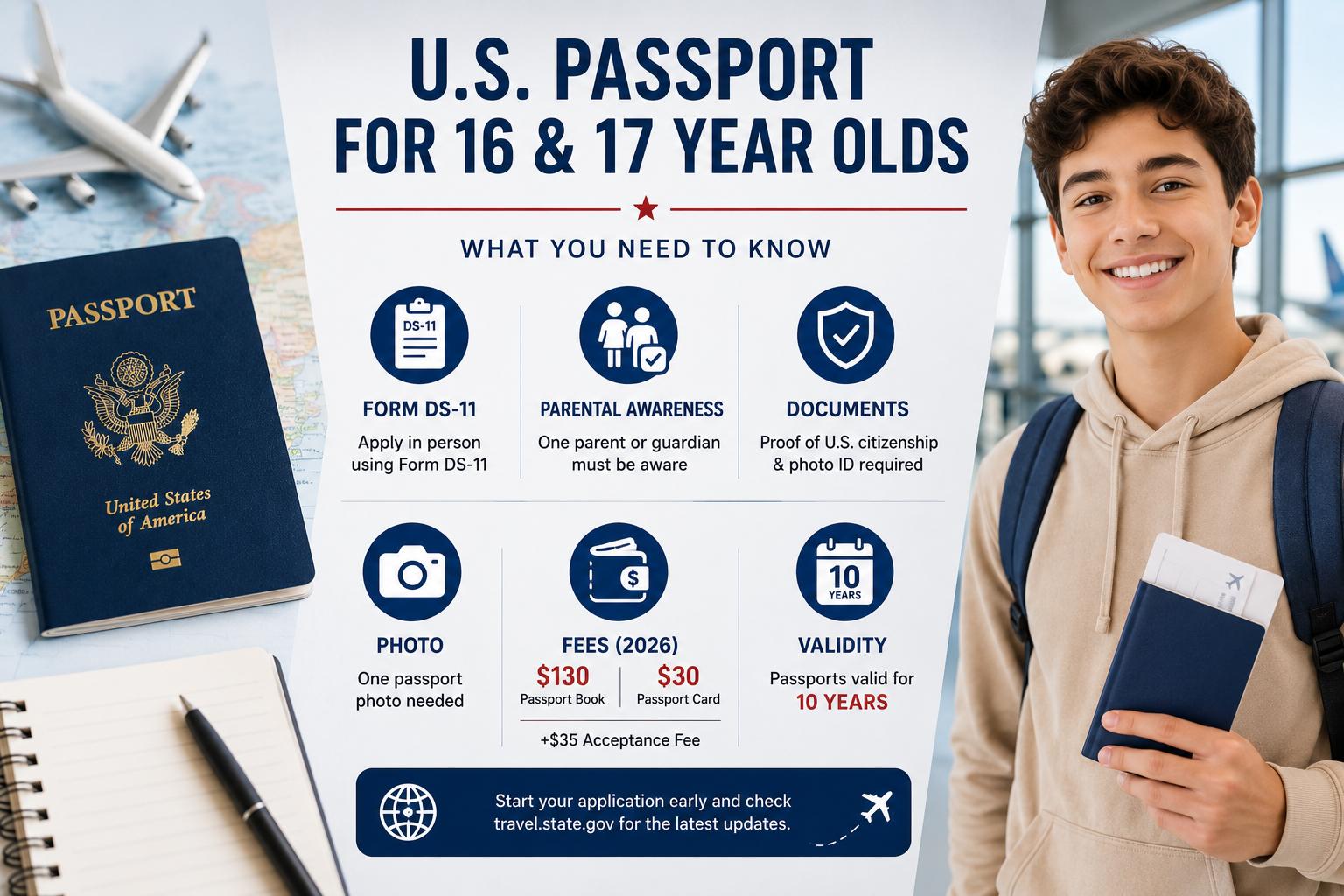
A U.S. passport for ages 16 and 17 follows different rules from passports for children under 16. Applicants generally use Form DS-11 in person, provide citizenship evidence and photo ID, show that one parent or guardian is aware, and receive a passport valid for 10 years. U.S. passport requirements change once a child turns 16. Applicants ages 16 and 17 generally apply in person using Form DS-11, but unlike children under 16, they do not normally need both parents to app
U.S. Passport for 16- and 17-Year-Olds: Rules and Documents
A U.S. passport for ages 16 and 17 follows different rules from passports for children under 16. Applicants generally use Form DS-11 in person, provide citizenship evidence and photo ID, show that one parent or guardian is aware, and receive a passport valid for 10 years. U.S. passport requirements change once a child turns 16. Applicants ages 16 and 17 generally apply in person using Form DS-11, but unlike children under 16, they do not normally need both parents to app
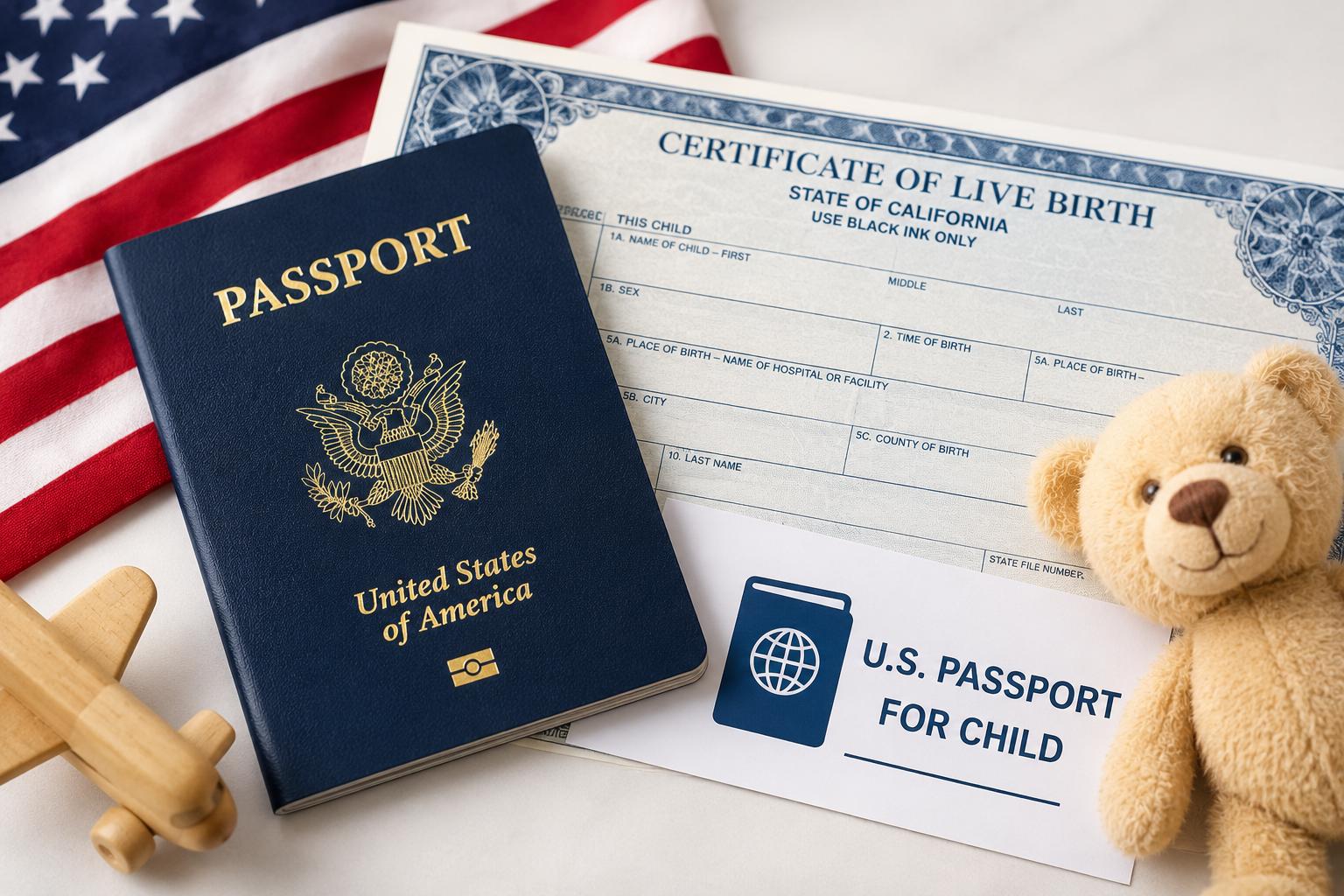
Can a U.S.-Born Child Get a Passport if Parents Aren’t Citizens?
A U.S.-born child can generally qualify for a U.S. passport when the child is recognized as a U.S. citizen, even if the parents are not citizens. Parents must prove the child’s citizenship and relationship, follow consent rules, and watch for pending policy changes. A child born in the United States can generally apply for a U.S. passport if the child is recognized as a U.S. citizen, even when one or both parents are not U.S. citizens. For passport purpo
Can a U.S.-Born Child Get a Passport if Parents Aren’t Citizens?
A U.S.-born child can generally qualify for a U.S. passport when the child is recognized as a U.S. citizen, even if the parents are not citizens. Parents must prove the child’s citizenship and relationship, follow consent rules, and watch for pending policy changes. A child born in the United States can generally apply for a U.S. passport if the child is recognized as a U.S. citizen, even when one or both parents are not U.S. citizens. For passport purpo
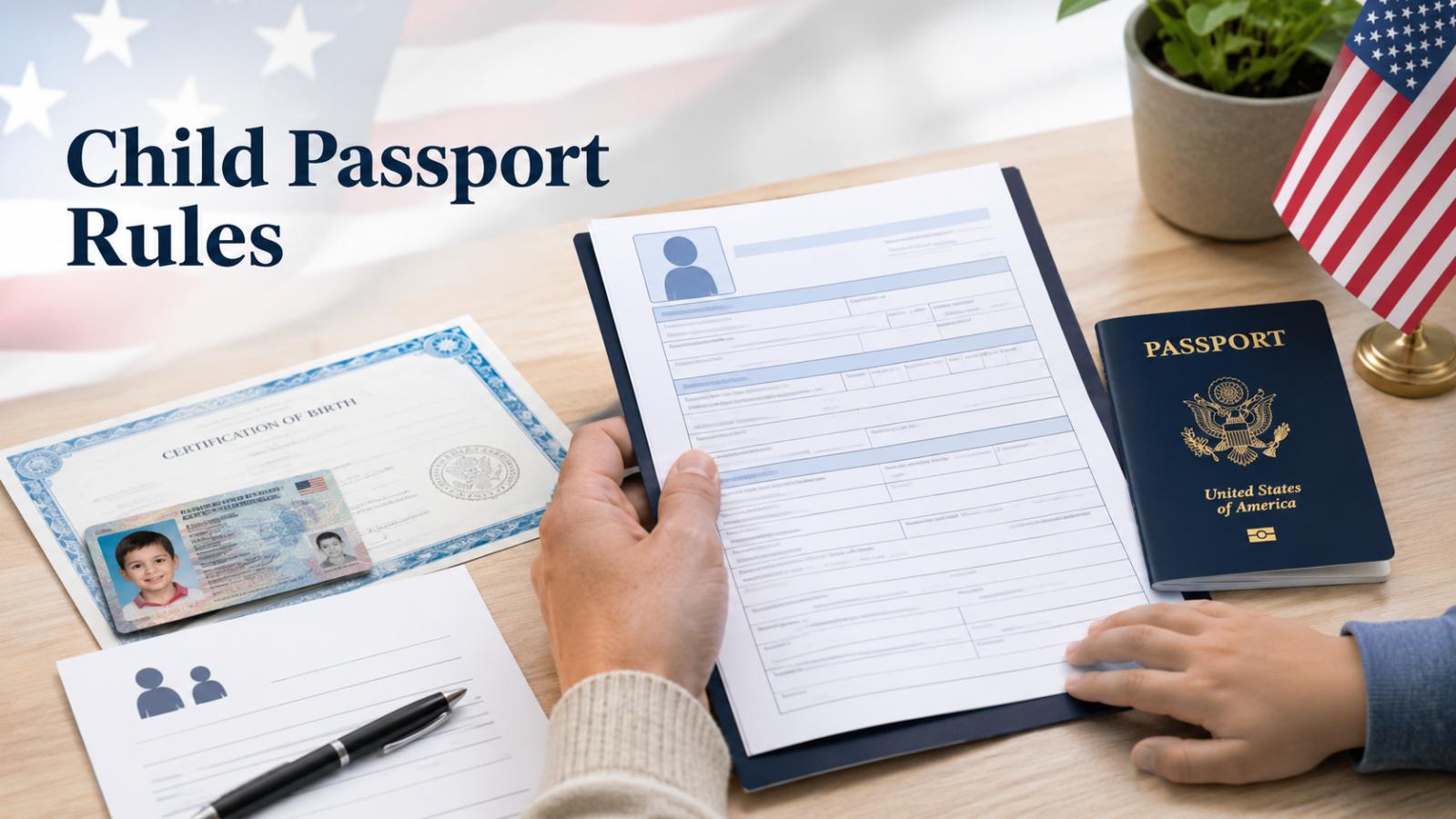
U.S. Passport for a Child Under 16: Documents and Consent
A U.S. passport for a child under 16 requires an in-person Form DS-11 application, proof of U.S. citizenship, evidence of the parent-child relationship, parental identification and consent. This guide explains the documents, fees, validity and special cases parents should know. Parents applying for a U.S. passport for a child under 16 must follow a different process from adult applicants. The child must appear in person, and the application requires proof of U.S. ci
U.S. Passport for a Child Under 16: Documents and Consent
A U.S. passport for a child under 16 requires an in-person Form DS-11 application, proof of U.S. citizenship, evidence of the parent-child relationship, parental identification and consent. This guide explains the documents, fees, validity and special cases parents should know. Parents applying for a U.S. passport for a child under 16 must follow a different process from adult applicants. The child must appear in person, and the application requires proof of U.S. ci
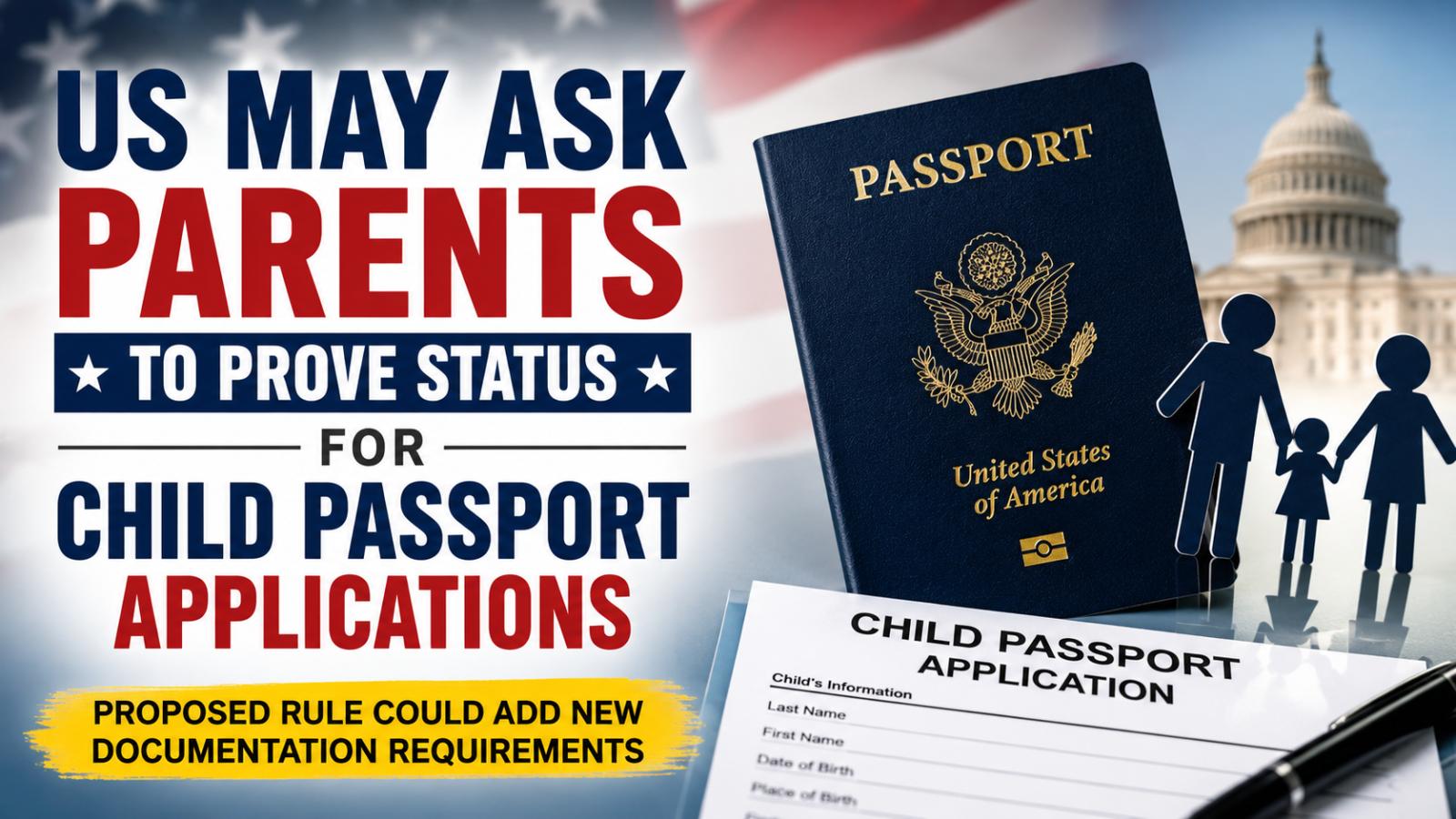
US May Require Parents to Prove Status for Child Passports
The US State Department is considering new passport procedures that could require parents or legal guardians to provide proof of their own citizenship or immigration status when applying for a passport for a child. The possible change is linked to the Trump administration’s efforts to implement new rules surrounding birthright citizenship and prevent what officials describe as misuse of US citizenship laws. The proposal has not yet been finalized, meaning families should continue
US May Require Parents to Prove Status for Child Passports
The US State Department is considering new passport procedures that could require parents or legal guardians to provide proof of their own citizenship or immigration status when applying for a passport for a child. The possible change is linked to the Trump administration’s efforts to implement new rules surrounding birthright citizenship and prevent what officials describe as misuse of US citizenship laws. The proposal has not yet been finalized, meaning families should continue