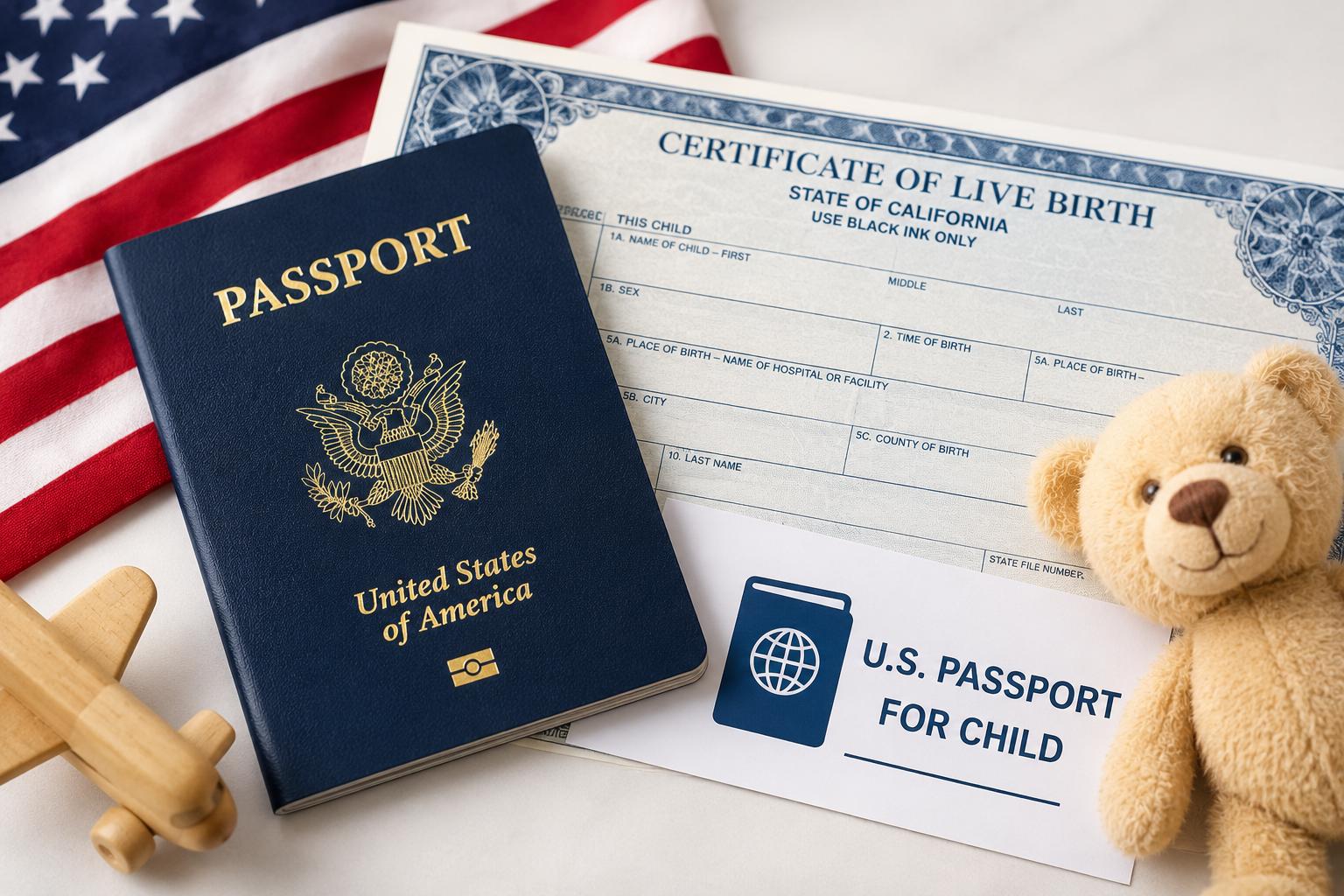
A U.S.-born child can generally qualify for a U.S. passport when the child is recognized as a U.S. citizen, even if the parents are not citizens. Parents must prove the child’s citizenship and relationship, follow consent rules, and watch for pending policy changes.
A child born in the United States can generally apply for a U.S. passport if the child is recognized as a U.S. citizen, even when one or both parents are not U.S. citizens.
For passport purposes, the key issue is establishing the child’s citizenship and meeting the requirements for a minor passport application. However, federal policy surrounding birthright citizenship is changing, making it important for families to check the latest rules before applying.
Citizenship Proof for a U.S.-Born Child
The State Department accepts a qualifying U.S. birth certificate as primary evidence of citizenship for a person born in the United States. The certificate should be issued by the city, county or state, list the applicant’s name, date and place of birth and include the parents’ full names.
Parents who need more detail can review the accepted proof of U.S. citizenship for a child before applying.
Other qualifying citizenship documents may also be accepted in appropriate cases.
One important exception involves children born to certain foreign diplomatic personnel. The State Department notes that a child born in the United States may not acquire U.S. nationality at birth if a parent was an accredited foreign diplomat at the time of birth.
Passport Rules for Noncitizen Parents
For a child under 16, parents generally submit Form DS-11 in person with the child. The application process requires evidence of the parent-child relationship, parental identification and consent.
Families can prepare in advance by reviewing the full list of documents needed for a child’s U.S. passport application.
The complete U.S. passport requirements for a child under 16 include citizenship evidence, identification, relationship documents and parental consent.
A parent does not currently become eligible for U.S. citizenship simply because the child is a citizen, and the parents’ nationality is separate from the child’s passport eligibility.
Both parents or guardians generally must approve issuance of the passport. When one parent cannot appear, additional documentation such as Form DS-3053 may be required.
When one parent cannot attend the child’s passport appointment, additional documentation such as Form DS-3053 may be required.
Could Parents’ Immigration Status Be Checked?
As of September 2, 2026, the State Department is considering procedures that could require parents applying for a child’s passport to provide proof of their own citizenship or immigration status.
The proposed change is connected to the administration’s August 6, 2026 executive order addressing certain categories of birthright citizenship. The passport guidance has not yet been finalized, so families should continue following the State Department’s currently published application requirements unless new instructions are issued.
What Families Should Prepare
Parents should have the child’s qualifying citizenship evidence, proof of the parent-child relationship, government-issued identification, passport photo, Form DS-11 and required consent documentation ready before the appointment.
Families involving diplomatic status, disputed citizenship, unusual birth circumstances or complex immigration situations should carefully review current federal guidance before making international travel plans.
Different citizenship documentation may apply when the child was born abroad to a U.S. citizen parent.
Because passport and citizenship policies can change through agency guidance or court decisions, applicants should verify the State Department requirements in effect when they submit the application.