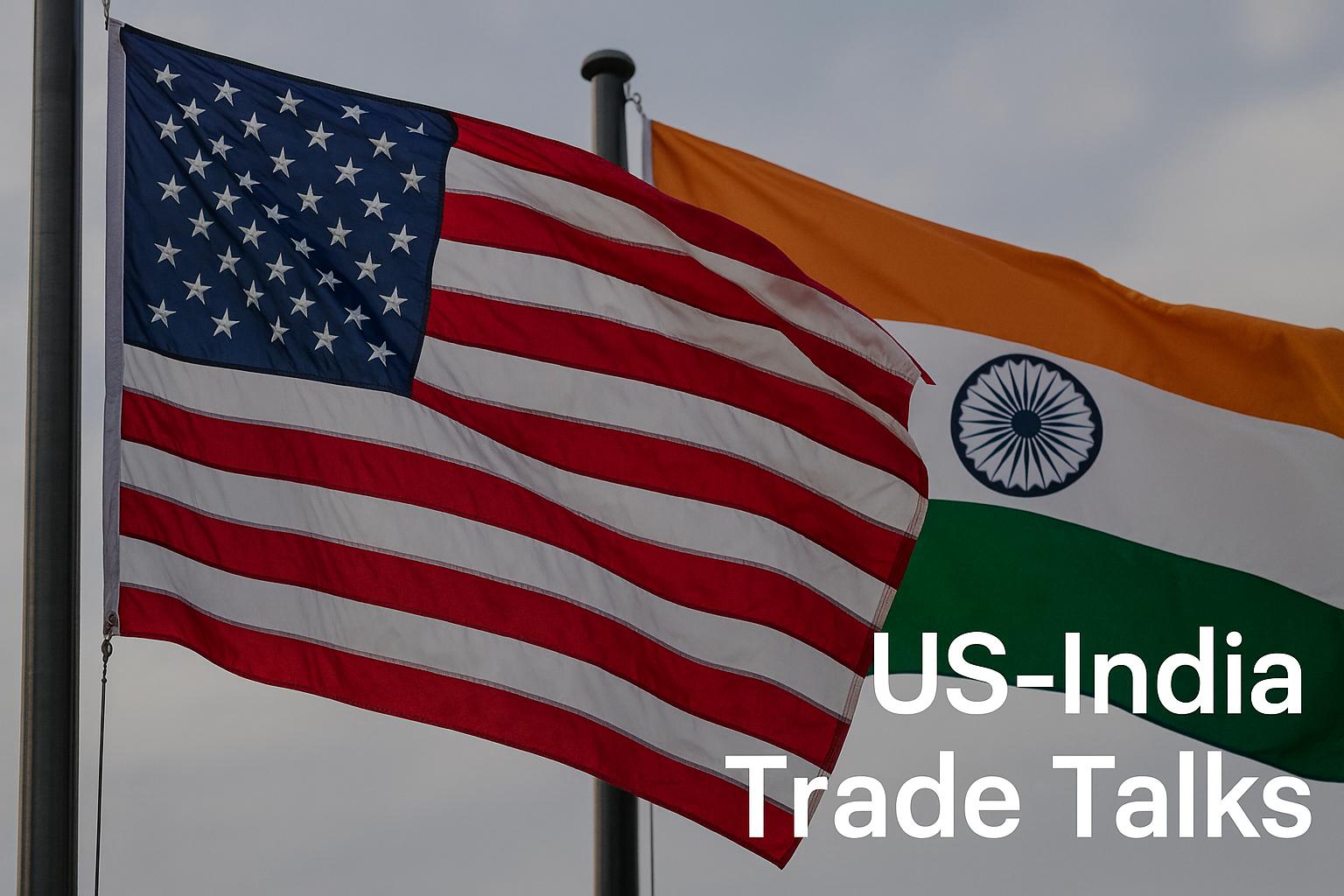
The possibility of a significant trade agreement between the United States and India has taken center stage after fresh comments by US Commerce Secretary Howard Lutnick. Speaking about key trade priorities, Lutnick made it clear that progress on the long-discussed deal will depend heavily on India ending its purchase of oil from Russia. His remarks underline the ongoing tensions between Washington and New Delhi over trade practices, energy choices, and global alignments.
According to Lutnick, the US is ready to move forward quickly once India adjusts its energy policy. “We’re going to sort out India,” he stated in a recent interview, emphasizing that the continuation of Russian oil imports remains the primary stumbling block. While India has defended its right to buy oil from multiple sources to meet domestic needs, the United States has been urging its partners to reduce reliance on Russia as part of broader efforts to apply economic pressure following Moscow’s geopolitical actions.
The debate over energy imports has overshadowed progress on other aspects of the trade relationship. Both countries have been negotiating over tariffs, technology transfers, agricultural products, and market access for several years. The linkage between oil imports and trade progress highlights how energy security and foreign policy can intersect with economic priorities, complicating negotiations but also creating opportunities for deeper dialogue.
Despite the challenges, Lutnick struck a conciliatory tone, suggesting that the US values its strategic relationship with India. He noted that any trade deal would not only benefit businesses but would also strengthen political and cultural ties. His approach came just days after US President Donald Trump expressed his own confidence in the direction of the talks.
In a post on social media, President Trump described Prime Minister Narendra Modi as a “dear friend” and said he expected to speak with him in the coming weeks. Trump added that negotiations were underway to resolve trade barriers and expressed optimism that the two sides would reach a “successful conclusion” that benefits both nations. His warm words were meant to reaffirm the importance of the partnership and highlight India’s role as a close ally in the Indo-Pacific.
Prime Minister Modi responded in kind, calling the United States and India “close friends and natural partners.” He said he was confident that the ongoing trade discussions would unlock the limitless potential of bilateral cooperation. Modi’s statement reinforced the notion that New Delhi sees Washington not only as an economic partner but also as a trusted ally in addressing global challenges, from security to climate change and beyond.
The convergence of positive rhetoric from both leaders and the candid remarks from Lutnick reveal a complex but promising phase in India-US ties. On the one hand, the unresolved issue of Russian oil imports has created friction. On the other hand, the reaffirmed friendship between Trump and Modi provides a strong political foundation to overcome these differences.
Observers note that India’s energy decisions are driven by its need for affordable and stable supplies, especially as its economy continues to expand and its population requires increasing access to energy. At the same time, India has diversified its energy sources and remains engaged in dialogue with the US about renewable energy, technology transfers, and nuclear cooperation. The balancing act reflects New Delhi’s effort to maintain autonomy in its foreign policy while still building deeper ties with Washington.
The potential trade deal carries high stakes for both economies. For the US, expanding access to India’s vast market means new opportunities for technology, agriculture, and manufacturing exports. For India, securing favorable terms could enhance its economic growth, improve supply chains, and attract more investment from American firms. Both sides recognize that a strong economic agreement would bolster their strategic partnership, particularly as they navigate global uncertainties and shifting power dynamics.
The discussion also takes place against the backdrop of broader geopolitical developments. The United States is working to reinforce alliances in Asia, counterbalance China’s growing influence, and maintain stability in global trade routes. India, with its size and economic potential, is seen as an essential partner in these efforts. A trade deal would not only solidify bilateral ties but would also serve as a signal to the wider world about the strength of democratic and market-oriented partnerships.
While the road ahead may still involve difficult negotiations, there is renewed optimism that both nations are committed to finding common ground. Trump’s expressions of friendship and Modi’s assurance of natural partnership reflect a political will to move forward, while Lutnick’s candid comments clarify the key hurdles that must be addressed.
Ultimately, the success of these negotiations will depend on whether both sides can reconcile their differences over energy imports without compromising their broader strategic goals. If achieved, a US-India trade agreement could mark a new chapter in bilateral relations, enhancing not only economic cooperation but also the shared vision of stability, prosperity, and resilience in an evolving global order.