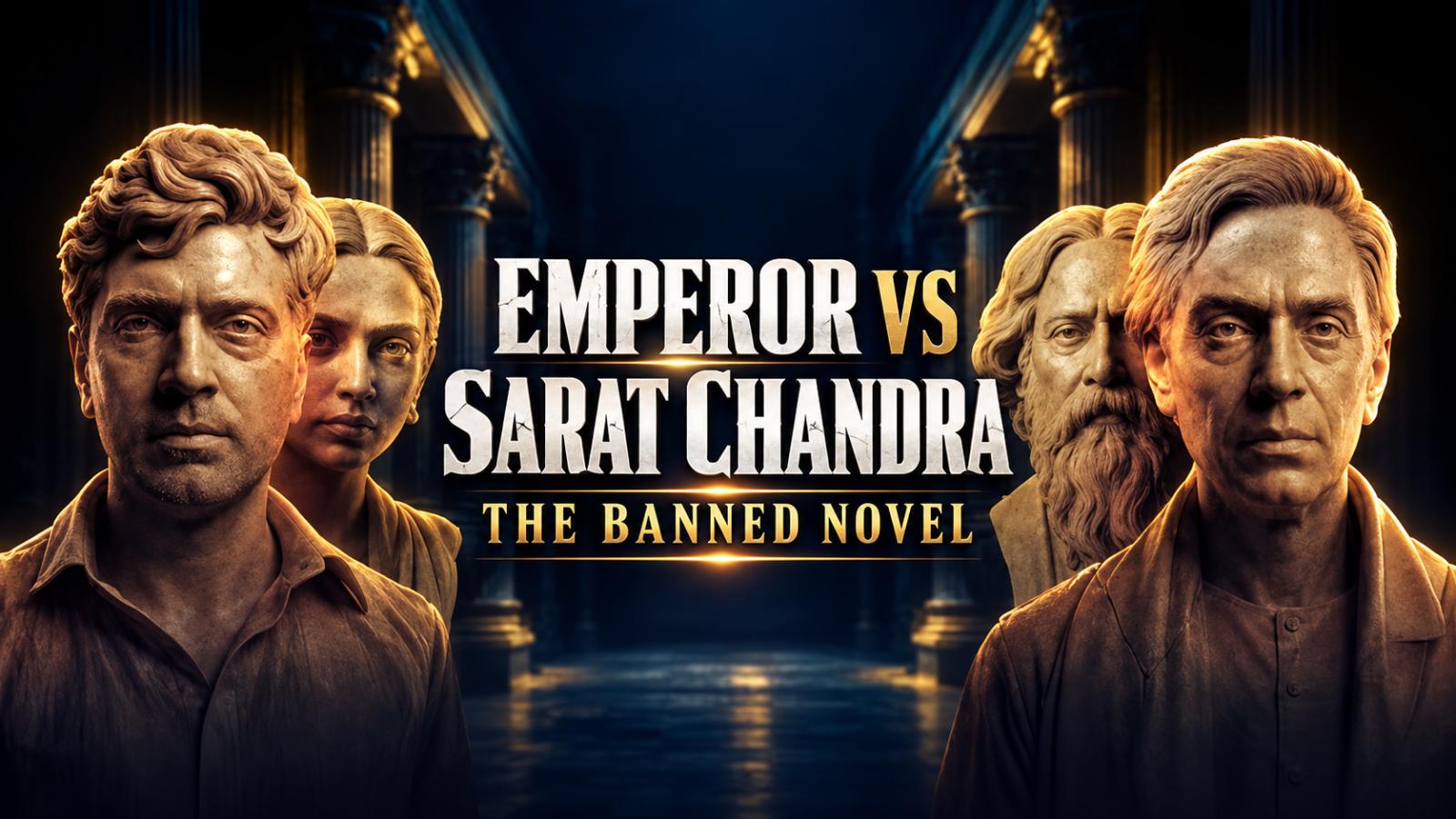
Srijit Mukherji’s Emperor vs Sarat Chandra brings a confrontation between literature and colonial authority to the screen. Scheduled to release on October 15, 2026, the Bengali historical drama examines the circumstances surrounding the British administration’s ban on Sarat Chandra Chattopadhyay’s novel Pather Dabi.
The film connects the author’s life with the revolutionary world of his fiction, exploring how a written story could challenge an empire. Srijit and his actors discussed the letters that inspired the project, the demands of portraying its central characters and the freedom movement that shapes its narrative.
Two Letters Sparked Srijit’s Film Idea
Srijit said the concept took shape in 2021 after he discovered a letter written by Sarat Chandra to Rabindranath Tagore and Tagore’s reply. Their exchange prompted him to explore the debate surrounding Pather Dabi and the relationship between literary expression and political resistance.
Rather than focusing only on the ban, the film brings together the writer’s experiences and the ideas embodied by his fictional characters. This approach places Sarat Chandra and Tagore within a wider discussion about dissent, responsibility and the power of literature under colonial rule.
Tota and Abir Lead the Historical Drama
Tota Roy Choudhury portrays Sarat Chandra, a casting choice Srijit linked to the actor’s facial resemblance to the novelist. Tota described the author’s adventurous and independent life as a significant challenge to capture on screen.
Abir Chatterjee plays Sabyasachi Mallick, the revolutionary at the centre of Pather Dabi. The character rejects compromise with British imperialism and builds connections across countries to support an armed uprising.
Abir said the role offered an opportunity to honour the revolutionaries associated with the character’s inspiration, including Rash Behari Bose, Netaji Subhas Chandra Bose, Masterda Surya Sen and Dr Jadugopal Mukherjee. His interpretation highlights the conviction and sacrifice behind the struggle for independence.
Tagore and Sumitra Connect the Film’s Worlds
Mimi Chakraborty plays Sumitra, while filmmaker and actor Sanjoy Nag appears as Rabindranath Tagore. Poet Joy Goswami provides the voice for Tagore’s dialogues, adding a distinctive element to the portrayal.
By including both Sarat Chandra and Tagore, the film examines the responses of two influential literary figures to the pressures of their time. Alongside them, the fictional world of Pather Dabi gives the narrative a way to explore revolutionary ambition and the consequences of resistance. The central conflict concerns more than the fate of a book: it considers why colonial authorities viewed literary imagination as a political threat.
Srijit Makes His Composer Debut
Emperor vs Sarat Chandra also marks Srijit’s debut as a composer. Timir Biswas sings Shoite Shoite, described in the report as a defiant track, while Shreya Ghoshal lends her voice to Dil Ka Daag.
The songs introduce contrasting emotional tones within a story shaped by rebellion, conviction and personal experience. Together with its historical setting and literary focus, the music adds another dimension to the filmmaker’s treatment.
Positioned as a Durga Puja release in Bengal, Emperor vs Sarat Chandra is set to arrive in theaters on October 15, 2026. The film brings renewed attention to Pather Dabi and the enduring debate over what happens when literature confronts political power.