Plot
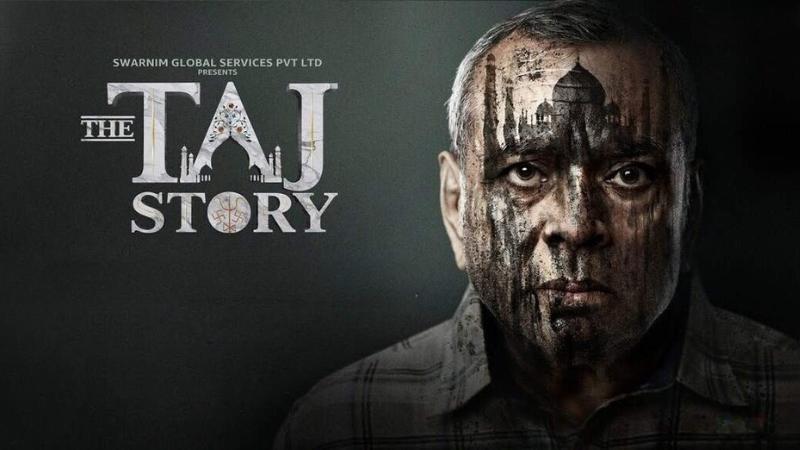
Vishnu Das (Paresh Rawal), a passionate Taj Mahal tour guide, believes the monument hides a buried truth that connects to his late father’s failed quest to uncover it. Determined to restore his father’s honor, Vishnu launches his own investigation into the “real” history of the Taj Mahal, leading to a legal battle that challenges India’s cultural and educational narratives. What begins as a mystery around the monument’s hidden chambers quickly turns into a loud, chaotic commentary on religion, history, and identity, losing focus on its core premise.
Overview
Directed by Tushar Amrish Goel, The Taj Story aims to blend historical intrigue, social commentary, and courtroom drama. Unfortunately, the film collapses under the weight of its ambitions. The early scenes promise intensity, with Paresh Rawal delivering a gripping portrayal of an eccentric idealist haunted by his father’s obsession. However, as the story unfolds, the narrative turns erratic — shifting from archaeology to politics to theology — without developing any of them convincingly.
Performances
Paresh Rawal shoulders the entire film with a deeply committed performance. His portrayal of Vishnu Das—a man torn between faith and rationality—feels genuine and powerful. He captures the frustration of a man mocked by society yet unshaken in conviction. Unfortunately, the supporting cast adds little substance. The secondary characters, including the female roles, are poorly written and exist only to echo or oppose Vishnu’s monologues.
Technical Aspects
The cinematography captures the Agra backdrop with authenticity, and the use of AI-generated visuals offers some fresh visual texture. However, the overreliance on such effects makes several scenes feel artificial. Editing is uneven, particularly in the courtroom sequences that drag on unnecessarily. The production design is serviceable, recreating the Taj Mahal’s interiors with moderate realism, though the narrative chaos overshadows the visual effort.
Music
The background score oscillates between patriotic and dramatic tones, often becoming intrusive. Rather than heightening emotion, it amplifies the already heavy-handed dialogue. The absence of subtle sound design leaves key emotional moments feeling hollow.
Editing
The film’s editing is inconsistent. The first act moves briskly, but as multiple subplots emerge, the pacing falters. Long monologues and courtroom speeches stretch the runtime, leaving viewers drained by the climax.
Positives
- Paresh Rawal’s powerful and committed performance
- Authentic Agra setting and accents
- A few visually striking AI-enhanced sequences
Negatives
- Disjointed and confusing screenplay
- Overstuffed with irrelevant social and political themes
- Weak supporting characters
- Preachy dialogues and lack of subtlety
- Missed potential for a compelling historical mystery
Analysis
The Taj Story begins as a promising tale of truth-seeking and personal redemption but soon spirals into a chaotic lecture. Tushar Amrish Goel’s direction lacks restraint; instead of developing emotional or historical depth, the film fixates on ideological debates. The courtroom climax, intended as a moment of revelation, turns into an overwrought sermon. The film’s central mystery—what lies beneath the Taj Mahal—remains unexplored, replaced by an unfocused rant on religion and education. Despite flashes of brilliance from Paresh Rawal and some commendable production effort, the movie’s confused writing and lack of coherence make it an exhausting watch.
Bottomline: Lost in Translation
Rating: 2.5/5