G7 origins shaped membership criteria
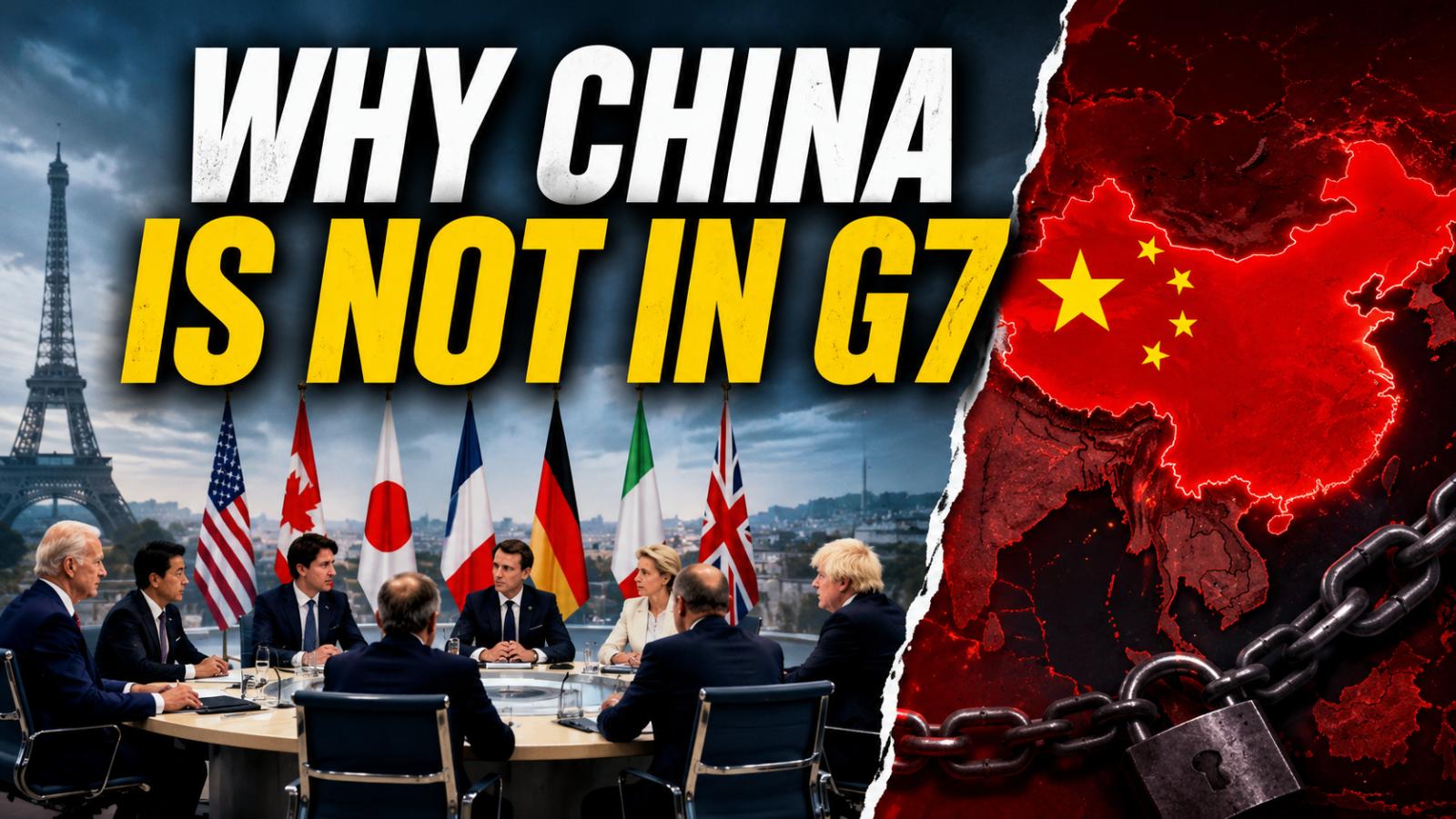
As world leaders prepare for the 2026 G7 Summit in Évian-les-Bains, France, attention has once again turned to a recurring question in global politics: why is China, the world's second-largest economy, not a member of the influential group? While Beijing plays a major role in global trade, manufacturing and international affairs, it remains outside the G7 framework that brings together some of the world's leading industrialized democracies.
How the G7 was formed
The Group of Seven traces its origins to 1975, when six major industrial economies—France, West Germany, Italy, Japan, the United Kingdom and the United States—created an informal forum to coordinate economic policy following the global disruptions caused by the oil crisis. Canada joined the following year, while the European Community, now the European Union, later became a regular participant. Russia was admitted in 1997, creating the G8, but its membership was suspended in 2014 following the annexation of Crimea, returning the bloc to its current G7 structure.
When the group was established, China had not yet emerged as a major economic power. More importantly, the G7 was designed as a coalition of advanced industrial democracies with broadly similar political and economic systems rather than a gathering of the world's largest economies by size alone.
Why China remains outside the group
Although China has become a global economic powerhouse, membership in the G7 is influenced by political principles as well as economic strength. The group consists of nations that share democratic governance models and market-oriented economic frameworks. China's one-party political structure differs significantly from the political systems represented within the G7, making membership unlikely despite its economic influence and international reach.
China's influence on G7 discussions
Even without a seat at the table, China remains central to many G7 discussions. As the world's largest exporter and a key manufacturing hub, China plays a critical role in global supply chains, technology production, clean energy industries and industrial output. Trade policy, economic security, inflation concerns and manufacturing resilience have increasingly focused on Beijing's role in the global economy.
China also influences security discussions involving the Taiwan Strait, the South China Sea, cybersecurity and emerging technologies. In recent years, G7 nations have promoted a strategy of reducing strategic dependencies on Chinese supply chains while maintaining economic engagement. Although China is absent from the G7, its economic power and geopolitical influence continue to shape many of the group's priorities. Meanwhile, Beijing remains a leading member of the G20, a broader forum that includes both advanced and emerging economies and better reflects today's global economic landscape.