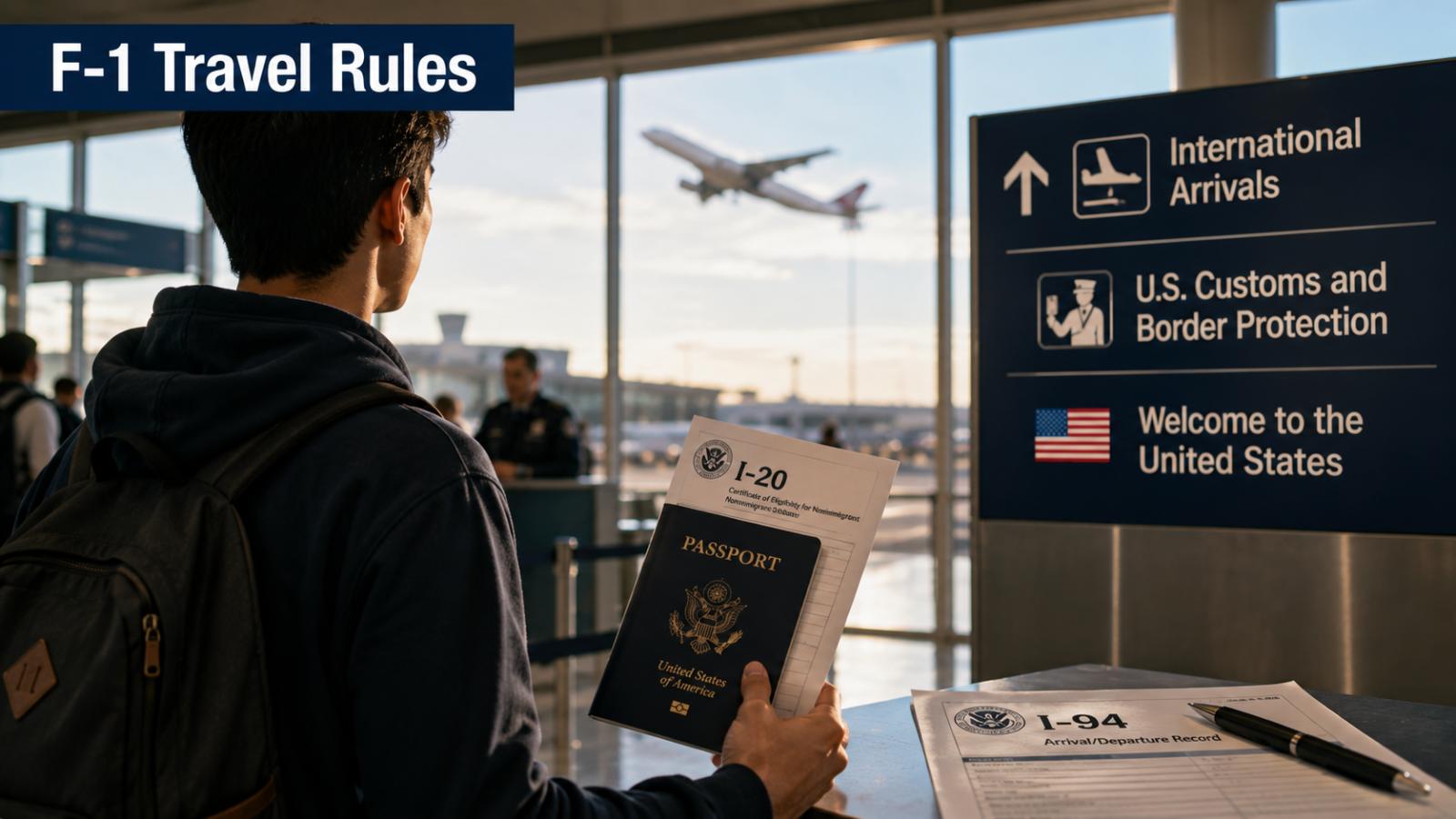
F-1 student travel after September 15, 2026, may lead to a fixed admission period at reentry. Students should check the new Form I-94, understand how travel affects transition protection, and review risks involving OPT, STEM OPT and pending extension applications.
The Department of Homeland Security’s final fixed-stay rule will change what happens when some F-1 students return to the United States after international travel. Published on Friday, July 17, 2026, it takes effect on Tuesday, September 15, 2026.
The travel changes are part of the broader DHS policy replacing duration of status with fixed admission periods. Read how the new DHS F-1 fixed-stay rule changes admission and extension requirements.
Reentry may create a fixed Form I-94 date
F-1 students admitted for duration of status and maintaining valid status in the United States on September 15 receive transition protection. A student who leaves after the rule takes effect and returns before the Form I-20 end date may instead be admitted for a new fixed period.
Students who were already maintaining valid status when the rule took effect should review how the F-1 transition rules protect current students and how travel may affect that protection.
That period will generally follow the Form I-20 program date, subject to the rule’s limits, with 30 additional days for departure. Students should check Form I-94 after every reentry because its date may control how long they can remain.
OPT and STEM OPT travel carries filing risks
Review the New OPT Filing Rules
International travel and reentry may affect whether an OPT or STEM OPT applicant must submit an extension-of-stay request. Review when Form I-539 may be required under the new F-1 OPT rules .
A transition student who leaves before filing for post-completion OPT or a STEM OPT extension and returns with a fixed admission period must file Form I-765 and Form I-539.
Travel while an OPT or STEM OPT application is pending or approved can also result in fixed-period admission. DHS says departure alone does not abandon the employment application, but students must monitor and answer any USCIS request for evidence.
Pending extension applications require care
USCIS generally will not treat a timely extension-of-stay application as abandoned when the prior admission remains valid and the student seeks reentry for its remaining balance.
The result may differ if the student returns using a new Form I-20 extending beyond the earlier authorized stay. The pending extension may then be treated as abandoned, and the new CBP-issued Form I-94 may govern.
Documents students should review
ICE advises continuing students to carry a valid passport, an appropriate visa, a DSO-endorsed Form I-20 and supporting financial records. Travelers with pending Form I-539 or Form I-765 cases should also carry the Form I-797C receipt notice.
A fixed admission date may also change the time available after a program or practical training ends. Read who receives the new 30-day F-1 grace period and who may retain 60 days.
The rule does not prohibit F-1 travel, but reentry can change a student’s immigration timeline. CBP will continue making admission decisions case by case, making document checks before departure and an immediate Form I-94 review after return increasingly important.