US–Israel–Iran War | US sends 2,200 marines and amphibious ships to Middle East as Hormuz tensions grow
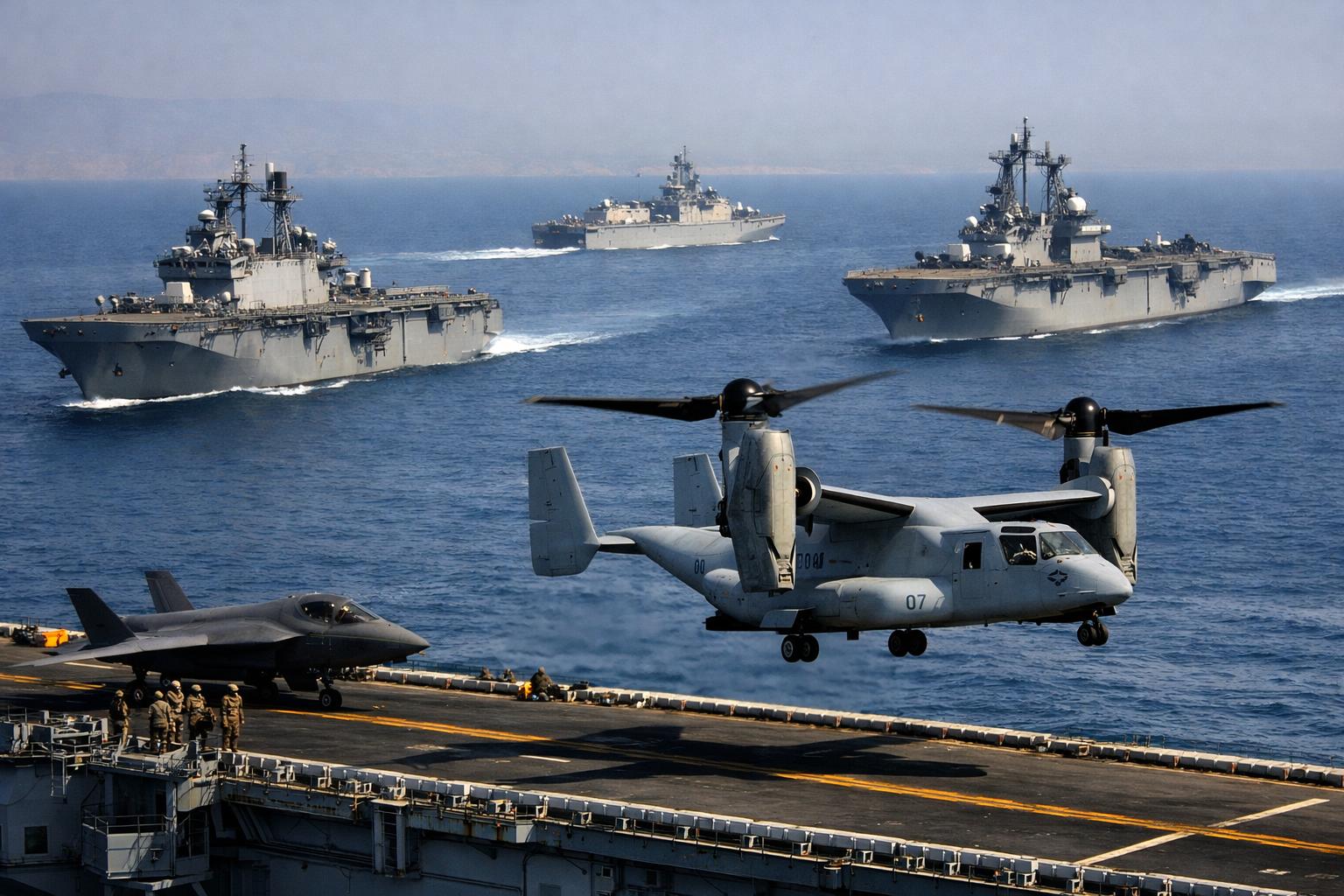
The unit involved in the deployment is the 31st Marine Expeditionary Unit, which is normally based in Japan and typically operates across the Indo-Pacific under the command of United States Indo-Pacific Command. Military officials confirmed that the force has now been redirected from its usual operational zone to move toward the Middle East as part of broader defense planning.
Officials emphasized that the deployment does not necessarily indicate plans for direct ground combat operations in Iran. Instead, the Marine Expeditionary Unit provides a flexible military capability designed to respond to a wide range of potential scenarios. Such units are structured to support crisis response, humanitarian assistance, evacuation missions, and military operations if required.
The 31st Marine Expeditionary Unit also carries advanced aviation assets that enhance its operational reach. Among them are F-35 Lightning II fighter jets and Bell Boeing V-22 Osprey tilt-rotor aircraft, which allow the unit to conduct rapid troop transport, reconnaissance missions, and air support operations. These aircraft provide commanders with versatile tools that can be deployed quickly depending on evolving security conditions.
The move is widely viewed as part of Washington’s effort to strengthen maritime security in response to Iran’s threats to disrupt oil tanker traffic in the Strait of Hormuz. The narrow waterway is one of the most important shipping routes for global oil supplies, and any disruption could have significant economic consequences worldwide.
Defense officials have also approved the deployment of elements from an Amphibious Ready Group to operate alongside the Marine unit. Such groups typically include a large amphibious assault ship, transport dock ships, and additional support vessels carrying Marines, equipment, and aircraft. Together, they provide a mobile force capable of responding rapidly to regional crises.
By increasing its military presence in the area, the United States aims to provide additional security resources for commanders while maintaining readiness in case tensions escalate further in the strategically important Gulf region.