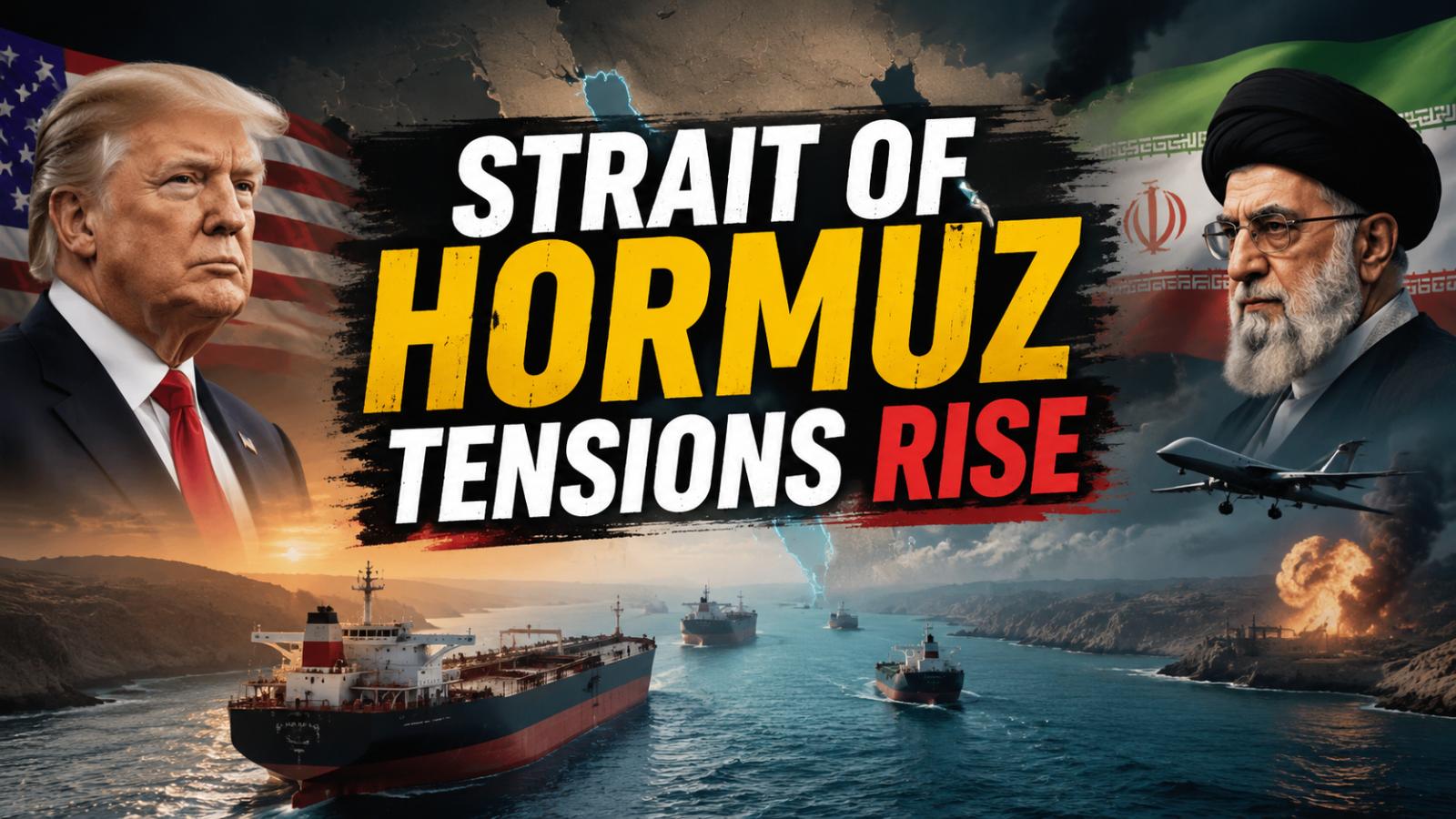
Tensions around the Strait of Hormuz have increased again after a mix of political remarks and renewed security incidents in the Gulf region. The strategic waterway, which carries a significant share of global oil shipments, has once again become a focal point as diplomatic relations between the United States and Iran remain unstable.
Recent political commentary from US circles, including remarks linked to Hunter Biden on social media, has added a new layer to an already sensitive situation. The comments mocked former President Donald Trump’s repeated claims regarding progress in resolving the Iran conflict. While the exchange is largely political, it has fed into a wider debate over US foreign policy credibility in the region.
Why the Strait of Hormuz matters globally
The Strait of Hormuz is one of the most critical energy corridors in the world. Any disruption here directly affects oil transport, insurance costs, and global fuel pricing. Even minor security incidents tend to trigger immediate reactions in energy markets due to the narrow and heavily used shipping lane.
For Gulf economies and global importers alike, stability in this corridor is not optional—it is essential. This is why even unverified reports of attacks or military movement tend to create ripple effects far beyond the region.
Fresh incidents raise shipping concerns
In the latest wave of tension, reports of drone-related attacks targeting commercial vessels have raised concerns among maritime operators. A Singapore-linked vessel reportedly suffered damage, followed by another incident involving a tanker flagged under Panama. While full verification of operational details remains limited, shipping firms have already begun reassessing risk routes and insurance coverage.
These incidents highlight how quickly maritime security in the region can shift, even without full-scale conflict escalation.
Military responses and counter-accusations
Following the reported attacks, US Central Command (CENTCOM) is believed to have carried out targeted operations against suspected infrastructure linked to militant networks along coastal zones. The actions reportedly focused on missile storage and unmanned aerial systems facilities.
Iranian military leadership, including the Islamic Revolutionary Guard Corps (IRGC), has rejected the framing of responsibility and accused the United States of escalating tensions rather than stabilizing them. The exchange of blame has further complicated already fragile diplomatic communication channels.
What this means for global trade stability
The key concern now is whether the Strait of Hormuz can continue functioning without disruption. Even short-term instability can affect global oil prices, shipping insurance premiums, and supply chain confidence.
Markets are watching closely, but the situation remains fluid. With political statements increasing and maritime incidents continuing to surface, the region remains in a low-level but persistent state of uncertainty that could escalate if not contained.