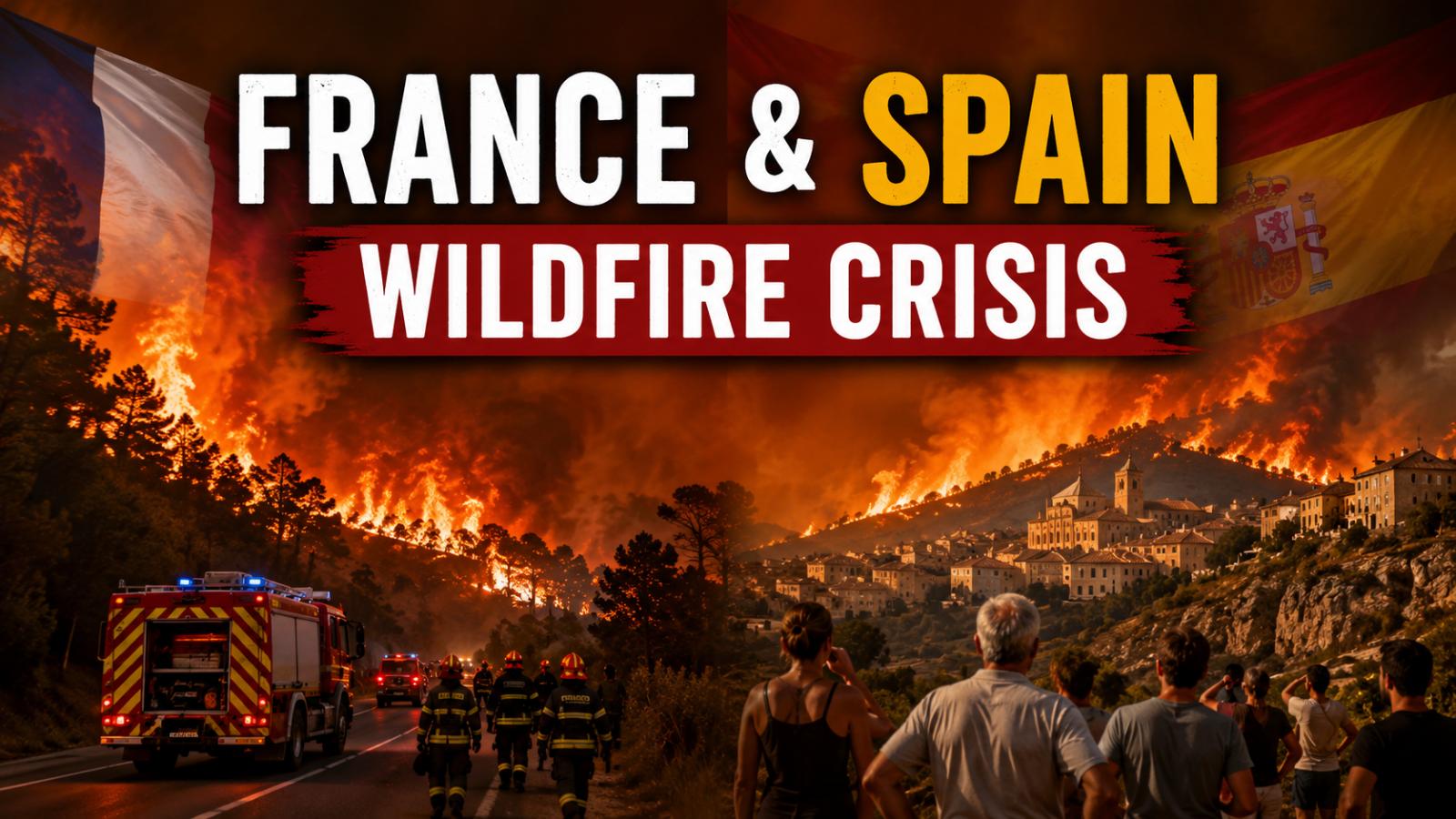
The France and Spain wildfire crisis has forced hundreds of thousands of people to leave threatened communities as Gironde fires advance near Bordeaux and Spain fires affect Madrid, Ávila and Valencia. Emergency crews and EU aircraft are supporting large-scale rescue operations.
Gironde fires threaten Bordeaux communities
Wildfires continued burning across France and Spain on Monday, July 27, disrupting daily life, transport and peak-season tourism. Authorities have evacuated more than 300,000 people across the two countries as dry vegetation, strong winds and extreme temperatures fuel unpredictable fire fronts.
France has recorded nearly 98,000 hectares of burned land this year, according to figures cited by Interior Minister Laurent Nunez. The most dangerous fires remain concentrated in the southwestern departments of Gironde and Landes, where dozens of blazes have burned at the same time.
More than 220,000 people were evacuated from Gironde as flames moved through forests and communities near Bordeaux. Authorities ordered residents and tourists to leave the Cap Ferret peninsula, while some people escaped by boat after roads became unsafe. Further evacuation orders affected communities in Bordeaux’s western suburbs.
Nunez described conditions as highly unfavorable and warned that the fire had become violent and unpredictable while advancing toward the Bordeaux metropolitan area. France also closed a section of the A63 motorway linking Bordeaux with the Spanish border.
France deploys firefighters and military teams
France mobilized thousands of firefighters, military personnel and police officers for fire control, evacuations and public safety operations. Aircraft have dropped water and fire retardant over difficult terrain as ground crews worked to defend homes, roads and essential infrastructure.
The crisis has already caused serious losses. Buildings and homes have been destroyed, while two French firefighters reportedly died during operations near Bordeaux. Officials have also restricted access to high-risk forest areas and urged residents to follow evacuation instructions without delay.
The French government activated the EU Civil Protection Mechanism to request international assistance. The European Commission had already deployed firefighting aircraft and specialist teams to support France and other affected countries during July.
Spain fires trigger national emergency
Spain is facing another major front in the France and Spain wildfire crisis. Fires near Madrid and in Ávila, Toledo, Castellón and Valencia have forced tens of thousands of residents to evacuate, while many others have been told to remain indoors because of thick smoke.
Around 152,000 hectares have reportedly burned across Spain this year. Fires west of Madrid and in Ávila have caused extensive damage, with merging fire fronts overwhelming local resources during the most dangerous periods.
Spanish authorities declared a national emergency and deployed military emergency units to assist regional firefighters. Madrid regional president Isabel Díaz Ayuso described the fires as the worst experienced by the region, citing high temperatures, powerful winds and several blazes joining together.
Prime Minister Pedro Sánchez said protecting lives remained the government’s main priority and warned that difficult conditions could continue. At least two deaths have been reported in fire-affected areas of eastern Spain.
EU aid supports wildfire response
The European Union has coordinated aircraft, vehicles and firefighting personnel through its emergency response system. The EU prepared its largest wildfire deployment for the 2026 summer, including 777 pre-positioned firefighters, 22 aircraft and five helicopters available for countries facing severe pressure.
The fires have also affected travel, road access, local businesses and tourism communities during one of Europe’s busiest holiday periods. Authorities continue to assess damaged homes, forests and infrastructure while warning that shifting winds could quickly change evacuation zones.
Official figures may continue to rise as crews map burned areas and new incidents emerge. Residents and travelers should rely on national civil protection agencies, regional emergency services and local evacuation notices for the latest safety instructions.