India Secures Passage for Two Gas Tankers Through Hormuz Strait, Jaishankar Highlights Diplomatic Success
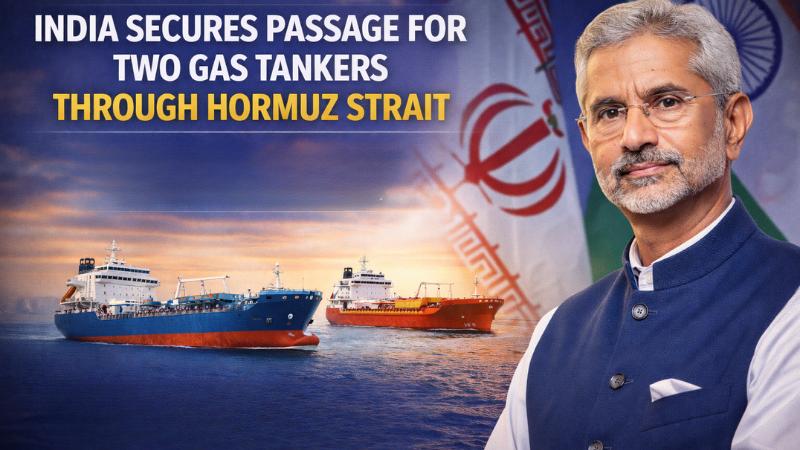
In a significant diplomatic development, External Affairs Minister S. Jaishankarhighlighted India's successful engagement with Iranthat allowed two Indian-flagged gas carriers, Shivalikand Nanda Devi, to pass through the Strait of Hormuzamidst ongoing regional tensions. The Strait of Hormuz, a critical maritime passage connecting the Persian Gulf to the Arabian Sea, has been at the center of geopolitical issues due to military strikes between Iran, the US, and Israel.
On March 14, 2026, the two gas carriers, carrying approximately 92,712 metric tonnes of LPG, safely crossed the Strait while heading toward India. The passage is considered a major breakthrough as the Strait has been partially closed due to Iran's military operations, which had raised global concerns about energy security. The safe passage of these vessels showcases the results of India’s ongoing diplomatic efforts with Iran, as Jaishankarnoted that such engagements "yielded results."
Since Iran shut the Strait of Hormuz in response to the ongoing tensions with the US and Israel, Jaishankarand his Iranian counterpart, Abbas Araghchi, have held several discussions to ensure continued maritime access for Indian vessels. Jaishankarstressed that this was not part of a broader "exchange deal" but a testament to the longstanding India-Iran relationship. He clarified that there was no "blanket arrangement" for all Indian ships, but the diplomatic channels were critical in facilitating this passage. India’s move is seen as an attempt to ensure uninterrupted LPG supplies, crucial for households and industries across the country.
Despite the success with Shivalikand Nanda Devi, Jaishankarmentioned that this is just the beginning, with more ships to follow. He emphasized the continued dialogue between the two nations, aiming to secure more access for Indian vessels. Jaishankar further noted that India’s approach to engaging Iran might not be replicated by other countries, as each country’s relationship with Tehran is unique and built on its own merits.
The Strait of Hormuzis critical for global energy supplies, with nearly 20% of the world's oil shipments passing through this narrow waterway. Any disruptions in this vital route can significantly impact energy prices, a concern for countries like Indiaand China, which heavily depend on oil and gas supplies from the Middle East.
The closure of the Strait has already begun to affect India’s energy market, which is the world’s fourth-largest importer of LNG and the second-largest importer of LPG. While the Indian governmenthas assured that there is no shortage of LPG cylinders, industries dependent on gas, such as ceramics and food processing, are beginning to experience LPG shortages, raising concerns about potential production slowdowns.
As Jaishankarindicated, India’s diplomatic engagement with Iran is crucial in ensuring the country’s energy needs are met, even amidst a tense geopolitical climate. The safe passage of these tankers through the Strait of Hormuzis just one example of how diplomacy can play a role in maintaining stability in the region and securing critical energy supplies.