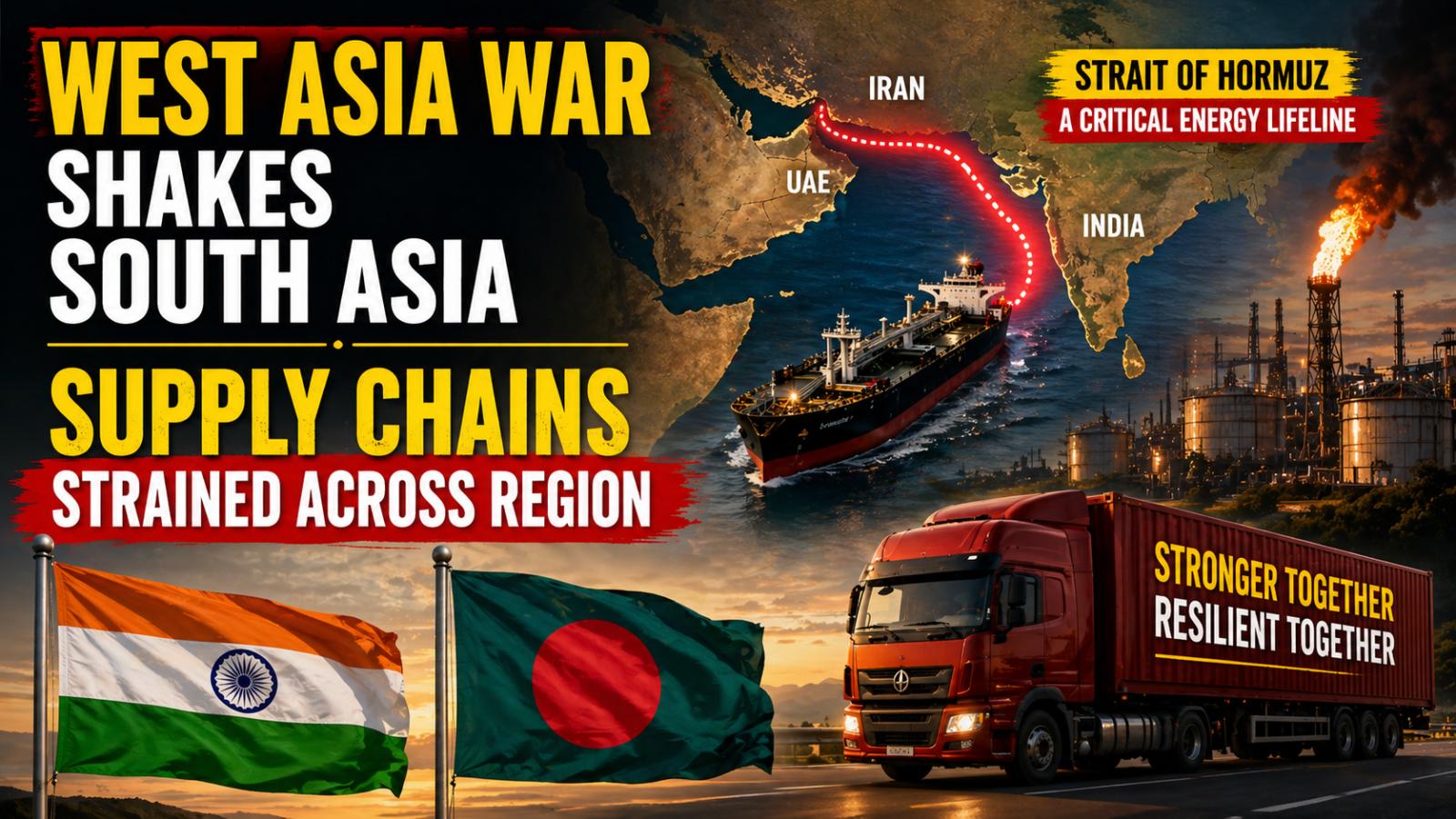
The war in West Asia and disruptions in the Strait of Hormuz have triggered widespread supply chain instability across South Asia, affecting energy security, economic stability, and regional cooperation. Countries across the subcontinent, heavily reliant on hydrocarbon imports from West Asia, are facing rising costs, reduced industrial competitiveness, and increased household expenditures as critical supply routes remain constrained.
Fuel shortages and economic strain across South Asia
The Strait of Hormuz, a vital global energy corridor, has become a bottleneck amid the conflict, severely impacting fuel availability in South Asia. Sri Lanka has reintroduced its National Fuel Authorization System to ration limited supplies, while Pakistan is grappling with fertilizer shortages during the kharif agricultural season, raising concerns about food security. Landlocked nations such as Nepal and Bhutan, dependent on India for fuel imports, are experiencing secondary vulnerabilities as supply disruptions ripple across borders.
Bangladesh faces shortages amid global supply shocks
Bangladesh has also been significantly affected, with disruptions tied to major suppliers including Qatar, Iraq, and the United Arab Emirates after reported attacks on energy infrastructure. In response to panic buying and stockpiling, authorities introduced rationing measures in March. India has stepped in to stabilize supplies, delivering 5,000 tonnes of diesel through the Indo-Bangladesh Friendship Pipeline, followed by another 5,000 tonnes on Thursday, April 10, 2026. Additional imports totaling 17,000 tonnes are planned to ease domestic concerns.
India expands regional energy support efforts
Beyond Bangladesh, India has supplied approximately 38,000 metric tonnes of oil products to Sri Lanka and maintained uninterrupted deliveries to Nepal and Bhutan. Similar support requests from the Maldives are under consideration. These efforts highlight India’s expanding role as a regional energy stabilizer during the ongoing crisis, particularly as global supply chains remain volatile.
Shifting dynamics in India-Bangladesh relations
The crisis has coincided with a shift in India-Bangladesh relations following political changes in Dhaka after 2024. Previously anchored in close leadership ties under Sheikh Hasina, bilateral relations cooled amid rising tensions, trade restrictions, and diplomatic disagreements. However, recent cooperation in energy supply suggests a pragmatic recalibration driven by shared economic necessity and geographic proximity.
Strategic cooperation and future outlook
Both nations are now focusing on strengthening institutional and functional cooperation, particularly in areas such as river water sharing, trade facilitation, and energy collaboration. The upcoming renewal of the Ganga Waters Treaty in 2026 presents an opportunity to modernize agreements with climate-responsive frameworks. Meanwhile, reopening land ports and improving trade infrastructure could provide immediate relief to disrupted supply chains.
The ongoing crisis underscores the importance of regional interdependence. By prioritizing practical cooperation in energy and trade, India and Bangladesh may not only stabilize their economies but also build a more resilient and predictable bilateral relationship amid broader geopolitical uncertainty.