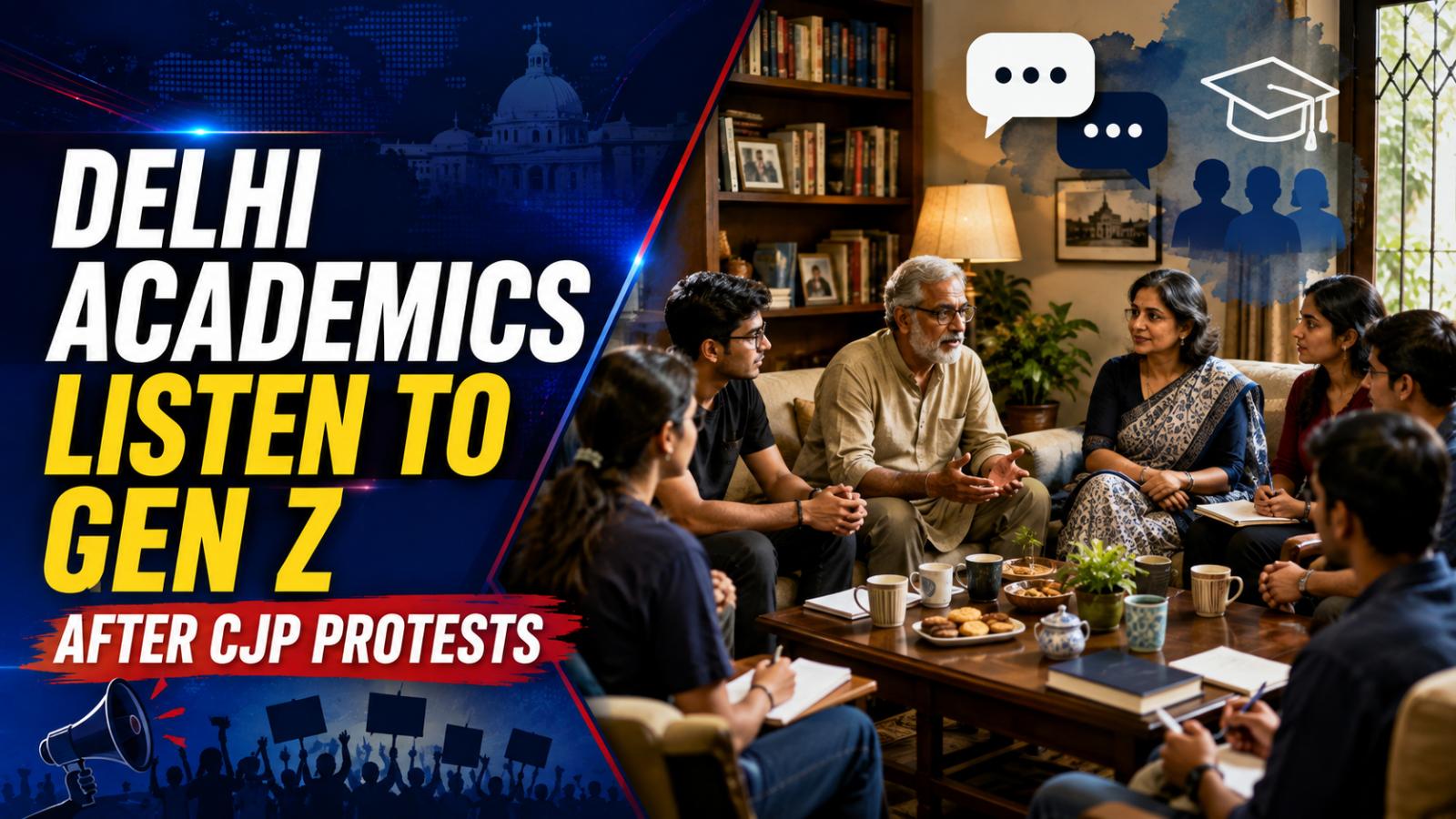
A group of leading Delhi academics welcomed Gen Z students into their homes for informal conversations following the recent CJP protests. The initiative focused on understanding student perspectives, youth activism, academic pressures, and future ambitions through open and respectful dialogue.
In a unique effort to connect with young people beyond classrooms and lecture halls, several prominent academics and civil society members across Delhi-NCR opened their homes to Gen Z students for informal discussions. The initiative came in the aftermath of the recent CJP protests and aimed to better understand the concerns, aspirations, and viewpoints of today's youth.
Rather than delivering speeches or conducting formal sessions, the hosts chose a different approach—listening. Over tea and home-cooked meals, students and academics exchanged ideas on issues ranging from education and campus life to social change and career ambitions.
Delhi Academics Gen Z Discussions Create Space for Meaningful Exchange
The programme was organized by the Academic Dialogue Forum and transformed private homes into welcoming spaces for thoughtful conversation. Students registered online and selected the academic or public intellectual they wished to meet, ensuring a more personalized experience.
The discussions were hosted at 12 locations across Delhi-NCR by respected scholars, writers, scientists, and social activists. Participants included historians, educators, researchers, and community leaders who wanted to hear directly from students about the challenges they face in today's rapidly changing world.
Unlike traditional academic events, these gatherings encouraged free-flowing conversations. Students spoke openly about academic pressure, campus politics, social media influence, career uncertainty, and the growing role of youth in public life.
Youth Voices, Campus Issues, and Future Aspirations
A key theme that emerged from the discussions was the desire among young people to be heard. Many students shared their experiences navigating higher education, balancing personal goals, and responding to social and political developments.
The conversations also highlighted how Gen Z approaches activism differently from previous generations. Participants discussed issues such as educational reforms, social responsibility, mental well-being, and opportunities for meaningful civic engagement.
For many students, the informal setting made it easier to express their views honestly. The absence of a formal agenda encouraged genuine dialogue and helped build mutual understanding between generations.
Why Intergenerational Dialogue Matters
Organizers believe that initiatives like this can help bridge the gap between students and established academic communities. By creating opportunities for face-to-face conversations, both sides gain valuable insights into the experiences, expectations, and challenges shaping modern society.
As discussions around youth participation, education, and social change continue to grow, such community-driven efforts demonstrate the importance of listening as much as teaching. The Delhi initiative serves as a reminder that meaningful dialogue can often begin with something as simple as an open door, a shared meal, and a willingness to understand one another.