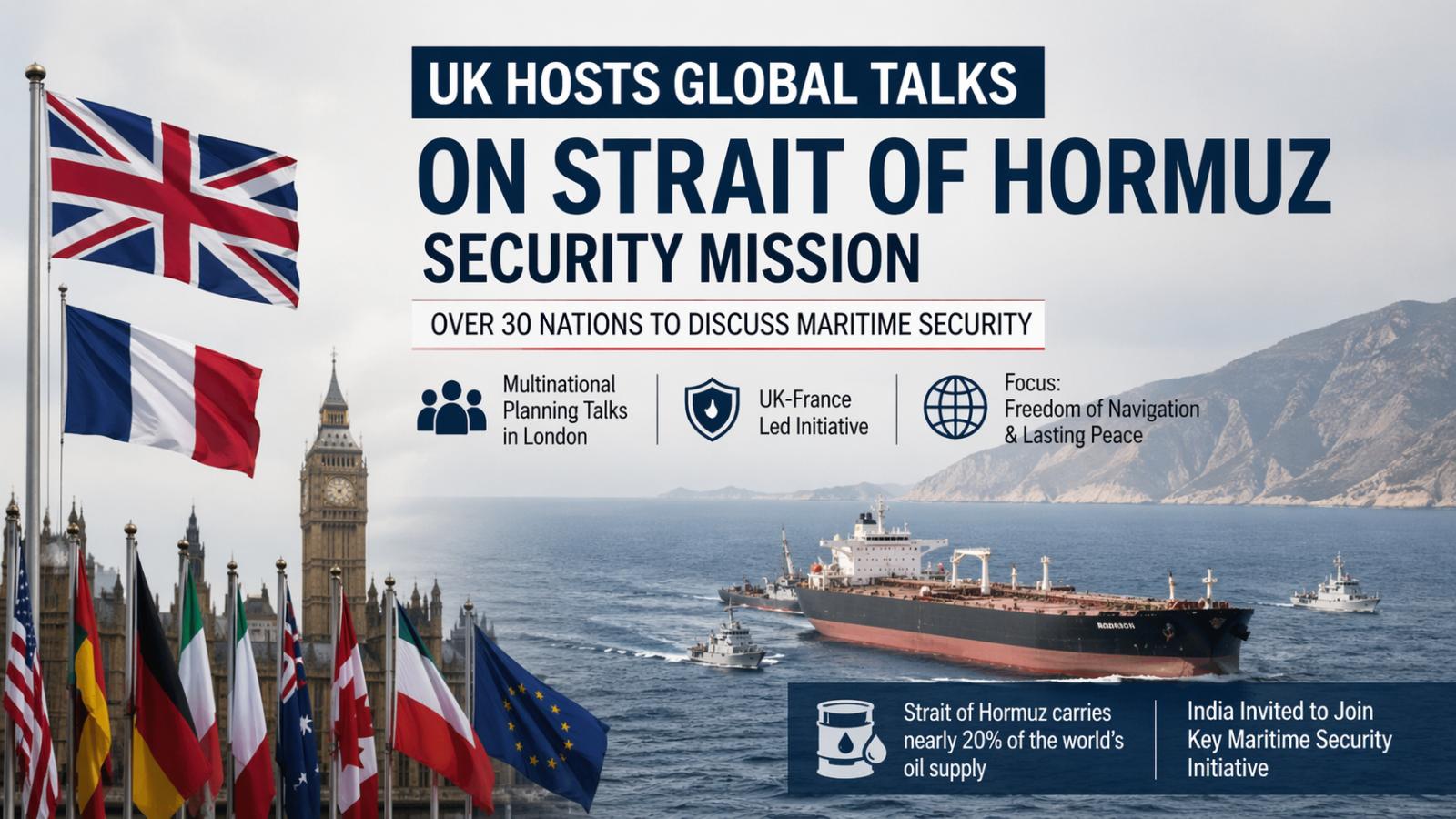
Britain is hosting senior military planners from more than 30 countries at the UK Permanent Joint Headquarters for high-level discussions on securing the Strait of Hormuz, a critical global oil transit route. The two-day meeting in northwest London, being held from April 22 to April 23, 2026, aims to advance a multinational maritime security initiative jointly led by the United Kingdom and France, following earlier consultations involving over 40 nations chaired by Keir Starmer and Emmanuel Macron in Paris.
The talks come amid heightened tensions in the Persian Gulf, where the United States and Iran have agreed to extend a temporary ceasefire even as broader diplomatic efforts continue. Despite this extension, Donald Trump confirmed that a naval blockade on Iranian ports will remain in place, further complicating the fragile situation. Iran has responded by reinstating strict control over the Strait, reversing a brief reopening and warning that navigation will remain restricted until full maritime access to its ports is restored.
The Strait of Hormuz, which carries nearly a fifth of global oil shipments, has become a focal point of the conflict that escalated in late February. The intermittent closures and renewed restrictions have already driven global oil prices above $100 per barrel, intensifying economic pressure on energy-importing nations, particularly across Asia.
UK Defence Secretary John Healey stated that the objective of the London meeting is to transform diplomatic consensus into a coordinated operational plan that ensures freedom of navigation and supports a durable ceasefire. Both Britain and France have emphasized that the proposed multinational force would be defensive in nature and deployed only after a stable peace agreement is achieved.
India has been invited to join the initiative, reflecting its strategic interest in maintaining secure energy supply routes. External Affairs Ministry spokesperson Randhir Jaiswal confirmed the invitation, noting that New Delhi would clarify its position after assessing the outcomes of the discussions. With over 88 percent of its energy needs dependent on imports, India’s potential participation could play a significant role in shaping the mission’s effectiveness and broader regional stability.