A series of drone attacks targeting the United Arab Emirates’ critical energy infrastructure has intensified concerns over prolonged supply disruptions as regional tensions linked to the Iran conflict continue to escalate. The incidents have struck key oil and gas facilities, disrupted shipping routes, and heightened volatility in global energy markets.
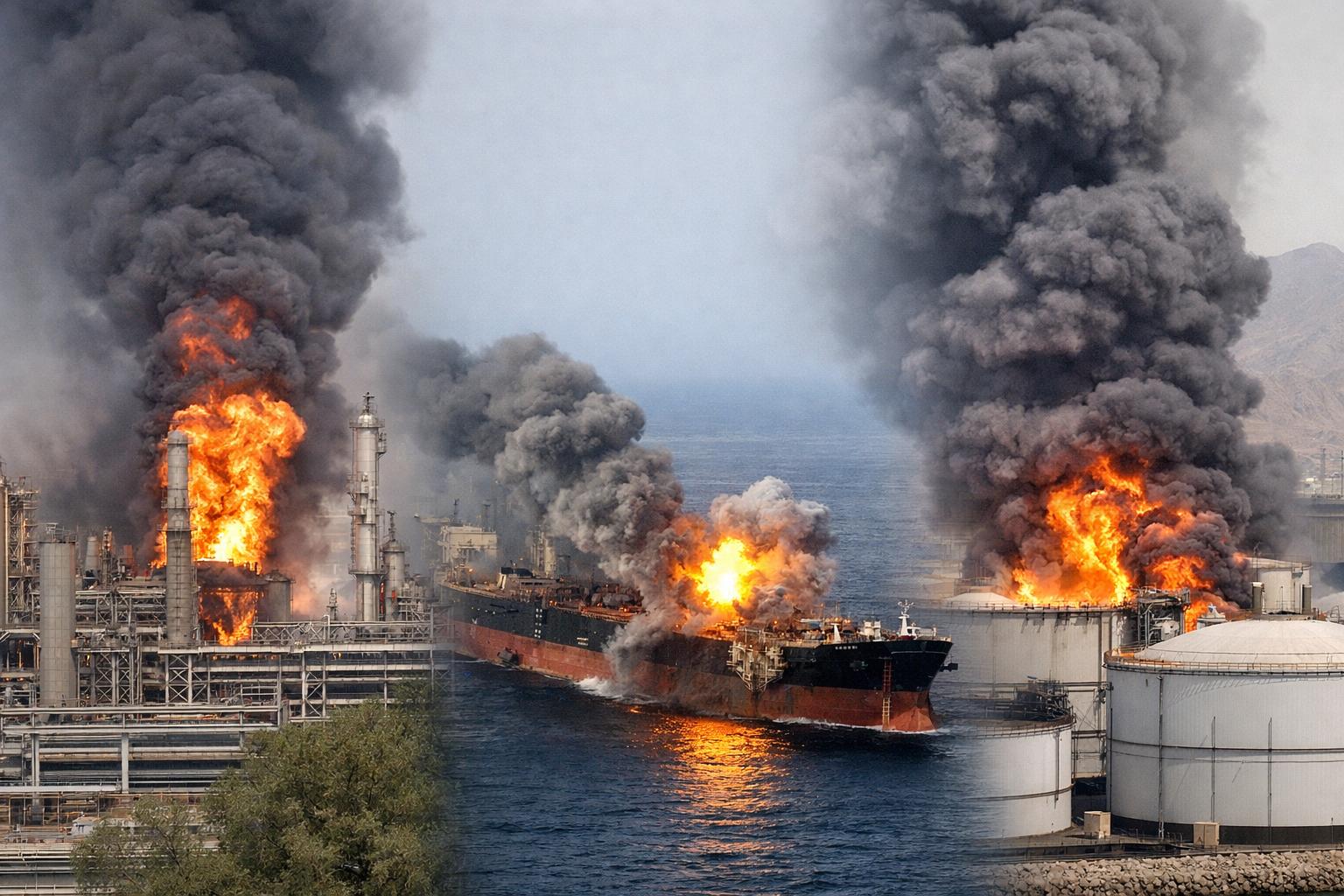
Operations at the Shah gas field, one of the world’s largest ultra-sour gas developments, remained suspended after a drone strike triggered a fire at the site. Authorities confirmed there were no injuries, but the halt in production underscores the vulnerability of major energy assets. The facility, located southwest of Abu Dhabi, plays a vital role in gas output and sulfur production through a joint venture involving ADNOC and international partners.
In a separate incident, a fire broke out at the Fujairah Oil Industry Zone following another drone attack. The strategically significant hub is central to the UAE’s crude storage and export operations and serves as a key bunkering point for global shipping. While no casualties were reported, repeated attacks in recent weeks have raised alarm over the security of the UAE’s primary export route that bypasses the Strait of Hormuz.
Shipping activity through the Strait of Hormuz has slowed dramatically amid ongoing hostilities, with multiple vessels targeted in the surrounding waters. A tanker near Fujairah also sustained minor damage after being struck by an unidentified projectile, adding to growing concerns about maritime safety in the region.
The disruption has had a direct impact on global oil markets. Crude prices surged, with benchmark Brent rising above $100 per barrel for the first time in years, reflecting fears of constrained supply. Analysts warn that continued instability could push prices significantly higher if attacks persist and shipping lanes remain compromised.