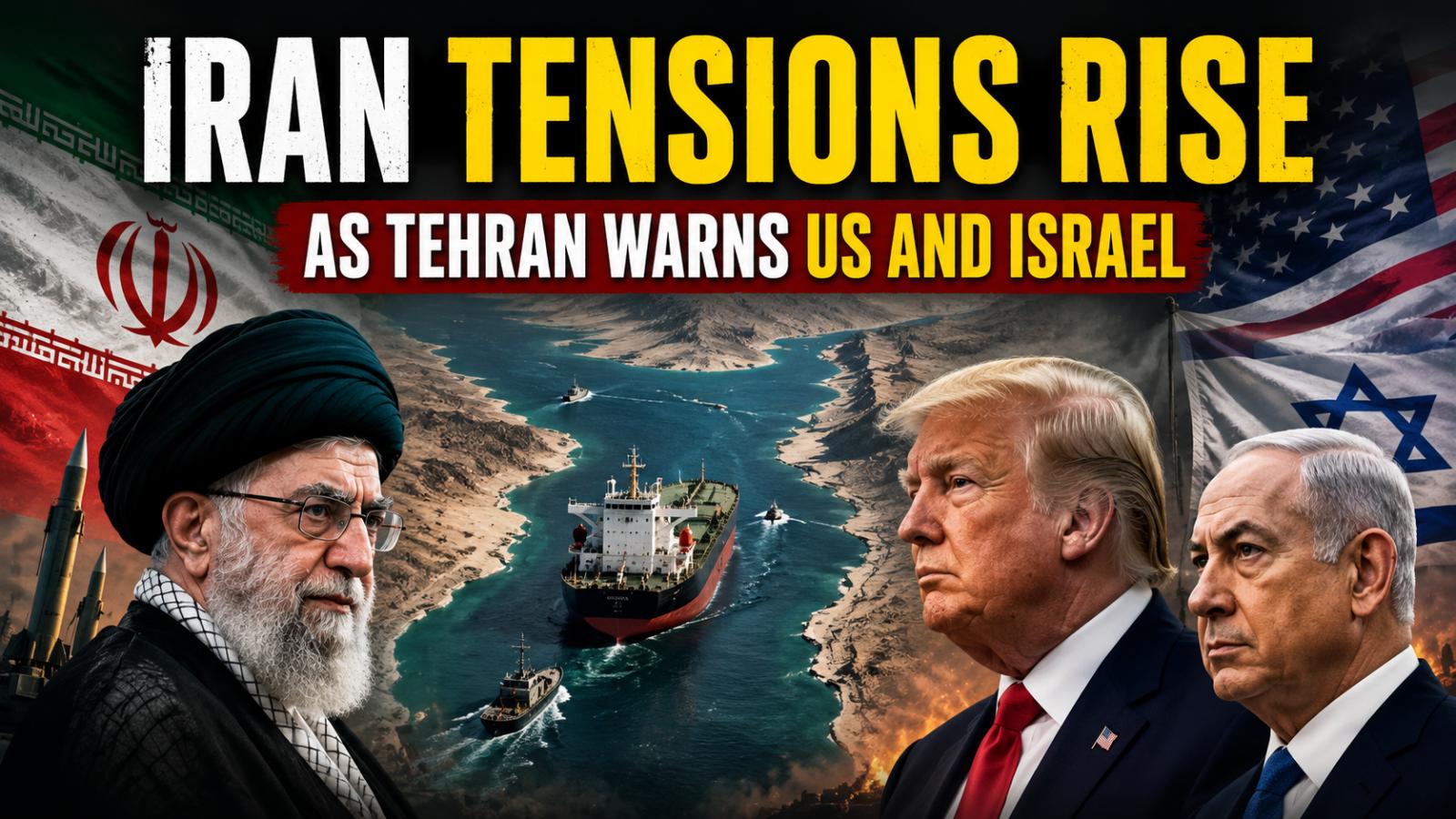
Iran tensions are rising as senior officials warn of retaliation against Israel and the United States while Foreign Minister Abbas Araghchi prepares for Oman talks focused on the Strait of Hormuz. Tehran is pairing military warnings with renewed Gulf diplomacy.
IRGC warning intensifies retaliation message
A day after former Supreme Leader Ali Khamenei was buried, IRGC commander-in-chief Ahmad Vahidi said Iran would continue seeking punishment for those responsible for the deaths of Khamenei and senior military commanders. Iranian reports said the demand extended to those who carried out, ordered or supported the killings.
Vahidi described accountability as a lasting national demand. His statement strengthens the retaliation message from Iran’s military establishment and signals that Tehran does not consider the deaths a closed chapter.
Strait of Hormuz dominates Oman talks
Iranian Foreign Minister Abbas Araghchi is expected to travel to Oman with a diplomatic delegation for discussions on regional developments, particularly the Strait of Hormuz. Iran’s state-run IRNA reported the visit but did not identify the officials he would meet or publish a detailed agenda.
The trip gives Tehran a diplomatic channel while security around the waterway remains a major regional concern. The Strait of Hormuz carries large volumes of international energy shipments, so military escalation, shipping disruption or disputes over its administration could have wider economic effects.
Araghchi recently discussed developments in the Strait of Hormuz with Omani Foreign Minister Badr Albusaidi. According to IRNA, the ministers stressed the need for continued diplomatic communication and coordination aimed at reducing regional tensions.
Ghalibaf warns US over memorandum
Parliament Speaker Mohammad Bagher Ghalibaf warned that Iran would respond if the United States failed to honour its understanding with Tehran. During a meeting with Indonesian People’s Consultative Assembly Speaker Ahmad Muzani, he said Iran did not trust Washington and argued that only negotiators prepared for war could deal with the United States.
Ghalibaf said Iran had maintained its defence readiness throughout the diplomatic process. He also claimed that the United States, Israel and NATO had failed to force Tehran into surrender during the recent conflict.
His remarks show that Iranian officials view negotiations as part of a broader security contest rather than a replacement for military preparedness. Tehran appears determined to link future diplomatic progress to compliance with the existing memorandum and guarantees against renewed attacks.
Tehran balances pressure with diplomacy
The latest Iran tensions reveal a dual strategy. Military and political leaders are using hardline language to preserve deterrence and reassure domestic supporters, while the Foreign Ministry continues regional engagement through Oman. That combination lets Tehran signal that diplomacy remains possible without appearing to retreat under pressure.
The immediate risk is that fresh threats, disputed commitments or another incident in the Strait of Hormuz could narrow the space for talks. For now, Iran is negotiating while keeping retaliation against Israel and the US central to its public message.
Relevant internal links could include the Middle East news category, previous Iran-US relations articles, Strait of Hormuz updates, Israel-Iran conflict coverage and Oman country news.