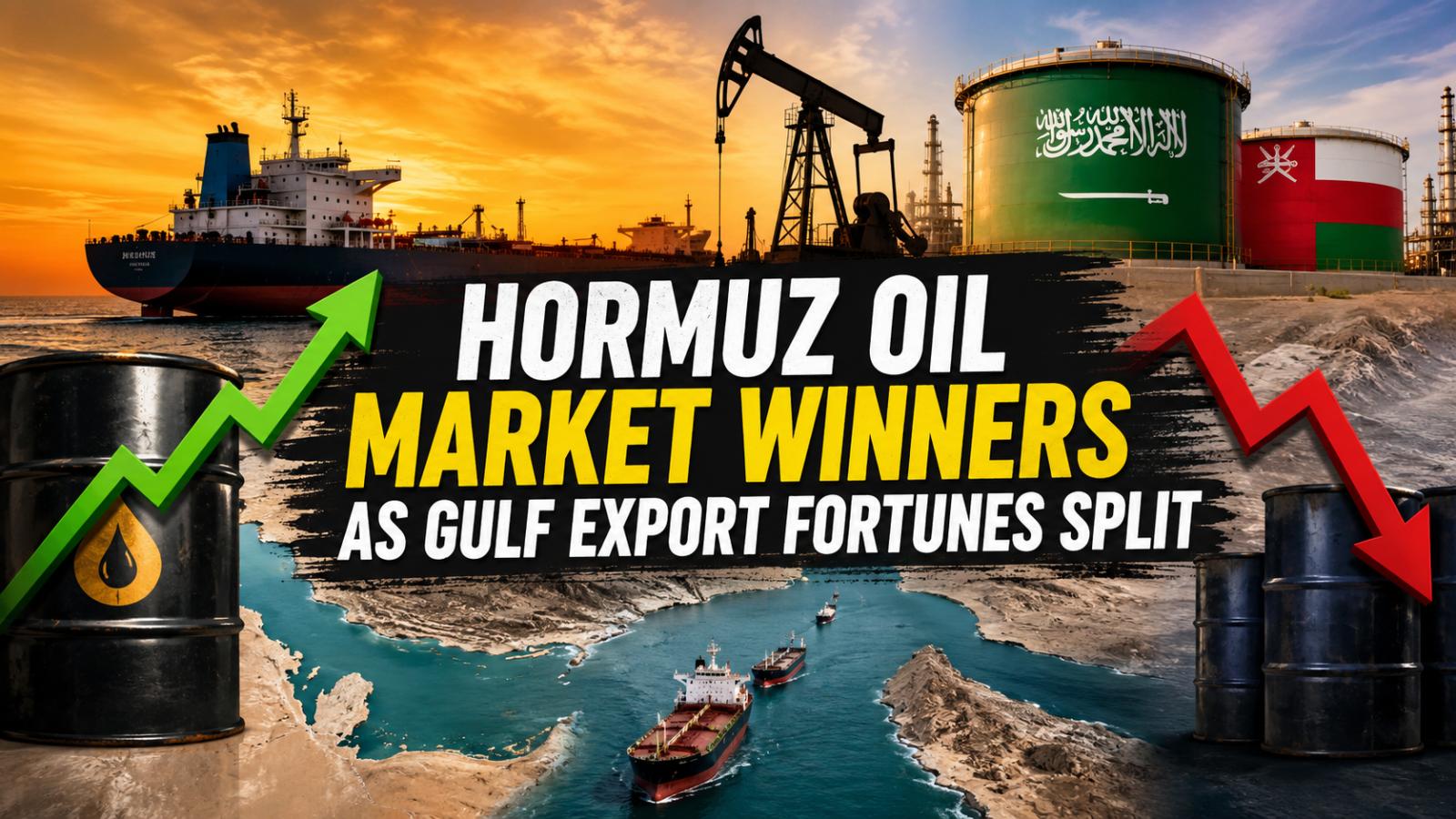
The disruption around the Strait of Hormuz has created sharply different outcomes across the global oil market. Saudi Arabia and Oman have benefited from higher prices and alternative export access, while Iraq, Kuwait and other Gulf producers remain constrained by geography. Refiners and non-Gulf exporters have also gained from changing crude and fuel prices.
Saudi Route Creates an Export Advantage
Saudi Arabia entered the crisis with an advantage that several neighbouring producers lack: a major pipeline connecting its eastern oil fields to the Red Sea coast. The East-West pipeline allows Saudi crude to reach the port of Yanbu without passing through the Strait of Hormuz.
The route cannot remove every logistical risk, especially when instability also threatens Red Sea shipping. However, it gives Saudi Arabia more flexibility than producers whose export terminals remain inside the Persian Gulf.
Saudi Arabia has considered expanding the pipeline by another one million to two million barrels per day, although such a project would require years of construction and billions of dollars in investment. Current bypass infrastructure has already helped the kingdom protect a portion of its export business during the disruption.
Gulf Losses Reveal Geographic Weakness
The Hormuz blockade exposed the vulnerability of Iraq, Kuwait, Qatar and Bahrain. These producers depend heavily on tankers moving through the narrow waterway and have limited immediate alternatives when traffic is interrupted.
An analysis of March export data estimated that Iraq and Kuwait suffered oil-revenue declines of roughly three-quarters compared with the previous year. Saudi Arabia’s estimated revenue rose by 4.3%, while Oman recorded a 26% increase. The UAE experienced a smaller decline of about 2.6% because higher prices only partly compensated for reduced export volumes.
This shows why an increase in Brent crude does not automatically benefit every producer. Countries earn more only when they can continue delivering enough oil to customers. A higher market price offers little protection when tankers cannot leave export terminals.
Refiner Gains Could Prove Temporary
Oil refiners have emerged as another group of Hormuz oil market winners. Following the partial reopening of shipping routes, previously stranded crude returned to the market and temporarily increased supply. At the same time, gasoline and diesel inventories remained tight.
This created an unusual combination: refiners could purchase discounted crude while selling finished fuels at elevated prices. The benchmark US refining margin moved above $60 per barrel during early July, reaching levels rarely seen outside major energy crises.
These profits are unlikely to last indefinitely. As excess crude is absorbed and fuel supply adjusts, the difference between crude costs and product prices should narrow. Refiners therefore face a temporary opportunity rather than a permanent change in profitability.
US and Russian Exporters Gain
Oil exporters outside the Persian Gulf have also benefited because they can deliver crude without relying on the Strait of Hormuz. Buyers seeking secure supplies have turned toward producers in the United States, Russia and other regions.
The International Energy Agency reported that Russian crude and petroleum-product export revenue rose from about $9.7 billion in February to approximately $19 billion in March. Russian export volumes also increased as global buyers searched for replacement supplies during the disruption.
US exporters gained similar strategic importance as Gulf shipments declined. However, higher oil and gasoline prices also increased inflation pressure on American households and businesses. The United States can benefit as an exporter while still facing higher domestic transport and manufacturing costs.
Oil Power Shifts Beyond Hormuz
The Hormuz crisis is changing more than daily oil prices. It is rewarding countries with diversified pipelines, ports and overseas export options while penalising producers that depend on a single maritime chokepoint.
Saudi Arabia’s infrastructure strengthens its position relative to several Gulf competitors, but its advantage is not absolute. Continued instability near the Red Sea could threaten the Yanbu route, while expanding pipeline capacity will require substantial time and capital.
The larger lesson is clear: oil reserves alone do not determine energy power. Export flexibility, refining capacity, storage, shipping access and political stability increasingly decide who profits during a supply crisis. Hormuz has turned infrastructure into a strategic asset and geography into a measurable financial risk.