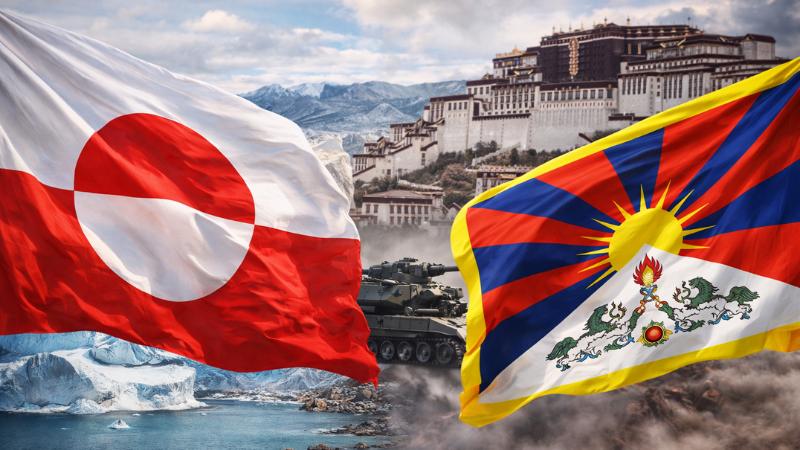
In the history of the post-Second World War era, Tibet stands as one of the most profound and painful examples of what can happen when a civilisation places its faith entirely in peace. For centuries, Tibet sought to build its identity not through conquest or military power, but through spiritual authority, discipline, and restraint. It believed that moral strength and inner balance could serve as a shield against external threats. That belief, however, proved tragically misplaced in a world where power is often measured by force rather than principle.
Some societies construct their greatness through expansion, dominance, and the readiness to impose their will on others. Their sense of destiny is tied to banners, armies, and territorial control. Tibet represented a stark alternative to this model. It attempted to demonstrate that the highest form of power was the ability to restrain power itself. Yet when confronted by a more aggressive force, Tibet discovered that moral authority could not compensate for the absence of military strength. Its tragedy was not its devotion to peace, but its trust that peace alone would protect it.
Today, a similar question is being asked far from the Himalayas. Greenland, the world’s largest island, has long lived on the fringes of global power politics. With a population of just over 57,000 people spread thinly along its coastline, it has never aspired to be a major power player. Its society has valued cooperation, stability, and peaceful coexistence, even as it remained part of a larger political structure that ruled it for generations. That preference for peace is now being tested by rapidly changing global realities.
Greenland’s leaders have openly acknowledged the imbalance that defines their position. The island is vast, resource-rich, and strategically located, yet its population is small enough to fit into a single large stadium. This contrast has increasingly attracted outside attention. Powerful nations are beginning to question why such a small population should control such an expansive and strategically valuable territory, revealing a mindset where land and resources are weighed more heavily than the wishes of the people who live there.
Until recently, few in Greenland anticipated becoming the focus of intense international competition. Yet shifting geopolitical priorities and growing rivalries among major powers have transformed the Arctic into a strategic arena. Greenland’s location has elevated its importance in global security calculations, pulling it into disputes it neither sought nor welcomed. The island’s future is increasingly discussed in terms of strategic necessity rather than self-determination.
The choices now being implied for Greenland are deeply unsettling. The narrative being imposed from outside suggests that its fate must be decided by stronger powers, whether through political bargaining or outright acquisition. The argument is framed as inevitability: if one power does not assert control, another will. In such logic, the voices and rights of Greenland’s people risk being sidelined in favor of broader strategic interests.
This pattern closely resembles the historical forces that shaped Tibet’s fate. Peaceful societies that lack the means to defend themselves often become objects in global power struggles rather than participants in them. Their cultures, values, and claims to autonomy struggle to withstand arguments rooted in security, dominance, and control. Once a land is viewed primarily as a strategic asset, its people can be reduced to a secondary consideration.
Greenland’s situation forces the world to confront uncomfortable questions. Does a commitment to peace invite aggression in an international system driven by power? Can small and peaceful societies preserve their sovereignty when global competition intensifies around them? Tibet’s experience offers a stark warning. Whether Greenland can avoid a similar outcome will depend not only on its own resolve, but on whether the global community is willing to respect the rights and dignity of nations that choose peace in a world increasingly shaped by force.
Some societies construct their greatness through expansion, dominance, and the readiness to impose their will on others. Their sense of destiny is tied to banners, armies, and territorial control. Tibet represented a stark alternative to this model. It attempted to demonstrate that the highest form of power was the ability to restrain power itself. Yet when confronted by a more aggressive force, Tibet discovered that moral authority could not compensate for the absence of military strength. Its tragedy was not its devotion to peace, but its trust that peace alone would protect it.
Today, a similar question is being asked far from the Himalayas. Greenland, the world’s largest island, has long lived on the fringes of global power politics. With a population of just over 57,000 people spread thinly along its coastline, it has never aspired to be a major power player. Its society has valued cooperation, stability, and peaceful coexistence, even as it remained part of a larger political structure that ruled it for generations. That preference for peace is now being tested by rapidly changing global realities.
Greenland’s leaders have openly acknowledged the imbalance that defines their position. The island is vast, resource-rich, and strategically located, yet its population is small enough to fit into a single large stadium. This contrast has increasingly attracted outside attention. Powerful nations are beginning to question why such a small population should control such an expansive and strategically valuable territory, revealing a mindset where land and resources are weighed more heavily than the wishes of the people who live there.
Until recently, few in Greenland anticipated becoming the focus of intense international competition. Yet shifting geopolitical priorities and growing rivalries among major powers have transformed the Arctic into a strategic arena. Greenland’s location has elevated its importance in global security calculations, pulling it into disputes it neither sought nor welcomed. The island’s future is increasingly discussed in terms of strategic necessity rather than self-determination.
The choices now being implied for Greenland are deeply unsettling. The narrative being imposed from outside suggests that its fate must be decided by stronger powers, whether through political bargaining or outright acquisition. The argument is framed as inevitability: if one power does not assert control, another will. In such logic, the voices and rights of Greenland’s people risk being sidelined in favor of broader strategic interests.
This pattern closely resembles the historical forces that shaped Tibet’s fate. Peaceful societies that lack the means to defend themselves often become objects in global power struggles rather than participants in them. Their cultures, values, and claims to autonomy struggle to withstand arguments rooted in security, dominance, and control. Once a land is viewed primarily as a strategic asset, its people can be reduced to a secondary consideration.
Greenland’s situation forces the world to confront uncomfortable questions. Does a commitment to peace invite aggression in an international system driven by power? Can small and peaceful societies preserve their sovereignty when global competition intensifies around them? Tibet’s experience offers a stark warning. Whether Greenland can avoid a similar outcome will depend not only on its own resolve, but on whether the global community is willing to respect the rights and dignity of nations that choose peace in a world increasingly shaped by force.