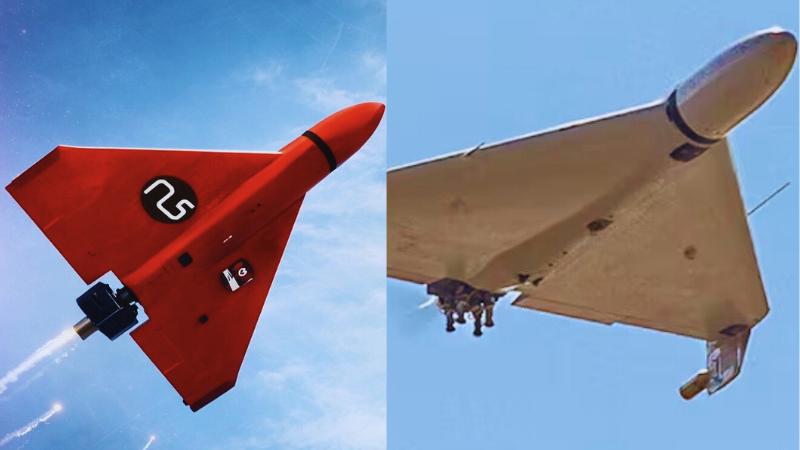
Low cost drones are rapidly transforming modern warfare across the world. Recent conflicts such as the Russia Ukraine war and the ongoing tensions in the Middle East have shown how inexpensive loitering drones can challenge powerful military systems. Iran’s Shahed 136 drone has become one of the most talked about examples of this new form of warfare because of its ability to strike targets at long distances while costing only a fraction of traditional military aircraft.
These drones are often referred to as kamikaze drones or loitering munitions because they fly toward a target and detonate on impact. Their relatively low cost makes them extremely effective because countries defending against them often spend millions of dollars on interceptors to stop a drone that costs only a few thousand dollars to produce. This imbalance has forced many nations to rethink their military strategies and invest in similar technologies.
India is also moving in the same direction by developing its own low cost strike drone systems. Two major projects currently drawing attention are the Sheshnag 150 drone developed by Bengaluru based NewSpace Research and Technologies and Project KAL being developed by Noida based IG Defence. These projects aim to give the Indian armed forces a powerful and cost effective strike capability for modern battlefield scenarios.
The Sheshnag 150 is a long range loitering munition designed to conduct deep strike missions. The drone weighs around 150 kilograms and can reportedly carry a payload of about 25 to 40 kilograms. It also has an estimated operational range between 1000 and 1200 kilometers and can remain airborne for more than five hours. What makes this drone particularly notable is its swarm capability. Multiple drones can operate together autonomously using artificial intelligence to overwhelm enemy defenses and strike targets simultaneously.
Meanwhile Project KAL is another ambitious effort aimed at building an indigenous long range attack drone. The system is designed to penetrate deep into hostile territory, locate targets and deliver explosive payloads with high precision. Early reports suggest the drone could have a range of up to 1000 kilometers and an endurance of several hours.
India already operates several indigenous loitering munitions such as Nagastra 1 which has been inducted into the armed forces since 2024. Another example is the SkyStriker suicide drone developed through collaboration between India’s Alpha Design Technologies and Israel’s Elbit Systems. These systems have been tested in operational scenarios including deployments in sensitive regions.
The growing importance of such drones became evident in the Russia Ukraine war where Iran’s Shahed 136 drones were widely used by Russia under the name Geran 2. These drones have targeted critical infrastructure including power facilities and military installations. Because of their low cost and ability to be launched in large numbers they have forced defenders to spend far more money on air defense systems.
Interestingly the concept has also inspired other countries including the United States which developed a similar drone known as the Low cost Uncrewed Combat Attack System or LUCAS. This shows how the simple yet effective design of loitering munitions is influencing military technology across the world.
As geopolitical tensions continue to rise in different parts of the world experts believe drone warfare will play an increasingly important role in future conflicts. For India which faces complex security challenges along multiple borders the development of indigenous low cost strike drones could significantly strengthen its strategic capabilities while reducing dependence on expensive imported systems.