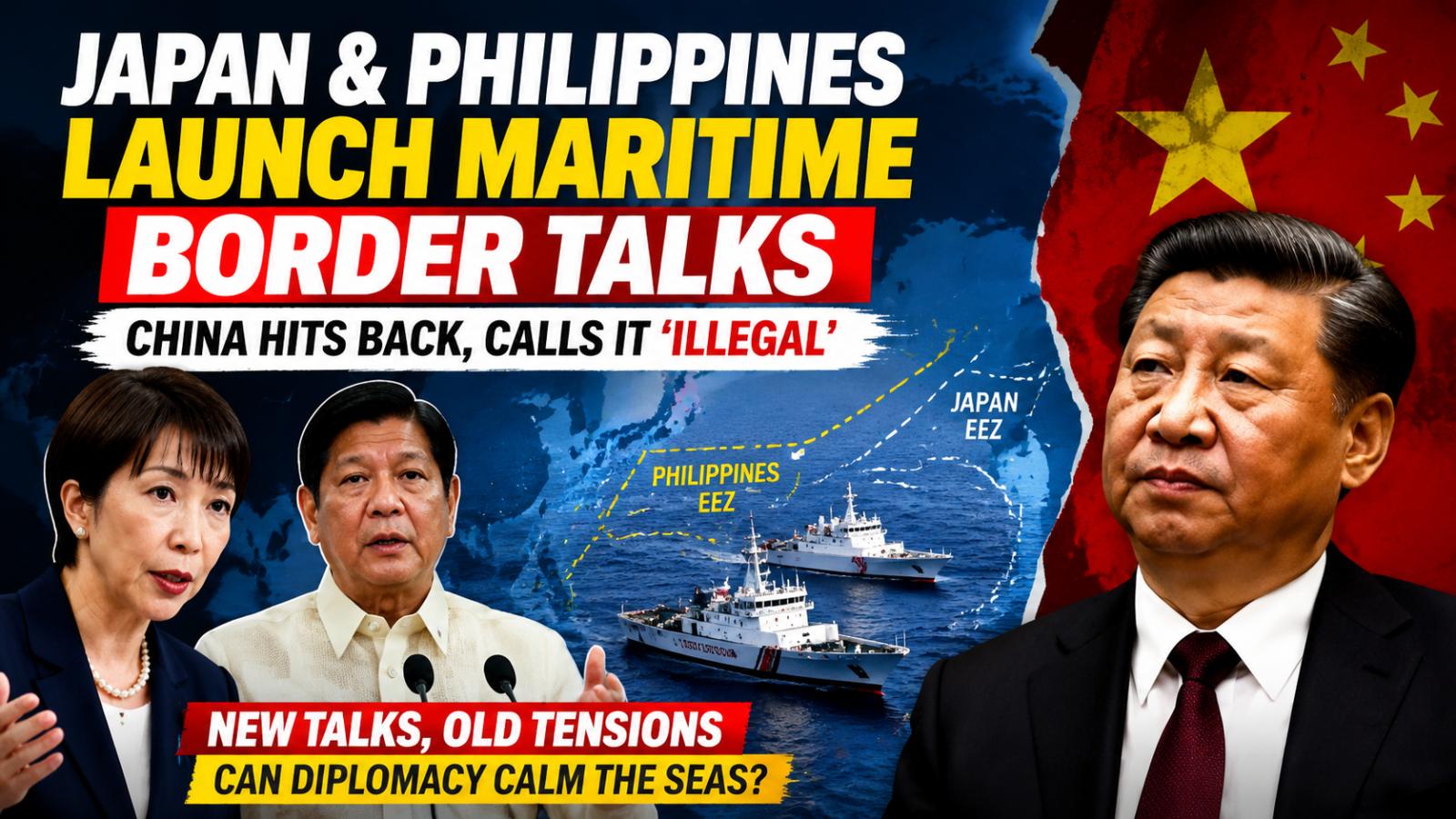
Japan and the Philippines have officially started discussions to define their maritime boundaries in areas where economic zones and continental shelves overlap. This follows Philippine President Ferdinand Marcos’ diplomatic visit to Japan, where he met Prime Minister Sanae Takaichi. The goal is to clarify boundaries while securing trade, fisheries, and energy interests.
China Voices Strong Objection
China has opposed the talks, calling them illegal and invalid. A Chinese foreign ministry spokesperson stated that the negotiations do not align with Beijing’s interpretation of international maritime law. The statement underscores China’s continued assertiveness over both the East and South China Seas.
Regional Tensions and Naval Activity
Both Japan and China have a history of disputes over islands and resource rights in the East China Sea, with frequent coast guard and naval patrols. Similarly, in the South China Sea, China’s naval presence restricts Philippine access to strategic areas, heightening tension and raising concerns over potential maritime incidents.
Manila-Tokyo Strategic Alignment
These negotiations signal a closer strategic partnership between Manila and Tokyo. Both nations are seeking legal frameworks to manage overlapping claims, enhance maritime security, and coordinate economic policy. Experts note that while the talks are legitimate under international law, China’s opposition could complicate diplomacy and require careful handling to avoid escalation.
Importance for Trade and Resources
The areas under discussion are critical for commerce, fisheries, and energy exploration. Establishing clear boundaries can reduce conflicts and encourage cooperation in maritime management. Observers emphasize the need for continued diplomatic engagement to prevent misunderstandings and maintain regional stability.