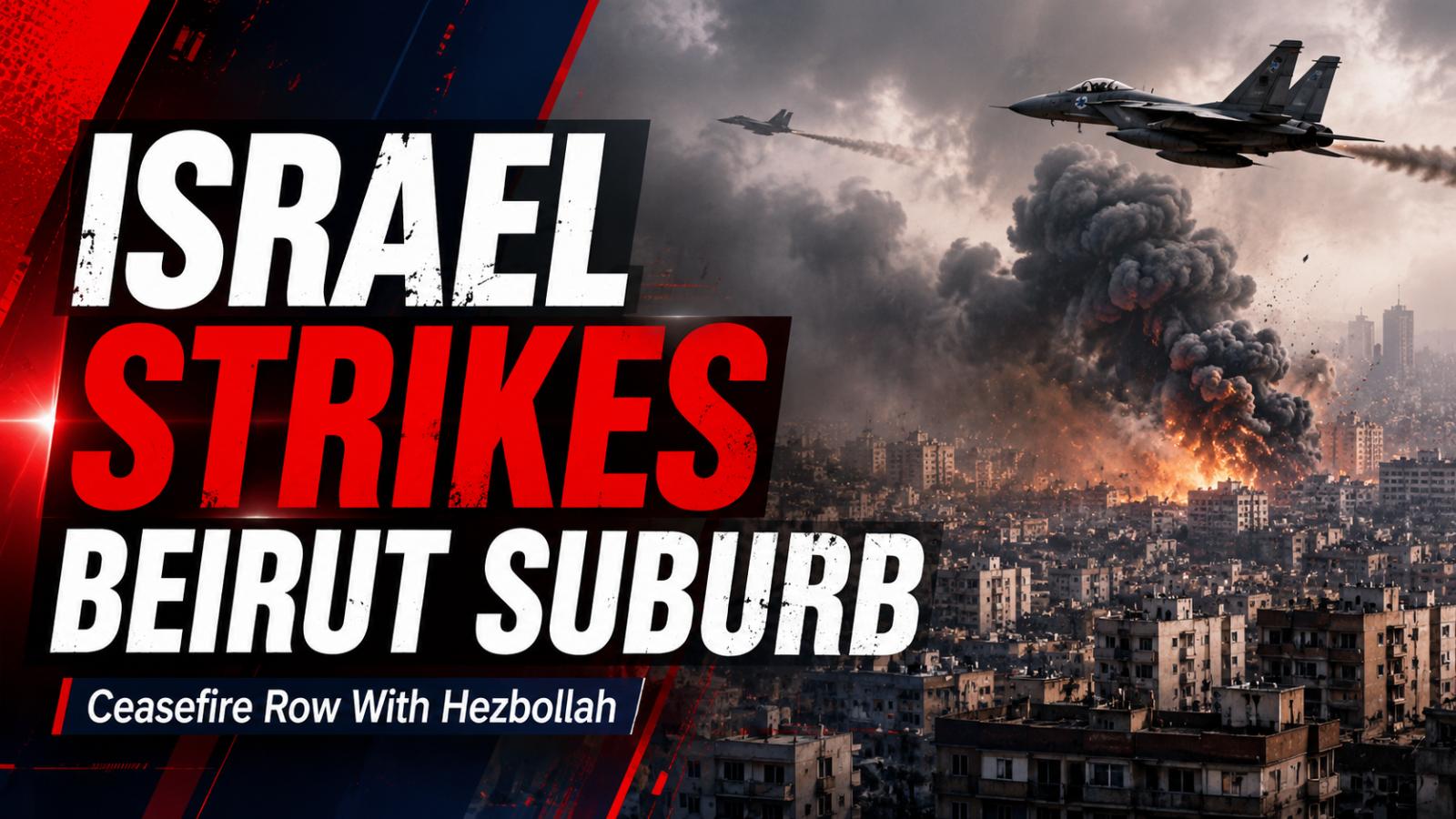
Israel ordered fresh military strikes on Beirut’s southern Dahiyeh suburb on Monday, June 1, after accusing Hezbollah of repeatedly violating the ceasefire in Lebanon. Prime Minister Benjamin Netanyahu and Defence Minister Israel Katz said the Israeli military had been instructed to target Hezbollah-linked sites in the area.
The move has increased concern over the fragile situation between Israel and Hezbollah. Dahiyeh is widely known as a major Hezbollah stronghold, making any strike in the area politically and militarily sensitive. Since it is also a crowded urban district, such attacks immediately raise fears about civilian safety, displacement, and further escalation.
Why Israel Says It Acted ?
Israeli leaders said the decision came after Hezbollah continued attacks on Israeli cities and civilians despite the ceasefire arrangement. According to Israel’s position, the strikes were not meant as a broad campaign against Lebanon, but as a direct response to Hezbollah activity.
However, the situation remains dangerous because both sides are already operating in a highly tense environment. When one side calls its action a security response, the other side may view it as an escalation. That is why even limited strikes can quickly create a wider crisis.
Why Dahiyeh Matters ?
Dahiyeh is not just another Beirut suburb. It has long been associated with Hezbollah’s political and military influence. Because of this, Israel often views the area as a strategic target during periods of conflict.
But the difficulty is that Dahiyeh is also home to ordinary residents. Any military action in such a dense neighborhood can create panic, disrupt daily life, and put civilians at risk. This is the main reason strikes on Dahiyeh attract serious regional and international attention.
Ceasefire Under Pressure
The latest strikes show how fragile the Israel-Hezbollah ceasefire has become. A ceasefire can only hold when both sides believe the other is following it. Israel says Hezbollah broke the understanding through repeated attacks. Hezbollah and its supporters are likely to frame Israel’s strikes as aggression.
This blame cycle is what makes the situation unstable. If Hezbollah responds with more rockets or missiles, Israel may expand its military action. If Israel continues striking deeper into Lebanon, pressure may grow on Hezbollah to retaliate. That is the real risk now.
Civilian Safety Becomes the Biggest Concern
For people in Beirut, the immediate worry is safety. Strikes in or near residential neighborhoods can affect homes, roads, hospitals, schools, and businesses. Even when the declared target is military, civilians often suffer the consequences in crowded areas.
For Israelis, the concern is also civilian protection, especially in cities exposed to Hezbollah rocket fire. Both sides are using civilian safety as part of their justification, but the people living near the conflict zones are the ones facing the highest cost.
What Could Happen Next ?
The next few days will be important. If Hezbollah limits its response, the situation may remain contained. If it launches stronger attacks, Israel could answer with wider strikes in Lebanon. That would increase the risk of a larger Israel-Lebanon conflict.
Diplomatic pressure may also grow, especially from countries trying to prevent another major regional war. But diplomacy will have limited impact unless both Israel and Hezbollah reduce military action on the ground.
For now, the strikes on Dahiyeh are a warning sign. The ceasefire is still technically important, but its survival depends on whether both sides stop testing its limits.