Kapu Vote Strategy and the Core Assumption Problem
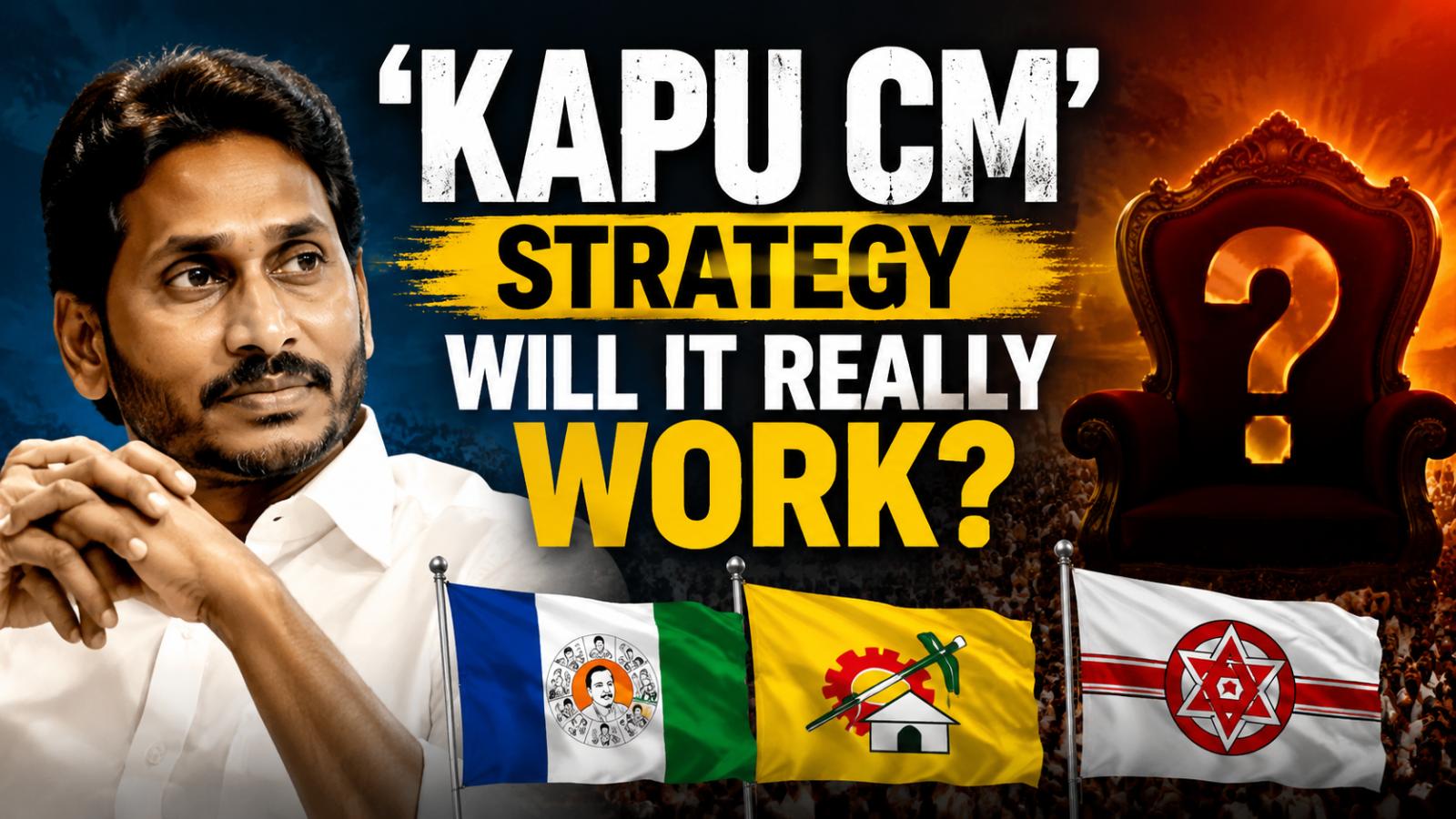
The current political discussion in Andhra Pradesh is increasingly centered around how parties are attempting to realign caste-based voter blocs ahead of the 2029 elections. One of the most debated narratives is whether the YSRCP can rebuild influence among Kapu voters after the shifts seen in recent elections. The assumption driving this strategy is simple but risky: that caste consolidation alone can be engineered through messaging and leadership positioning. That assumption is not as stable as it looks.
The Kapu community, estimated to be a significant share of the electorate, has not behaved as a fixed voting bloc in recent cycles. Instead, voting patterns have shifted based on alliances, perceived governance performance, and local leadership strength rather than identity alone. Treating it as a single predictable unit oversimplifies a more fragmented political reality.
Changing Alliances Have Already Redefined the Ground
In 2014, voter preference in several regions leaned toward the then dominant alliance structure, where expectations of governance stability played a larger role than identity politics. By 2019, fragmentation of opposition votes and anti-incumbency sentiment significantly altered outcomes, benefiting YSRCP. However, that victory was not solely the result of any one community alignment but a combination of broader electoral consolidation.
By 2024, the alliance between TDP, Janasena, and BJP changed the arithmetic again, especially in regions where Kapu influence is stronger. This alliance created a more unified counterweight, reducing the effectiveness of segmented vote strategies. The key shift here is not just voter loyalty but coordinated opposition structure, which is harder to break through symbolic appeals alone.
Leadership Representation and the Reality Gap
A central claim in the current strategy debate is that increasing representation or signaling empowerment within YSRCP could shift sentiment. However, this approach faces a credibility gap. Voters increasingly compare promises with visible leadership outcomes across administrations.
At present, the visible leadership structure in the ruling ecosystem already includes representation from the community at senior levels, which weakens the argument that political exclusion is the primary issue. Any counter-narrative built on dissatisfaction has to overcome that visible contradiction. Without tangible governance differentiation, messaging risks appearing strategic rather than substantive.
The Structural Limitation of “Caste-Centric Fixes”
The deeper issue is whether caste-centric electoral engineering still has the same predictive power it once did. Andhra Pradesh politics has gradually moved toward coalition-driven outcomes where multiple variables overlap: welfare delivery, local candidate strength, anti-incumbency cycles, and alliance cohesion.
The idea that a single declaration or symbolic positioning could decisively shift a 15–18 percent voter base is politically overstated. Even if such a move were attempted, it would likely trigger counter-mobilization rather than consolidation.
The strategy being discussed assumes a level of voter uniformity that no longer matches ground realities. The more effective approach for any party is likely not symbolic promises but consistent regional governance performance and alliance management. Anything else risks becoming a short-term narrative play with limited electoral return.