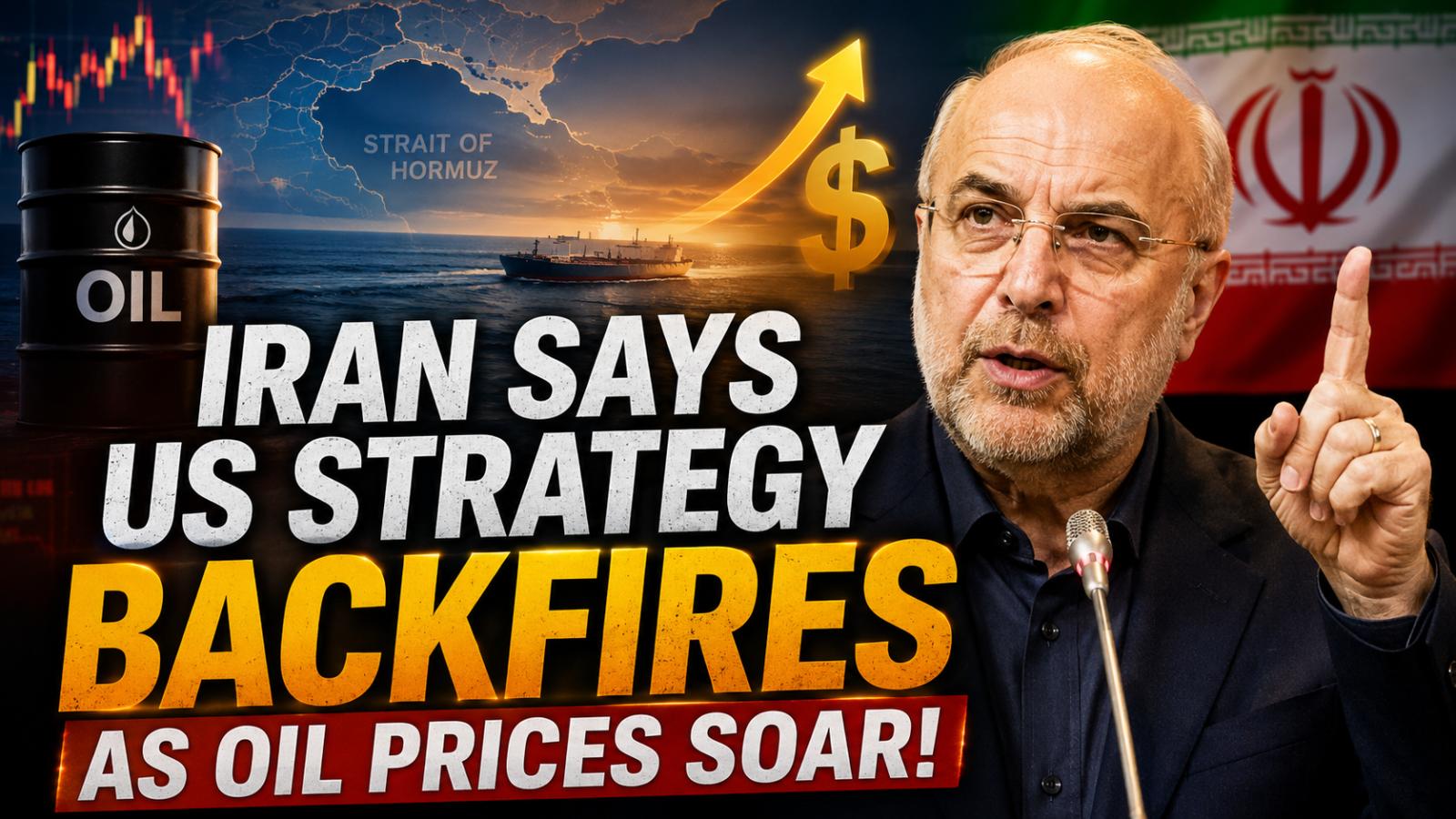
Iran Strait of Hormuz oil price warning has reignited global attention after Parliament Speaker Mohammad Bagher Ghalibaf argued that US pressure on Tehran has instead pushed oil prices higher. As Brent crude briefly crossed $100 a barrel, markets, governments and investors are closely watching developments around one of the world's most critical energy routes.
Iran US Oil Conflict Impact
Iran has intensified its criticism of Washington's strategy in the Middle East after Parliament Speaker Mohammad Bagher Ghalibaf claimed the United States had unintentionally harmed its own economic interests. In a post shared on X, Ghalibaf sarcastically argued that efforts to weaken Tehran's influence over the Strait of Hormuz had instead contributed to higher global oil prices.
"They wanted to punish Iran. Punished themselves with triple-digit oil instead. 10/10 strategy," he wrote, referring to Brent crude briefly rising above $100 per barrel. His comments followed attacks by Yemen's Houthi rebels on two Saudi oil tankers, an incident that added fresh uncertainty to already tense energy markets.
The statement reflects Iran's broader position that military and economic pressure on the country has increased instability across the region rather than reducing it. While Tehran continues to deny direct involvement in several regional attacks, officials argue that escalating tensions have made global energy markets more vulnerable.
Strait Of Hormuz Tensions
The Strait of Hormuz remains one of the world's most strategically important waterways. A significant share of global crude oil and liquefied natural gas exports pass through the narrow maritime corridor connecting the Persian Gulf with international markets.
Any threat to shipping through the strait immediately raises concerns about supply disruptions. Even without a complete closure, heightened military activity, attacks on commercial vessels or increased insurance costs for shipping companies can drive oil prices sharply higher.
Energy analysts continue to monitor the region closely because even temporary disruptions could affect fuel prices, transportation costs and inflation worldwide.
Brent Crude Crosses $100
Oil markets reacted quickly after reports of attacks on Saudi oil tankers. Brent crude, the international benchmark, briefly traded above $100 per barrel as traders assessed the possibility of further disruptions to energy supplies.
Although prices later fluctuated, the sharp rise highlighted how sensitive commodity markets remain to geopolitical developments in the Middle East. Investors are weighing not only immediate supply risks but also the possibility of prolonged instability if regional tensions continue to escalate.
Higher crude prices typically increase production and transportation costs across industries, eventually affecting consumers through higher fuel prices and increased costs for goods and services.
Global Oil Supply Disruption
The latest developments have also drawn attention from international economic institutions. Earlier this month, the International Monetary Fund lowered its global growth forecast from 3.1 percent to 3 percent, describing the outlook as a modest slowdown influenced partly by ongoing geopolitical tensions and their economic consequences.
Rising energy costs can slow economic activity by increasing inflation and reducing consumer spending. Businesses also face higher operating expenses, while governments may experience additional pressure in managing fuel subsidies and energy security.
Officials, traders and policymakers are expected to continue monitoring developments around the Strait of Hormuz, as any further escalation could have significant implications for global trade and financial markets.
Iran Parliament Speaker Statement
Ghalibaf's remarks have become part of a wider diplomatic narrative emerging from Tehran as regional tensions persist. While his comments were aimed at criticizing US policy, they also underscore the broader reality that geopolitical conflicts increasingly influence global commodity markets.
With shipping routes, oil infrastructure and regional security under close scrutiny, the Strait of Hormuz remains central to the global energy conversation. Markets are likely to remain volatile until there is greater clarity on regional security, shipping safety and diplomatic efforts to reduce tensions.
As governments continue to assess the economic consequences, investors will closely follow official statements, shipping activity and oil market movements for indications of whether the latest price surge is temporary or the beginning of a longer period of volatility.