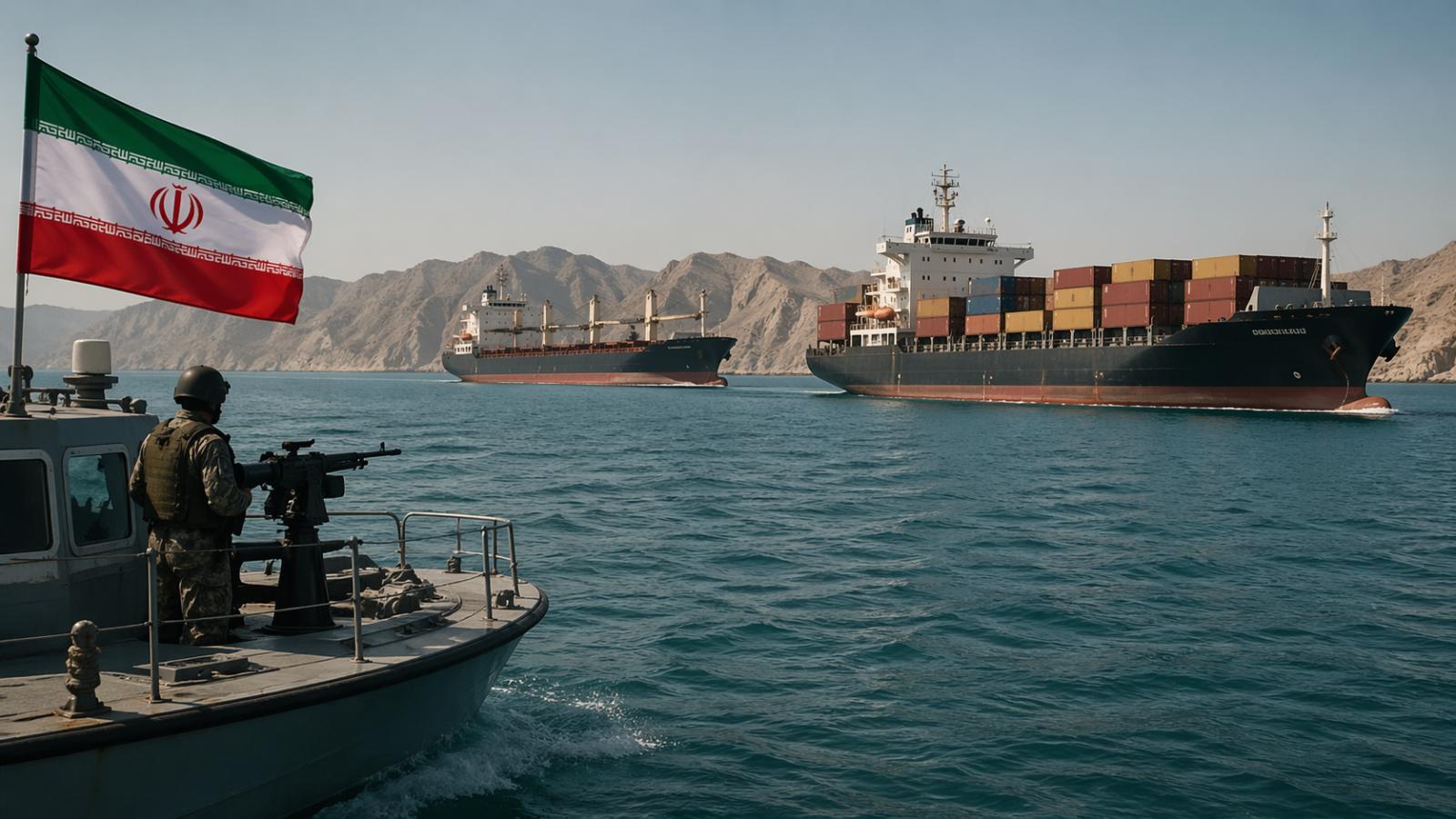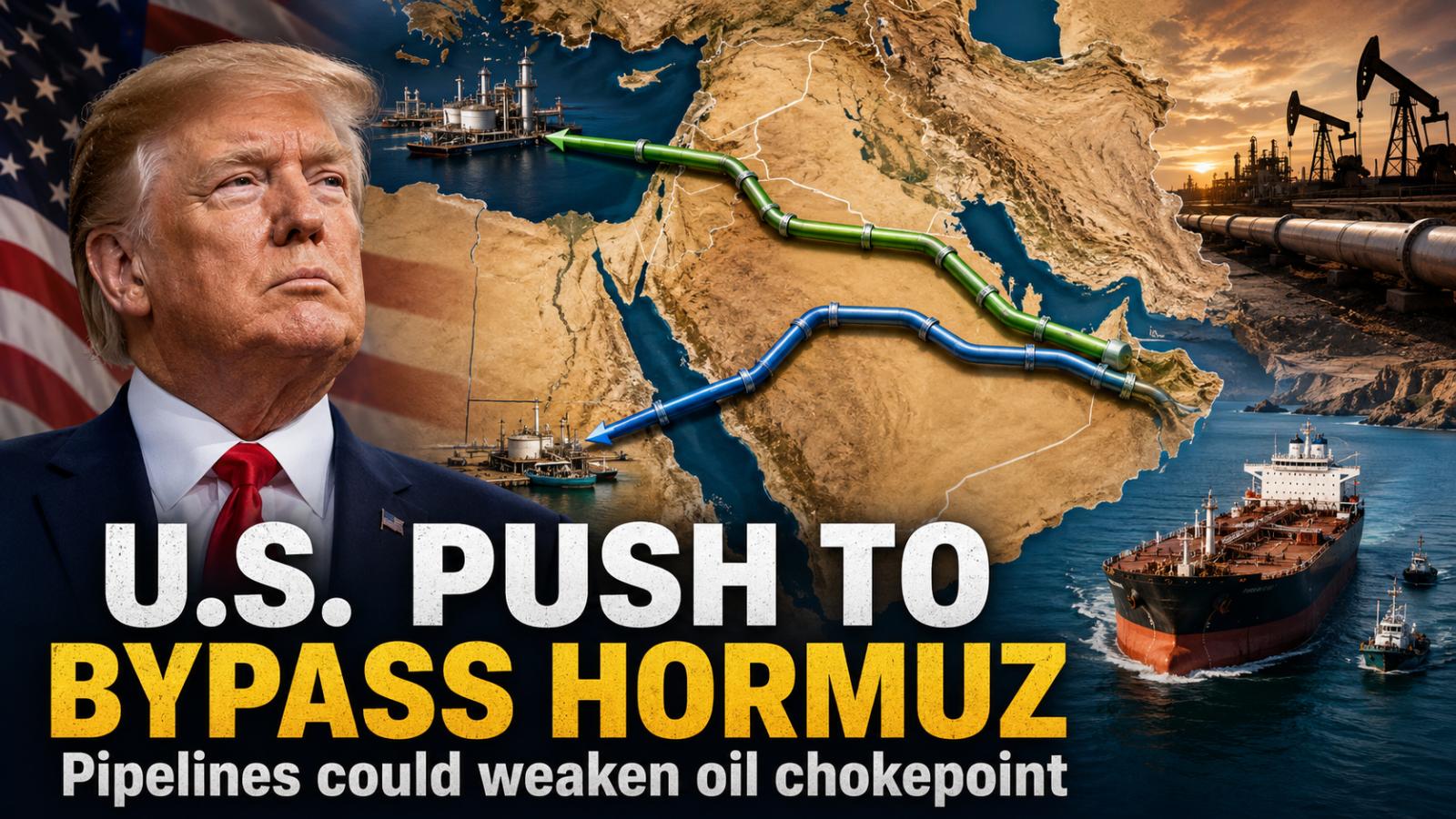
For decades, the Strait of Hormuz has been one of the world’s most important energy chokepoints. Now, Washington and Gulf producers are accelerating plans for pipelines and alternative export routes that could sharply reduce dependence on the narrow waterway. The goal is not necessarily to eliminate Hormuz, but to weaken its ability to disrupt global oil markets.
Strait of Hormuz bypass becomes US strategy
US Treasury Secretary Scott Bessent has argued that new overland pipelines could make Hormuz far less important within two years. He has suggested that 50% to 70% of energy currently dependent on the strait could eventually move through alternative routes. That remains an ambitious projection rather than an established outcome.
The broader strategy reflects Washington’s concern that Iran can use the narrow waterway as leverage during regional crises. Creating multiple export corridors would give Gulf producers more options if shipping through Hormuz becomes restricted or unsafe.
Saudi Petroline and Fujairah offer existing alternatives
Saudi Arabia already operates the East-West Pipeline, known as Petroline, linking its eastern oil fields with Yanbu on the Red Sea. The system can carry about 7 million barrels per day, and Riyadh has discussed expanding capacity by as much as another 2 million barrels daily.
However, pipeline capacity does not automatically equal export capacity. Yanbu’s terminals can handle less crude than the pipeline itself can transport, creating a major bottleneck. Ships leaving Yanbu for Asian markets may also need to pass through Bab el-Mandeb, another waterway exposed to regional security threats.
The UAE has its own Hormuz bypass through the Habshan-Fujairah pipeline, allowing crude to reach the Gulf of Oman without passing through the strait. These existing systems already reduce some exposure, but they cannot yet replace Hormuz completely.
Iraq-Syria pipeline could reshape Gulf oil routes
One of the most important new projects involves Iraq. Baghdad has begun studies for a pipeline network linking Basra to Haditha, with branches toward Syria’s Baniyas port and the Iraqi-Turkish system.
The overall network is designed for about 2 million barrels per day. Current plans indicate roughly 1 million barrels could move toward Baniyas and another 1 million toward Fishkhabour and Turkey. Construction could take between two and four years once the project formally proceeds.
Syria sees the plan as an opportunity to restore its role as an energy corridor between the Gulf and Mediterranean. A Chevron-linked consortium is involved in technical and financial studies for the cross-border project.
Hormuz can lose its monopoly without becoming irrelevant
The strongest case for the bypass strategy is diversification. Goldman Sachs estimates that additional pipeline capacity could shield more than 45% of pre-war Persian Gulf exports from Hormuz disruptions by the end of 2027 and more than 60% by the end of 2028.
But pipelines create different vulnerabilities. They cross long distances, can be targeted by missiles or drones and often depend on ports that introduce new bottlenecks. Crude oil pipelines also do little to solve Qatar’s dependence on maritime LNG exports.
So the more realistic outcome is not the death of Hormuz. It is the end of Hormuz’s near-monopoly over Gulf energy exports. New pipelines could reduce Iran’s leverage and give producers more flexibility, but geography will still matter—and bypassing one chokepoint may simply shift strategic risk somewhere else.