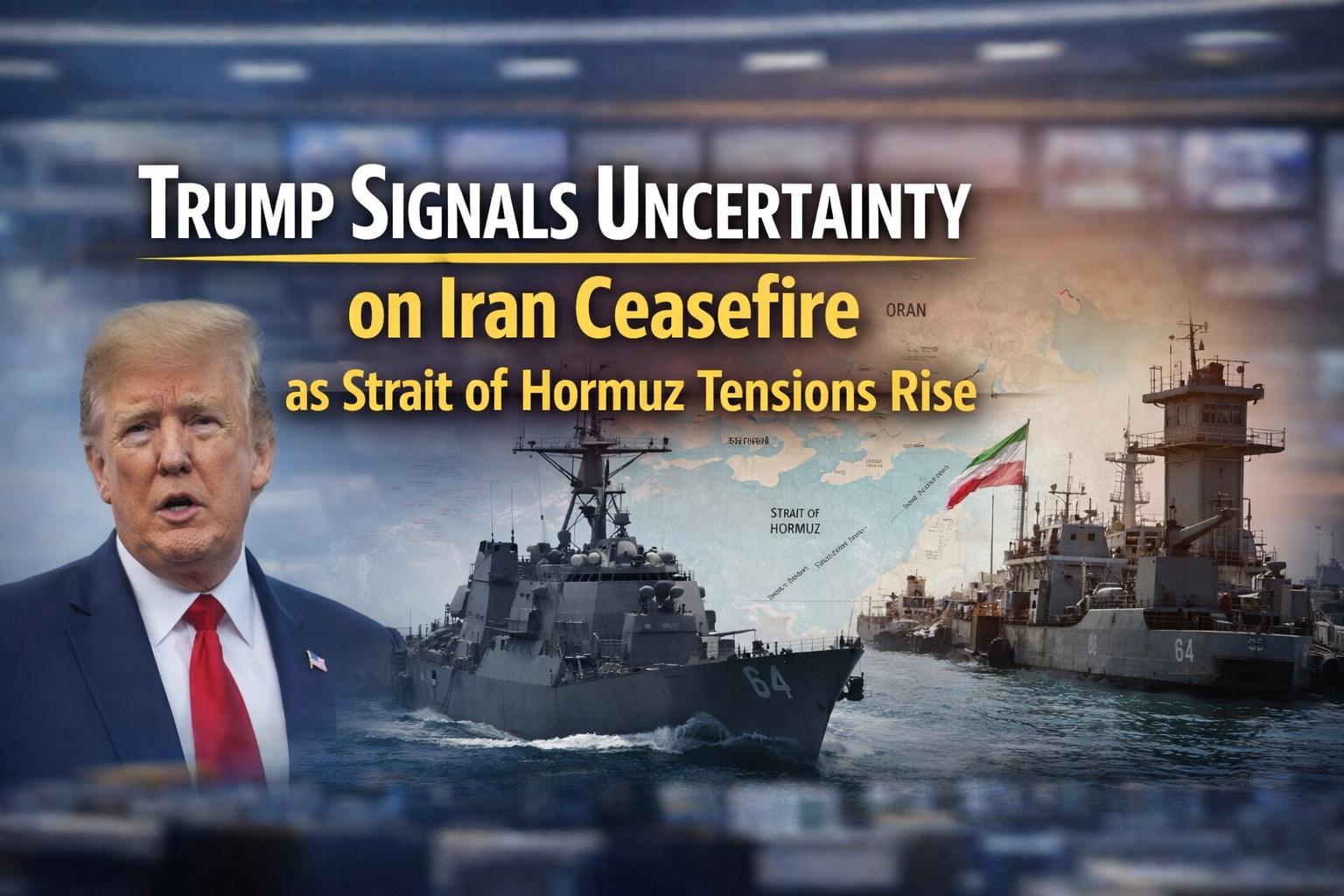
Donald Trump indicated that the United States may not extend its ceasefire with Iran, as tensions continue to rise over maritime security and regional control. Speaking to reporters, he said the naval blockade of Iranian ports would remain in place regardless of whether the ceasefire expires, signaling a firm stance on maintaining pressure.
The warning comes amid renewed threats from Iranian leadership regarding the strategic Strait of Hormuz, a critical global oil transit corridor. Iranian officials suggested that continued restrictions on their ports could prompt action affecting passage through the strait, raising concerns about disruptions to international shipping and energy supplies. The waterway remains one of the most vital routes for global oil transport, making any escalation a matter of global economic significance.
Trump also dismissed proposals linked to charging tolls for vessels crossing the strait, stating that such measures would not be implemented. While uncertainty surrounds the ceasefire’s future, he expressed confidence that a broader agreement could still emerge, pointing to ongoing diplomatic possibilities despite heightened tensions.
In parallel, Trump referenced engagement with Xi Jinping, suggesting that recent developments are intertwined with wider geopolitical discussions. He described upcoming talks in Beijing as potentially significant, indicating that the evolving situation in the Gulf region could influence broader international relations.
The developments underscore the fragile balance between military strategy and economic stability, as global markets remain sensitive to any disruptions in key energy corridors. With the ceasefire deadline approaching, attention is focused on whether diplomatic channels can prevent further escalation while maintaining stability in one of the world’s most critical shipping routes.