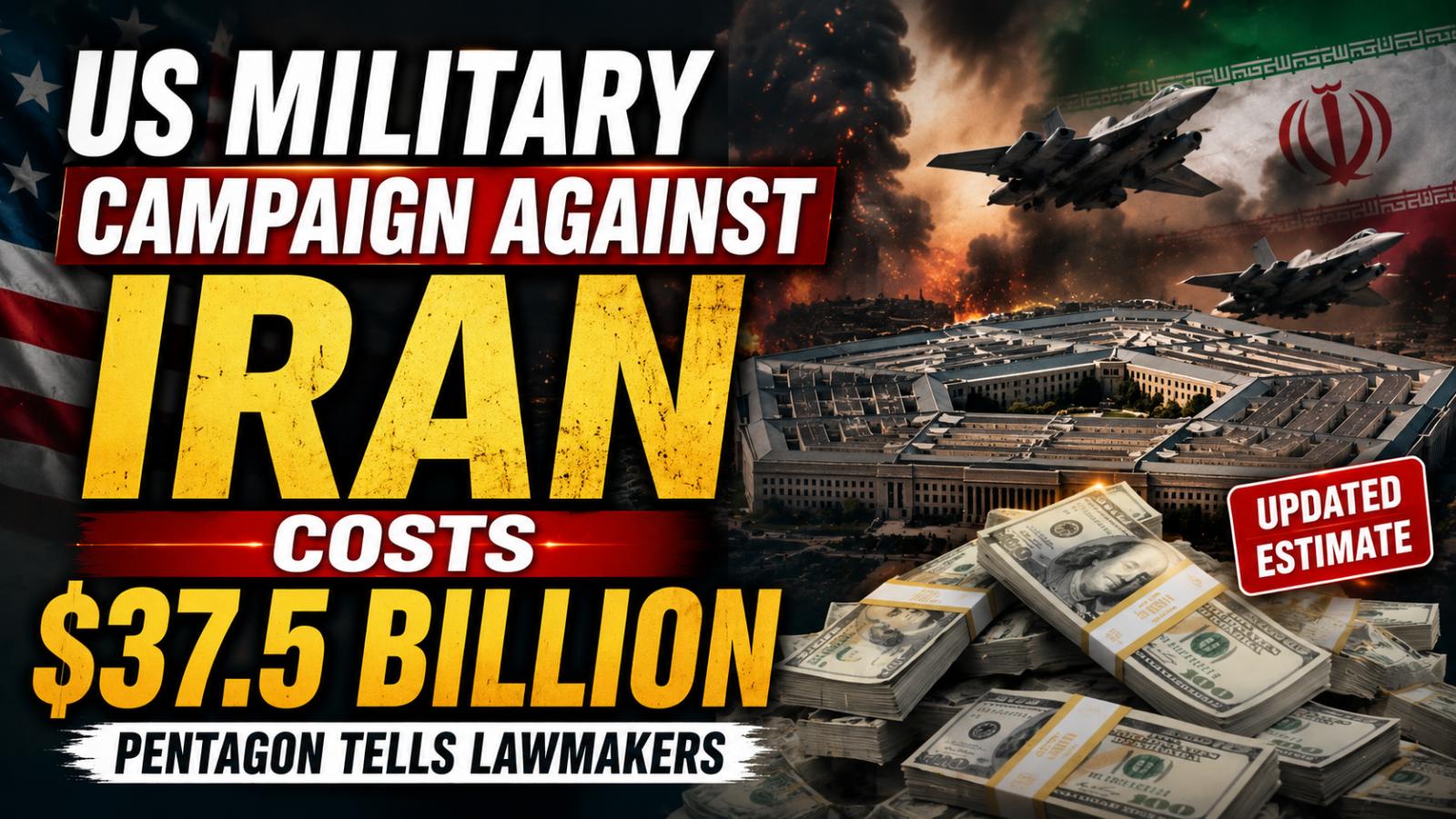
The US military campaign against Iran now carries an estimated cost of $37.5 billion, according to Defence Secretary Pete Hegseth. The updated figure includes projected expenses through September as the Pentagon seeks additional funding while defending the effectiveness of operations against Iran before Congress.
US Military Campaign Against Iran Costs $37.5 Billion
Pentagon Updates Iran Campaign Cost
The cost of the United States military campaign against Iran has risen to an estimated $37.5 billion, according to Defence Secretary Pete Hegseth, who presented the updated figure during testimony before the Senate Appropriations Committee. The estimate represents a significant increase from the nearly $29 billion projection released in May and reflects the expanding financial commitment required to sustain military operations.
Hegseth told lawmakers that the revised figure includes projected expenses through September 30. The estimate covers operational costs, military pay, logistics, equipment support and other expenses directly associated with the ongoing campaign. The updated assessment highlights the growing financial demands facing the Pentagon as military operations continue across the region.
Pete Hegseth Defends Pentagon Funding Request
The hearing marked Hegseth's first public appearance before Congress since the United States resumed military operations against Iran earlier this month. Appearing alongside Chairman of the Joint Chiefs of Staff General Dan Caine, the Defence Secretary defended both the administration's military strategy and its request for approximately $67 billion in additional Pentagon funding.
Hegseth argued that the requested funding is necessary to maintain military readiness, support deployed personnel and continue operations designed to weaken Iran's military capabilities. Lawmakers questioned both the overall cost of the campaign and the administration's long-term strategy, making the hearing one of the most closely watched congressional defense briefings in recent weeks.
The Pentagon maintains that continued funding is essential to sustain operations while ensuring American forces remain prepared for evolving security challenges across the Middle East.
Iran Military Capabilities Remain a Concern
During questioning from senators, Hegseth said the sustained US campaign has inflicted significant damage on Iran's military infrastructure. According to his testimony, repeated American strikes have left Iran's armed forces in their weakest position in years.
At the same time, he acknowledged that Tehran still possesses the ability to respond militarily. Hegseth noted that some Iranian ballistic missiles survived because they were stored in deeply buried facilities that remained beyond the reach of certain American strikes.
His comments reflected the Pentagon's assessment that although Iran's military capability has been substantially reduced, it has not been eliminated. Officials continue to monitor Iran's remaining missile inventory and broader regional military posture as operations continue.
Congress Reviews Defense Spending
The rising cost of the campaign is expected to remain a central issue as Congress debates the Pentagon's supplemental funding request. Legislators from both parties have sought greater transparency regarding operational costs, military objectives and the timeline for continued involvement.
Defense officials argue that current expenditures reflect the scale of modern military operations, including personnel deployment, precision weapons, intelligence gathering, logistics support and equipment maintenance. They also emphasize that continued investment is necessary to protect US forces and maintain strategic stability in the region.
According to testimony presented before the Senate Appropriations Committee, the Pentagon believes sustained military pressure has weakened Iran's operational capabilities while reducing immediate threats to American personnel and allied interests. However, officials also recognize that future costs will depend on how regional security conditions evolve over the coming months.
The latest cost estimate illustrates both the military and financial challenges associated with prolonged operations. As Congress evaluates the administration's funding request, lawmakers are expected to continue examining whether current military objectives justify the expanding defense expenditures and how future operations should be financed.
Information in this report is based on testimony delivered by Defence Secretary Pete Hegseth and Chairman of the Joint Chiefs of Staff General Dan Caine before the US Senate Appropriations Committee, along with publicly available Pentagon statements.