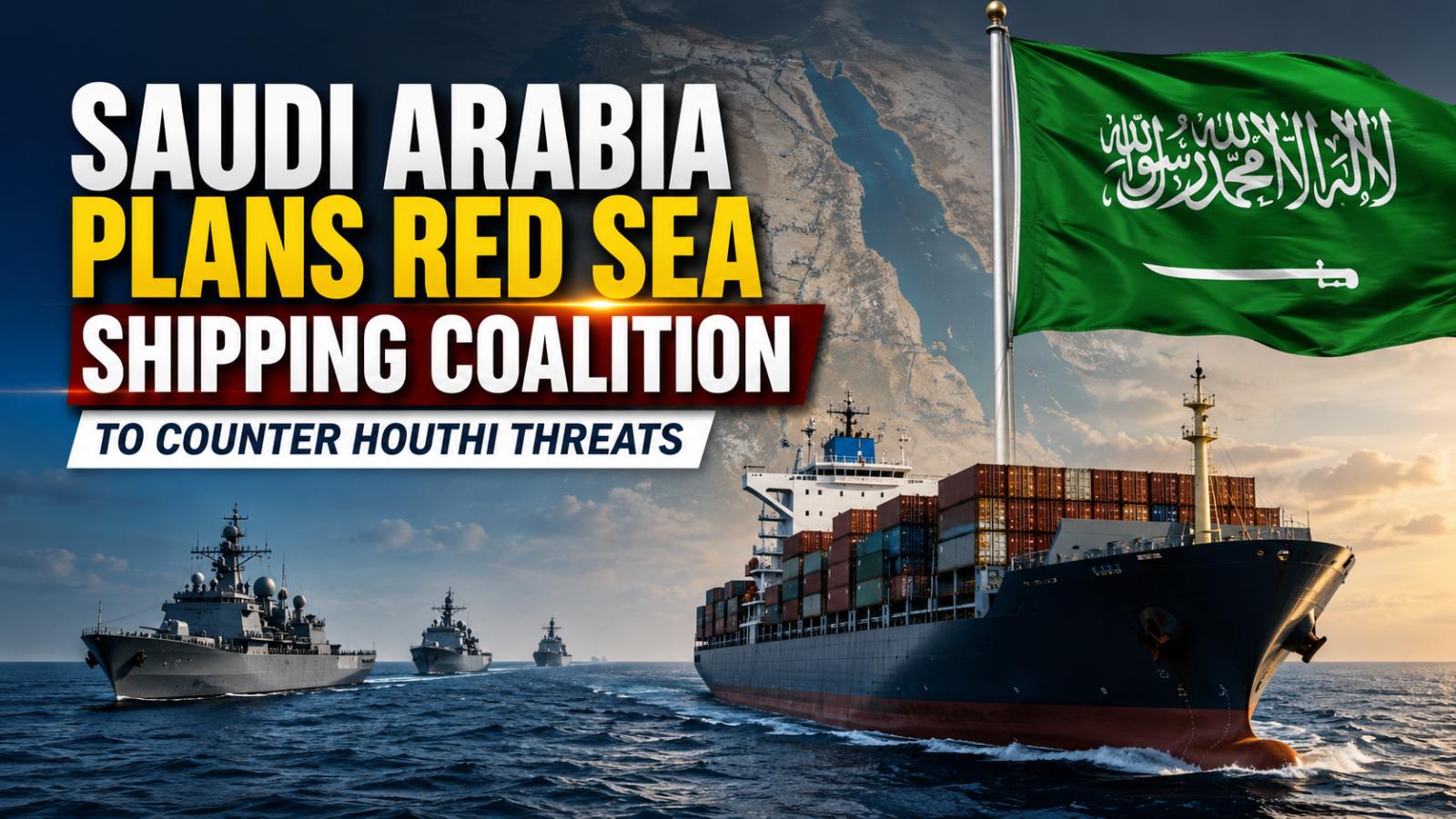
Saudi Arabia is exploring a Saudi Red Sea shipping coalition as Houthi attacks, a maritime embargo and possible vessel fees raise concerns over security, global trade and energy flows through the strategically important Bab al-Mandab Strait.
Security
Saudi Arabia is holding discussions with dozens of countries about forming an international coalition to protect commercial shipping in the Red Sea from attacks by Yemen’s Iran-aligned Houthi movement.
People familiar with the discussions said the initiative remains at an early stage and that participating countries, responsibilities and operational arrangements have not been finalized. Riyadh’s Centre for International Communication had not issued a public response confirming the proposed coalition as of Wednesday, July 29.
The discussions reflect growing concern over the safety of vessels using the Red Sea, one of the main maritime corridors connecting Asian markets with Europe through the Suez Canal. Any sustained threat along this route could force shipping companies to take longer journeys around Africa, increasing fuel, insurance and delivery costs.
Embargo
The coalition discussions follow the Houthis’ July 20 declaration of a maritime embargo against Saudi Arabia. The group said the measure responded to what it described as restrictions imposed on Yemen. Saudi Arabia has rejected those claims and said it would take necessary measures to protect its ships.
Houthi forces later claimed attacks on Saudi-linked oil tankers in the Red Sea, accusing the vessels of violating the embargo. The Saudi-led coalition warned that it would respond firmly to threats against commercial ships passing through Bab al-Mandab.
Shipping data has already indicated reduced vessel movement through the strait following recent attacks and threats. The decline highlights how quickly security concerns can influence tanker routes, cargo schedules and the willingness of shipping operators to enter high-risk waters.
Fees
Regional sources also said the Houthis were considering charging commercial vessels that cross the southern Red Sea. The proposed fees could apply to most ships using the Bab al-Mandab Strait, although the group has not publicly announced a launch date or a formal payment system.
Such charges would represent a major escalation. Bab al-Mandab links the Red Sea with the Gulf of Aden and serves as an essential gateway for container cargo, petroleum products and other commodities moving between Europe, Asia and the Middle East.
Any attempt by an armed group to control passage or demand payments could create legal, military and commercial complications. Shipping companies may also face higher security expenses and insurance premiums, even when vessels are not directly targeted.
Trade
The Red Sea remains critical to global trade and energy security. Disruption near Bab al-Mandab could delay supplies, increase transport costs and place additional pressure on oil markets already affected by wider Middle East tensions.
A Saudi-led international arrangement could involve naval patrols, intelligence sharing, surveillance and coordination with commercial operators. However, its effectiveness would depend on the countries involved, the authority given to participating forces and whether the coalition could prevent attacks without widening the regional conflict.
Until Riyadh announces a finalized plan, the proposed coalition should be treated as an initiative under discussion rather than an established military operation. The immediate risk is clear: continued attacks, embargo threats or vessel fees could make one of the world’s most important shipping routes more expensive and dangerous.