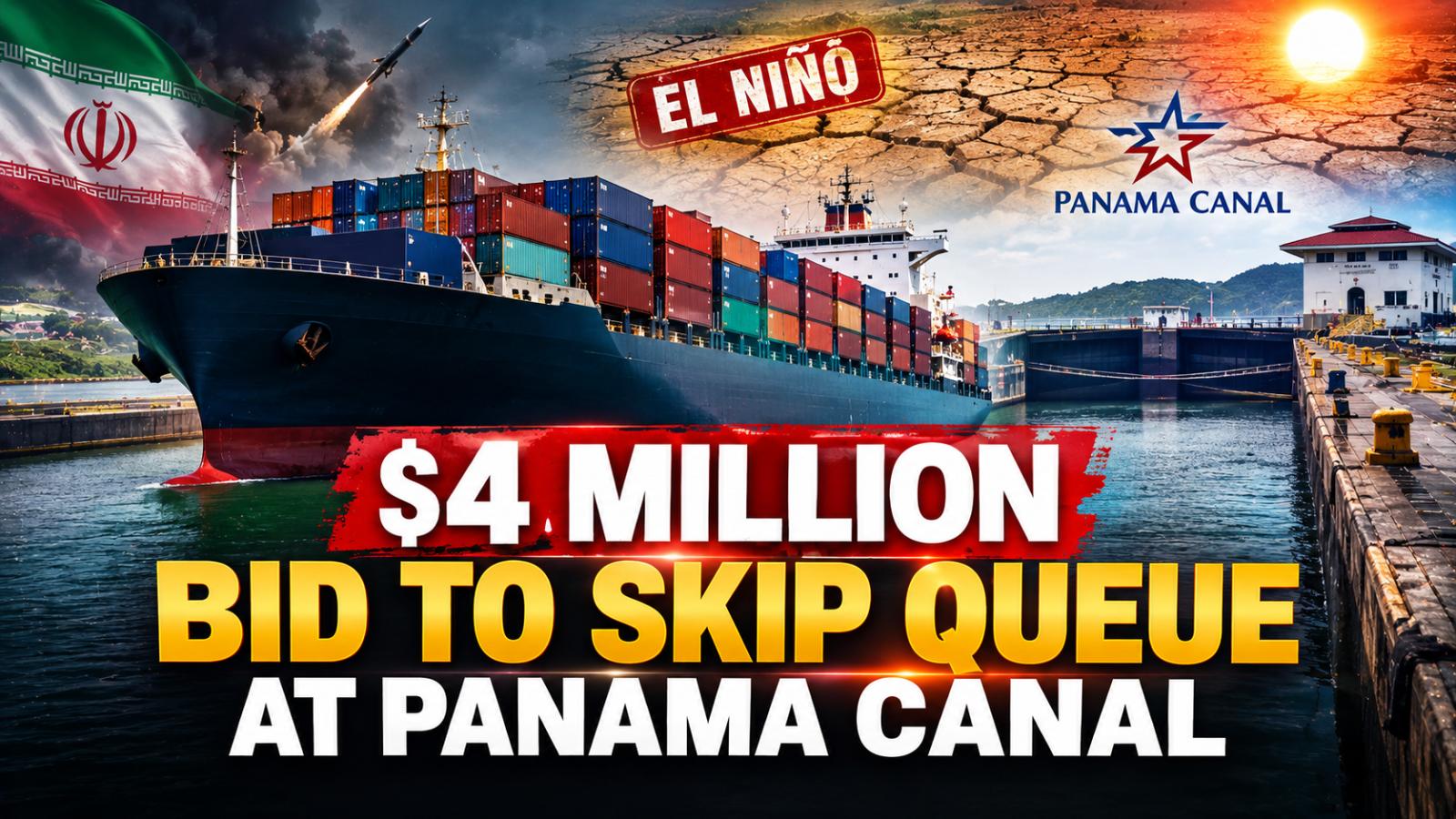
Panama Canal shipping costs have surged as global maritime disruption and tighter water conditions squeeze one of the world's most important trade routes. The Seaspan Benefactor reportedly paid about $4 million for priority transit as some vessels faced waits of roughly 10 days.
Canal congestion pushes auction prices sharply higher
The Seaspan Benefactor, a container ship with capacity of roughly 10,000 TEU, reportedly paid about $4 million in an auction to move ahead of other vessels waiting to transit the Panama Canal. The payment was for priority access rather than the canal's normal transit toll.
The Panama Canal Authority operates an auction mechanism alongside its regular reservation system, allowing shipping companies to bid for earlier passage when congestion becomes severe. Starting prices are far lower than the multimillion-dollar amount reportedly paid for the Benefactor, but intense demand can send bids sharply higher.
For shipping companies, the calculation is straightforward: several days of delay can disrupt vessel schedules, cargo delivery commitments and downstream supply chains. When the commercial cost of waiting exceeds the auction price, paying millions for priority transit can become economically rational.
Iran war disruption redirects global shipping
The surge in Panama Canal demand is also linked to disruption across Middle Eastern shipping routes. The Iran war has reduced traffic through strategic waterways including the Strait of Hormuz and Bab al-Mandab, forcing some carriers to reconsider established routes and creating additional pressure elsewhere in the global transport network.
The canal is particularly important for trade between Asia and the US Gulf and East Coast because it avoids longer voyages around South America or Africa. Higher demand for the route therefore has direct consequences for freight prices, delivery schedules and energy shipments.
This is why the $4 million auction payment matters beyond one vessel. It is a visible sign of how geopolitical disruption in one region can quickly raise transport costs thousands of kilometres away.
El Niño drought tightens Panama Canal draft limits
At the same time, water availability is becoming a major operational constraint. The Panama Canal depends heavily on freshwater from Gatun Lake, and strengthening El Niño conditions have raised concerns about lower rainfall and declining reservoir levels.
The Canal Authority has progressively reduced the maximum authorised draft for Neopanamax ships. The limit was cut to 49.5 feet in July, followed by additional reductions, with a further decrease toward 47.5 feet scheduled by early September.
Lower draft limits can force large vessels to carry less cargo, potentially reducing the economic efficiency of each transit even if the overall number of ships remains relatively stable.
Global trade faces another supply chain squeeze
The broader concern is that several trade routes are under pressure simultaneously. Panama is dealing with water constraints and stronger demand, while geopolitical conflict is disrupting Middle Eastern shipping. Low water levels have also affected European waterways such as the Rhine, increasing reliance on road and rail transport.
The Panama Canal Authority had earlier said it did not expect major vessel transit restrictions during 2026 because reservoir levels were relatively healthy, but subsequent draft reductions show how quickly conditions can change when weather forecasts deteriorate.
For importers and retailers, the risk is higher freight costs and less predictable delivery times. For energy companies, congestion can complicate the movement of LNG, LPG, crude and refined products. Those pressures can eventually filter into consumer prices if disruption lasts long enough.
The Seaspan Benefactor's reported $4 million payment is therefore more than an eye-catching auction result. It shows how valuable time has become in a shipping system dealing simultaneously with war, drought and congestion. If El Niño strengthens further or Middle Eastern routes remain disrupted, the Panama Canal could become an even more expensive bottleneck for global trade.