US President Donald Trump has ordered a substantial reduction in US participation in joint military exercises with South Korea, citing their cost and his relationship with North Korean leader Kim Jong Un. Seoul, however, says the Ulchi Freedom Shield exercise has begun as scheduled.
US-South Korea drills face Trump-ordered reduction
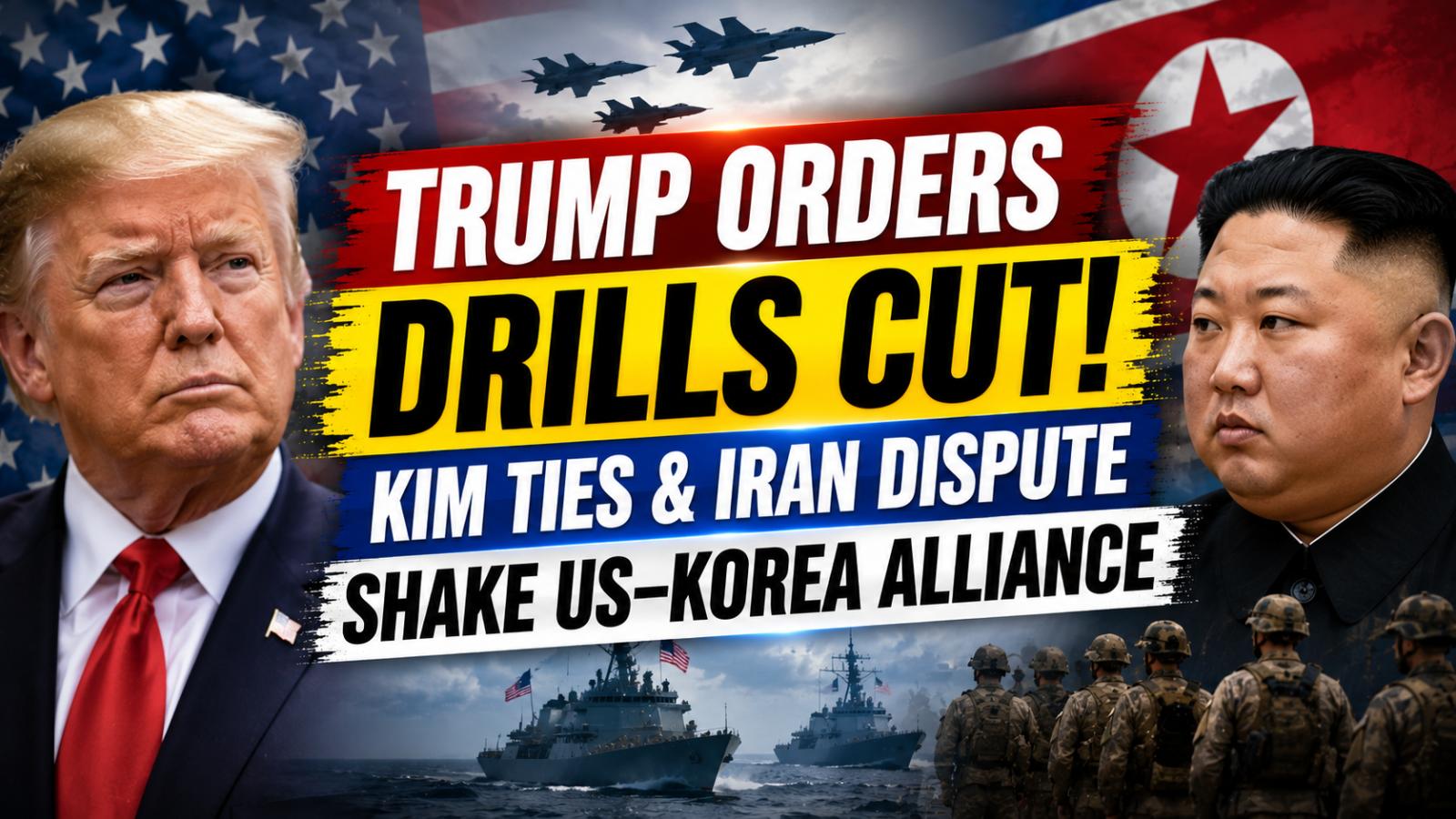
Trump announced on Sunday that he had instructed Defense Secretary Pete Hegseth to substantially scale back the United States' participation in planned military exercises with South Korea.
Writing on Truth Social, Trump said he was unhappy that Washington had agreed to participate in the exercises, arguing that they were expensive and sent what he called an inappropriate and hostile signal toward North Korea.
Trump specifically linked his decision to his relationship with Kim Jong Un. He described their relationship as “very good” and portrayed North Korea as respectful during his presidency.
The move revives an issue that has followed Trump since his first administration. He has repeatedly questioned the expense of large-scale military exercises on the Korean Peninsula and has previously argued that reducing them could support diplomacy with Pyongyang.
UFS exercise begins despite Trump's announcement
Trump's intervention came too late to cancel Ulchi Freedom Shield, the annual combined military exercise between the United States and South Korea.
The exercise began Monday, August 17, and is scheduled to continue until August 27. Around 18,000 South Korean troops are participating, with training covering combined and all-domain operations.
South Korea's Defense Ministry said the exercise would proceed as scheduled despite Trump's announcement. Exactly how the Pentagon will implement the president's instruction to “substantially reduce” US participation remains an important unanswered question.
US and South Korean military officials had announced preparations for the exercise before Trump's intervention, describing the training as necessary to strengthen readiness against evolving security threats.
Kim Jong Un ties shape Trump's Korea strategy
Trump's emphasis on Kim Jong Un adds a diplomatic dimension to the decision.
North Korea has consistently condemned US-South Korean exercises, portraying them as preparations for an invasion. Washington and Seoul maintain that the exercises are defensive and necessary to preserve military readiness.
Just days before Ulchi Freedom Shield began, North Korea warned that it would respond to the drills with a stronger level of deterrence.
The security environment has also changed significantly. US and South Korean officials say North Korean forces have gained battlefield experience through Pyongyang's military cooperation with Russia, while the North continues developing nuclear weapons, ballistic missiles, drones, cyber capabilities and electronic-warfare tactics.
That creates a difficult balance for Washington: reducing exercises could potentially create diplomatic space with Pyongyang, but significant cuts could also raise questions about alliance readiness.
Seoul response highlights Iran disagreement
Trump also connected the military exercise decision to an apparently unrelated disagreement over Iran.
In his Truth Social post, he said he had recently asked South Korea's president whether Seoul wanted to join Washington in efforts involving the “denuclearization” of Iran and said South Korea declined. Reuters reported that Trump cited Seoul's refusal to support US actions involving Iran when explaining his decision.
The remarks introduce Middle East policy into an already sensitive US-South Korea defense relationship.
For Seoul, the immediate priority remains maintaining military readiness as North Korea expands its weapons capabilities. For Trump, however, the cost of the exercises and the possibility of reopening diplomacy with Kim appear to be weighing more heavily.
The immediate consequence is an unusual situation: Ulchi Freedom Shield has started, but the US commander-in-chief has simultaneously ordered American participation to be substantially reduced.
How the Pentagon implements that instruction could determine whether Trump's announcement becomes a limited adjustment to this year's exercise or the beginning of a broader change in Washington's military posture toward the Korean Peninsula.