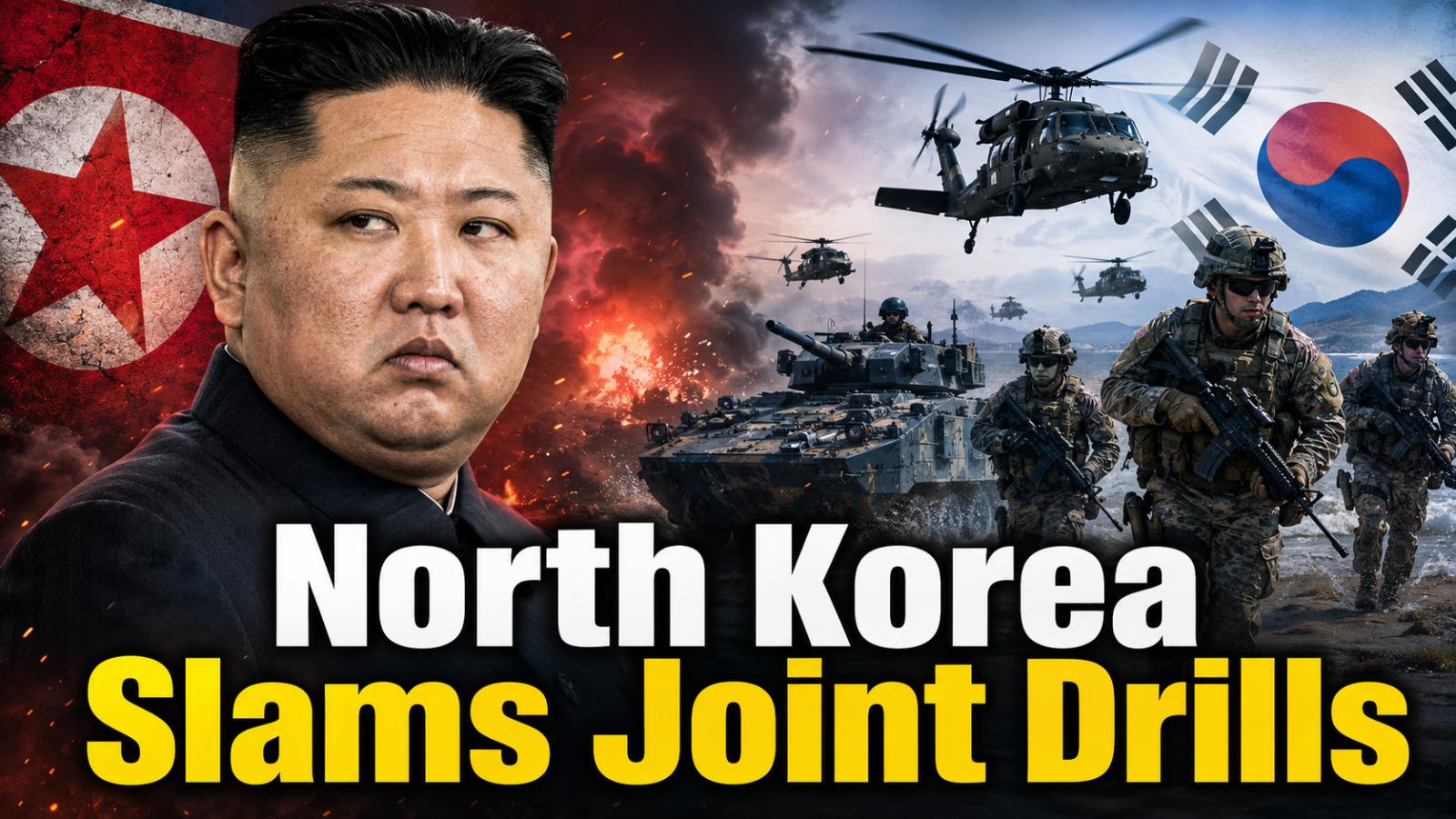
North Korea has sharply criticized the latest US-South Korea military drills, calling them an open threat to its security even after President Donald Trump ordered a reduction in their scale. The response from Pyongyang shows that the deeper dispute on the Korean Peninsula remains unchanged, with mistrust still shaping every military and diplomatic move.
Trump drill cut
Pyongyang’s reaction came after Trump ordered the Pentagon to scale back the annual Ulchi Freedom Shield exercises shortly before they began. Trump described the drills as inappropriate and hostile, and he has recently signaled interest in reopening diplomacy with North Korean leader Kim Jong Un. He also said Kim had responded to his outreach, though he did not reveal what was said or whether a new round of talks could follow.
Yet North Korea’s state media ignored that shift. In a commentary published by the Korean Central News Agency, Pyongyang described the joint drills as the most immediate and open threat to both North Korea and regional security. The message followed North Korea’s long-running claim that joint exercises are not defensive training but rehearsals for invasion.
Ulchi shield
Ulchi Freedom Shield remains one of the most important annual military exercises conducted by the United States and South Korea. Washington and Seoul say the drills improve readiness, coordination and crisis response in case of conflict on the peninsula. The Pentagon and allied commanders have repeatedly framed the exercise as defensive.
North Korea does not accept that explanation. KCNA said hostile forces were creating military pressure and warned that Pyongyang would exercise its right to self-defence through more transparent action. That language matters because it suggests North Korea wants to justify future military steps as a direct response to allied activity, even when the scale of those drills is reduced.
Kim talks silence
Another striking point is what North Korea chose not to mention. KCNA made no reference to Trump’s decision to trim the exercise, and it also ignored his stated interest in reviving talks with Kim. That silence suggests Pyongyang may be unwilling to reward symbolic gestures unless they lead to broader concessions on security, sanctions or the military posture of the United States in the region.
For now, Pyongyang appears more focused on preserving leverage than on encouraging new diplomacy. By treating even a reduced exercise as a threat, it keeps pressure on Washington and Seoul while avoiding any sign that it sees Trump’s move as a breakthrough.
USFK troops
The wider military reality also remains in place. The United States still maintains 28,500 troops in South Korea, a presence that US Forces Korea describes as central to deterrence and alliance readiness. That force posture dates back to the Korean War, which ended in 1953 with an armistice rather than a peace treaty. Technically, the Korean Peninsula is still in a state of war.
That unresolved legacy explains why every exercise, missile test and diplomatic signal carries outsized weight. Trump may have reduced the drills, but North Korea’s response shows that the core security dispute has not eased. Unless Washington, Seoul and Pyongyang move from tactical gestures to serious negotiations, the peninsula will likely remain trapped between military deterrence and stalled diplomacy.