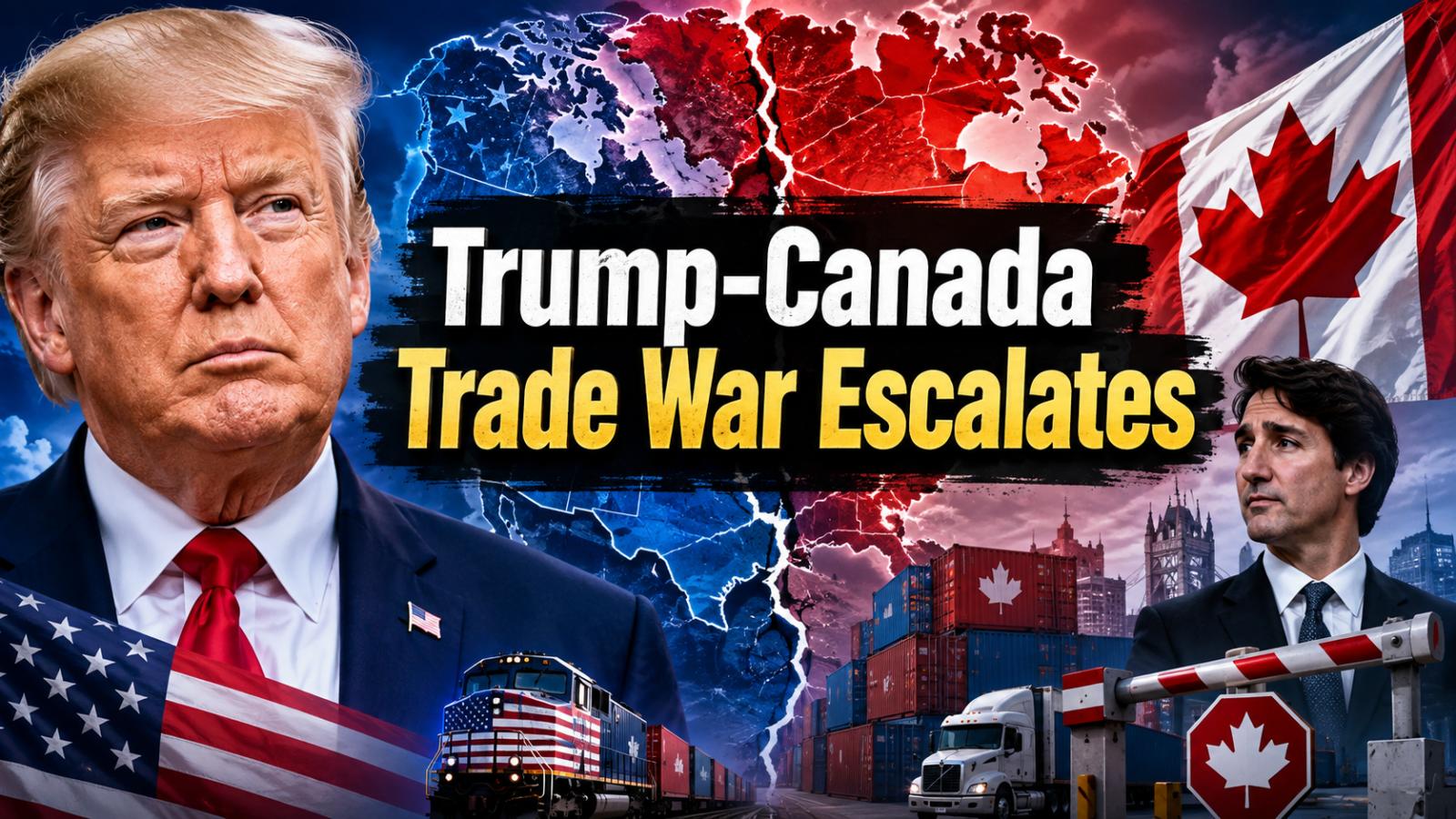
The Trump Canada trade war has entered a sharper phase after negotiations between Washington and Ottawa collapsed and new US tariffs took effect. Canada is preparing dollar-for-dollar retaliation from September 8, adding fresh pressure to one of the world's largest and most integrated trading relationships.
Canada Tariffs
The United States imposed tariffs of up to 50% on a new group of Canadian goods beginning August 22 after last-minute negotiations failed to produce an agreement. Canada says the measures affect C$27.6 billion worth of exports and has announced matching counter-tariffs covering the same value of US imports.
The Canadian countermeasures are scheduled to begin on September 8 and will target sectors including steel, dairy products, appliances, agricultural equipment, pulp and paper, plastics and electronics. Canada's Department of Finance says tariff rates of 15%, 25% and 50% will broadly match the US measures on affected goods.
Carney Response
Prime Minister Mark Carney has taken a firm position following the breakdown of talks. Canadian officials said Washington introduced conditions near the end of negotiations that Ottawa considered economically unacceptable.
Carney has promised a dollar-for-dollar response while also announcing support for Canadian businesses and workers exposed to the tariffs. No immediate new negotiating round has been announced, increasing the possibility that the dispute could continue into the autumn.
Canada's challenge is significant because the United States remains its dominant export market. However, the dispute is also pushing Ottawa to look more aggressively at trade diversification and infrastructure that could increase access to markets outside the US.
Trump Canada Tensions
President Donald Trump has intensified his criticism of Canada as trade relations have deteriorated. In recent remarks, he described Canada as particularly difficult to negotiate with and said it was time to take a tougher approach toward the country.
The political dispute has also expanded beyond tariffs. The source article describes Trump's decision to order federal agencies to refer to Lake Ontario as “Lake America,” a move that drew criticism in Canada and opposition from New York Governor Kathy Hochul.
Such symbolic disputes have added another layer of tension to an economic relationship already strained by tariffs and uncertainty surrounding the future operation of North American trade rules.
US Canada Trade
The consequences extend well beyond politics. Canada is one of America's largest trading partners, and supply chains in automobiles, metals, agriculture and manufacturing cross the border repeatedly before finished products reach consumers.
Economists warn that prolonged tariffs could increase costs for businesses on both sides while weakening investment. Canada's economy recorded stronger-than-expected growth in the second quarter, but analysts say renewed tariffs could threaten that momentum.
The dispute also comes as both governments navigate an increasingly uncertain future for the US-Mexico-Canada trade framework, making the current confrontation more consequential than a temporary argument over individual products.
Iran War Pressure
Trump's confrontation with Canada is unfolding while his administration remains involved in the six-month conflict with Iran. The war has weighed on US public opinion, disrupted energy markets and contributed to higher fuel costs.
A Reuters/Ipsos poll published in August put Trump's approval rating at 33%, while support for US military action against Iran had fallen to 31%. Most respondents expected the conflict to remain prolonged.
For Washington and Ottawa, however, the immediate economic question is simpler: whether either side will return to negotiations before Canada's September 8 retaliatory measures take effect. Without renewed talks, the Trump Canada trade war is moving from political rhetoric toward a deeper economic confrontation.