Edit

Pakistan Food Crisis Deepens as Families Eat Less, Spend More

Pakistan Food Crisis Deepens as Families Eat Less, Spend More
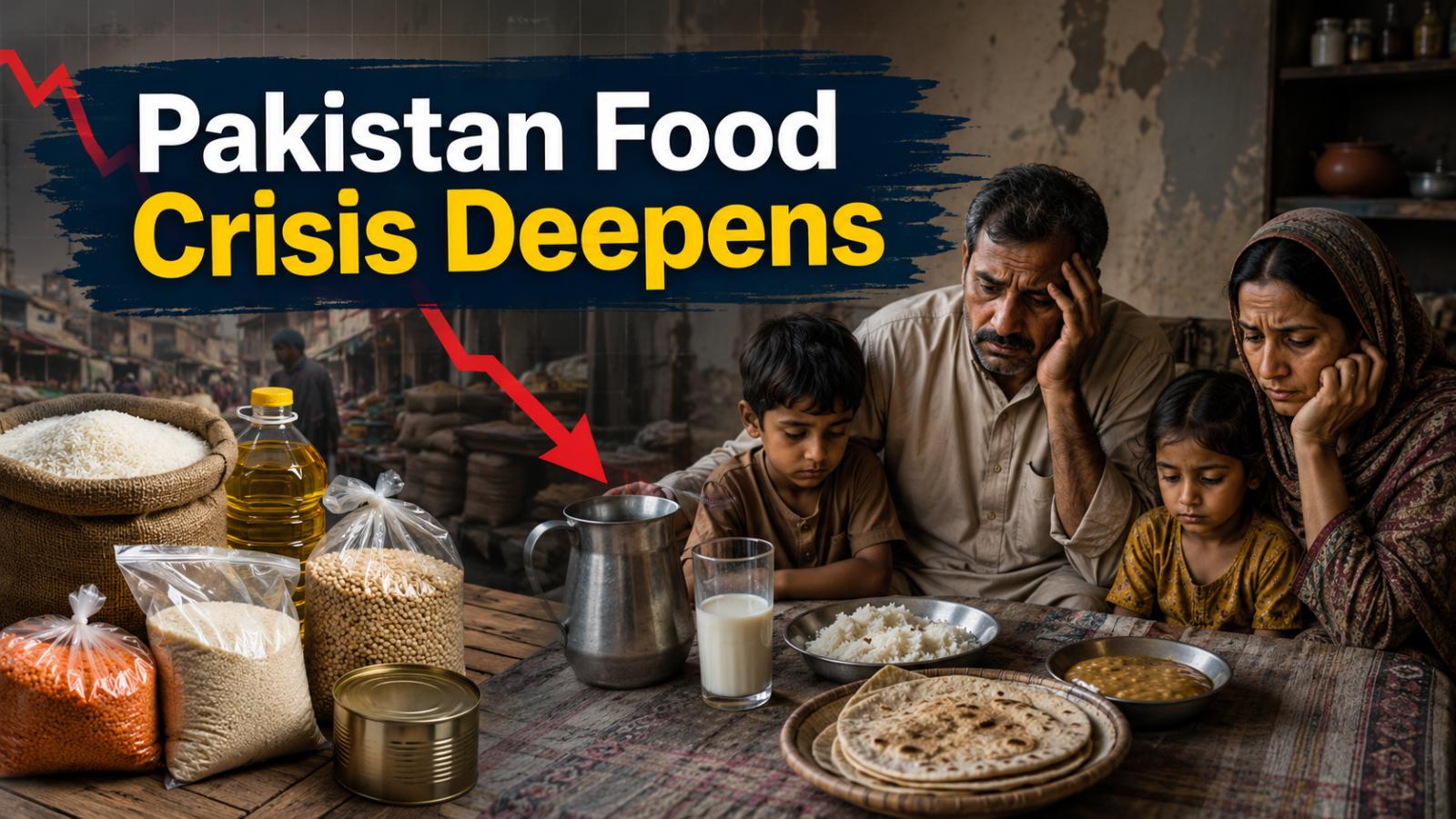
Pakistan’s food crisis is increasingly visible at the household level, with official data showing families consuming less of many everyday foods while food insecurity continues to rise. The decline in milk, meat, rice and other staples suggests that affordability is reshaping diets and pushing more households toward cheaper sources of calories.



Food Insecurity Rises

Data from the Pakistan Bureau of Statistics shows that the share of households facing moderate to severe food insecurity increased from 15.92% in 2019 to 24.35% in 2025. Severe food insecurity more than doubled over the same period, rising from 2.37% to 5.04%.

The figures mean nearly one in four households now experiences some level of serious difficulty accessing enough food. This is no longer only an inflation story. It points to a broader deterioration in living standards, particularly for families already spending a large share of their income on basic necessities.

Diet Quality Declines

Food consumption has fallen across most major categories in both urban and rural Pakistan over the past six years. Families are eating less rice, smaller quantities of wheat-based foods, less meat and less milk. Even tea consumption has declined.

When incomes fail to keep pace with food prices, households usually do not stop eating entirely. Instead, they reduce portions, cut expensive foods and substitute cheaper options. That can keep calorie intake going while reducing protein, vitamins and other nutrients needed for healthy development.

The long-term consequences are serious. Children receiving less milk, meat and other nutrient-rich foods face greater risks to growth and development, while adults living on poorer-quality diets may experience lower energy, weaker health and reduced productivity.

Ghee Consumption Surges

One striking exception to the broader decline is vanaspati ghee. Average monthly consumption reportedly rose by about 81%, from roughly 690 grams to 1.25 kilograms.

The increase suggests that affordability is playing a larger role in determining diets. When households cannot regularly afford more nutritious foods, inexpensive fats and calorie-dense products can become attractive substitutes.

This does not necessarily mean people are consuming more food overall. Instead, it may indicate that household diets are shifting toward cheaper calories as meat, dairy and other foods become harder to afford.

Food Prices Pressure Families

Pakistan has traditionally described itself as an agricultural economy capable of producing much of its own food. Yet the country has increasingly depended on food imports, while domestic prices have placed greater pressure on household budgets.

The problem therefore extends beyond agricultural production. A country can produce food and still face widespread food insecurity if families cannot afford to buy what is available.

That distinction is critical. Food security depends not only on supply but also on household income, prices, distribution and access to nutritious options.

Nutrition Crisis Risks Growth

Poor nutrition can create a damaging economic cycle. Inadequate diets weaken health and productivity, lower productivity limits earning potential, and weaker household incomes make nutritious food even harder to afford.

If the current trend continues, Pakistan could face consequences exteing far beyond today’s cost-of-living pressures. Higher malnutrition, weaker human capital and greater healthcare needs could weigh on future economic growth.

The most important warning in the latest figures is therefore not simply that Pakistanis are eating less. It is that many families appear to be eating worse because healthier choices are becoming financially harder to reach.

What is your response?

joyful Joyful 0%
cool Cool 0%
thrilled Thrilled 0%
upset Upset 0%
unhappy Unhappy 0%
AD
AD
AD
AD
AD
AD
AD
AD
AD