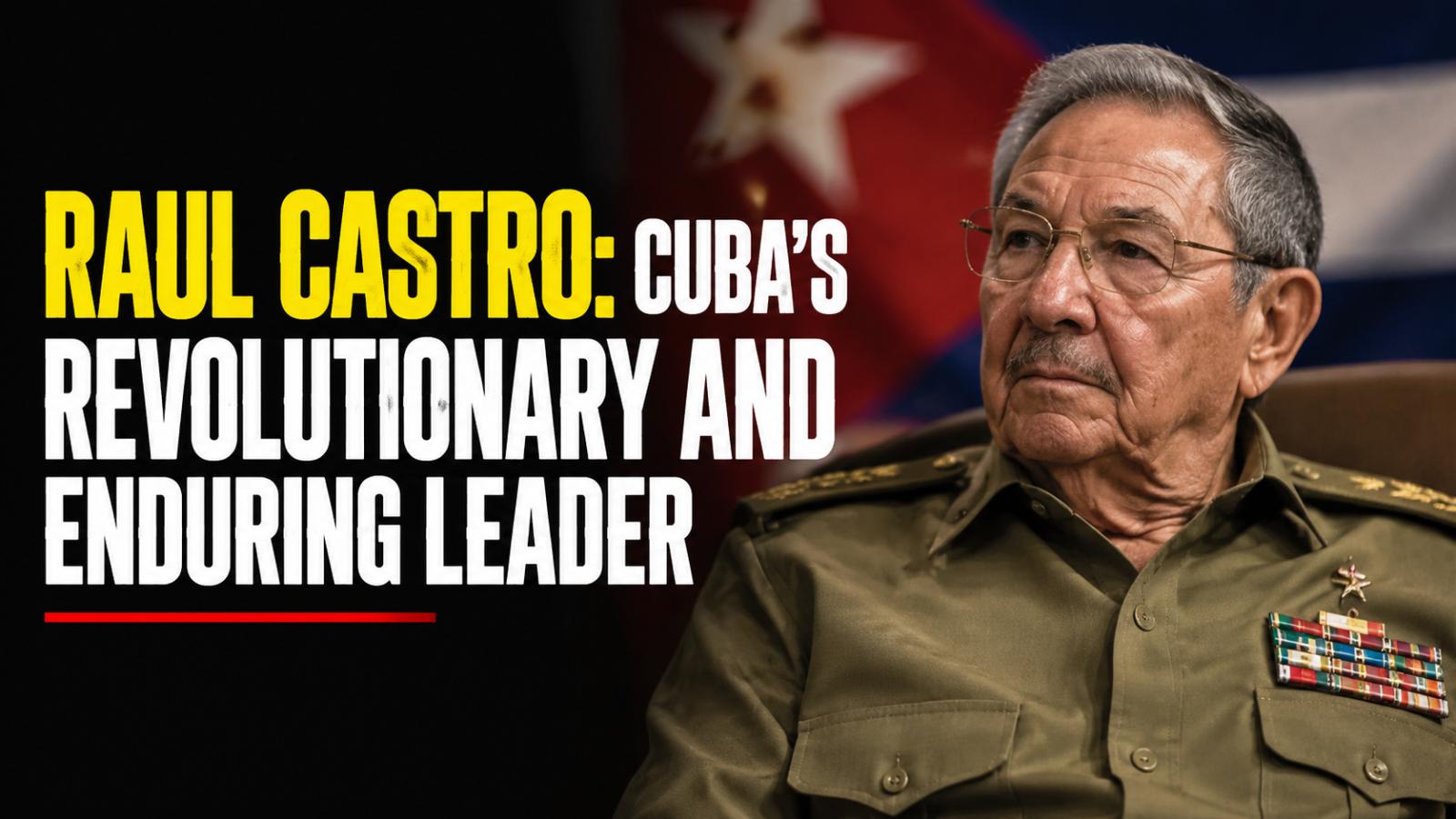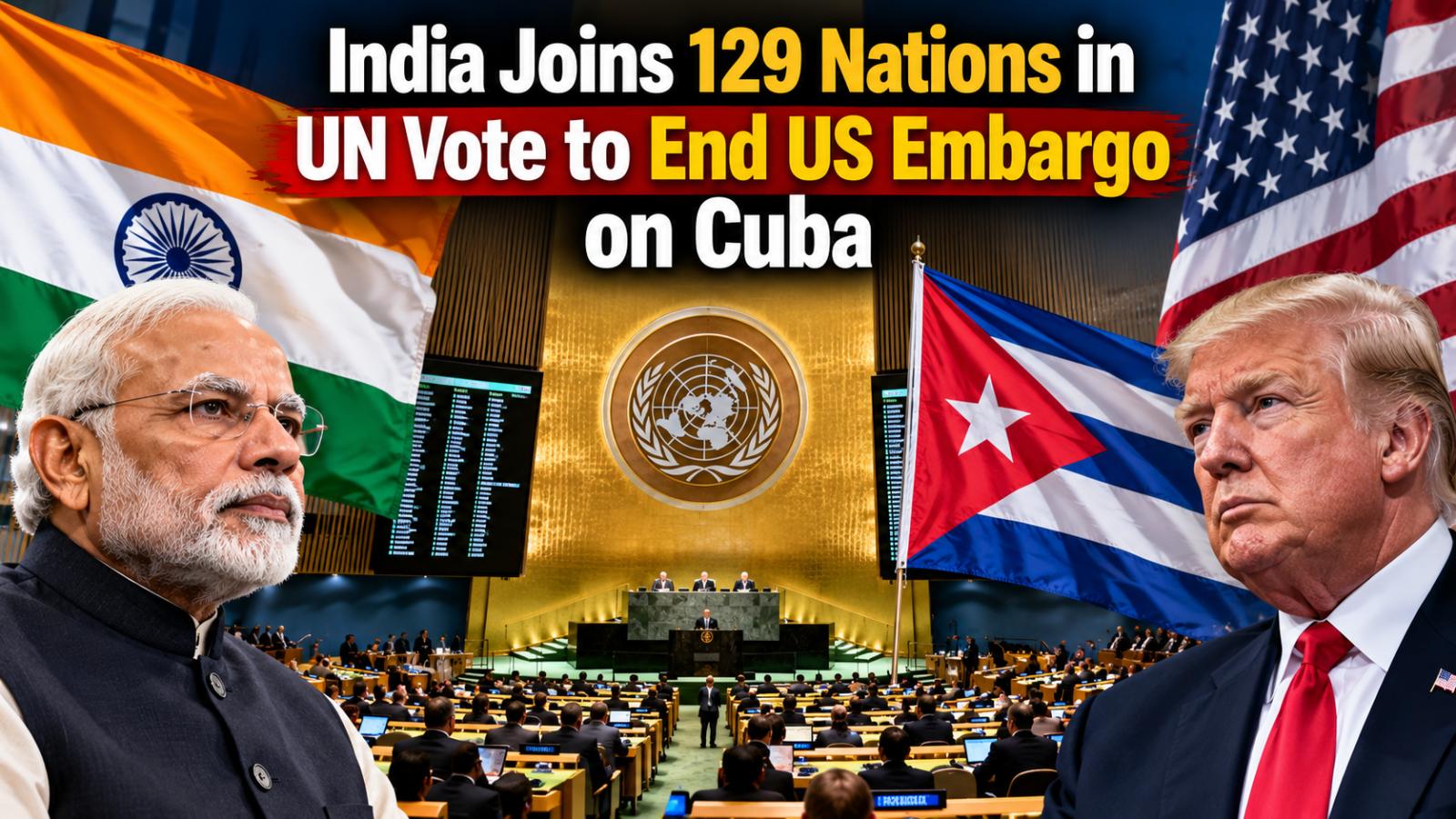
India joined 129 other countries in supporting a United Nations resolution calling for an end to the decades-old US economic, commercial and financial embargo on Cuba. The General Assembly adopted the measure on October 28, 2026, although support fell sharply from the previous year amid growing diplomatic tensions between Washington and Havana.
India Supports UN Cuba Embargo Resolution
India reaffirmed its opposition to economic measures that affect the sovereignty and development of other countries.
Addressing the General Assembly, Soumya Nair, a counsellor at India's Permanent Mission to the UN, called for respect for international law and the principles of the UN Charter.
New Delhi expressed hope that lifting the embargo would help Cuba strengthen international cooperation and improve economic opportunities for its people.
UN General Assembly Cuba Vote Results
The resolution passed with 130 votes in favour, 17 against and 25 abstentions.
India supported the measure, while the United States, Israel, Ukraine and the United Arab Emirates were among countries voting against it.
Support declined from 165 votes in 2025. Germany and Italy were among countries that changed their positions and abstained this year.
The annual resolution has been adopted since 1992, except in 2020 when the vote was suspended during the COVID-19 pandemic.
US Cuba Embargo and Fuel Restrictions
The US embargo dates back to 1960 and restricts trade, financial transactions and other economic activities involving Cuba.
Washington has increased pressure on Havana through measures affecting oil supplies, contributing to fuel shortages and electricity disruptions.
Cuban officials argue that these restrictions have harmed healthcare, food distribution and essential services.
The United States maintains that Cuba's economic difficulties are primarily linked to the policies of its government.
Cuba and US Clash at United Nations
The debate was marked by a confrontation between Cuban Foreign Minister Bruno Rodríguez and US Ambassador Mike Waltz.
Rodríguez accused Washington of pressuring countries to change their votes and criticised the humanitarian impact of the embargo.
Waltz rejected those allegations, arguing that Cuba's leadership bears responsibility for the country's economic problems.
The disagreement led to tense exchanges during the General Assembly proceedings.
Global Support for Ending Cuba Sanctions
Although fewer countries supported the resolution this year, a majority of voting nations continued to call for an end to the embargo.
The measure is non-binding and cannot compel Washington to lift its restrictions.
Removing the core embargo would require action under US law, including congressional involvement.
The vote highlights continuing differences over sanctions, national sovereignty and economic pressure, while leaving the future of US-Cuba relations uncertain.