











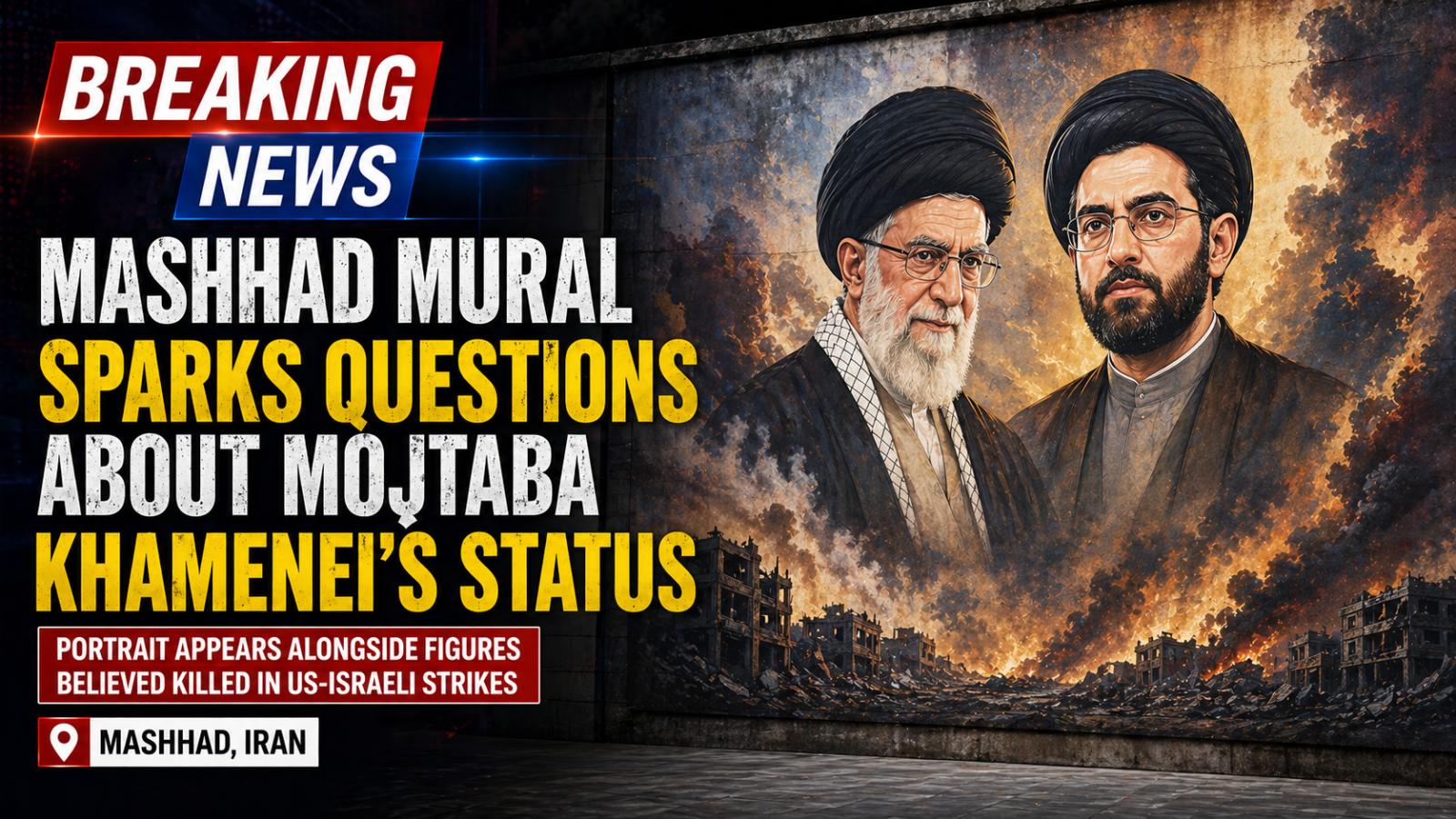
Iran Mural Raises Speculation Over Mojtaba Khamenei Health Condition
A newly unveiled mural in Mashhad, Iran, has drawn attention and sparked renewed speculation about the status of Mojtaba Khamenei, a key figure in Iran’s leadership. The artwork, revealed during a public ceremony attended by officials, features his portrait alongside several military and political figures believed to have died in recent US-Israeli airstrikes. The inclusion has prompted questions, as such murals in Iran are typically used to honor individuals associated with significan
Iran Mural Raises Speculation Over Mojtaba Khamenei Health Condition
A newly unveiled mural in Mashhad, Iran, has drawn attention and sparked renewed speculation about the status of Mojtaba Khamenei, a key figure in Iran’s leadership. The artwork, revealed during a public ceremony attended by officials, features his portrait alongside several military and political figures believed to have died in recent US-Israeli airstrikes. The inclusion has prompted questions, as such murals in Iran are typically used to honor individuals associated with significan
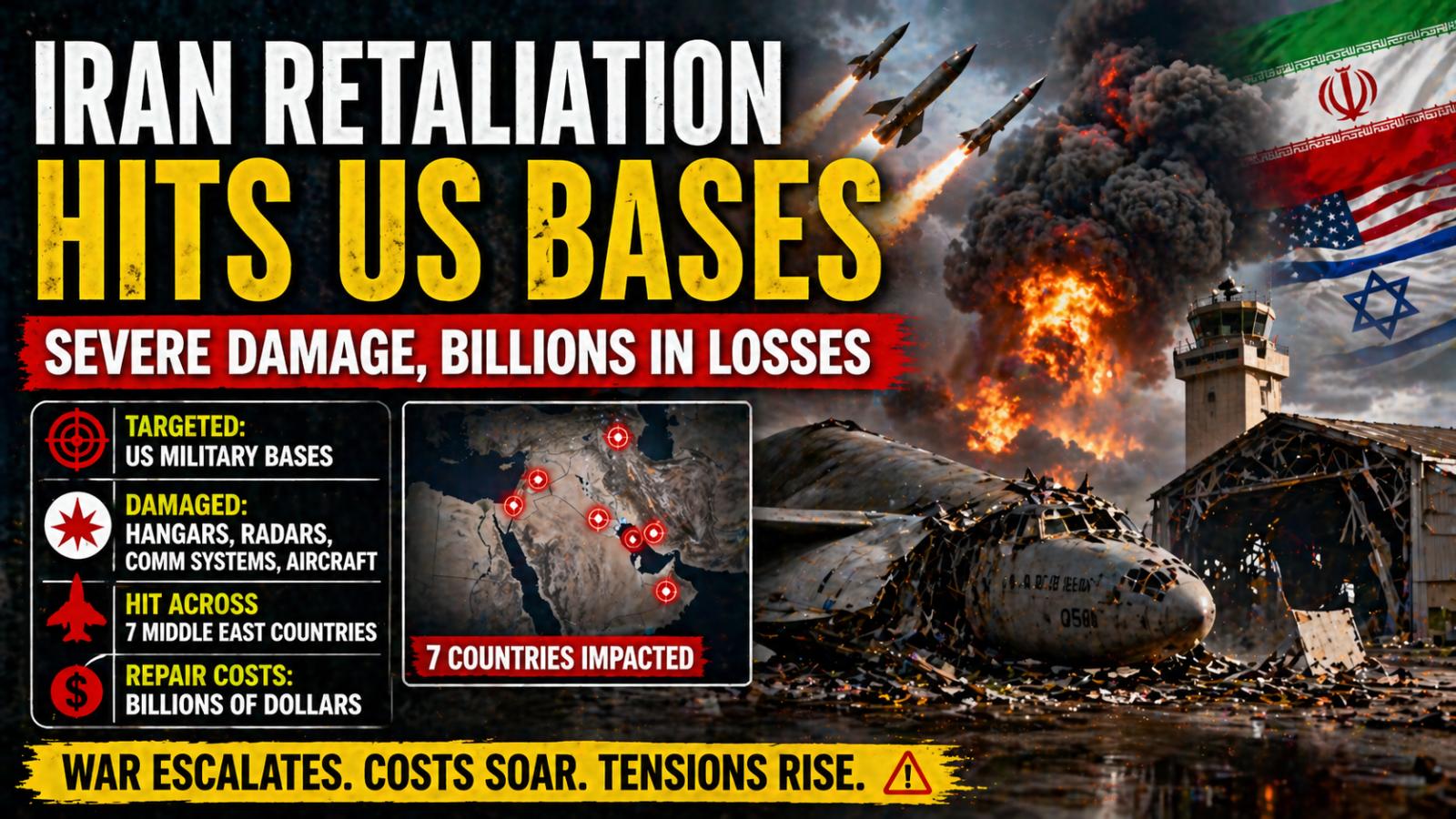
What damage did Iran war cause? US bases hit hard after airstrikes
The Iran war, which began on Friday, February 28, 2026, following joint airstrikes by the United States and Israel, has led to widespread infrastructure destruction across Iran while also triggering significant retaliation. New reporting indicates that Iranian counterattacks have caused extensive damage to US military installations across the Middle East, raising concerns about escalating defense costs and regional instability. Escalation after joint US-Israel airstrikes on
What damage did Iran war cause? US bases hit hard after airstrikes
The Iran war, which began on Friday, February 28, 2026, following joint airstrikes by the United States and Israel, has led to widespread infrastructure destruction across Iran while also triggering significant retaliation. New reporting indicates that Iranian counterattacks have caused extensive damage to US military installations across the Middle East, raising concerns about escalating defense costs and regional instability. Escalation after joint US-Israel airstrikes on

Google Data Centre in Vizag: $15 Billion Investment, Launch Date, Key Details
Google will invest $15 billion to set up a data centre and AI hub in Visakhapatnam, marking one of the biggest investments in Andhra Pradesh. One of the largest investments in Andhra Pradesh’s history is set to take shape as
Google Data Centre in Vizag: $15 Billion Investment, Launch Date, Key Details
Google will invest $15 billion to set up a data centre and AI hub in Visakhapatnam, marking one of the biggest investments in Andhra Pradesh. One of the largest investments in Andhra Pradesh’s history is set to take shape as

SRH Chase Down 228 as Abhishek, Ishan Outshine Vaibhav’s IPL Ton
Sunrisers Hyderabad chased down 229 in 18.3 overs to defeat Rajasthan Royals, who posted 228/6 in 20 overs, winning by 5 wickets at Sawai Mansingh Stadium, Jaipur.
SRH Chase Down 228 as Abhishek, Ishan Outshine Vaibhav’s IPL Ton
Sunrisers Hyderabad chased down 229 in 18.3 overs to defeat Rajasthan Royals, who posted 228/6 in 20 overs, winning by 5 wickets at Sawai Mansingh Stadium, Jaipur.

How did the Columbus half marathon impact the community? Event raises funds and unity
Thousands of participants gathered in downtown Columbus, Ohio, for the Capital City half marathon, a major annual event that brought together runners, volunteers, and supporters from across the United States. The race drew more than 11,000 runners and over 70 volunteers, with spectators lining the streets to cheer on participants who had spent months preparing. Months of preparation lead to race day success Many runners committed to rigorous training sch
How did the Columbus half marathon impact the community? Event raises funds and unity
Thousands of participants gathered in downtown Columbus, Ohio, for the Capital City half marathon, a major annual event that brought together runners, volunteers, and supporters from across the United States. The race drew more than 11,000 runners and over 70 volunteers, with spectators lining the streets to cheer on participants who had spent months preparing. Months of preparation lead to race day success Many runners committed to rigorous training sch
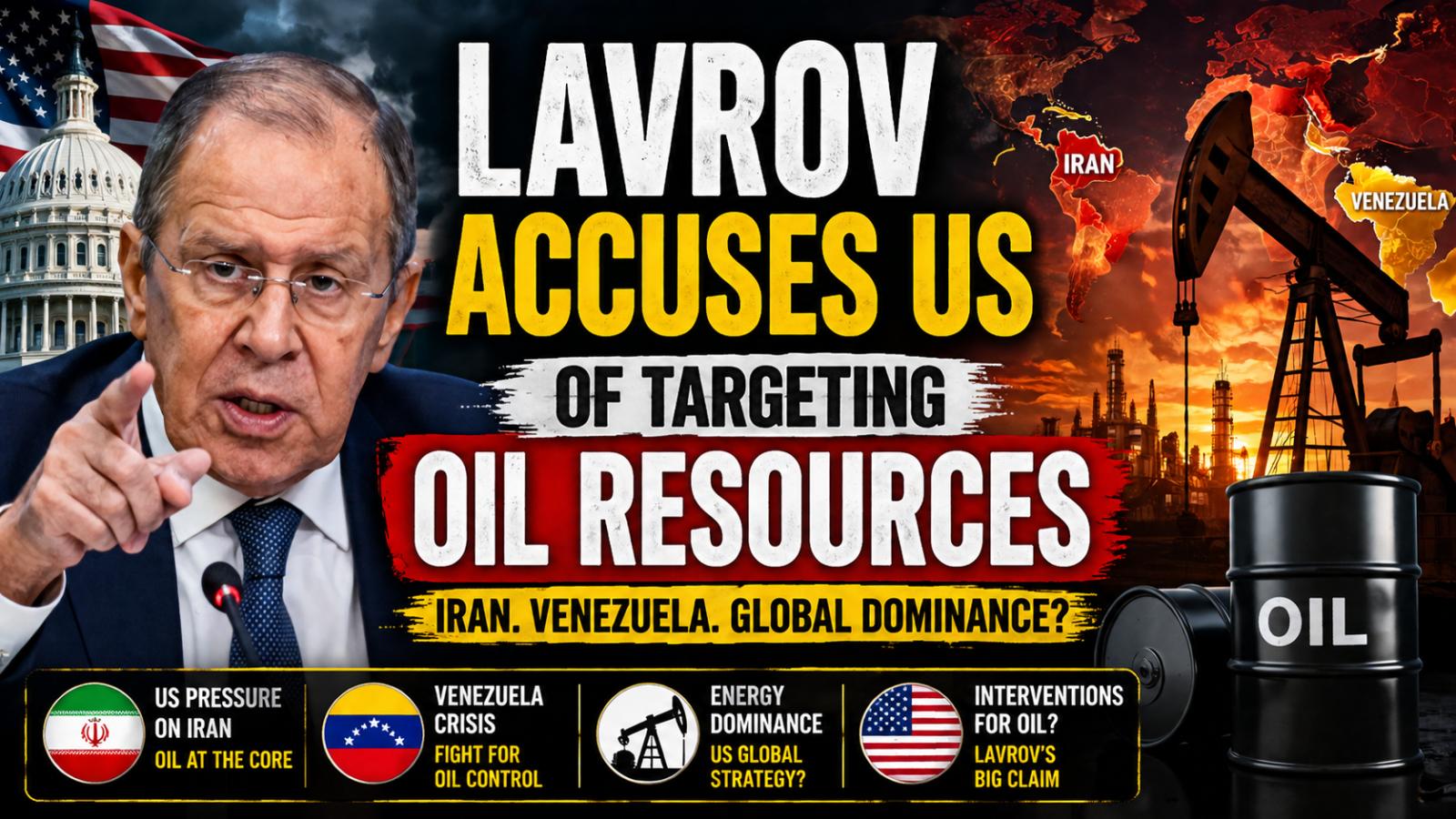
Russia’s Lavrov accuses US of targeting oil resources in foreign policy
Russia’s foreign minister accuses the US of pursuing oil-driven interventions in Iran and Venezuela, raising concerns over global energy dominance and geopolitical tensions. Russian Foreign Minister Sergei Lavrov has accused the United States of pursuing foreign interventions to secure control over global oil and energy resources, escalating rhetoric between Moscow and
Russia’s Lavrov accuses US of targeting oil resources in foreign policy
Russia’s foreign minister accuses the US of pursuing oil-driven interventions in Iran and Venezuela, raising concerns over global energy dominance and geopolitical tensions. Russian Foreign Minister Sergei Lavrov has accused the United States of pursuing foreign interventions to secure control over global oil and energy resources, escalating rhetoric between Moscow and
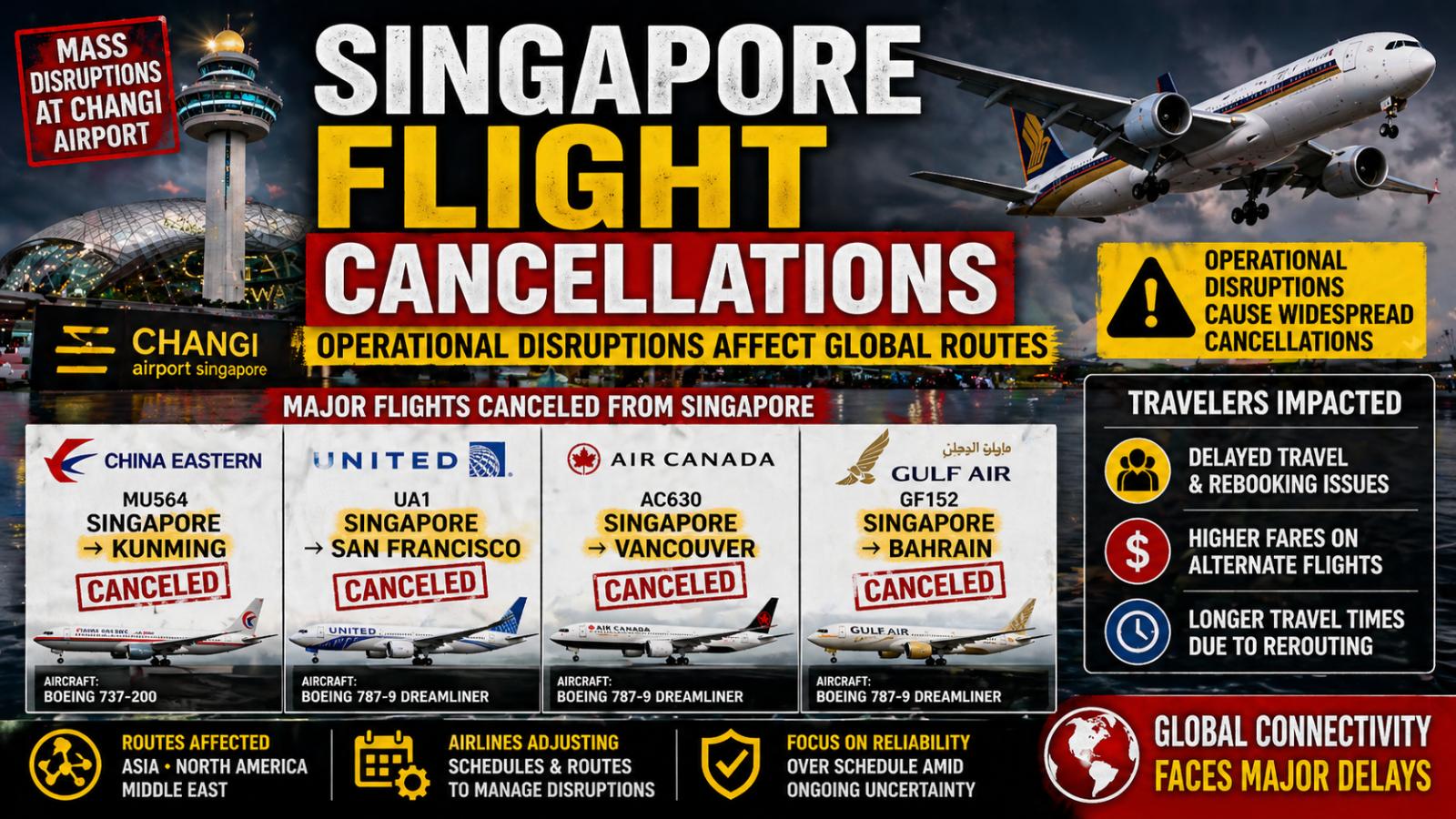
What caused Singapore flight cancellations? Operational disruptions affect global routes
What caused Singapore flight cancellations? Operational disruptions affect global routes as multiple departures from Singapore’s Changi Airport were canceled, impacting both regional and long-haul travel. The disruptions affected flights bound for Kunming, San Francisco, Vancouver, and Bahrain, underscoring operational challenges at one of Asia’s busiest aviation hubs. Airlines and routes affected across Asia, North America, and the Middle East Airli
What caused Singapore flight cancellations? Operational disruptions affect global routes
What caused Singapore flight cancellations? Operational disruptions affect global routes as multiple departures from Singapore’s Changi Airport were canceled, impacting both regional and long-haul travel. The disruptions affected flights bound for Kunming, San Francisco, Vancouver, and Bahrain, underscoring operational challenges at one of Asia’s busiest aviation hubs. Airlines and routes affected across Asia, North America, and the Middle East Airli

Lungi Ngidi stretchered off after head injury during DC vs PBKS match
Lungi Ngidi stretchered off after head injury during DC vs PBKS match as the Delhi Capitals fast bowler was taken to a hospital following a concerning on-field incident at Arun Jaitley Stadium in Delhi during an Indian Premier League game held on Saturday, April 25, 2026 (IST). The incident occurred during the third over of the second innings when Ngidi attempted a catch to dismiss Punjab Kings opener Priyansh Arya. While tracking the ball, the South African pacer
Lungi Ngidi stretchered off after head injury during DC vs PBKS match
Lungi Ngidi stretchered off after head injury during DC vs PBKS match as the Delhi Capitals fast bowler was taken to a hospital following a concerning on-field incident at Arun Jaitley Stadium in Delhi during an Indian Premier League game held on Saturday, April 25, 2026 (IST). The incident occurred during the third over of the second innings when Ngidi attempted a catch to dismiss Punjab Kings opener Priyansh Arya. While tracking the ball, the South African pacer
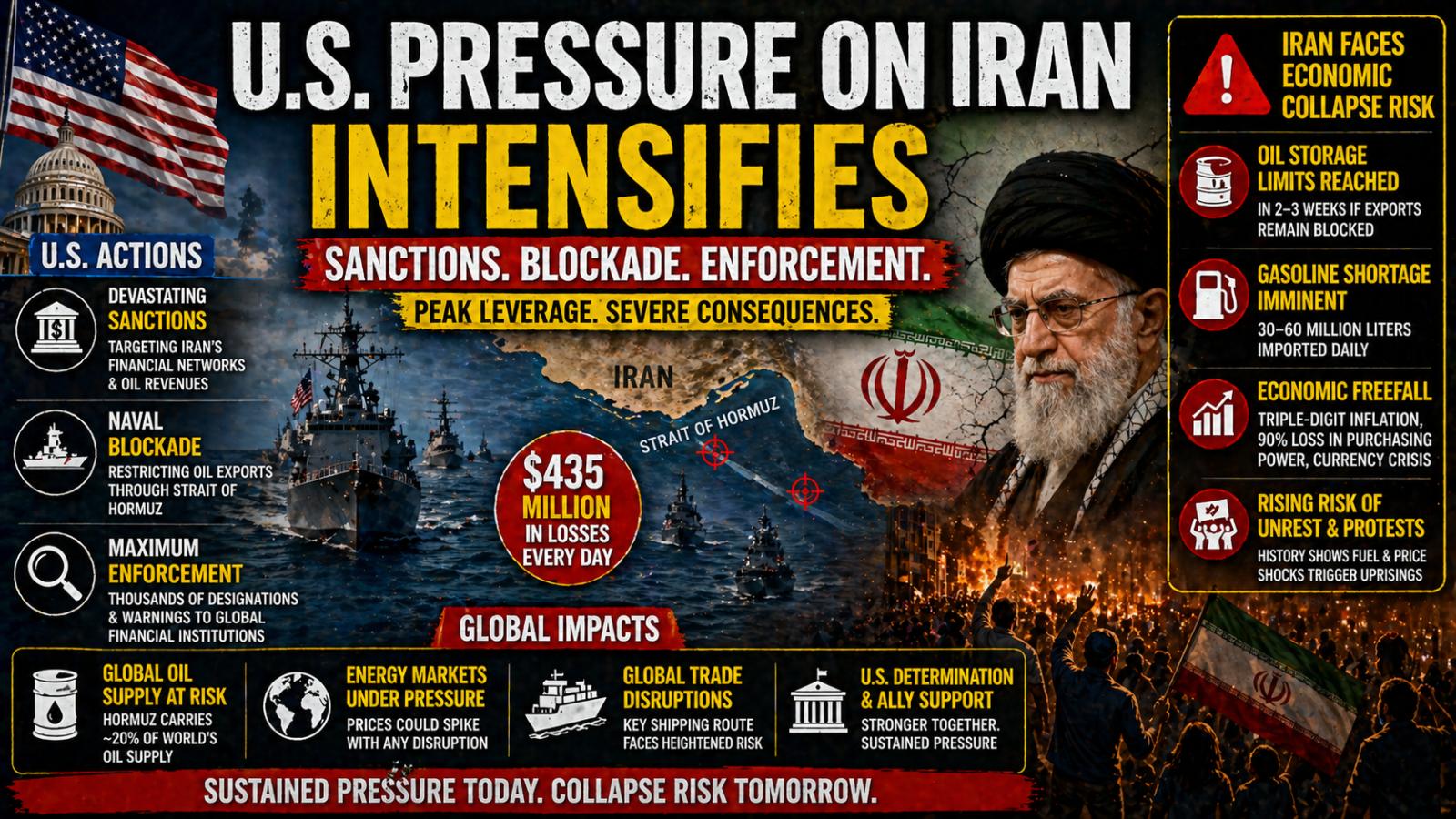
How is U.S. pressure on Iran intensifying? It combines sanctions, blockade, and enforcement
How is U.S. pressure on Iran intensifying? It combines sanctions, blockade, and enforcement as economic and geopolitical forces converge to place unprecedented strain on Tehran, according to a former U.S. Treasury sanctions expert who described the current moment as a rare alignment of leverage. Converging tools create peak economic pressure Miad Maleki, a former Treasury Department sanctions specialist, said the United States is applying multiple pressu
How is U.S. pressure on Iran intensifying? It combines sanctions, blockade, and enforcement
How is U.S. pressure on Iran intensifying? It combines sanctions, blockade, and enforcement as economic and geopolitical forces converge to place unprecedented strain on Tehran, according to a former U.S. Treasury sanctions expert who described the current moment as a rare alignment of leverage. Converging tools create peak economic pressure Miad Maleki, a former Treasury Department sanctions specialist, said the United States is applying multiple pressu

Why are AI firms hiring software executives? Talent shift accelerates enterprise push
Why are AI firms hiring software executives? Talent shift accelerates enterprise push is becoming a defining question across the technology sector as artificial intelligence companies aggressively recruit senior leaders from traditional software firms, signaling a strategic shift toward enterprise growth and customer expansion. AI companies target enterprise expertise from software leaders Executives from companies including Salesforce, Snowflake, and Datadog have recently joined AI firms such as OpenAI and Anthropic, according to multiple industry sources. These hires are often driven by lucrative compensation packages and the ability to leverage long-standing corporate relationships in enterprise markets. Among the most prominent moves, Denise Dresser transitioned to OpenAI as chief revenue officer after previously serving as CEO of Slack under Salesforce. Jennifer Majlessi also joined OpenAI in a go-to-market leadership role, reflecting a broader trend of AI firms strengthening their sales and commercialization capabilities. Enterprise growth becomes central to AI business strategy The hiring surge highlights a shift in priorities for AI companies, where enterprise adoption is increasingly seen as a key revenue driver. Corporate clients tend to offer more stable, long-term contracts, making them a “sticky” and profitable segment. OpenAI has indicated that enterprise customers already account for roughly 40% of its business, with expectations to grow that share further. AI firms are also recruiting specialized talent such as forward-deployed engineers from Palantir Technologies, professionals known for implementing complex software solutions directly within client organizations. Software sector faces mounting pressure from AI disruption The talent migration comes at a challenging time for traditional software companies, which are already facing investor concerns about AI-driven disruption to subscription-based cloud models. Industry tracking funds have recorded significant declines, reflecting uncertainty about long-term competitiveness. At the same time, layoffs across major tech companies underscore a broader workforce transition. Firms like Oracle, Meta Platforms, and Microsoft have announced workforce reductions while reallocating resources toward AI initiatives. Workforce shifts reshape career paths in technology The evolving landscape is prompting professionals to reassess career trajectories, with many seeking roles aligned with AI innovation. However, integrating talent from traditional software firms into fast-paced AI environments can present challenges, particularly around culture and expectations for long working hours. Still, the movement of experienced executives into AI companies signals a broader structural shift in the tech industry, where enterprise-focused growth and advanced AI capabilities are rapidly redefining competitive dynamics.
Why are AI firms hiring software executives? Talent shift accelerates enterprise push
Why are AI firms hiring software executives? Talent shift accelerates enterprise push is becoming a defining question across the technology sector as artificial intelligence companies aggressively recruit senior leaders from traditional software firms, signaling a strategic shift toward enterprise growth and customer expansion. AI companies target enterprise expertise from software leaders Executives from companies including Salesforce, Snowflake, and Datadog have recently joined AI firms such as OpenAI and Anthropic, according to multiple industry sources. These hires are often driven by lucrative compensation packages and the ability to leverage long-standing corporate relationships in enterprise markets. Among the most prominent moves, Denise Dresser transitioned to OpenAI as chief revenue officer after previously serving as CEO of Slack under Salesforce. Jennifer Majlessi also joined OpenAI in a go-to-market leadership role, reflecting a broader trend of AI firms strengthening their sales and commercialization capabilities. Enterprise growth becomes central to AI business strategy The hiring surge highlights a shift in priorities for AI companies, where enterprise adoption is increasingly seen as a key revenue driver. Corporate clients tend to offer more stable, long-term contracts, making them a “sticky” and profitable segment. OpenAI has indicated that enterprise customers already account for roughly 40% of its business, with expectations to grow that share further. AI firms are also recruiting specialized talent such as forward-deployed engineers from Palantir Technologies, professionals known for implementing complex software solutions directly within client organizations. Software sector faces mounting pressure from AI disruption The talent migration comes at a challenging time for traditional software companies, which are already facing investor concerns about AI-driven disruption to subscription-based cloud models. Industry tracking funds have recorded significant declines, reflecting uncertainty about long-term competitiveness. At the same time, layoffs across major tech companies underscore a broader workforce transition. Firms like Oracle, Meta Platforms, and Microsoft have announced workforce reductions while reallocating resources toward AI initiatives. Workforce shifts reshape career paths in technology The evolving landscape is prompting professionals to reassess career trajectories, with many seeking roles aligned with AI innovation. However, integrating talent from traditional software firms into fast-paced AI environments can present challenges, particularly around culture and expectations for long working hours. Still, the movement of experienced executives into AI companies signals a broader structural shift in the tech industry, where enterprise-focused growth and advanced AI capabilities are rapidly redefining competitive dynamics.
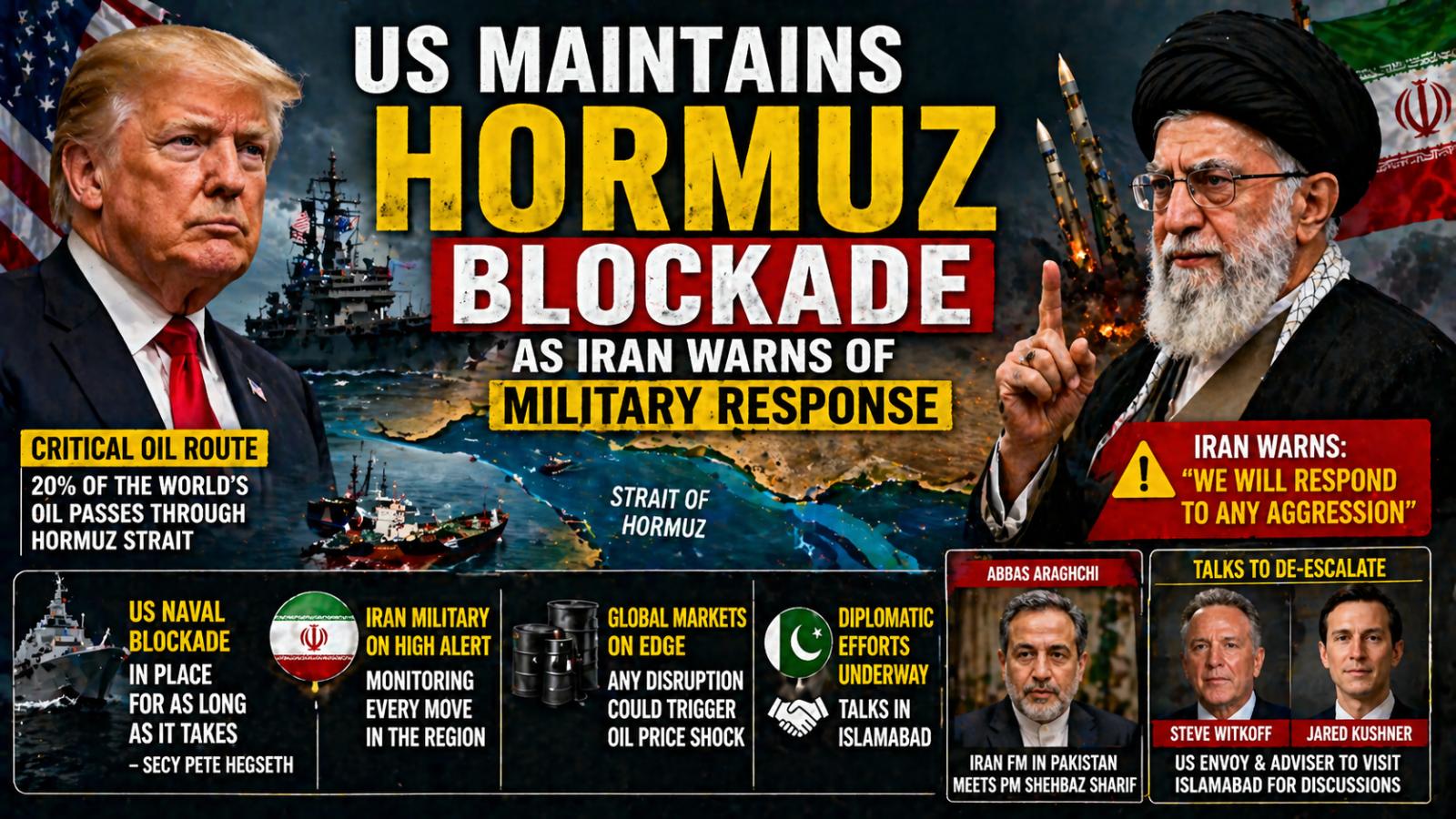
US maintains Hormuz blockade as Iran warns of military response
US maintains Hormuz blockade as Iran warns of retaliation, escalating tensions over a key global oil route while both sides pursue parallel diplomatic talks in Pakistan. US maintains Hormuz blockade as Iran warns of military response as tensions escalated on Saturday, April 25, 2026, when Iranian officials warned they would respond if U.S. naval actions targeting Iranian ports continue. The statement, issued through state-run media, described the U.S. presence in t
US maintains Hormuz blockade as Iran warns of military response
US maintains Hormuz blockade as Iran warns of retaliation, escalating tensions over a key global oil route while both sides pursue parallel diplomatic talks in Pakistan. US maintains Hormuz blockade as Iran warns of military response as tensions escalated on Saturday, April 25, 2026, when Iranian officials warned they would respond if U.S. naval actions targeting Iranian ports continue. The statement, issued through state-run media, described the U.S. presence in t
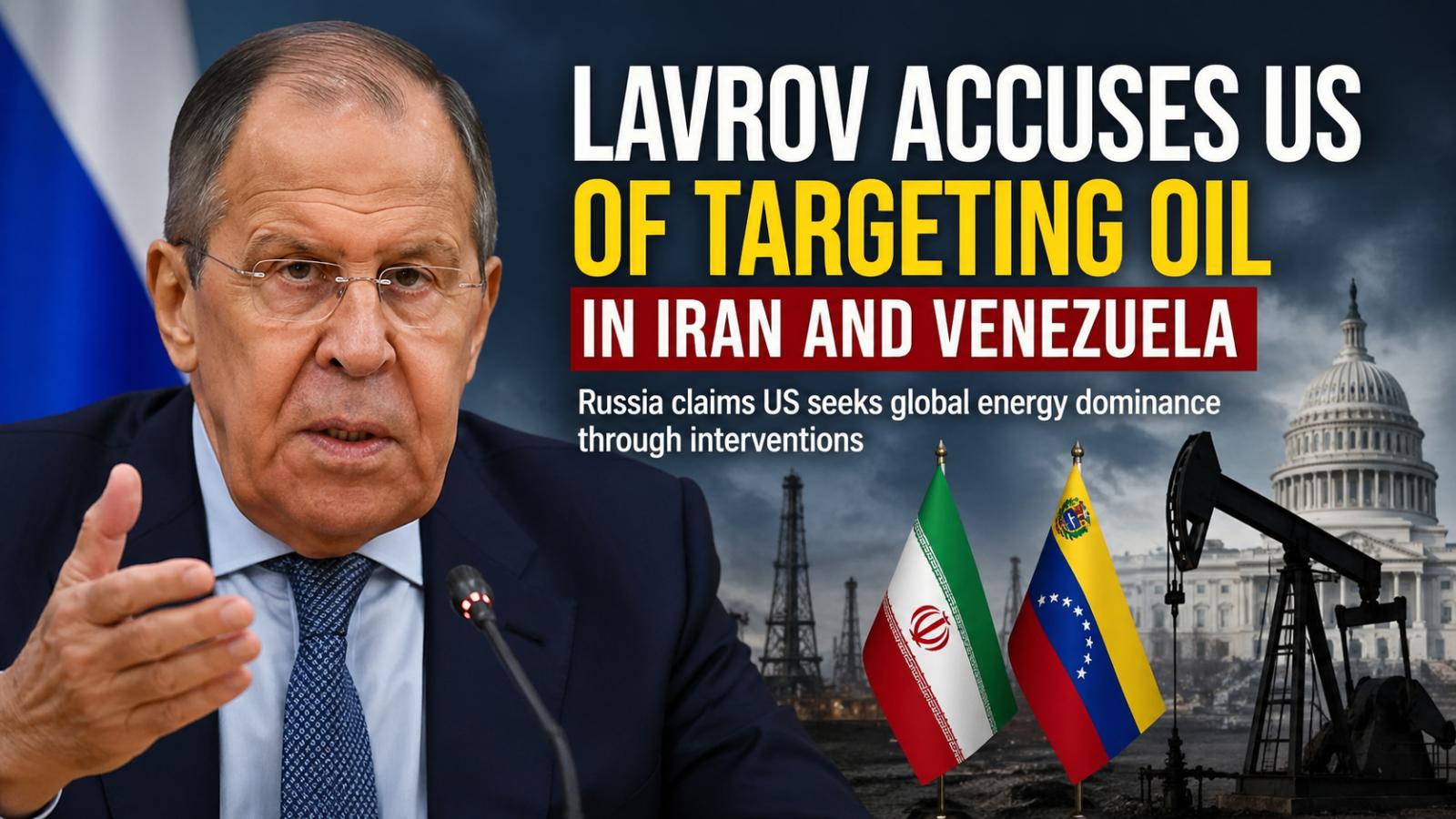
Lavrov criticizes US foreign policy over oil and energy dominance
Russian Foreign Minister Sergei Lavrov has accused the United States of pursuing oil-driven policies in Iran and Venezuela, claiming that control over global energy resources is a central goal of Washington’s foreign strategy. Speaking in a televised interview, Lavrov said the US focuses primarily on its own interests and is willing to use extreme methods to secure access to oil and energy assets in resource-rich nations. Lavrov alleged that US actions in countries such as Iran and Venezuela are not hidden, but openly tied to securing influence over energy markets. According to him, Washington’s approach reflects a broader ambition to dominate global energy supply chains. He argued that such policies show a shift away from international legal norms, suggesting that decisions are increasingly shaped by power rather than agreed rules. The Russian minister also criticized the US for what he described as inconsistent diplomacy. He urged Washington to prioritize dialogue, stating that the US has a pattern of withdrawing from agreements instead of maintaining stable international commitments. His remarks come as American envoys prepare for discussions in Pakistan, signaling ongoing diplomatic engagement in the region. The White House has indicated openness to negotiations with Iran, while maintaining that it will not act under pressure. Meanwhile, Iran’s Foreign Minister Abbas Araghchi has begun a regional visit, adding to the ongoing diplomatic activity surrounding the issue. Lavrov further linked US foreign policy to developments in Europe, particularly in the context of the Ukraine conflict. He accused Washington of encouraging European nations to reduce dependence on Russian gas, framing this as part of a broader geopolitical strategy. According to Lavrov, such moves resemble attempts to reshape global energy dynamics in a way that benefits US interests, raising concerns about a return to power-based international relations.
Lavrov criticizes US foreign policy over oil and energy dominance
Russian Foreign Minister Sergei Lavrov has accused the United States of pursuing oil-driven policies in Iran and Venezuela, claiming that control over global energy resources is a central goal of Washington’s foreign strategy. Speaking in a televised interview, Lavrov said the US focuses primarily on its own interests and is willing to use extreme methods to secure access to oil and energy assets in resource-rich nations. Lavrov alleged that US actions in countries such as Iran and Venezuela are not hidden, but openly tied to securing influence over energy markets. According to him, Washington’s approach reflects a broader ambition to dominate global energy supply chains. He argued that such policies show a shift away from international legal norms, suggesting that decisions are increasingly shaped by power rather than agreed rules. The Russian minister also criticized the US for what he described as inconsistent diplomacy. He urged Washington to prioritize dialogue, stating that the US has a pattern of withdrawing from agreements instead of maintaining stable international commitments. His remarks come as American envoys prepare for discussions in Pakistan, signaling ongoing diplomatic engagement in the region. The White House has indicated openness to negotiations with Iran, while maintaining that it will not act under pressure. Meanwhile, Iran’s Foreign Minister Abbas Araghchi has begun a regional visit, adding to the ongoing diplomatic activity surrounding the issue. Lavrov further linked US foreign policy to developments in Europe, particularly in the context of the Ukraine conflict. He accused Washington of encouraging European nations to reduce dependence on Russian gas, framing this as part of a broader geopolitical strategy. According to Lavrov, such moves resemble attempts to reshape global energy dynamics in a way that benefits US interests, raising concerns about a return to power-based international relations.
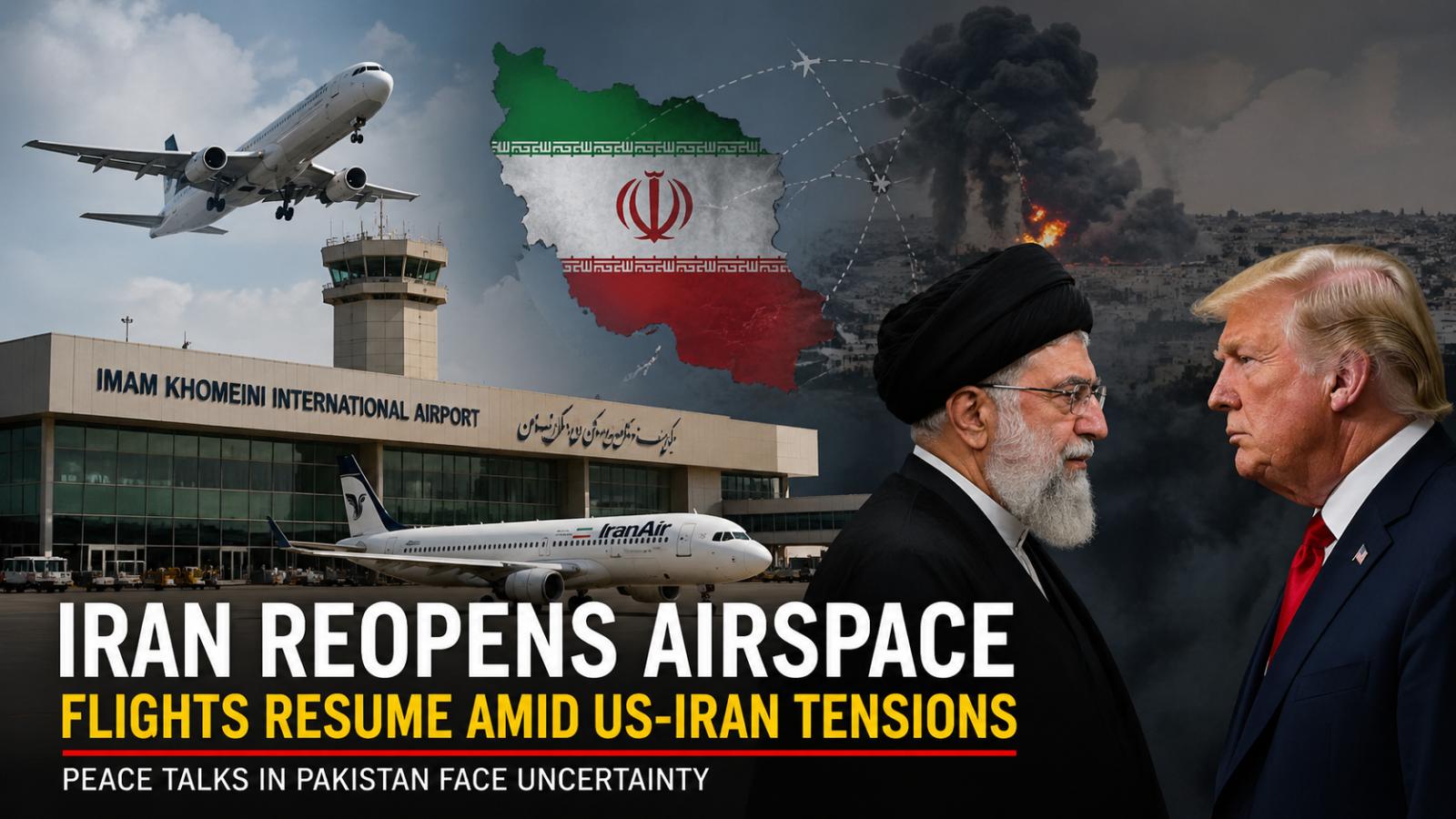
Iran airspace resumes operations amid ongoing US-Iran conflict tensions
Iran airspace has resumed operations nearly two months after being shut down following joint airstrikes by the United States and Israel, marking a cautious step toward normalcy amid ongoing regional tensions. The reopening of Imam Khomeini International Airport on April 25 signals a gradual recovery in Iran’s aviation sector, even as diplomatic uncertainty continues to cloud the broader US-Iran conflict. The airspace closure was enforced on February 28 after coordinated military action escalated into a wider confrontation, forcing Iran to halt civilian aviation across the country. With security assessments and operational preparations now underway, authorities have begun restoring flight services in phases. Initial departures from Tehran include routes to Medina, Muscat, and Istanbul, reflecting limited but significant progress in reconnecting international travel corridors. Iran’s Civil Aviation Authority has indicated that full restoration of aviation services will depend on continued coordination between military and civilian agencies. Earlier, on April 18, Iran reopened its eastern airspace to international flights, allowing transit operations to resume and easing pressure on regional air traffic routes. Officials emphasize that passenger safety remains the top priority during this phased reopening. At the same time, diplomatic efforts to de-escalate the US-Iran war have encountered fresh complications. A delegation linked to former US President Donald Trump, including envoy Steve Witkoff and adviser Jared Kushner, is currently in Pakistan for a second round of peace talks. However, Iran has clearly denied any direct engagement with US representatives during this visit, raising doubts about the progress of negotiations. Iran’s Foreign Ministry has clarified that its position will be conveyed through Pakistani intermediaries, with Foreign Minister Abbas Araghchi actively involved in discussions aimed at reducing tensions. Tehran continues to describe the conflict as “an externally imposed war of aggression”, stressing the importance of restoring regional stability and easing sanctions pressure. Previous negotiations collapsed after Iran strongly objected to US demands to maintain sanctions and naval restrictions during talks. As both sides remain firm in their positions, the reopening of Iran airspace stands as a significant operational step, even as broader geopolitical challenges remain unresolved.
Iran airspace resumes operations amid ongoing US-Iran conflict tensions
Iran airspace has resumed operations nearly two months after being shut down following joint airstrikes by the United States and Israel, marking a cautious step toward normalcy amid ongoing regional tensions. The reopening of Imam Khomeini International Airport on April 25 signals a gradual recovery in Iran’s aviation sector, even as diplomatic uncertainty continues to cloud the broader US-Iran conflict. The airspace closure was enforced on February 28 after coordinated military action escalated into a wider confrontation, forcing Iran to halt civilian aviation across the country. With security assessments and operational preparations now underway, authorities have begun restoring flight services in phases. Initial departures from Tehran include routes to Medina, Muscat, and Istanbul, reflecting limited but significant progress in reconnecting international travel corridors. Iran’s Civil Aviation Authority has indicated that full restoration of aviation services will depend on continued coordination between military and civilian agencies. Earlier, on April 18, Iran reopened its eastern airspace to international flights, allowing transit operations to resume and easing pressure on regional air traffic routes. Officials emphasize that passenger safety remains the top priority during this phased reopening. At the same time, diplomatic efforts to de-escalate the US-Iran war have encountered fresh complications. A delegation linked to former US President Donald Trump, including envoy Steve Witkoff and adviser Jared Kushner, is currently in Pakistan for a second round of peace talks. However, Iran has clearly denied any direct engagement with US representatives during this visit, raising doubts about the progress of negotiations. Iran’s Foreign Ministry has clarified that its position will be conveyed through Pakistani intermediaries, with Foreign Minister Abbas Araghchi actively involved in discussions aimed at reducing tensions. Tehran continues to describe the conflict as “an externally imposed war of aggression”, stressing the importance of restoring regional stability and easing sanctions pressure. Previous negotiations collapsed after Iran strongly objected to US demands to maintain sanctions and naval restrictions during talks. As both sides remain firm in their positions, the reopening of Iran airspace stands as a significant operational step, even as broader geopolitical challenges remain unresolved.

How did Western music begin in Athens? It started with mathematics and philosophy
Western music traces back to ancient Athens, where philosophy and mathematics defined sound and structure. In this early period, music was not merely entertainment but an intellectual discipline deeply connected to science and education. The ideas developed in Athens would later influence the foundations of Western music, shaping how sound is understood and organized. Mathematical foundations of musical sound Ancient Greek thinkers explored the relationship between numbers and sound, establishing principles that continue to influence music theory. Pythagoras, a key figure in this development, discovered that harmonious tones could be produced through simple mathematical ratios. By observing vibrating strings, he demonstrated that pitch changes were directly related to numerical relationships, laying the groundwork for structured scales and harmony. Music as part of education and philosophy In Athens, music was considered essential to intellectual and moral development. Philosophers such as Plato argued that music could influence human behavior, emotions, and character. As a result, music education became an integral part of learning, reinforcing the idea that sound had both scientific and psychological significance. Performance traditions in Greek theater Music also played a central role in public life, particularly in theatrical performances. Greek dramas incorporated choruses that combined singing, poetry, and movement to convey stories. These performances represented one of the earliest forms of organized musical storytelling, demonstrating how music functioned as both an artistic and communal experience. Lasting influence on Western musical systems Although ancient Greek compositions have not survived in their original form, the theoretical framework developed in Athens continues to shape Western music. Concepts such as scales, harmony, and structured composition evolved from these early discoveries. The emphasis on mathematical order and philosophical meaning established a foundation that later cultures expanded upon. The legacy of Athens highlights how music evolved from a study of numbers and ideas into a complex artistic system. This transition marks the beginning of a tradition that continues to influence modern music across the world.
How did Western music begin in Athens? It started with mathematics and philosophy
Western music traces back to ancient Athens, where philosophy and mathematics defined sound and structure. In this early period, music was not merely entertainment but an intellectual discipline deeply connected to science and education. The ideas developed in Athens would later influence the foundations of Western music, shaping how sound is understood and organized. Mathematical foundations of musical sound Ancient Greek thinkers explored the relationship between numbers and sound, establishing principles that continue to influence music theory. Pythagoras, a key figure in this development, discovered that harmonious tones could be produced through simple mathematical ratios. By observing vibrating strings, he demonstrated that pitch changes were directly related to numerical relationships, laying the groundwork for structured scales and harmony. Music as part of education and philosophy In Athens, music was considered essential to intellectual and moral development. Philosophers such as Plato argued that music could influence human behavior, emotions, and character. As a result, music education became an integral part of learning, reinforcing the idea that sound had both scientific and psychological significance. Performance traditions in Greek theater Music also played a central role in public life, particularly in theatrical performances. Greek dramas incorporated choruses that combined singing, poetry, and movement to convey stories. These performances represented one of the earliest forms of organized musical storytelling, demonstrating how music functioned as both an artistic and communal experience. Lasting influence on Western musical systems Although ancient Greek compositions have not survived in their original form, the theoretical framework developed in Athens continues to shape Western music. Concepts such as scales, harmony, and structured composition evolved from these early discoveries. The emphasis on mathematical order and philosophical meaning established a foundation that later cultures expanded upon. The legacy of Athens highlights how music evolved from a study of numbers and ideas into a complex artistic system. This transition marks the beginning of a tradition that continues to influence modern music across the world.
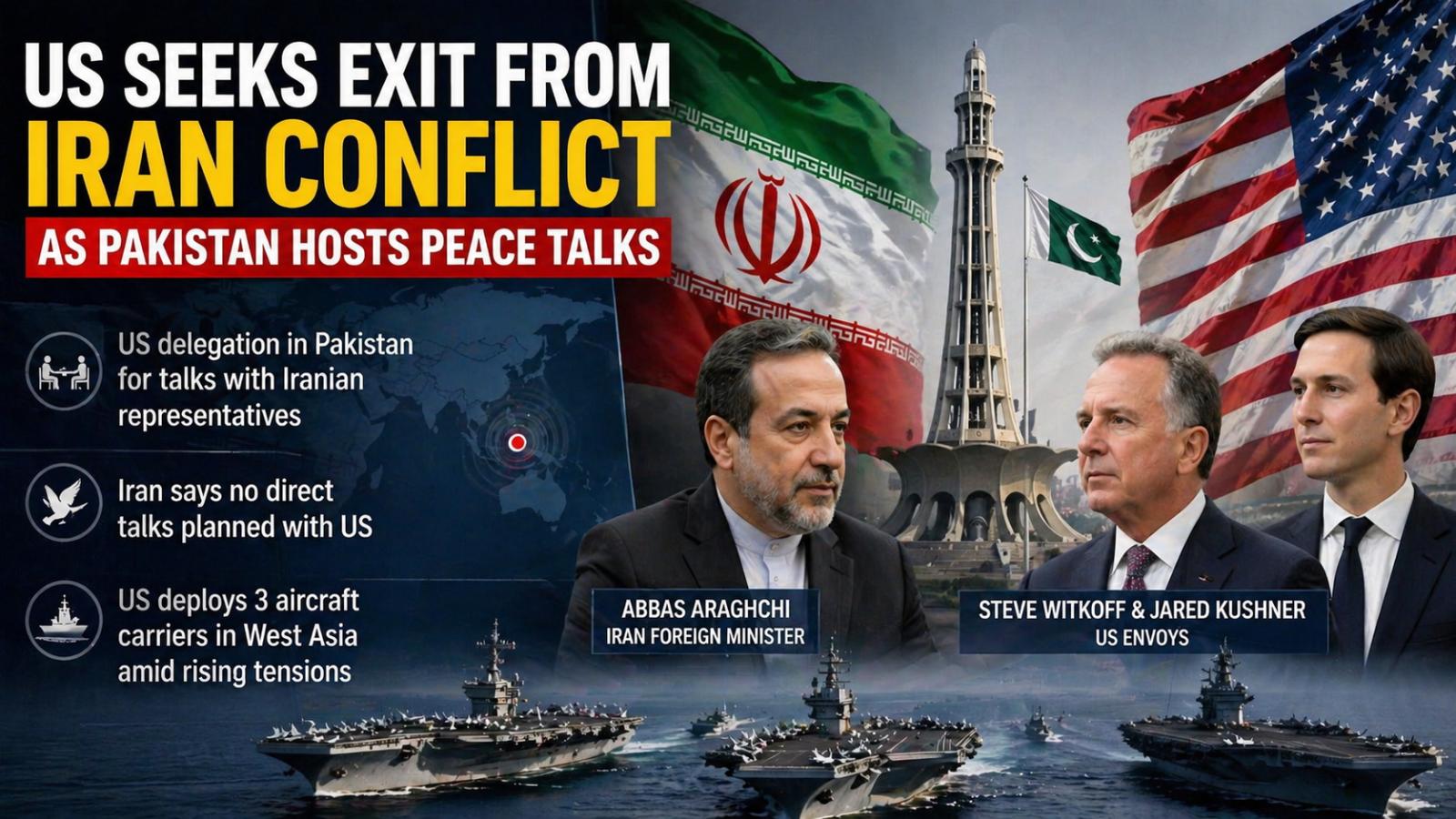
West Asia tensions rise as US envoys head to Pakistan for Iran talks
The US Iran conflict has entered a critical phase as Iran’s Defence Ministry claimed that the United States is seeking a “face-saving” way to exit the war, even as Washington sends a delegation to Pakistan for peace talks. The statement highlights growing diplomatic activity alongside rising military tensions in West Asia, with Pakistan emerging as a key mediator in the crisis. According to Iranian media reports, a defence ministry spokesperson said that Iran’s military strength has become dominant in the region, forcing the United States to look for a way out of what it described as a prolonged and difficult conflict. The remarks come at a time when US envoys Steve Witkoff and Jared Kushner are heading to Pakistan for discussions that the White House said would include talks with Iranian representatives. However, Iran has publicly denied plans for direct negotiations with the United States. Iranian Foreign Minister Abbas Araghchi arrived in Islamabad for an official visit and is scheduled to meet senior Pakistani officials. Iranian Foreign Ministry spokesperson Esmaeil Baqaei clarified that the visit is focused on consultations with Pakistan as part of its mediation efforts and not on direct dialogue with the US. He added that Iran’s position would be communicated through Pakistani channels. The diplomatic developments unfold against a backdrop of intensifying West Asia tensions, particularly around the Strait of Hormuz, a vital global oil route. The United States has significantly increased its military presence in the region, deploying three aircraft carrier strike groups, marking the largest such deployment since the Iraq war in 2003. According to US Central Command, the deployment includes more than 200 aircraft and around 15,000 personnel. As both diplomatic and military activities escalate, uncertainty remains over whether meaningful progress toward de-escalation can be achieved. While Pakistan continues its mediation role, the absence of direct Iran-US talks suggests that a resolution may still be distant, keeping the region on edge.
West Asia tensions rise as US envoys head to Pakistan for Iran talks
The US Iran conflict has entered a critical phase as Iran’s Defence Ministry claimed that the United States is seeking a “face-saving” way to exit the war, even as Washington sends a delegation to Pakistan for peace talks. The statement highlights growing diplomatic activity alongside rising military tensions in West Asia, with Pakistan emerging as a key mediator in the crisis. According to Iranian media reports, a defence ministry spokesperson said that Iran’s military strength has become dominant in the region, forcing the United States to look for a way out of what it described as a prolonged and difficult conflict. The remarks come at a time when US envoys Steve Witkoff and Jared Kushner are heading to Pakistan for discussions that the White House said would include talks with Iranian representatives. However, Iran has publicly denied plans for direct negotiations with the United States. Iranian Foreign Minister Abbas Araghchi arrived in Islamabad for an official visit and is scheduled to meet senior Pakistani officials. Iranian Foreign Ministry spokesperson Esmaeil Baqaei clarified that the visit is focused on consultations with Pakistan as part of its mediation efforts and not on direct dialogue with the US. He added that Iran’s position would be communicated through Pakistani channels. The diplomatic developments unfold against a backdrop of intensifying West Asia tensions, particularly around the Strait of Hormuz, a vital global oil route. The United States has significantly increased its military presence in the region, deploying three aircraft carrier strike groups, marking the largest such deployment since the Iraq war in 2003. According to US Central Command, the deployment includes more than 200 aircraft and around 15,000 personnel. As both diplomatic and military activities escalate, uncertainty remains over whether meaningful progress toward de-escalation can be achieved. While Pakistan continues its mediation role, the absence of direct Iran-US talks suggests that a resolution may still be distant, keeping the region on edge.

Kalvakuntla Kavitha Launches Telangana Praja Jagruthi, Paying Tribute to Telangana Icons
All preparations are in place for the launch of a new political party by Kalvakuntla Kavitha, daughter of former Telangana Chief Minister and BRS president K Chandrasekhar Rao. The event will take place on April 25, 2026, at 10:00 AM at Prof Jayashankar Grounds in Muneerabad, Medchal-Malkajgiri district. Kavitha’s new political party has been named “Telangana Praja Jagruthi”, a name that was registered two months ago. Kavitha, who resigned from the BRS and her Legislative Coun
Kalvakuntla Kavitha Launches Telangana Praja Jagruthi, Paying Tribute to Telangana Icons
All preparations are in place for the launch of a new political party by Kalvakuntla Kavitha, daughter of former Telangana Chief Minister and BRS president K Chandrasekhar Rao. The event will take place on April 25, 2026, at 10:00 AM at Prof Jayashankar Grounds in Muneerabad, Medchal-Malkajgiri district. Kavitha’s new political party has been named “Telangana Praja Jagruthi”, a name that was registered two months ago. Kavitha, who resigned from the BRS and her Legislative Coun
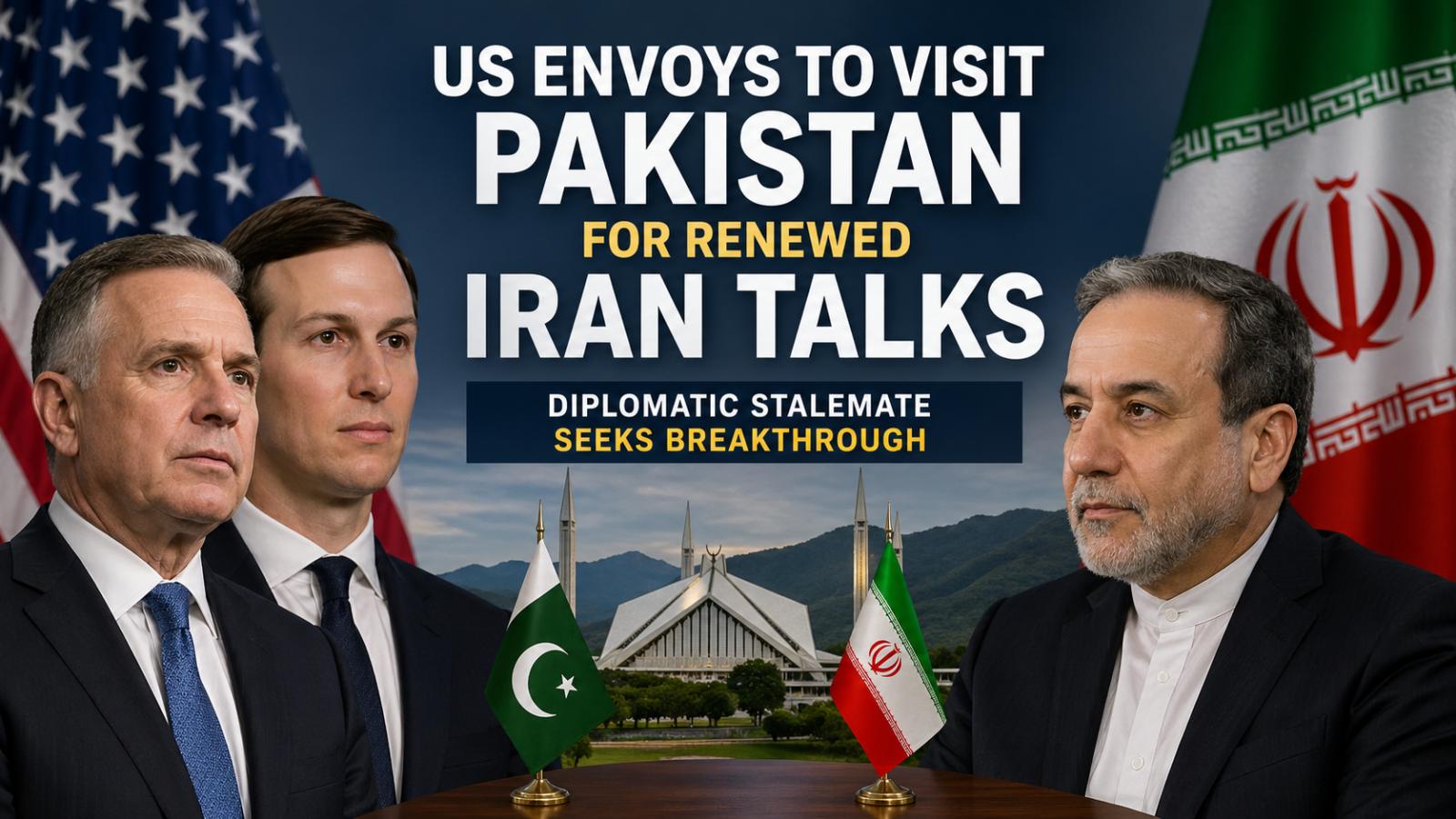
US envoys to visit Pakistan for renewed Iran talks amid ongoing tensions
After several days of diplomatic deadlock, the United States has confirmed that senior envoys Steve Witkoff and Jared Kushner will travel to Pakistan for a fresh round of negotiations with Iran, signaling a renewed effort to address escalating tensions between the two nations. The visit is scheduled for Saturday and follows Iran’s request for direct, in-person discussions. White House Press Secretary Karoline Leavitt stated that the move comes after Iran reached out for dialogue, aligning with earlier calls from US leadership to reopen communication channels. She emphasized that the envoys will assess the situation on the ground and report back to President Donald Trump and Vice President JD Vance, while additional officials remain on standby if required. The upcoming talks mark the second round of discussions in Pakistan, following initial meetings held earlier this month. However, notable figures such as Vice President Vance and Iranian parliamentary leader Mohammad Bagher Ghalibaf, who were involved previously, will not participate in this phase. Their absence highlights a shift in the structure of the negotiations. Iran’s Foreign Minister Abbas Araghchi recently announced a regional diplomatic tour that includes Pakistan, Oman, and Russia. His stated objective is to strengthen coordination with key partners on bilateral and regional issues, underlining Iran’s strategic engagement with neighboring countries during a period of heightened geopolitical tension. What are the main sticking points in the talks? The primary disagreements revolve around Iran’s nuclear program and control over the Strait of Hormuz. Iran has insisted it will not proceed with negotiations unless the United States lifts its blockade in the strategic waterway. In contrast, the US is demanding verifiable guarantees that Iran will halt its nuclear ambitions and ease its own restrictions in the region. At a recent Pentagon briefing, US Defense Secretary Pete Hegseth reiterated that the United States is not under pressure to finalize an agreement quickly. He indicated that Washington is prepared for prolonged negotiations, while also stressing that Iran has an opportunity to secure a favorable and pragmatic deal if it chooses to engage constructively. The renewed diplomatic effort in Pakistan reflects a cautious but significant step toward resolving one of the most critical international disputes, with both sides maintaining firm positions as negotiations resume.
US envoys to visit Pakistan for renewed Iran talks amid ongoing tensions
After several days of diplomatic deadlock, the United States has confirmed that senior envoys Steve Witkoff and Jared Kushner will travel to Pakistan for a fresh round of negotiations with Iran, signaling a renewed effort to address escalating tensions between the two nations. The visit is scheduled for Saturday and follows Iran’s request for direct, in-person discussions. White House Press Secretary Karoline Leavitt stated that the move comes after Iran reached out for dialogue, aligning with earlier calls from US leadership to reopen communication channels. She emphasized that the envoys will assess the situation on the ground and report back to President Donald Trump and Vice President JD Vance, while additional officials remain on standby if required. The upcoming talks mark the second round of discussions in Pakistan, following initial meetings held earlier this month. However, notable figures such as Vice President Vance and Iranian parliamentary leader Mohammad Bagher Ghalibaf, who were involved previously, will not participate in this phase. Their absence highlights a shift in the structure of the negotiations. Iran’s Foreign Minister Abbas Araghchi recently announced a regional diplomatic tour that includes Pakistan, Oman, and Russia. His stated objective is to strengthen coordination with key partners on bilateral and regional issues, underlining Iran’s strategic engagement with neighboring countries during a period of heightened geopolitical tension. What are the main sticking points in the talks? The primary disagreements revolve around Iran’s nuclear program and control over the Strait of Hormuz. Iran has insisted it will not proceed with negotiations unless the United States lifts its blockade in the strategic waterway. In contrast, the US is demanding verifiable guarantees that Iran will halt its nuclear ambitions and ease its own restrictions in the region. At a recent Pentagon briefing, US Defense Secretary Pete Hegseth reiterated that the United States is not under pressure to finalize an agreement quickly. He indicated that Washington is prepared for prolonged negotiations, while also stressing that Iran has an opportunity to secure a favorable and pragmatic deal if it chooses to engage constructively. The renewed diplomatic effort in Pakistan reflects a cautious but significant step toward resolving one of the most critical international disputes, with both sides maintaining firm positions as negotiations resume.

Mumbai Suburban Faces Low Voter Mapping; Gadchiroli Leads Maharashtra's Electoral Revision
Mumbai: The ongoing Special Intensive Revision (SIR) of electoral mapping in Maharashtra has shown disappointing results in urban areas, particularly in Mumbai, Thane, and Pune, while the tribal district of Gadchiroli has seen the highest participation. As per the Maharashtra State Election Commission (SEC) data, the Mumbai Suburban district recorded only 36.31% of electoral mapping, the lowest in the state and far below the state average of 64.77%. On the other hand, Gadchiroli has achieved
Mumbai Suburban Faces Low Voter Mapping; Gadchiroli Leads Maharashtra's Electoral Revision
Mumbai: The ongoing Special Intensive Revision (SIR) of electoral mapping in Maharashtra has shown disappointing results in urban areas, particularly in Mumbai, Thane, and Pune, while the tribal district of Gadchiroli has seen the highest participation. As per the Maharashtra State Election Commission (SEC) data, the Mumbai Suburban district recorded only 36.31% of electoral mapping, the lowest in the state and far below the state average of 64.77%. On the other hand, Gadchiroli has achieved
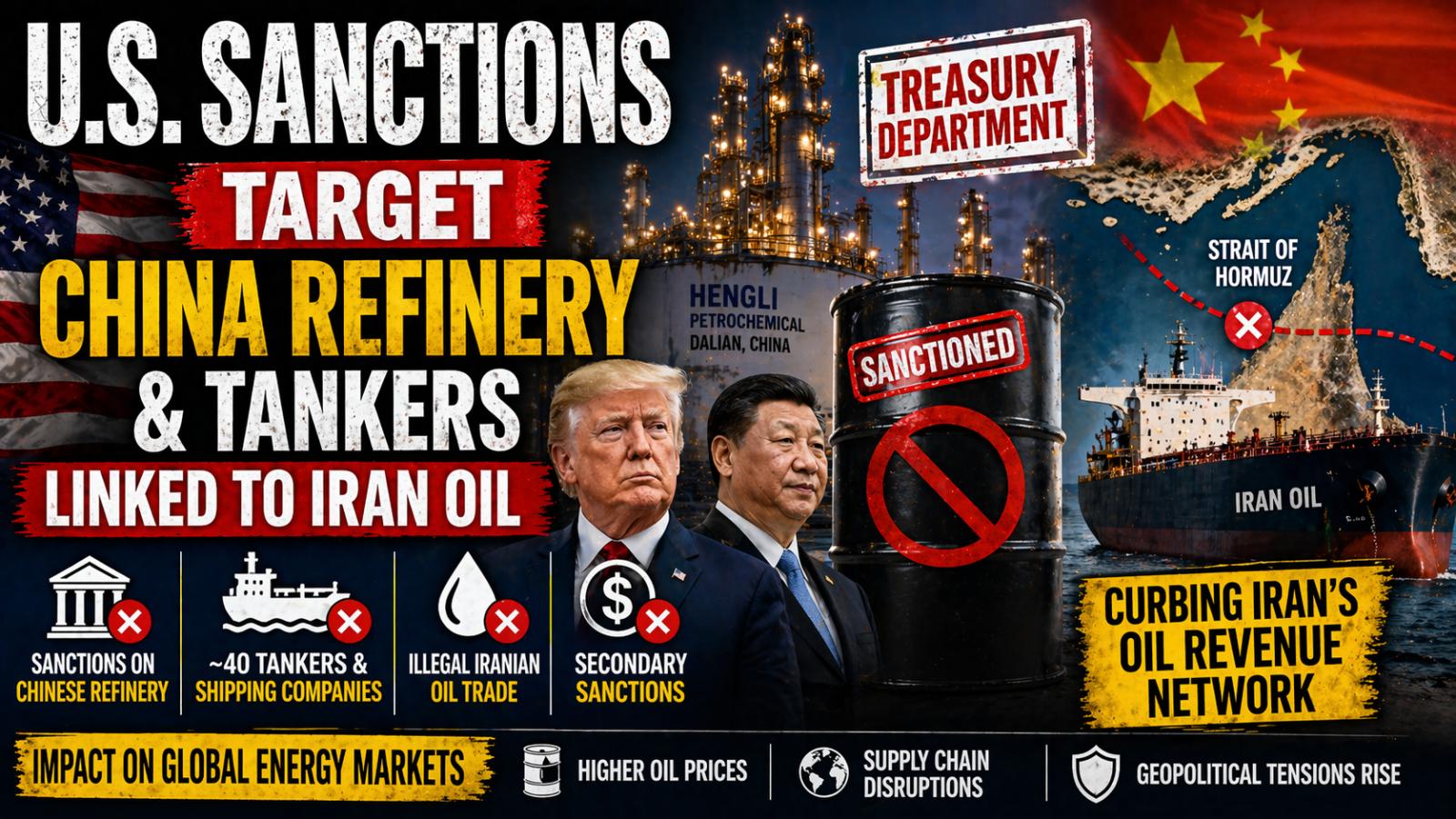
What sanctions did the U.S. impose on China-linked oil trade? The move targets refinery and tankers tied to Iran
The United States has imposed sweeping new sanctions targeting a China-linked oil trade network tied to Iran, focusing on a major refinery and dozens of shipping entities. Announced on Friday, April 25, 2026, the measures aim to disrupt Tehran’s oil revenue streams by penalizing companies involved in transporting and processing Iranian crude, reinforcing Washington’s broader use of secondary sanctions. Targeting key nodes in Iran’s oil supply chain Among those sanctioned is Hengli Petrochemical’s large refinery in Dalian, China, which has the capacity to process about 400,000 barrels of crude oil per day. The U.S. Treasury Department said the facility has accepted Iranian crude shipments since 2023, generating substantial revenue that allegedly supports Iran’s military. Officials indicated the action is part of a wider strategy to dismantle networks of vessels, intermediaries, and buyers enabling Iranian oil exports. Escalating pressure amid geopolitical tensions The sanctions come just weeks before a planned meeting between U.S. President Donald Trump and Chinese President Xi Jinping in China, adding strain to an already complex economic relationship. Earlier in April 2026, U.S. officials issued warnings to financial institutions in China, Hong Kong, the United Arab Emirates, and Oman about potential penalties for facilitating Iranian transactions. Treasury Secretary Scott Bessent said the administration is prepared to apply stringent secondary sanctions to entities involved in such dealings. Impact on global energy flows and shipping routes These developments coincide with broader disruptions in global energy markets. Earlier in April 2026, the U.S. implemented a physical blockade of the Strait of Hormuz, a critical passage for oil shipments from the Persian Gulf. The move has contributed to rising oil prices and heightened uncertainty across energy markets, though U.S. authorities have issued limited waivers to ease immediate supply concerns. China’s response and global compliance concerns China remains the largest importer of Iranian oil and has consistently opposed U.S. sanctions, arguing they undermine international trade rules. Despite this position, many Chinese firms and banks continue to comply due to their reliance on the U.S.-dominated financial system. Chinese officials have previously criticized such sanctions as disruptive to legitimate economic activity, highlighting ongoing tensions over trade enforcement and global energy flows.
What sanctions did the U.S. impose on China-linked oil trade? The move targets refinery and tankers tied to Iran
The United States has imposed sweeping new sanctions targeting a China-linked oil trade network tied to Iran, focusing on a major refinery and dozens of shipping entities. Announced on Friday, April 25, 2026, the measures aim to disrupt Tehran’s oil revenue streams by penalizing companies involved in transporting and processing Iranian crude, reinforcing Washington’s broader use of secondary sanctions. Targeting key nodes in Iran’s oil supply chain Among those sanctioned is Hengli Petrochemical’s large refinery in Dalian, China, which has the capacity to process about 400,000 barrels of crude oil per day. The U.S. Treasury Department said the facility has accepted Iranian crude shipments since 2023, generating substantial revenue that allegedly supports Iran’s military. Officials indicated the action is part of a wider strategy to dismantle networks of vessels, intermediaries, and buyers enabling Iranian oil exports. Escalating pressure amid geopolitical tensions The sanctions come just weeks before a planned meeting between U.S. President Donald Trump and Chinese President Xi Jinping in China, adding strain to an already complex economic relationship. Earlier in April 2026, U.S. officials issued warnings to financial institutions in China, Hong Kong, the United Arab Emirates, and Oman about potential penalties for facilitating Iranian transactions. Treasury Secretary Scott Bessent said the administration is prepared to apply stringent secondary sanctions to entities involved in such dealings. Impact on global energy flows and shipping routes These developments coincide with broader disruptions in global energy markets. Earlier in April 2026, the U.S. implemented a physical blockade of the Strait of Hormuz, a critical passage for oil shipments from the Persian Gulf. The move has contributed to rising oil prices and heightened uncertainty across energy markets, though U.S. authorities have issued limited waivers to ease immediate supply concerns. China’s response and global compliance concerns China remains the largest importer of Iranian oil and has consistently opposed U.S. sanctions, arguing they undermine international trade rules. Despite this position, many Chinese firms and banks continue to comply due to their reliance on the U.S.-dominated financial system. Chinese officials have previously criticized such sanctions as disruptive to legitimate economic activity, highlighting ongoing tensions over trade enforcement and global energy flows.
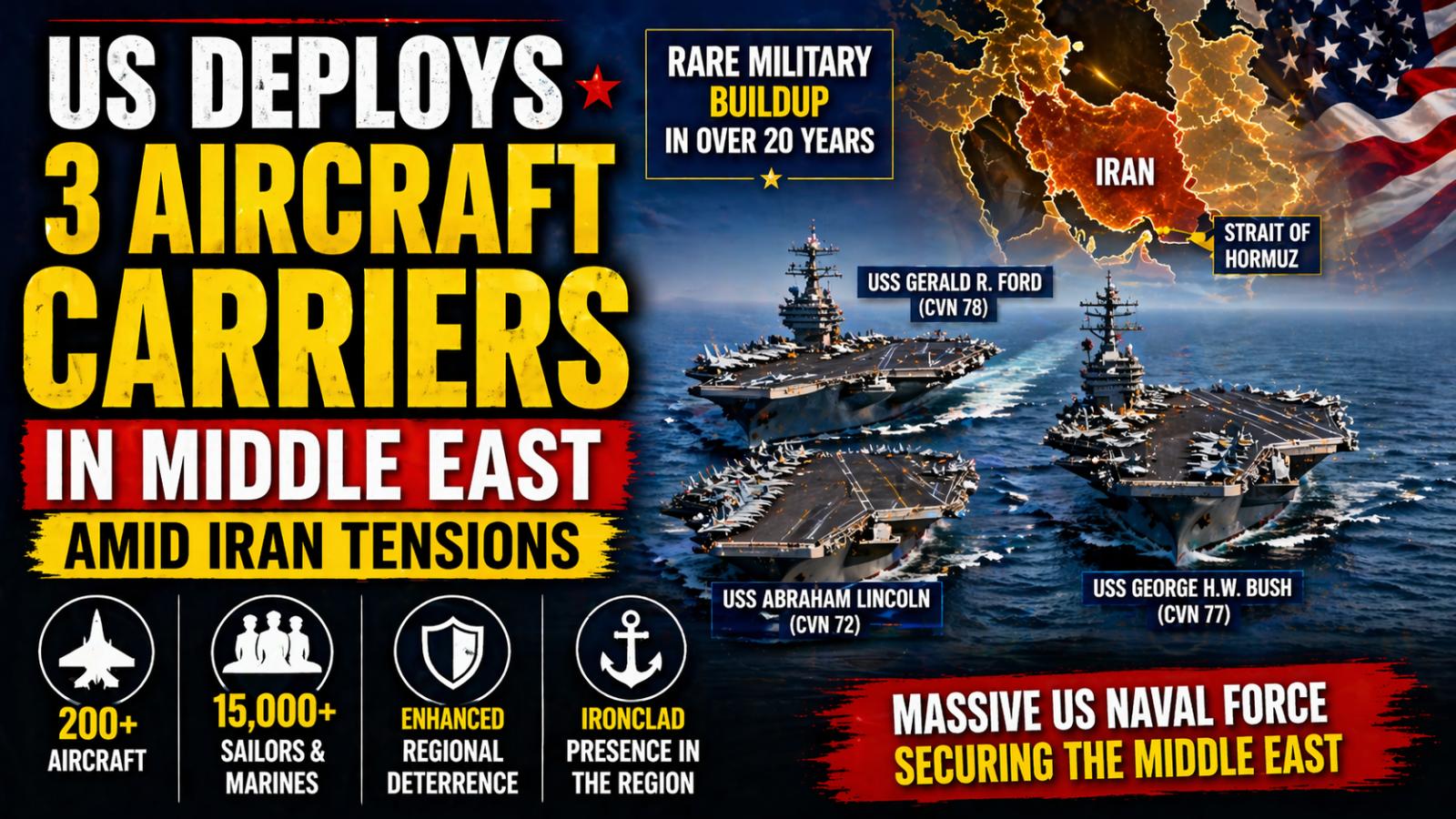
US deploys three aircraft carriers to Middle East amid Iran tensions
US deploys three aircraft carriers to the Middle East amid Iran tensions, expanding naval operations and reinforcing security in key maritime routes including the Strait of Hormuz. US deploys three aircraft carriers to Middle East amid Iran tensions as Washington significantly expands its military footprint across the region, marking one of the largest naval concentrations in more than two decades. Officials confirmed that three carrier strike groups—the USS Abraham Lincoln, USS Gerald R. Ford, and USS George H.W. Bush—are operating simultaneously, supported by more than 200 aircraft and approximately 15,000 sailors and Marines. A statement from US Central Command on Thursday confirmed the rare deployment, describing it as a significant concentration of naval power aimed at maintaining operational readiness amid rising tensions involving Iran. The carrier groups and their air wings are conducting coordinated missions, underscoring the strategic importance of key maritime routes in the Middle East and reinforcing a broader posture of deterrence. The announcement coincided with remarks from Donald Trump on Thursday, who declined to provide a timeline for a potential resolution to the Iran conflict. He indicated that any agreement would depend on conditions favorable to US interests, highlighting ongoing uncertainty surrounding diplomatic efforts. The absence of a clear timeline has aligned with increased military activity and messaging focused on regional stability. Defense officials stated on Friday that the US blockade of Iranian vessels in the Strait of Hormuz remains “ironclad,” with additional naval assets expected to join the operation in the coming days. The expanding mission signals a broader enforcement effort in one of the world’s most critical shipping corridors. The USS George H.W. Bush, commissioned in 2009, is among the newest Nimitz-class carriers involved, measuring nearly 1,000 feet in length and powered by two nuclear reactors, with the capacity to carry more than 80 aircraft and support a crew exceeding 5,500 personnel.
US deploys three aircraft carriers to Middle East amid Iran tensions
US deploys three aircraft carriers to the Middle East amid Iran tensions, expanding naval operations and reinforcing security in key maritime routes including the Strait of Hormuz. US deploys three aircraft carriers to Middle East amid Iran tensions as Washington significantly expands its military footprint across the region, marking one of the largest naval concentrations in more than two decades. Officials confirmed that three carrier strike groups—the USS Abraham Lincoln, USS Gerald R. Ford, and USS George H.W. Bush—are operating simultaneously, supported by more than 200 aircraft and approximately 15,000 sailors and Marines. A statement from US Central Command on Thursday confirmed the rare deployment, describing it as a significant concentration of naval power aimed at maintaining operational readiness amid rising tensions involving Iran. The carrier groups and their air wings are conducting coordinated missions, underscoring the strategic importance of key maritime routes in the Middle East and reinforcing a broader posture of deterrence. The announcement coincided with remarks from Donald Trump on Thursday, who declined to provide a timeline for a potential resolution to the Iran conflict. He indicated that any agreement would depend on conditions favorable to US interests, highlighting ongoing uncertainty surrounding diplomatic efforts. The absence of a clear timeline has aligned with increased military activity and messaging focused on regional stability. Defense officials stated on Friday that the US blockade of Iranian vessels in the Strait of Hormuz remains “ironclad,” with additional naval assets expected to join the operation in the coming days. The expanding mission signals a broader enforcement effort in one of the world’s most critical shipping corridors. The USS George H.W. Bush, commissioned in 2009, is among the newest Nimitz-class carriers involved, measuring nearly 1,000 feet in length and powered by two nuclear reactors, with the capacity to carry more than 80 aircraft and support a crew exceeding 5,500 personnel.










