

























Israel Hezbollah clashes raise oil and trade risk for India
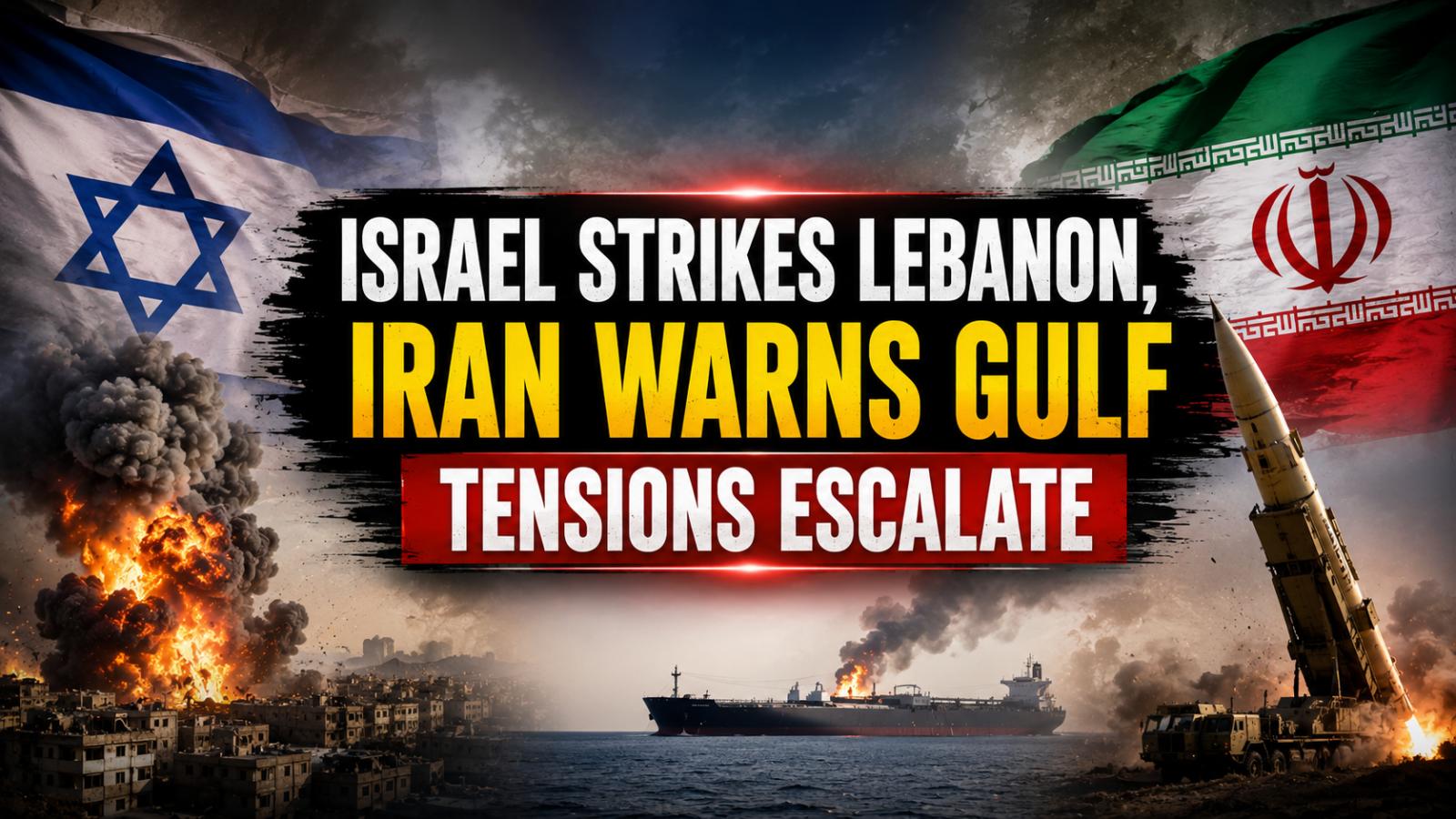
The renewed exchange of fire between Israeli forces and Hezbollah-linked positions in southern Lebanon has again drawn attention to an already fragile regional security environment. While both sides continue to frame their actions as targeted and defensive, the situation is increasingly being viewed through a wider geopolitical lens, especially by energy markets and trade-dependent economies. Even limited escalation in this corridor tends to trigger immediate risk recalibration in global markets, not because of direct supply disruption, but due to fear of spillover into wider West Asian conflict zones. Oil markets react to uncertainty, not only disruption Crude oil prices have remained sensitive to developments in the region, with traders closely tracking any sign of expansion beyond localized strikes. Brent crude has shown intermittent swings, reflecting how quickly sentiment shifts when geopolitical risks rise. For import-heavy economies like India, the concern is not only about supply cuts but also price volatility. Even short-lived spikes increase import bills, widen trade deficits, and add pressure on domestic inflation through fuel and transport costs. India remains heavily dependent on imported crude, leaving it exposed to external shocks that originate far from its own borders but quickly reach its economy through global pricing mechanisms. Maritime chokepoints add another layer of risk Beyond oil production zones, shipping routes remain a critical pressure point. The Strait of Hormuz continues to be one of the most strategically sensitive maritime corridors in the world, handling a large share of global crude movement. Any perception of instability in nearby conflict zones tends to increase insurance premiums for tankers and freight operators. This raises shipping costs even when physical disruption does not occur. For trade-dependent economies, the indirect cost of conflict often arrives faster than any actual supply shortage. India’s broader exposure goes beyond energy India’s stake in West Asian stability is not limited to crude imports. A large Indian workforce in Gulf countries supports billions in annual remittances, which play a steady role in foreign exchange stability. At the same time, India maintains layered relationships across the region—energy partnerships with Gulf producers, strategic cooperation with Israel, and connectivity interests linked to Iran and regional ports. This creates a complex policy environment where instability in one corridor can influence multiple economic and diplomatic channels simultaneously. Long-term infrastructure plans face sensitivity risks Large-scale trade and infrastructure initiatives involving West Asia, including proposed trans-regional connectivity corridors, depend heavily on stable political conditions. Projects linked to ports, energy routes, and logistics networks become vulnerable when security risks rise. Even without direct damage, prolonged uncertainty tends to slow investment decisions, delay contracts, and increase financing costs for regional development projects. Conclusion The current Israel–Hezbollah exchange remains geographically contained, but its economic impact is far wider. Oil markets, shipping costs, remittance flows, and long-term trade planning all react quickly to signals of escalation. For India and other import-dependent economies, the primary challenge is not direct involvement in the conflict but exposure to its ripple effects through energy pricing, logistics costs, and regional stability risks.
Israel Hezbollah clashes raise oil and trade risk for India
The renewed exchange of fire between Israeli forces and Hezbollah-linked positions in southern Lebanon has again drawn attention to an already fragile regional security environment. While both sides continue to frame their actions as targeted and defensive, the situation is increasingly being viewed through a wider geopolitical lens, especially by energy markets and trade-dependent economies. Even limited escalation in this corridor tends to trigger immediate risk recalibration in global markets, not because of direct supply disruption, but due to fear of spillover into wider West Asian conflict zones. Oil markets react to uncertainty, not only disruption Crude oil prices have remained sensitive to developments in the region, with traders closely tracking any sign of expansion beyond localized strikes. Brent crude has shown intermittent swings, reflecting how quickly sentiment shifts when geopolitical risks rise. For import-heavy economies like India, the concern is not only about supply cuts but also price volatility. Even short-lived spikes increase import bills, widen trade deficits, and add pressure on domestic inflation through fuel and transport costs. India remains heavily dependent on imported crude, leaving it exposed to external shocks that originate far from its own borders but quickly reach its economy through global pricing mechanisms. Maritime chokepoints add another layer of risk Beyond oil production zones, shipping routes remain a critical pressure point. The Strait of Hormuz continues to be one of the most strategically sensitive maritime corridors in the world, handling a large share of global crude movement. Any perception of instability in nearby conflict zones tends to increase insurance premiums for tankers and freight operators. This raises shipping costs even when physical disruption does not occur. For trade-dependent economies, the indirect cost of conflict often arrives faster than any actual supply shortage. India’s broader exposure goes beyond energy India’s stake in West Asian stability is not limited to crude imports. A large Indian workforce in Gulf countries supports billions in annual remittances, which play a steady role in foreign exchange stability. At the same time, India maintains layered relationships across the region—energy partnerships with Gulf producers, strategic cooperation with Israel, and connectivity interests linked to Iran and regional ports. This creates a complex policy environment where instability in one corridor can influence multiple economic and diplomatic channels simultaneously. Long-term infrastructure plans face sensitivity risks Large-scale trade and infrastructure initiatives involving West Asia, including proposed trans-regional connectivity corridors, depend heavily on stable political conditions. Projects linked to ports, energy routes, and logistics networks become vulnerable when security risks rise. Even without direct damage, prolonged uncertainty tends to slow investment decisions, delay contracts, and increase financing costs for regional development projects. Conclusion The current Israel–Hezbollah exchange remains geographically contained, but its economic impact is far wider. Oil markets, shipping costs, remittance flows, and long-term trade planning all react quickly to signals of escalation. For India and other import-dependent economies, the primary challenge is not direct involvement in the conflict but exposure to its ripple effects through energy pricing, logistics costs, and regional stability risks.
Mukesh Ambani Quote: Dhirubhai’s Lesson For Entrepreneurs
Mukesh Ambani’s quote on entrepreneurship shares a simple but powerful lesson from his father, Dhirubhai Ambani: those who want to build something of their own must learn to find their own way. The message continues to inspire young founders, business owners, and professionals aiming to take charge of their future. The quote, shared in a “Quote of the Day” context, highlights one of the most important principles behi
Mukesh Ambani Quote: Dhirubhai’s Lesson For Entrepreneurs
Mukesh Ambani’s quote on entrepreneurship shares a simple but powerful lesson from his father, Dhirubhai Ambani: those who want to build something of their own must learn to find their own way. The message continues to inspire young founders, business owners, and professionals aiming to take charge of their future. The quote, shared in a “Quote of the Day” context, highlights one of the most important principles behi
Mahua Moitra Praises Suvendu Adhikari, Sparks Bengal Political Buzz
Kolkata, June 24, 2026: Trinamool Congress (TMC) MP Mahua Moitra has stirred fresh political discussions in West Bengal after publicly recalling the support she received from Chief Minister Suvendu Adhikari during the early stages of her political journey. Her remarks come at a crucial time when the TMC is facing internal challenges, defections, and a growing leadership crisis. Mahua Moitra described her relationship with Suvendu Adhikari as one built on personal respect and emotion
Mahua Moitra Praises Suvendu Adhikari, Sparks Bengal Political Buzz
Kolkata, June 24, 2026: Trinamool Congress (TMC) MP Mahua Moitra has stirred fresh political discussions in West Bengal after publicly recalling the support she received from Chief Minister Suvendu Adhikari during the early stages of her political journey. Her remarks come at a crucial time when the TMC is facing internal challenges, defections, and a growing leadership crisis. Mahua Moitra described her relationship with Suvendu Adhikari as one built on personal respect and emotion
London court orders Nirav Modi to repay Bank of India dues
A London court has ruled against diamond merchant Nirav Modi in a financial dispute involving Bank of India, ordering him to repay approximately $10.7 million linked to a defaulted corporate loan. The judgment strengthens the bank’s claim that Modi remains personally liable under a guarantee tied to funding extended to his overseas diamond trading entity. Court upholds personal guarantee obligation
London court orders Nirav Modi to repay Bank of India dues
A London court has ruled against diamond merchant Nirav Modi in a financial dispute involving Bank of India, ordering him to repay approximately $10.7 million linked to a defaulted corporate loan. The judgment strengthens the bank’s claim that Modi remains personally liable under a guarantee tied to funding extended to his overseas diamond trading entity. Court upholds personal guarantee obligation
UP Bans Coaching Centres In Basements After Lucknow Fire Tragedy
Tragedy Triggers Statewide Crackdown The Uttar Pradesh government has imposed a strict ban on coaching centres and all commercial activities operating from basements following the deadly fire in Aliganj, Lucknow. The incident, which claimed at least 15 lives, has exposed serious violations in building safety compliance and triggered a large-scale enforcement response across the state. Chief Ministe
UP Bans Coaching Centres In Basements After Lucknow Fire Tragedy
Tragedy Triggers Statewide Crackdown The Uttar Pradesh government has imposed a strict ban on coaching centres and all commercial activities operating from basements following the deadly fire in Aliganj, Lucknow. The incident, which claimed at least 15 lives, has exposed serious violations in building safety compliance and triggered a large-scale enforcement response across the state. Chief Ministe
Iran–US talks stall as Lebanon crisis deepens over Hezbollah role
Negotiations between Iran and the United States are increasingly being shaped by events in Lebanon, where Hezbollah’s presence has turned a local conflict into a regional negotiation barrier. What was once a narrow security issue has evolved into a wider political and military deadlock involving multiple state and non-state actors. Hezbollah’s dual structure complicates negotiations Hezbolla
Iran–US talks stall as Lebanon crisis deepens over Hezbollah role
Negotiations between Iran and the United States are increasingly being shaped by events in Lebanon, where Hezbollah’s presence has turned a local conflict into a regional negotiation barrier. What was once a narrow security issue has evolved into a wider political and military deadlock involving multiple state and non-state actors. Hezbollah’s dual structure complicates negotiations Hezbolla
Mamata Banerjee faces internal revolt claim in TMC politics
Alleged internal revolt in TMC triggers political buzz A major political development has been reported within the Trinamool Congress (TMC) in West Bengal, with claims of an internal revolt challenging the leadership of party supremo Mamata Banerjee and MP Abhishek Banerjee. According to reports, the development unfolded shortly after the state’s first BJP-led government presented its budget in the Assembly, adding to the political tension in the state.
Mamata Banerjee faces internal revolt claim in TMC politics
Alleged internal revolt in TMC triggers political buzz A major political development has been reported within the Trinamool Congress (TMC) in West Bengal, with claims of an internal revolt challenging the leadership of party supremo Mamata Banerjee and MP Abhishek Banerjee. According to reports, the development unfolded shortly after the state’s first BJP-led government presented its budget in the Assembly, adding to the political tension in the state.
Iran says it will administer Strait of Hormuz
Iran claims new Hormuz role Iran’s chief negotiator and Parliament Speaker Mohammad Bagher Ghalibaf said the Strait of Hormuz would be administered by Tehran following the first round of US Iran talks in Switzerland. In a video message quoted by Iranian state media on Tuesday, June 23, Ghalibaf said the strategic waterway would not return to its pre-war conditions and would be managed by the Islamic Republic of Iran in accordance with inter
Iran says it will administer Strait of Hormuz
Iran claims new Hormuz role Iran’s chief negotiator and Parliament Speaker Mohammad Bagher Ghalibaf said the Strait of Hormuz would be administered by Tehran following the first round of US Iran talks in Switzerland. In a video message quoted by Iranian state media on Tuesday, June 23, Ghalibaf said the strategic waterway would not return to its pre-war conditions and would be managed by the Islamic Republic of Iran in accordance with inter
Who Was Alan Greenspan? His Fed Career and Economic Legacy
Who was Alan Greenspan? He was one of the most influential—and disputed—central bankers in modern U.S. history, leading the Federal Reserve from 1987 to 2006. Greenspan died on Monday, June 22, 2026, at age 100. His death renewed attention on a career that spanned Wall Street, presidential administrations and nearly two decades at the center of U.S. monetary policy. Who Was Alan Greenspan? Born on March 6, 1926, in New York City, Greenspan
Who Was Alan Greenspan? His Fed Career and Economic Legacy
Who was Alan Greenspan? He was one of the most influential—and disputed—central bankers in modern U.S. history, leading the Federal Reserve from 1987 to 2006. Greenspan died on Monday, June 22, 2026, at age 100. His death renewed attention on a career that spanned Wall Street, presidential administrations and nearly two decades at the center of U.S. monetary policy. Who Was Alan Greenspan? Born on March 6, 1926, in New York City, Greenspan
Alan Greenspan, Former Federal Reserve Chair, Dies at 100
Alan Greenspan, the former Federal Reserve chair who shaped U.S. monetary policy for nearly two decades, died on Monday, June 22, 2026, at age 100. His wife, NBC News correspondent Andrea Mitchell, said Greenspan died at their home from complications of Parkinson’s disease. Alan Greenspan Dies After Nearly Two Decades Leading the Fed Greenspan served as chair of the Federal Res
Alan Greenspan, Former Federal Reserve Chair, Dies at 100
Alan Greenspan, the former Federal Reserve chair who shaped U.S. monetary policy for nearly two decades, died on Monday, June 22, 2026, at age 100. His wife, NBC News correspondent Andrea Mitchell, said Greenspan died at their home from complications of Parkinson’s disease. Alan Greenspan Dies After Nearly Two Decades Leading the Fed Greenspan served as chair of the Federal Res
Israel Lebanon border tension grows over Beaufort Castle
Israel has signalled that its forces will remain in parts of southern Lebanon, including the area around Beaufort Castle, as border security remains a major concern despite continuing ceasefire pressure. Israeli officials say the military-held zone is needed to protect communities in Galilee and prevent Hezbollah-linked groups from regaining positions close to northern Israel. Defence Minister Israel Katz said Israel does not intend to wit
Israel Lebanon border tension grows over Beaufort Castle
Israel has signalled that its forces will remain in parts of southern Lebanon, including the area around Beaufort Castle, as border security remains a major concern despite continuing ceasefire pressure. Israeli officials say the military-held zone is needed to protect communities in Galilee and prevent Hezbollah-linked groups from regaining positions close to northern Israel. Defence Minister Israel Katz said Israel does not intend to wit
Tacloban school shooting leaves three students dead
A deadly shooting at San Jose National High School in Tacloban City, Philippines, left three students dead and several others injured on Monday, June 22, 2026. The incident happened during school hours, sending students, teachers and parents into fear as police and emergency responders rushed to the campus. Injured learners were taken to nearby medical facilities, while authorities secured the school grounds and began a full investigation into the attack.
Tacloban school shooting leaves three students dead
A deadly shooting at San Jose National High School in Tacloban City, Philippines, left three students dead and several others injured on Monday, June 22, 2026. The incident happened during school hours, sending students, teachers and parents into fear as police and emergency responders rushed to the campus. Injured learners were taken to nearby medical facilities, while authorities secured the school grounds and began a full investigation into the attack.
Netanyahu rejects claims Trump controls Israel decisions
Netanyahu rejects influence claims Israeli Prime Minister Benjamin Netanyahu has rejected claims that US President Donald Trump controls his decisions or that he directs Trump’s actions, saying both leaders act independently in the interests of their own countries. Speaking at the JNS Summit in Jerusalem on Sunday, June 21, Netanyahu addressed speculation over whether the two leaders influence each other’s positions on the Iran war and br
Netanyahu rejects claims Trump controls Israel decisions
Netanyahu rejects influence claims Israeli Prime Minister Benjamin Netanyahu has rejected claims that US President Donald Trump controls his decisions or that he directs Trump’s actions, saying both leaders act independently in the interests of their own countries. Speaking at the JNS Summit in Jerusalem on Sunday, June 21, Netanyahu addressed speculation over whether the two leaders influence each other’s positions on the Iran war and br
US Iran talks continue in Switzerland despite walkout
US Iran talks face early tension in Switzerland US and Iranian negotiators continued discussions in Switzerland into the early hours of Monday, June 22, as both sides attempted to advance a fragile diplomatic process aimed at reducing months of conflict across the Middle East. The talks, held at the Swiss resort of Burgenstock, focused on regional security issues and efforts to prevent further escalation that has unsettled global energy marke
US Iran talks continue in Switzerland despite walkout
US Iran talks face early tension in Switzerland US and Iranian negotiators continued discussions in Switzerland into the early hours of Monday, June 22, as both sides attempted to advance a fragile diplomatic process aimed at reducing months of conflict across the Middle East. The talks, held at the Swiss resort of Burgenstock, focused on regional security issues and efforts to prevent further escalation that has unsettled global energy marke
Supreme Court Declares Right To Walk On Footpaths A Fundamental Right
Supreme Court Says Right To Walk On Safe Footpaths Is A Fundamental Right The Supreme Court has declared that walking on safe and clearly marked footpaths is a fundamental right, strengthening the legal protection available to pedestrians across India. In a significant ruling, the court said public authorities have a duty to provide and maintain footpaths wherever roads exist. The judgment pl
Supreme Court Declares Right To Walk On Footpaths A Fundamental Right
Supreme Court Says Right To Walk On Safe Footpaths Is A Fundamental Right The Supreme Court has declared that walking on safe and clearly marked footpaths is a fundamental right, strengthening the legal protection available to pedestrians across India. In a significant ruling, the court said public authorities have a duty to provide and maintain footpaths wherever roads exist. The judgment pl
US Iran talks in Switzerland face fragile diplomatic test
US Iran negotiations in Switzerland have entered a renewed phase, but the environment remains unstable as regional conflicts continue to shape the direction of talks. Diplomatic representatives from both sides are attempting to revive stalled communication lines, with mediation support from regional actors working behind the scenes to prevent another breakdown. The discussions are being positioned as an attempt to rebuild trust after repeated interruptions, though expectations remai
US Iran talks in Switzerland face fragile diplomatic test
US Iran negotiations in Switzerland have entered a renewed phase, but the environment remains unstable as regional conflicts continue to shape the direction of talks. Diplomatic representatives from both sides are attempting to revive stalled communication lines, with mediation support from regional actors working behind the scenes to prevent another breakdown. The discussions are being positioned as an attempt to rebuild trust after repeated interruptions, though expectations remai
Dhaka sees protest over Gaibandha temple vandalism claim
Tensions surfaced in Bangladesh after members of the Hindu community staged a protest in Dhaka over allegations linked to a religious site in Gaibandha district. The demonstration took place at Shahbagh, where large groups gathered to express concern over reported damage at a temple construction area dedicated to Lord Ram. Participants claimed that an image associated with the ongoing temple project in Palashbari was disrespected during a confrontation at the site. The incident quickly gained attention within local religious groups, prompting calls for accountability and stronger protection of places of worship under construction. Allegations at Gaibandha construction site According to community representatives involved in the protest, the dispute began at a temple project site where construction of a large Ram statue was underway. They alleged that individuals opposing the project caused damage to religious imagery and created disturbances that halted work. Authorities have reportedly received a complaint related to the incident, though protesters expressed dissatisfaction over the pace of investigation. The lack of immediate arrests became a central point of frustration during the rally. Large gathering at Shahbagh intersection From late afternoon, groups from multiple Hindu organisations and student participants assembled at Shahbagh intersection in Dhaka. The crowd continued to grow as speakers addressed concerns over religious safety and equal protection under law. The gathering remained largely organised, with participants demanding prompt legal steps and assurances that such incidents would not repeat in the future. Many stressed that the issue reflected broader concerns about safeguarding minority religious spaces in the country. Torch march through central Dhaka As the evening progressed, protesters carried out a torchlight march from Shahbagh towards central Dhaka roads, briefly moving in the direction of the National Press Club area. Slogans were raised during the procession, reflecting anger over the alleged incident and calls for justice. Organisers stated that the march was intended to highlight concerns over religious site protection rather than escalate tensions. The demonstration remained focused on demands for accountability and preventive measures. Demands for action and future mobilisation Community leaders announced plans for further engagement with authorities, including meetings and additional public programmes if progress is not made. They also indicated broader coordination efforts across regions to raise awareness about protection of religious sites. Earlier in the day, smaller groups had already conducted human chains and brief press interactions in Dhaka. Organisers indicated that more coordinated demonstrations could follow if their concerns remain unaddressed.
Dhaka sees protest over Gaibandha temple vandalism claim
Tensions surfaced in Bangladesh after members of the Hindu community staged a protest in Dhaka over allegations linked to a religious site in Gaibandha district. The demonstration took place at Shahbagh, where large groups gathered to express concern over reported damage at a temple construction area dedicated to Lord Ram. Participants claimed that an image associated with the ongoing temple project in Palashbari was disrespected during a confrontation at the site. The incident quickly gained attention within local religious groups, prompting calls for accountability and stronger protection of places of worship under construction. Allegations at Gaibandha construction site According to community representatives involved in the protest, the dispute began at a temple project site where construction of a large Ram statue was underway. They alleged that individuals opposing the project caused damage to religious imagery and created disturbances that halted work. Authorities have reportedly received a complaint related to the incident, though protesters expressed dissatisfaction over the pace of investigation. The lack of immediate arrests became a central point of frustration during the rally. Large gathering at Shahbagh intersection From late afternoon, groups from multiple Hindu organisations and student participants assembled at Shahbagh intersection in Dhaka. The crowd continued to grow as speakers addressed concerns over religious safety and equal protection under law. The gathering remained largely organised, with participants demanding prompt legal steps and assurances that such incidents would not repeat in the future. Many stressed that the issue reflected broader concerns about safeguarding minority religious spaces in the country. Torch march through central Dhaka As the evening progressed, protesters carried out a torchlight march from Shahbagh towards central Dhaka roads, briefly moving in the direction of the National Press Club area. Slogans were raised during the procession, reflecting anger over the alleged incident and calls for justice. Organisers stated that the march was intended to highlight concerns over religious site protection rather than escalate tensions. The demonstration remained focused on demands for accountability and preventive measures. Demands for action and future mobilisation Community leaders announced plans for further engagement with authorities, including meetings and additional public programmes if progress is not made. They also indicated broader coordination efforts across regions to raise awareness about protection of religious sites. Earlier in the day, smaller groups had already conducted human chains and brief press interactions in Dhaka. Organisers indicated that more coordinated demonstrations could follow if their concerns remain unaddressed.
US-Iran Talks Postponed as Trump’s Iran Memorandum Faces Lebanon Test
US-Iran talks were postponed on Friday, June 19, 2026, as President Donald Trump’s interim Iran memorandum faced questions over nuclear safeguards, financial incentives and renewed fighting in Lebanon. US-Iran talks postponed in Switzerland Switzerland’s Foreign Ministry said planned talks involving the United States, Iran, Qatar and Pakistan had been postponed. It did not announce a new date. The White House had earlier delayed Vice President JD Van
US-Iran Talks Postponed as Trump’s Iran Memorandum Faces Lebanon Test
US-Iran talks were postponed on Friday, June 19, 2026, as President Donald Trump’s interim Iran memorandum faced questions over nuclear safeguards, financial incentives and renewed fighting in Lebanon. US-Iran talks postponed in Switzerland Switzerland’s Foreign Ministry said planned talks involving the United States, Iran, Qatar and Pakistan had been postponed. It did not announce a new date. The White House had earlier delayed Vice President JD Van
Columbus Juneteenth 2026 Closures: Trash, COTA, Mail and More
Columbus residents should expect Juneteenth 2026 closures and service changes on Friday, June 19, affecting mail, trash pickup, COTA buses, libraries, banks and city parking. Juneteenth National Independence Day commemorates June 19, 1865, when enslaved people in Galveston, Texas, learned they were free. The holiday became a federal observance in 2021. Columbus Juneteenth 2026 Closures for Mail and Banks USPS post offices will
Columbus Juneteenth 2026 Closures: Trash, COTA, Mail and More
Columbus residents should expect Juneteenth 2026 closures and service changes on Friday, June 19, affecting mail, trash pickup, COTA buses, libraries, banks and city parking. Juneteenth National Independence Day commemorates June 19, 1865, when enslaved people in Galveston, Texas, learned they were free. The holiday became a federal observance in 2021. Columbus Juneteenth 2026 Closures for Mail and Banks USPS post offices will
Cuba unveils major reforms to expand private sector
Cuba proposes major shift in economic policy Cuban Prime Minister Manuel Marrero has presented lawmakers with a sweeping economic reform package aimed at reshaping parts of the island’s tightly controlled economy. The proposals, backed by the Communist Party and former leader Raúl Castro, come as Cuba faces rising pressure from US sanctions, a fuel blockade and worsening shortages of basic goods. The package still requires approval from th
Cuba unveils major reforms to expand private sector
Cuba proposes major shift in economic policy Cuban Prime Minister Manuel Marrero has presented lawmakers with a sweeping economic reform package aimed at reshaping parts of the island’s tightly controlled economy. The proposals, backed by the Communist Party and former leader Raúl Castro, come as Cuba faces rising pressure from US sanctions, a fuel blockade and worsening shortages of basic goods. The package still requires approval from th


