









Trisha Krishnan's Cryptic Posts Amid Vijay Rumours: A Focus on Peace and Love
Amid growing rumours surrounding Vijay Thalapathy and Trisha Krishnan, the actress took to social media to share a series of cryptic posts about peace, love, and self-worth. As the Tamil Nadu elections approach, the speculation around her personal life, especially her reported connection with Vijay, has intensified. Trisha, who had been relatively quiet in recent days, sparked fresh discussions with her latest online activity. In a video shared on Instagram, Trisha posted a powerful
Trisha Krishnan's Cryptic Posts Amid Vijay Rumours: A Focus on Peace and Love
Amid growing rumours surrounding Vijay Thalapathy and Trisha Krishnan, the actress took to social media to share a series of cryptic posts about peace, love, and self-worth. As the Tamil Nadu elections approach, the speculation around her personal life, especially her reported connection with Vijay, has intensified. Trisha, who had been relatively quiet in recent days, sparked fresh discussions with her latest online activity. In a video shared on Instagram, Trisha posted a powerful

Elon Musk pushes SpaceX IPO banks to subscribe to Grok AI ahead of public listing
In a surprising development that has sparked debate across the tech and financial sectors, Elon Musk has reportedly asked banks involved in a potential SpaceX IPO to subscribe to Grok AI, the chatbot developed by his artificial intelligence venture xAI. The move is being seen as an unusual blending of financial negotiations with technology adoption, raising questions about influence, strategy, and ethics. According to reports, Musk has encouraged major financial institutions that are expected to play a role in SpaceX’s much-anticipated public offering to purchase subscriptions to Grok AI. Grok, integrated into the platform of X, is positioned as a competitor to other leading AI chatbots, aiming to provide real-time, conversational intelligence with a unique personality. By pushing Grok subscriptions, Musk appears to be leveraging his business relationships to expand the reach and adoption of his AI ecosystem. Industry analysts believe this strategy could serve multiple purposes. On one hand, it helps boost early enterprise adoption of Grok, potentially strengthening xAI’s valuation and credibility in the rapidly evolving artificial intelligence market. On the other hand, it may also create synergies between Musk’s ventures, aligning financial partners with his broader technological vision. Why this move is gaining attention The reported request has drawn scrutiny because it blurs the lines between separate business interests. While it is not uncommon for business leaders to promote their products, tying such expectations to high-stakes financial deals like an IPO is relatively rare. Experts suggest that this could raise concerns among regulators and investors, especially regarding fairness and transparency in financial negotiations. At the same time, some supporters argue that banks and institutions often adopt new technologies as part of strategic partnerships. If Grok AI proves to be a valuable tool for financial analysis, communication, or data processing, its adoption could be seen as a logical step rather than an obligation. Impact on SpaceX IPO and AI competition The potential SpaceX IPO is already one of the most anticipated events in global markets, given the company’s dominant position in private space exploration and satellite technology. Any additional layer of complexity, such as this reported push for AI subscriptions, could influence how investors and stakeholders perceive the deal. Meanwhile, the move highlights the intensifying competition in the AI space. With major players racing to capture market share, enterprise adoption is becoming a key battleground. By integrating Grok into financial institutions, Musk may be attempting to position xAI as a serious contender alongside other established AI platforms. As the story continues to unfold, it remains to be seen whether this strategy will accelerate Grok’s growth or invite regulatory attention. What is clear, however, is that Musk’s approach once again demonstrates his willingness to challenge conventional boundaries between industries, reshaping how technology and finance intersect in the modern era.
Elon Musk pushes SpaceX IPO banks to subscribe to Grok AI ahead of public listing
In a surprising development that has sparked debate across the tech and financial sectors, Elon Musk has reportedly asked banks involved in a potential SpaceX IPO to subscribe to Grok AI, the chatbot developed by his artificial intelligence venture xAI. The move is being seen as an unusual blending of financial negotiations with technology adoption, raising questions about influence, strategy, and ethics. According to reports, Musk has encouraged major financial institutions that are expected to play a role in SpaceX’s much-anticipated public offering to purchase subscriptions to Grok AI. Grok, integrated into the platform of X, is positioned as a competitor to other leading AI chatbots, aiming to provide real-time, conversational intelligence with a unique personality. By pushing Grok subscriptions, Musk appears to be leveraging his business relationships to expand the reach and adoption of his AI ecosystem. Industry analysts believe this strategy could serve multiple purposes. On one hand, it helps boost early enterprise adoption of Grok, potentially strengthening xAI’s valuation and credibility in the rapidly evolving artificial intelligence market. On the other hand, it may also create synergies between Musk’s ventures, aligning financial partners with his broader technological vision. Why this move is gaining attention The reported request has drawn scrutiny because it blurs the lines between separate business interests. While it is not uncommon for business leaders to promote their products, tying such expectations to high-stakes financial deals like an IPO is relatively rare. Experts suggest that this could raise concerns among regulators and investors, especially regarding fairness and transparency in financial negotiations. At the same time, some supporters argue that banks and institutions often adopt new technologies as part of strategic partnerships. If Grok AI proves to be a valuable tool for financial analysis, communication, or data processing, its adoption could be seen as a logical step rather than an obligation. Impact on SpaceX IPO and AI competition The potential SpaceX IPO is already one of the most anticipated events in global markets, given the company’s dominant position in private space exploration and satellite technology. Any additional layer of complexity, such as this reported push for AI subscriptions, could influence how investors and stakeholders perceive the deal. Meanwhile, the move highlights the intensifying competition in the AI space. With major players racing to capture market share, enterprise adoption is becoming a key battleground. By integrating Grok into financial institutions, Musk may be attempting to position xAI as a serious contender alongside other established AI platforms. As the story continues to unfold, it remains to be seen whether this strategy will accelerate Grok’s growth or invite regulatory attention. What is clear, however, is that Musk’s approach once again demonstrates his willingness to challenge conventional boundaries between industries, reshaping how technology and finance intersect in the modern era.

AAP Leader Kejriwal Moves to Recuse Judge in Excise Policy Case Amid CBI Appeals
Arvind Kejriwal, the Aam Aadmi Party (AAP) chief and former Delhi Chief Minister, has moved a recusal application before the Delhi High Court, requesting that Justice Swarn Kanta Sharma recuse herself from hearing the excise policy case. This legal maneuver follows the court’s previous decision on March 16, granting Kejriwal and 22 others more time to respond to the Central Bureau of Investigation's (CBI) plea challenging their discharge in the case. Kejriwal has stated his intent to p
AAP Leader Kejriwal Moves to Recuse Judge in Excise Policy Case Amid CBI Appeals
Arvind Kejriwal, the Aam Aadmi Party (AAP) chief and former Delhi Chief Minister, has moved a recusal application before the Delhi High Court, requesting that Justice Swarn Kanta Sharma recuse herself from hearing the excise policy case. This legal maneuver follows the court’s previous decision on March 16, granting Kejriwal and 22 others more time to respond to the Central Bureau of Investigation's (CBI) plea challenging their discharge in the case. Kejriwal has stated his intent to p

SpaceX plans $1 trillion IPO in historic public listing move
Elon Musk’s SpaceX has taken a major step toward becoming a publicly traded company, filing confidentially for an initial public offering on Wednesday, April 1, 2026. The move could position the aerospace and technology firm among the most valuable companies globally, with an expected valuation exceeding $1 trillion. The IPO filing allows SpaceX to begin discussions with regulators while keeping detailed financial disclosures private during the early stages. Reports indicate the c
SpaceX plans $1 trillion IPO in historic public listing move
Elon Musk’s SpaceX has taken a major step toward becoming a publicly traded company, filing confidentially for an initial public offering on Wednesday, April 1, 2026. The move could position the aerospace and technology firm among the most valuable companies globally, with an expected valuation exceeding $1 trillion. The IPO filing allows SpaceX to begin discussions with regulators while keeping detailed financial disclosures private during the early stages. Reports indicate the c

CBSE Expands Curriculum With Early AI Education From Class 3
The Central Board of Secondary Education (CBSE) has taken a significant step towards modernizing India’s education system by introducing artificial intelligence learning for students starting from Class 3. This move reflects the growing importance of digital literacy and emerging technologies in shaping the future workforce. By incorporating AI concepts at an early stage, CBSE aims to ensure that students are not just consumers of technology but also understand its fundamentals and applications. The initiative is part of a broader effort to align school education with global technological trends and prepare students for a rapidly evolving digital world. Under this new curriculum, young learners will be introduced to basic concepts of artificial intelligence through interactive and activity-based learning methods. Instead of complex coding, the focus will be on developing logical thinking, problem-solving skills, and an understanding of how AI impacts everyday life. Students will engage in simple exercises, games, and real-life examples to grasp how machines can learn and make decisions. This foundational approach ensures that children build curiosity and confidence in technology without feeling overwhelmed. Curriculum Focus and Implementation The AI curriculum for primary classes is designed to be age-appropriate and engaging. CBSE has collaborated with education experts and technology partners to create content that is both informative and easy to understand. Teachers will also receive specialized training to effectively deliver AI-related lessons in classrooms. The board plans to integrate AI topics with existing subjects, making learning more interdisciplinary and practical. This approach will help students connect theoretical knowledge with real-world applications, enhancing their overall learning experience. Impact on Students and Future Education Introducing AI learning at an early stage is expected to have a long-term impact on students’ academic and career paths. As industries increasingly rely on automation and data-driven technologies, early exposure to AI will give students a competitive edge. It will also encourage innovation and creativity among young minds, enabling them to think beyond traditional career options. Parents and educators have largely welcomed this move, seeing it as a progressive step toward building a tech-savvy generation. With this initiative, CBSE reinforces its commitment to evolving education standards and preparing students for the challenges of the future. The inclusion of artificial intelligence in the curriculum marks a shift from rote learning to skill-based education, ensuring that students are better equipped to navigate and contribute to a technology-driven world.
CBSE Expands Curriculum With Early AI Education From Class 3
The Central Board of Secondary Education (CBSE) has taken a significant step towards modernizing India’s education system by introducing artificial intelligence learning for students starting from Class 3. This move reflects the growing importance of digital literacy and emerging technologies in shaping the future workforce. By incorporating AI concepts at an early stage, CBSE aims to ensure that students are not just consumers of technology but also understand its fundamentals and applications. The initiative is part of a broader effort to align school education with global technological trends and prepare students for a rapidly evolving digital world. Under this new curriculum, young learners will be introduced to basic concepts of artificial intelligence through interactive and activity-based learning methods. Instead of complex coding, the focus will be on developing logical thinking, problem-solving skills, and an understanding of how AI impacts everyday life. Students will engage in simple exercises, games, and real-life examples to grasp how machines can learn and make decisions. This foundational approach ensures that children build curiosity and confidence in technology without feeling overwhelmed. Curriculum Focus and Implementation The AI curriculum for primary classes is designed to be age-appropriate and engaging. CBSE has collaborated with education experts and technology partners to create content that is both informative and easy to understand. Teachers will also receive specialized training to effectively deliver AI-related lessons in classrooms. The board plans to integrate AI topics with existing subjects, making learning more interdisciplinary and practical. This approach will help students connect theoretical knowledge with real-world applications, enhancing their overall learning experience. Impact on Students and Future Education Introducing AI learning at an early stage is expected to have a long-term impact on students’ academic and career paths. As industries increasingly rely on automation and data-driven technologies, early exposure to AI will give students a competitive edge. It will also encourage innovation and creativity among young minds, enabling them to think beyond traditional career options. Parents and educators have largely welcomed this move, seeing it as a progressive step toward building a tech-savvy generation. With this initiative, CBSE reinforces its commitment to evolving education standards and preparing students for the challenges of the future. The inclusion of artificial intelligence in the curriculum marks a shift from rote learning to skill-based education, ensuring that students are better equipped to navigate and contribute to a technology-driven world.

Allu Arjun Fans Association Supports HPV Vaccination Drive on Icon Star's Birthday
The Allu Arjun Fans Association (AAFA) has taken a significant step in supporting the HPV vaccination drive, inspired by the words of Icon Star Allu Arjun. Allu Arjun encourages his fans to do at least one good deed every year, and AAFA has embraced this philosophy by launching awareness programs to educate the public about the importance of the HPV vaccine. The HPV vaccine, which can protect young girls from Cervical Cancer, is available for free to girls and women
Allu Arjun Fans Association Supports HPV Vaccination Drive on Icon Star's Birthday
The Allu Arjun Fans Association (AAFA) has taken a significant step in supporting the HPV vaccination drive, inspired by the words of Icon Star Allu Arjun. Allu Arjun encourages his fans to do at least one good deed every year, and AAFA has embraced this philosophy by launching awareness programs to educate the public about the importance of the HPV vaccine. The HPV vaccine, which can protect young girls from Cervical Cancer, is available for free to girls and women

Transamerica Pyramid sold to Cyprus firm in $691 million deal
The Transamerica Pyramid, one of San Francisco’s most recognizable landmarks, has been sold in a major commercial real estate transaction that signals a shift in ownership strategy for the iconic property. Cyprus-based investment firm Yoda Plc announced the acquisition this week, purchasing the 48-story tower along with two adjacent buildings for $691.6 million. The total transaction value reached approximately $725 million after final settlements and associated costs. The deal repr
Transamerica Pyramid sold to Cyprus firm in $691 million deal
The Transamerica Pyramid, one of San Francisco’s most recognizable landmarks, has been sold in a major commercial real estate transaction that signals a shift in ownership strategy for the iconic property. Cyprus-based investment firm Yoda Plc announced the acquisition this week, purchasing the 48-story tower along with two adjacent buildings for $691.6 million. The total transaction value reached approximately $725 million after final settlements and associated costs. The deal repr

Chelsea reports record £262.4 million loss despite major trophy wins
Chelsea Football Club reported a record pre-tax loss of £262.4 million ($349.3 million) for the financial year ending Monday, June 30, 2025, the club confirmed on Wednesday, April 1, 2026. The announcement comes despite a successful period on the field, where the London-based club secured two major trophies within the same 12-month span. During the reporting period, Chelsea won the FIFA Club World Cup in the United States and lifted the UEFA Europa Conference League title, becoming
Chelsea reports record £262.4 million loss despite major trophy wins
Chelsea Football Club reported a record pre-tax loss of £262.4 million ($349.3 million) for the financial year ending Monday, June 30, 2025, the club confirmed on Wednesday, April 1, 2026. The announcement comes despite a successful period on the field, where the London-based club secured two major trophies within the same 12-month span. During the reporting period, Chelsea won the FIFA Club World Cup in the United States and lifted the UEFA Europa Conference League title, becoming

Tech-backed PACs shape Texas primaries amid AI regulation debate
WASHINGTON — A surge in political spending tied to artificial intelligence interests is reshaping congressional races in Texas, highlighting the growing influence of the tech industry on U.S. elections and policy debates. In the lead-up to the March 2026 primary elections, Republican candidate Chris Gober was promoted in a television ad as a “Trump conservative” and “MAGA warrior,” though the messaging avoided direct references to artificial intelligence despite backing from AI-link
Tech-backed PACs shape Texas primaries amid AI regulation debate
WASHINGTON — A surge in political spending tied to artificial intelligence interests is reshaping congressional races in Texas, highlighting the growing influence of the tech industry on U.S. elections and policy debates. In the lead-up to the March 2026 primary elections, Republican candidate Chris Gober was promoted in a television ad as a “Trump conservative” and “MAGA warrior,” though the messaging avoided direct references to artificial intelligence despite backing from AI-link
Reports of Oracle layoffs emerge amid shift toward AI investments
Reports circulating across online platforms indicate that Oracle Corporation may have initiated a fresh round of layoffs affecting employees in multiple regions, including India and Mexico, though the company has not issued an official confirmation regarding the scale or timing of these actions. Employees posting on professional forums such as Blind and Reddit described receiving early morning emails informing them that their positions had been eliminated with immediate effect. Several individuals reported that these notifications arrived as early as 5:00 AM or 6:00 AM local time, though the exact date of these communications has not been independently verified. Many said the messages were sent directly from company leadership without prior notice, formal HR discussions, or communication from direct managers. Accounts shared online suggest that access to internal systems was revoked shortly after the emails were delivered, leaving affected employees without a transition period. Some posts indicate that roles within cloud computing and engineering teams may have been impacted, although the full scope of departments involved remains unclear. Unverified claims circulating on social media suggest that between 20,000 and 30,000 employees could be affected, representing a significant portion of Oracle’s global workforce of approximately 162,000. However, these figures remain speculative and have not been confirmed by the company. The reported layoffs come at a time when Oracle continues to expand its investments in artificial intelligence infrastructure and data centers. Industry observers note that many technology companies are restructuring operations to prioritize AI-driven initiatives and cloud services, which may involve reallocating resources and reducing roles in other areas. Similar workforce reductions have been observed across the broader tech industry in recent months, as companies reassess hiring strategies following periods of rapid expansion. While some analysts link these layoffs to increased spending on AI, others suggest they reflect efforts to correct overhiring during earlier growth cycles. In the absence of an official statement, the full extent and impact of the reported layoffs at Oracle remain uncertain, with affected employees continuing to share their experiences across online platforms.
Reports of Oracle layoffs emerge amid shift toward AI investments
Reports circulating across online platforms indicate that Oracle Corporation may have initiated a fresh round of layoffs affecting employees in multiple regions, including India and Mexico, though the company has not issued an official confirmation regarding the scale or timing of these actions. Employees posting on professional forums such as Blind and Reddit described receiving early morning emails informing them that their positions had been eliminated with immediate effect. Several individuals reported that these notifications arrived as early as 5:00 AM or 6:00 AM local time, though the exact date of these communications has not been independently verified. Many said the messages were sent directly from company leadership without prior notice, formal HR discussions, or communication from direct managers. Accounts shared online suggest that access to internal systems was revoked shortly after the emails were delivered, leaving affected employees without a transition period. Some posts indicate that roles within cloud computing and engineering teams may have been impacted, although the full scope of departments involved remains unclear. Unverified claims circulating on social media suggest that between 20,000 and 30,000 employees could be affected, representing a significant portion of Oracle’s global workforce of approximately 162,000. However, these figures remain speculative and have not been confirmed by the company. The reported layoffs come at a time when Oracle continues to expand its investments in artificial intelligence infrastructure and data centers. Industry observers note that many technology companies are restructuring operations to prioritize AI-driven initiatives and cloud services, which may involve reallocating resources and reducing roles in other areas. Similar workforce reductions have been observed across the broader tech industry in recent months, as companies reassess hiring strategies following periods of rapid expansion. While some analysts link these layoffs to increased spending on AI, others suggest they reflect efforts to correct overhiring during earlier growth cycles. In the absence of an official statement, the full extent and impact of the reported layoffs at Oracle remain uncertain, with affected employees continuing to share their experiences across online platforms.

Khushbu Alerts Fans About Fake Social Media Account Impersonating Husband Sundar C
Actor-politician Khushbu Sundar has recently raised awareness about a fake social media account impersonating her husband, director Sundar C, who recently made his political debut. This came after BJP state president Nainar Nagendran tagged the unverified account of Sundar C in a post, prompting Khushbu to clarify the situation. She immediately warned her followers by sharing the photo on her own X handle, making it clear that Sundar C does not have an official social media presence as of now
Khushbu Alerts Fans About Fake Social Media Account Impersonating Husband Sundar C
Actor-politician Khushbu Sundar has recently raised awareness about a fake social media account impersonating her husband, director Sundar C, who recently made his political debut. This came after BJP state president Nainar Nagendran tagged the unverified account of Sundar C in a post, prompting Khushbu to clarify the situation. She immediately warned her followers by sharing the photo on her own X handle, making it clear that Sundar C does not have an official social media presence as of now

Millions must switch repayment plans after SAVE program shutdown
The U.S. Department of Education announced on Friday, March 27, 2026, that millions of federal student loan borrowers will be removed from the Saving on a Valuable Education (SAVE) repayment plan, following a federal appeals court decision earlier in March that blocked the program after nearly two years of legal challenges. The SAVE plan, introduced in 2023 under the Biden administration, aimed to reduce monthly payments and expand loan forgiveness. However, several Republican-led
Millions must switch repayment plans after SAVE program shutdown
The U.S. Department of Education announced on Friday, March 27, 2026, that millions of federal student loan borrowers will be removed from the Saving on a Valuable Education (SAVE) repayment plan, following a federal appeals court decision earlier in March that blocked the program after nearly two years of legal challenges. The SAVE plan, introduced in 2023 under the Biden administration, aimed to reduce monthly payments and expand loan forgiveness. However, several Republican-led

Rupee Falls to Record Low of 95.20 Against US Dollar Despite RBI Measures
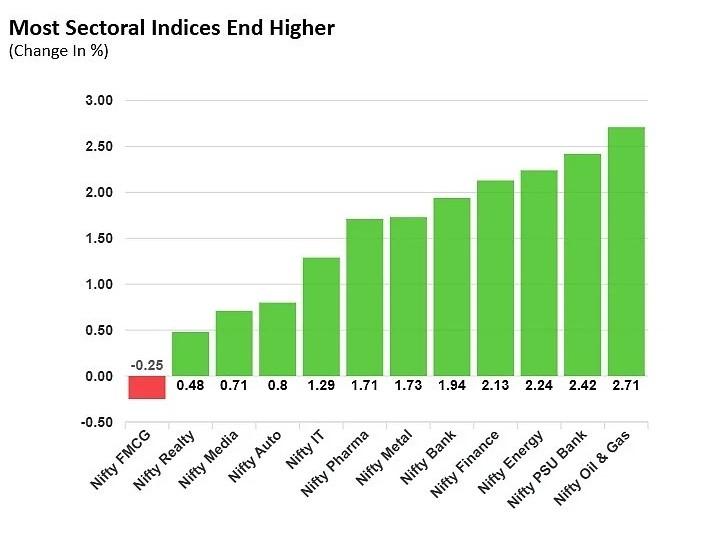
The Indian rupee slipped past the 95 mark against the US dollar on March 30, 2026, hitting an all-time low of 95.20 per dollar, a decline of 0.3% for the day. This drop occurred despite the Reserve Bank of India's (RBI) recent intervention aimed at curbing currency volatility. The currency has been under pressure from a mix of global factors, sustained foreign outflows, and rising oil prices. The RBI had introduced measures to support the rupee by tightening limits on banks' foreign exchange positions. As of late Friday, the central bank directed banks to cap their net open rupee positions in the foreign exchange market at $100 million by the end of each business day, with compliance required by April 10. While this move offered temporary relief, the impact was limited as analysts pointed out that underlying factors, such as persistent foreign outflows and high crude oil prices, continued to weigh on the rupee. Foreign portfolio outflows have been one of the major contributors to the rupee's weakness. These outflows, coupled with high global oil prices, have put pressure on India’s current account deficit, thus exerting more pressure on the currency. The rising oil prices are linked to geopolitical tensions, such as the ongoing conflict in Iran, which has exacerbated market volatility. Additionally, the wider spread between the onshore and non-deliverable forward (NDF) markets, due to increasing volatility, has contributed to the rupee’s decline. Despite the RBI’s directive, the rupee continued its downward spiral, reflecting broader economic challenges. The currency has fallen over 4% in March alone, marking its worst monthly performance in over seven years. The Nifty 50 index also reflected the market's overall weakness, dropping by about 2% on Monday, with a looming risk of its worst monthly decline since March 2020. In this uncertain climate, analysts predict that unless there is a significant drop in oil prices or a reversal in foreign fund flows, the pressure on the rupee is likely to persist. The continued outflows from emerging markets and heightened global uncertainty have created a negative sentiment surrounding India’s economic outlook, which, in turn, has kept the rupee under significant pressure.
Rupee Falls to Record Low of 95.20 Against US Dollar Despite RBI Measures
The Indian rupee slipped past the 95 mark against the US dollar on March 30, 2026, hitting an all-time low of 95.20 per dollar, a decline of 0.3% for the day. This drop occurred despite the Reserve Bank of India's (RBI) recent intervention aimed at curbing currency volatility. The currency has been under pressure from a mix of global factors, sustained foreign outflows, and rising oil prices. The RBI had introduced measures to support the rupee by tightening limits on banks' foreign exchange positions. As of late Friday, the central bank directed banks to cap their net open rupee positions in the foreign exchange market at $100 million by the end of each business day, with compliance required by April 10. While this move offered temporary relief, the impact was limited as analysts pointed out that underlying factors, such as persistent foreign outflows and high crude oil prices, continued to weigh on the rupee. Foreign portfolio outflows have been one of the major contributors to the rupee's weakness. These outflows, coupled with high global oil prices, have put pressure on India’s current account deficit, thus exerting more pressure on the currency. The rising oil prices are linked to geopolitical tensions, such as the ongoing conflict in Iran, which has exacerbated market volatility. Additionally, the wider spread between the onshore and non-deliverable forward (NDF) markets, due to increasing volatility, has contributed to the rupee’s decline. Despite the RBI’s directive, the rupee continued its downward spiral, reflecting broader economic challenges. The currency has fallen over 4% in March alone, marking its worst monthly performance in over seven years. The Nifty 50 index also reflected the market's overall weakness, dropping by about 2% on Monday, with a looming risk of its worst monthly decline since March 2020. In this uncertain climate, analysts predict that unless there is a significant drop in oil prices or a reversal in foreign fund flows, the pressure on the rupee is likely to persist. The continued outflows from emerging markets and heightened global uncertainty have created a negative sentiment surrounding India’s economic outlook, which, in turn, has kept the rupee under significant pressure.

Rupee Hits Record Low as It Slips Past 94 Mark Against US Dollar Amid Global Tensions
The Indian rupee has slipped to a new record low, falling to 94.1575 per US dollar, surpassing its previous all-time low of 93.98 set earlier this week. The continued decline is being attributed to growing concerns over the ongoing conflict in the Middle East, which has placed significant pressure on global markets, including the Indian currency. Since the war broke out late last month, the rupee has weakened by about 3.5%, reflecting the heightened uncertainty in international mark
Rupee Hits Record Low as It Slips Past 94 Mark Against US Dollar Amid Global Tensions
The Indian rupee has slipped to a new record low, falling to 94.1575 per US dollar, surpassing its previous all-time low of 93.98 set earlier this week. The continued decline is being attributed to growing concerns over the ongoing conflict in the Middle East, which has placed significant pressure on global markets, including the Indian currency. Since the war broke out late last month, the rupee has weakened by about 3.5%, reflecting the heightened uncertainty in international mark
Google and Meta Found Liable for $3 Million in Landmark Social Media Addiction Lawsuit
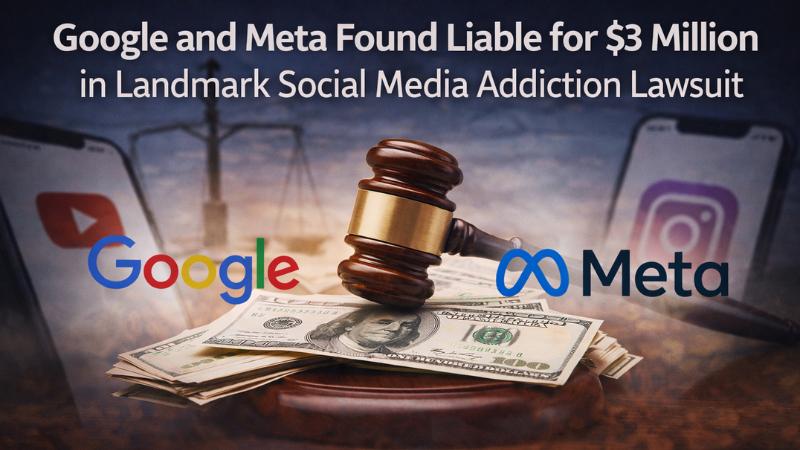
A Los Angeles jury has found Alphabet’s Google and Meta Platforms liable for $3 million in damages in a social media addiction lawsuit, a ruling that could set a precedent for thousands of similar cases. The lawsuit focused on the platforms' addictive design, which the plaintiff argued contributed to her addiction to YouTube and Instagram from a young age. This case, which highlights the growing concerns over social media’s impact on mental health, could influence future legal actions brought by parents, school districts, and attorneys general against tech giants. The plaintiff, a 20-year-old woman, claimed that the attention-grabbing features of the apps led her to develop an addiction, marking a significant legal focus on the platforms' design rather than the content itself. The lawsuit was filed amid mounting criticism of social media companies for their role in the safety of children and teens. At least half of American teenagers use platforms like YouTube and Instagram daily, amplifying concerns over the prolonged exposure to these platforms. Snapchat and TikTok were also named in the case but settled with the plaintiff before the trial commenced. Despite the ruling, Meta and Google have expressed their disagreement with the verdict, with Meta already evaluating further legal options. The ruling has minimal impact on the companies’ stock prices, as shares of Meta rose slightly, while Alphabet’s stock remained largely unchanged. The case adds to the growing body of lawsuits focused on social media addiction, with other similar cases expected to go to trial in federal and state courts. Critics have long called for more stringent regulations on social media use, but Congress has yet to pass comprehensive legislation on the matter. Meanwhile, numerous states have enacted laws governing social media use among children, with some requiring age verification for account creation, a measure that tech trade associations are challenging in court. As the debate intensifies, the impact of this verdict on future legislation and lawsuits against tech companies remains to be seen. The ruling could be a crucial step in holding companies accountable for the design of platforms that contribute to addiction and harm, particularly among vulnerable youth populations.
Google and Meta Found Liable for $3 Million in Landmark Social Media Addiction Lawsuit
A Los Angeles jury has found Alphabet’s Google and Meta Platforms liable for $3 million in damages in a social media addiction lawsuit, a ruling that could set a precedent for thousands of similar cases. The lawsuit focused on the platforms' addictive design, which the plaintiff argued contributed to her addiction to YouTube and Instagram from a young age. This case, which highlights the growing concerns over social media’s impact on mental health, could influence future legal actions brought by parents, school districts, and attorneys general against tech giants. The plaintiff, a 20-year-old woman, claimed that the attention-grabbing features of the apps led her to develop an addiction, marking a significant legal focus on the platforms' design rather than the content itself. The lawsuit was filed amid mounting criticism of social media companies for their role in the safety of children and teens. At least half of American teenagers use platforms like YouTube and Instagram daily, amplifying concerns over the prolonged exposure to these platforms. Snapchat and TikTok were also named in the case but settled with the plaintiff before the trial commenced. Despite the ruling, Meta and Google have expressed their disagreement with the verdict, with Meta already evaluating further legal options. The ruling has minimal impact on the companies’ stock prices, as shares of Meta rose slightly, while Alphabet’s stock remained largely unchanged. The case adds to the growing body of lawsuits focused on social media addiction, with other similar cases expected to go to trial in federal and state courts. Critics have long called for more stringent regulations on social media use, but Congress has yet to pass comprehensive legislation on the matter. Meanwhile, numerous states have enacted laws governing social media use among children, with some requiring age verification for account creation, a measure that tech trade associations are challenging in court. As the debate intensifies, the impact of this verdict on future legislation and lawsuits against tech companies remains to be seen. The ruling could be a crucial step in holding companies accountable for the design of platforms that contribute to addiction and harm, particularly among vulnerable youth populations.
Jury finds Meta and YouTube negligent in landmark social media addiction case
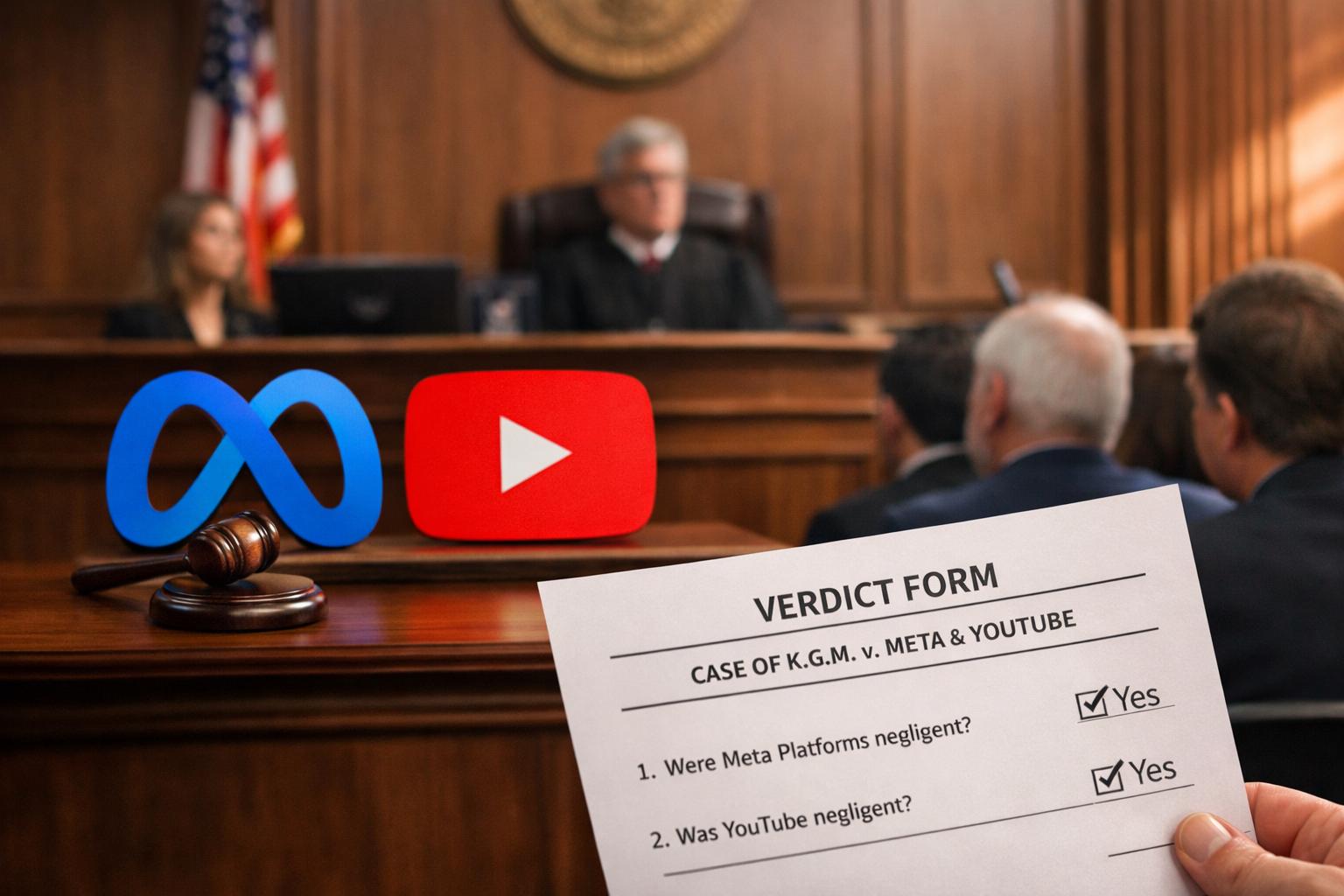
A Los Angeles jury has found Meta and YouTube negligent in the design and operation of their platforms, delivering a significant verdict in one of the first trials addressing allegations of social media addiction. The jury concluded that both companies played a substantial role in causing harm to the plaintiff, identified as K.G.M., and failed to adequately warn users about potential risks associated with Instagram and YouTube. The panel awarded $3 million in compensatory damages, a
Jury finds Meta and YouTube negligent in landmark social media addiction case
A Los Angeles jury has found Meta and YouTube negligent in the design and operation of their platforms, delivering a significant verdict in one of the first trials addressing allegations of social media addiction. The jury concluded that both companies played a substantial role in causing harm to the plaintiff, identified as K.G.M., and failed to adequately warn users about potential risks associated with Instagram and YouTube. The panel awarded $3 million in compensatory damages, a

Denmark PM resigns as election results force coalition talks
Denmark’s Prime Minister Mette Frederiksen formally resigned on Wednesday following the outcome of the country’s general election, initiating the process of forming a new government after no political bloc secured a clear majority. The resignation was submitted to King Frederik at the Royal Palace, in line with constitutional practice when an incumbent administration loses its parliamentary majority. Frederiksen’s Social Democrats emerged as the largest party, securing 21.9% of the vote and retaining the highest number of seats in parliament. However, the result marked the party’s weakest performance in more than a century, significantly undermining its governing position. The left-leaning “red bloc,” led by the Social Democrats, secured 84 seats, falling short of the 90 required for a majority in the 179-seat Folketing. Despite the setback, Frederiksen signaled her intention to remain politically active and potentially lead the next government. She will continue in a caretaker role until coalition negotiations conclude. Addressing supporters, she acknowledged disappointment over the vote share but emphasized that her party remains the largest political force in Denmark. The opposition “blue bloc” also failed to secure a governing majority, collectively winning 77 seats. The Liberal Party Venstre recorded one of its poorest results, securing just 10.1% of the vote and trailing behind the Green Left party. With neither bloc able to form a government independently, attention has shifted to the Moderates party, led by former prime minister Lars Løkke Rasmussen, which secured 14 seats and is expected to play a decisive role in coalition talks. The election, called earlier than anticipated, was initially influenced by international tensions, including debates over Greenland. However, domestic policy issues dominated the campaign, reshaping voter priorities. Political negotiations are expected to continue for several days or weeks as parties attempt to build a stable governing coalition.
Denmark PM resigns as election results force coalition talks
Denmark’s Prime Minister Mette Frederiksen formally resigned on Wednesday following the outcome of the country’s general election, initiating the process of forming a new government after no political bloc secured a clear majority. The resignation was submitted to King Frederik at the Royal Palace, in line with constitutional practice when an incumbent administration loses its parliamentary majority. Frederiksen’s Social Democrats emerged as the largest party, securing 21.9% of the vote and retaining the highest number of seats in parliament. However, the result marked the party’s weakest performance in more than a century, significantly undermining its governing position. The left-leaning “red bloc,” led by the Social Democrats, secured 84 seats, falling short of the 90 required for a majority in the 179-seat Folketing. Despite the setback, Frederiksen signaled her intention to remain politically active and potentially lead the next government. She will continue in a caretaker role until coalition negotiations conclude. Addressing supporters, she acknowledged disappointment over the vote share but emphasized that her party remains the largest political force in Denmark. The opposition “blue bloc” also failed to secure a governing majority, collectively winning 77 seats. The Liberal Party Venstre recorded one of its poorest results, securing just 10.1% of the vote and trailing behind the Green Left party. With neither bloc able to form a government independently, attention has shifted to the Moderates party, led by former prime minister Lars Løkke Rasmussen, which secured 14 seats and is expected to play a decisive role in coalition talks. The election, called earlier than anticipated, was initially influenced by international tensions, including debates over Greenland. However, domestic policy issues dominated the campaign, reshaping voter priorities. Political negotiations are expected to continue for several days or weeks as parties attempt to build a stable governing coalition.

Claude Now Controls Your Computer, Anthropic Unveils New AI Feature for Automation
In a groundbreaking development, Anthropic has introduced a new feature for Claude, its powerful AI assistant, enabling it to gain full control of your computer. This update takes Claude beyond simply responding to commands—it now has the capability to operate your mouse, keyboard, and even access apps, effectively transforming it into a remote personal assistant capable of completing tasks on your behalf. The new functionality is designed to streamline productivity by allowing Claude to handle tasks like opening applications, managing spreadsheets, navigating browsers, and more—all without you needing to be present at your computer. With this feature, Anthropic envisions a future where you can rely on AI to do the work while you are away, with minimal interaction required on your part. Alex Albert, a researcher at Anthropic, shared on X (formerly Twitter), "The future where I never have to open up my laptop to get work done is becoming real very fast." The integration with the Dispatch feature, which allows users to remotely control Claude, enhances the AI’s capabilities, making it a versatile tool for both personal and professional use. Claude's access to your computer is seamless, initially starting with apps like Slack or Calendar. With permission, it can extend access to other applications needed for the task at hand. Once set up, you can prompt Claude remotely through its mobile or desktop app, and when you return, the AI will have completed your tasks. Currently, this feature is available only to paid users of Claude Cowork and Claude Code, and is limited to macOS users. Both the Claude desktop and mobile apps need to be updated and paired for the full functionality to work. This shift towards AI-powered automation, allowing AI agents like Claude to manage tasks and workflows independently, marks a significant step forward in the development of agentic AI, positioning Anthropic as a leader in this field. With competitors like Nvidia’s NemoClaw, OpenAI, and Meta developing similar AI systems, the race to bring seamless, autonomous task management to everyday users is gaining momentum.
Claude Now Controls Your Computer, Anthropic Unveils New AI Feature for Automation
In a groundbreaking development, Anthropic has introduced a new feature for Claude, its powerful AI assistant, enabling it to gain full control of your computer. This update takes Claude beyond simply responding to commands—it now has the capability to operate your mouse, keyboard, and even access apps, effectively transforming it into a remote personal assistant capable of completing tasks on your behalf. The new functionality is designed to streamline productivity by allowing Claude to handle tasks like opening applications, managing spreadsheets, navigating browsers, and more—all without you needing to be present at your computer. With this feature, Anthropic envisions a future where you can rely on AI to do the work while you are away, with minimal interaction required on your part. Alex Albert, a researcher at Anthropic, shared on X (formerly Twitter), "The future where I never have to open up my laptop to get work done is becoming real very fast." The integration with the Dispatch feature, which allows users to remotely control Claude, enhances the AI’s capabilities, making it a versatile tool for both personal and professional use. Claude's access to your computer is seamless, initially starting with apps like Slack or Calendar. With permission, it can extend access to other applications needed for the task at hand. Once set up, you can prompt Claude remotely through its mobile or desktop app, and when you return, the AI will have completed your tasks. Currently, this feature is available only to paid users of Claude Cowork and Claude Code, and is limited to macOS users. Both the Claude desktop and mobile apps need to be updated and paired for the full functionality to work. This shift towards AI-powered automation, allowing AI agents like Claude to manage tasks and workflows independently, marks a significant step forward in the development of agentic AI, positioning Anthropic as a leader in this field. With competitors like Nvidia’s NemoClaw, OpenAI, and Meta developing similar AI systems, the race to bring seamless, autonomous task management to everyday users is gaining momentum.

Supreme Court of India rules conversion ends Scheduled Caste status
The Supreme Court of India, in a significant judgment delivered on March 24, 2026, has reaffirmed that individuals who convert to religions other than Hinduism, Sikhism, or Buddhism cannot retain or claim Scheduled Caste status under the law. The ruling reinforces the constitutional framework governing caste-based reservations and legal protections in India. The verdict came in an appeal challenging an earlier decision of the Andhra Pradesh High Court, which had quashed criminal proceedings filed under the Scheduled Castes and Scheduled Tribes (Prevention of Atrocities) Act. The complainant, who was born into a Scheduled Caste but had converted to Christianity and was functioning as a pastor, had alleged caste-based abuse and assault. However, the court held that his conversion disentitled him from invoking protections meant specifically for Scheduled Castes. A bench of the Supreme Court observed that the Constitution (Scheduled Castes) Order, 1950, clearly restricts Scheduled Caste recognition to persons professing Hinduism, Sikhism, or Buddhism. The court described this restriction as categorical, stating that conversion to any other religion results in the immediate and complete loss of Scheduled Caste status, regardless of birth. The court further clarified that a person cannot simultaneously profess a religion outside the specified categories and claim Scheduled Caste identity for statutory benefits. It emphasized that such positions are mutually exclusive within the constitutional scheme, and no statutory protection or reservation can be extended once a person ceases to fall within the legally defined category. In its interpretation, the court also highlighted that the term “profess” implies a public declaration and active practice of a religion. This interpretation played a key role in assessing the individual’s eligibility, particularly in cases where religious identity is visibly demonstrated through roles such as clergy or religious leadership. The judgment is expected to have wide-ranging implications for individuals who convert to religions outside the constitutionally recognised framework while seeking benefits or protections linked to Scheduled Caste status. While the ruling reinforces existing legal provisions, it also brings renewed attention to ongoing debates about caste discrimination and its persistence beyond religious boundaries.
Supreme Court of India rules conversion ends Scheduled Caste status
The Supreme Court of India, in a significant judgment delivered on March 24, 2026, has reaffirmed that individuals who convert to religions other than Hinduism, Sikhism, or Buddhism cannot retain or claim Scheduled Caste status under the law. The ruling reinforces the constitutional framework governing caste-based reservations and legal protections in India. The verdict came in an appeal challenging an earlier decision of the Andhra Pradesh High Court, which had quashed criminal proceedings filed under the Scheduled Castes and Scheduled Tribes (Prevention of Atrocities) Act. The complainant, who was born into a Scheduled Caste but had converted to Christianity and was functioning as a pastor, had alleged caste-based abuse and assault. However, the court held that his conversion disentitled him from invoking protections meant specifically for Scheduled Castes. A bench of the Supreme Court observed that the Constitution (Scheduled Castes) Order, 1950, clearly restricts Scheduled Caste recognition to persons professing Hinduism, Sikhism, or Buddhism. The court described this restriction as categorical, stating that conversion to any other religion results in the immediate and complete loss of Scheduled Caste status, regardless of birth. The court further clarified that a person cannot simultaneously profess a religion outside the specified categories and claim Scheduled Caste identity for statutory benefits. It emphasized that such positions are mutually exclusive within the constitutional scheme, and no statutory protection or reservation can be extended once a person ceases to fall within the legally defined category. In its interpretation, the court also highlighted that the term “profess” implies a public declaration and active practice of a religion. This interpretation played a key role in assessing the individual’s eligibility, particularly in cases where religious identity is visibly demonstrated through roles such as clergy or religious leadership. The judgment is expected to have wide-ranging implications for individuals who convert to religions outside the constitutionally recognised framework while seeking benefits or protections linked to Scheduled Caste status. While the ruling reinforces existing legal provisions, it also brings renewed attention to ongoing debates about caste discrimination and its persistence beyond religious boundaries.

Democrat Emily Gregory Wins Florida House Special Election
In a surprising upset, Emily Gregory, a Democrat, defeated Republican Jon Maples in a special election for the Florida state House of Representatives. The district, which includes Palm Beach—President Donald Trump’s primary residence at Mar-a-Lago—was expected to be a safe win for Republicans, especially after Trump endorsed Maples. However, Gregory’s victory represents a symbolic win for Democrats, even though it will not significantly affect the state’s Republican majority. Her ca
Democrat Emily Gregory Wins Florida House Special Election
In a surprising upset, Emily Gregory, a Democrat, defeated Republican Jon Maples in a special election for the Florida state House of Representatives. The district, which includes Palm Beach—President Donald Trump’s primary residence at Mar-a-Lago—was expected to be a safe win for Republicans, especially after Trump endorsed Maples. However, Gregory’s victory represents a symbolic win for Democrats, even though it will not significantly affect the state’s Republican majority. Her ca