Google I/O 2026: Gemini Spark Brings Agentic AI to Users
Google used its annual developer conference on Tuesday, May 19, 2026, in Mountain View, California, to introduce new Gemini AI tools aimed at making its assistant more proactive and task-focused. The biggest consumer-facing update is Gemini Spark, a personal AI agent inside the Gemini app that Google says can help users manage digital tasks under their direction. The company said Spark will run on dedicated virtual machines on Google Cloud, allowing
Google I/O 2026: Gemini Spark Brings Agentic AI to Users
Google used its annual developer conference on Tuesday, May 19, 2026, in Mountain View, California, to introduce new Gemini AI tools aimed at making its assistant more proactive and task-focused. The biggest consumer-facing update is Gemini Spark, a personal AI agent inside the Gemini app that Google says can help users manage digital tasks under their direction. The company said Spark will run on dedicated virtual machines on Google Cloud, allowing
MEA Official Responds To Press Freedom Question During Modi Oslo Visit
MEA Responds To Trust Question In Oslo India’s Ministry of External Affairs responded strongly during a press briefing in Oslo after a Norwegian journalist questioned why India should be trusted and why Prime Minister Narendra Modi does not take questions from the press. MEA Secretary West Sibi George answered by defending India’s democratic institutions, constitutional protections, media environment and record on human
MEA Official Responds To Press Freedom Question During Modi Oslo Visit
MEA Responds To Trust Question In Oslo India’s Ministry of External Affairs responded strongly during a press briefing in Oslo after a Norwegian journalist questioned why India should be trusted and why Prime Minister Narendra Modi does not take questions from the press. MEA Secretary West Sibi George answered by defending India’s democratic institutions, constitutional protections, media environment and record on human
TDP Mahanadu 2026 Goes Online: Chandrababu Naidu’s Move
TDP’s Mahanadu 2026 Goes Fully Online: Chandrababu Naidu Adopts New Format The Telugu Desam Party (TDP) is set to celebrate its annual flagship event Mahanadu in a completely new format this year. Instead of the traditional grand physical gathering, Chandrababu Naidu has decided to hold the event online as part of nationwide fuel-saving measures. Mahanadu Schedule and Background
TDP Mahanadu 2026 Goes Online: Chandrababu Naidu’s Move
TDP’s Mahanadu 2026 Goes Fully Online: Chandrababu Naidu Adopts New Format The Telugu Desam Party (TDP) is set to celebrate its annual flagship event Mahanadu in a completely new format this year. Instead of the traditional grand physical gathering, Chandrababu Naidu has decided to hold the event online as part of nationwide fuel-saving measures. Mahanadu Schedule and Background
Fuel Prices Rise In India As Petrol Diesel CNG Hike Hits Major Cities
The petrol, diesel, and CNG price hike in India took effect on Friday, May 15, 2026. This was the first retail fuel price increase in four years, following the surge in global crude oil prices due to the Iran war. Fuel Price Hike Overview in Major Cities The government raised petrol, diesel, and CNG prices following a surge in global crude oil prices triggered by the Iran war. This is the first retail fuel price hike in four years. The increase is expected to affect transportation costs, household spending, and overall inflation. City Petrol Price (Rs/Litre) Petrol Hike (Rs) Diesel Price (Rs/Litre) Diesel Hike (Rs) CNG Price (Rs/Kg) CNG Hike (Rs) Delhi 97.77 3.00 90.67 3.00 79.09 2.00 Kolkata 108.74 3.29 95.13 3.11 — — Mumbai 106.68 3.14 93.14 3.11 84.00 2.00 Chennai 103.67 2.83 95.25 2.86 — — Hyderabad 104.50 3.10 94.20 3.05 80.50 2.00 Economic Implications and Expert Insights India’s state-run oil companies, IOCL, BPCL, and HPCL, were absorbing high crude costs for months, incurring daily losses of around Rs 1,600 crore. Imported crude prices jumped from $69 per barrel in February to $113-114 per barrel after the Iran war began on February 28. Economists, including Finance Commission Chair Dr Arvind Panagariya, recommended that retail prices be adjusted to prevent further losses and sustain OMC operations. Prime Minister Modi has appealed to citizens to conserve fuel and encouraged work-from-home practices to reduce foreign outflows. The Delhi government initiated a 90-day campaign promoting fuel-saving habits and limited office days. The fuel price increase is expected to push up transportation and logistics costs, which may drive inflation in essential commodities like milk and vegetables. Household savings could shrink, and discretionary spending may reduce, potentially slowing consumption, production, and GDP growth. While consumers will feel the immediate impact, this step was unavoidable given the international crude price surge.
Fuel Prices Rise In India As Petrol Diesel CNG Hike Hits Major Cities
The petrol, diesel, and CNG price hike in India took effect on Friday, May 15, 2026. This was the first retail fuel price increase in four years, following the surge in global crude oil prices due to the Iran war. Fuel Price Hike Overview in Major Cities The government raised petrol, diesel, and CNG prices following a surge in global crude oil prices triggered by the Iran war. This is the first retail fuel price hike in four years. The increase is expected to affect transportation costs, household spending, and overall inflation. City Petrol Price (Rs/Litre) Petrol Hike (Rs) Diesel Price (Rs/Litre) Diesel Hike (Rs) CNG Price (Rs/Kg) CNG Hike (Rs) Delhi 97.77 3.00 90.67 3.00 79.09 2.00 Kolkata 108.74 3.29 95.13 3.11 — — Mumbai 106.68 3.14 93.14 3.11 84.00 2.00 Chennai 103.67 2.83 95.25 2.86 — — Hyderabad 104.50 3.10 94.20 3.05 80.50 2.00 Economic Implications and Expert Insights India’s state-run oil companies, IOCL, BPCL, and HPCL, were absorbing high crude costs for months, incurring daily losses of around Rs 1,600 crore. Imported crude prices jumped from $69 per barrel in February to $113-114 per barrel after the Iran war began on February 28. Economists, including Finance Commission Chair Dr Arvind Panagariya, recommended that retail prices be adjusted to prevent further losses and sustain OMC operations. Prime Minister Modi has appealed to citizens to conserve fuel and encouraged work-from-home practices to reduce foreign outflows. The Delhi government initiated a 90-day campaign promoting fuel-saving habits and limited office days. The fuel price increase is expected to push up transportation and logistics costs, which may drive inflation in essential commodities like milk and vegetables. Household savings could shrink, and discretionary spending may reduce, potentially slowing consumption, production, and GDP growth. While consumers will feel the immediate impact, this step was unavoidable given the international crude price surge.
Trump Highlights Xi Meeting as Key Diplomatic Win
Trump Discusses Meeting with Xi Jinping US President Donald Trump spoke on Thursday, May 14, in his first interview following a high-stakes meeting with Chinese President Xi Jinping. The President described the discussion as a significant diplomatic achievement, asserting that his administration is treated with a heightened level of seriousness by the Chinese leadership. He contrasted his approach to foreign relations with
Trump Highlights Xi Meeting as Key Diplomatic Win
Trump Discusses Meeting with Xi Jinping US President Donald Trump spoke on Thursday, May 14, in his first interview following a high-stakes meeting with Chinese President Xi Jinping. The President described the discussion as a significant diplomatic achievement, asserting that his administration is treated with a heightened level of seriousness by the Chinese leadership. He contrasted his approach to foreign relations with
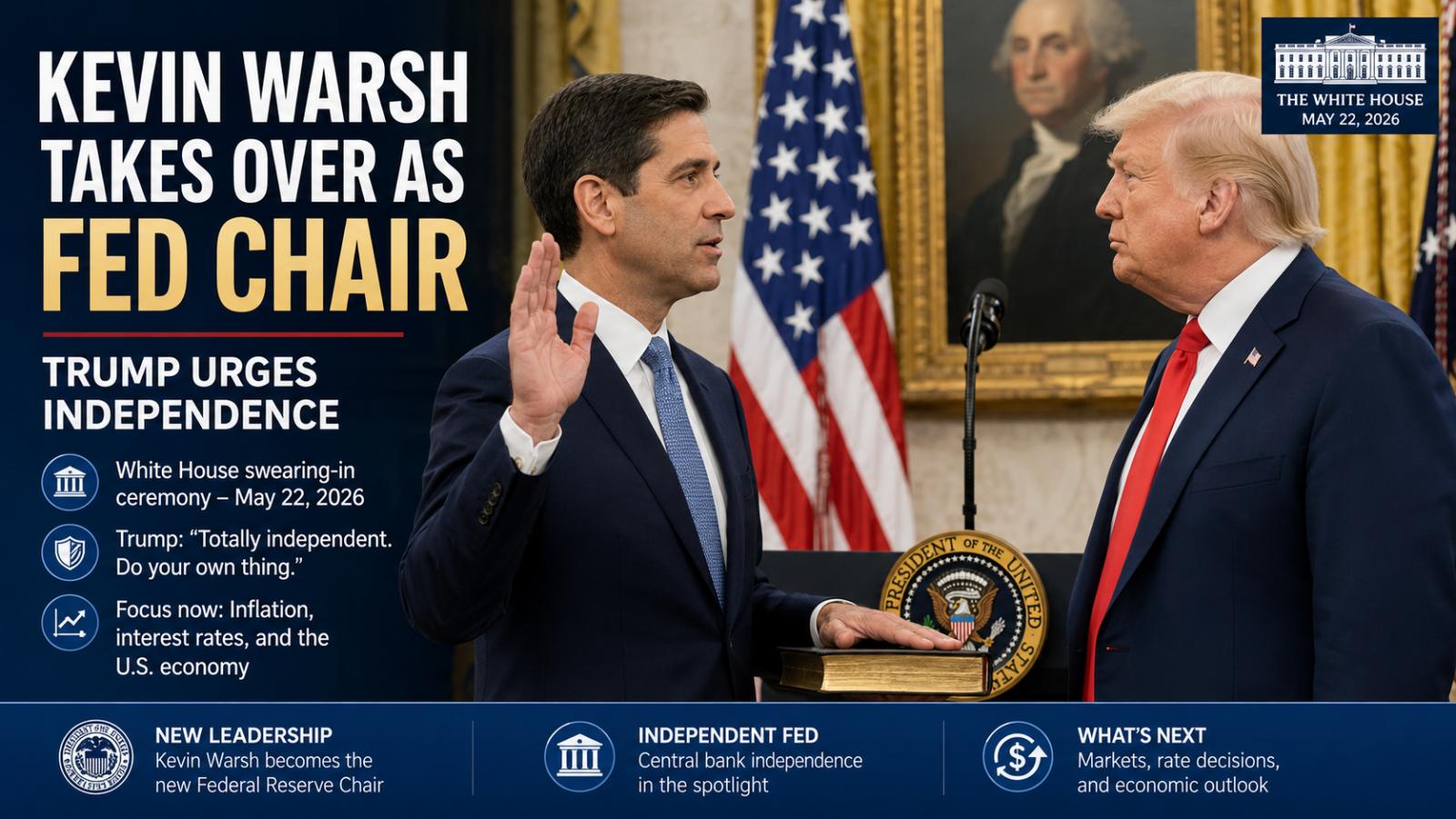
Kevin Warsh Confirmed as Fed Chair as Inflation and Rate-Cut Pressure Intensify
Kevin Warsh was confirmed as Federal Reserve chair on Wednesday, May 13, 2026, placing President Donald Trump’s nominee at the center of a high-stakes debate over inflation, interest rates and the independence of the U.S. central bank. The Senate approved Warsh in a 54–45 largely party-line vote, clearing the way for the former Federal Reserve official to succeed Jerome Powell. The confirmation followed uncertainty tied to a Justice Department investigation involving Powell, whi
Kevin Warsh Confirmed as Fed Chair as Inflation and Rate-Cut Pressure Intensify
Kevin Warsh was confirmed as Federal Reserve chair on Wednesday, May 13, 2026, placing President Donald Trump’s nominee at the center of a high-stakes debate over inflation, interest rates and the independence of the U.S. central bank. The Senate approved Warsh in a 54–45 largely party-line vote, clearing the way for the former Federal Reserve official to succeed Jerome Powell. The confirmation followed uncertainty tied to a Justice Department investigation involving Powell, whi
Trump’s Bold Iran Strategy: "We’ll Win Peacefully or Otherwise"
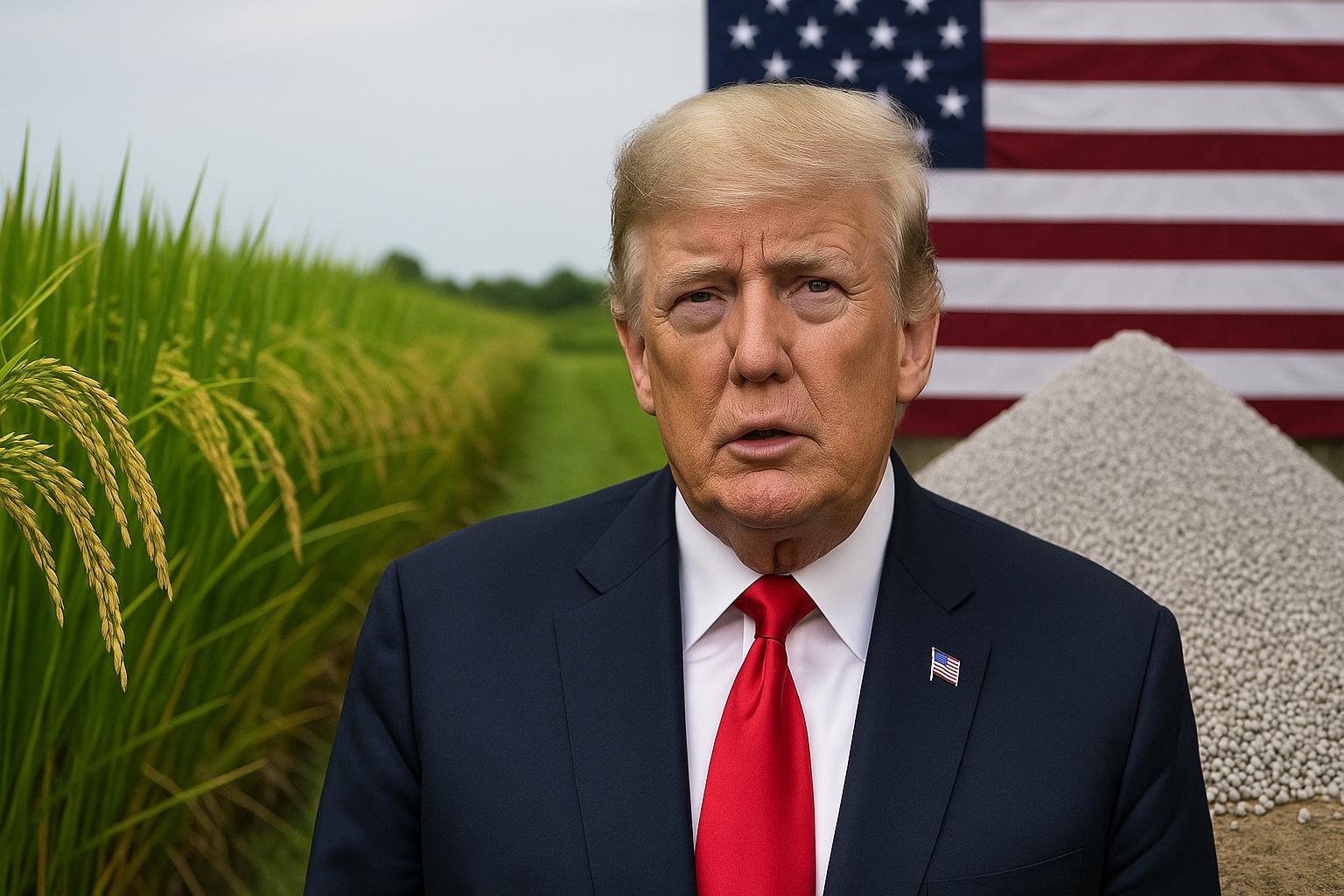
Trump’s Departure for Beijing President Donald Trump left Washington on May 12th for a high-stakes summit with Chinese President Xi Jinping in Beijing. As he boarded Air Force One for the trip, Trump addressed reporters, emphasizing that Iran is "under control" and that the United States either intends to make a deal or "decimate" Iran’s military capabilities. This rhetoric comes amid the ongoing conflict with Iran, with Trump reiterating his u
Trump’s Bold Iran Strategy: "We’ll Win Peacefully or Otherwise"
Trump’s Departure for Beijing President Donald Trump left Washington on May 12th for a high-stakes summit with Chinese President Xi Jinping in Beijing. As he boarded Air Force One for the trip, Trump addressed reporters, emphasizing that Iran is "under control" and that the United States either intends to make a deal or "decimate" Iran’s military capabilities. This rhetoric comes amid the ongoing conflict with Iran, with Trump reiterating his u
Trump Gas Tax Suspension Plan: How Much Could Drivers Save?
President Donald Trump is backing a temporary federal gas tax suspension as US drivers face sharply higher fuel prices linked to the Iran conflict. The proposal could cut up to 18.4 cents per gallon from gasoline and 24.4 cents per gallon from diesel, but it cannot take effect without approval from Congress. How Much Could Drivers Save? Trump said on Monday, May 11, 2026, that he wants to remove the federal gas tax “for a period of time” and restore it once prices ease. The White House has not confirmed whether formal legislation has already been sent to lawmakers. The relief would be limited compared with the wider rise in pump prices. US gasoline prices have climbed sharply since the Iran conflict intensified, leaving many households paying more for commuting, deliveries and daily transportation. Congress Holds The Key The federal gas tax helps fund highways, bridges and public transit through the Highway Trust Fund. Any suspension could give drivers short-term relief but may raise concerns over road funding. Energy Secretary Chris Wright said the administration supports steps to lower fuel costs. Some lawmakers have also backed a temporary gas tax holiday, while critics argue the savings may not fully reach consumers. For American families already dealing with inflation, even a small reduction at the pump could matter. But the plan’s real impact depends on Congress, fuel markets and whether gas stations pass the full tax cut to drivers.
Trump Gas Tax Suspension Plan: How Much Could Drivers Save?
President Donald Trump is backing a temporary federal gas tax suspension as US drivers face sharply higher fuel prices linked to the Iran conflict. The proposal could cut up to 18.4 cents per gallon from gasoline and 24.4 cents per gallon from diesel, but it cannot take effect without approval from Congress. How Much Could Drivers Save? Trump said on Monday, May 11, 2026, that he wants to remove the federal gas tax “for a period of time” and restore it once prices ease. The White House has not confirmed whether formal legislation has already been sent to lawmakers. The relief would be limited compared with the wider rise in pump prices. US gasoline prices have climbed sharply since the Iran conflict intensified, leaving many households paying more for commuting, deliveries and daily transportation. Congress Holds The Key The federal gas tax helps fund highways, bridges and public transit through the Highway Trust Fund. Any suspension could give drivers short-term relief but may raise concerns over road funding. Energy Secretary Chris Wright said the administration supports steps to lower fuel costs. Some lawmakers have also backed a temporary gas tax holiday, while critics argue the savings may not fully reach consumers. For American families already dealing with inflation, even a small reduction at the pump could matter. But the plan’s real impact depends on Congress, fuel markets and whether gas stations pass the full tax cut to drivers.
US Navy targets oil tanker violating blockade on Iranian ports
On May 6, the US military announced that a US Navy warplane disabled an Iranian oil tanker after it attempted to breach Washington’s blockade on Iranian ports. This marks the second time US forces have fired on a vessel accused of violating the blockade, which has been in place since April 13. The Iranian-flagged vessel, M/T Hasna, was reportedly not carrying any cargo when it was warned by US forces. When the crew failed to respond, a US F/A-18 Super Hornet opened fire, disabling the tanke
US Navy targets oil tanker violating blockade on Iranian ports
On May 6, the US military announced that a US Navy warplane disabled an Iranian oil tanker after it attempted to breach Washington’s blockade on Iranian ports. This marks the second time US forces have fired on a vessel accused of violating the blockade, which has been in place since April 13. The Iranian-flagged vessel, M/T Hasna, was reportedly not carrying any cargo when it was warned by US forces. When the crew failed to respond, a US F/A-18 Super Hornet opened fire, disabling the tanke
US gas prices hit $4.52 for the first time since 2022, causing political pressure for Trump
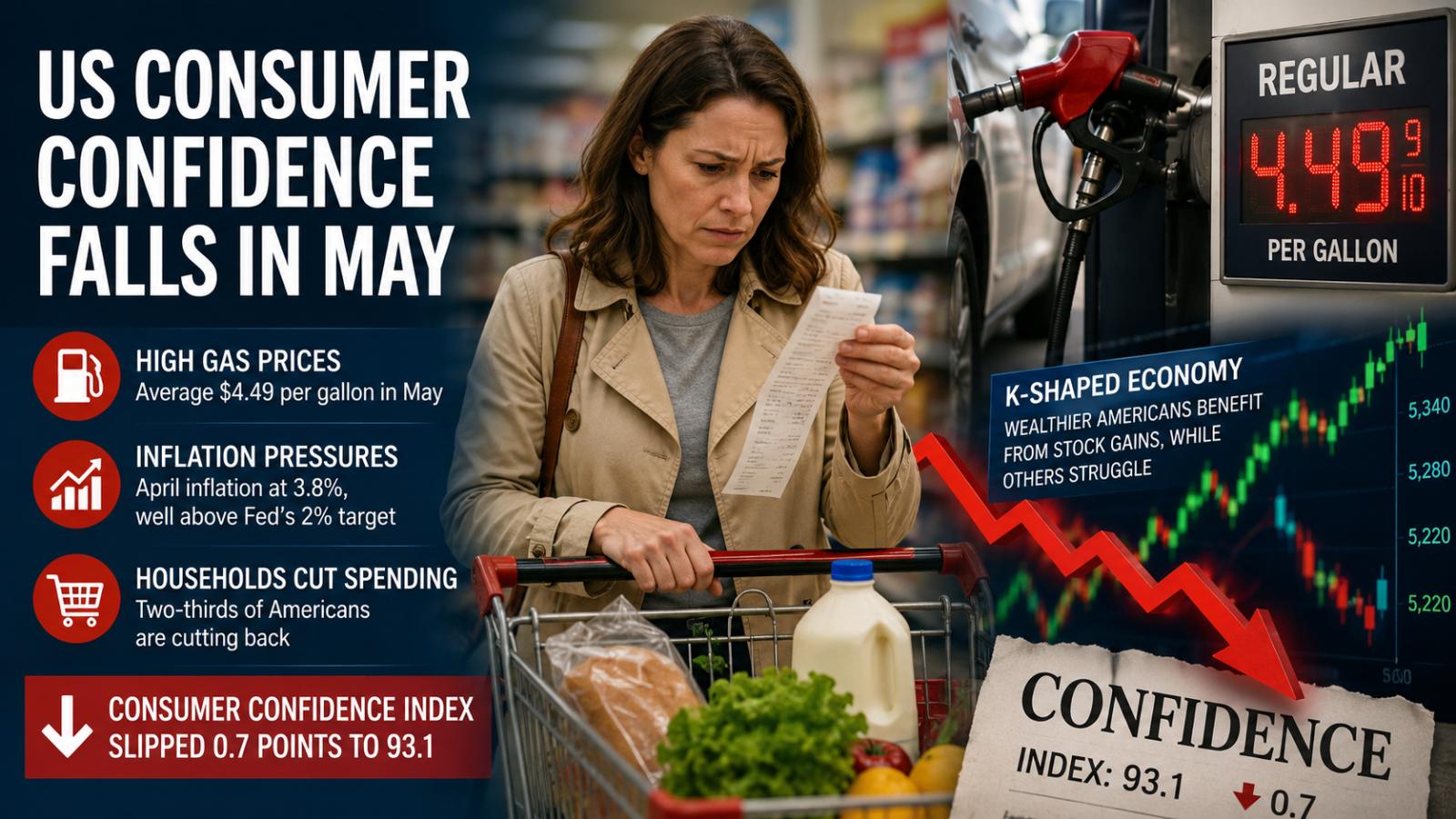
For the first time since July 2022, Americans are facing gas prices above $4.50 a gallon, with the national average hitting $4.52 as of May 6. This surge in fuel prices is placing significant political pressure on President Donald Trump, just five months before the 2024 US Midterm elections. Rising gas prices, coupled with low approval ratings, are adding to the growing dissatisfaction over his handling of key issues such as the economy, inflation, and international conflicts.
US gas prices hit $4.52 for the first time since 2022, causing political pressure for Trump
For the first time since July 2022, Americans are facing gas prices above $4.50 a gallon, with the national average hitting $4.52 as of May 6. This surge in fuel prices is placing significant political pressure on President Donald Trump, just five months before the 2024 US Midterm elections. Rising gas prices, coupled with low approval ratings, are adding to the growing dissatisfaction over his handling of key issues such as the economy, inflation, and international conflicts.
Texas Fuel Prices Jump, Squeezing Household Budgets
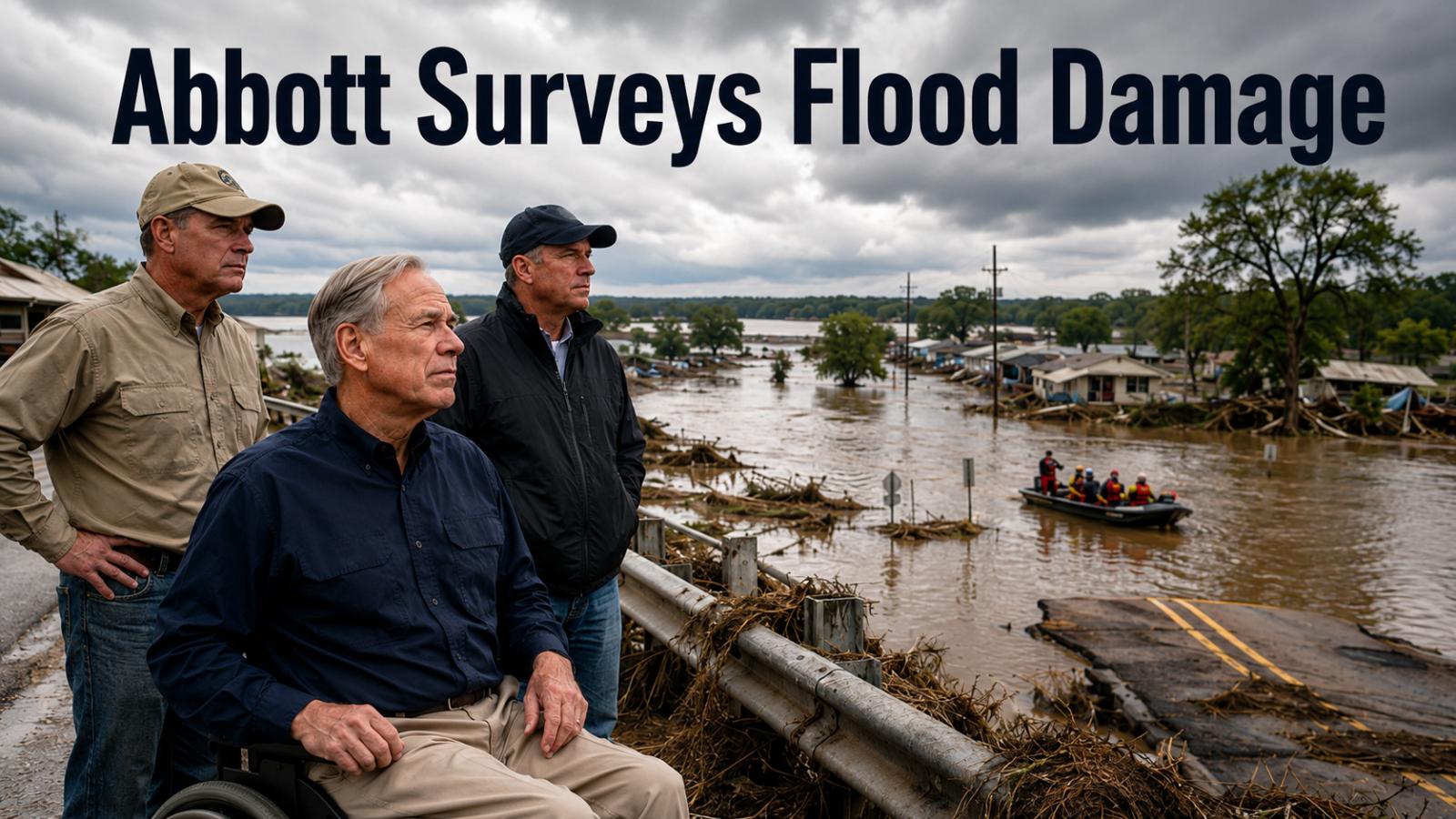
The numbers on gas station signs across Texas are rising fast—and for many drivers, so is the stress. What used to be a routine fill-up is now a moment of hesitation, as fuel costs eat deeper into already stretched budgets. High gas prices in Texas have surged in recent weeks, climbing from about $2.55 per gallon in early February to nearly $3.78. The sharp increase is being driven by global tensions that have disrupted oil supply routes, sending ripple effects through loca
Texas Fuel Prices Jump, Squeezing Household Budgets
The numbers on gas station signs across Texas are rising fast—and for many drivers, so is the stress. What used to be a routine fill-up is now a moment of hesitation, as fuel costs eat deeper into already stretched budgets. High gas prices in Texas have surged in recent weeks, climbing from about $2.55 per gallon in early February to nearly $3.78. The sharp increase is being driven by global tensions that have disrupted oil supply routes, sending ripple effects through loca
Milma Approves ₹4 Per Litre Milk Price Hike In Kerala From May 20
The Kerala Cooperative Milk Marketing Federation (Milma) has approved a ₹4 per litre increase in milk prices across Kerala, a move that is expected to come into effect from May 20, 2026. The decision was taken during a high-level meeting of the cooperative’s governing body on April 30, 2026, amid growi
Milma Approves ₹4 Per Litre Milk Price Hike In Kerala From May 20
The Kerala Cooperative Milk Marketing Federation (Milma) has approved a ₹4 per litre increase in milk prices across Kerala, a move that is expected to come into effect from May 20, 2026. The decision was taken during a high-level meeting of the cooperative’s governing body on April 30, 2026, amid growi
Why are US gas prices rising? Stalled Iran talks push costs to four-year high
Stalled Iran talks push costs to four-year high Gasoline prices across the United States climbed sharply on Tuesday, April 28, 2026, reaching their highest level in four years as stalled negotiations between Washington and Tehran fueled a surge in global oil markets. According to AAA, the national average price for a gallon of regular gasoline rose to $4.18, marking the h
Why are US gas prices rising? Stalled Iran talks push costs to four-year high
Stalled Iran talks push costs to four-year high Gasoline prices across the United States climbed sharply on Tuesday, April 28, 2026, reaching their highest level in four years as stalled negotiations between Washington and Tehran fueled a surge in global oil markets. According to AAA, the national average price for a gallon of regular gasoline rose to $4.18, marking the h
What triggered India’s response to Mali violence? Coordinated terror strikes and minister’s death
India condemns Mali terror attacks after minister killed, highlights global security risks and support for Sahel stability. The Government of India issued a strong condemnation on Tuesday, April 28, 2026 (IST), following a series of coordinated terrorist attacks across Mali that resulted in significant casualties and heightened regional instability. In an official statement, the Ministry of External Affairs expressed condolences to victims’ families and affirmed solidarity with Mali’s government and citizens. Coordinated assaults escalate violence across Mali The wave of violence began on Saturday, April 25, 2026, when militant group Jama'at Nusrat al-Islam wal-Muslimin joined forces with Tuareg separatists from the Front de libération de l'Azawad. Together, they launched synchronized attacks targeting key locations from the capital Bamako to northern regions. The coordinated nature of the assaults marked one of the most significant escalations of violence in the country in recent years. Death of defense minister shocks leadership Among those killed was Sadio Camara, Mali’s Minister of Defence and Veteran Affairs, who died in a targeted strike during the offensive. His death has sent shockwaves through Mali’s political and military leadership, raising concerns about the capacity of state institutions to counter increasingly sophisticated insurgent operations. India reiterates zero tolerance on terrorism In its statement, New Delhi emphasized its longstanding policy of zero tolerance toward terrorism. The government reaffirmed its commitment to combating extremist violence in all forms and voiced support for international efforts aimed at restoring peace and stability in the Sahel region. Officials in New Delhi indicated that the scale and coordination of the attacks reflect evolving threats posed by transnational militant networks. Broader implications for Sahel stability The attacks have intensified concerns within India’s strategic community that Mali could become a more entrenched base for global terror groups. While India has historically maintained a measured relationship with Bamako focused on development and capacity building, the latest violence underscores growing instability across the Sahel. Analysts warn that continued unrest may have wider implications for international security and counterterrorism efforts.
What triggered India’s response to Mali violence? Coordinated terror strikes and minister’s death
India condemns Mali terror attacks after minister killed, highlights global security risks and support for Sahel stability. The Government of India issued a strong condemnation on Tuesday, April 28, 2026 (IST), following a series of coordinated terrorist attacks across Mali that resulted in significant casualties and heightened regional instability. In an official statement, the Ministry of External Affairs expressed condolences to victims’ families and affirmed solidarity with Mali’s government and citizens. Coordinated assaults escalate violence across Mali The wave of violence began on Saturday, April 25, 2026, when militant group Jama'at Nusrat al-Islam wal-Muslimin joined forces with Tuareg separatists from the Front de libération de l'Azawad. Together, they launched synchronized attacks targeting key locations from the capital Bamako to northern regions. The coordinated nature of the assaults marked one of the most significant escalations of violence in the country in recent years. Death of defense minister shocks leadership Among those killed was Sadio Camara, Mali’s Minister of Defence and Veteran Affairs, who died in a targeted strike during the offensive. His death has sent shockwaves through Mali’s political and military leadership, raising concerns about the capacity of state institutions to counter increasingly sophisticated insurgent operations. India reiterates zero tolerance on terrorism In its statement, New Delhi emphasized its longstanding policy of zero tolerance toward terrorism. The government reaffirmed its commitment to combating extremist violence in all forms and voiced support for international efforts aimed at restoring peace and stability in the Sahel region. Officials in New Delhi indicated that the scale and coordination of the attacks reflect evolving threats posed by transnational militant networks. Broader implications for Sahel stability The attacks have intensified concerns within India’s strategic community that Mali could become a more entrenched base for global terror groups. While India has historically maintained a measured relationship with Bamako focused on development and capacity building, the latest violence underscores growing instability across the Sahel. Analysts warn that continued unrest may have wider implications for international security and counterterrorism efforts.
India economy faces slowdown risks amid rising crude oil prices
India growth slowdown: oil price surge impacts economy India growth slowdown has become a major concern after crude oil prices crossed $100 per barrel following tensions linked to the Iran conflict. The sharp increase in energy costs is already affecting corporate earnings and is expected to impact the FY27 outlook, according to analysts tracking the India economy slowdown. The rising oil price surge is not seen as a short-term issue. Higher crude oil prices are likely to continue putting pressure on multiple sectors including consumer, auto, and financial industries. JP Morgan has warned that supply disruptions and elevated energy costs India could persist for months, even after a ceasefire, delaying full normalization. The firm has reduced its FY27 earnings forecast by 2–10 percent across major sectors, highlighting the growing risks to corporate earnings India. Experts point out that the impact will be visible in different ways. Companies may face margin compression, reduced demand, and operational challenges, while consumers may experience the effects through higher prices and inflation India. These combined factors are expected to slow overall economic momentum. Market estimates show that Nifty EPS growth could drop sharply from earlier expectations of around 15 percent to nearly 7–8 percent if crude oil prices remain high. Key industries such as automobiles, oil and gas, and airlines are likely to be the most affected due to their heavy dependence on fuel. Despite these pressures, India Inc revenue growth remains stable, but the growth pattern is shifting from volume-driven to price-led expansion. This means companies are increasing prices to maintain revenues, a strategy that may not be sustainable if inflation continues to rise. West Asia continues to play a crucial role in India’s economy. The region accounts for a significant share of exports and remittances, making India highly sensitive to disruptions in West Asia trade and income flows. Any prolonged instability could further deepen the India growth slowdown. Investor sentiment has also weakened amid global uncertainty. Foreign portfolio investors have turned net sellers, with total FPI outflows reaching nearly ₹1.68 trillion since early 2026, reflecting concerns over geopolitical risks and economic stability.
India economy faces slowdown risks amid rising crude oil prices
India growth slowdown: oil price surge impacts economy India growth slowdown has become a major concern after crude oil prices crossed $100 per barrel following tensions linked to the Iran conflict. The sharp increase in energy costs is already affecting corporate earnings and is expected to impact the FY27 outlook, according to analysts tracking the India economy slowdown. The rising oil price surge is not seen as a short-term issue. Higher crude oil prices are likely to continue putting pressure on multiple sectors including consumer, auto, and financial industries. JP Morgan has warned that supply disruptions and elevated energy costs India could persist for months, even after a ceasefire, delaying full normalization. The firm has reduced its FY27 earnings forecast by 2–10 percent across major sectors, highlighting the growing risks to corporate earnings India. Experts point out that the impact will be visible in different ways. Companies may face margin compression, reduced demand, and operational challenges, while consumers may experience the effects through higher prices and inflation India. These combined factors are expected to slow overall economic momentum. Market estimates show that Nifty EPS growth could drop sharply from earlier expectations of around 15 percent to nearly 7–8 percent if crude oil prices remain high. Key industries such as automobiles, oil and gas, and airlines are likely to be the most affected due to their heavy dependence on fuel. Despite these pressures, India Inc revenue growth remains stable, but the growth pattern is shifting from volume-driven to price-led expansion. This means companies are increasing prices to maintain revenues, a strategy that may not be sustainable if inflation continues to rise. West Asia continues to play a crucial role in India’s economy. The region accounts for a significant share of exports and remittances, making India highly sensitive to disruptions in West Asia trade and income flows. Any prolonged instability could further deepen the India growth slowdown. Investor sentiment has also weakened amid global uncertainty. Foreign portfolio investors have turned net sellers, with total FPI outflows reaching nearly ₹1.68 trillion since early 2026, reflecting concerns over geopolitical risks and economic stability.
What is driving Iran’s cooking oil trade surge? Inflation and shortages at the border
On Turkey’s bustling border crossing with Iran, inflation and shortages are driving a surge in cooking oil trade as economic pressures deepen inside Iran. At the Kapikoy crossing near Van in eastern Turkey, merchants and travelers described a growing demand for basic goods, particularly cooking oil, as Iranian consumers grapple with soaring prices and limited supply. Shopkeepers at the crossing said demand has risen sharply in recent days, with dozens of individuals carrying multiple large bottles of oil back into Iran. The trade has become a small but vital source of income for both Turkish vendors and Iranian buyers seeking to resell or use the goods domestically. Rising food prices and subsidy reforms reshape consumer behavior Iran’s inflation crisis, projected by the International Monetary Fund to approach 70 percent in 2026, has significantly eroded purchasing power. Cooking oil prices surged after the government removed subsidies on certain essential imports in January, a move intended to reduce state spending amid ongoing sanctions. Iranian officials, including President Masoud Pezeshkian, have defended the policy, arguing that subsidies were being exploited without effectively lowering prices. However, many consumers report difficulty finding affordable cooking oil in local markets, forcing them to look beyond the country’s borders. Border trade becomes a lifeline for struggling households For some Iranians, cross-border trade offers a modest financial cushion. Individuals interviewed at the crossing described buying cooking oil in Turkey for just over $10 per five-liter bottle and reselling it in Iran at slightly lower prices than domestic shops, earning small profits. The Kapikoy crossing has remained one of the few consistent links between Iran and the outside world during recent disruptions, including airspace closures and an ongoing internet shutdown that has limited access to information within the country. Economic strain intensifies amid conflict and job losses Beyond inflation, Iran’s economy is facing additional strain from conflict-related disruptions and layoffs. The country’s minimum wage, roughly $108 per month, has failed to keep pace with rising living costs, leaving many households under severe financial pressure. Recent protests driven by economic discontent have been met with government crackdowns, adding to an atmosphere of uncertainty. While the government has introduced monthly cash payments equivalent to about $7 to offset rising costs, analysts say the measure is unlikely to significantly ease the burden on most families. Limited relief despite growing cross-border activity Although the increase in cross-border trade highlights the resilience of individuals adapting to economic hardship, the overall impact remains limited. The modest profits generated by transporting goods like cooking oil do little to offset the broader challenges posed by inflation, unemployment, and supply shortages. For many Iranians, the scenes at the Turkey-Iran border underscore a deeper economic crisis, where even basic necessities require creative—and often difficult—solutions to obtain.
What is driving Iran’s cooking oil trade surge? Inflation and shortages at the border
On Turkey’s bustling border crossing with Iran, inflation and shortages are driving a surge in cooking oil trade as economic pressures deepen inside Iran. At the Kapikoy crossing near Van in eastern Turkey, merchants and travelers described a growing demand for basic goods, particularly cooking oil, as Iranian consumers grapple with soaring prices and limited supply. Shopkeepers at the crossing said demand has risen sharply in recent days, with dozens of individuals carrying multiple large bottles of oil back into Iran. The trade has become a small but vital source of income for both Turkish vendors and Iranian buyers seeking to resell or use the goods domestically. Rising food prices and subsidy reforms reshape consumer behavior Iran’s inflation crisis, projected by the International Monetary Fund to approach 70 percent in 2026, has significantly eroded purchasing power. Cooking oil prices surged after the government removed subsidies on certain essential imports in January, a move intended to reduce state spending amid ongoing sanctions. Iranian officials, including President Masoud Pezeshkian, have defended the policy, arguing that subsidies were being exploited without effectively lowering prices. However, many consumers report difficulty finding affordable cooking oil in local markets, forcing them to look beyond the country’s borders. Border trade becomes a lifeline for struggling households For some Iranians, cross-border trade offers a modest financial cushion. Individuals interviewed at the crossing described buying cooking oil in Turkey for just over $10 per five-liter bottle and reselling it in Iran at slightly lower prices than domestic shops, earning small profits. The Kapikoy crossing has remained one of the few consistent links between Iran and the outside world during recent disruptions, including airspace closures and an ongoing internet shutdown that has limited access to information within the country. Economic strain intensifies amid conflict and job losses Beyond inflation, Iran’s economy is facing additional strain from conflict-related disruptions and layoffs. The country’s minimum wage, roughly $108 per month, has failed to keep pace with rising living costs, leaving many households under severe financial pressure. Recent protests driven by economic discontent have been met with government crackdowns, adding to an atmosphere of uncertainty. While the government has introduced monthly cash payments equivalent to about $7 to offset rising costs, analysts say the measure is unlikely to significantly ease the burden on most families. Limited relief despite growing cross-border activity Although the increase in cross-border trade highlights the resilience of individuals adapting to economic hardship, the overall impact remains limited. The modest profits generated by transporting goods like cooking oil do little to offset the broader challenges posed by inflation, unemployment, and supply shortages. For many Iranians, the scenes at the Turkey-Iran border underscore a deeper economic crisis, where even basic necessities require creative—and often difficult—solutions to obtain.
How is U.S. pressure on Iran intensifying? It combines sanctions, blockade, and enforcement
How is U.S. pressure on Iran intensifying? It combines sanctions, blockade, and enforcement as economic and geopolitical forces converge to place unprecedented strain on Tehran, according to a former U.S. Treasury sanctions expert who described the current moment as a rare alignment of leverage. Converging tools create peak economic pressure Miad Maleki, a former Treasury Department sanctions specialist, said the United States is applying multiple pressu
How is U.S. pressure on Iran intensifying? It combines sanctions, blockade, and enforcement
How is U.S. pressure on Iran intensifying? It combines sanctions, blockade, and enforcement as economic and geopolitical forces converge to place unprecedented strain on Tehran, according to a former U.S. Treasury sanctions expert who described the current moment as a rare alignment of leverage. Converging tools create peak economic pressure Miad Maleki, a former Treasury Department sanctions specialist, said the United States is applying multiple pressu
Why are AI firms hiring software executives? Talent shift accelerates enterprise push
Why are AI firms hiring software executives? Talent shift accelerates enterprise push is becoming a defining question across the technology sector as artificial intelligence companies aggressively recruit senior leaders from traditional software firms, signaling a strategic shift toward enterprise growth and customer expansion. AI companies target enterprise expertise from software leaders Executives from companies including Salesforce, Snowflake, and Datadog have recently joined AI firms such as OpenAI and Anthropic, according to multiple industry sources. These hires are often driven by lucrative compensation packages and the ability to leverage long-standing corporate relationships in enterprise markets. Among the most prominent moves, Denise Dresser transitioned to OpenAI as chief revenue officer after previously serving as CEO of Slack under Salesforce. Jennifer Majlessi also joined OpenAI in a go-to-market leadership role, reflecting a broader trend of AI firms strengthening their sales and commercialization capabilities. Enterprise growth becomes central to AI business strategy The hiring surge highlights a shift in priorities for AI companies, where enterprise adoption is increasingly seen as a key revenue driver. Corporate clients tend to offer more stable, long-term contracts, making them a “sticky” and profitable segment. OpenAI has indicated that enterprise customers already account for roughly 40% of its business, with expectations to grow that share further. AI firms are also recruiting specialized talent such as forward-deployed engineers from Palantir Technologies, professionals known for implementing complex software solutions directly within client organizations. Software sector faces mounting pressure from AI disruption The talent migration comes at a challenging time for traditional software companies, which are already facing investor concerns about AI-driven disruption to subscription-based cloud models. Industry tracking funds have recorded significant declines, reflecting uncertainty about long-term competitiveness. At the same time, layoffs across major tech companies underscore a broader workforce transition. Firms like Oracle, Meta Platforms, and Microsoft have announced workforce reductions while reallocating resources toward AI initiatives. Workforce shifts reshape career paths in technology The evolving landscape is prompting professionals to reassess career trajectories, with many seeking roles aligned with AI innovation. However, integrating talent from traditional software firms into fast-paced AI environments can present challenges, particularly around culture and expectations for long working hours. Still, the movement of experienced executives into AI companies signals a broader structural shift in the tech industry, where enterprise-focused growth and advanced AI capabilities are rapidly redefining competitive dynamics.

Why are AI firms hiring software executives? Talent shift accelerates enterprise push
Why are AI firms hiring software executives? Talent shift accelerates enterprise push is becoming a defining question across the technology sector as artificial intelligence companies aggressively recruit senior leaders from traditional software firms, signaling a strategic shift toward enterprise growth and customer expansion. AI companies target enterprise expertise from software leaders Executives from companies including Salesforce, Snowflake, and Datadog have recently joined AI firms such as OpenAI and Anthropic, according to multiple industry sources. These hires are often driven by lucrative compensation packages and the ability to leverage long-standing corporate relationships in enterprise markets. Among the most prominent moves, Denise Dresser transitioned to OpenAI as chief revenue officer after previously serving as CEO of Slack under Salesforce. Jennifer Majlessi also joined OpenAI in a go-to-market leadership role, reflecting a broader trend of AI firms strengthening their sales and commercialization capabilities. Enterprise growth becomes central to AI business strategy The hiring surge highlights a shift in priorities for AI companies, where enterprise adoption is increasingly seen as a key revenue driver. Corporate clients tend to offer more stable, long-term contracts, making them a “sticky” and profitable segment. OpenAI has indicated that enterprise customers already account for roughly 40% of its business, with expectations to grow that share further. AI firms are also recruiting specialized talent such as forward-deployed engineers from Palantir Technologies, professionals known for implementing complex software solutions directly within client organizations. Software sector faces mounting pressure from AI disruption The talent migration comes at a challenging time for traditional software companies, which are already facing investor concerns about AI-driven disruption to subscription-based cloud models. Industry tracking funds have recorded significant declines, reflecting uncertainty about long-term competitiveness. At the same time, layoffs across major tech companies underscore a broader workforce transition. Firms like Oracle, Meta Platforms, and Microsoft have announced workforce reductions while reallocating resources toward AI initiatives. Workforce shifts reshape career paths in technology The evolving landscape is prompting professionals to reassess career trajectories, with many seeking roles aligned with AI innovation. However, integrating talent from traditional software firms into fast-paced AI environments can present challenges, particularly around culture and expectations for long working hours. Still, the movement of experienced executives into AI companies signals a broader structural shift in the tech industry, where enterprise-focused growth and advanced AI capabilities are rapidly redefining competitive dynamics.


India’s renewable energy growth reduces impact of global oil shocks
As geopolitical tensions in West Asia continue to disrupt global oil and gas markets, India is showing greater structural resilience compared with past crises, driven by a steady shift in how it produces and consumes energy. Data published in the Reserve Bank of India’s March Bulletin indicates that renewable sources accounted for 26.4 percent of India’s total electricity generation as of January 2026, rising from 22.1 percent in January 2025. This increase reflects a broader tran
India’s renewable energy growth reduces impact of global oil shocks
As geopolitical tensions in West Asia continue to disrupt global oil and gas markets, India is showing greater structural resilience compared with past crises, driven by a steady shift in how it produces and consumes energy. Data published in the Reserve Bank of India’s March Bulletin indicates that renewable sources accounted for 26.4 percent of India’s total electricity generation as of January 2026, rising from 22.1 percent in January 2025. This increase reflects a broader tran
MK Stalin Burns Delimitation Bill, Launches Statewide Protest Against Centre’s Proposal
MK Stalin, the Chief Minister of Tamil Nadu, has intensified his protests against the Centre’s proposed delimitation move, burning a copy of the bill and hoisting a black flag. This move is part of a broader statewide agitation initiated by Stalin, who has termed the proposed delimitation as a direct attack on Tamil rights and federalism. In a symbolic gesture of defiance, Stalin called the bill a "black law" and urged widespread resistance across Tamil Nadu. The protest was spark
MK Stalin Burns Delimitation Bill, Launches Statewide Protest Against Centre’s Proposal
MK Stalin, the Chief Minister of Tamil Nadu, has intensified his protests against the Centre’s proposed delimitation move, burning a copy of the bill and hoisting a black flag. This move is part of a broader statewide agitation initiated by Stalin, who has termed the proposed delimitation as a direct attack on Tamil rights and federalism. In a symbolic gesture of defiance, Stalin called the bill a "black law" and urged widespread resistance across Tamil Nadu. The protest was spark