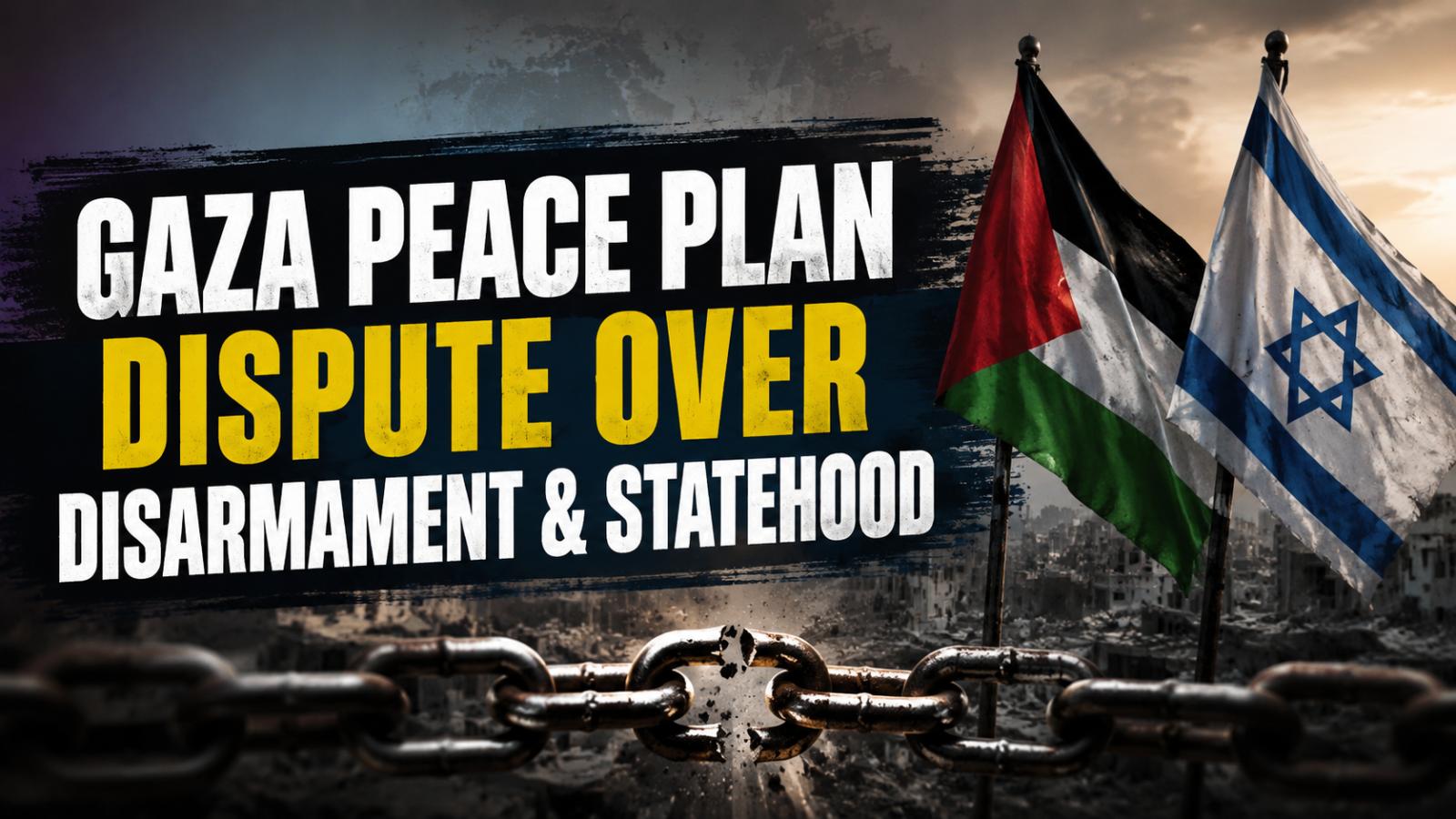
Gaza peace plan divides leaders over disarmament terms
Fresh diplomatic discussions around a proposed Gaza peace framework have exposed deep divisions over how the territory should transition after conflict. The draft outlines a multi-step roadmap covering security arrangements, reconstruction and political governance, but key stakeholders remain split on the order in which these steps should take place. At the center of the disagreement is whether armed groups should be required to disarm before any political transition begins, or whether political recognition and state-building guarantees must come first to ensure balance in negotiations. Disarmament conditions trigger political tension One version of the proposal places disarmament as a prerequisite for rebuilding efforts and formal governance structures. Supporters of this approach argue that long-term stability cannot be achieved without removing weapons from non-state actors first. Opponents reject this sequencing, warning that it could leave Palestinian authorities without leverage in future talks. They argue that political rights and institutional recognition must be secured alongside any security commitments, not after them. This divide has become one of the most sensitive issues in the ongoing talks. Aid and reconstruction tied to compliance terms Another contested element involves humanitarian aid and reconstruction funding. Some draft interpretations suggest that international assistance could be linked to compliance with security benchmarks under the proposed roadmap. Critics say this risks turning basic recovery needs into conditional political tools, potentially slowing down urgently needed rebuilding efforts. Supporters argue that conditionality is necessary to prevent renewed escalation and ensure accountability during the transition phase. Governance model and external oversight concerns The proposed framework also includes the idea of an international oversight structure to stabilize post-conflict Gaza. While intended to support security coordination and administrative rebuilding, the concept has raised concerns about long-term external control. Questions remain unanswered over who would lead local governance, how authority would be transferred over time, and what limits would be placed on external involvement. These unresolved issues continue to slow consensus-building. Trust gap widens between negotiating sides Beyond policy disagreements, a broader trust deficit is shaping the talks. Each side interprets the roadmap differently, particularly on what constitutes compliance and political progress. This lack of shared definition has made it difficult to establish a clear sequence for implementation. Analysts note that without agreed enforcement mechanisms, even minor disputes could delay or derail the entire process. Fragile outlook for ceasefire implementation While discussions continue, the overall outlook remains uncertain. The success of any ceasefire arrangement depends on whether both sides can align on sequencing, accountability, and political guarantees. Without that alignment, observers warn that the proposed roadmap risks remaining a draft framework rather than becoming an actionable peace agreement.
Gaza peace plan divides leaders over disarmament terms
Fresh diplomatic discussions around a proposed Gaza peace framework have exposed deep divisions over how the territory should transition after conflict. The draft outlines a multi-step roadmap covering security arrangements, reconstruction and political governance, but key stakeholders remain split on the order in which these steps should take place. At the center of the disagreement is whether armed groups should be required to disarm before any political transition begins, or whether political recognition and state-building guarantees must come first to ensure balance in negotiations. Disarmament conditions trigger political tension One version of the proposal places disarmament as a prerequisite for rebuilding efforts and formal governance structures. Supporters of this approach argue that long-term stability cannot be achieved without removing weapons from non-state actors first. Opponents reject this sequencing, warning that it could leave Palestinian authorities without leverage in future talks. They argue that political rights and institutional recognition must be secured alongside any security commitments, not after them. This divide has become one of the most sensitive issues in the ongoing talks. Aid and reconstruction tied to compliance terms Another contested element involves humanitarian aid and reconstruction funding. Some draft interpretations suggest that international assistance could be linked to compliance with security benchmarks under the proposed roadmap. Critics say this risks turning basic recovery needs into conditional political tools, potentially slowing down urgently needed rebuilding efforts. Supporters argue that conditionality is necessary to prevent renewed escalation and ensure accountability during the transition phase. Governance model and external oversight concerns The proposed framework also includes the idea of an international oversight structure to stabilize post-conflict Gaza. While intended to support security coordination and administrative rebuilding, the concept has raised concerns about long-term external control. Questions remain unanswered over who would lead local governance, how authority would be transferred over time, and what limits would be placed on external involvement. These unresolved issues continue to slow consensus-building. Trust gap widens between negotiating sides Beyond policy disagreements, a broader trust deficit is shaping the talks. Each side interprets the roadmap differently, particularly on what constitutes compliance and political progress. This lack of shared definition has made it difficult to establish a clear sequence for implementation. Analysts note that without agreed enforcement mechanisms, even minor disputes could delay or derail the entire process. Fragile outlook for ceasefire implementation While discussions continue, the overall outlook remains uncertain. The success of any ceasefire arrangement depends on whether both sides can align on sequencing, accountability, and political guarantees. Without that alignment, observers warn that the proposed roadmap risks remaining a draft framework rather than becoming an actionable peace agreement.
Israel shifts defence strategy amid US political strain
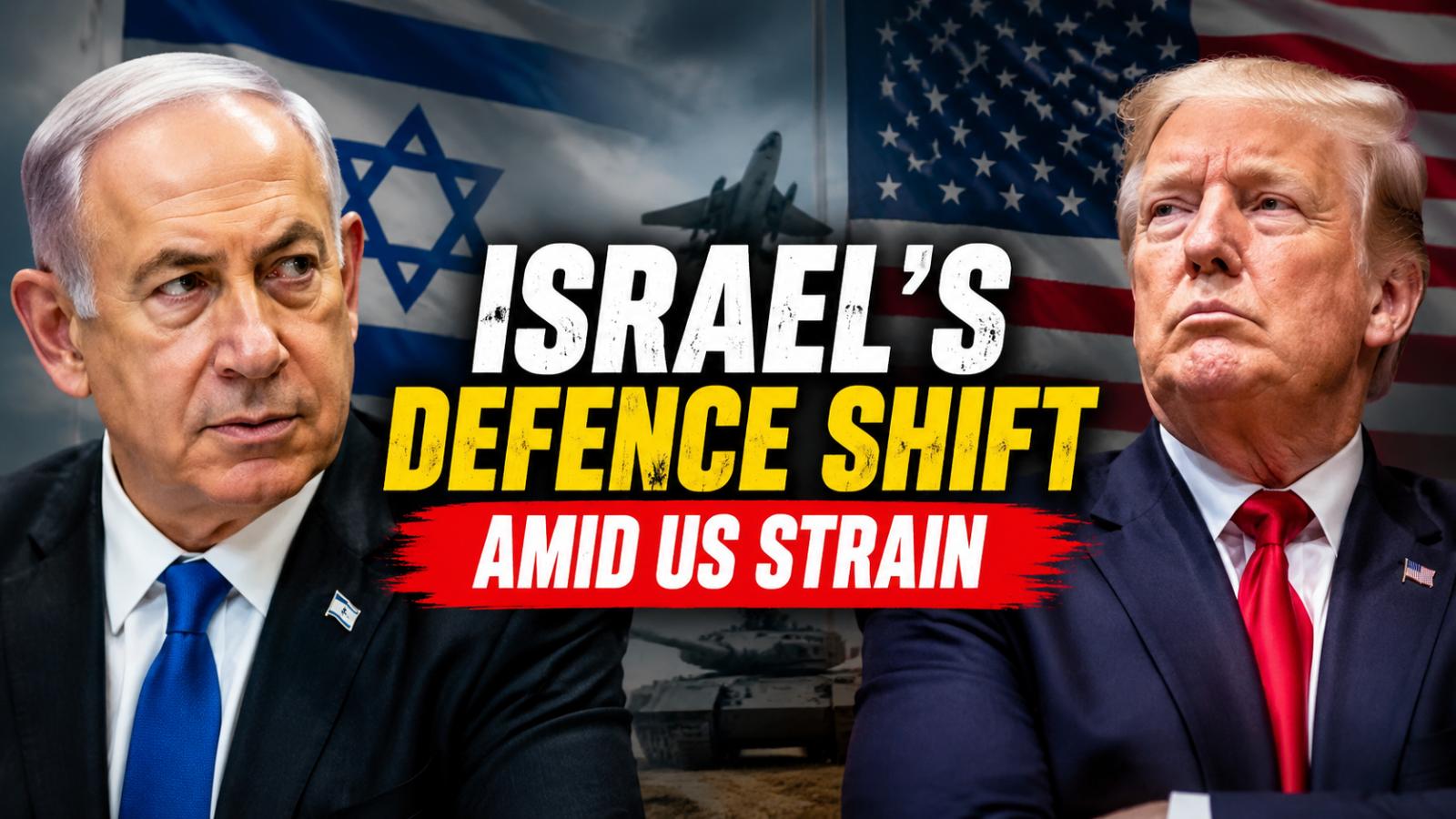
Tensions between Israel and the United States over regional security priorities have added pressure on Prime Minister Benjamin Netanyahu’s government to accelerate its push for greater military independence. The discussion has gained momentum as Israel continues operations linked to Iran-backed groups while simultaneously responding to diplomatic developments involving Washington and Tehran. Netanyahu recently emphasized that Israel cannot depend entirely on external military supply chains for long-term security needs. His remarks were delivered during a meeting with reserve officers in the West Bank, where he highlighted the importance of strengthening domestic defence production and reducing strategic vulnerabilities linked to foreign policy shifts. Domestic defence capacity becomes a strategic priority Israeli leadership is increasingly focused on expanding its local defence manufacturing ecosystem. The plan includes scaling up production of advanced weapon systems, improving technological innovation within the military sector, and reducing delays caused by international procurement dependencies. Officials argue that while US military support remains critical, future conflict scenarios require Israel to maintain uninterrupted access to essential defence capabilities without external constraints. This shift reflects broader concerns about regional instability and the speed at which security threats evolve. Diplomatic friction over regional agreements Recent US-led diplomatic efforts involving Iran have added another layer of complexity to the relationship. Israeli policymakers have expressed concern that regional understandings may not fully address threats posed by groups such as Hezbollah, which continue to operate along Israel’s northern border. From Israel’s perspective, security decisions tied to immediate threats cannot be constrained by broader international agreements. This difference in approach has created periodic friction between Washington and Jerusalem, even as both sides publicly reaffirm their strategic partnership. Political messaging highlights diverging priorities Netanyahu’s statements also reflect internal political messaging aimed at reinforcing a doctrine of strategic independence. While maintaining that the US remains Israel’s most important ally, he has repeatedly stressed that national security decisions must ultimately remain under Israeli control. The debate has also been reflected in wider political discourse, including commentary associated with US political figures and shifting positions on Middle East engagement. Although both governments continue coordination on defence matters, differences in threat assessment and timing of responses remain evident. Strategic autonomy framed as long-term necessity Israeli officials describe the current shift not as a break from alliances but as a recalibration of priorities. The focus is on ensuring that Israel can respond rapidly to evolving threats in a region marked by proxy conflicts, cross-border tensions, and shifting diplomatic alignments. The emerging strategy positions defence self-reliance as a structural requirement rather than a temporary policy adjustment, signaling a longer-term transformation in how Israel plans its security framework.

Israel shifts defence strategy amid US political strain
Tensions between Israel and the United States over regional security priorities have added pressure on Prime Minister Benjamin Netanyahu’s government to accelerate its push for greater military independence. The discussion has gained momentum as Israel continues operations linked to Iran-backed groups while simultaneously responding to diplomatic developments involving Washington and Tehran. Netanyahu recently emphasized that Israel cannot depend entirely on external military supply chains for long-term security needs. His remarks were delivered during a meeting with reserve officers in the West Bank, where he highlighted the importance of strengthening domestic defence production and reducing strategic vulnerabilities linked to foreign policy shifts. Domestic defence capacity becomes a strategic priority Israeli leadership is increasingly focused on expanding its local defence manufacturing ecosystem. The plan includes scaling up production of advanced weapon systems, improving technological innovation within the military sector, and reducing delays caused by international procurement dependencies. Officials argue that while US military support remains critical, future conflict scenarios require Israel to maintain uninterrupted access to essential defence capabilities without external constraints. This shift reflects broader concerns about regional instability and the speed at which security threats evolve. Diplomatic friction over regional agreements Recent US-led diplomatic efforts involving Iran have added another layer of complexity to the relationship. Israeli policymakers have expressed concern that regional understandings may not fully address threats posed by groups such as Hezbollah, which continue to operate along Israel’s northern border. From Israel’s perspective, security decisions tied to immediate threats cannot be constrained by broader international agreements. This difference in approach has created periodic friction between Washington and Jerusalem, even as both sides publicly reaffirm their strategic partnership. Political messaging highlights diverging priorities Netanyahu’s statements also reflect internal political messaging aimed at reinforcing a doctrine of strategic independence. While maintaining that the US remains Israel’s most important ally, he has repeatedly stressed that national security decisions must ultimately remain under Israeli control. The debate has also been reflected in wider political discourse, including commentary associated with US political figures and shifting positions on Middle East engagement. Although both governments continue coordination on defence matters, differences in threat assessment and timing of responses remain evident. Strategic autonomy framed as long-term necessity Israeli officials describe the current shift not as a break from alliances but as a recalibration of priorities. The focus is on ensuring that Israel can respond rapidly to evolving threats in a region marked by proxy conflicts, cross-border tensions, and shifting diplomatic alignments. The emerging strategy positions defence self-reliance as a structural requirement rather than a temporary policy adjustment, signaling a longer-term transformation in how Israel plans its security framework.


Netanyahu rejects claims Trump controls Israel decisions
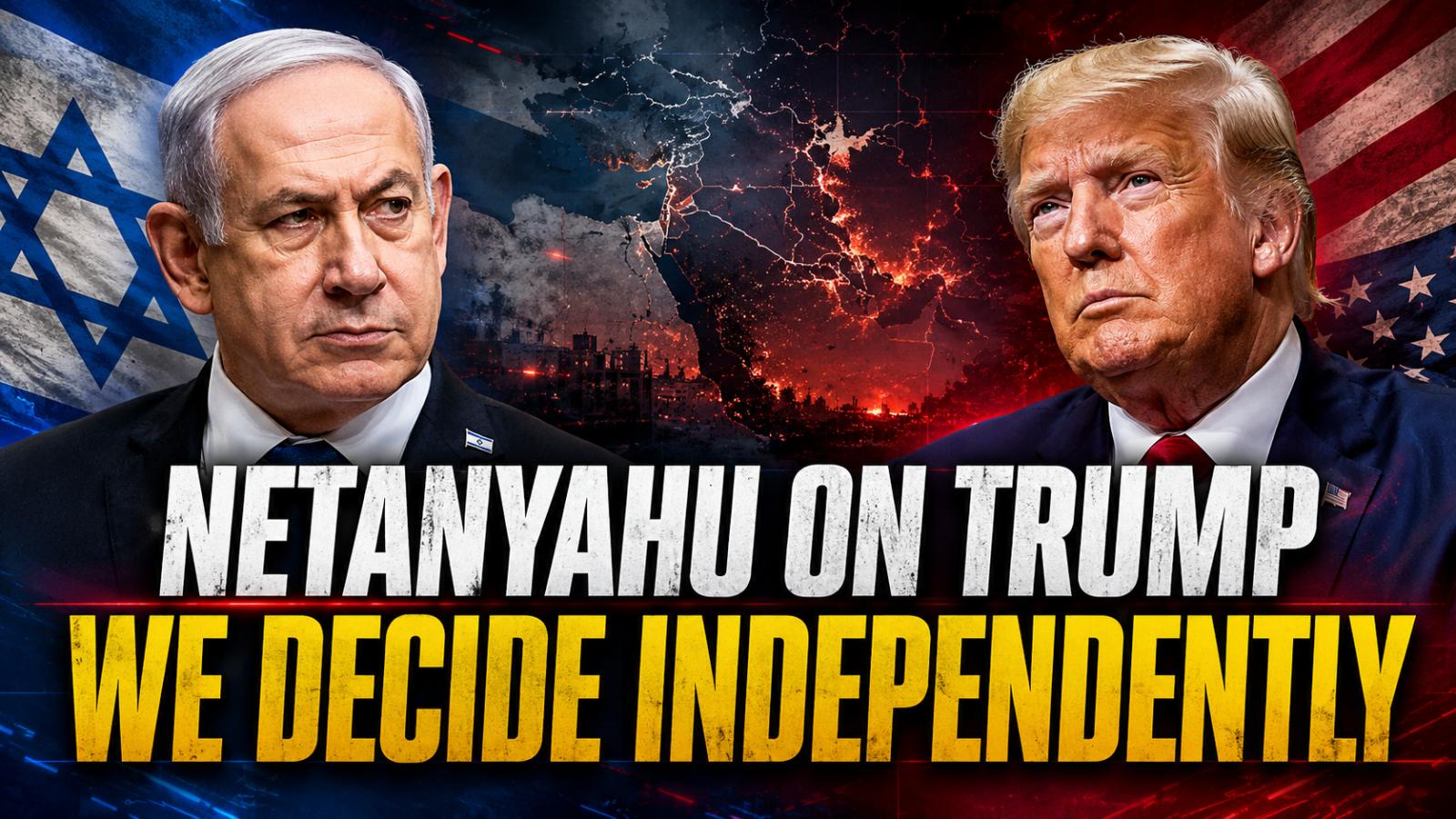
Netanyahu rejects influence claims Israeli Prime Minister Benjamin Netanyahu has rejected claims that US President Donald Trump controls his decisions or that he directs Trump’s actions, saying both leaders act independently in the interests of their own countries. Speaking at the JNS Summit in Jerusalem on Sunday, June 21, Netanyahu addressed speculation over whether the two leaders influence each other’s positions on the Iran war and br
Netanyahu rejects claims Trump controls Israel decisions
Netanyahu rejects influence claims Israeli Prime Minister Benjamin Netanyahu has rejected claims that US President Donald Trump controls his decisions or that he directs Trump’s actions, saying both leaders act independently in the interests of their own countries. Speaking at the JNS Summit in Jerusalem on Sunday, June 21, Netanyahu addressed speculation over whether the two leaders influence each other’s positions on the Iran war and br
US Troop Review in Europe Shapes NATO Ukraine Air Defense Talks
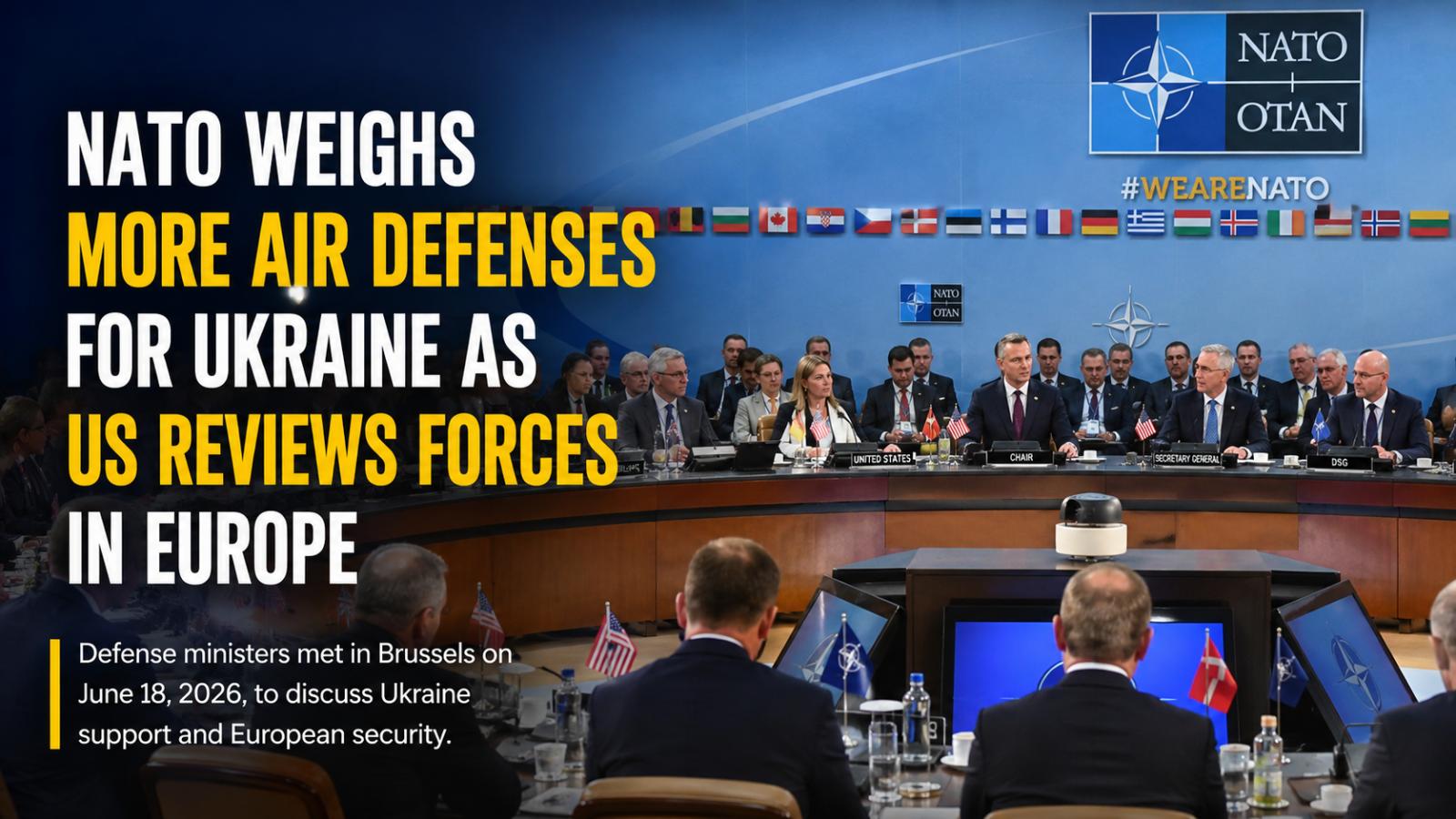
BRUSSELS — A US troop review in Europe is reshaping NATO discussions over Ukraine’s air defenses and the alliance’s long-term security responsibilities. Defense ministers meeting in Brussels on Thursday, June 18, 2026, considered additional weapons, missile interceptors and air-defense support for Ukraine as Washington began reassessing the scale and structure of American military deployments across Europe. US Troop Review in Europe Puts Pressure on NATO All
US Troop Review in Europe Shapes NATO Ukraine Air Defense Talks
BRUSSELS — A US troop review in Europe is reshaping NATO discussions over Ukraine’s air defenses and the alliance’s long-term security responsibilities. Defense ministers meeting in Brussels on Thursday, June 18, 2026, considered additional weapons, missile interceptors and air-defense support for Ukraine as Washington began reassessing the scale and structure of American military deployments across Europe. US Troop Review in Europe Puts Pressure on NATO All
Taiwan presses US for $14bn arms approval amid China tensions
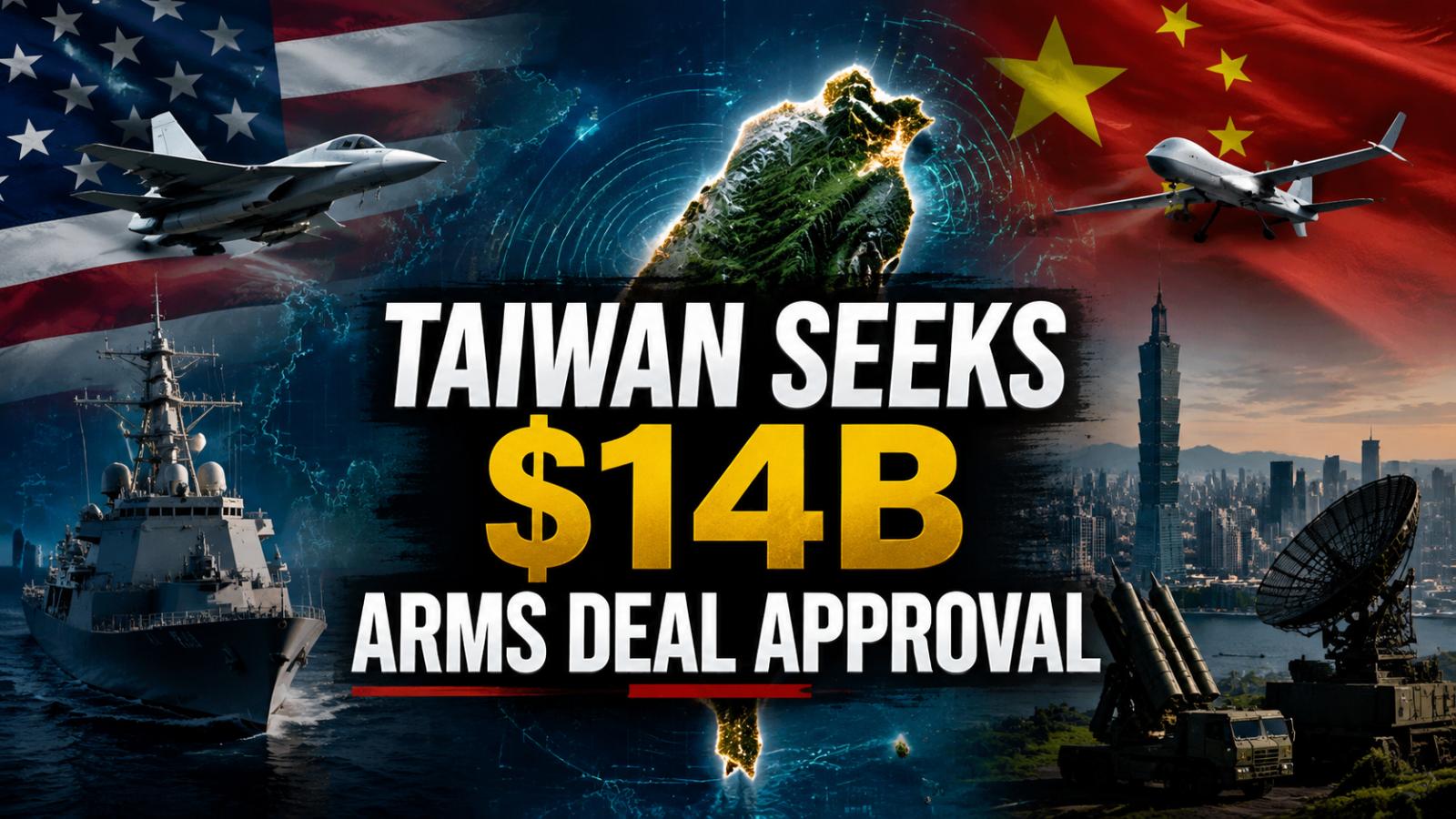
Taiwan has renewed its push for approval of a proposed $14 billion defense package from the United States, arguing that its security environment has become increasingly unstable. The request comes at a time when military activity and political messaging across the Taiwan Strait have intensified, placing additional pressure on Washington’s strategic decision-making. US officials are currently evaluating the proposal through standard defense export channels, weighing supply constrai
Taiwan presses US for $14bn arms approval amid China tensions
Taiwan has renewed its push for approval of a proposed $14 billion defense package from the United States, arguing that its security environment has become increasingly unstable. The request comes at a time when military activity and political messaging across the Taiwan Strait have intensified, placing additional pressure on Washington’s strategic decision-making. US officials are currently evaluating the proposal through standard defense export channels, weighing supply constrai
US pushes NATO 3.0 shift toward stronger defence model
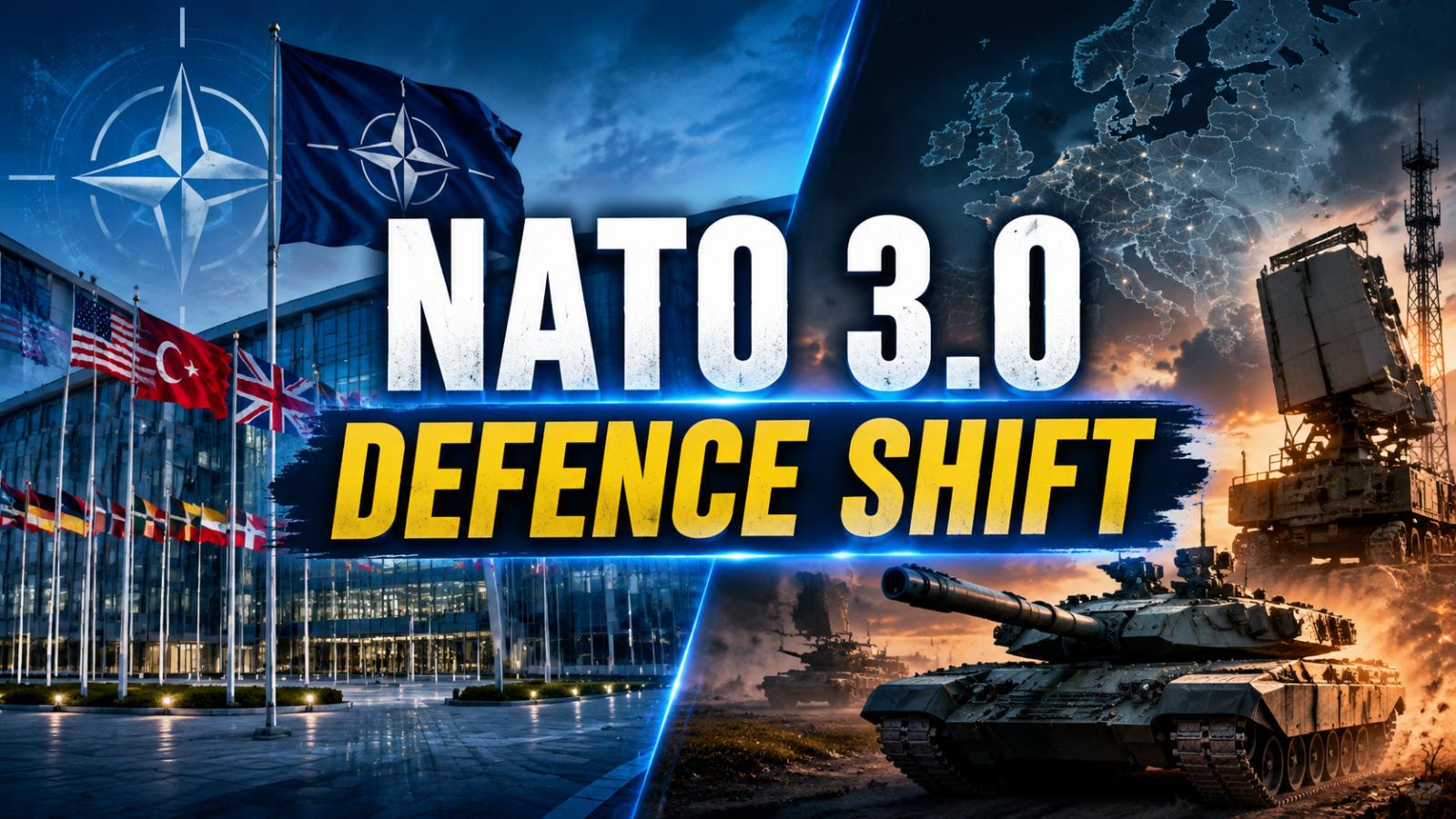
The debate around NATO’s future direction has intensified after renewed US pressure on allies to strengthen their military commitments. The discussion, often referred to as a “NATO 3.0” shift, centers on moving the alliance toward a more force-driven structure focused on deterrence and rapid response rather than political coordination alone. The push reflects growing concerns in Washington over uneven defence contributions across member states.
US pushes NATO 3.0 shift toward stronger defence model
The debate around NATO’s future direction has intensified after renewed US pressure on allies to strengthen their military commitments. The discussion, often referred to as a “NATO 3.0” shift, centers on moving the alliance toward a more force-driven structure focused on deterrence and rapid response rather than political coordination alone. The push reflects growing concerns in Washington over uneven defence contributions across member states.
Trump says US and Iran could sign agreement within 48 hours amid G7 talks
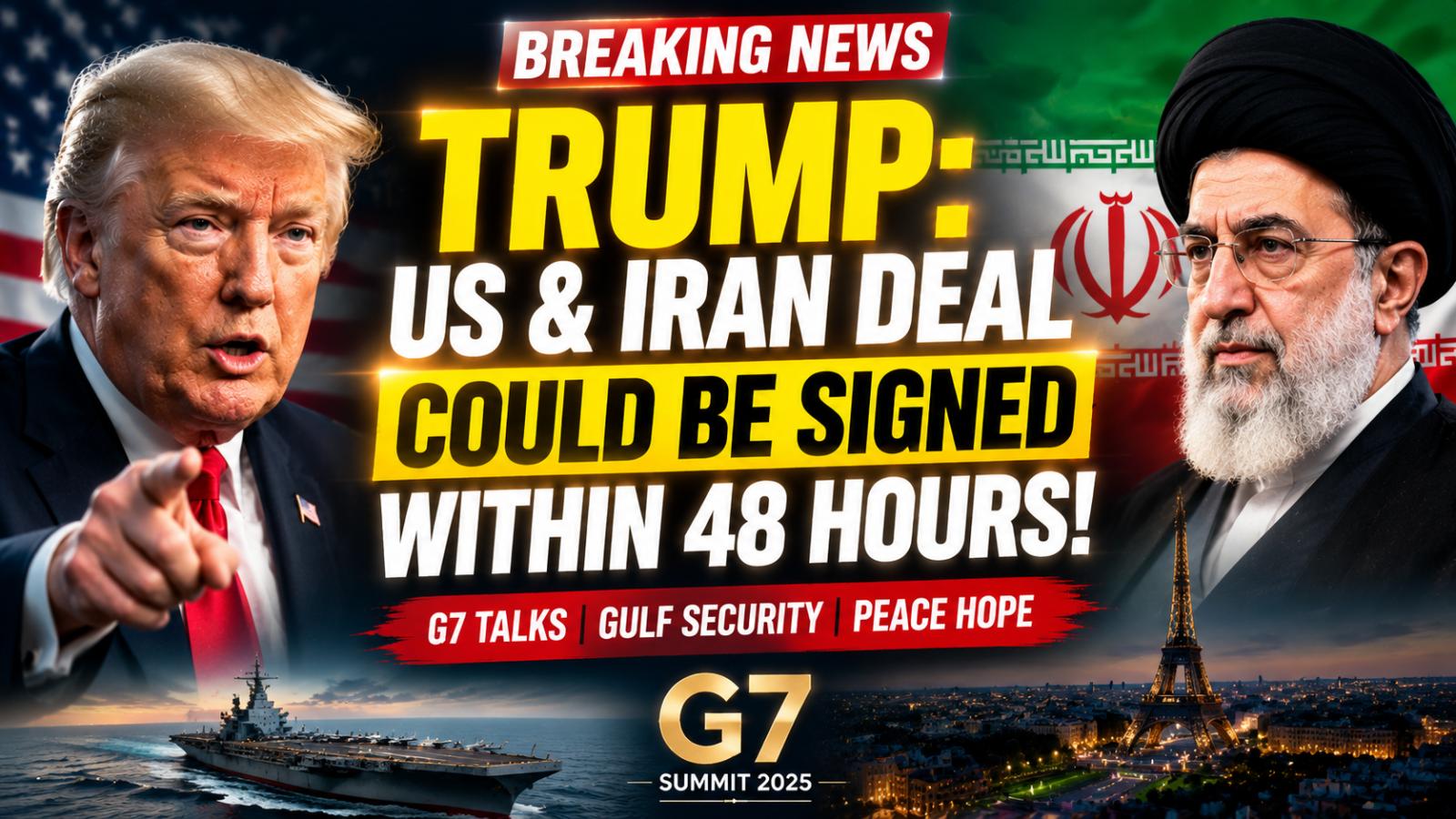
Trump Signals Imminent US–Iran Agreement US President Donald Trump has stated that Washington and Tehran could finalize and sign an agreement within the next 48 hours, signaling that negotiations aimed at ending nearly four months of conflict are approaching a critical conclusion. Speaking to reporters in Paris during the G7 summit in France, Trump said the deal could be signed “tomorrow, maybe the next
Trump says US and Iran could sign agreement within 48 hours amid G7 talks
Trump Signals Imminent US–Iran Agreement US President Donald Trump has stated that Washington and Tehran could finalize and sign an agreement within the next 48 hours, signaling that negotiations aimed at ending nearly four months of conflict are approaching a critical conclusion. Speaking to reporters in Paris during the G7 summit in France, Trump said the deal could be signed “tomorrow, maybe the next
Evian G7 security operation turns alpine town into fortress
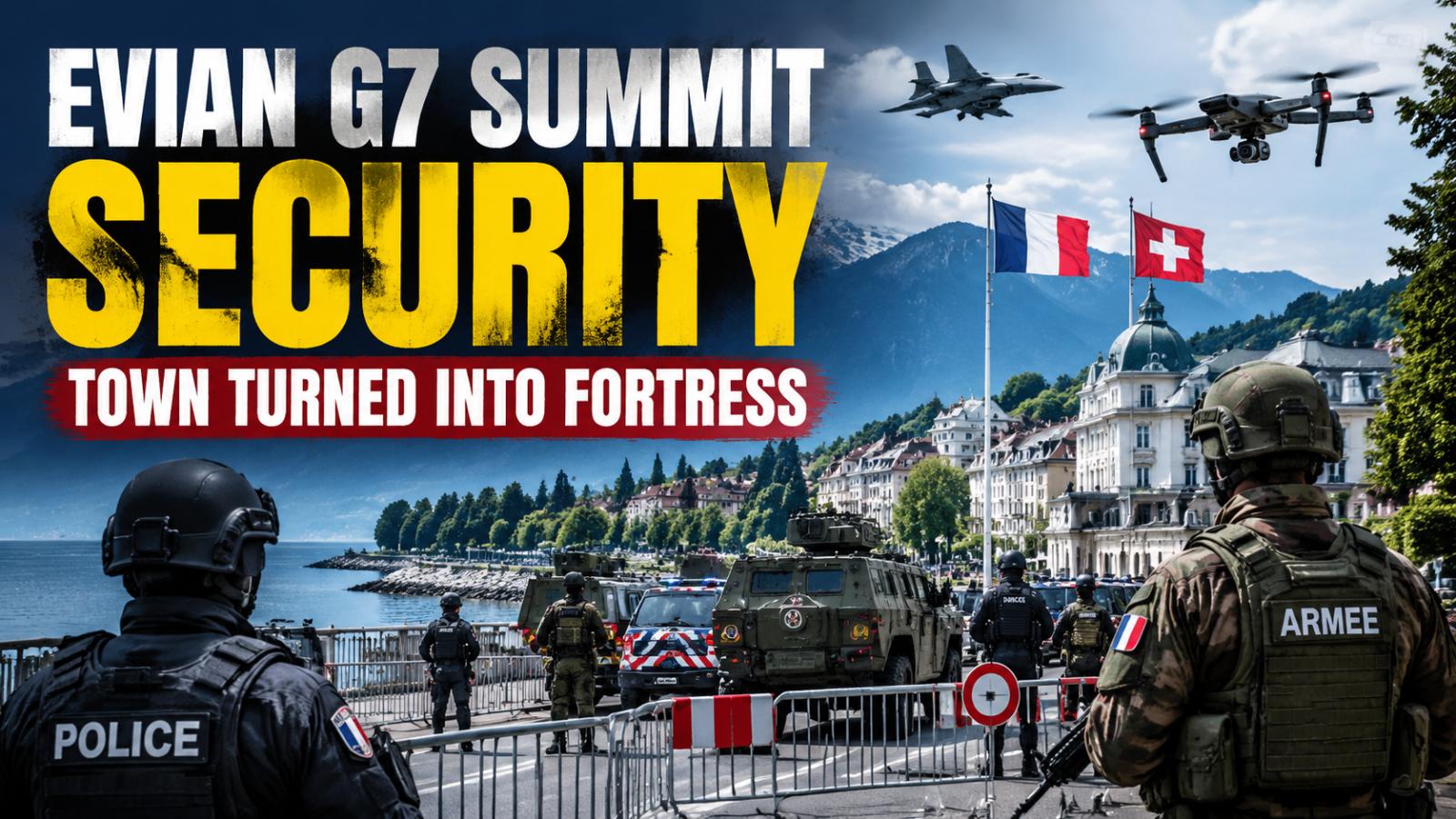
The Evian region has been converted into a heavily controlled security perimeter as France and Switzerland deploy coordinated forces for the G7 summit. What is usually a calm lakeside resort on Lake Geneva has shifted into a restricted diplomatic zone, with layered protection systems covering land, air, and water routes. Authorities are treating the summit as a high-risk global event due to the presence of multiple heads of state and rising concerns over modern hybrid threats.


Evian G7 security operation turns alpine town into fortress
The Evian region has been converted into a heavily controlled security perimeter as France and Switzerland deploy coordinated forces for the G7 summit. What is usually a calm lakeside resort on Lake Geneva has shifted into a restricted diplomatic zone, with layered protection systems covering land, air, and water routes. Authorities are treating the summit as a high-risk global event due to the presence of multiple heads of state and rising concerns over modern hybrid threats.
CIA raises concerns over Iran nuclear deal enforcement risks
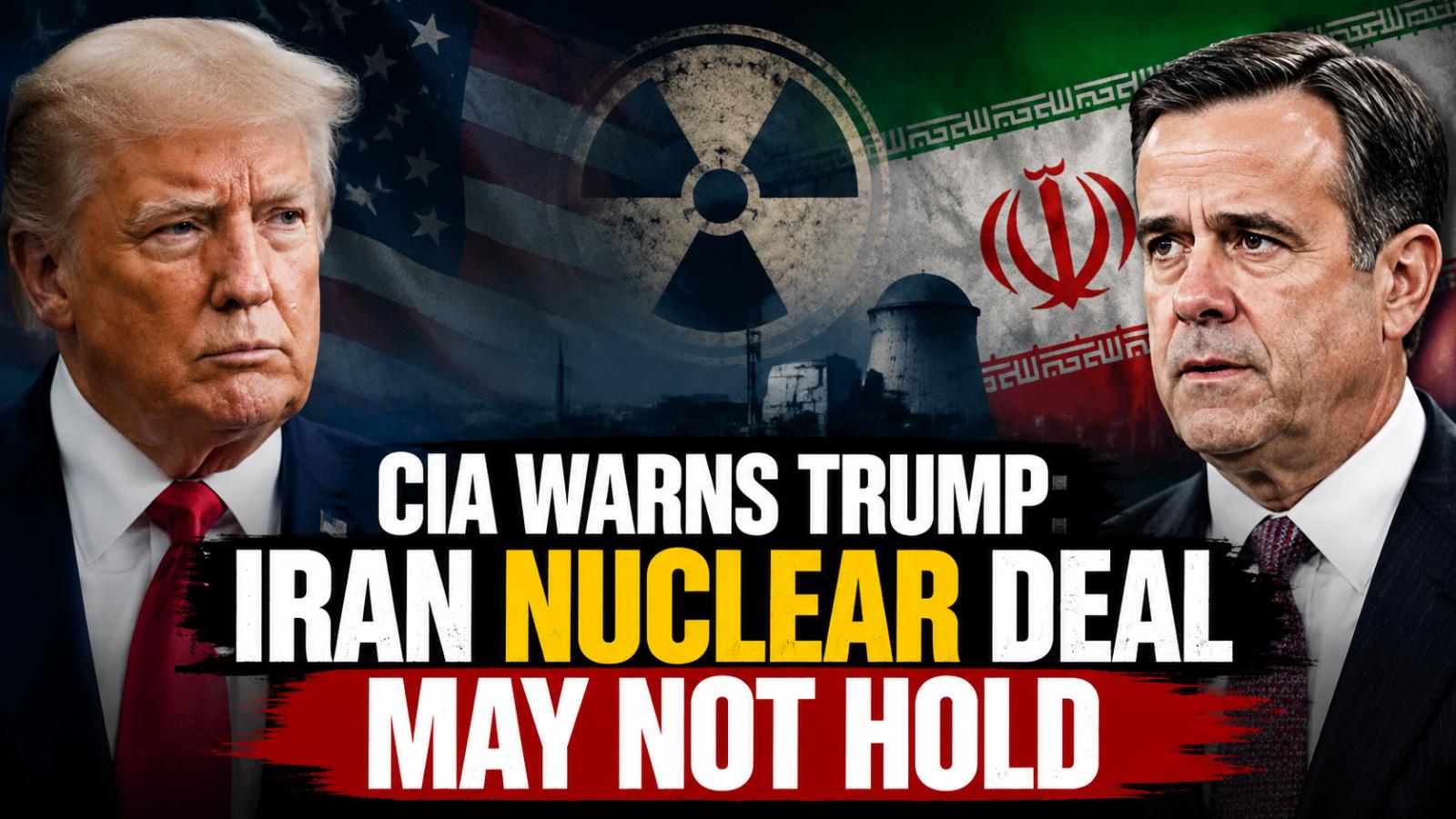
US intelligence officials have reportedly raised fresh concerns over the durability of a recently discussed nuclear understanding with Iran, warning that the framework may not be strong enough to ensure long-term compliance. The assessment, attributed to CIA Director John Ratcliffe, suggests that while the agreement is designed to reduce immediate tensions, its enforcement structure could leave significant gaps in verification and oversight.
CIA raises concerns over Iran nuclear deal enforcement risks
US intelligence officials have reportedly raised fresh concerns over the durability of a recently discussed nuclear understanding with Iran, warning that the framework may not be strong enough to ensure long-term compliance. The assessment, attributed to CIA Director John Ratcliffe, suggests that while the agreement is designed to reduce immediate tensions, its enforcement structure could leave significant gaps in verification and oversight.
Zelensky Meets European Allies In London
Zelensky Meets Key European Allies Ukrainian President Volodymyr Zelensky arrived in London on Sunday for talks with British Prime Minister Keir Starmer, French President Emmanuel Macron and German Chancellor Friedrich Merz. The meeting brought together some of Kyiv’s most important European supporters as Ukraine continues to seek stronger security guarantees and more military backing. The talks focused on
Zelensky Meets European Allies In London
Zelensky Meets Key European Allies Ukrainian President Volodymyr Zelensky arrived in London on Sunday for talks with British Prime Minister Keir Starmer, French President Emmanuel Macron and German Chancellor Friedrich Merz. The meeting brought together some of Kyiv’s most important European supporters as Ukraine continues to seek stronger security guarantees and more military backing. The talks focused on
Iran Missile Attacks on Kuwait and Bahrain Raise Gulf Security Fears
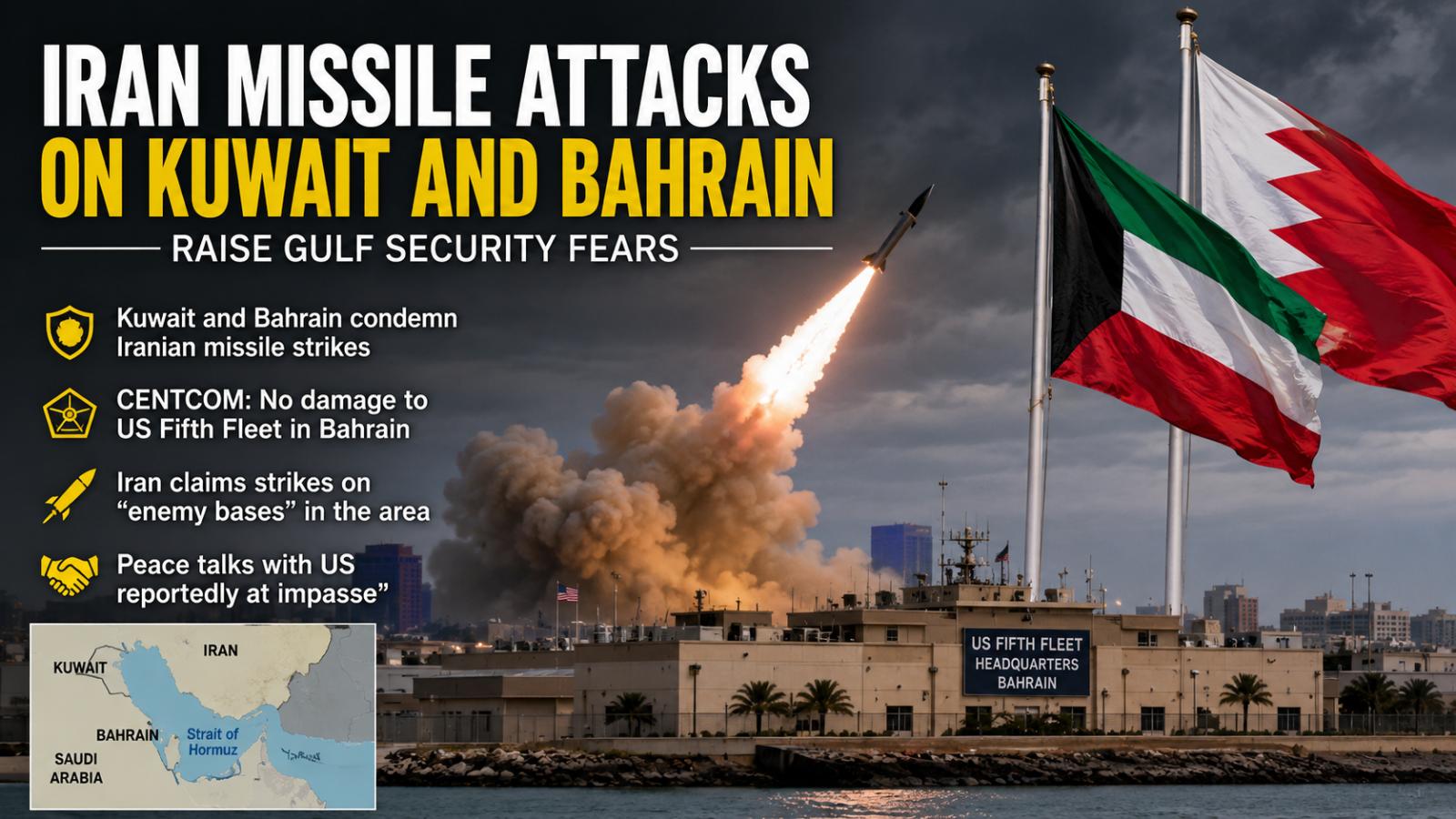
Iran missile attacks on Kuwait and Bahrain have increased concern across the Gulf after both governments condemned the strikes as violations of sovereignty and threats to regional stability. Kuwait’s Foreign Ministry, in a statement dated only as Saturday in the source material, said the attacks posed a direct threat to the lives of citizens and residents. Bahrain also condemned the strikes, calling them blatant aggression and a violation of sovereignty. Iran Mi
Iran Missile Attacks on Kuwait and Bahrain Raise Gulf Security Fears
Iran missile attacks on Kuwait and Bahrain have increased concern across the Gulf after both governments condemned the strikes as violations of sovereignty and threats to regional stability. Kuwait’s Foreign Ministry, in a statement dated only as Saturday in the source material, said the attacks posed a direct threat to the lives of citizens and residents. Bahrain also condemned the strikes, calling them blatant aggression and a violation of sovereignty. Iran Mi
US Issues Fresh Travel Advisory for Middle East Tensions
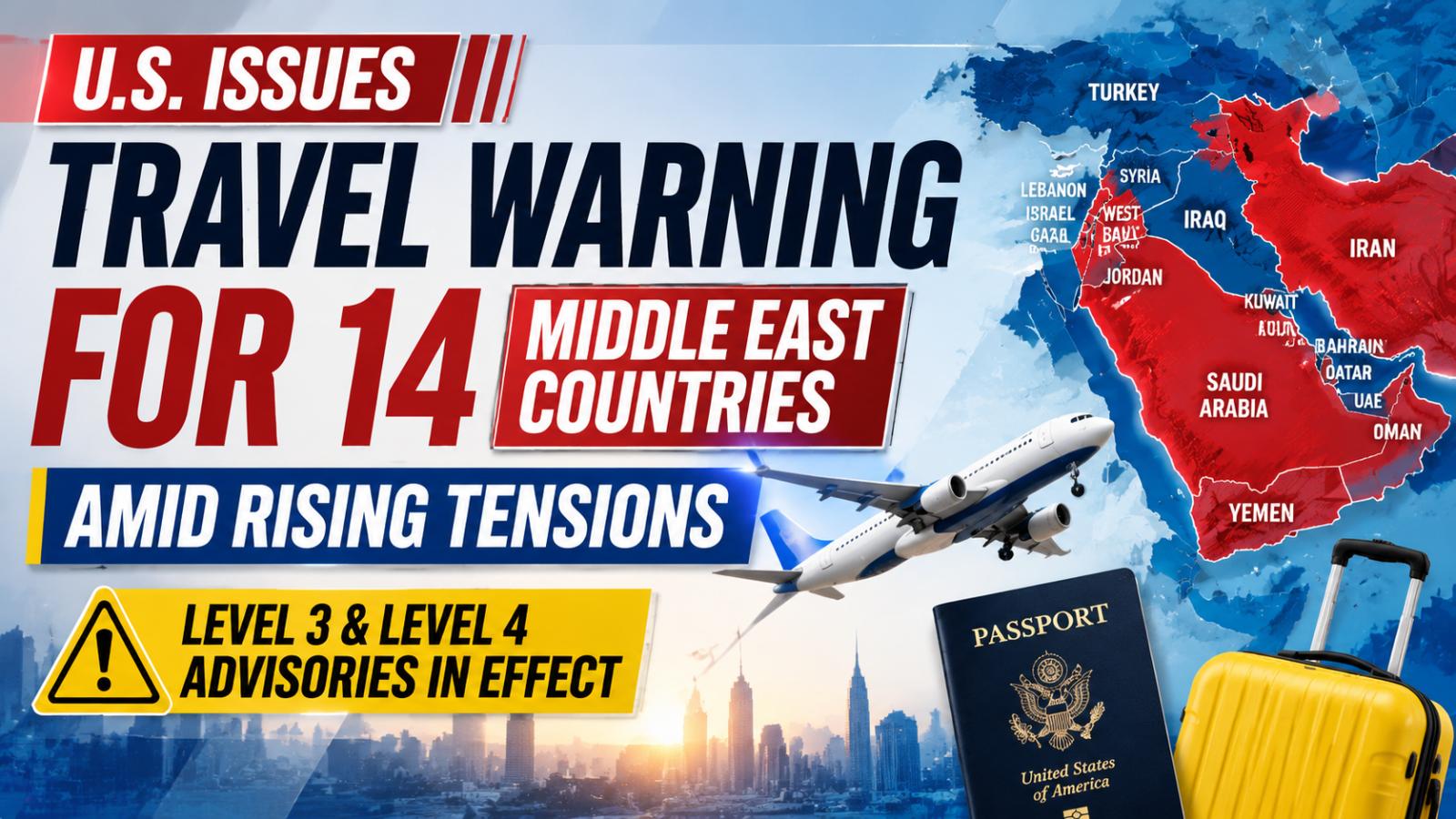
Heightened Travel Advisories for Middle East The United States has issued a renewed travel advisory covering 14 countries in the Middle East, citing elevated regional tensions and a rapidly changing security situation. Embassies in the region warned American citizens to remain vigilant amid ongoing instability affecting travel conditions. According to the US Department of State, the security envi
US Issues Fresh Travel Advisory for Middle East Tensions
Heightened Travel Advisories for Middle East The United States has issued a renewed travel advisory covering 14 countries in the Middle East, citing elevated regional tensions and a rapidly changing security situation. Embassies in the region warned American citizens to remain vigilant amid ongoing instability affecting travel conditions. According to the US Department of State, the security envi
Israel Intercepts Rockets from Lebanon as Tensions Rise on Northern Border
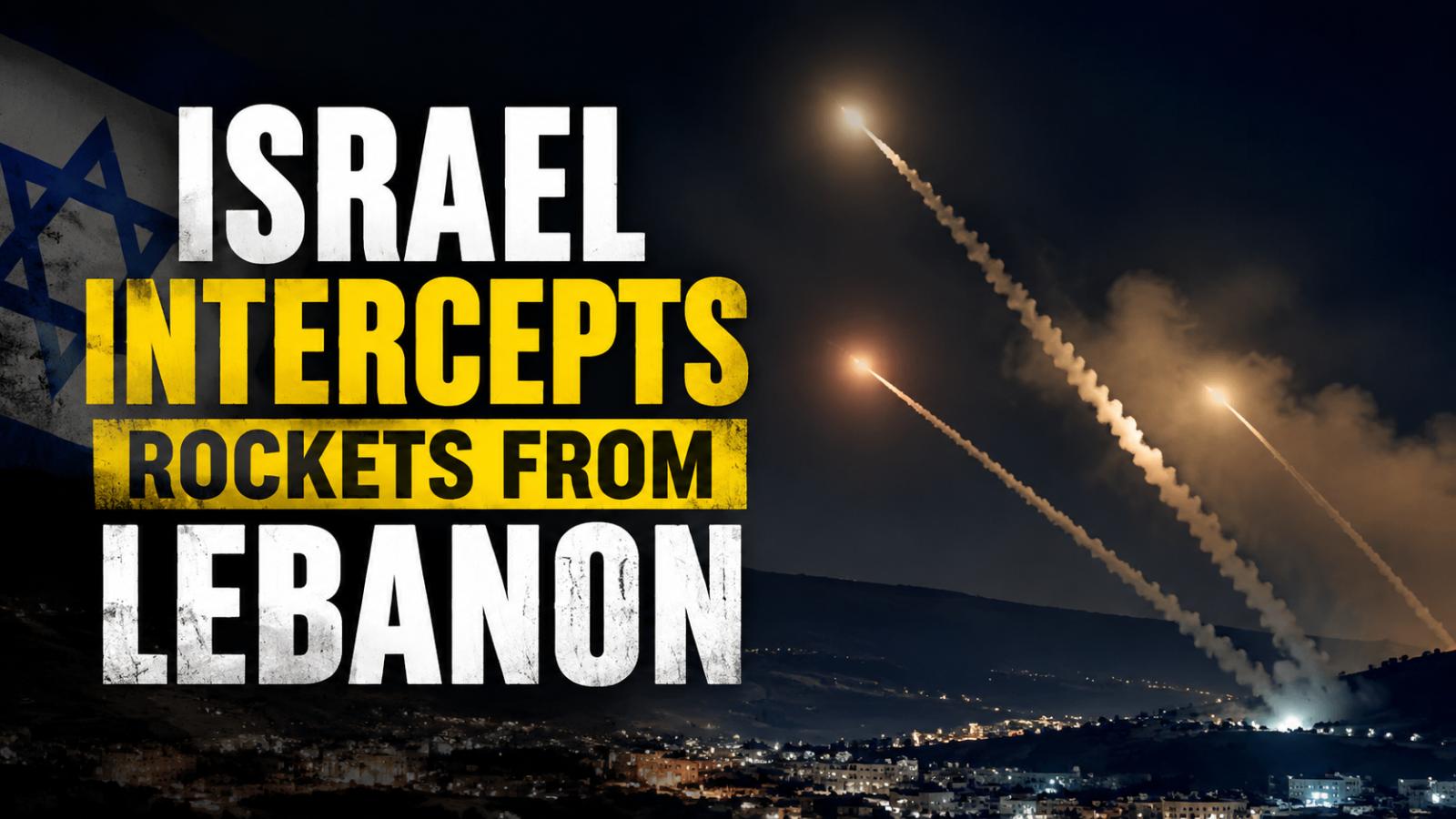
Israeli defense forces successfully intercepted two rockets launched from Lebanon early Tuesday morning. Air raid sirens sounded across communities in northern Israel, prompting residents to seek immediate shelter. The Israeli Air Force quickly neutralized the threats, while officials reported a suspicious aerial object landing within Israeli territory. No injuries or property damage occurred, but the incident highlights the persistent security challenges along the northern border.
Israel Intercepts Rockets from Lebanon as Tensions Rise on Northern Border
Israeli defense forces successfully intercepted two rockets launched from Lebanon early Tuesday morning. Air raid sirens sounded across communities in northern Israel, prompting residents to seek immediate shelter. The Israeli Air Force quickly neutralized the threats, while officials reported a suspicious aerial object landing within Israeli territory. No injuries or property damage occurred, but the incident highlights the persistent security challenges along the northern border.
US-Iran Talks Progress Amid Lebanon Tensions, Trump Comments
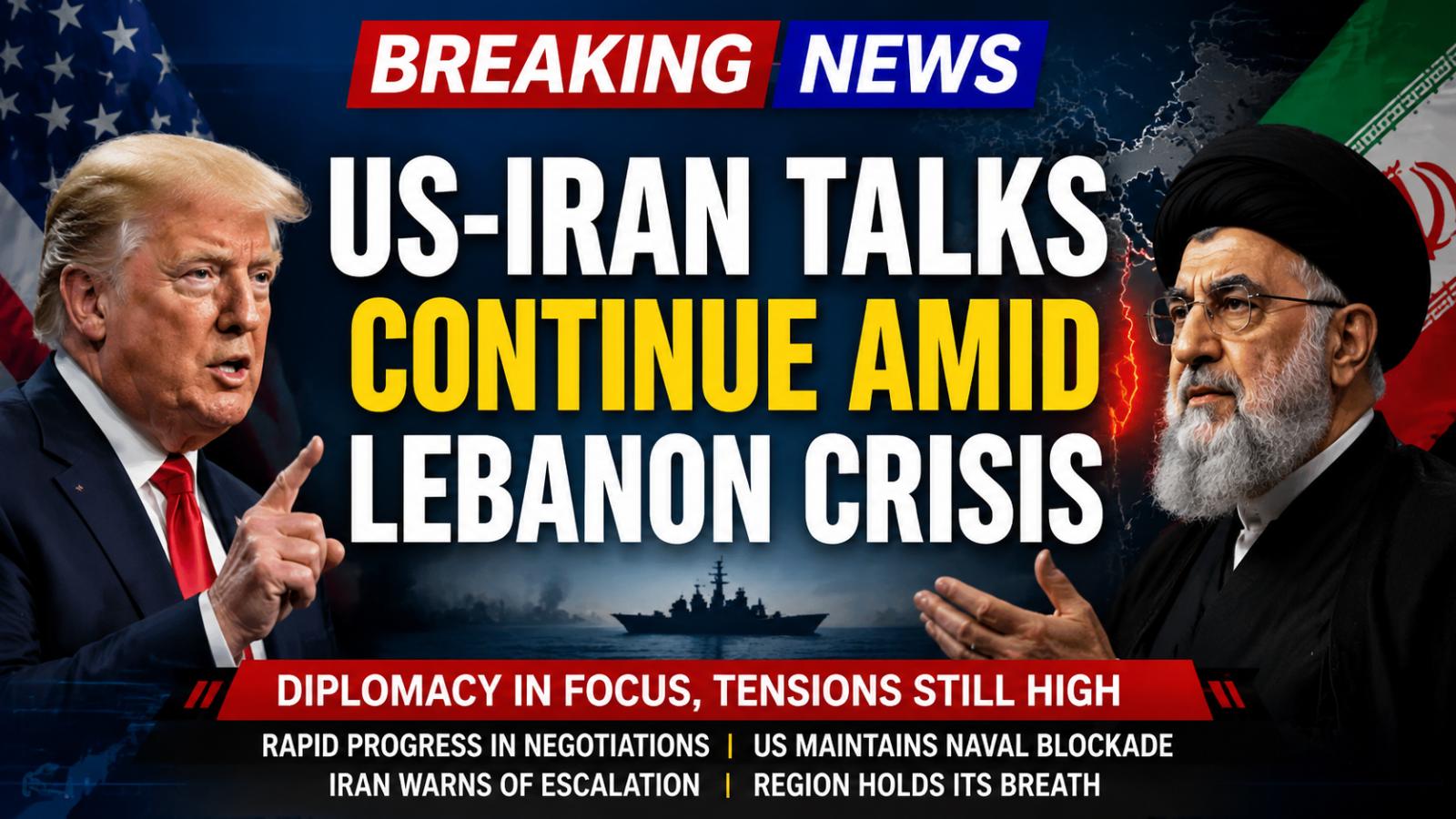
US President Donald Trump confirmed that discussions with Iran are making steady progress despite ongoing unrest in Lebanon. According to his statement, talks are active and focused on diplomatic solutions to ease regional tensions. Efforts to De-escalate in Lebanon The discussions include attempts to persuade both Israel and Hezbollah to limit their actions in Lebanon.
US-Iran Talks Progress Amid Lebanon Tensions, Trump Comments
US President Donald Trump confirmed that discussions with Iran are making steady progress despite ongoing unrest in Lebanon. According to his statement, talks are active and focused on diplomatic solutions to ease regional tensions. Efforts to De-escalate in Lebanon The discussions include attempts to persuade both Israel and Hezbollah to limit their actions in Lebanon.
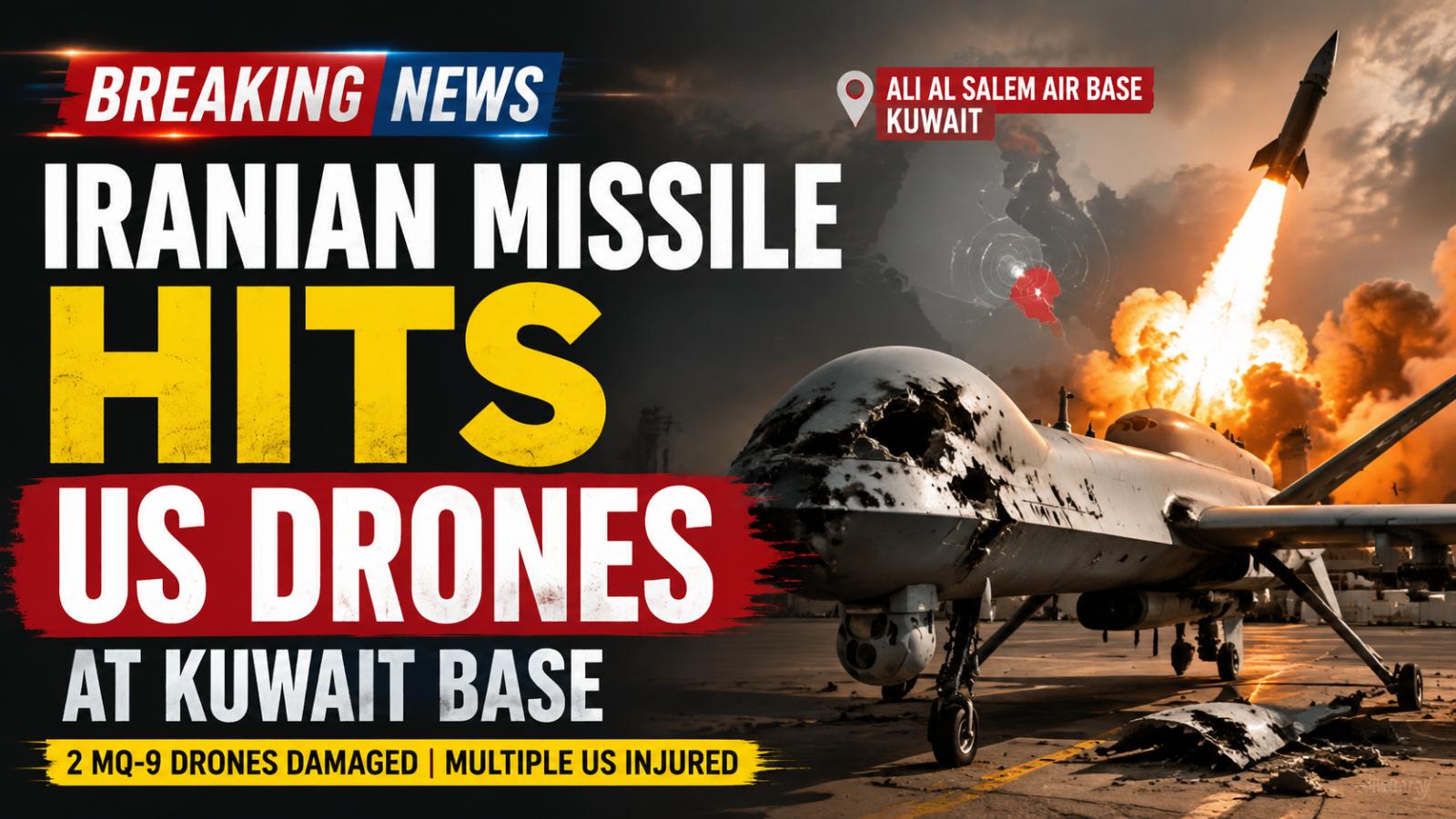
Iran Missile Strike Damages US Drones at Kuwait Base – Rising Gulf Tensions
In the past 24 hours, a ballistic missile launched by Iranian forces struck Ali Al Salem Air Base in Kuwait, a key location for U.S. military operations. Kuwaiti air defenses engaged the incoming projectile, but falling debris caused significant destruction inside the base perimeter. Two U.S. MQ‑9 Reaper drones, each valued at roughly $30 million, were hit — one was destroyed and the other badly damaged. Several American service members and civilian contr
Iran Missile Strike Damages US Drones at Kuwait Base – Rising Gulf Tensions
In the past 24 hours, a ballistic missile launched by Iranian forces struck Ali Al Salem Air Base in Kuwait, a key location for U.S. military operations. Kuwaiti air defenses engaged the incoming projectile, but falling debris caused significant destruction inside the base perimeter. Two U.S. MQ‑9 Reaper drones, each valued at roughly $30 million, were hit — one was destroyed and the other badly damaged. Several American service members and civilian contr
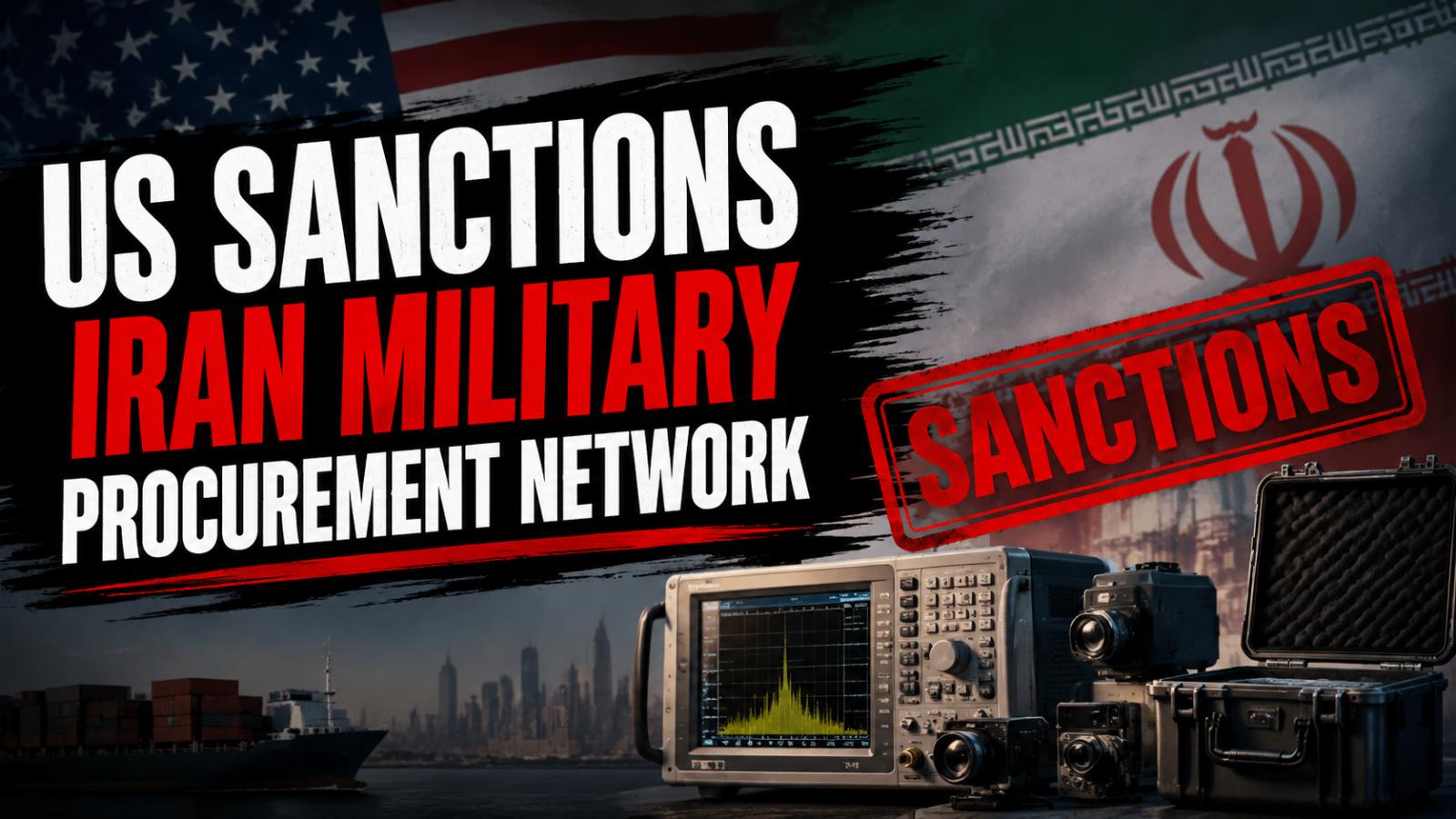
US Blocks Iranian Military Tech Network Over Deceptive Procurement
The United States announced new sanctions against an Iranian network involved in procuring advanced military technology through deceptive practices. The network reportedly misrepresented itself as legitimate companies, acquiring critical equipment such as spectrum analysers and security devices for Iran’s defense programs. The sanctions reflect Washington’s ongoing effort to restrict Iran’s access to sensitive military technology.
US Blocks Iranian Military Tech Network Over Deceptive Procurement
The United States announced new sanctions against an Iranian network involved in procuring advanced military technology through deceptive practices. The network reportedly misrepresented itself as legitimate companies, acquiring critical equipment such as spectrum analysers and security devices for Iran’s defense programs. The sanctions reflect Washington’s ongoing effort to restrict Iran’s access to sensitive military technology.
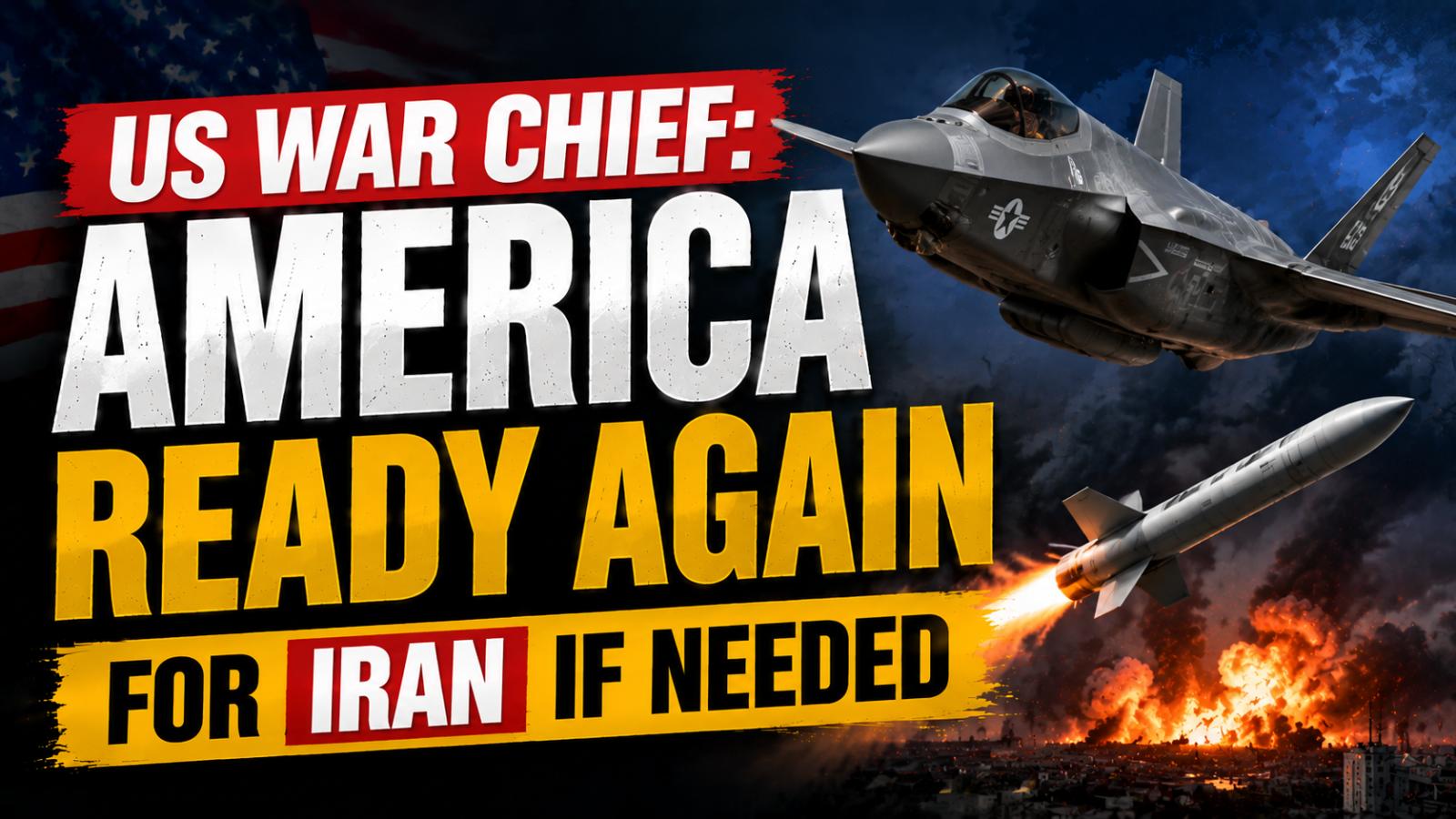
US War Secretary Assures Readiness Against Iran
Hegseth Affirms U.S. Military Readiness US Secretary of War Pete Hegseth on Saturday, May 30, dismissed concerns over the United States’ military preparedness, asserting that the country remains fully capable of launching fresh operations against Iran if necessary. Speaking at the annual Shangri-La Dialogue security summit in Singapore, Hegseth emphasized the US military’s ability to res
US War Secretary Assures Readiness Against Iran
Hegseth Affirms U.S. Military Readiness US Secretary of War Pete Hegseth on Saturday, May 30, dismissed concerns over the United States’ military preparedness, asserting that the country remains fully capable of launching fresh operations against Iran if necessary. Speaking at the annual Shangri-La Dialogue security summit in Singapore, Hegseth emphasized the US military’s ability to res
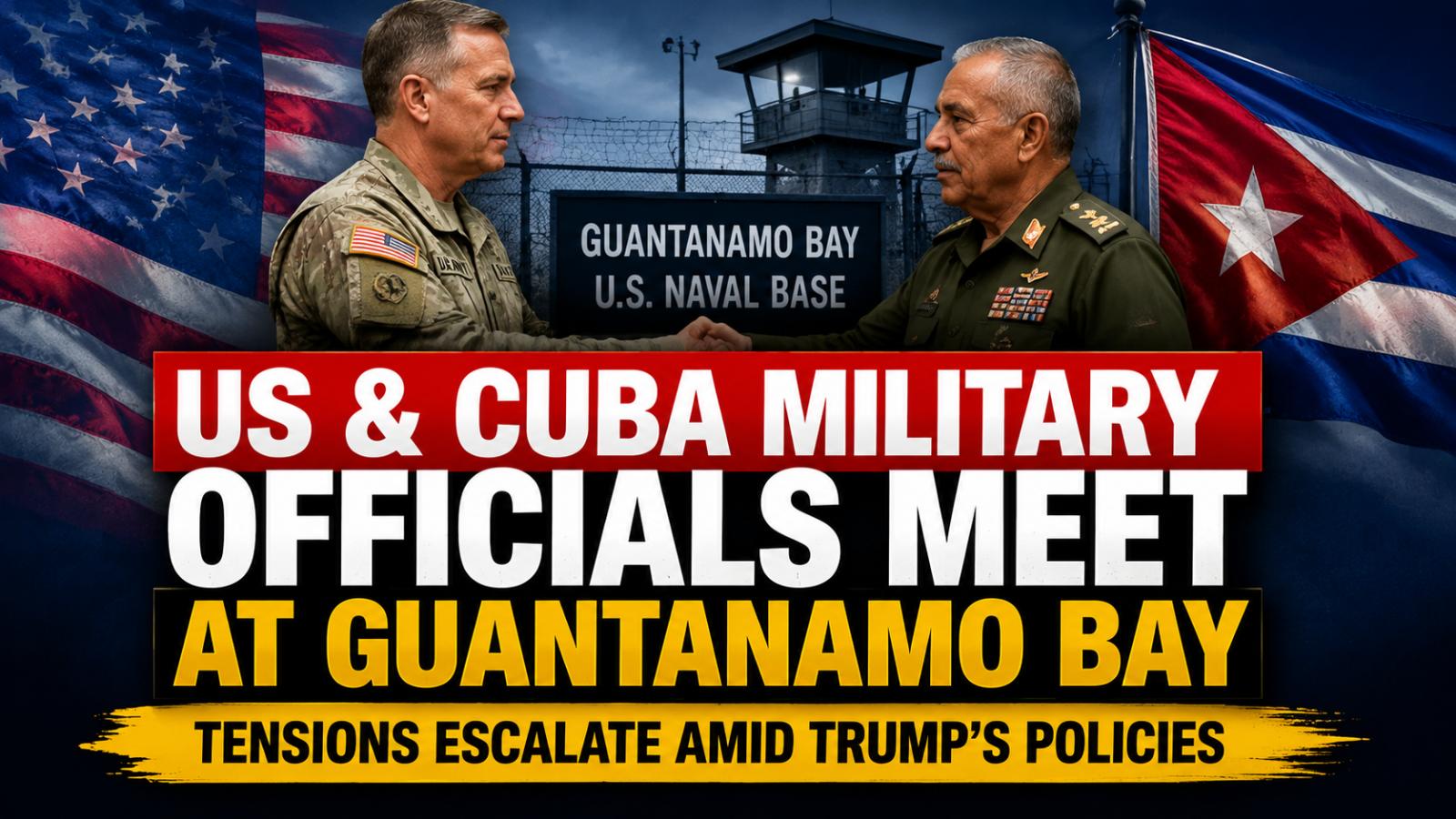
Military Officials Meet Amid Rising US-Cuba Tensions
US-Cuba Talks at Guantanamo Bay Senior military officials from the United States and Cuba met on Friday, May 29, at the Guantanamo Bay naval base, amid ongoing political tensions between Washington and Havana. The meeting involved U.S. General Francis Donovan and Cuban General Roberto Legra Sotolongo, focusing on operational security matters. A photograph released by the U.S. Southern Command showed the two
Military Officials Meet Amid Rising US-Cuba Tensions
US-Cuba Talks at Guantanamo Bay Senior military officials from the United States and Cuba met on Friday, May 29, at the Guantanamo Bay naval base, amid ongoing political tensions between Washington and Havana. The meeting involved U.S. General Francis Donovan and Cuban General Roberto Legra Sotolongo, focusing on operational security matters. A photograph released by the U.S. Southern Command showed the two
Honduras Coastal Attacks Kill 19 As Gunmen Target Workers And Police
Gunmen Kill Workers And Police In Honduras Coastal Attacks Gunmen carried out two separate attacks along the coast of Honduras on May,21,2026, killing at least 19 people, including six police officers, authorities said. The first attack took place at a plantation in the municipality of Trujillo, where at least 10 workers were shot dead, according to National Police spokesperson Edgardo Barahona. Officials said the exact dea
Honduras Coastal Attacks Kill 19 As Gunmen Target Workers And Police
Gunmen Kill Workers And Police In Honduras Coastal Attacks Gunmen carried out two separate attacks along the coast of Honduras on May,21,2026, killing at least 19 people, including six police officers, authorities said. The first attack took place at a plantation in the municipality of Trujillo, where at least 10 workers were shot dead, according to National Police spokesperson Edgardo Barahona. Officials said the exact dea
India Escorts LPG Carriers Through Strait of Hormuz as Gulf Tensions Rise
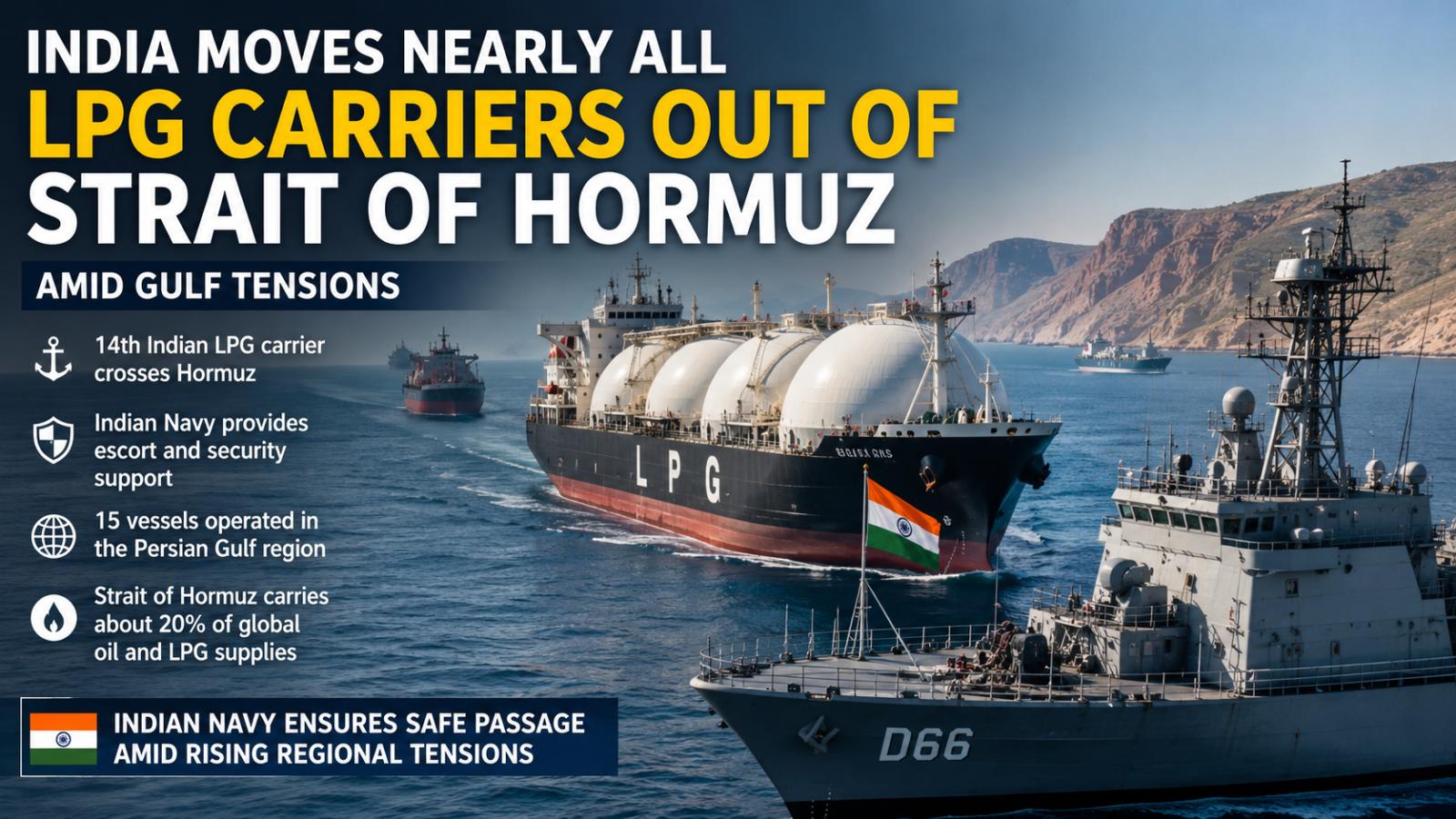
India LPG Carriers Move Through Strait of Hormuz India has moved nearly all of its LPG carriers out of the Strait of Hormuz with support from the Indian Navy as tensions continue to affect shipping security in the Persian Gulf region. Government sources said on Thursday, May 14, 2026, that the 14th Indian liquefied petroleum gas carrier had crossed the strategic waterway, while one final vessel remained in the process of crossing under close monitoring.
India Escorts LPG Carriers Through Strait of Hormuz as Gulf Tensions Rise
India LPG Carriers Move Through Strait of Hormuz India has moved nearly all of its LPG carriers out of the Strait of Hormuz with support from the Indian Navy as tensions continue to affect shipping security in the Persian Gulf region. Government sources said on Thursday, May 14, 2026, that the 14th Indian liquefied petroleum gas carrier had crossed the strategic waterway, while one final vessel remained in the process of crossing under close monitoring.