









Oracle Appoints Hilary Maxson as New CFO, Effective April 6, 2026, Amid Tech Expansion
Oracle Corporation has announced the appointment of Hilary Maxson as its new Chief Financial Officer (CFO), effective April 6, 2026. Maxson will take charge of Oracle’s global finance organization, reporting directly to co‑CEO Clay Magouyrk. This appointment marks a pivotal leadership change for the company as it continues to strengthen its position in the cloud computing and artificial intelligence (AI) markets. Maxson, who brings extensive experience in corporate finance and technology leadership, joins Oracle from Schneider Electric, where she served as the Executive Vice President and Group CFO. Her appointment is seen as a strategic move to bolster Oracle’s financial operations amid its ongoing expansion in AI and cloud services. As the company focuses heavily on AI-driven solutions and cloud infrastructure, Maxson’s expertise will be key in navigating the complexities of the evolving tech landscape. With demand for cloud services and AI technologies surging, Oracle is focused on scaling its operations to meet the growing market needs. Maxson’s leadership will guide Oracle through this critical phase, ensuring financial stability while supporting the company’s ambitious growth objectives. Oracle’s investment in AI and cloud technologies has positioned it as a major player in these sectors, and Maxson’s financial oversight will be essential as the company continues to innovate and expand its global footprint. The timing of this leadership change is significant, as Oracle is also undergoing a restructuring process. Recently, the company has faced workforce layoffs, a strategic move to streamline its operations and focus on the most promising areas for future growth. With Maxson at the helm of the finance team, Oracle is poised to make smart financial decisions that will fuel its continued success in the competitive tech sector. Maxson’s appointment underscores Oracle’s commitment to adapting to industry trends and ensuring its leadership is well-equipped to manage the challenges and opportunities in the rapidly changing tech landscape. As she steps into her new role, Maxson’s focus will be on aligning Oracle’s financial strategies with its long-term goals, driving profitability, and supporting the company’s continued leadership in cloud computing and AI.
Oracle Appoints Hilary Maxson as New CFO, Effective April 6, 2026, Amid Tech Expansion
Oracle Corporation has announced the appointment of Hilary Maxson as its new Chief Financial Officer (CFO), effective April 6, 2026. Maxson will take charge of Oracle’s global finance organization, reporting directly to co‑CEO Clay Magouyrk. This appointment marks a pivotal leadership change for the company as it continues to strengthen its position in the cloud computing and artificial intelligence (AI) markets. Maxson, who brings extensive experience in corporate finance and technology leadership, joins Oracle from Schneider Electric, where she served as the Executive Vice President and Group CFO. Her appointment is seen as a strategic move to bolster Oracle’s financial operations amid its ongoing expansion in AI and cloud services. As the company focuses heavily on AI-driven solutions and cloud infrastructure, Maxson’s expertise will be key in navigating the complexities of the evolving tech landscape. With demand for cloud services and AI technologies surging, Oracle is focused on scaling its operations to meet the growing market needs. Maxson’s leadership will guide Oracle through this critical phase, ensuring financial stability while supporting the company’s ambitious growth objectives. Oracle’s investment in AI and cloud technologies has positioned it as a major player in these sectors, and Maxson’s financial oversight will be essential as the company continues to innovate and expand its global footprint. The timing of this leadership change is significant, as Oracle is also undergoing a restructuring process. Recently, the company has faced workforce layoffs, a strategic move to streamline its operations and focus on the most promising areas for future growth. With Maxson at the helm of the finance team, Oracle is poised to make smart financial decisions that will fuel its continued success in the competitive tech sector. Maxson’s appointment underscores Oracle’s commitment to adapting to industry trends and ensuring its leadership is well-equipped to manage the challenges and opportunities in the rapidly changing tech landscape. As she steps into her new role, Maxson’s focus will be on aligning Oracle’s financial strategies with its long-term goals, driving profitability, and supporting the company’s continued leadership in cloud computing and AI.
Why social media revives false Trump death claims in 2026
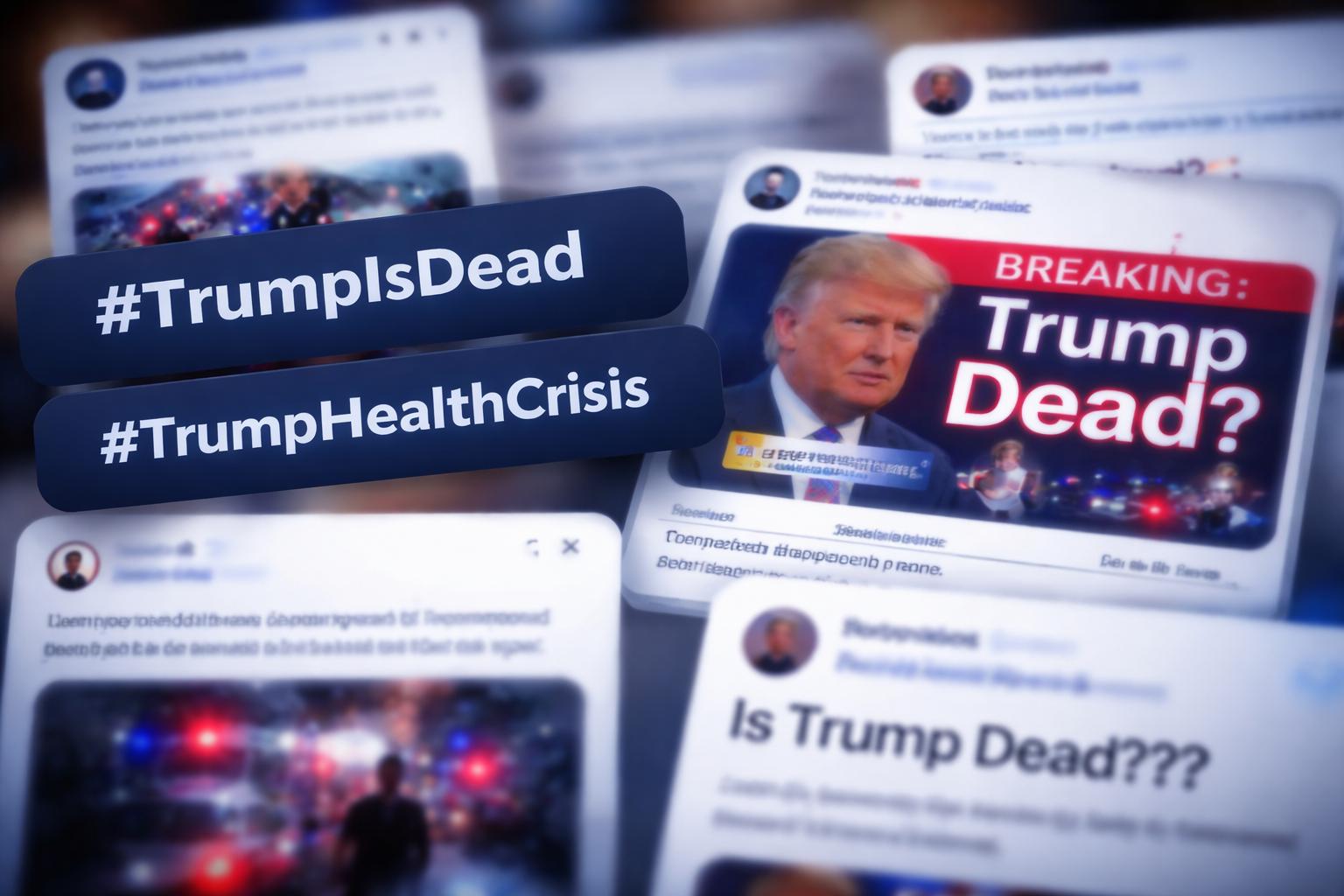
Social media users inundated X, formerly known as Twitter, with unverified claims about President Donald Trump’s death over the weekend of Saturday, April 5, 2026. The rumors began gaining traction around 10 AM IST on Sunday, April 6, 2026, alleging that the 79-year-old leader had been rushed to Walter Reed National Military Medical Center due to a serious health emergency, possibly a heart attack or stroke. These speculations mirrored earlier hoaxes from 2025 but intensified following a Wh
Why social media revives false Trump death claims in 2026
Social media users inundated X, formerly known as Twitter, with unverified claims about President Donald Trump’s death over the weekend of Saturday, April 5, 2026. The rumors began gaining traction around 10 AM IST on Sunday, April 6, 2026, alleging that the 79-year-old leader had been rushed to Walter Reed National Military Medical Center due to a serious health emergency, possibly a heart attack or stroke. These speculations mirrored earlier hoaxes from 2025 but intensified following a Wh
US rejects Iran ceasefire response as regional strikes escalate
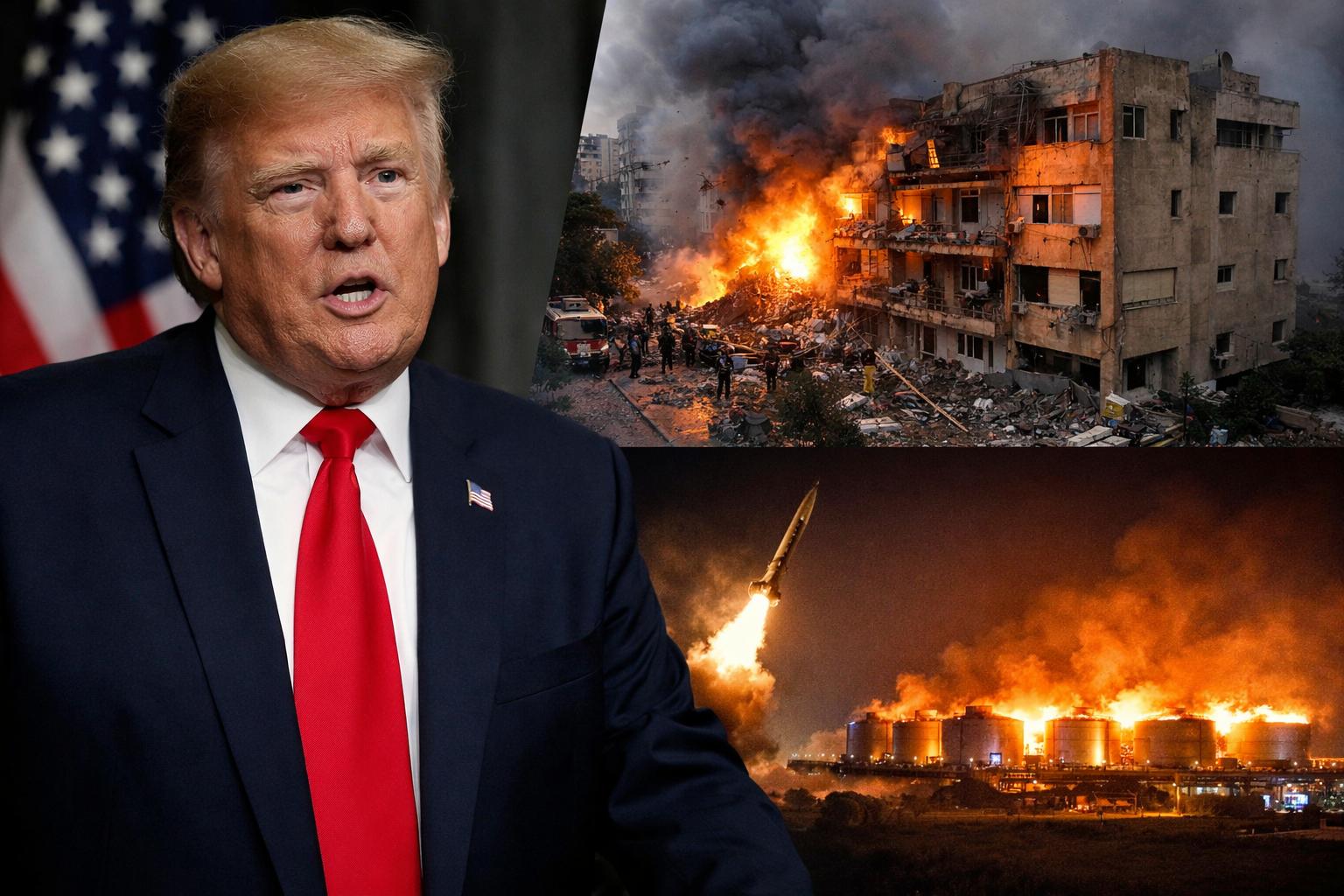
Escalating tensions across the Middle East intensified after US President Donald Trump said Iran’s response to a proposed ceasefire was “substantial” but ultimately “not good enough,” signaling continued diplomatic strain as military exchanges widened across the region. The remarks came as at least 34 people, including six children, were reported killed in coordinated US-Israeli strikes across Iran. The attacks mark a significant escalation in the ongoing conflict, raisin
US rejects Iran ceasefire response as regional strikes escalate
Escalating tensions across the Middle East intensified after US President Donald Trump said Iran’s response to a proposed ceasefire was “substantial” but ultimately “not good enough,” signaling continued diplomatic strain as military exchanges widened across the region. The remarks came as at least 34 people, including six children, were reported killed in coordinated US-Israeli strikes across Iran. The attacks mark a significant escalation in the ongoing conflict, raisin
Israel Targets Iran’s Petrochemical Hub in Latest Escalation of US-Israel-Iran Conflict
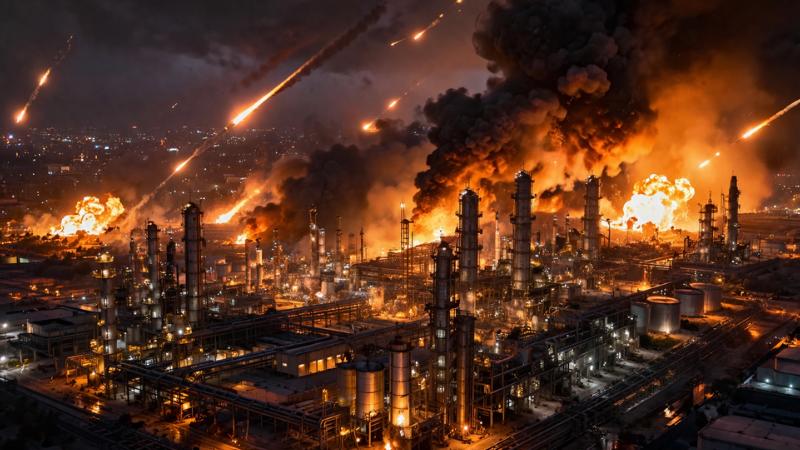
The ongoing conflict between the US, Israel, and Iran continues to escalate as the war in the Middle East enters its second month with no sign of abating. Tensions have been rising ever since US President Donald Trump’s ultimatum for Iran to engage in negotiations was issued, but Tehran remains defiant and continues its aggressive stance. Israel has intensified its military operations in the region, striking Iran’s largest petrochemical complex, which it claims serves as a centr
Israel Targets Iran’s Petrochemical Hub in Latest Escalation of US-Israel-Iran Conflict
The ongoing conflict between the US, Israel, and Iran continues to escalate as the war in the Middle East enters its second month with no sign of abating. Tensions have been rising ever since US President Donald Trump’s ultimatum for Iran to engage in negotiations was issued, but Tehran remains defiant and continues its aggressive stance. Israel has intensified its military operations in the region, striking Iran’s largest petrochemical complex, which it claims serves as a centr

RBI Plans Incentives for NRI Deposits to Stabilize Indian Rupee
The Reserve Bank of India (RBI) is expected to introduce incentives for Non-Resident Indian (NRI) deposits in its upcoming April monetary policy review to help stabilize the Indian Rupee. Experts suggest that the RBI may revive the foreign currency non-resident (FCNR B) deposit scheme to attract foreign deposits and address the rupee's volatility. Currently, the UAE accounts for over 40% of FCNR (B) deposits, showing a heavy reliance on the Gulf region. NRI deposit inflows have seen
RBI Plans Incentives for NRI Deposits to Stabilize Indian Rupee
The Reserve Bank of India (RBI) is expected to introduce incentives for Non-Resident Indian (NRI) deposits in its upcoming April monetary policy review to help stabilize the Indian Rupee. Experts suggest that the RBI may revive the foreign currency non-resident (FCNR B) deposit scheme to attract foreign deposits and address the rupee's volatility. Currently, the UAE accounts for over 40% of FCNR (B) deposits, showing a heavy reliance on the Gulf region. NRI deposit inflows have seen
Iran sends 10-point response, rejects temporary ceasefire proposal
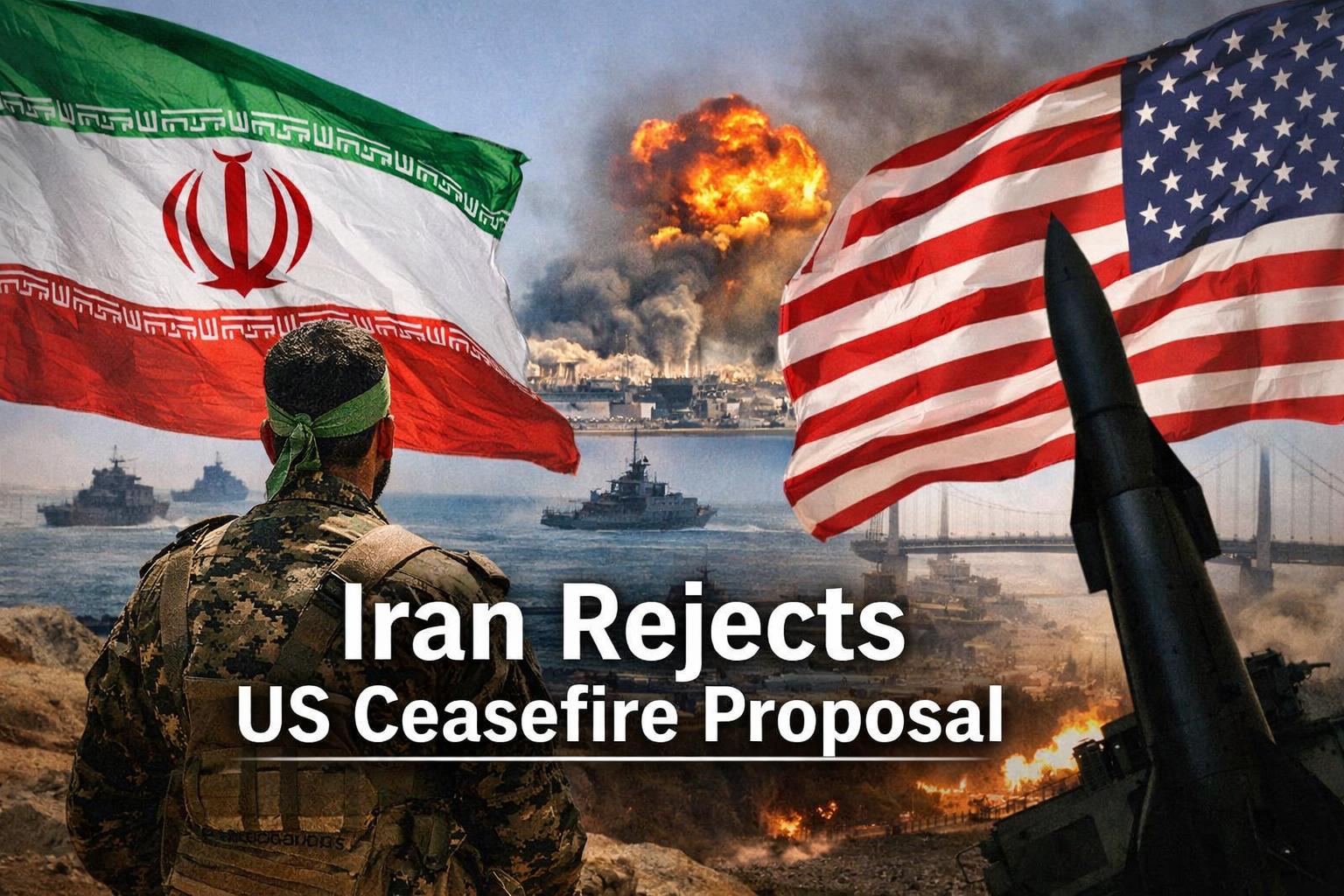
Iran has formally rejected a United States-backed proposal for a temporary ceasefire, instead presenting a structured response that calls for a permanent resolution to the ongoing conflict, according to statements from its state news agency. The move highlights Tehran’s position that a short-term truce would not address the broader geopolitical tensions shaping the crisis. The response was conveyed to Washington through Pakistan, which has been serving as an intermediary in diplom
Iran sends 10-point response, rejects temporary ceasefire proposal
Iran has formally rejected a United States-backed proposal for a temporary ceasefire, instead presenting a structured response that calls for a permanent resolution to the ongoing conflict, according to statements from its state news agency. The move highlights Tehran’s position that a short-term truce would not address the broader geopolitical tensions shaping the crisis. The response was conveyed to Washington through Pakistan, which has been serving as an intermediary in diplom
Rising LPG costs threaten Brazil’s free cooking gas initiative
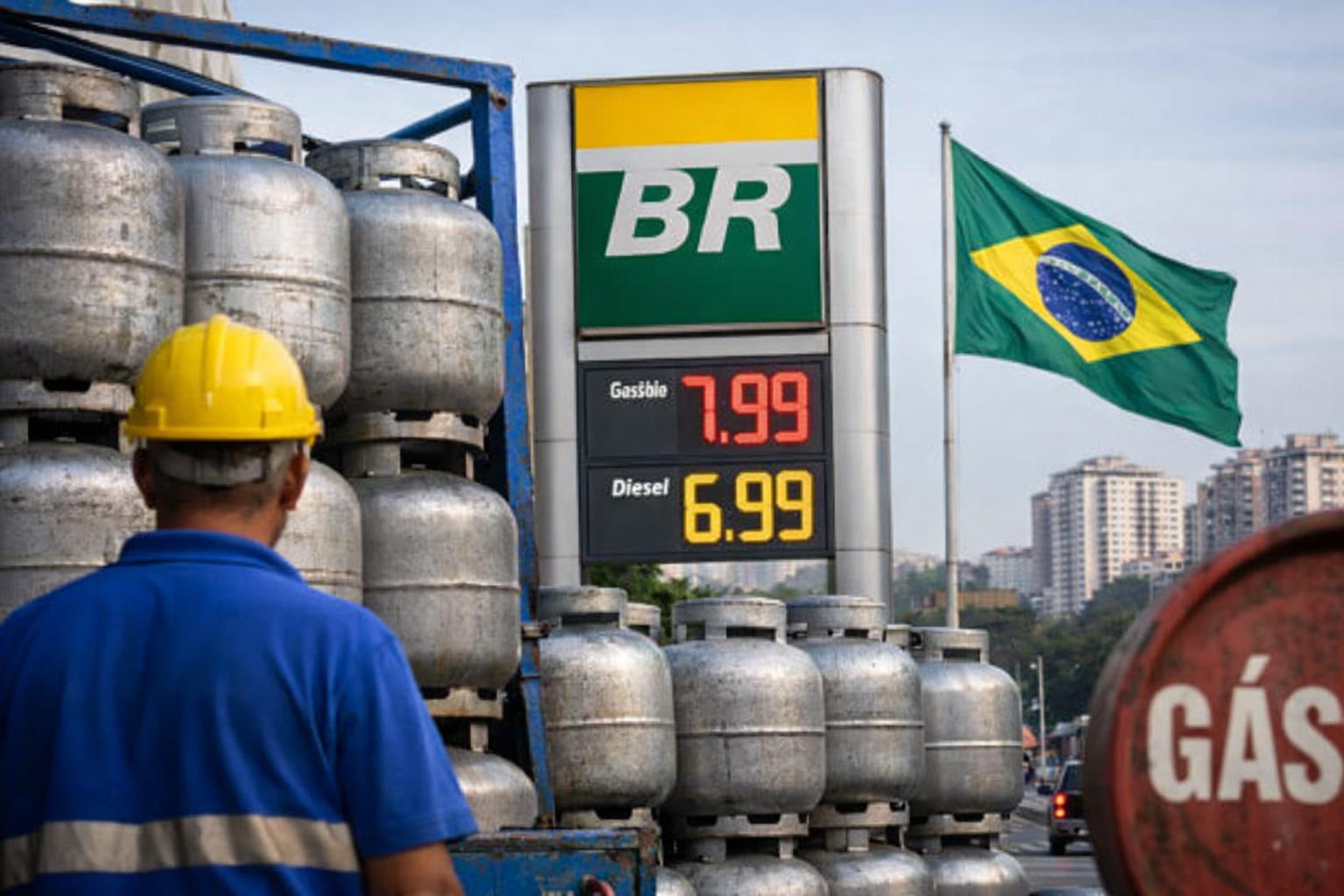
RIO DE JANEIRO — Monday, April 6, 2026 — Surging energy prices linked to global geopolitical tensions are putting pressure on Brazil’s flagship cooking gas subsidy program, raising concerns about its sustainability just months ahead of the country’s presidential election. The initiative, known as “People’s Gas,” was launched by President Luiz Inacio Lula da Silva in November 2025 as a central component of his energy policy, aiming to provide free liquefied petroleum g
Rising LPG costs threaten Brazil’s free cooking gas initiative
RIO DE JANEIRO — Monday, April 6, 2026 — Surging energy prices linked to global geopolitical tensions are putting pressure on Brazil’s flagship cooking gas subsidy program, raising concerns about its sustainability just months ahead of the country’s presidential election. The initiative, known as “People’s Gas,” was launched by President Luiz Inacio Lula da Silva in November 2025 as a central component of his energy policy, aiming to provide free liquefied petroleum g
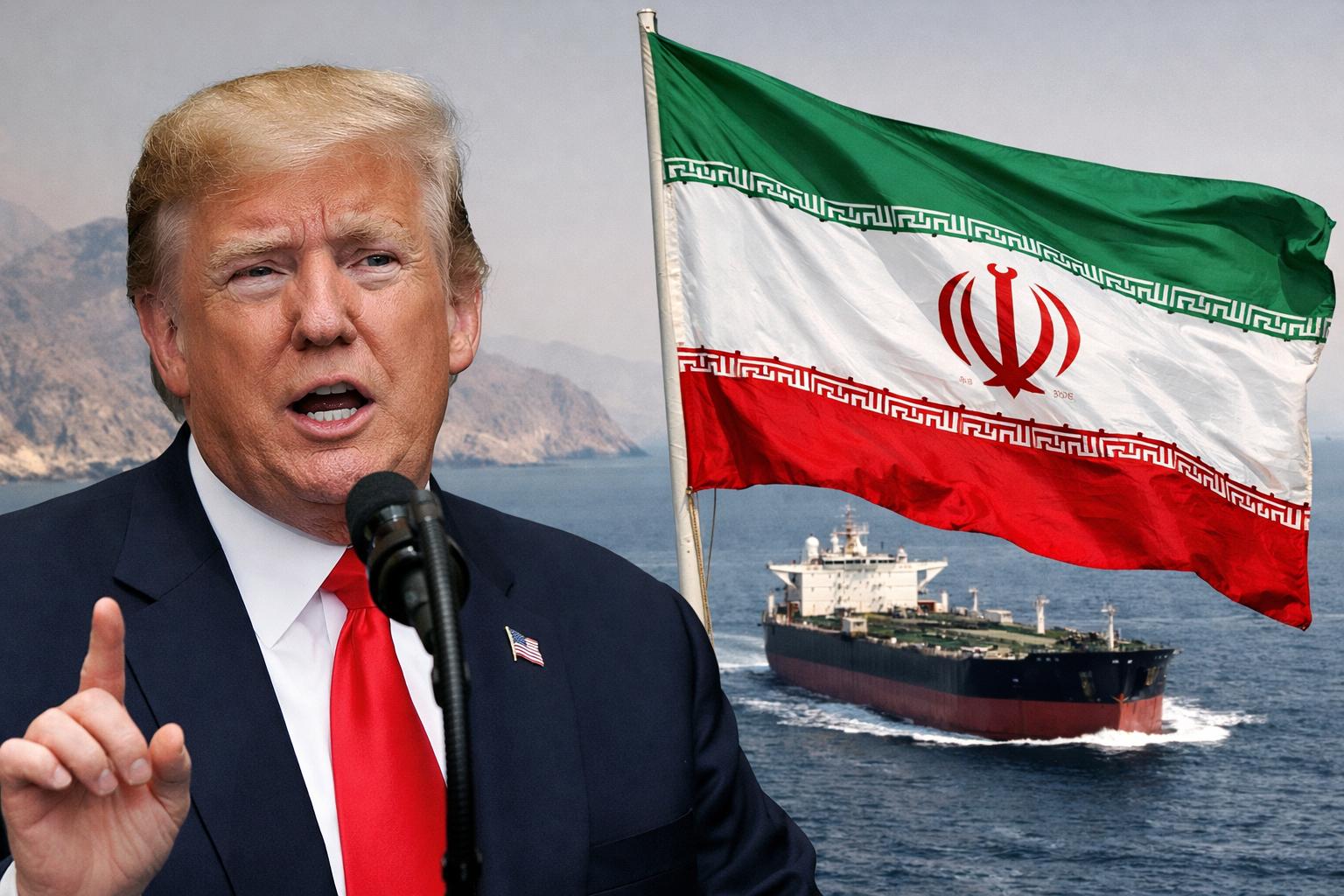
Trump warns of plan to destroy Iran infrastructure amid ceasefire talks
U.S. President Donald Trump on Monday, April 6, 2026, warned that the United States has a plan to destroy critical infrastructure in Iran if ongoing ceasefire efforts fail, signaling a potential escalation in already heightened tensions between the two countries. Speaking publicly, Trump described a scenario in which “every bridge, every power plant in Iran will be out of business,” adding that such an operation would result in “complete demolition by 12:00,” though he did not specify a time zone for that reference. The president emphasized that he does not want to pursue such action, noting the long-term consequences for Iran’s recovery. He stated that rebuilding could take “100 years,” underscoring the scale of destruction implied in his remarks. His comments come at a critical moment in the broader Middle East crisis, where diplomatic efforts and military posturing continue simultaneously. Trump also introduced a proposal involving the Strait of Hormuz, a vital global shipping route through which a significant portion of the world’s oil supply passes. He suggested that the United States, rather than Iran, should collect tolls from vessels transiting the waterway. “What about us charging tolls?” he said, positioning the idea as an alternative to allowing Iran to control revenue from the route. Iran recently announced its own toll system for tankers, asserting authority over the strategically important passage. Addressing the status of negotiations, Trump declined to provide a definitive assessment of whether tensions are easing or intensifying. “I can’t tell you, it depends on what they do. This is a critical period,” he said. He also referenced a deadline related to reopening the waterway, stating that Iran had “’til tomorrow at 8:00” following an extension he granted, though further details were not disclosed. Despite the strong rhetoric, Trump indicated that diplomatic engagement remains ongoing. He described Iran as an “active, willing participant” in negotiations and suggested that both sides may be exploring a potential agreement. However, he stopped short of confirming any progress toward a ceasefire, leaving the situation uncertain as global markets and policymakers continue to monitor developments closely.
Trump warns of plan to destroy Iran infrastructure amid ceasefire talks
U.S. President Donald Trump on Monday, April 6, 2026, warned that the United States has a plan to destroy critical infrastructure in Iran if ongoing ceasefire efforts fail, signaling a potential escalation in already heightened tensions between the two countries. Speaking publicly, Trump described a scenario in which “every bridge, every power plant in Iran will be out of business,” adding that such an operation would result in “complete demolition by 12:00,” though he did not specify a time zone for that reference. The president emphasized that he does not want to pursue such action, noting the long-term consequences for Iran’s recovery. He stated that rebuilding could take “100 years,” underscoring the scale of destruction implied in his remarks. His comments come at a critical moment in the broader Middle East crisis, where diplomatic efforts and military posturing continue simultaneously. Trump also introduced a proposal involving the Strait of Hormuz, a vital global shipping route through which a significant portion of the world’s oil supply passes. He suggested that the United States, rather than Iran, should collect tolls from vessels transiting the waterway. “What about us charging tolls?” he said, positioning the idea as an alternative to allowing Iran to control revenue from the route. Iran recently announced its own toll system for tankers, asserting authority over the strategically important passage. Addressing the status of negotiations, Trump declined to provide a definitive assessment of whether tensions are easing or intensifying. “I can’t tell you, it depends on what they do. This is a critical period,” he said. He also referenced a deadline related to reopening the waterway, stating that Iran had “’til tomorrow at 8:00” following an extension he granted, though further details were not disclosed. Despite the strong rhetoric, Trump indicated that diplomatic engagement remains ongoing. He described Iran as an “active, willing participant” in negotiations and suggested that both sides may be exploring a potential agreement. However, he stopped short of confirming any progress toward a ceasefire, leaving the situation uncertain as global markets and policymakers continue to monitor developments closely.

Strait of Hormuz explained: why this narrow route affects the whole world
The Strait of Hormuz, a narrow waterway connecting the Persian Gulf to the open ocean, remains one of the most strategically important routes in the global economy. Located between Iran and Oman, this passage serves as a critical channel for transporting oil from major producing countries to markets around the world. A significant portion of the world’s oil supply moves through this route each day, making it essential for maintaining stable energy markets. Because many countries r
Strait of Hormuz explained: why this narrow route affects the whole world
The Strait of Hormuz, a narrow waterway connecting the Persian Gulf to the open ocean, remains one of the most strategically important routes in the global economy. Located between Iran and Oman, this passage serves as a critical channel for transporting oil from major producing countries to markets around the world. A significant portion of the world’s oil supply moves through this route each day, making it essential for maintaining stable energy markets. Because many countries r
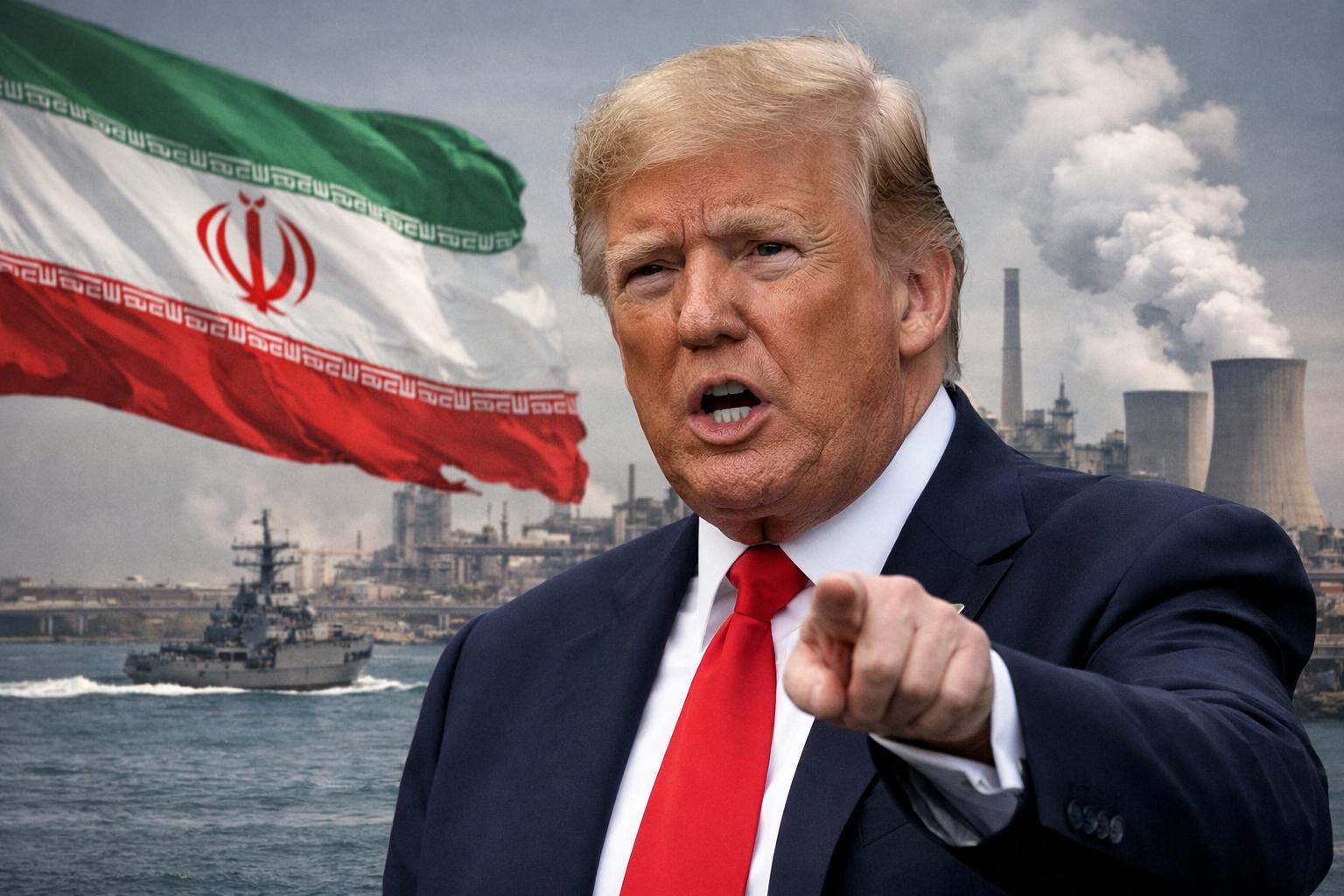
Trump defends stance on Iran strikes amid war crime concerns
U.S. President Donald Trump on Sunday (exact date not specified in the source) dismissed concerns that potential strikes on Iran’s power plants and civilian infrastructure could constitute a war crime, delivering a series of controversial remarks that further escalated tensions between Washington and Tehran. Speaking to reporters during a public event at the White House, Trump defended his position, stating he was “not worried” about such concerns and using inflammatory language to describ
Trump defends stance on Iran strikes amid war crime concerns
U.S. President Donald Trump on Sunday (exact date not specified in the source) dismissed concerns that potential strikes on Iran’s power plants and civilian infrastructure could constitute a war crime, delivering a series of controversial remarks that further escalated tensions between Washington and Tehran. Speaking to reporters during a public event at the White House, Trump defended his position, stating he was “not worried” about such concerns and using inflammatory language to describ
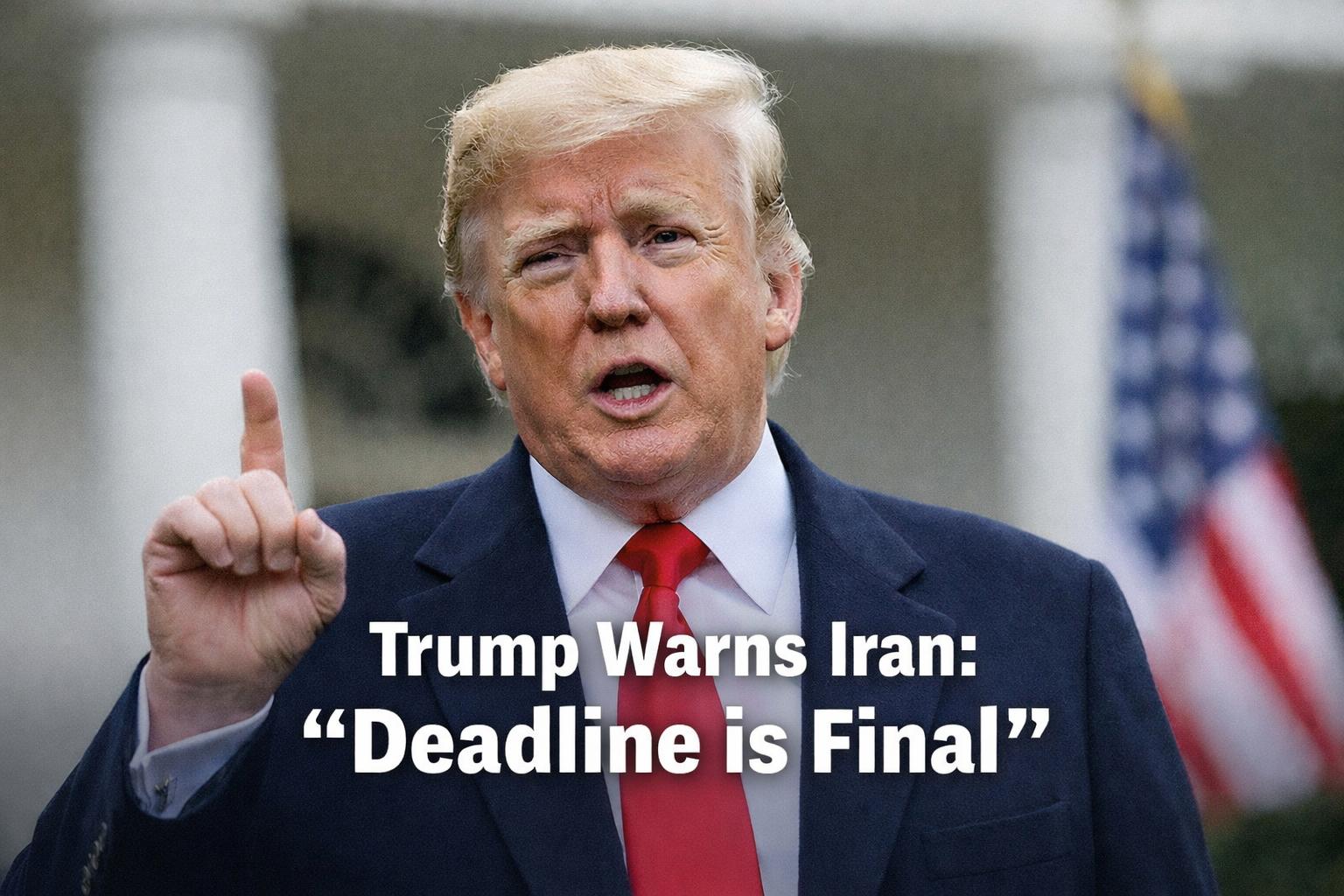
Trump says Iran deal deadline is final, warns of possible military action
US President Donald Trump stated on Monday April 6, 2026, that the deadline he set for Iran to reach a negotiated agreement remains final, signaling increased pressure on Tehran amid ongoing diplomatic efforts. Speaking during a public event on the White House South Lawn, Trump described Iran’s latest proposal as a meaningful step forward but emphasized that it falls short of US expectations. According to his remarks, the proposal reflects progress in negotiations, yet does not meet the conditions the United States considers necessary for a resolution. Trump indicated that Iranian officials are aware of the specific requirements being sought, suggesting that discussions have been conducted in what he characterized as good faith. The president also reiterated his warning that failure to meet the Tuesday deadline could result in significant military consequences. He stated that US forces are prepared to carry out broad attacks targeting Iranian infrastructure if an agreement is not reached within the specified timeframe. This position underscores a sharp escalation in rhetoric as diplomatic channels remain active but uncertain. Iran has rejected the imposed deadline, maintaining its stance against external pressure in the negotiation process. The divergence highlights ongoing challenges in reaching consensus, as both sides continue to navigate complex political and strategic considerations. Trump added that a resolution could be achieved quickly if Iran complies with the outlined demands, suggesting that the situation remains fluid despite the firm deadline. The developments reflect heightened geopolitical tensions, with global observers closely monitoring whether diplomacy or confrontation will shape the next phase of US-Iran relations.
Trump says Iran deal deadline is final, warns of possible military action
US President Donald Trump stated on Monday April 6, 2026, that the deadline he set for Iran to reach a negotiated agreement remains final, signaling increased pressure on Tehran amid ongoing diplomatic efforts. Speaking during a public event on the White House South Lawn, Trump described Iran’s latest proposal as a meaningful step forward but emphasized that it falls short of US expectations. According to his remarks, the proposal reflects progress in negotiations, yet does not meet the conditions the United States considers necessary for a resolution. Trump indicated that Iranian officials are aware of the specific requirements being sought, suggesting that discussions have been conducted in what he characterized as good faith. The president also reiterated his warning that failure to meet the Tuesday deadline could result in significant military consequences. He stated that US forces are prepared to carry out broad attacks targeting Iranian infrastructure if an agreement is not reached within the specified timeframe. This position underscores a sharp escalation in rhetoric as diplomatic channels remain active but uncertain. Iran has rejected the imposed deadline, maintaining its stance against external pressure in the negotiation process. The divergence highlights ongoing challenges in reaching consensus, as both sides continue to navigate complex political and strategic considerations. Trump added that a resolution could be achieved quickly if Iran complies with the outlined demands, suggesting that the situation remains fluid despite the firm deadline. The developments reflect heightened geopolitical tensions, with global observers closely monitoring whether diplomacy or confrontation will shape the next phase of US-Iran relations.
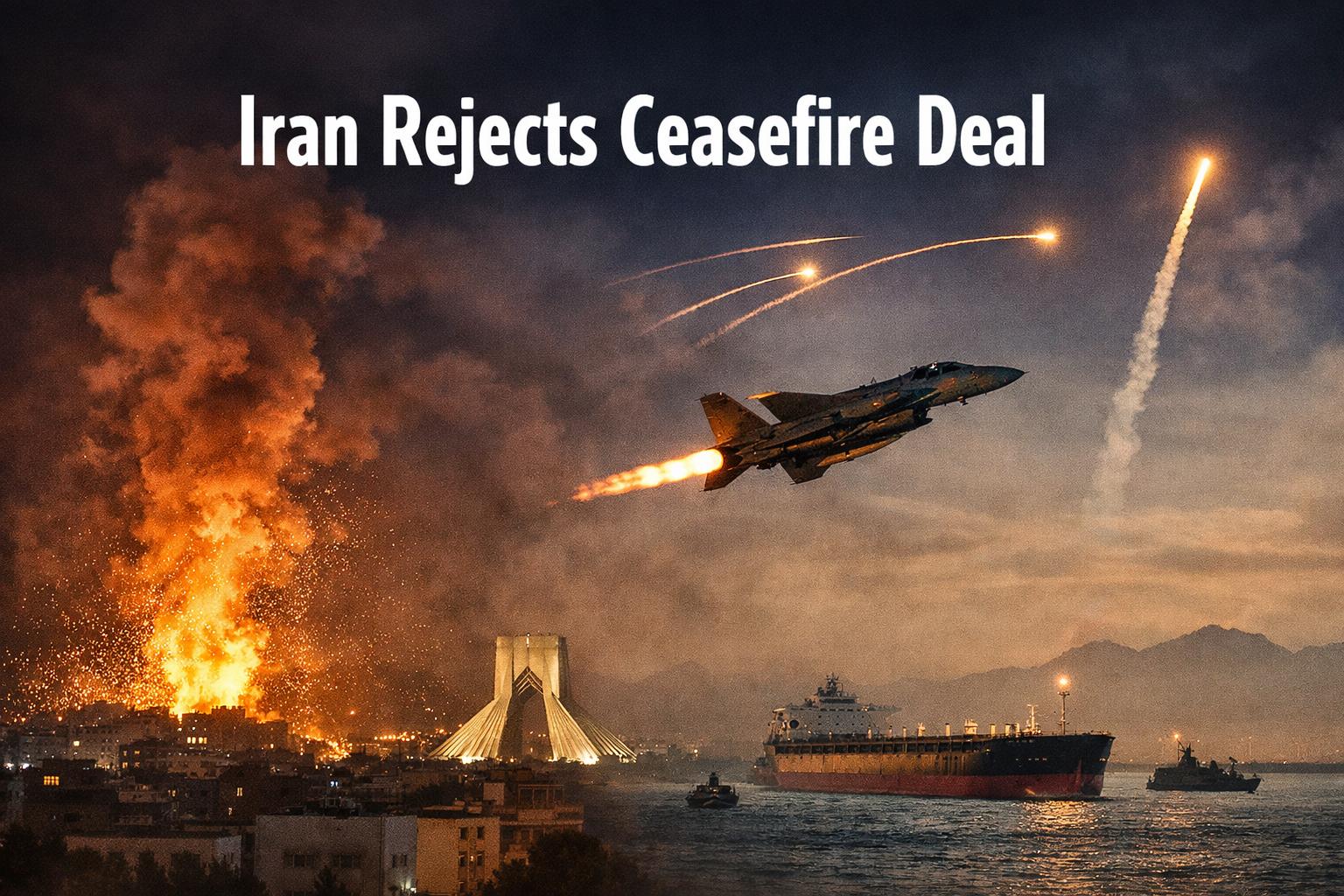
Iran rejects ceasefire proposal, demands permanent end to conflict
TEHRAN, Iran — Iran has rejected a proposed ceasefire agreement and is instead calling for a permanent end to hostilities, intensifying an already volatile situation in the Middle East. The development was reported on Monday, April 6, 2026, local time in Iran, amid rising pressure from the United States and escalating military actions involving Israel. Mojtaba Ferdousi Pour, head of Iran’s diplomatic mission in Cairo, stated that Tehran would not agree to a temporary truce without guarantees of long-term security. He emphasized that Iran seeks a definitive end to the conflict with assurances that future attacks would not occur. According to Iranian officials, the country conveyed its position through Pakistan, which has been acting as a key mediator in ongoing diplomatic efforts. The rejection comes as U.S. President Donald Trump has imposed a deadline tied to the reopening of the Strait of Hormuz, a critical global shipping route through which roughly 20% of the world’s oil supply passes during peacetime. Iranian and Omani officials are reportedly working on a mechanism to manage traffic through the strategic waterway. Disruptions in the strait have already contributed to rising oil prices and heightened concerns about the global economy. Tensions further escalated following Israeli strikes on Iran’s South Pars natural gas field, a major energy hub shared with Qatar and vital to Iran’s electricity production. The strikes also reportedly killed senior figures within Iran’s Revolutionary Guard, including intelligence chief Maj. Gen. Majid Khademi and a commander linked to the Quds Force. Israeli officials indicated that targeting Iran’s economic and military infrastructure remains a priority. Simultaneously, explosions were reported across Tehran, with residents describing sustained aerial activity, including drones and low-flying aircraft. Israeli forces also claimed to have struck multiple airports in the Iranian capital, damaging military assets. Efforts by mediators from Egypt, Pakistan, and Turkey to broker a 45-day ceasefire and reopen the Strait of Hormuz are ongoing, though progress appears uncertain. Iranian officials have reiterated that negotiations cannot proceed under threats or ultimatums. Regional tensions have also spread to neighboring Gulf countries, with Kuwait, the United Arab Emirates, and Saudi Arabia activating air defenses in response to Iranian missile and drone activity. In Israel, missile strikes reportedly hit residential areas in Haifa, resulting in civilian casualties. The situation continues to evolve, with significant implications for global energy markets and regional stability.
Iran rejects ceasefire proposal, demands permanent end to conflict
TEHRAN, Iran — Iran has rejected a proposed ceasefire agreement and is instead calling for a permanent end to hostilities, intensifying an already volatile situation in the Middle East. The development was reported on Monday, April 6, 2026, local time in Iran, amid rising pressure from the United States and escalating military actions involving Israel. Mojtaba Ferdousi Pour, head of Iran’s diplomatic mission in Cairo, stated that Tehran would not agree to a temporary truce without guarantees of long-term security. He emphasized that Iran seeks a definitive end to the conflict with assurances that future attacks would not occur. According to Iranian officials, the country conveyed its position through Pakistan, which has been acting as a key mediator in ongoing diplomatic efforts. The rejection comes as U.S. President Donald Trump has imposed a deadline tied to the reopening of the Strait of Hormuz, a critical global shipping route through which roughly 20% of the world’s oil supply passes during peacetime. Iranian and Omani officials are reportedly working on a mechanism to manage traffic through the strategic waterway. Disruptions in the strait have already contributed to rising oil prices and heightened concerns about the global economy. Tensions further escalated following Israeli strikes on Iran’s South Pars natural gas field, a major energy hub shared with Qatar and vital to Iran’s electricity production. The strikes also reportedly killed senior figures within Iran’s Revolutionary Guard, including intelligence chief Maj. Gen. Majid Khademi and a commander linked to the Quds Force. Israeli officials indicated that targeting Iran’s economic and military infrastructure remains a priority. Simultaneously, explosions were reported across Tehran, with residents describing sustained aerial activity, including drones and low-flying aircraft. Israeli forces also claimed to have struck multiple airports in the Iranian capital, damaging military assets. Efforts by mediators from Egypt, Pakistan, and Turkey to broker a 45-day ceasefire and reopen the Strait of Hormuz are ongoing, though progress appears uncertain. Iranian officials have reiterated that negotiations cannot proceed under threats or ultimatums. Regional tensions have also spread to neighboring Gulf countries, with Kuwait, the United Arab Emirates, and Saudi Arabia activating air defenses in response to Iranian missile and drone activity. In Israel, missile strikes reportedly hit residential areas in Haifa, resulting in civilian casualties. The situation continues to evolve, with significant implications for global energy markets and regional stability.

Kanye West faces pressure over UK festival amid antisemitism concerns
Mounting political and public pressure is building in the United Kingdom over Kanye West’s scheduled appearance at the Wireless Festival in London, as concerns grow over his past antisemitic comments and actions. West, who now goes by Ye, is set to headline the event at Finsbury Park from Thursday, July 10 to Saturday, July 12, with attendance expected to reach tens of thousands daily. The controversy intensified on Sunday when major sponsors began distancing themselves from the event. Pepsi withdrew its sponsorship, while Diageo also pulled its support. Payment partner PayPal has reportedly requested the removal of its branding from promotional materials. The backlash follows renewed scrutiny of West’s previous behavior, including the release of a song titled Heil Hitler and the sale of merchandise featuring swastikas. UK political leaders have voiced strong objections. Prime Minister Sir Keir Starmer described the booking as “deeply concerning,” emphasizing that antisemitism must be addressed firmly. Opposition figures have urged authorities to deny West entry into the country, arguing that allowing him to perform would send the wrong message. Several lawmakers have echoed calls for action, citing a pattern of conduct that has caused distress within Jewish communities. Jewish advocacy groups have also called for intervention, urging officials to consider blocking West’s entry. Local authorities overseeing the festival venue have indicated they will seek assurances that performers comply with conditions prohibiting offensive or discriminatory content. Despite the backlash, West remains a commercially successful artist, with strong album sales and sold-out performances. However, industry observers note that the growing controversy presents both reputational and financial risks for festival organizers. With sponsors withdrawing and public criticism intensifying, uncertainty remains over whether the event will proceed as planned.
Kanye West faces pressure over UK festival amid antisemitism concerns
Mounting political and public pressure is building in the United Kingdom over Kanye West’s scheduled appearance at the Wireless Festival in London, as concerns grow over his past antisemitic comments and actions. West, who now goes by Ye, is set to headline the event at Finsbury Park from Thursday, July 10 to Saturday, July 12, with attendance expected to reach tens of thousands daily. The controversy intensified on Sunday when major sponsors began distancing themselves from the event. Pepsi withdrew its sponsorship, while Diageo also pulled its support. Payment partner PayPal has reportedly requested the removal of its branding from promotional materials. The backlash follows renewed scrutiny of West’s previous behavior, including the release of a song titled Heil Hitler and the sale of merchandise featuring swastikas. UK political leaders have voiced strong objections. Prime Minister Sir Keir Starmer described the booking as “deeply concerning,” emphasizing that antisemitism must be addressed firmly. Opposition figures have urged authorities to deny West entry into the country, arguing that allowing him to perform would send the wrong message. Several lawmakers have echoed calls for action, citing a pattern of conduct that has caused distress within Jewish communities. Jewish advocacy groups have also called for intervention, urging officials to consider blocking West’s entry. Local authorities overseeing the festival venue have indicated they will seek assurances that performers comply with conditions prohibiting offensive or discriminatory content. Despite the backlash, West remains a commercially successful artist, with strong album sales and sold-out performances. However, industry observers note that the growing controversy presents both reputational and financial risks for festival organizers. With sponsors withdrawing and public criticism intensifying, uncertainty remains over whether the event will proceed as planned.
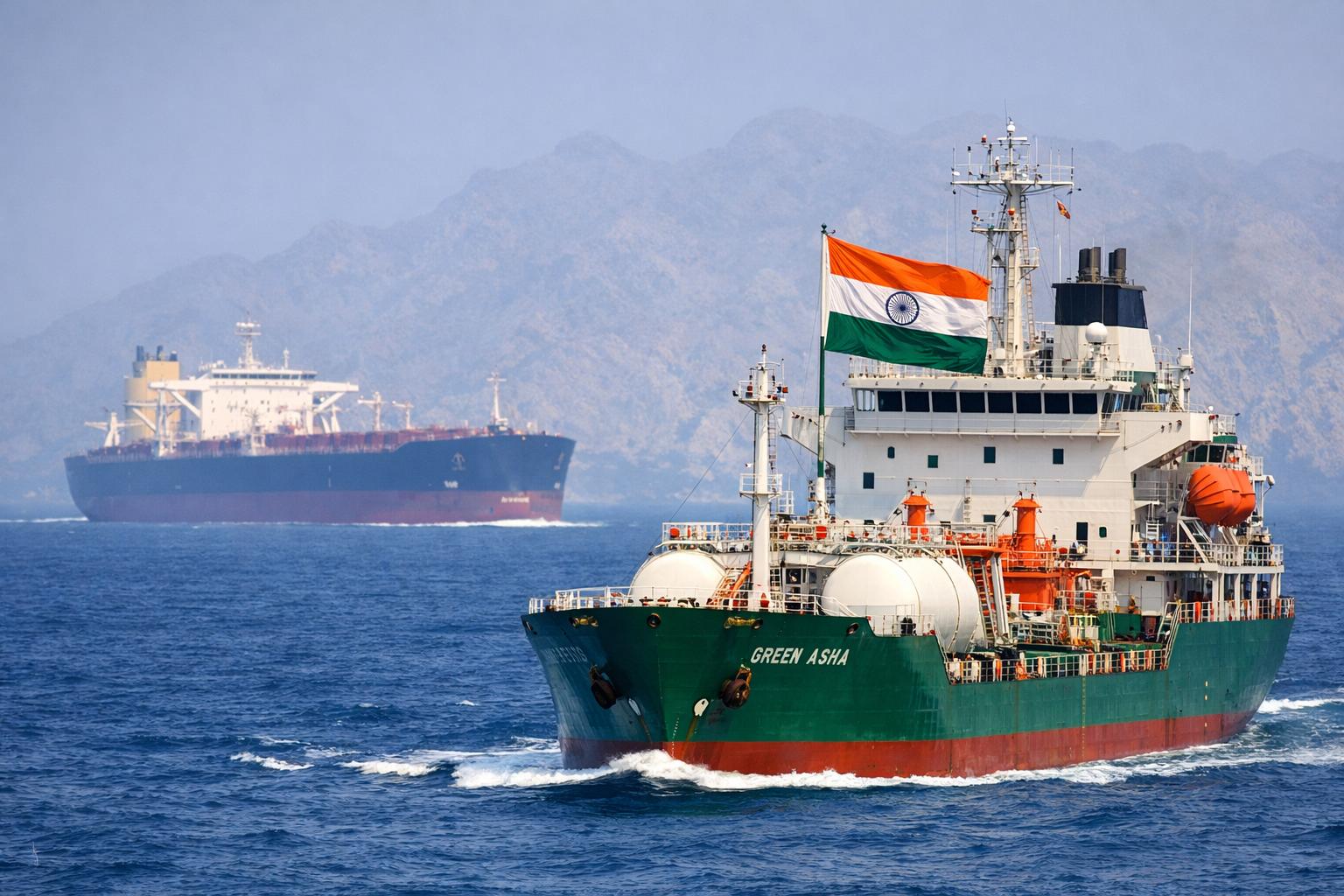
India confirms seafarers safe amid Strait of Hormuz tensions and oil surge
At an inter-ministerial press conference held on Monday, April 6, 2026, in India (IST), Mukesh Mangal, Secretary in the Ministry of Ports, Shipping and Waterways, confirmed that Indian seafarers operating in the conflict-affected West Asia region remain safe, even as escalating geopolitical tensions continue to disrupt global energy markets. Mangal stated that no incidents involving Indian-flagged vessels had been reported in the preceding 24 hours, underscoring the government’s ong
India confirms seafarers safe amid Strait of Hormuz tensions and oil surge
At an inter-ministerial press conference held on Monday, April 6, 2026, in India (IST), Mukesh Mangal, Secretary in the Ministry of Ports, Shipping and Waterways, confirmed that Indian seafarers operating in the conflict-affected West Asia region remain safe, even as escalating geopolitical tensions continue to disrupt global energy markets. Mangal stated that no incidents involving Indian-flagged vessels had been reported in the preceding 24 hours, underscoring the government’s ong
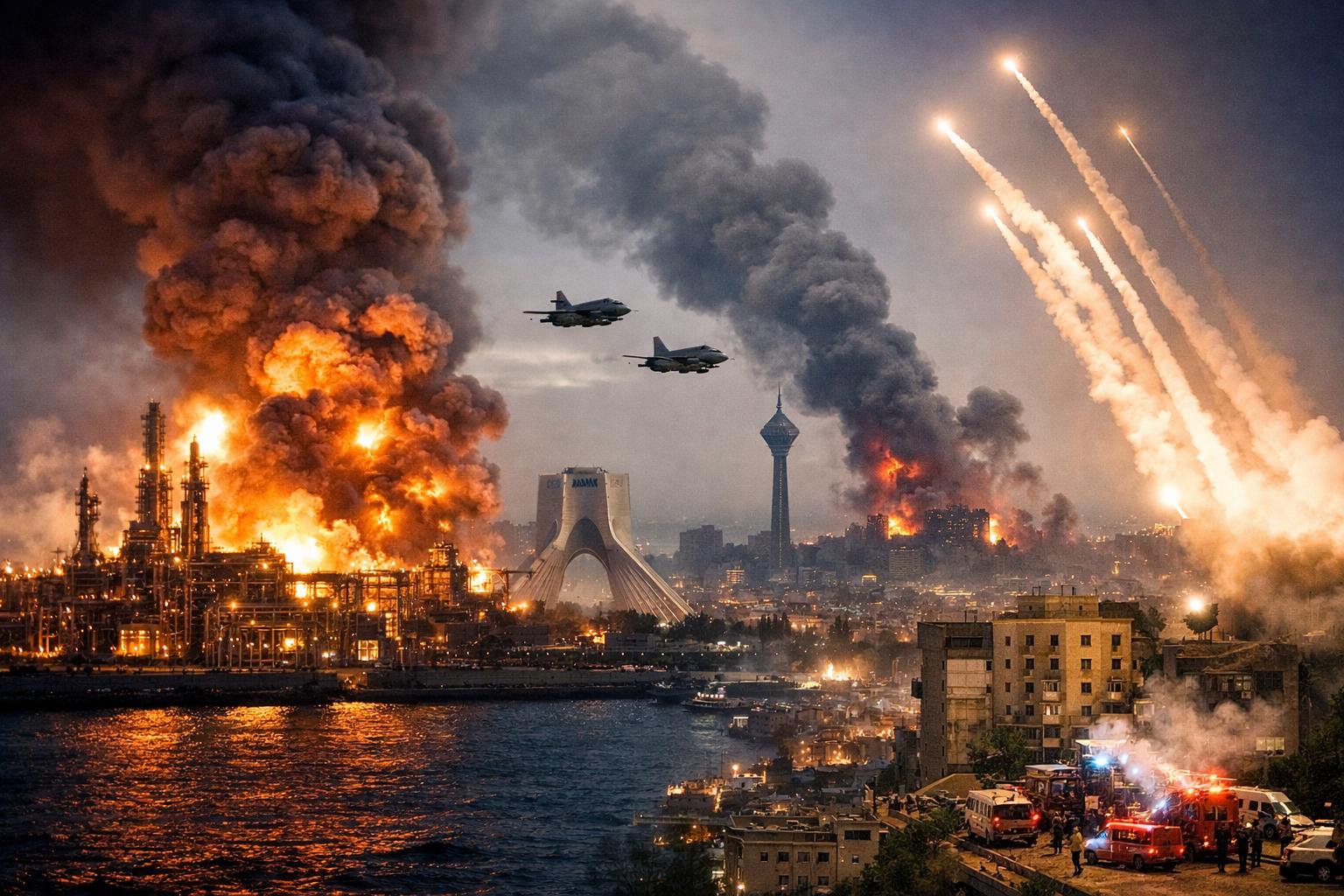
Israeli attack on Iran energy site raises tensions over Strait of Hormuz
DUBAI, United Arab Emirates — Israel carried out a major strike on Iran’s South Pars natural gas field, targeting a key petrochemical facility that accounts for a significant portion of the country’s production, in an escalation that threatens ongoing efforts to broker a ceasefire between Tehran and Washington. Israeli officials confirmed the operation, describing it as a decisive blow to Iran’s energy infrastructure, while warning that further actions could follow despite diplomatic neg
Israeli attack on Iran energy site raises tensions over Strait of Hormuz
DUBAI, United Arab Emirates — Israel carried out a major strike on Iran’s South Pars natural gas field, targeting a key petrochemical facility that accounts for a significant portion of the country’s production, in an escalation that threatens ongoing efforts to broker a ceasefire between Tehran and Washington. Israeli officials confirmed the operation, describing it as a decisive blow to Iran’s energy infrastructure, while warning that further actions could follow despite diplomatic neg
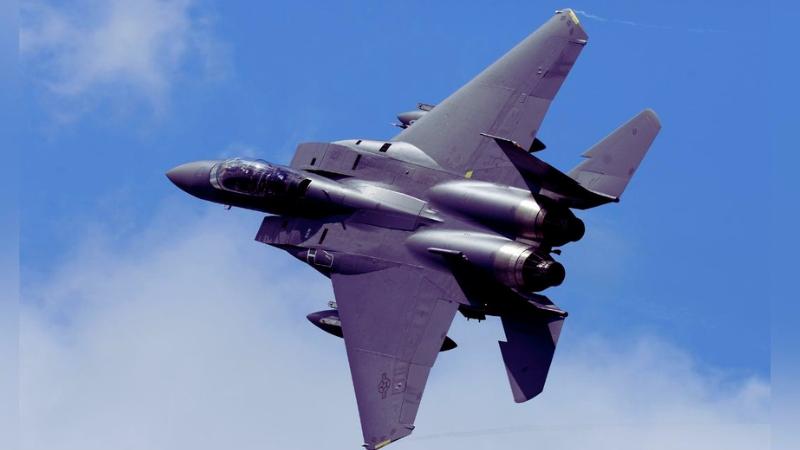
Trump Reveals US Pilot’s 3-Word Radio Message That Sparked Fears of Iranian Trap
US President Donald Trump recently revealed the three-word radio message sent by a US pilot trapped in Iran, which initially sparked fears of an Iranian trap. The pilot, a weapons system officer, had ejected from his downed F-15E Strike Eagle over southern Iran on April 3, 2026, during the ongoing conflict. After his aircraft was shot down, the first pilot was rescued, but the second remained missing, and both US and Iranian forces raced to locate him. During the search, Trump expla
Trump Reveals US Pilot’s 3-Word Radio Message That Sparked Fears of Iranian Trap
US President Donald Trump recently revealed the three-word radio message sent by a US pilot trapped in Iran, which initially sparked fears of an Iranian trap. The pilot, a weapons system officer, had ejected from his downed F-15E Strike Eagle over southern Iran on April 3, 2026, during the ongoing conflict. After his aircraft was shot down, the first pilot was rescued, but the second remained missing, and both US and Iranian forces raced to locate him. During the search, Trump expla
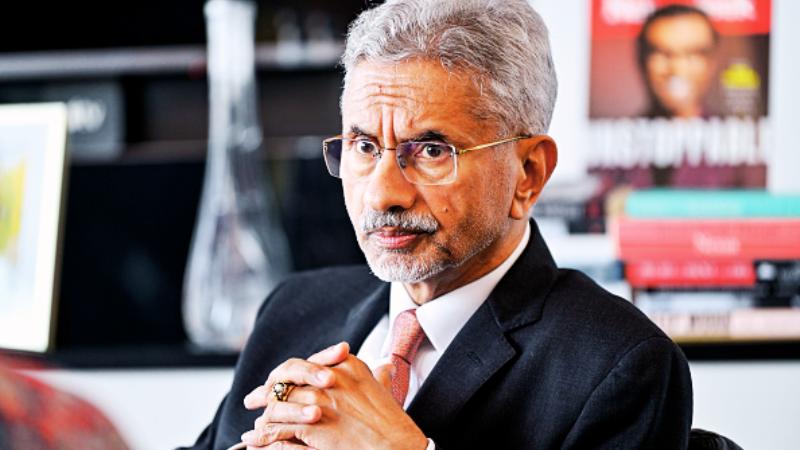
West Asia Crisis: Jaishankar Holds Key Talks with Qatar PM, UAE Foreign Minister
On April 5, 2026, Subrahmanyam Jaishankar held crucial telephonic discussions with Sheikh Mohammed bin Abdulrahman bin Jassim Al Thani and
West Asia Crisis: Jaishankar Holds Key Talks with Qatar PM, UAE Foreign Minister
On April 5, 2026, Subrahmanyam Jaishankar held crucial telephonic discussions with Sheikh Mohammed bin Abdulrahman bin Jassim Al Thani and
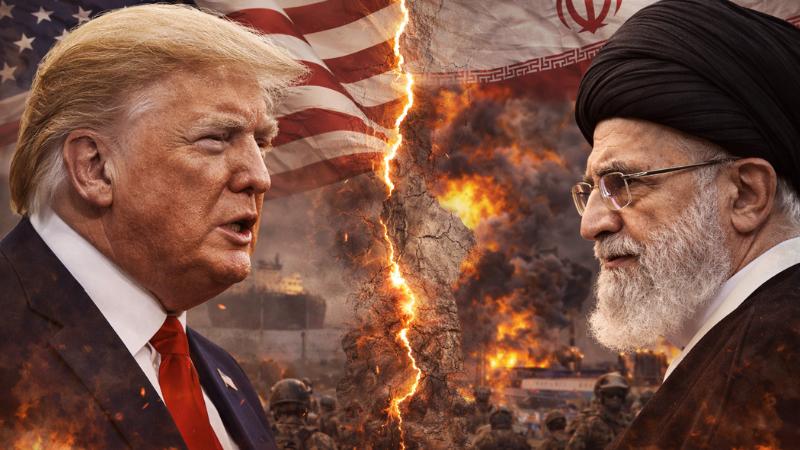
US-Iran Ceasefire Efforts on the Brink: Will a 45-Day Truce Hold?
The ongoing conflict between the United States and Iran has reached a critical juncture, with efforts to negotiate a 45-day ceasefire pushing towards a narrow window for a breakthrough. Sources involved in the discussions reveal that while negotiations continue, the chances of a deal within the next 48 hours are slim. This ceasefire is seen as a last-ditch effort to avoid large-scale military strikes on Iranian infrastructure, which could trigger retaliatory attacks on vital energy and water
US-Iran Ceasefire Efforts on the Brink: Will a 45-Day Truce Hold?
The ongoing conflict between the United States and Iran has reached a critical juncture, with efforts to negotiate a 45-day ceasefire pushing towards a narrow window for a breakthrough. Sources involved in the discussions reveal that while negotiations continue, the chances of a deal within the next 48 hours are slim. This ceasefire is seen as a last-ditch effort to avoid large-scale military strikes on Iranian infrastructure, which could trigger retaliatory attacks on vital energy and water

Elon Musk pushes SpaceX IPO banks to subscribe to Grok AI ahead of public listing
In a surprising development that has sparked debate across the tech and financial sectors, Elon Musk has reportedly asked banks involved in a potential SpaceX IPO to subscribe to Grok AI, the chatbot developed by his artificial intelligence venture xAI. The move is being seen as an unusual blending of financial negotiations with technology adoption, raising questions about influence, strategy, and ethics. According to reports, Musk has encouraged major financial institutions that are expected to play a role in SpaceX’s much-anticipated public offering to purchase subscriptions to Grok AI. Grok, integrated into the platform of X, is positioned as a competitor to other leading AI chatbots, aiming to provide real-time, conversational intelligence with a unique personality. By pushing Grok subscriptions, Musk appears to be leveraging his business relationships to expand the reach and adoption of his AI ecosystem. Industry analysts believe this strategy could serve multiple purposes. On one hand, it helps boost early enterprise adoption of Grok, potentially strengthening xAI’s valuation and credibility in the rapidly evolving artificial intelligence market. On the other hand, it may also create synergies between Musk’s ventures, aligning financial partners with his broader technological vision. Why this move is gaining attention The reported request has drawn scrutiny because it blurs the lines between separate business interests. While it is not uncommon for business leaders to promote their products, tying such expectations to high-stakes financial deals like an IPO is relatively rare. Experts suggest that this could raise concerns among regulators and investors, especially regarding fairness and transparency in financial negotiations. At the same time, some supporters argue that banks and institutions often adopt new technologies as part of strategic partnerships. If Grok AI proves to be a valuable tool for financial analysis, communication, or data processing, its adoption could be seen as a logical step rather than an obligation. Impact on SpaceX IPO and AI competition The potential SpaceX IPO is already one of the most anticipated events in global markets, given the company’s dominant position in private space exploration and satellite technology. Any additional layer of complexity, such as this reported push for AI subscriptions, could influence how investors and stakeholders perceive the deal. Meanwhile, the move highlights the intensifying competition in the AI space. With major players racing to capture market share, enterprise adoption is becoming a key battleground. By integrating Grok into financial institutions, Musk may be attempting to position xAI as a serious contender alongside other established AI platforms. As the story continues to unfold, it remains to be seen whether this strategy will accelerate Grok’s growth or invite regulatory attention. What is clear, however, is that Musk’s approach once again demonstrates his willingness to challenge conventional boundaries between industries, reshaping how technology and finance intersect in the modern era.
Elon Musk pushes SpaceX IPO banks to subscribe to Grok AI ahead of public listing
In a surprising development that has sparked debate across the tech and financial sectors, Elon Musk has reportedly asked banks involved in a potential SpaceX IPO to subscribe to Grok AI, the chatbot developed by his artificial intelligence venture xAI. The move is being seen as an unusual blending of financial negotiations with technology adoption, raising questions about influence, strategy, and ethics. According to reports, Musk has encouraged major financial institutions that are expected to play a role in SpaceX’s much-anticipated public offering to purchase subscriptions to Grok AI. Grok, integrated into the platform of X, is positioned as a competitor to other leading AI chatbots, aiming to provide real-time, conversational intelligence with a unique personality. By pushing Grok subscriptions, Musk appears to be leveraging his business relationships to expand the reach and adoption of his AI ecosystem. Industry analysts believe this strategy could serve multiple purposes. On one hand, it helps boost early enterprise adoption of Grok, potentially strengthening xAI’s valuation and credibility in the rapidly evolving artificial intelligence market. On the other hand, it may also create synergies between Musk’s ventures, aligning financial partners with his broader technological vision. Why this move is gaining attention The reported request has drawn scrutiny because it blurs the lines between separate business interests. While it is not uncommon for business leaders to promote their products, tying such expectations to high-stakes financial deals like an IPO is relatively rare. Experts suggest that this could raise concerns among regulators and investors, especially regarding fairness and transparency in financial negotiations. At the same time, some supporters argue that banks and institutions often adopt new technologies as part of strategic partnerships. If Grok AI proves to be a valuable tool for financial analysis, communication, or data processing, its adoption could be seen as a logical step rather than an obligation. Impact on SpaceX IPO and AI competition The potential SpaceX IPO is already one of the most anticipated events in global markets, given the company’s dominant position in private space exploration and satellite technology. Any additional layer of complexity, such as this reported push for AI subscriptions, could influence how investors and stakeholders perceive the deal. Meanwhile, the move highlights the intensifying competition in the AI space. With major players racing to capture market share, enterprise adoption is becoming a key battleground. By integrating Grok into financial institutions, Musk may be attempting to position xAI as a serious contender alongside other established AI platforms. As the story continues to unfold, it remains to be seen whether this strategy will accelerate Grok’s growth or invite regulatory attention. What is clear, however, is that Musk’s approach once again demonstrates his willingness to challenge conventional boundaries between industries, reshaping how technology and finance intersect in the modern era.










