

















Iran Dismisses Trump Khamenei Meeting as Unrealistic Amid US Talks
Iranian Foreign Minister Abbas Araghchi has dismissed the idea of a future Trump Khamenei meeting, saying expectations of such a high-level encounter are not realistic under current conditions. The remarks came after U.S. President Donald Trump said he would like to meet Iran’s Supreme Leader, Mojtaba Khamenei, if ongoing contacts between Washington and Tehran lead to progress. Iran Pushes Back on Trump Khamenei Meeting Speaking in an intervi
Iran Dismisses Trump Khamenei Meeting as Unrealistic Amid US Talks
Iranian Foreign Minister Abbas Araghchi has dismissed the idea of a future Trump Khamenei meeting, saying expectations of such a high-level encounter are not realistic under current conditions. The remarks came after U.S. President Donald Trump said he would like to meet Iran’s Supreme Leader, Mojtaba Khamenei, if ongoing contacts between Washington and Tehran lead to progress. Iran Pushes Back on Trump Khamenei Meeting Speaking in an intervi
Iran Missile Attacks on Kuwait and Bahrain Raise Gulf Security Fears
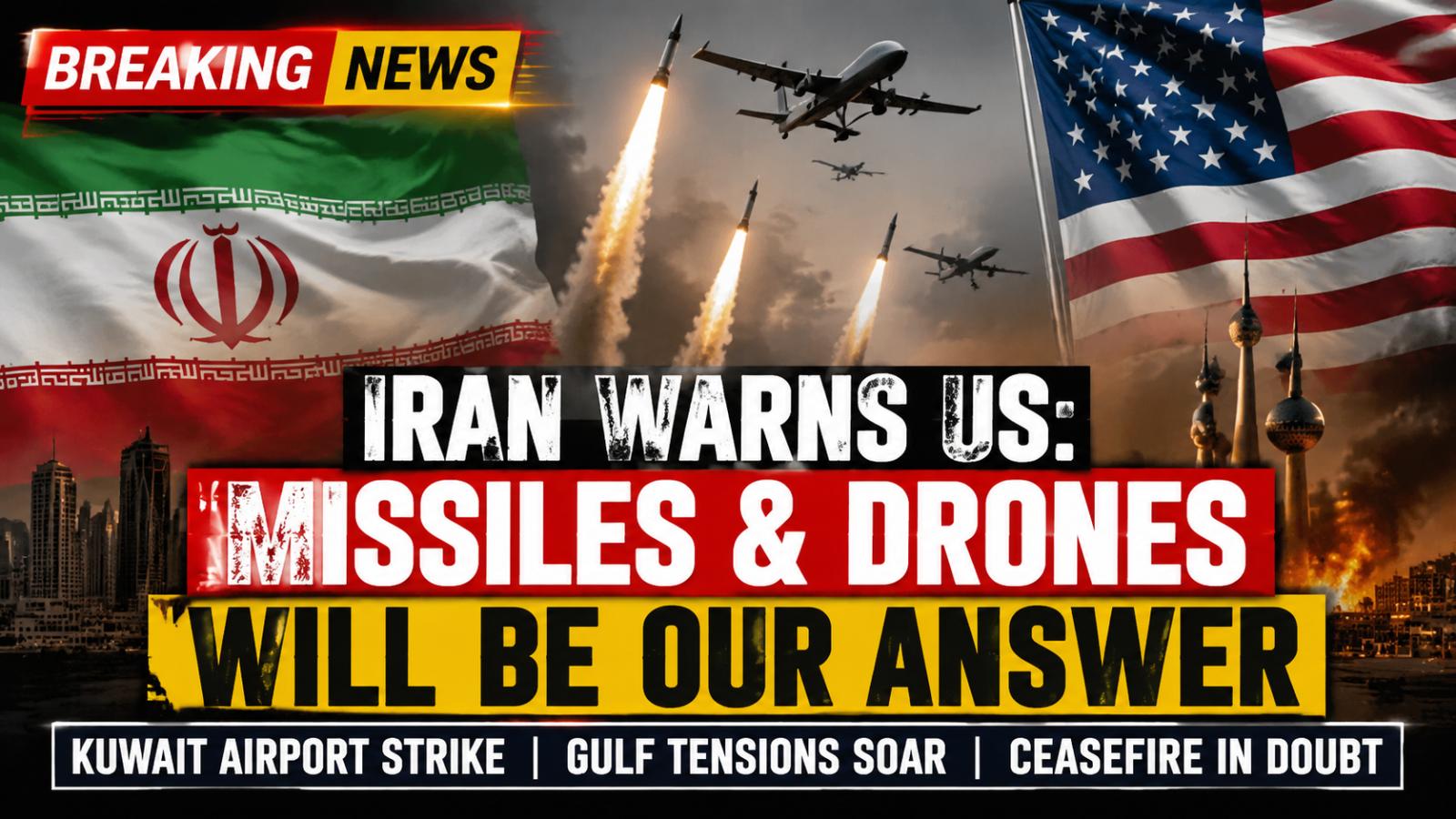
Iran missile attacks on Kuwait and Bahrain have increased concern across the Gulf after both governments condemned the strikes as violations of sovereignty and threats to regional stability. Kuwait’s Foreign Ministry, in a statement dated only as Saturday in the source material, said the attacks posed a direct threat to the lives of citizens and residents. Bahrain also condemned the strikes, calling them blatant aggression and a violation of sovereignty. Iran Mi
Iran Missile Attacks on Kuwait and Bahrain Raise Gulf Security Fears
Iran missile attacks on Kuwait and Bahrain have increased concern across the Gulf after both governments condemned the strikes as violations of sovereignty and threats to regional stability. Kuwait’s Foreign Ministry, in a statement dated only as Saturday in the source material, said the attacks posed a direct threat to the lives of citizens and residents. Bahrain also condemned the strikes, calling them blatant aggression and a violation of sovereignty. Iran Mi
Pakistan Denies Iran Nuclear Claim as Ishaq Dar-Marco Rubio Talks Draw Attention
A new controversy over an Iran nuclear claim has placed Pakistan-US discussions under fresh attention. The issue began after former CIA analyst Larry Johnson alleged that Pakistan’s Deputy Prime Minister and Foreign Minister Ishaq Dar passed a sensitive “nuclear alert” message to US Secretary of State Marco Rubio. According to the claim, the message was linked to a possible major development in Iran’s nuclear position. Pakistan, however, has firmly denied the allegation and said no secret or confidential report about Iran’s nuclear activity was shared with the United States. Pakistan Rejects Secret Report Allegation The claim has brought renewed focus to the May 29 meeting between Ishaq Dar and Marco Rubio. While the official discussion was described as part of regular bilateral engagement, Johnson’s remarks turned the meeting into a wider debate involving Iran, Pakistan, the United States and regional security. Pakistan’s Foreign Office rejected the reports as baseless and speculative. It made clear that Islamabad did not hand over any secret nuclear document or intelligence report to Washington. This denial is important because the allegation involves a highly sensitive subject. Any suggestion of secret nuclear communication between Pakistan and the United States can quickly create diplomatic pressure, especially when Iran and Israel tensions are already high. Larry Johnson’s Claim Raises Questions Larry Johnson claimed that Iranian President Masoud Pezeshkian had informed Pakistan Prime Minister Shehbaz Sharif about Iran’s nuclear position. He further suggested that Tehran may be close to either declaring itself a nuclear power or showing its capability through a possible internal test. These are serious claims, but they remain unverified. So far, Iran, Pakistan and the United States have not confirmed any plan for a nuclear test or public nuclear declaration by Tehran. For readers, the key point is simple: Pakistan’s denial is official. Johnson’s claim is not officially proven. Iran’s Nuclear Doctrine Back in Debate The controversy has also revived discussion around Iran’s nuclear doctrine. Tehran has long maintained that nuclear weapons and weapons of mass destruction are forbidden under a religious decree associated with its leadership. This position is often described as Iran’s religious and political justification for not building nuclear weapons. However, some analysts believe Iran’s doctrine could change if regional threats increase. Others argue that there is still no clear evidence of Iran deciding to build, test or stockpile nuclear weapons. Because of this uncertainty, even an unconfirmed Iran nuclear claim can create serious concern among governments and security analysts. Why the Claim Matters for Regional Security ? The timing of the claim is sensitive. US-Iran talks, Israel-Iran tensions and Middle East security concerns are already under global attention. Any report suggesting that Iran may shift its nuclear position can increase fear in the region. Johnson also suggested that sensitive communication may have been allowed through a channel that Western and Israeli intelligence could detect. That claim too remains unproven and should be treated with caution. In geopolitics, even speculation can have consequences. A single unverified claim can affect diplomatic language, security planning and public debate. What Is Confirmed So Far ? At this stage, the confirmed fact is Pakistan’s denial. Islamabad has rejected the idea that it shared any confidential Iran nuclear report with the United States. There is no official confirmation from Iran about a nuclear test. There is no public confirmation from Washington that it received such a report from Pakistan. There is also no verified statement proving that Tehran is preparing to declare itself a nuclear power. The issue remains important because it touches three sensitive areas: Iran’s nuclear policy, Pakistan-US diplomatic communication and regional security fears.
Pakistan Denies Iran Nuclear Claim as Ishaq Dar-Marco Rubio Talks Draw Attention
A new controversy over an Iran nuclear claim has placed Pakistan-US discussions under fresh attention. The issue began after former CIA analyst Larry Johnson alleged that Pakistan’s Deputy Prime Minister and Foreign Minister Ishaq Dar passed a sensitive “nuclear alert” message to US Secretary of State Marco Rubio. According to the claim, the message was linked to a possible major development in Iran’s nuclear position. Pakistan, however, has firmly denied the allegation and said no secret or confidential report about Iran’s nuclear activity was shared with the United States. Pakistan Rejects Secret Report Allegation The claim has brought renewed focus to the May 29 meeting between Ishaq Dar and Marco Rubio. While the official discussion was described as part of regular bilateral engagement, Johnson’s remarks turned the meeting into a wider debate involving Iran, Pakistan, the United States and regional security. Pakistan’s Foreign Office rejected the reports as baseless and speculative. It made clear that Islamabad did not hand over any secret nuclear document or intelligence report to Washington. This denial is important because the allegation involves a highly sensitive subject. Any suggestion of secret nuclear communication between Pakistan and the United States can quickly create diplomatic pressure, especially when Iran and Israel tensions are already high. Larry Johnson’s Claim Raises Questions Larry Johnson claimed that Iranian President Masoud Pezeshkian had informed Pakistan Prime Minister Shehbaz Sharif about Iran’s nuclear position. He further suggested that Tehran may be close to either declaring itself a nuclear power or showing its capability through a possible internal test. These are serious claims, but they remain unverified. So far, Iran, Pakistan and the United States have not confirmed any plan for a nuclear test or public nuclear declaration by Tehran. For readers, the key point is simple: Pakistan’s denial is official. Johnson’s claim is not officially proven. Iran’s Nuclear Doctrine Back in Debate The controversy has also revived discussion around Iran’s nuclear doctrine. Tehran has long maintained that nuclear weapons and weapons of mass destruction are forbidden under a religious decree associated with its leadership. This position is often described as Iran’s religious and political justification for not building nuclear weapons. However, some analysts believe Iran’s doctrine could change if regional threats increase. Others argue that there is still no clear evidence of Iran deciding to build, test or stockpile nuclear weapons. Because of this uncertainty, even an unconfirmed Iran nuclear claim can create serious concern among governments and security analysts. Why the Claim Matters for Regional Security ? The timing of the claim is sensitive. US-Iran talks, Israel-Iran tensions and Middle East security concerns are already under global attention. Any report suggesting that Iran may shift its nuclear position can increase fear in the region. Johnson also suggested that sensitive communication may have been allowed through a channel that Western and Israeli intelligence could detect. That claim too remains unproven and should be treated with caution. In geopolitics, even speculation can have consequences. A single unverified claim can affect diplomatic language, security planning and public debate. What Is Confirmed So Far ? At this stage, the confirmed fact is Pakistan’s denial. Islamabad has rejected the idea that it shared any confidential Iran nuclear report with the United States. There is no official confirmation from Iran about a nuclear test. There is no public confirmation from Washington that it received such a report from Pakistan. There is also no verified statement proving that Tehran is preparing to declare itself a nuclear power. The issue remains important because it touches three sensitive areas: Iran’s nuclear policy, Pakistan-US diplomatic communication and regional security fears.
US Approves $1.98B Kuwait Arms Deal
US Clears Major Defense Sale To Kuwait The United States has approved a proposed $1.98 billion arms sale to Kuwait, a package centered on advanced counter-drone systems and related defense equipment. The State Department said the sale is intended to strengthen Kuwait’s ability to respond to current and future threats, particularly unmanned aerial systems that could endanger military sites, civilian infrastr
US Approves $1.98B Kuwait Arms Deal
US Clears Major Defense Sale To Kuwait The United States has approved a proposed $1.98 billion arms sale to Kuwait, a package centered on advanced counter-drone systems and related defense equipment. The State Department said the sale is intended to strengthen Kuwait’s ability to respond to current and future threats, particularly unmanned aerial systems that could endanger military sites, civilian infrastr
Gulf Tensions Rise As Missiles Target Region
Gulf States Raise Security Alerts Tensions in the Gulf rose again as Kuwait said its air defense systems were responding to hostile missile and drone threats, while Bahrain sounded warning sirens and urged residents to remain calm and move to safe locations. Kuwait’s military said explosions heard in the area were linked to air defense interceptions, but it did not immediately identify the source of the in
Gulf Tensions Rise As Missiles Target Region
Gulf States Raise Security Alerts Tensions in the Gulf rose again as Kuwait said its air defense systems were responding to hostile missile and drone threats, while Bahrain sounded warning sirens and urged residents to remain calm and move to safe locations. Kuwait’s military said explosions heard in the area were linked to air defense interceptions, but it did not immediately identify the source of the in
Trump Says Iran Still Has War Capacity
Trump Says Iran Conflict Is Moving Fast US President Donald Trump said Friday, June 5th that his administration is “moving very fast” in its handling of the Iran conflict, while acknowledging that Tehran still retains part of its military capacity. Speaking about the war, now in its third month, Trump again compared the timeline with the Vietnam War and argued that the current campaign remains far shorter than past American military engagements. Trump
Trump Says Iran Still Has War Capacity
Trump Says Iran Conflict Is Moving Fast US President Donald Trump said Friday, June 5th that his administration is “moving very fast” in its handling of the Iran conflict, while acknowledging that Tehran still retains part of its military capacity. Speaking about the war, now in its third month, Trump again compared the timeline with the Vietnam War and argued that the current campaign remains far shorter than past American military engagements. Trump
US President Open to Meeting Iran’s Mojtaba Amid Tensions
Trump Hints at Potential Iran Conflict US President Donald Trump on Thursday, June 5, indicated that breakthroughs in the Iran conflict might be near but warned that the killing of American troops would constitute a red line potentially restarting the war. Speaking from the Oval Office, Trump said he could meet Iran’s Mojtaba Khamenei under a diplomatic agreement, despite tensions between Washington and Te
US President Open to Meeting Iran’s Mojtaba Amid Tensions
Trump Hints at Potential Iran Conflict US President Donald Trump on Thursday, June 5, indicated that breakthroughs in the Iran conflict might be near but warned that the killing of American troops would constitute a red line potentially restarting the war. Speaking from the Oval Office, Trump said he could meet Iran’s Mojtaba Khamenei under a diplomatic agreement, despite tensions between Washington and Te
Kuwait Airport Drone Attack: Iran Denies Role, CENTCOM Rejects Claim
Immediate Aftermath and Casualties Kuwait’s Civil Aviation Authority released CCTV footage on June 4 showing the chaos following a drone strike on Terminal 1 at Kuwait International Airport. The attack killed an Indian national and injured 63 others, forcing the temporary closure of the airport. Officials described this as the first deadly strike in the Gulf since the April 8 ceasefire. The incident follows US military strikes on
Kuwait Airport Drone Attack: Iran Denies Role, CENTCOM Rejects Claim
Immediate Aftermath and Casualties Kuwait’s Civil Aviation Authority released CCTV footage on June 4 showing the chaos following a drone strike on Terminal 1 at Kuwait International Airport. The attack killed an Indian national and injured 63 others, forcing the temporary closure of the airport. Officials described this as the first deadly strike in the Gulf since the April 8 ceasefire. The incident follows US military strikes on
US House Votes to End Iran War Amid Trump Tensions
US House Approves Resolution to End Iran War The US House of Representatives on Wednesday, June 4, passed a resolution ordering the withdrawal of American troops from Iran, marking a rare bipartisan move in the Republican-controlled chamber. Four Republican members joined Democrats in backing the measure, which passed 215-208 and now moves to the Senate for debate. The resolution, part of the War Powers Resolution framework, seeks t
US House Votes to End Iran War Amid Trump Tensions
US House Approves Resolution to End Iran War The US House of Representatives on Wednesday, June 4, passed a resolution ordering the withdrawal of American troops from Iran, marking a rare bipartisan move in the Republican-controlled chamber. Four Republican members joined Democrats in backing the measure, which passed 215-208 and now moves to the Senate for debate. The resolution, part of the War Powers Resolution framework, seeks t
Iran Denies Kuwait Airport Attack, Blames Patriot Missile Malfunction
Iran Denies Responsibility Iran’s Islamic Revolutionary Guard Corps (IRGC) has categorically denied involvement in the recent attack on Kuwait International Airport. The IRGC stated that the damage resulted from a malfunction in the US-made Patriot missile defence system, which failed to intercept incoming projectiles. According to a spokesperson, the Aerospace Force did not target the civilian airport, and the terminal was struck accidentally by malfunctioning defensive systems. The incident caused extensive damage to Passenger Terminal 1 (T1), killed one individual—a citizen of India—and injured 63 others. Kuwaiti authorities immediately closed national airspace, suspended commercial operations, and diverted incoming flights. Regional Criticism and Concerns Former Qatari Prime Minister Sheikh Hamad bin Jassim bin Jaber Al Thani strongly criticized Iran’s military activities against Gulf countries, labeling them as "astonishing" and "unjustifiable." While emphasizing Qatar’s intent to maintain constructive relations with Tehran, he stressed that Gulf states should adopt a coordinated stance to ensure regional stability. Al Thani questioned the rationale behind recent attacks on Bahrain and Kuwait and highlighted the importance of unified diplomatic and security measures in the face of escalating threats. US Response and CENTCOM Statement The United States Central Command (CENTCOM) rejected Iran’s claim, asserting that Tehran deliberately targeted Kuwait’s civilian airport. Officials described the attack as “unjustified” and stressed the potential threat to civilian safety in the region. CENTCOM continues to monitor developments and coordinate with Gulf partners to prevent further escalation. The conflicting accounts between Tehran and Washington underline growing tensions in the Middle East, highlighting the need for diplomatic engagement to avoid a wider regional conflict. Strategic and Political Implications The dispute underscores the fragility of security in the Gulf amid Iran’s military expansion and the broader geopolitical rivalries in the region. The use of defensive missile systems such as the Patriot has drawn scrutiny for its reliability and effectiveness in high-tension scenarios. Analysts note that the incident may influence future negotiations between Gulf countries and Iran and could prompt stronger regional defense cooperation. Both civilian safety and military escalation remain pressing concerns as authorities assess the implications of the incident. International Repercussions The attack has drawn global attention to the volatility of the Gulf region, with multiple countries urging restraint. International observers have called for transparent investigations into the incident and emphasized the importance of maintaining airspace security to prevent further civilian casualties. The events highlight the intersection of military technology, regional politics, and civilian safety, reinforcing the need for carefully coordinated responses to avoid unintended consequences in densely populated areas.
Iran Denies Kuwait Airport Attack, Blames Patriot Missile Malfunction
Iran Denies Responsibility Iran’s Islamic Revolutionary Guard Corps (IRGC) has categorically denied involvement in the recent attack on Kuwait International Airport. The IRGC stated that the damage resulted from a malfunction in the US-made Patriot missile defence system, which failed to intercept incoming projectiles. According to a spokesperson, the Aerospace Force did not target the civilian airport, and the terminal was struck accidentally by malfunctioning defensive systems. The incident caused extensive damage to Passenger Terminal 1 (T1), killed one individual—a citizen of India—and injured 63 others. Kuwaiti authorities immediately closed national airspace, suspended commercial operations, and diverted incoming flights. Regional Criticism and Concerns Former Qatari Prime Minister Sheikh Hamad bin Jassim bin Jaber Al Thani strongly criticized Iran’s military activities against Gulf countries, labeling them as "astonishing" and "unjustifiable." While emphasizing Qatar’s intent to maintain constructive relations with Tehran, he stressed that Gulf states should adopt a coordinated stance to ensure regional stability. Al Thani questioned the rationale behind recent attacks on Bahrain and Kuwait and highlighted the importance of unified diplomatic and security measures in the face of escalating threats. US Response and CENTCOM Statement The United States Central Command (CENTCOM) rejected Iran’s claim, asserting that Tehran deliberately targeted Kuwait’s civilian airport. Officials described the attack as “unjustified” and stressed the potential threat to civilian safety in the region. CENTCOM continues to monitor developments and coordinate with Gulf partners to prevent further escalation. The conflicting accounts between Tehran and Washington underline growing tensions in the Middle East, highlighting the need for diplomatic engagement to avoid a wider regional conflict. Strategic and Political Implications The dispute underscores the fragility of security in the Gulf amid Iran’s military expansion and the broader geopolitical rivalries in the region. The use of defensive missile systems such as the Patriot has drawn scrutiny for its reliability and effectiveness in high-tension scenarios. Analysts note that the incident may influence future negotiations between Gulf countries and Iran and could prompt stronger regional defense cooperation. Both civilian safety and military escalation remain pressing concerns as authorities assess the implications of the incident. International Repercussions The attack has drawn global attention to the volatility of the Gulf region, with multiple countries urging restraint. International observers have called for transparent investigations into the incident and emphasized the importance of maintaining airspace security to prevent further civilian casualties. The events highlight the intersection of military technology, regional politics, and civilian safety, reinforcing the need for carefully coordinated responses to avoid unintended consequences in densely populated areas.
Israel and Lebanon Agree to Ceasefire After US Talks
Israel and Lebanon Agree to Ceasefire After US-Led Talks Israel and Lebanon have reached an agreement to work towards a ceasefire following US-led negotiations in Washington on June 4. The ceasefire is contingent on a “complete cessation” of hostilities by Iran-backed Hezbollah, according to a joint statement issued by the United States, Israel, and Lebanon. The deal also requires the evacuation of all H
Israel and Lebanon Agree to Ceasefire After US Talks
Israel and Lebanon Agree to Ceasefire After US-Led Talks Israel and Lebanon have reached an agreement to work towards a ceasefire following US-led negotiations in Washington on June 4. The ceasefire is contingent on a “complete cessation” of hostilities by Iran-backed Hezbollah, according to a joint statement issued by the United States, Israel, and Lebanon. The deal also requires the evacuation of all H
Kuwait Airport Attack Kills Indian National, MEA Says
The Kuwait airport attack killed one Indian national and injured several others, India’s Ministry of External Affairs said in a statement dated Wednesday, June 3, 2026. The incident at Kuwait International Airport was described in the source material as an Iranian drone strike. India condemned the attack and repeated its position that civilian populations and civilian infrastructure must not be targeted during the continuing conflict in West Asia. Kuwait Airport
Kuwait Airport Attack Kills Indian National, MEA Says
The Kuwait airport attack killed one Indian national and injured several others, India’s Ministry of External Affairs said in a statement dated Wednesday, June 3, 2026. The incident at Kuwait International Airport was described in the source material as an Iranian drone strike. India condemned the attack and repeated its position that civilian populations and civilian infrastructure must not be targeted during the continuing conflict in West Asia. Kuwait Airport
Trump rejects claims Netanyahu misled him on Iran policy
In a recent June 2026 podcast, former President Donald Trump addressed rumors suggesting Israeli Prime Minister Benjamin Netanyahu tricked him regarding Iran. Trump emphasized that discussions with Netanyahu, whom he calls "Bibi," focused on Israel’s operations in Lebanon and were not intended to provoke conflict. “I told Bibi, we have to be careful,” he stated, highlighting a cooperative approach rather than tension. He described their relationship as rooted in mutual respect and strat
Trump rejects claims Netanyahu misled him on Iran policy
In a recent June 2026 podcast, former President Donald Trump addressed rumors suggesting Israeli Prime Minister Benjamin Netanyahu tricked him regarding Iran. Trump emphasized that discussions with Netanyahu, whom he calls "Bibi," focused on Israel’s operations in Lebanon and were not intended to provoke conflict. “I told Bibi, we have to be careful,” he stated, highlighting a cooperative approach rather than tension. He described their relationship as rooted in mutual respect and strat
Trump mediates Israel-Hezbollah ceasefire as Iran talks resume
US President Donald Trump confirmed that Israel and Hezbollah have agreed to temporarily halt attacks, creating a window for possible peace talks in Lebanon. The president highlighted his direct involvement, including discussions with Israeli Prime Minister Benjamin Netanyahu and indirect communication with Hezbollah through intermediaries. Trump emphasized the ceasefire on his social media, noting that both sides have agreed to suspend operations against each other, while urging ho
Trump mediates Israel-Hezbollah ceasefire as Iran talks resume
US President Donald Trump confirmed that Israel and Hezbollah have agreed to temporarily halt attacks, creating a window for possible peace talks in Lebanon. The president highlighted his direct involvement, including discussions with Israeli Prime Minister Benjamin Netanyahu and indirect communication with Hezbollah through intermediaries. Trump emphasized the ceasefire on his social media, noting that both sides have agreed to suspend operations against each other, while urging ho
Iran Halts US Talks as Lebanon Conflict Escalates
Iran has decided to pause indirect negotiations with the United States in response to ongoing hostilities in Lebanon. Tehran cited repeated breaches of the ceasefire by Israeli forces as a primary reason for halting diplomatic exchanges. Officials emphasized that the suspension is temporary but signals a serious shift in Iran’s diplomatic approach. Tehran Signals Defensive Measures Iran’s le
Iran Halts US Talks as Lebanon Conflict Escalates
Iran has decided to pause indirect negotiations with the United States in response to ongoing hostilities in Lebanon. Tehran cited repeated breaches of the ceasefire by Israeli forces as a primary reason for halting diplomatic exchanges. Officials emphasized that the suspension is temporary but signals a serious shift in Iran’s diplomatic approach. Tehran Signals Defensive Measures Iran’s le
Trump brokers Israel-Hezbollah ceasefire via Pakistan mediation
A significant step toward peace emerged as Israel and Hezbollah agreed to halt hostilities, following active diplomacy from the U.S. and Pakistan. President Trump confirmed discussions with Israeli Prime Minister Netanyahu and Hezbollah representatives, resulting in mutual commitments to stop attacks. Iran Encourages Pakistan’s Mediation Role Iran requested Pakistan to continue its diplomatic i
Trump brokers Israel-Hezbollah ceasefire via Pakistan mediation
A significant step toward peace emerged as Israel and Hezbollah agreed to halt hostilities, following active diplomacy from the U.S. and Pakistan. President Trump confirmed discussions with Israeli Prime Minister Netanyahu and Hezbollah representatives, resulting in mutual commitments to stop attacks. Iran Encourages Pakistan’s Mediation Role Iran requested Pakistan to continue its diplomatic i
US-Iran Talks Progress Amid Lebanon Tensions, Trump Comments
US President Donald Trump confirmed that discussions with Iran are making steady progress despite ongoing unrest in Lebanon. According to his statement, talks are active and focused on diplomatic solutions to ease regional tensions. Efforts to De-escalate in Lebanon The discussions include attempts to persuade both Israel and Hezbollah to limit their actions in Lebanon.
US-Iran Talks Progress Amid Lebanon Tensions, Trump Comments
US President Donald Trump confirmed that discussions with Iran are making steady progress despite ongoing unrest in Lebanon. According to his statement, talks are active and focused on diplomatic solutions to ease regional tensions. Efforts to De-escalate in Lebanon The discussions include attempts to persuade both Israel and Hezbollah to limit their actions in Lebanon.
Iran Strikes U.S. Military Bases Across Middle East
Iran has carried out a series of coordinated attacks on U.S. military bases across the Middle East, striking facilities in multiple countries simultaneously. Satellite assessments suggest significant damage to critical infrastructure, including radar installations, air defense systems, and support aircraft. Analysts describe these operations as highly precise, signaling a new phase in Tehran’s regional military strategy.
Iran Strikes U.S. Military Bases Across Middle East
Iran has carried out a series of coordinated attacks on U.S. military bases across the Middle East, striking facilities in multiple countries simultaneously. Satellite assessments suggest significant damage to critical infrastructure, including radar installations, air defense systems, and support aircraft. Analysts describe these operations as highly precise, signaling a new phase in Tehran’s regional military strategy.
Tehran Rejects Claims of Internal Government Divisions
Report of Resignation Surfaces On Sunday, May 31, reports emerged claiming that Iranian President Masoud Pezeshkian had resigned and sent a letter to Supreme Leader Mojtaba Khamenei. The report, citing a source, suggested that Pezeshkian cited the overarching power of the Islamic Revolutionary Guard Corps (IRGC) as a reason for his exit. The claims appeared amid discussions of a potential peace deal between
Tehran Rejects Claims of Internal Government Divisions
Report of Resignation Surfaces On Sunday, May 31, reports emerged claiming that Iranian President Masoud Pezeshkian had resigned and sent a letter to Supreme Leader Mojtaba Khamenei. The report, citing a source, suggested that Pezeshkian cited the overarching power of the Islamic Revolutionary Guard Corps (IRGC) as a reason for his exit. The claims appeared amid discussions of a potential peace deal between
Iran Missile Strike Damages US Drones at Kuwait Base – Rising Gulf Tensions
In the past 24 hours, a ballistic missile launched by Iranian forces struck Ali Al Salem Air Base in Kuwait, a key location for U.S. military operations. Kuwaiti air defenses engaged the incoming projectile, but falling debris caused significant destruction inside the base perimeter. Two U.S. MQ‑9 Reaper drones, each valued at roughly $30 million, were hit — one was destroyed and the other badly damaged. Several American service members and civilian contr
Iran Missile Strike Damages US Drones at Kuwait Base – Rising Gulf Tensions
In the past 24 hours, a ballistic missile launched by Iranian forces struck Ali Al Salem Air Base in Kuwait, a key location for U.S. military operations. Kuwaiti air defenses engaged the incoming projectile, but falling debris caused significant destruction inside the base perimeter. Two U.S. MQ‑9 Reaper drones, each valued at roughly $30 million, were hit — one was destroyed and the other badly damaged. Several American service members and civilian contr


