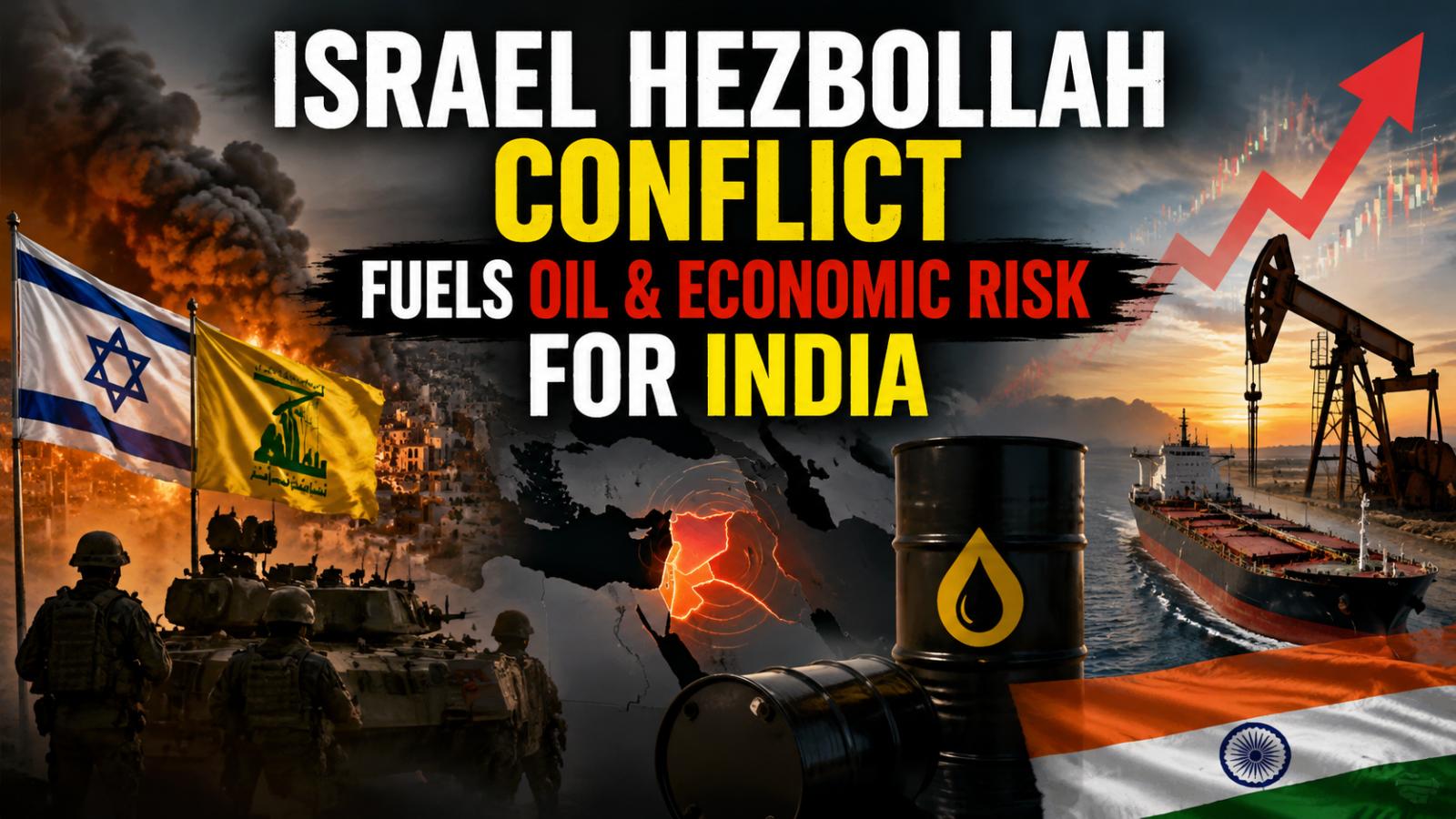
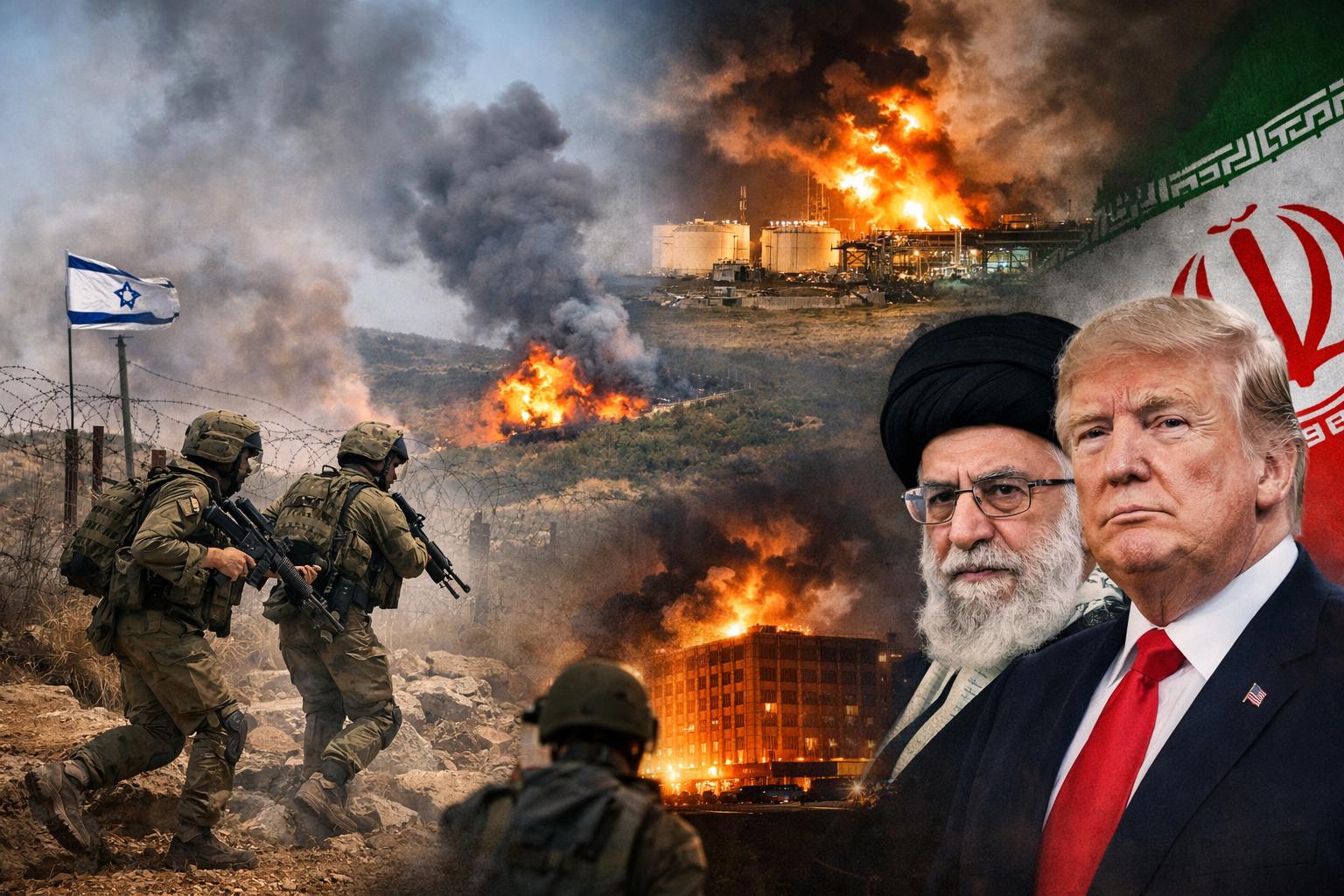
The renewed exchange of fire between Israeli forces and Hezbollah-linked positions in southern Lebanon has again drawn attention to an already fragile regional security environment. While both sides continue to frame their actions as targeted and defensive, the situation is increasingly being viewed through a wider geopolitical lens, especially by energy markets and trade-dependent economies.
Even limited escalation in this corridor tends to trigger immediate risk recalibration in global markets, not because of direct supply disruption, but due to fear of spillover into wider West Asian conflict zones.
Oil markets react to uncertainty, not only disruption
Crude oil prices have remained sensitive to developments in the region, with traders closely tracking any sign of expansion beyond localized strikes. Brent crude has shown intermittent swings, reflecting how quickly sentiment shifts when geopolitical risks rise.
For import-heavy economies like India, the concern is not only about supply cuts but also price volatility. Even short-lived spikes increase import bills, widen trade deficits, and add pressure on domestic inflation through fuel and transport costs.
India remains heavily dependent on imported crude, leaving it exposed to external shocks that originate far from its own borders but quickly reach its economy through global pricing mechanisms.
Maritime chokepoints add another layer of risk
Beyond oil production zones, shipping routes remain a critical pressure point. The Strait of Hormuz continues to be one of the most strategically sensitive maritime corridors in the world, handling a large share of global crude movement.
Any perception of instability in nearby conflict zones tends to increase insurance premiums for tankers and freight operators. This raises shipping costs even when physical disruption does not occur.
For trade-dependent economies, the indirect cost of conflict often arrives faster than any actual supply shortage.
India’s broader exposure goes beyond energy
India’s stake in West Asian stability is not limited to crude imports. A large Indian workforce in Gulf countries supports billions in annual remittances, which play a steady role in foreign exchange stability.
At the same time, India maintains layered relationships across the region—energy partnerships with Gulf producers, strategic cooperation with Israel, and connectivity interests linked to Iran and regional ports.
This creates a complex policy environment where instability in one corridor can influence multiple economic and diplomatic channels simultaneously.
Long-term infrastructure plans face sensitivity risks
Large-scale trade and infrastructure initiatives involving West Asia, including proposed trans-regional connectivity corridors, depend heavily on stable political conditions. Projects linked to ports, energy routes, and logistics networks become vulnerable when security risks rise.
Even without direct damage, prolonged uncertainty tends to slow investment decisions, delay contracts, and increase financing costs for regional development projects.
Conclusion
The current Israel–Hezbollah exchange remains geographically contained, but its economic impact is far wider. Oil markets, shipping costs, remittance flows, and long-term trade planning all react quickly to signals of escalation.
For India and other import-dependent economies, the primary challenge is not direct involvement in the conflict but exposure to its ripple effects through energy pricing, logistics costs, and regional stability risks.
The renewed exchange of fire between Israeli forces and Hezbollah-linked positions in southern Lebanon has again drawn attention to an already fragile regional security environment. While both sides continue to frame their actions as targeted and defensive, the situation is increasingly being viewed through a wider geopolitical lens, especially by energy markets and trade-dependent economies.
Even limited escalation in this corridor tends to trigger immediate risk recalibration in global markets, not because of direct supply disruption, but due to fear of spillover into wider West Asian conflict zones.
Oil markets react to uncertainty, not only disruption
Crude oil prices have remained sensitive to developments in the region, with traders closely tracking any sign of expansion beyond localized strikes. Brent crude has shown intermittent swings, reflecting how quickly sentiment shifts when geopolitical risks rise.
For import-heavy economies like India, the concern is not only about supply cuts but also price volatility. Even short-lived spikes increase import bills, widen trade deficits, and add pressure on domestic inflation through fuel and transport costs.
India remains heavily dependent on imported crude, leaving it exposed to external shocks that originate far from its own borders but quickly reach its economy through global pricing mechanisms.
Maritime chokepoints add another layer of risk
Beyond oil production zones, shipping routes remain a critical pressure point. The Strait of Hormuz continues to be one of the most strategically sensitive maritime corridors in the world, handling a large share of global crude movement.
Any perception of instability in nearby conflict zones tends to increase insurance premiums for tankers and freight operators. This raises shipping costs even when physical disruption does not occur.
For trade-dependent economies, the indirect cost of conflict often arrives faster than any actual supply shortage.
India’s broader exposure goes beyond energy
India’s stake in West Asian stability is not limited to crude imports. A large Indian workforce in Gulf countries supports billions in annual remittances, which play a steady role in foreign exchange stability.
At the same time, India maintains layered relationships across the region—energy partnerships with Gulf producers, strategic cooperation with Israel, and connectivity interests linked to Iran and regional ports.
This creates a complex policy environment where instability in one corridor can influence multiple economic and diplomatic channels simultaneously.
Long-term infrastructure plans face sensitivity risks
Large-scale trade and infrastructure initiatives involving West Asia, including proposed trans-regional connectivity corridors, depend heavily on stable political conditions. Projects linked to ports, energy routes, and logistics networks become vulnerable when security risks rise.
Even without direct damage, prolonged uncertainty tends to slow investment decisions, delay contracts, and increase financing costs for regional development projects.
Conclusion
The current Israel–Hezbollah exchange remains geographically contained, but its economic impact is far wider. Oil markets, shipping costs, remittance flows, and long-term trade planning all react quickly to signals of escalation.
For India and other import-dependent economies, the primary challenge is not direct involvement in the conflict but exposure to its ripple effects through energy pricing, logistics costs, and regional stability risks.
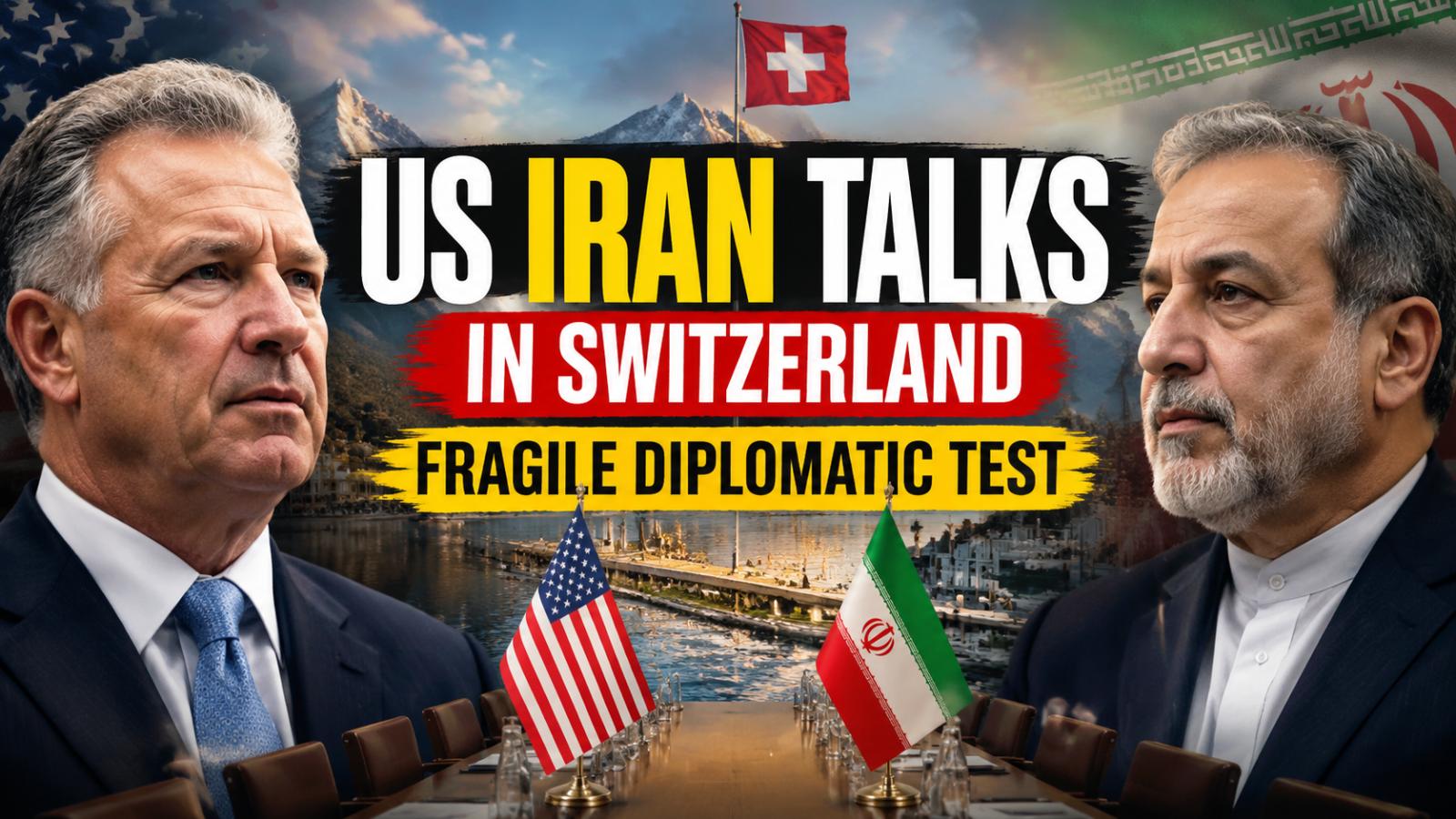
US Iran negotiations in Switzerland have entered a renewed phase, but the environment remains unstable as regional conflicts continue to shape the direction of talks. Diplomatic representatives from both sides are attempting to revive stalled communication lines, with mediation support from regional actors working behind the scenes to prevent another breakdown.
The discussions are being positioned as an attempt to rebuild trust after repeated interruptions, though expectations remai
US Iran negotiations in Switzerland have entered a renewed phase, but the environment remains unstable as regional conflicts continue to shape the direction of talks. Diplomatic representatives from both sides are attempting to revive stalled communication lines, with mediation support from regional actors working behind the scenes to prevent another breakdown.
The discussions are being positioned as an attempt to rebuild trust after repeated interruptions, though expectations remai
Date: May 2, 2026 | Time: 04:30 PM IST | Place: Southern Lebanon, Lebanon
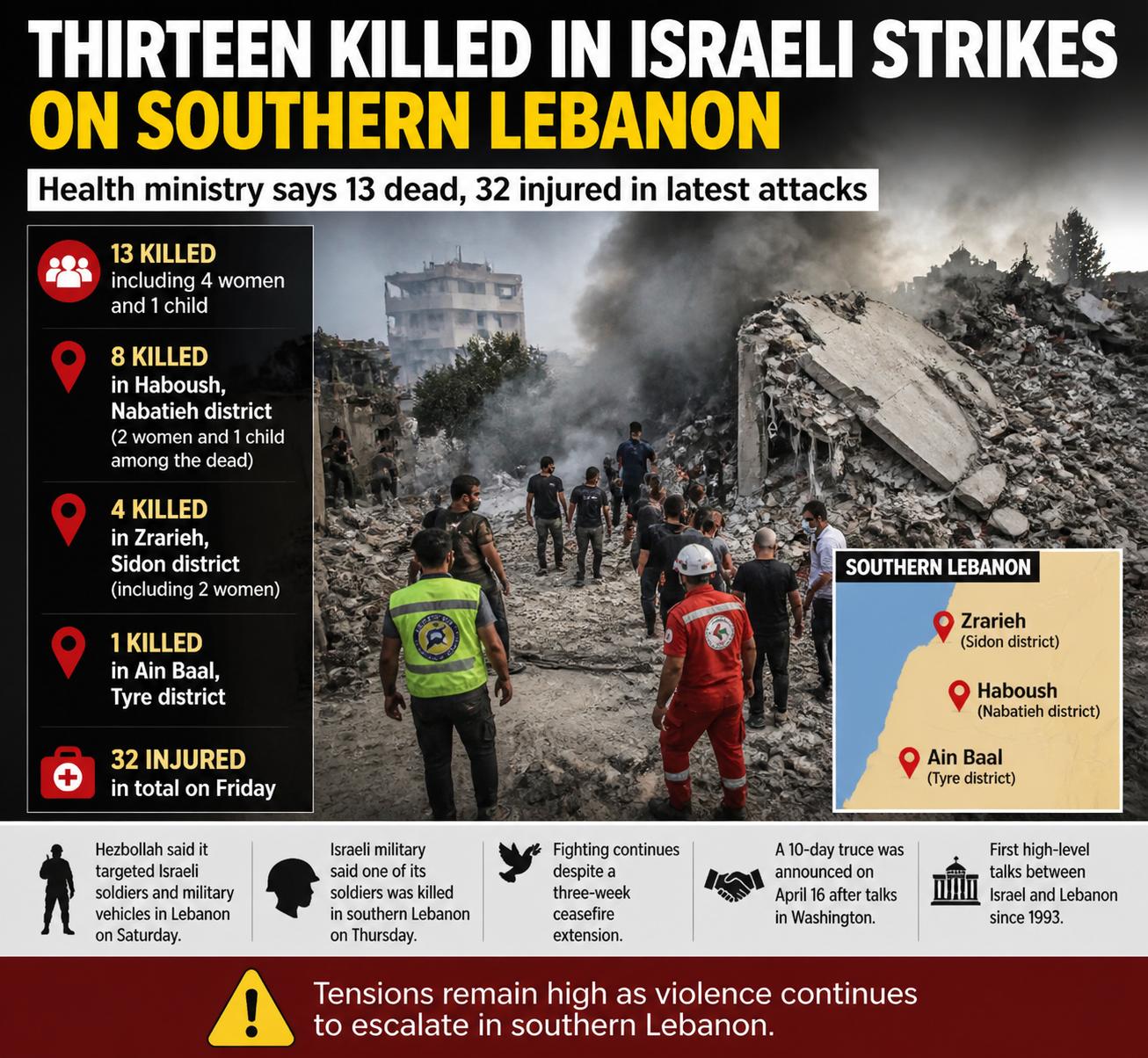
At least 13 people have been killed in Israeli airstrikes on southern Lebanon, according to the Lebanese Health Ministry. The airstrikes targeted multiple areas, with the most significant fatalities reported in Haboush, located in the Nabatieh district, where two women and a child were among the eight killed. The Israel Defense Forces (IDF) had issued an evacuation order for residents in these areas, but th
Date: May 2, 2026 | Time: 04:30 PM IST | Place: Southern Lebanon, Lebanon
At least 13 people have been killed in Israeli airstrikes on southern Lebanon, according to the Lebanese Health Ministry. The airstrikes targeted multiple areas, with the most significant fatalities reported in Haboush, located in the Nabatieh district, where two women and a child were among the eight killed. The Israel Defense Forces (IDF) had issued an evacuation order for residents in these areas, but th
Israel strikes Hezbollah targets after rocket fire from Lebanon as tensions persist despite a truce extension, while diplomatic efforts and US energy measures reflect widening regional impact.
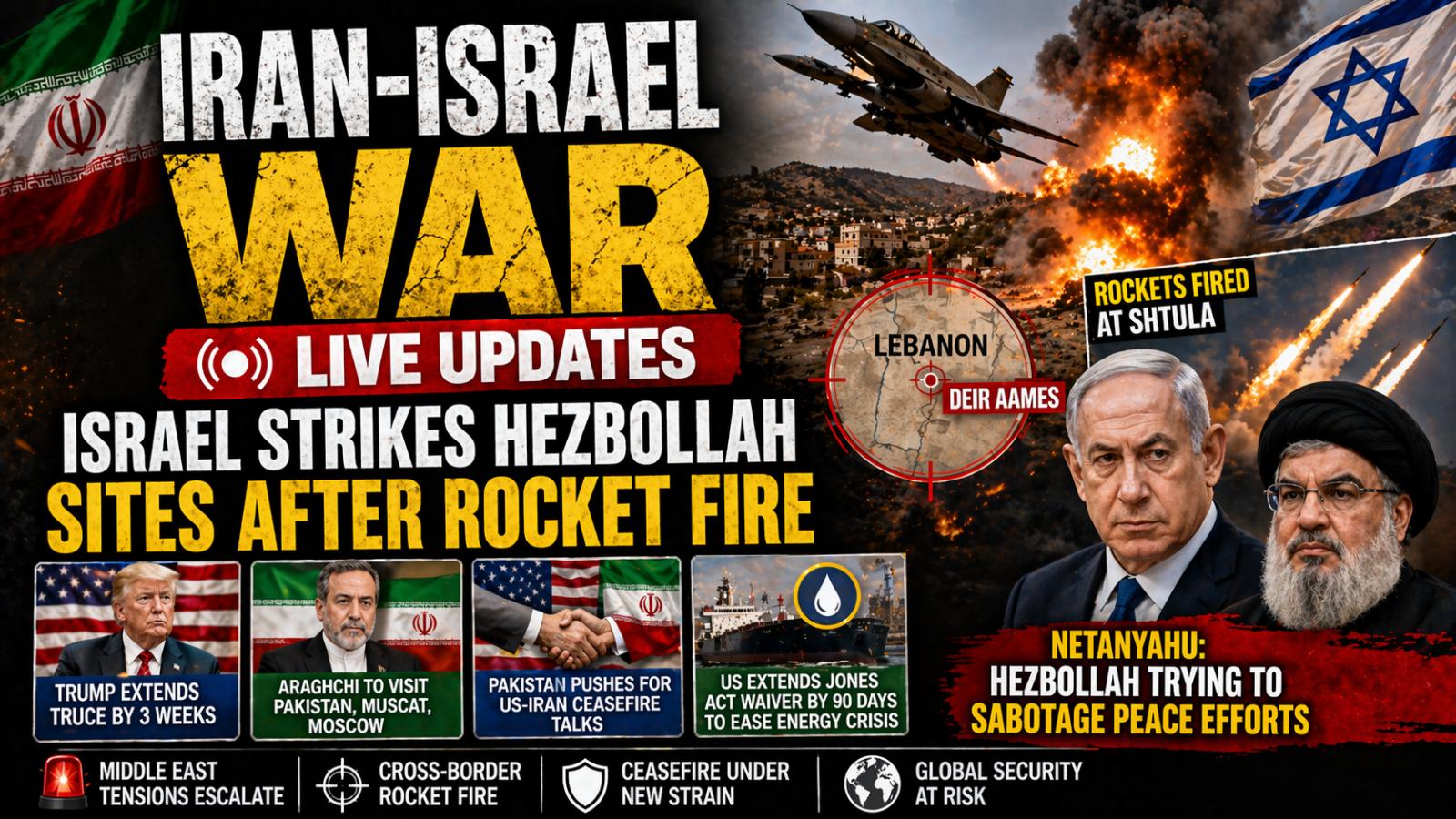
Iran-Israel war live updates: Israel strikes Hezbollah sites after rocket fire as regional tensions escalated on Friday, April 24, 2026, with the Israeli military confirming strikes on Hezbollah-linked locations in southern Lebanon following cross-border rocket launches.
The Israeli military stated that it targeted sites near the town of Deir Aames after rockets were fired toward the Israeli town of Shtula a day earlier. Deir Aames lies outside the designated border buffer zone that Israeli forces have continued to occupy even after a 10-day ceasefire agreement implemented the previous week. Earlier on Friday, April 24, 2026, the military issued evacuation warnings urging residents to leave the area before the strikes.
The renewed hostilities come despite diplomatic efforts to maintain calm. U.S. President Donald Trump announced on Thursday, April 23, 2026, a three-week extension of the Israel-Hezbollah truce. However, both sides have continued intermittent exchanges of fire, raising concerns about the durability of the ceasefire.
Israeli Prime Minister Benjamin Netanyahu accused Hezbollah of undermining peace efforts, stating on Friday, April 24, 2026, that the group was attempting to “sabotage” negotiations aimed at reaching a long-term agreement between Israel and Lebanon. His remarks marked his first public comments following the truce extension.
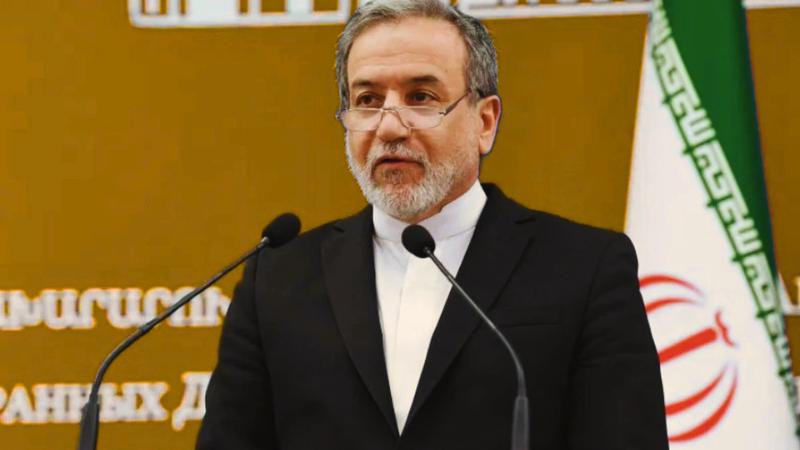
Meanwhile, diplomatic activity continued across the region. Iranian Foreign Minister Abbas Araghchi said his upcoming visits to Islamabad, Muscat, and Moscow are intended to coordinate with regional partners and discuss evolving developments. While he did not directly address potential talks with the United States, officials in Pakistan have recently intensified efforts to facilitate renewed ceasefire negotiations between Washington and Tehran.
In Washington, the White House announced an extension of a waiver to the Jones Act by 90 days on Friday, April 24, 2026. The measure is designed to ease domestic energy supply pressures amid disruptions linked to the broader West Asia conflict. Officials said the extension would help maintain the flow of oil and natural gas within the United States by allowing greater flexibility in maritime transport.
The combination of military actions, diplomatic outreach, and economic measures underscores the widening impact of the conflict, with regional instability continuing to influence global security and energy markets.
Israel strikes Hezbollah targets after rocket fire from Lebanon as tensions persist despite a truce extension, while diplomatic efforts and US energy measures reflect widening regional impact.
Iran-Israel war live updates: Israel strikes Hezbollah sites after rocket fire as regional tensions escalated on Friday, April 24, 2026, with the Israeli military confirming strikes on Hezbollah-linked locations in southern Lebanon following cross-border rocket launches.
The Israeli military stated that it targeted sites near the town of Deir Aames after rockets were fired toward the Israeli town of Shtula a day earlier. Deir Aames lies outside the designated border buffer zone that Israeli forces have continued to occupy even after a 10-day ceasefire agreement implemented the previous week. Earlier on Friday, April 24, 2026, the military issued evacuation warnings urging residents to leave the area before the strikes.
The renewed hostilities come despite diplomatic efforts to maintain calm. U.S. President Donald Trump announced on Thursday, April 23, 2026, a three-week extension of the Israel-Hezbollah truce. However, both sides have continued intermittent exchanges of fire, raising concerns about the durability of the ceasefire.
Israeli Prime Minister Benjamin Netanyahu accused Hezbollah of undermining peace efforts, stating on Friday, April 24, 2026, that the group was attempting to “sabotage” negotiations aimed at reaching a long-term agreement between Israel and Lebanon. His remarks marked his first public comments following the truce extension.
Meanwhile, diplomatic activity continued across the region. Iranian Foreign Minister Abbas Araghchi said his upcoming visits to Islamabad, Muscat, and Moscow are intended to coordinate with regional partners and discuss evolving developments. While he did not directly address potential talks with the United States, officials in Pakistan have recently intensified efforts to facilitate renewed ceasefire negotiations between Washington and Tehran.
In Washington, the White House announced an extension of a waiver to the Jones Act by 90 days on Friday, April 24, 2026. The measure is designed to ease domestic energy supply pressures amid disruptions linked to the broader West Asia conflict. Officials said the extension would help maintain the flow of oil and natural gas within the United States by allowing greater flexibility in maritime transport.
The combination of military actions, diplomatic outreach, and economic measures underscores the widening impact of the conflict, with regional instability continuing to influence global security and energy markets.
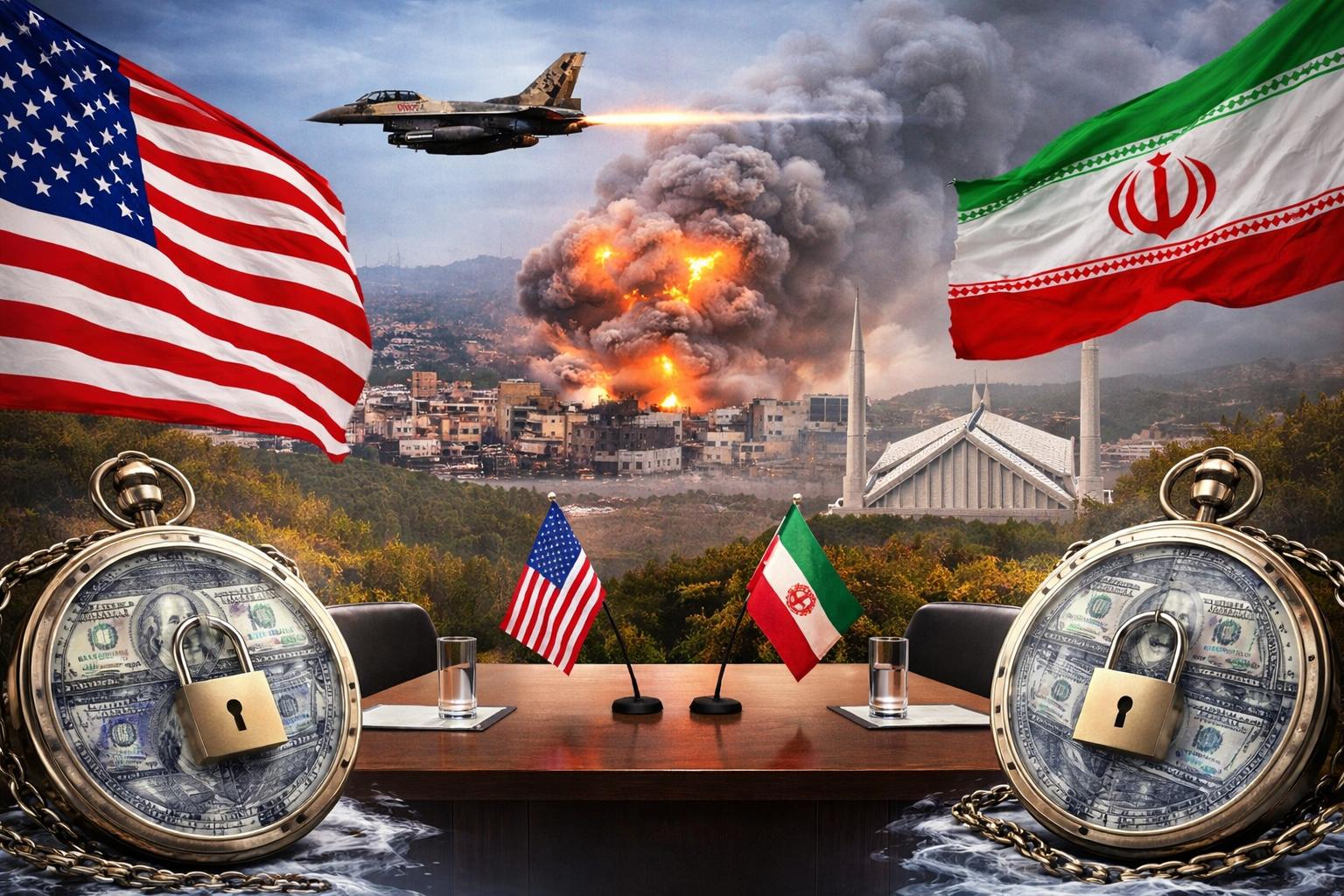
Delegations from the United States and Iran are scheduled to meet in Islamabad on Saturday, though the planned talks face significant uncertainty amid escalating regional tensions and unresolved preconditions set by Tehran. The negotiations come at a time when a fragile two-week ceasefire is already under strain, particularly due to renewed violence in Lebanon.
On Friday, April 10, 2026, Iran’s parliament speaker
Delegations from the United States and Iran are scheduled to meet in Islamabad on Saturday, though the planned talks face significant uncertainty amid escalating regional tensions and unresolved preconditions set by Tehran. The negotiations come at a time when a fragile two-week ceasefire is already under strain, particularly due to renewed violence in Lebanon.
On Friday, April 10, 2026, Iran’s parliament speaker
The Israeli military said it has killed approximately 1,000 Hezbollah operatives in Lebanon as hostilities intensify in parallel with escalating tensions involving Iran. The Israel Defense Forces (IDF) stated that the casualties include hundreds of members from Hezbollah’s elite Radwan Force, a key unit within the Iran-backed group.
The announcement was made as cross-border exchanges between Israel and Hezbollah continue to increase in frequency and intensity. According to the IDF, Hezbollah launched around 130 rockets into Israeli territory over the previous 24-hour period. Israeli defense systems intercepted the majority of the projectiles, while others landed in open areas. However, several rockets struck populated areas, causing property damage and leaving multiple individuals with minor injuries.
The developments were reported at 8:59 PM IST on Thursday, April 2, 2026. The situation reflects a broader escalation across the Middle East, with tensions extending beyond Israel and Lebanon.
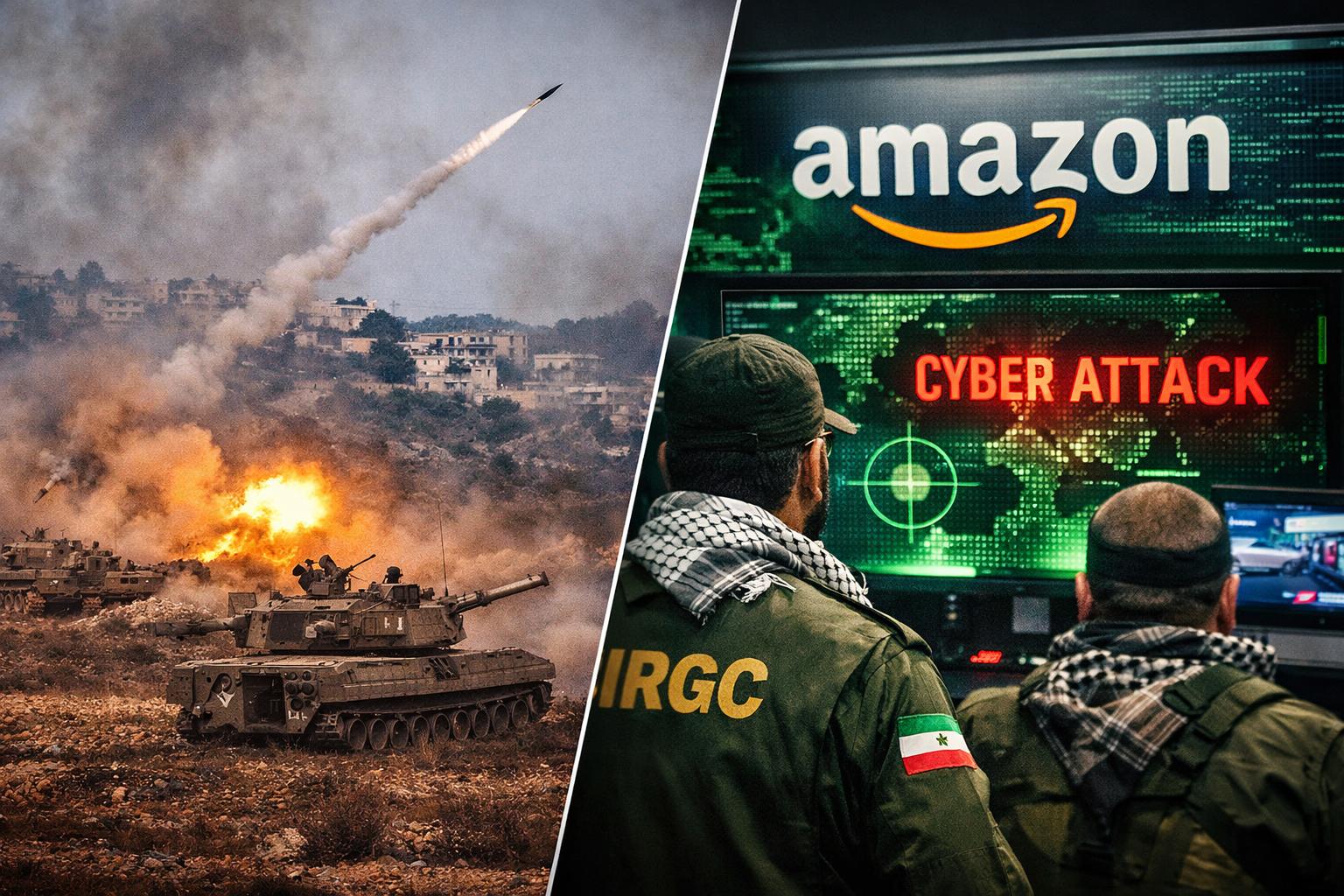
In a separate development, Iran’s Islamic Revolutionary Guard Corps (IRGC) claimed responsibility for an attack targeting an Amazon cloud computing facility in Bahrain. The claim was reported by Iranian state-affiliated media, which described the operation as part of the third phase of what it called the “90th wave” of Operation True Promise 4.
The reported cyber or infrastructure-related strike comes amid heightened rhetoric from Iran. On Wednesday, April 1, 2026, the IRGC warned that it could target multiple major international companies, including Microsoft, Google, Apple, Intel, IBM, Tesla, and Boeing, citing their regional presence.
These overlapping developments underscore the widening scope of the conflict, raising concerns about regional stability and the potential for broader international implications. While Israel continues military operations against Hezbollah, Iran’s actions and warnings suggest an expanding dimension that could involve both conventional and cyber domains.
The Israeli military said it has killed approximately 1,000 Hezbollah operatives in Lebanon as hostilities intensify in parallel with escalating tensions involving Iran. The Israel Defense Forces (IDF) stated that the casualties include hundreds of members from Hezbollah’s elite Radwan Force, a key unit within the Iran-backed group.
The announcement was made as cross-border exchanges between Israel and Hezbollah continue to increase in frequency and intensity. According to the IDF, Hezbollah launched around 130 rockets into Israeli territory over the previous 24-hour period. Israeli defense systems intercepted the majority of the projectiles, while others landed in open areas. However, several rockets struck populated areas, causing property damage and leaving multiple individuals with minor injuries.
The developments were reported at 8:59 PM IST on Thursday, April 2, 2026. The situation reflects a broader escalation across the Middle East, with tensions extending beyond Israel and Lebanon.
In a separate development, Iran’s Islamic Revolutionary Guard Corps (IRGC) claimed responsibility for an attack targeting an Amazon cloud computing facility in Bahrain. The claim was reported by Iranian state-affiliated media, which described the operation as part of the third phase of what it called the “90th wave” of Operation True Promise 4.
The reported cyber or infrastructure-related strike comes amid heightened rhetoric from Iran. On Wednesday, April 1, 2026, the IRGC warned that it could target multiple major international companies, including Microsoft, Google, Apple, Intel, IBM, Tesla, and Boeing, citing their regional presence.
These overlapping developments underscore the widening scope of the conflict, raising concerns about regional stability and the potential for broader international implications. While Israel continues military operations against Hezbollah, Iran’s actions and warnings suggest an expanding dimension that could involve both conventional and cyber domains.
The conflict in West Asia has entered its third week, with hostilities intensifying across multiple fronts and raising concerns about a broader regional escalation. Israeli President Isaac Herzog called on European nations to support Israel’s ongoing campaign against Hezbollah, as Israeli forces continued ground operations in southern Lebanon. The situation in Lebanon deteriorated further after Hezbollah launched attacks on Israel earlier this month, following the reported killing of Iran’s
The conflict in West Asia has entered its third week, with hostilities intensifying across multiple fronts and raising concerns about a broader regional escalation. Israeli President Isaac Herzog called on European nations to support Israel’s ongoing campaign against Hezbollah, as Israeli forces continued ground operations in southern Lebanon. The situation in Lebanon deteriorated further after Hezbollah launched attacks on Israel earlier this month, following the reported killing of Iran’s