







Statewide Kerala Protest After Nithin Raj Death Affects Buses, Patients And Students
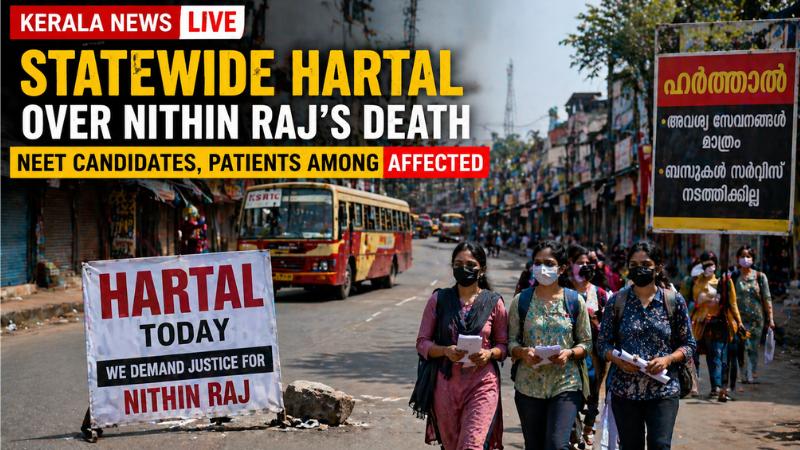
A statewide hartal called in Kerala on April 28, 2026, has significantly disrupted daily life, with public transport services coming to a near standstill and thousands of commuters stranded across the state. The protest was triggered by the death of Nithin Raj, which has sparked widespread outrage and led to demonstrations in multiple districts. According to reports, private buses, taxis, and auto-rickshaws largely stayed off the roads as protestors enforced the hartal. Shops, comme
Statewide Kerala Protest After Nithin Raj Death Affects Buses, Patients And Students
A statewide hartal called in Kerala on April 28, 2026, has significantly disrupted daily life, with public transport services coming to a near standstill and thousands of commuters stranded across the state. The protest was triggered by the death of Nithin Raj, which has sparked widespread outrage and led to demonstrations in multiple districts. According to reports, private buses, taxis, and auto-rickshaws largely stayed off the roads as protestors enforced the hartal. Shops, comme
Iran War Update: What Happened in the Minab School Strike and Why It Matters
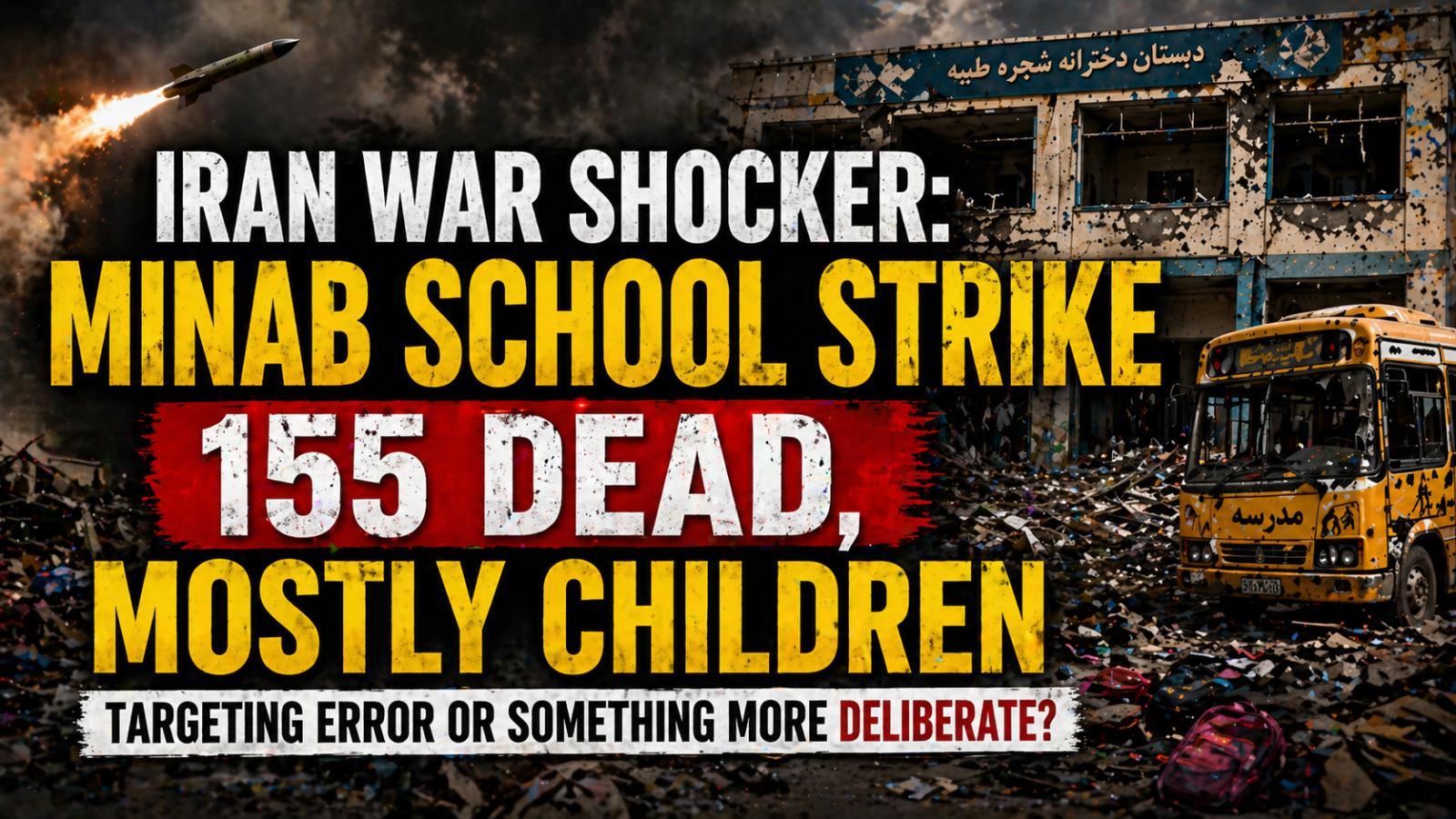
Iran has revised the death toll from the Minab school strike to 155, confirming it as the deadliest single incident in the ongoing conflict, now in its 59th day. Officials released a detailed breakdown indicating that most victims were children, alongside teachers and civilians connected to the school. The updated figure is lower than earlier estimates exceeding 175, though no formal explanation has been provided for the discrepancy. The strike occurred on February 28, the opening day of a coordinated military campaign. Two successive impacts hit the Shajareh Tayyebeh elementary school in Minab while classes were in session, a pattern described as a “double-tap” strike. Many of the children killed were between the ages of seven and twelve, amplifying global concern over the nature of the attack. Preliminary findings from a U.S. military review suggest the use of a Tomahawk cruise missile and indicate that the strike may have resulted from a targeting error. According to the investigation, outdated intelligence data misidentified the site as an active military location linked to a former Revolutionary Guards facility. Although the school had been separated from the base years earlier, the database used in targeting had not been updated accordingly. Analysts noted that automated systems processing this information may have contributed to the failure to recognize the location as a civilian site. Iranian officials have rejected the explanation, describing the incident as deliberate. The foreign minister characterized it as a calculated assault, citing the advanced precision capabilities attributed to modern military systems. The strike has since become a focal point in diplomatic discussions and ongoing ceasefire negotiations. The Pentagon has confirmed that a full investigation is still underway. As scrutiny continues, the Minab incident remains central to debates over accountability, intelligence reliability, and the risks associated with modern warfare technologies.
Iran War Update: What Happened in the Minab School Strike and Why It Matters
Iran has revised the death toll from the Minab school strike to 155, confirming it as the deadliest single incident in the ongoing conflict, now in its 59th day. Officials released a detailed breakdown indicating that most victims were children, alongside teachers and civilians connected to the school. The updated figure is lower than earlier estimates exceeding 175, though no formal explanation has been provided for the discrepancy. The strike occurred on February 28, the opening day of a coordinated military campaign. Two successive impacts hit the Shajareh Tayyebeh elementary school in Minab while classes were in session, a pattern described as a “double-tap” strike. Many of the children killed were between the ages of seven and twelve, amplifying global concern over the nature of the attack. Preliminary findings from a U.S. military review suggest the use of a Tomahawk cruise missile and indicate that the strike may have resulted from a targeting error. According to the investigation, outdated intelligence data misidentified the site as an active military location linked to a former Revolutionary Guards facility. Although the school had been separated from the base years earlier, the database used in targeting had not been updated accordingly. Analysts noted that automated systems processing this information may have contributed to the failure to recognize the location as a civilian site. Iranian officials have rejected the explanation, describing the incident as deliberate. The foreign minister characterized it as a calculated assault, citing the advanced precision capabilities attributed to modern military systems. The strike has since become a focal point in diplomatic discussions and ongoing ceasefire negotiations. The Pentagon has confirmed that a full investigation is still underway. As scrutiny continues, the Minab incident remains central to debates over accountability, intelligence reliability, and the risks associated with modern warfare technologies.
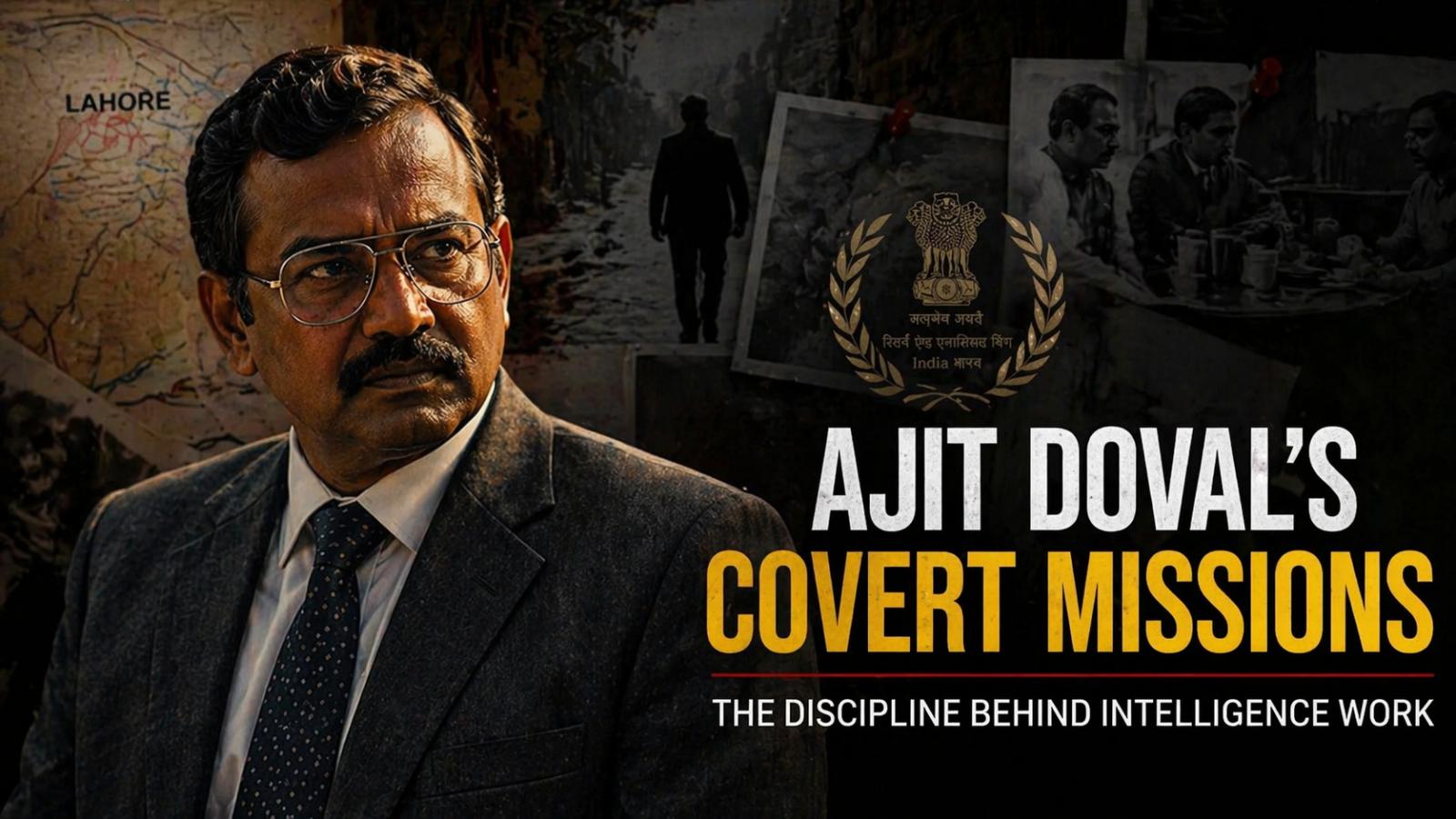
Ajit Doval’s covert operations reveal the discipline behind intelligence work
Ajit Doval’s reported deep-cover operations are widely regarded as a study in psychological resilience rather than physical confrontation. Operating within hostile environments, including extended periods in Pakistan, his work required a high degree of composure, adaptability, and continuous situational awareness. Public discussions often reference cities such as Lahore, though specific operational details remain classified. The available accounts suggest that Doval functioned under an assu
Ajit Doval’s covert operations reveal the discipline behind intelligence work
Ajit Doval’s reported deep-cover operations are widely regarded as a study in psychological resilience rather than physical confrontation. Operating within hostile environments, including extended periods in Pakistan, his work required a high degree of composure, adaptability, and continuous situational awareness. Public discussions often reference cities such as Lahore, though specific operational details remain classified. The available accounts suggest that Doval functioned under an assu

Kavitha Launches TRS Party Aiming Inclusive Development In Telangana
Kavitha launches Telangana Rashtra Sena, marking a new political chapter in Telangana after her exit from BRS. Former Bharat Rashtra Samithi (BRS) leader Kalvakuntla Kavitha, daughter of former Telangana Chief Minister K Chandrasekhar Rao (KCR), officially launched her own political party, Telangana Rashtra Sena (TRS), on Saturday, April 25, 2026. This development comes months after she was suspended from the BRS over alleged anti-party activities, marking a major
Kavitha Launches TRS Party Aiming Inclusive Development In Telangana
Kavitha launches Telangana Rashtra Sena, marking a new political chapter in Telangana after her exit from BRS. Former Bharat Rashtra Samithi (BRS) leader Kalvakuntla Kavitha, daughter of former Telangana Chief Minister K Chandrasekhar Rao (KCR), officially launched her own political party, Telangana Rashtra Sena (TRS), on Saturday, April 25, 2026. This development comes months after she was suspended from the BRS over alleged anti-party activities, marking a major

Israel deployed Iron Dome to UAE during Iran conflict, report says
Israel deployed Iron Dome to UAE during Iran conflict, report says, underscoring a previously undisclosed military move that signals deepening defense cooperation between the two countries during heightened tensions in the Gulf. According to a report citing U.S. and Israeli officials, the deployment occurred in the early phase of the war that began on Friday, February 28, 2026, when the United Arab Emirate
Israel deployed Iron Dome to UAE during Iran conflict, report says
Israel deployed Iron Dome to UAE during Iran conflict, report says, underscoring a previously undisclosed military move that signals deepening defense cooperation between the two countries during heightened tensions in the Gulf. According to a report citing U.S. and Israeli officials, the deployment occurred in the early phase of the war that began on Friday, February 28, 2026, when the United Arab Emirate

Trump Cites Shooting to Push $400M White House Ballroom Plan
President Donald Trump has pointed to the recent shooting incident at the White House Correspondents’ Dinner as justification for his proposed $400 million ballroom project at the White House, describing it as essential for national security. In a statement shared on social media, Trump argued that the event underscored longstanding concerns about the safety of large gatherings involving senior government officials. According to the president, past administrations have recognized the need for a secure, large-scale event space within the White House complex. He claimed that the proposed ballroom would address vulnerabilities exposed by the recent incident, stating that such an event might have been prevented with enhanced security infrastructure. The project, however, remains under legal scrutiny, with ongoing challenges delaying its progress. The proposal outlines a 22,000-square-foot facility designed to host major events, alongside a reinforced structure featuring advanced security elements. Plans reportedly include a fortified roof, blast-resistant materials, and an expansion of the existing Presidential Emergency Operations Center beneath the site. The administration has described the project as a strategic investment in long-term security. The shooting incident that prompted renewed attention to the plan occurred during a high-profile event attended by government officials. Security personnel responded quickly, escorting attendees, including the president and senior leaders, to safety. Authorities later confirmed that the suspect, identified as Cole Tomas Allen, acted alone and was taken into custody at the scene. Investigators continue to examine the motive behind the attack, noting that the suspect had no prior criminal record. While officials have not confirmed specific details about intent, the case remains under active review. The incident has reignited debate over security measures at major political events, even as questions persist about the timing and feasibility of the proposed ballroom project.
Trump Cites Shooting to Push $400M White House Ballroom Plan
President Donald Trump has pointed to the recent shooting incident at the White House Correspondents’ Dinner as justification for his proposed $400 million ballroom project at the White House, describing it as essential for national security. In a statement shared on social media, Trump argued that the event underscored longstanding concerns about the safety of large gatherings involving senior government officials. According to the president, past administrations have recognized the need for a secure, large-scale event space within the White House complex. He claimed that the proposed ballroom would address vulnerabilities exposed by the recent incident, stating that such an event might have been prevented with enhanced security infrastructure. The project, however, remains under legal scrutiny, with ongoing challenges delaying its progress. The proposal outlines a 22,000-square-foot facility designed to host major events, alongside a reinforced structure featuring advanced security elements. Plans reportedly include a fortified roof, blast-resistant materials, and an expansion of the existing Presidential Emergency Operations Center beneath the site. The administration has described the project as a strategic investment in long-term security. The shooting incident that prompted renewed attention to the plan occurred during a high-profile event attended by government officials. Security personnel responded quickly, escorting attendees, including the president and senior leaders, to safety. Authorities later confirmed that the suspect, identified as Cole Tomas Allen, acted alone and was taken into custody at the scene. Investigators continue to examine the motive behind the attack, noting that the suspect had no prior criminal record. While officials have not confirmed specific details about intent, the case remains under active review. The incident has reignited debate over security measures at major political events, even as questions persist about the timing and feasibility of the proposed ballroom project.

US envoys to visit Pakistan for renewed Iran talks amid ongoing tensions
After several days of diplomatic deadlock, the United States has confirmed that senior envoys Steve Witkoff and Jared Kushner will travel to Pakistan for a fresh round of negotiations with Iran, signaling a renewed effort to address escalating tensions between the two nations. The visit is scheduled for Saturday and follows Iran’s request for direct, in-person discussions. White House Press Secretary Karoline Leavitt stated that the move comes after Iran reached out for dialogue, aligning with earlier calls from US leadership to reopen communication channels. She emphasized that the envoys will assess the situation on the ground and report back to President Donald Trump and Vice President JD Vance, while additional officials remain on standby if required. The upcoming talks mark the second round of discussions in Pakistan, following initial meetings held earlier this month. However, notable figures such as Vice President Vance and Iranian parliamentary leader Mohammad Bagher Ghalibaf, who were involved previously, will not participate in this phase. Their absence highlights a shift in the structure of the negotiations. Iran’s Foreign Minister Abbas Araghchi recently announced a regional diplomatic tour that includes Pakistan, Oman, and Russia. His stated objective is to strengthen coordination with key partners on bilateral and regional issues, underlining Iran’s strategic engagement with neighboring countries during a period of heightened geopolitical tension. What are the main sticking points in the talks? The primary disagreements revolve around Iran’s nuclear program and control over the Strait of Hormuz. Iran has insisted it will not proceed with negotiations unless the United States lifts its blockade in the strategic waterway. In contrast, the US is demanding verifiable guarantees that Iran will halt its nuclear ambitions and ease its own restrictions in the region. At a recent Pentagon briefing, US Defense Secretary Pete Hegseth reiterated that the United States is not under pressure to finalize an agreement quickly. He indicated that Washington is prepared for prolonged negotiations, while also stressing that Iran has an opportunity to secure a favorable and pragmatic deal if it chooses to engage constructively. The renewed diplomatic effort in Pakistan reflects a cautious but significant step toward resolving one of the most critical international disputes, with both sides maintaining firm positions as negotiations resume.
US envoys to visit Pakistan for renewed Iran talks amid ongoing tensions
After several days of diplomatic deadlock, the United States has confirmed that senior envoys Steve Witkoff and Jared Kushner will travel to Pakistan for a fresh round of negotiations with Iran, signaling a renewed effort to address escalating tensions between the two nations. The visit is scheduled for Saturday and follows Iran’s request for direct, in-person discussions. White House Press Secretary Karoline Leavitt stated that the move comes after Iran reached out for dialogue, aligning with earlier calls from US leadership to reopen communication channels. She emphasized that the envoys will assess the situation on the ground and report back to President Donald Trump and Vice President JD Vance, while additional officials remain on standby if required. The upcoming talks mark the second round of discussions in Pakistan, following initial meetings held earlier this month. However, notable figures such as Vice President Vance and Iranian parliamentary leader Mohammad Bagher Ghalibaf, who were involved previously, will not participate in this phase. Their absence highlights a shift in the structure of the negotiations. Iran’s Foreign Minister Abbas Araghchi recently announced a regional diplomatic tour that includes Pakistan, Oman, and Russia. His stated objective is to strengthen coordination with key partners on bilateral and regional issues, underlining Iran’s strategic engagement with neighboring countries during a period of heightened geopolitical tension. What are the main sticking points in the talks? The primary disagreements revolve around Iran’s nuclear program and control over the Strait of Hormuz. Iran has insisted it will not proceed with negotiations unless the United States lifts its blockade in the strategic waterway. In contrast, the US is demanding verifiable guarantees that Iran will halt its nuclear ambitions and ease its own restrictions in the region. At a recent Pentagon briefing, US Defense Secretary Pete Hegseth reiterated that the United States is not under pressure to finalize an agreement quickly. He indicated that Washington is prepared for prolonged negotiations, while also stressing that Iran has an opportunity to secure a favorable and pragmatic deal if it chooses to engage constructively. The renewed diplomatic effort in Pakistan reflects a cautious but significant step toward resolving one of the most critical international disputes, with both sides maintaining firm positions as negotiations resume.

Kerala Heatwave Alert: Orange Warning In 3 Districts, Schools Closed Amid Rising Heat
Kerala is currently facing a sharp rise in temperatures, prompting authorities to issue an orange alert in three districts—Kollam, Thrissur, and Palakkad—on April 24, 2026, at around 09:00 AM IST. The warning by the India Meteorological Department indicates that temperatures are likely to remain significantly above normal, increasing the risk of heat-related illnesses such as dehydration, heat exhaustion, and heatstroke. The sudden spike in heat has been linked to dry weather conditions and reduced cloud cover, making the situation more intense across these regions. In response, district administrations have declared holidays for educational institutions to protect students from extreme heat exposure during peak hours. Children are among the most vulnerable groups, and this precautionary move aims to ensure their safety. Authorities have also advised the public to avoid stepping out between 11 AM and 3 PM, when temperatures are at their highest, and to stay hydrated by consuming adequate fluids. Palakkad, which is already known for higher temperatures, is expected to experience more severe heat conditions, while Kollam and Thrissur are also witnessing unusual temperature spikes. Health departments have issued advisories urging people to wear light clothing, avoid strenuous activities, and recognize early symptoms of heat stress such as dizziness and fatigue. Hospitals and health centers have been put on alert to handle potential cases. Local bodies have been directed to ensure the availability of drinking water in public places, while employers are encouraged to provide shaded rest areas for outdoor workers. With temperatures continuing to rise, authorities are closely monitoring the situation and may extend safety measures if needed.
Kerala Heatwave Alert: Orange Warning In 3 Districts, Schools Closed Amid Rising Heat
Kerala is currently facing a sharp rise in temperatures, prompting authorities to issue an orange alert in three districts—Kollam, Thrissur, and Palakkad—on April 24, 2026, at around 09:00 AM IST. The warning by the India Meteorological Department indicates that temperatures are likely to remain significantly above normal, increasing the risk of heat-related illnesses such as dehydration, heat exhaustion, and heatstroke. The sudden spike in heat has been linked to dry weather conditions and reduced cloud cover, making the situation more intense across these regions. In response, district administrations have declared holidays for educational institutions to protect students from extreme heat exposure during peak hours. Children are among the most vulnerable groups, and this precautionary move aims to ensure their safety. Authorities have also advised the public to avoid stepping out between 11 AM and 3 PM, when temperatures are at their highest, and to stay hydrated by consuming adequate fluids. Palakkad, which is already known for higher temperatures, is expected to experience more severe heat conditions, while Kollam and Thrissur are also witnessing unusual temperature spikes. Health departments have issued advisories urging people to wear light clothing, avoid strenuous activities, and recognize early symptoms of heat stress such as dizziness and fatigue. Hospitals and health centers have been put on alert to handle potential cases. Local bodies have been directed to ensure the availability of drinking water in public places, while employers are encouraged to provide shaded rest areas for outdoor workers. With temperatures continuing to rise, authorities are closely monitoring the situation and may extend safety measures if needed.

TCS enters broader discussion on workplace conduct and women’s treatment in India
India’s reverence for goddesses contrasts with rising concerns over women’s safety, workplace conduct, and equality, as discussions around TCS highlight broader systemic and cultural gaps A growing public conversation in India is highlighting a stark contrast between longstanding cultural values and contemporary realities surrounding the treatment of women. In a country where the Earth is often revered as a mother figure and rivers such as the Ganges are consid
TCS enters broader discussion on workplace conduct and women’s treatment in India
India’s reverence for goddesses contrasts with rising concerns over women’s safety, workplace conduct, and equality, as discussions around TCS highlight broader systemic and cultural gaps A growing public conversation in India is highlighting a stark contrast between longstanding cultural values and contemporary realities surrounding the treatment of women. In a country where the Earth is often revered as a mother figure and rivers such as the Ganges are consid
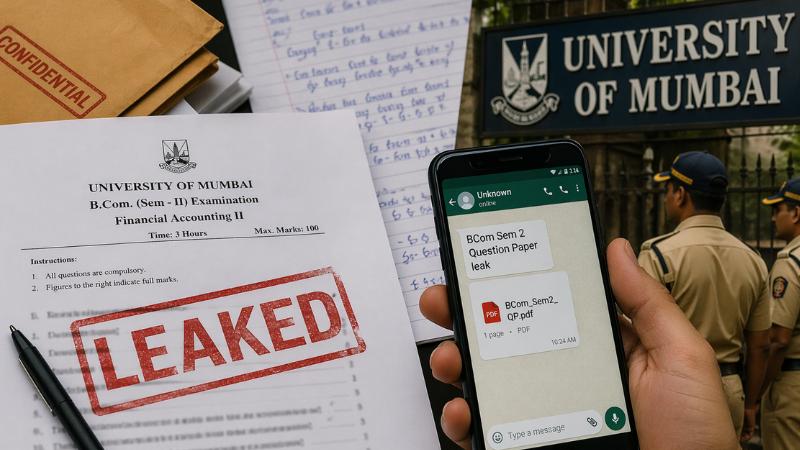
Mumbai BCom Question Paper Leak: Authorities Trace Source
The University of Mumbai has launched an inquiry into the alleged leak of three question papers from its third-year BCom examinations conducted between April 10 and 15. University officials confirmed that the investigation is ongoing and details are being kept confidential. They stated that strict action will be taken in accordance with rules if any individual is found guilty of involvement in the leak. The issue came to light after students approached the Akhil Bharatiya Vidyarthi
Mumbai BCom Question Paper Leak: Authorities Trace Source
The University of Mumbai has launched an inquiry into the alleged leak of three question papers from its third-year BCom examinations conducted between April 10 and 15. University officials confirmed that the investigation is ongoing and details are being kept confidential. They stated that strict action will be taken in accordance with rules if any individual is found guilty of involvement in the leak. The issue came to light after students approached the Akhil Bharatiya Vidyarthi
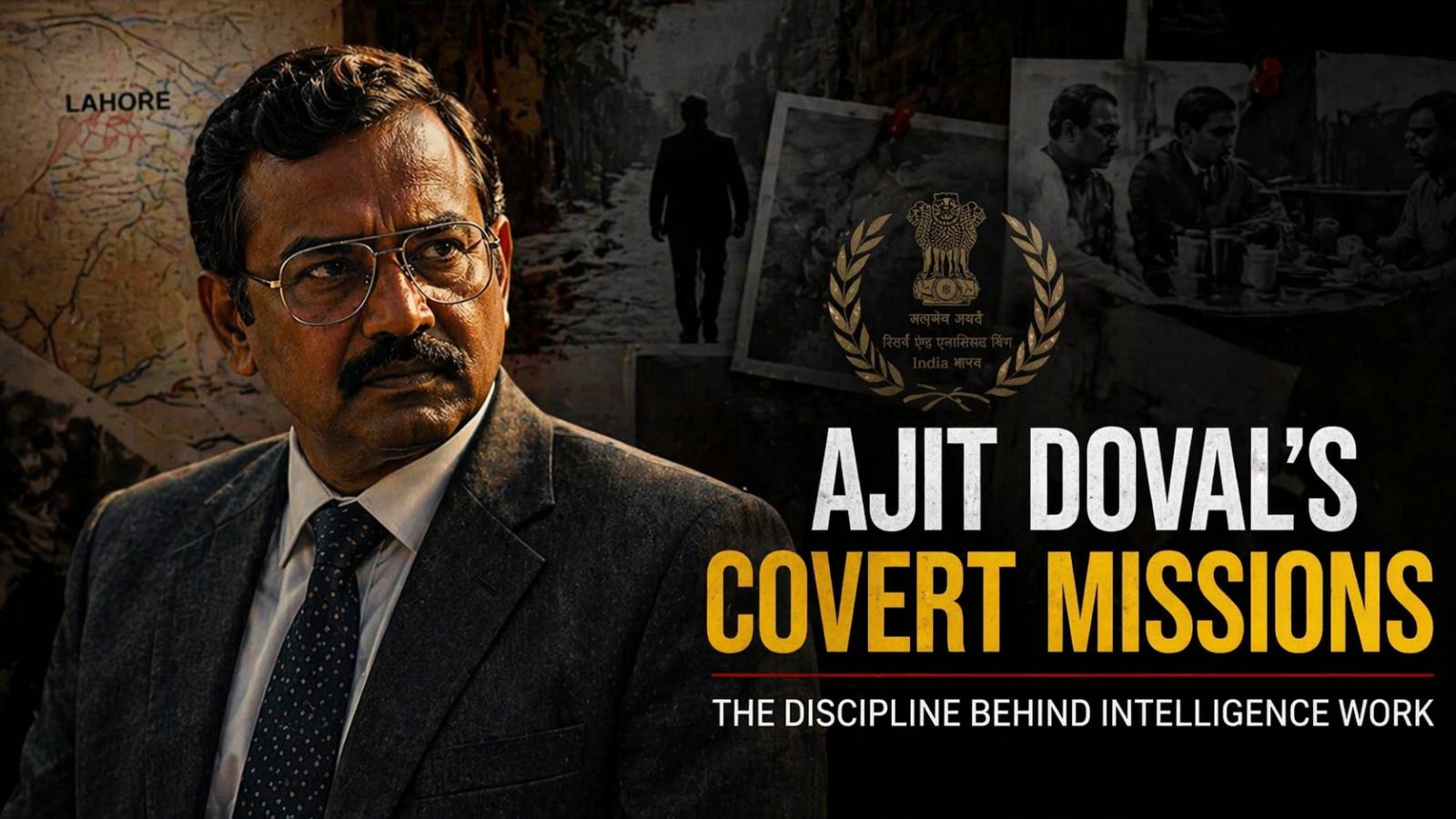
Ajit Doval’s covert operations reveal the discipline behind intelligence work
Ajit Doval’s reported deep-cover operations are widely regarded as a study in psychological resilience rather than physical confrontation. Operating within hostile environments, including extended periods in Pakistan, his work required a high degree of composure, adaptability, and continuous situational awareness. Public discussions often reference cities such as Lahore, though specific operational details remain classified. The available accounts suggest that Doval functioned under an assu
Ajit Doval’s covert operations reveal the discipline behind intelligence work
Ajit Doval’s reported deep-cover operations are widely regarded as a study in psychological resilience rather than physical confrontation. Operating within hostile environments, including extended periods in Pakistan, his work required a high degree of composure, adaptability, and continuous situational awareness. Public discussions often reference cities such as Lahore, though specific operational details remain classified. The available accounts suggest that Doval functioned under an assu

UK hosts global talks on Hormuz security amid Iran-US tensions
Britain is hosting senior military planners from more than 30 countries at the UK Permanent Joint Headquarters for high-level discussions on securing the Strait of Hormuz, a critical global oil transit route. The two-day meeting in northwest London, being held from April 22 to April 23, 2026, aims to advance a multinational maritime security initiative jointly led by the United Kingdom and France, following earlier consultations involving over 40 nations chaired by Keir Starmer and Emmanuel M
UK hosts global talks on Hormuz security amid Iran-US tensions
Britain is hosting senior military planners from more than 30 countries at the UK Permanent Joint Headquarters for high-level discussions on securing the Strait of Hormuz, a critical global oil transit route. The two-day meeting in northwest London, being held from April 22 to April 23, 2026, aims to advance a multinational maritime security initiative jointly led by the United Kingdom and France, following earlier consultations involving over 40 nations chaired by Keir Starmer and Emmanuel M

Mumbai University Takes Steps To Resolve Student Issues, Ensures Transparency
Mumbai University on 21st April 2026 evening clarified that it is addressing recent concerns related to its academic processes and student-related issues. The university administration stated that necessary steps are being taken to ensure smooth functioning, transparency, and timely resolution of grievances raised by students. Officials also assured that all decisions are being made in accordance with established guidelines and regulations. The university further highlighted its com
Mumbai University Takes Steps To Resolve Student Issues, Ensures Transparency
Mumbai University on 21st April 2026 evening clarified that it is addressing recent concerns related to its academic processes and student-related issues. The university administration stated that necessary steps are being taken to ensure smooth functioning, transparency, and timely resolution of grievances raised by students. Officials also assured that all decisions are being made in accordance with established guidelines and regulations. The university further highlighted its com
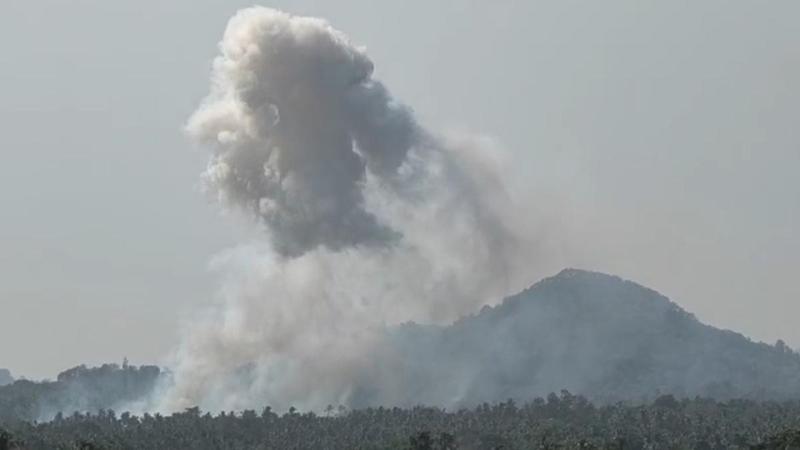
Kerala Fireworks Unit Blast Kills 13 Ahead Of Thrissur Pooram
A tragic explosion at a fireworks manufacturing unit in Mundathikode, located in Kerala, has claimed the lives of at least 13 people and left around 40 others injured, several of them in critical condition. The incident occurred just days before the grand celebrations of Thrissur Pooram, one of the most prominent temple festivals in the state, where elaborate fireworks displays are a major highlight. According to initial reports, the blast took place while workers were preparing fireworks for the upcoming festival. The explosion triggered a massive fire that quickly engulfed the unit, causing widespread destruction and panic in the surrounding area. Eyewitnesses described multiple blasts occurring in quick succession, indicating the presence of highly volatile materials stored inside the facility. Authorities rushed to the spot immediately after receiving alerts, with fire and rescue teams working tirelessly to control the flames and search for survivors. Due to the intensity of the explosion and the extent of the damage, drones were deployed to assess the situation from above and help locate victims trapped under debris. Emergency services shifted the injured to nearby hospitals, where doctors confirmed that several victims remain in critical condition. The incident has raised serious concerns about safety standards in fireworks manufacturing units, especially during peak festival seasons when production is at its highest. Officials have launched an investigation to determine the exact cause of the explosion and to check whether safety regulations were violated. Preliminary findings suggest that improper storage or handling of explosive materials may have contributed to the tragedy. Local authorities have also initiated a review of all licensed fireworks units in the region to prevent similar incidents in the future. Meanwhile, families of the victims are grappling with immense grief as the state mourns the loss of lives in what is being described as one of the deadliest industrial accidents in recent times.
Kerala Fireworks Unit Blast Kills 13 Ahead Of Thrissur Pooram
A tragic explosion at a fireworks manufacturing unit in Mundathikode, located in Kerala, has claimed the lives of at least 13 people and left around 40 others injured, several of them in critical condition. The incident occurred just days before the grand celebrations of Thrissur Pooram, one of the most prominent temple festivals in the state, where elaborate fireworks displays are a major highlight. According to initial reports, the blast took place while workers were preparing fireworks for the upcoming festival. The explosion triggered a massive fire that quickly engulfed the unit, causing widespread destruction and panic in the surrounding area. Eyewitnesses described multiple blasts occurring in quick succession, indicating the presence of highly volatile materials stored inside the facility. Authorities rushed to the spot immediately after receiving alerts, with fire and rescue teams working tirelessly to control the flames and search for survivors. Due to the intensity of the explosion and the extent of the damage, drones were deployed to assess the situation from above and help locate victims trapped under debris. Emergency services shifted the injured to nearby hospitals, where doctors confirmed that several victims remain in critical condition. The incident has raised serious concerns about safety standards in fireworks manufacturing units, especially during peak festival seasons when production is at its highest. Officials have launched an investigation to determine the exact cause of the explosion and to check whether safety regulations were violated. Preliminary findings suggest that improper storage or handling of explosive materials may have contributed to the tragedy. Local authorities have also initiated a review of all licensed fireworks units in the region to prevent similar incidents in the future. Meanwhile, families of the victims are grappling with immense grief as the state mourns the loss of lives in what is being described as one of the deadliest industrial accidents in recent times.
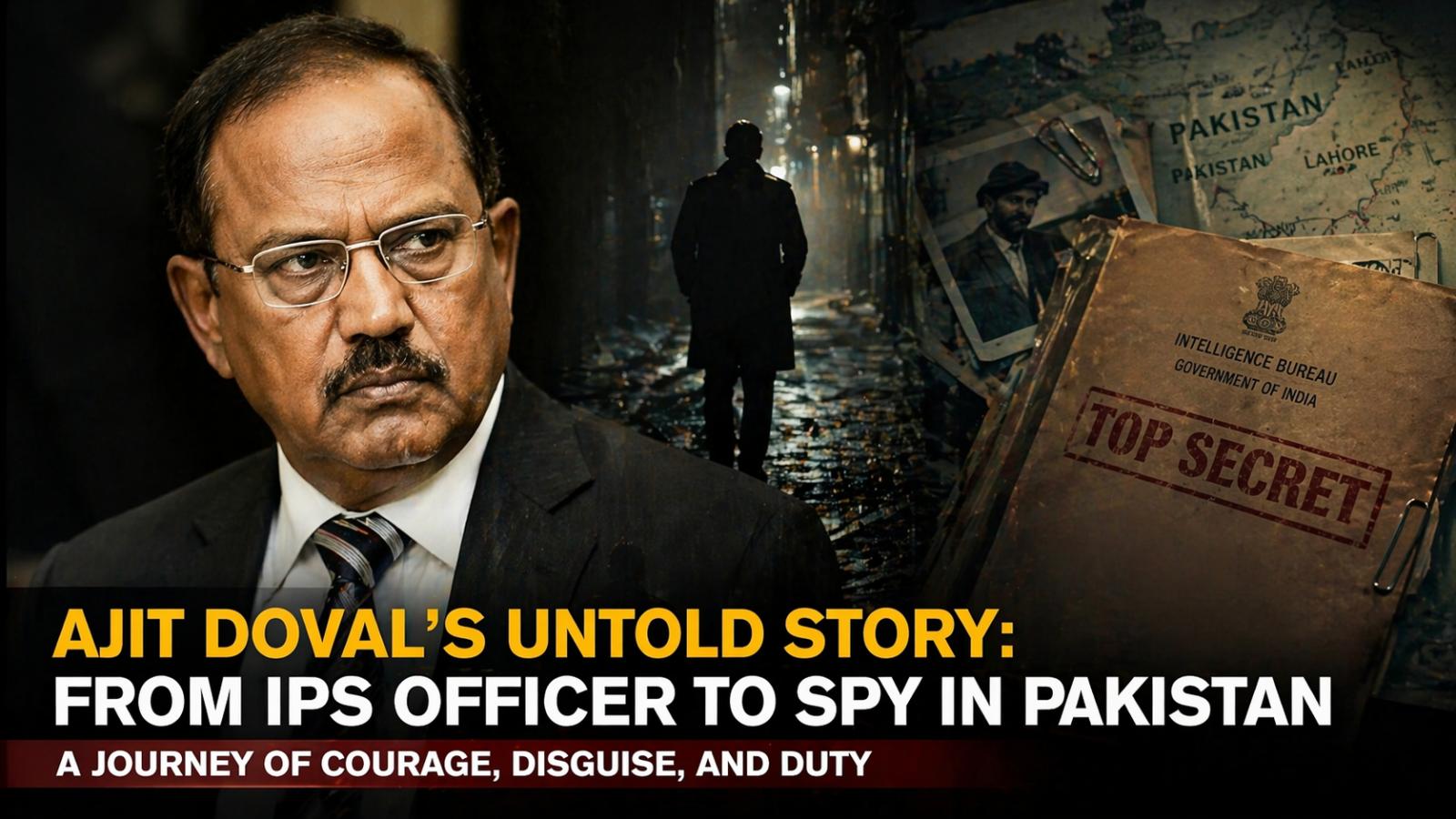
Ajit Doval’s journey from IPS officer to covert intelligence operative
Ajit Doval began his professional journey as an officer in the Indian Police Service in 1968, serving in the Kerala cadre. Over time, he developed a reputation for managing insurgency-related challenges and complex law-and-order situations, which required a combination of tactical decision-making and psychological resilience. Rather than following a conventional policing career, he later transitioned into the Intelligence Bureau, moving into a domain where operational visibility is minimal but strategic impact is significant. During the 1970s, Doval was reportedly assigned to a deep-cover intelligence mission in Pakistan, marking a critical phase in his career. The assignment extended over several years, demanding a sustained and disciplined approach to undercover work. To function effectively, he assumed a complete alternate identity, integrating into local society through language proficiency, cultural understanding, and adherence to social and religious practices. This level of immersion was essential for maintaining credibility and avoiding suspicion in a sensitive environment. Operating in a foreign and potentially hostile setting required the development of a consistent personal narrative and the ability to establish relationships without drawing attention. Such assignments are typically conducted without direct support, placing significant responsibility on the individual operative. The risks associated with exposure are severe, emphasizing the need for precision, restraint, and continuous situational awareness. Intelligence gathering in these conditions often involves incremental efforts, where accurate information is collected over time rather than through rapid or visible actions. The nature of such operations differs considerably from their portrayal in popular media. While films like Dhurandhar often depict espionage through fast-paced sequences and overt action, real-world intelligence work is characterized by patience, discretion, and long-term commitment. Doval’s reported experiences reflect the complexities of covert operations, where outcomes are rarely visible and details remain largely classified, underscoring the contrast between cinematic representation and operational reality.
Ajit Doval’s journey from IPS officer to covert intelligence operative
Ajit Doval began his professional journey as an officer in the Indian Police Service in 1968, serving in the Kerala cadre. Over time, he developed a reputation for managing insurgency-related challenges and complex law-and-order situations, which required a combination of tactical decision-making and psychological resilience. Rather than following a conventional policing career, he later transitioned into the Intelligence Bureau, moving into a domain where operational visibility is minimal but strategic impact is significant. During the 1970s, Doval was reportedly assigned to a deep-cover intelligence mission in Pakistan, marking a critical phase in his career. The assignment extended over several years, demanding a sustained and disciplined approach to undercover work. To function effectively, he assumed a complete alternate identity, integrating into local society through language proficiency, cultural understanding, and adherence to social and religious practices. This level of immersion was essential for maintaining credibility and avoiding suspicion in a sensitive environment. Operating in a foreign and potentially hostile setting required the development of a consistent personal narrative and the ability to establish relationships without drawing attention. Such assignments are typically conducted without direct support, placing significant responsibility on the individual operative. The risks associated with exposure are severe, emphasizing the need for precision, restraint, and continuous situational awareness. Intelligence gathering in these conditions often involves incremental efforts, where accurate information is collected over time rather than through rapid or visible actions. The nature of such operations differs considerably from their portrayal in popular media. While films like Dhurandhar often depict espionage through fast-paced sequences and overt action, real-world intelligence work is characterized by patience, discretion, and long-term commitment. Doval’s reported experiences reflect the complexities of covert operations, where outcomes are rarely visible and details remain largely classified, underscoring the contrast between cinematic representation and operational reality.
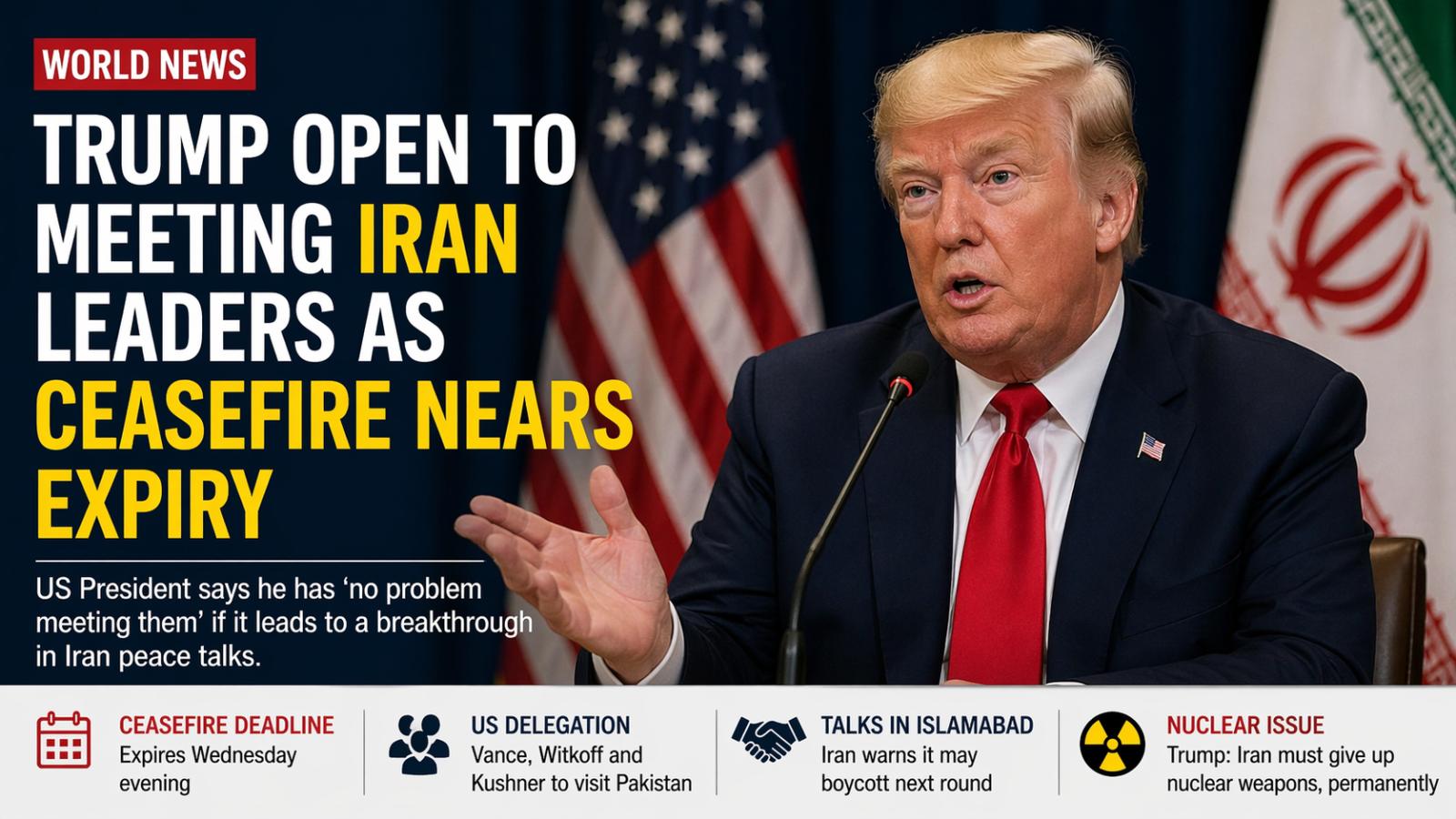
Trump proposes meeting Iran amid stalled peace talks and ceasefire deadline
United States President Donald Trump on Monday indicated his willingness to meet Iranian leaders directly, as diplomatic efforts to sustain a fragile ceasefire between Washington and Iran approach a critical deadline. The two-week ceasefire is set to expire on Wednesday evening, raising concerns that hosti
Trump proposes meeting Iran amid stalled peace talks and ceasefire deadline
United States President Donald Trump on Monday indicated his willingness to meet Iranian leaders directly, as diplomatic efforts to sustain a fragile ceasefire between Washington and Iran approach a critical deadline. The two-week ceasefire is set to expire on Wednesday evening, raising concerns that hosti

Gurugram Tragedy: American Express Manager Dies by Suicide Months After Marriage
A tragic incident in Gurugram has left residents shocked after a 33-year-old manager working with American Express was found dead in his apartment just four months after his marriage. The deceased, identified as Rishabh Dixit, was discovered in his flat at Pyramid Society in Sector 76 on Friday morning, Ap
Gurugram Tragedy: American Express Manager Dies by Suicide Months After Marriage
A tragic incident in Gurugram has left residents shocked after a 33-year-old manager working with American Express was found dead in his apartment just four months after his marriage. The deceased, identified as Rishabh Dixit, was discovered in his flat at Pyramid Society in Sector 76 on Friday morning, Ap

North Korea Fires Multiple Ballistic Missiles Toward Eastern Waters, South Korea Alerts
Tensions on the Korean Peninsula have escalated once again after North Korea launched multiple ballistic missiles toward its eastern waters, according to officials from South Korea. The launches, which were detected and tracked by South Korea’s military, have raised fresh concerns over regional security
North Korea Fires Multiple Ballistic Missiles Toward Eastern Waters, South Korea Alerts
Tensions on the Korean Peninsula have escalated once again after North Korea launched multiple ballistic missiles toward its eastern waters, according to officials from South Korea. The launches, which were detected and tracked by South Korea’s military, have raised fresh concerns over regional security

California refund debit cards near expiration leave millions unclaimed
Millions of debit cards issued under California’s Middle Class Tax Refund program in 2022 are set to expire on April 30, leaving hundreds of millions of dollars at risk of going unclaimed, according to state records. The looming deadline has raised concerns for consumers who may still have unused balances but face difficulties accessing their funds. Data from the California Franchise Tax Board shows that only 43% of the distributed cards have been fully used, while approximately 10% have never been activated. That translates to roughly 960,000 cards still holding an estimated $400 million that could revert to the state if not claimed before the expiration date. Some cardholders report unexpected issues when attempting to use their remaining balances. In certain cases, cards that initially worked were later declined despite having available funds. Attempts to withdraw money at banks have also been unsuccessful for some users, with reports indicating that accounts were inaccessible or cards had been deactivated without clear explanation. Consumers have described ongoing challenges in resolving these problems through customer service channels. Calls to the program’s card provider, Money Network, have sometimes resulted in long wait times or difficulty reaching assistance. The company’s parent, Fiserv, said in a statement that it is implementing program changes in accordance with California requirements and the Better for Families Act. State officials note that some cards may be deactivated or funds frozen due to fraud prevention measures. They advise cardholders experiencing issues to contact customer service directly during weekday business hours, from 8:00 AM to 5:00 PM. Assistance will only be available through April 30. With the deadline approaching, officials are urging residents to check for unused cards and confirm balances as soon as possible. Any remaining funds not accessed before expiration could be returned to state lawmakers, underscoring the importance of prompt action for those who may still be eligible to use the money.
California refund debit cards near expiration leave millions unclaimed
Millions of debit cards issued under California’s Middle Class Tax Refund program in 2022 are set to expire on April 30, leaving hundreds of millions of dollars at risk of going unclaimed, according to state records. The looming deadline has raised concerns for consumers who may still have unused balances but face difficulties accessing their funds. Data from the California Franchise Tax Board shows that only 43% of the distributed cards have been fully used, while approximately 10% have never been activated. That translates to roughly 960,000 cards still holding an estimated $400 million that could revert to the state if not claimed before the expiration date. Some cardholders report unexpected issues when attempting to use their remaining balances. In certain cases, cards that initially worked were later declined despite having available funds. Attempts to withdraw money at banks have also been unsuccessful for some users, with reports indicating that accounts were inaccessible or cards had been deactivated without clear explanation. Consumers have described ongoing challenges in resolving these problems through customer service channels. Calls to the program’s card provider, Money Network, have sometimes resulted in long wait times or difficulty reaching assistance. The company’s parent, Fiserv, said in a statement that it is implementing program changes in accordance with California requirements and the Better for Families Act. State officials note that some cards may be deactivated or funds frozen due to fraud prevention measures. They advise cardholders experiencing issues to contact customer service directly during weekday business hours, from 8:00 AM to 5:00 PM. Assistance will only be available through April 30. With the deadline approaching, officials are urging residents to check for unused cards and confirm balances as soon as possible. Any remaining funds not accessed before expiration could be returned to state lawmakers, underscoring the importance of prompt action for those who may still be eligible to use the money.

How Iran’s affordable drones are challenging America’s expensive interceptors
One of the most striking lessons from the war with Iran is how a relatively low-cost adversary has exposed vulnerabilities in U.S. defense strategy. Iran has demonstrated both a willingness to go on the offensive and an ability to leverage inexpensive drone technology at scale. These drones, often built with commercial-grade components, cost roughly $35,000 each—far less than the high-end interceptors used to destroy them. This imbalance has forced the United States and its allies to confront a new reality: modern warfare is no longer dominated solely by precision and sophistication, but also by affordability and volume. Cheap drones had already reshaped the battlefield in Ukraine, and Iran has now applied similar tactics in the Middle East, exploiting a long-standing gap in U.S. defense investments that favored fewer, more expensive systems over scalable solutions. Why are U.S. defenses struggling with cost efficiency? Because interceptors far exceed drone prices The financial mismatch is stark. In just the first six days of the conflict, the U.S. spent $11.3 billion, with estimates later rising to between $25 billion and $35 billion. A significant portion of that cost comes from interceptor missiles used to shoot down relatively inexpensive drones. Despite years of Pentagon focus on counter-drone capabilities, experts like Michael C. Horowitz note that there has been little urgency to scale affordable solutions. The result is a defense strategy where each engagement can cost far more than the threat itself—an unsustainable model in prolonged conflicts. How do air-based defenses work against drones? By using early detection and precision strikes—when available In an ideal scenario, airborne early warning systems detect drones hundreds of miles away. Fighter jets such as the F-16 Fighting Falcon are then deployed to intercept them using relatively cheaper rocket systems like APKWS II. This method is among the most cost-efficient, but it depends heavily on maintaining constant air patrols and intact detection systems. Iran has targeted these early warning assets, limiting their effectiveness and reducing the availability of this optimal defense approach. What role do ground and naval systems play? They offer range and reliability but at a steep price When air defenses are unavailable, the U.S. relies on ground- and sea-based systems. These include: Short-range systems like the Coyote, designed specifically for drones and relatively cost-effective—but in short supply. Naval destroyers using radar and SM-2 interceptors, which are powerful but expensive and designed for larger threats. The Patriot missile system, capable of intercepting drones from long distances using costly PAC-3 missiles. These systems were originally built to counter high-end threats like ballistic missiles, not swarms of cheap drones. As a result, they are often overkill—both technologically and financially—for the task at hand. Still, their use can be justified when defending high-value assets, such as billion-dollar radar installations or critical military infrastructure. What are the emerging solutions to counter drones? AI interceptors and lasers show promise but remain unproven New approaches aim to fix the cost imbalance. AI-powered interceptor drones, such as the Merops system developed by a company founded by Eric Schmidt, represent a potential shift toward cheaper, scalable defenses. These systems have been tested in collaboration with Ukrainian forces experienced in countering Iranian drones. The U.S. has already sent thousands of these units to the Middle East and begun training troops, though it remains unclear whether they have been deployed in combat. Meanwhile, the Pentagon has invested heavily in directed energy weapons—lasers that could cost as little as $3 per shot and reach targets up to 12 miles away. However, these systems have yet to be fielded in real-world combat. Why is ammunition depletion a growing concern? Because stockpiles may run out faster than they can be replaced Beyond cost, a more immediate concern is supply. Experts warn that interceptor stockpiles are being depleted at an alarming rate. As Tom Karako explains, the issue is not just affordability but availability: the U.S. risks running out of munitions before it can replenish them. This highlights a deeper strategic challenge. Modern conflicts—defined by mass-produced, low-cost threats—require not just advanced technology, but also sustainable production and scalable defense systems.
How Iran’s affordable drones are challenging America’s expensive interceptors
One of the most striking lessons from the war with Iran is how a relatively low-cost adversary has exposed vulnerabilities in U.S. defense strategy. Iran has demonstrated both a willingness to go on the offensive and an ability to leverage inexpensive drone technology at scale. These drones, often built with commercial-grade components, cost roughly $35,000 each—far less than the high-end interceptors used to destroy them. This imbalance has forced the United States and its allies to confront a new reality: modern warfare is no longer dominated solely by precision and sophistication, but also by affordability and volume. Cheap drones had already reshaped the battlefield in Ukraine, and Iran has now applied similar tactics in the Middle East, exploiting a long-standing gap in U.S. defense investments that favored fewer, more expensive systems over scalable solutions. Why are U.S. defenses struggling with cost efficiency? Because interceptors far exceed drone prices The financial mismatch is stark. In just the first six days of the conflict, the U.S. spent $11.3 billion, with estimates later rising to between $25 billion and $35 billion. A significant portion of that cost comes from interceptor missiles used to shoot down relatively inexpensive drones. Despite years of Pentagon focus on counter-drone capabilities, experts like Michael C. Horowitz note that there has been little urgency to scale affordable solutions. The result is a defense strategy where each engagement can cost far more than the threat itself—an unsustainable model in prolonged conflicts. How do air-based defenses work against drones? By using early detection and precision strikes—when available In an ideal scenario, airborne early warning systems detect drones hundreds of miles away. Fighter jets such as the F-16 Fighting Falcon are then deployed to intercept them using relatively cheaper rocket systems like APKWS II. This method is among the most cost-efficient, but it depends heavily on maintaining constant air patrols and intact detection systems. Iran has targeted these early warning assets, limiting their effectiveness and reducing the availability of this optimal defense approach. What role do ground and naval systems play? They offer range and reliability but at a steep price When air defenses are unavailable, the U.S. relies on ground- and sea-based systems. These include: Short-range systems like the Coyote, designed specifically for drones and relatively cost-effective—but in short supply. Naval destroyers using radar and SM-2 interceptors, which are powerful but expensive and designed for larger threats. The Patriot missile system, capable of intercepting drones from long distances using costly PAC-3 missiles. These systems were originally built to counter high-end threats like ballistic missiles, not swarms of cheap drones. As a result, they are often overkill—both technologically and financially—for the task at hand. Still, their use can be justified when defending high-value assets, such as billion-dollar radar installations or critical military infrastructure. What are the emerging solutions to counter drones? AI interceptors and lasers show promise but remain unproven New approaches aim to fix the cost imbalance. AI-powered interceptor drones, such as the Merops system developed by a company founded by Eric Schmidt, represent a potential shift toward cheaper, scalable defenses. These systems have been tested in collaboration with Ukrainian forces experienced in countering Iranian drones. The U.S. has already sent thousands of these units to the Middle East and begun training troops, though it remains unclear whether they have been deployed in combat. Meanwhile, the Pentagon has invested heavily in directed energy weapons—lasers that could cost as little as $3 per shot and reach targets up to 12 miles away. However, these systems have yet to be fielded in real-world combat. Why is ammunition depletion a growing concern? Because stockpiles may run out faster than they can be replaced Beyond cost, a more immediate concern is supply. Experts warn that interceptor stockpiles are being depleted at an alarming rate. As Tom Karako explains, the issue is not just affordability but availability: the U.S. risks running out of munitions before it can replenish them. This highlights a deeper strategic challenge. Modern conflicts—defined by mass-produced, low-cost threats—require not just advanced technology, but also sustainable production and scalable defense systems.