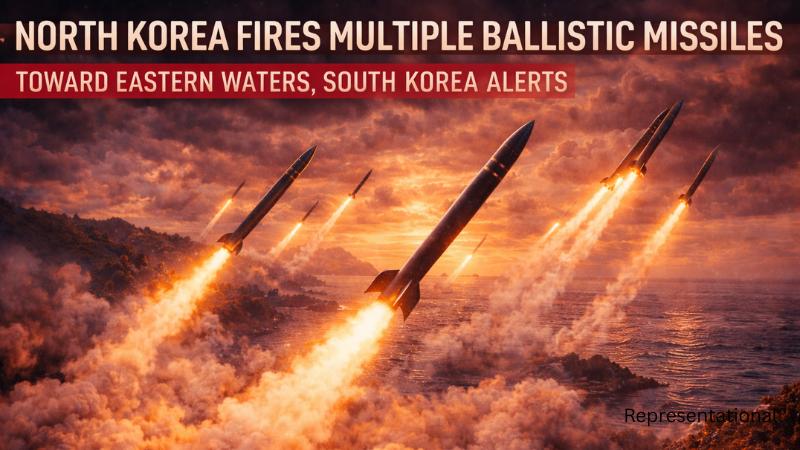
Tensions on the Korean Peninsula have escalated once again after North Korea launched multiple ballistic missiles toward its eastern waters, according to officials from South Korea. The launches, which were detected and tracked by South Korea’s military, have raised fresh concerns over regional security and the stability of East Asia. The missiles are believed to have been fired toward the sea east of the Korean Peninsula, often referred to as the East Sea or Sea of Japan, a region frequently used by North Korea for weapons testing.
South Korean authorities confirmed that their defense systems quickly identified the projectiles and monitored their trajectory. While the missiles did not appear to pose an immediate threat to populated areas, the launch has triggered heightened military readiness in the region. Officials emphasized that such actions violate international norms and continue to challenge efforts aimed at reducing tensions on the peninsula.
The move comes amid ongoing geopolitical friction, with North Korea continuing to pursue advancements in its missile and nuclear capabilities. Analysts believe that these launches may be part of a broader strategy to demonstrate military strength and send a message to regional rivals and global powers. The country has conducted several similar tests in recent years, often in response to joint military exercises or diplomatic developments involving the United States and its allies.
Regional Security Concerns Rise
The missile launches have drawn swift reactions from neighboring countries and the international community. South Korea has condemned the action, calling it a provocative step that undermines peace and stability. Military officials have increased surveillance and coordination with allies to ensure preparedness for any further developments.
Japan, which lies close to the trajectory of many such tests, has also expressed concern and is closely monitoring the situation. The repeated missile launches highlight the ongoing challenges faced by the region in maintaining security and preventing escalation. International bodies and governments have consistently urged North Korea to halt its weapons programs and engage in constructive dialogue, though progress has remained limited.
Global Implications And Next Steps
The latest launch underscores the persistent volatility of the Korean Peninsula and its impact on global geopolitics. While no immediate damage or casualties have been reported, the symbolic significance of these tests continues to influence diplomatic relations and defense strategies. Countries in the region are likely to strengthen cooperation and reassess their security frameworks in response to such developments.
Experts suggest that continued missile testing could complicate diplomatic efforts and increase the risk of miscalculation. The situation remains fluid, with governments keeping a close watch on North Korea’s next moves. As tensions simmer, the need for dialogue and de-escalation becomes more urgent to prevent further instability in one of the world’s most sensitive geopolitical regions.