Do Indian Students in the U.S. Have Insurance?
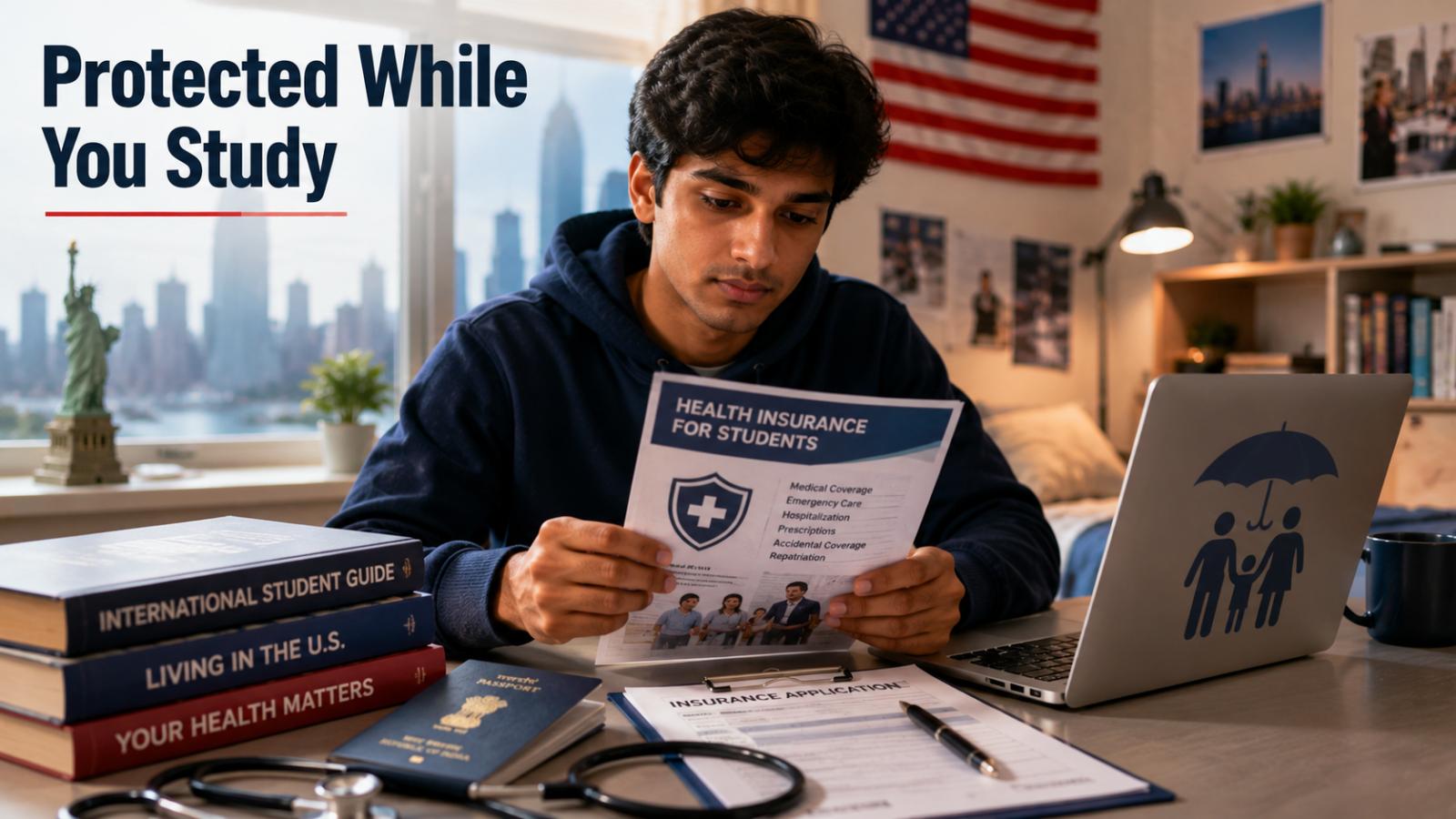
Last Updated: July 18, 2026 Most Indian students studying in the United States have some form of insurance, but the type and coverage vary. This guide explains university health insurance, private insurance, travel insurance, accidental death benefits, repatriation coverage and the protection studen
Do Indian Students in the U.S. Have Insurance?
Last Updated: July 18, 2026 Most Indian students studying in the United States have some form of insurance, but the type and coverage vary. This guide explains university health insurance, private insurance, travel insurance, accidental death benefits, repatriation coverage and the protection studen
Does Student Insurance Cover Repatriation to India?
Last Updated: July 18, 2026 Student insurance may help cover the repatriation of remains to India, but coverage depends on the policy. This guide explains international student insurance, accidental death benefits, transportation costs, consular assistance and the documents families may need after a death in the United States. When
Does Student Insurance Cover Repatriation to India?
Last Updated: July 18, 2026 Student insurance may help cover the repatriation of remains to India, but coverage depends on the policy. This guide explains international student insurance, accidental death benefits, transportation costs, consular assistance and the documents families may need after a death in the United States. When
What Happens When an Indian Student Dies in a U.S. Car Crash?
Last Updated: July 18, 2026 When an Indian student dies in a U.S. car crash, several legal and administrative steps follow before the remains can be returned to India. This guide explains the police investigation, family notificat
What Happens When an Indian Student Dies in a U.S. Car Crash?
Last Updated: July 18, 2026 When an Indian student dies in a U.S. car crash, several legal and administrative steps follow before the remains can be returned to India. This guide explains the police investigation, family notificat
NRE vs NRO vs FCNR Accounts: Which One Should an NRI Use?
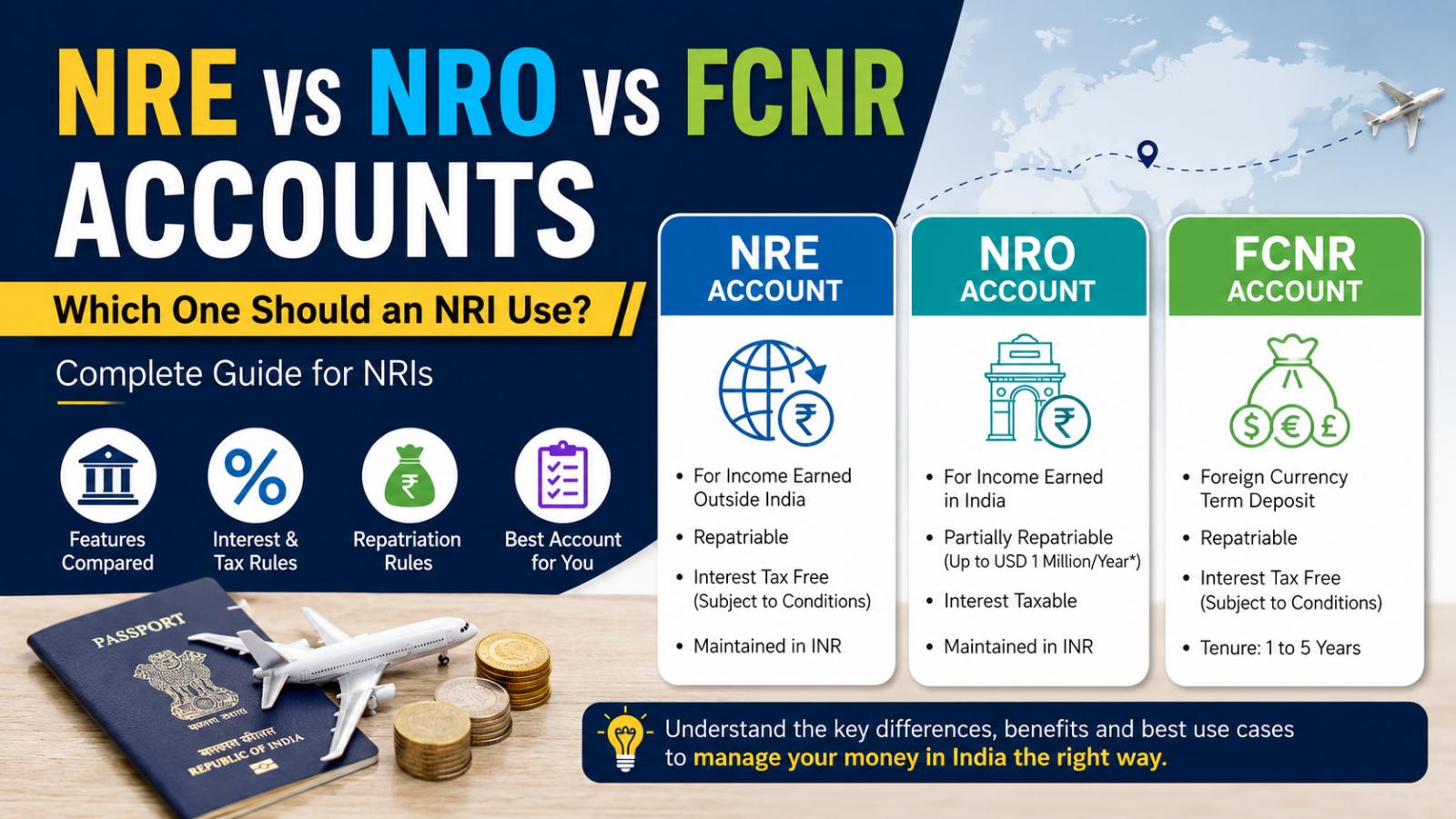
This guide explains NRE, NRO and FCNR accounts in plain English, compares tax and repatriation rules, shows where overseas and Indian income should go, and gives realistic account combinations for salaried NRIs, landlords, investors and families. Last reviewed: July 18, 2026 The first banking question most new NRIs ask sounds simple: “Which Indian account should I use now?”
NRE vs NRO vs FCNR Accounts: Which One Should an NRI Use?
This guide explains NRE, NRO and FCNR accounts in plain English, compares tax and repatriation rules, shows where overseas and Indian income should go, and gives realistic account combinations for salaried NRIs, landlords, investors and families. Last reviewed: July 18, 2026 The first banking question most new NRIs ask sounds simple: “Which Indian account should I use now?”
Indian Student Makkena Prasanna Dies in New Jersey Crash
Indian student Makkena Prasanna, 27, died in a New Jersey crash while traveling with friends. The Andhra Pradesh native had completed a master’s degree in the United States, and her family is seeking government help to return her remains to India Indian student Makkena Prasanna, 27, died in a car crash in New Jersey on Tuesday, July 14, 2026, according to reports from India. Three friends traveling with her were reportedly
Indian Student Makkena Prasanna Dies in New Jersey Crash
Indian student Makkena Prasanna, 27, died in a New Jersey crash while traveling with friends. The Andhra Pradesh native had completed a master’s degree in the United States, and her family is seeking government help to return her remains to India Indian student Makkena Prasanna, 27, died in a car crash in New Jersey on Tuesday, July 14, 2026, according to reports from India. Three friends traveling with her were reportedly
Vietnam Boat Tragedy: 15 Indians’ Remains Return Home
The mortal remains of 15 Indian nationals killed in the Vietnam boat tragedy were being flown to Mumbai on Monday, July 13, ending an agonising wait for their families. The victims died after a tourist speedboat capsized near Phu Quoc Island on July 11. The flight carrying the bodies departed from Ho Chi Minh City and was expected to reach Chhatrapati Shivaji Maharaj International Airport late Monday. Indian officials were coordinating the
Vietnam Boat Tragedy: 15 Indians’ Remains Return Home
The mortal remains of 15 Indian nationals killed in the Vietnam boat tragedy were being flown to Mumbai on Monday, July 13, ending an agonising wait for their families. The victims died after a tourist speedboat capsized near Phu Quoc Island on July 11. The flight carrying the bodies departed from Ho Chi Minh City and was expected to reach Chhatrapati Shivaji Maharaj International Airport late Monday. Indian officials were coordinating the
Indian Woman Found Homeless in Chicago Returns to Family in India
An Indian woman found homeless in Chicago has reunited with her family in India after volunteers, a Chicago social worker and the Consulate General of India in Chicago helped arrange emergency documents for her return. The case was updated from Chicago, Illinois, on Sunday, July 5, 2026, nearly three years after the woman’s situation first drew attention. Indian Woman Found Homeless in Chicago Repatriated to India According to U.S.-based nonp
Indian Woman Found Homeless in Chicago Returns to Family in India
An Indian woman found homeless in Chicago has reunited with her family in India after volunteers, a Chicago social worker and the Consulate General of India in Chicago helped arrange emergency documents for her return. The case was updated from Chicago, Illinois, on Sunday, July 5, 2026, nearly three years after the woman’s situation first drew attention. Indian Woman Found Homeless in Chicago Repatriated to India According to U.S.-based nonp
Telangana Student Found Dead In London, Family Seeks Govt Help
Telangana student Srinath Reddy, 25, from Kamareddy district, was found dead in England on June 23, leaving his family seeking government help to bring his body back to India. Srinath Reddy was a native of Talamadla village in Rajampet mandal of Kamareddy district. He had gone to England around 14 months ago for higher studies and was pursuing his MS at Leicester University. Telangana Student Found Dea
Telangana Student Found Dead In London, Family Seeks Govt Help
Telangana student Srinath Reddy, 25, from Kamareddy district, was found dead in England on June 23, leaving his family seeking government help to bring his body back to India. Srinath Reddy was a native of Talamadla village in Rajampet mandal of Kamareddy district. He had gone to England around 14 months ago for higher studies and was pursuing his MS at Leicester University. Telangana Student Found Dea
FCNR vs NRE vs NRO Accounts: Which Is Better for NRIs?
FCNR vs NRE vs NRO accounts serve different purposes. The right choice generally depends on where the money was earned, which currency the depositor wants to hold and how easily the funds must move outside India. There is no single account that is best for every NRI. The RBI is encouraging banks to attract more foreign-currency deposits, although most NRI bank money in India remains in rupee-denominated accounts. Read ou
FCNR vs NRE vs NRO Accounts: Which Is Better for NRIs?
FCNR vs NRE vs NRO accounts serve different purposes. The right choice generally depends on where the money was earned, which currency the depositor wants to hold and how easily the funds must move outside India. There is no single account that is best for every NRI. The RBI is encouraging banks to attract more foreign-currency deposits, although most NRI bank money in India remains in rupee-denominated accounts. Read ou
Visakhapatnam Chief Engineer Suresh Patnala Killed in MT Settebello Strike
Suresh Patnala, a chief engineer from Visakhapatnam, was among three Indian crew members killed after the commercial tanker MT Settebello was struck off Oman’s coast on Wednesday, June 10, 2026. Indian authorities confirmed on Thursday, June 11, 2026, that three Indian nationals aboard the vessel had died. Patnala, 44, was serving as chief engineer and had nearly two decades of experience at sea. Suresh Patnala Was Expected to Return Home Pat
Visakhapatnam Chief Engineer Suresh Patnala Killed in MT Settebello Strike
Suresh Patnala, a chief engineer from Visakhapatnam, was among three Indian crew members killed after the commercial tanker MT Settebello was struck off Oman’s coast on Wednesday, June 10, 2026. Indian authorities confirmed on Thursday, June 11, 2026, that three Indian nationals aboard the vessel had died. Patnala, 44, was serving as chief engineer and had nearly two decades of experience at sea. Suresh Patnala Was Expected to Return Home Pat
Kushner-Linked Albania Coastal Project Sparks Protests Over Sazan Island and Protected Wetlands
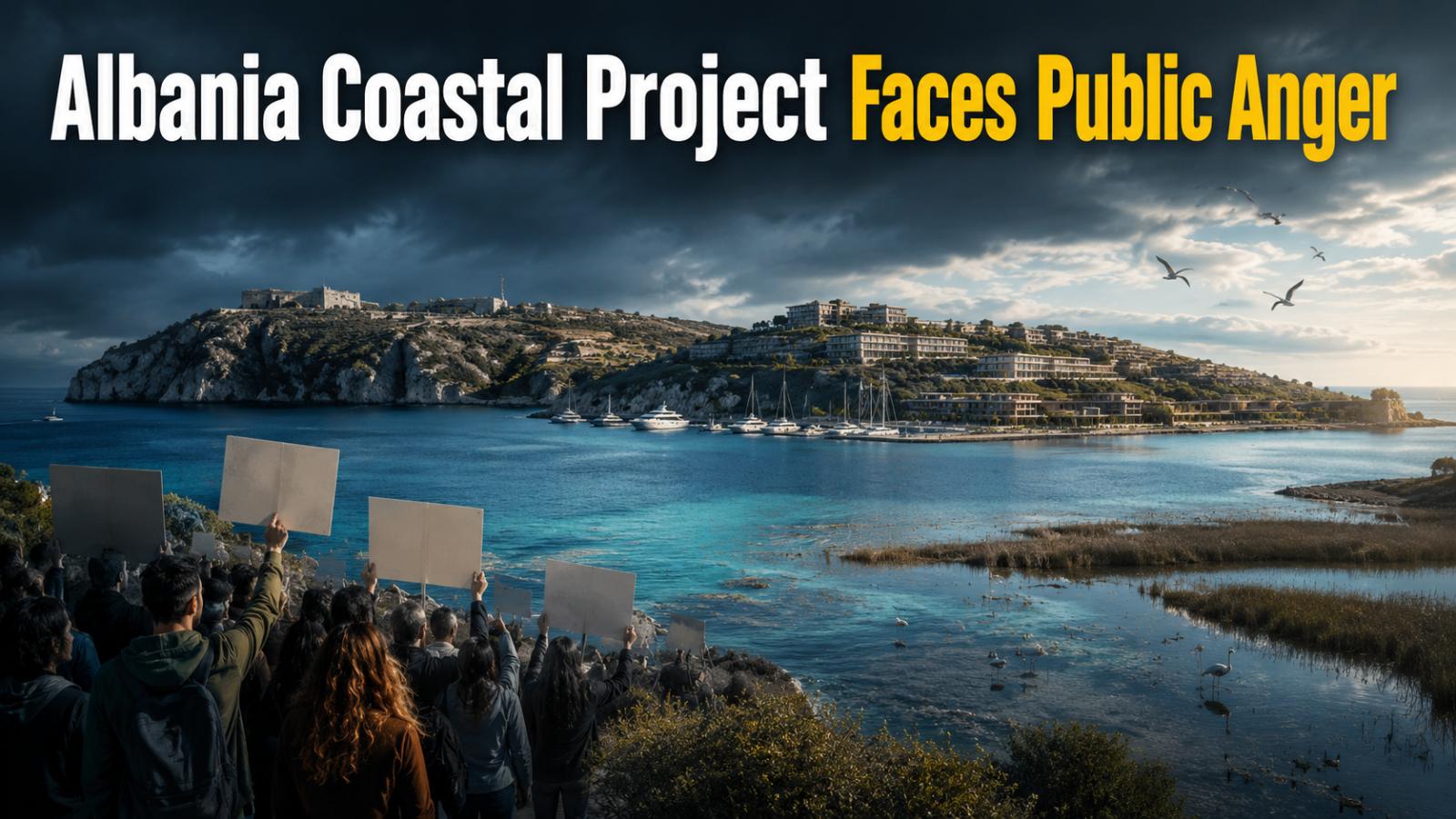
A major Albania coastal project linked to Jared Kushner’s investment firm, Affinity Partners, has become a flashpoint for public anger, environmental concern, and political debate. The proposed development involves Sazan Island and coastal areas near the Vjosa-Narta wetland, one of Albania’s most sensitive natural zones. Supporters describe the plan as a major tourism opportunity that could bring investment, jobs, and international attention to Albania’s Adriatic coast. Critics see it very differently. For them, the project raises serious questions about protected land, public transparency, local rights, and whether Albania’s coastline is being opened too quickly to powerful private investors. The controversy has now moved beyond a normal real estate debate. Protests in Tirana have shown that many Albanians view the issue as a fight over national land, environmental protection, and public trust. What Is Planned For Sazan Island Sazan Island is an uninhabited island with a long military history. It was once used as a strategic base and has remained largely untouched compared to many other Mediterranean coastal areas. That untouched nature is exactly why the island is attractive to luxury developers, but it is also why environmental groups and citizens are worried. The resort plan connected to the Kushner Albania deal has been described as a high-end tourism project with luxury accommodation, private villas, hospitality spaces, and marina-style development for wealthy visitors. Ivanka Trump has also spoken publicly about the island and its appeal, adding more global attention to the project. For investors, Sazan Island represents a rare chance to build a premium destination in a country trying to expand its tourism economy. For opponents, it represents something more dangerous: the possible transformation of public and protected coastal land into exclusive spaces for private profit. Why Protesters Are Opposing The Project The Albania island protest movement is not only about one resort. It reflects a deeper fear that citizens are being left out of major decisions about land that belongs to the country. Many protesters argue that development should not happen without full public consultation, clear environmental studies, and transparent land agreements. Slogans such as “Albania is not for sale” show that the anger is not limited to environmental activists. It is also about sovereignty, corruption concerns, and distrust of political decision-making. People are asking simple but important questions. Who benefits from the project? What land is being used? Were protection rules changed? Will ordinary Albanians gain from the investment, or will the coast become a playground for foreign elites? These questions are the reason the Tirana protest movement has gained attention. Vjosa-Narta Wetland Concerns Are At The Center Of The Debate One of the biggest concerns is the Vjosa-Narta wetland, a protected coastal ecosystem known for birdlife, lagoons, beaches, pine areas, and marine habitats. Environmental groups say construction near such an area could damage fragile ecosystems that cannot easily recover. The fear is not only about hotel buildings. Large tourism projects often require roads, fencing, digging, drainage, lighting, parking, utilities, and security zones. Even if the main resort buildings are placed away from the most sensitive areas, the wider infrastructure can still disturb wildlife and change the natural character of the coast. This is where the government and developers face a trust problem. Saying the project will follow environmental rules is not enough. Albanians want to see clear studies, public documents, independent reviews, and real guarantees that protected land will not be weakened. Affinity Partners And Foreign Investment Questions The Affinity Partners project is also controversial because of the political profile of the people connected to it. Jared Kushner is not just a businessman. He is also the son-in-law of Donald Trump and a former senior White House adviser. Ivanka Trump’s public comments about the island have made the project even more visible. Affinity Partners has also been linked to major Middle Eastern investment, including Saudi-backed funding. That has led to more scrutiny over how foreign capital is entering strategic coastal areas in Albania. Foreign investment is not automatically bad. Albania needs tourism growth, infrastructure, and job creation. But when a project involves protected land, politically connected investors, and limited public clarity, suspicion grows quickly. The opportunity cost is also real. Albania could develop tourism in a way that supports local businesses, protects nature, and keeps coastal access open. If the country chooses an ultra-luxury model too aggressively, it may gain short-term money but lose long-term public trust and natural value. Government Support And Public Distrust Prime Minister Edi Rama has defended large tourism projects as part of Albania’s growth strategy. His government argues that high-end investment can help position Albania as a serious Mediterranean tourism destination and create economic opportunities. That argument has some weight. Albania has beautiful coastlines and has long been underdeveloped compared to Greece, Croatia, and Italy. Better infrastructure and international visibility could help the country attract more visitors. But the government’s problem is credibility. When citizens believe protected status can be changed for investors, every official promise sounds weak. If the project is truly good for Albania, the government should be able to explain the land process, environmental safeguards, investor terms, and public benefits in plain language. Without that transparency, even a potentially useful investment becomes politically toxic. Albania Land Probe Adds More Pressure The Albania corruption probe has added another serious layer to the controversy. The key concern is whether land protection rules or ownership arrangements were changed in ways that helped the resort plan move forward. No final conclusion should be assumed before investigators complete their work. But the existence of a probe itself shows why the public is demanding answers. When protected land is involved, the process matters as much as the project. If the rules were followed properly, the government and developers should release enough information to prove it. If mistakes or political favoritism occurred, the project should not move forward until those issues are addressed. For many Albanians, this is the heart of the matter: development is acceptable, but development through unclear land decisions is not. What This Means For Albania’s Future The Sazan Island resort debate is bigger than one coastal project. It is a test of how Albania will handle foreign investment, environmental protection, and public accountability. A luxury Adriatic resort may bring money and jobs, but Albania’s coast is not an unlimited resource. Once wetlands, beaches, and natural habitats are damaged, they cannot be easily restored. Once public trust is broken, it is even harder to rebuild. The smartest path is not blind rejection of investment, but stronger rules. Albania needs tourism growth that respects protected land, involves local communities, publishes environmental reviews, and makes clear who benefits. Right now, the Kushner-linked Albania coastal project has become a symbol of a difficult choice: fast luxury development or slower, more transparent growth that protects nature and public confidence. For protesters, the message is clear. Albania can welcome investors, but the country’s land, coast, and wetlands should not be treated as private assets to be negotiated behind closed doors.
Kushner-Linked Albania Coastal Project Sparks Protests Over Sazan Island and Protected Wetlands
A major Albania coastal project linked to Jared Kushner’s investment firm, Affinity Partners, has become a flashpoint for public anger, environmental concern, and political debate. The proposed development involves Sazan Island and coastal areas near the Vjosa-Narta wetland, one of Albania’s most sensitive natural zones. Supporters describe the plan as a major tourism opportunity that could bring investment, jobs, and international attention to Albania’s Adriatic coast. Critics see it very differently. For them, the project raises serious questions about protected land, public transparency, local rights, and whether Albania’s coastline is being opened too quickly to powerful private investors. The controversy has now moved beyond a normal real estate debate. Protests in Tirana have shown that many Albanians view the issue as a fight over national land, environmental protection, and public trust. What Is Planned For Sazan Island Sazan Island is an uninhabited island with a long military history. It was once used as a strategic base and has remained largely untouched compared to many other Mediterranean coastal areas. That untouched nature is exactly why the island is attractive to luxury developers, but it is also why environmental groups and citizens are worried. The resort plan connected to the Kushner Albania deal has been described as a high-end tourism project with luxury accommodation, private villas, hospitality spaces, and marina-style development for wealthy visitors. Ivanka Trump has also spoken publicly about the island and its appeal, adding more global attention to the project. For investors, Sazan Island represents a rare chance to build a premium destination in a country trying to expand its tourism economy. For opponents, it represents something more dangerous: the possible transformation of public and protected coastal land into exclusive spaces for private profit. Why Protesters Are Opposing The Project The Albania island protest movement is not only about one resort. It reflects a deeper fear that citizens are being left out of major decisions about land that belongs to the country. Many protesters argue that development should not happen without full public consultation, clear environmental studies, and transparent land agreements. Slogans such as “Albania is not for sale” show that the anger is not limited to environmental activists. It is also about sovereignty, corruption concerns, and distrust of political decision-making. People are asking simple but important questions. Who benefits from the project? What land is being used? Were protection rules changed? Will ordinary Albanians gain from the investment, or will the coast become a playground for foreign elites? These questions are the reason the Tirana protest movement has gained attention. Vjosa-Narta Wetland Concerns Are At The Center Of The Debate One of the biggest concerns is the Vjosa-Narta wetland, a protected coastal ecosystem known for birdlife, lagoons, beaches, pine areas, and marine habitats. Environmental groups say construction near such an area could damage fragile ecosystems that cannot easily recover. The fear is not only about hotel buildings. Large tourism projects often require roads, fencing, digging, drainage, lighting, parking, utilities, and security zones. Even if the main resort buildings are placed away from the most sensitive areas, the wider infrastructure can still disturb wildlife and change the natural character of the coast. This is where the government and developers face a trust problem. Saying the project will follow environmental rules is not enough. Albanians want to see clear studies, public documents, independent reviews, and real guarantees that protected land will not be weakened. Affinity Partners And Foreign Investment Questions The Affinity Partners project is also controversial because of the political profile of the people connected to it. Jared Kushner is not just a businessman. He is also the son-in-law of Donald Trump and a former senior White House adviser. Ivanka Trump’s public comments about the island have made the project even more visible. Affinity Partners has also been linked to major Middle Eastern investment, including Saudi-backed funding. That has led to more scrutiny over how foreign capital is entering strategic coastal areas in Albania. Foreign investment is not automatically bad. Albania needs tourism growth, infrastructure, and job creation. But when a project involves protected land, politically connected investors, and limited public clarity, suspicion grows quickly. The opportunity cost is also real. Albania could develop tourism in a way that supports local businesses, protects nature, and keeps coastal access open. If the country chooses an ultra-luxury model too aggressively, it may gain short-term money but lose long-term public trust and natural value. Government Support And Public Distrust Prime Minister Edi Rama has defended large tourism projects as part of Albania’s growth strategy. His government argues that high-end investment can help position Albania as a serious Mediterranean tourism destination and create economic opportunities. That argument has some weight. Albania has beautiful coastlines and has long been underdeveloped compared to Greece, Croatia, and Italy. Better infrastructure and international visibility could help the country attract more visitors. But the government’s problem is credibility. When citizens believe protected status can be changed for investors, every official promise sounds weak. If the project is truly good for Albania, the government should be able to explain the land process, environmental safeguards, investor terms, and public benefits in plain language. Without that transparency, even a potentially useful investment becomes politically toxic. Albania Land Probe Adds More Pressure The Albania corruption probe has added another serious layer to the controversy. The key concern is whether land protection rules or ownership arrangements were changed in ways that helped the resort plan move forward. No final conclusion should be assumed before investigators complete their work. But the existence of a probe itself shows why the public is demanding answers. When protected land is involved, the process matters as much as the project. If the rules were followed properly, the government and developers should release enough information to prove it. If mistakes or political favoritism occurred, the project should not move forward until those issues are addressed. For many Albanians, this is the heart of the matter: development is acceptable, but development through unclear land decisions is not. What This Means For Albania’s Future The Sazan Island resort debate is bigger than one coastal project. It is a test of how Albania will handle foreign investment, environmental protection, and public accountability. A luxury Adriatic resort may bring money and jobs, but Albania’s coast is not an unlimited resource. Once wetlands, beaches, and natural habitats are damaged, they cannot be easily restored. Once public trust is broken, it is even harder to rebuild. The smartest path is not blind rejection of investment, but stronger rules. Albania needs tourism growth that respects protected land, involves local communities, publishes environmental reviews, and makes clear who benefits. Right now, the Kushner-linked Albania coastal project has become a symbol of a difficult choice: fast luxury development or slower, more transparent growth that protects nature and public confidence. For protesters, the message is clear. Albania can welcome investors, but the country’s land, coast, and wetlands should not be treated as private assets to be negotiated behind closed doors.
Revanth Reddy Cuts Convoy After PM Modi’s Fuel-Saving Call
Revanth Reddy Reduces Convoy Size Telangana Chief Minister A. Revanth Reddy has reduced the size of his official convoy, following Prime Minister Narendra Modi’s appeal to save fuel amid rising energy concerns. The Chief Minister reportedly travelled to the Dr BR Ambedkar Telangana Secretariat on Saturday with a much smaller convoy and without causing major disruption to public traffic. Accordin


Revanth Reddy Cuts Convoy After PM Modi’s Fuel-Saving Call
Revanth Reddy Reduces Convoy Size Telangana Chief Minister A. Revanth Reddy has reduced the size of his official convoy, following Prime Minister Narendra Modi’s appeal to save fuel amid rising energy concerns. The Chief Minister reportedly travelled to the Dr BR Ambedkar Telangana Secretariat on Saturday with a much smaller convoy and without causing major disruption to public traffic. Accordin
Royal International Air Tattoo 2026 Cancelled Over Iran Tensions
RIAT 2026 Cancelled Amid Iran Tensions The Royal International Air Tattoo (RIAT), one of the world’s largest military and defence airshows, has been cancelled for 2026 due to ongoing military operations connected to the Iran conflict, organisers confirmed on Friday, May 22,2026. Scheduled for July 17–19 at RAF Fairford in southwest England, the event attracts more than 150,000 visitors annually. The active Royal Air For
Royal International Air Tattoo 2026 Cancelled Over Iran Tensions
RIAT 2026 Cancelled Amid Iran Tensions The Royal International Air Tattoo (RIAT), one of the world’s largest military and defence airshows, has been cancelled for 2026 due to ongoing military operations connected to the Iran conflict, organisers confirmed on Friday, May 22,2026. Scheduled for July 17–19 at RAF Fairford in southwest England, the event attracts more than 150,000 visitors annually. The active Royal Air For
Indian student’s death in Chicago highlights mental health and visa stress
A 26-year-old Indian student from Andhra Pradesh died by suicide in Chicago after struggling to find a job post-graduation. Facing financial pressure and emotional stress, he left messages before his death. A fundraiser is underway to support repatriation and assist his family. Indian student’s death in Chicago highlights mental health and visa stress as Iraganaboyina Chandu, a 26-year-old graduate from Andhra Pradesh, died by suicide at his residence in Chicago
Indian student’s death in Chicago highlights mental health and visa stress
A 26-year-old Indian student from Andhra Pradesh died by suicide in Chicago after struggling to find a job post-graduation. Facing financial pressure and emotional stress, he left messages before his death. A fundraiser is underway to support repatriation and assist his family. Indian student’s death in Chicago highlights mental health and visa stress as Iraganaboyina Chandu, a 26-year-old graduate from Andhra Pradesh, died by suicide at his residence in Chicago
911 call released in Miami case of Indian-origin doctor accused of child’s murder
Eight months after a four-year-old girl was found dead in a swimming pool at a Miami rental property, authorities have released the 911 call placed by her mother, bringing renewed attention to a case that continues to move through the Florida court system. The recording, made public this week, offers new insight into the moments following the child’s death and comes as prosecutors prepare for upcoming court proceedings scheduled for May. Dr. Neha Gupta, 37, an Oklahoma-based pedia
911 call released in Miami case of Indian-origin doctor accused of child’s murder
Eight months after a four-year-old girl was found dead in a swimming pool at a Miami rental property, authorities have released the 911 call placed by her mother, bringing renewed attention to a case that continues to move through the Florida court system. The recording, made public this week, offers new insight into the moments following the child’s death and comes as prosecutors prepare for upcoming court proceedings scheduled for May. Dr. Neha Gupta, 37, an Oklahoma-based pedia
House advances funding bill as Johnson averts shutdown
The US House of Representatives moved closer to preventing a government shutdown on Tuesday after Speaker Mike Johnson rallied Republican lawmakers behind a sweeping government funding bill, setting the stage for final passage of legislation designed to keep federal agencies operating through the end of the fiscal year. The procedural victory marked a critical step in advancing the appropriations package and reflected intense negotiations within the Republican conference to maintain unity ahe
House advances funding bill as Johnson averts shutdown
The US House of Representatives moved closer to preventing a government shutdown on Tuesday after Speaker Mike Johnson rallied Republican lawmakers behind a sweeping government funding bill, setting the stage for final passage of legislation designed to keep federal agencies operating through the end of the fiscal year. The procedural victory marked a critical step in advancing the appropriations package and reflected intense negotiations within the Republican conference to maintain unity ahe
US museum to repatriate ancient Tamil Nadu bronzes to India
The Smithsonian’s National Museum of Asian Art in the United States has announced that it will return three historic bronze sculptures to India after concluding that the works were illegally removed from temple sites in Tamil Nadu. The decision follows an extensive provenance review of the museum’s South Asian collection and marks a significant step in addressing the long-standing issue of illicit trafficking of cultural heritage. The most prominent of the sculptures slated for return is a bronze depiction of Shiva Nataraja, dating to around A.D. 990. Created during the Chola period, the sculpture represents the Hindu deity Shiva in his cosmic dance, symbolizing the cycle of creation and destruction. The figure shows Shiva dancing upon a demon that embodies ignorance, encircled by a ring of fire and standing on a lotus base. Art historians regard this form as one of the most visually powerful and symbolically rich representations in Indian art, revered both within India and among global audiences. Alongside the Shiva Nataraja, the museum will repatriate a Somaskanda sculpture from the 12th century, also from the Chola period. This bronze depicts Shiva seated with his consort Parvathy and their son Skanda, reflecting devotional traditions that were central to temple worship in medieval South India. The third work to be returned is a 16th-century bronze titled Saint Sundarar With Paravai, dating to the Vijayanagar period, which portrays the revered Shaivite saint with his companion. The museum stated that the return of these works reflects its commitment to ethical museum practices and responsible stewardship. A comprehensive review was initiated to determine whether any objects in the collection had been unlawfully acquired. During this process, researchers uncovered evidence that raised serious concerns about the origins of the three bronzes. The Shiva Nataraja entered the museum’s collection in 2002 through a New York art gallery. Subsequent investigation revealed inconsistencies in the documentation associated with the acquisition, including the inability to verify the gallery’s listed address. Researchers later established that the sculpture appeared in photographs taken at a Tamil Nadu temple during the 1950s, confirming that it had been removed from its original religious setting. Further inquiry connected the gallery to a network involved in the trafficking of stolen antiquities. Court records have shown that individuals associated with this network engaged in smuggling cultural objects from South Asia and falsifying provenance records to introduce them into the international art market. In recent years, other institutions have also returned comparable works linked to the same sources. The Somaskanda and Saint Sundarar With Paravai sculptures were donated to the museum in 1987 as part of a major private collection. Their provenance came under scrutiny after a tip prompted researchers to consult archival material held by the French Institute of Pondicherry. Photographs from the 1950s in the institute’s archives showed both sculptures installed in temples in Tamil Nadu, providing clear evidence that they had been stolen and exported illegally. Experts note that bronze sculptures from South Indian temples have been frequent targets of theft due to their artistic value and global demand. Replicas have circulated widely in tourist markets, while original works disappeared from sacred sites, often leaving communities without objects of worship that had been central to their cultural and religious identity for centuries. The Smithsonian’s decision is being viewed as part of a broader international movement toward repatriation and accountability in the museum sector. By returning these sculptures, the institution acknowledges the importance of restoring cultural heritage to its place of origin and reinforces growing global standards for transparency and ethical collecting practices.
US museum to repatriate ancient Tamil Nadu bronzes to India
The Smithsonian’s National Museum of Asian Art in the United States has announced that it will return three historic bronze sculptures to India after concluding that the works were illegally removed from temple sites in Tamil Nadu. The decision follows an extensive provenance review of the museum’s South Asian collection and marks a significant step in addressing the long-standing issue of illicit trafficking of cultural heritage. The most prominent of the sculptures slated for return is a bronze depiction of Shiva Nataraja, dating to around A.D. 990. Created during the Chola period, the sculpture represents the Hindu deity Shiva in his cosmic dance, symbolizing the cycle of creation and destruction. The figure shows Shiva dancing upon a demon that embodies ignorance, encircled by a ring of fire and standing on a lotus base. Art historians regard this form as one of the most visually powerful and symbolically rich representations in Indian art, revered both within India and among global audiences. Alongside the Shiva Nataraja, the museum will repatriate a Somaskanda sculpture from the 12th century, also from the Chola period. This bronze depicts Shiva seated with his consort Parvathy and their son Skanda, reflecting devotional traditions that were central to temple worship in medieval South India. The third work to be returned is a 16th-century bronze titled Saint Sundarar With Paravai, dating to the Vijayanagar period, which portrays the revered Shaivite saint with his companion. The museum stated that the return of these works reflects its commitment to ethical museum practices and responsible stewardship. A comprehensive review was initiated to determine whether any objects in the collection had been unlawfully acquired. During this process, researchers uncovered evidence that raised serious concerns about the origins of the three bronzes. The Shiva Nataraja entered the museum’s collection in 2002 through a New York art gallery. Subsequent investigation revealed inconsistencies in the documentation associated with the acquisition, including the inability to verify the gallery’s listed address. Researchers later established that the sculpture appeared in photographs taken at a Tamil Nadu temple during the 1950s, confirming that it had been removed from its original religious setting. Further inquiry connected the gallery to a network involved in the trafficking of stolen antiquities. Court records have shown that individuals associated with this network engaged in smuggling cultural objects from South Asia and falsifying provenance records to introduce them into the international art market. In recent years, other institutions have also returned comparable works linked to the same sources. The Somaskanda and Saint Sundarar With Paravai sculptures were donated to the museum in 1987 as part of a major private collection. Their provenance came under scrutiny after a tip prompted researchers to consult archival material held by the French Institute of Pondicherry. Photographs from the 1950s in the institute’s archives showed both sculptures installed in temples in Tamil Nadu, providing clear evidence that they had been stolen and exported illegally. Experts note that bronze sculptures from South Indian temples have been frequent targets of theft due to their artistic value and global demand. Replicas have circulated widely in tourist markets, while original works disappeared from sacred sites, often leaving communities without objects of worship that had been central to their cultural and religious identity for centuries. The Smithsonian’s decision is being viewed as part of a broader international movement toward repatriation and accountability in the museum sector. By returning these sculptures, the institution acknowledges the importance of restoring cultural heritage to its place of origin and reinforces growing global standards for transparency and ethical collecting practices.
Indian students from Telangana killed in US car crash during California trip
Two young women from Telangana’s Mahabubabad district lost their lives in a tragic road accident in the United States after the car they were travelling in plunged into a gorge along a mountainous stretch of road in California. The incident occurred at a sharp curve on Alabama Hills Road, a scenic but challenging route known for its winding terrain. The deaths have sent shockwaves through their hometowns in Telangana, where families and residents are struggling to come to terms with the sud
Indian students from Telangana killed in US car crash during California trip
Two young women from Telangana’s Mahabubabad district lost their lives in a tragic road accident in the United States after the car they were travelling in plunged into a gorge along a mountainous stretch of road in California. The incident occurred at a sharp curve on Alabama Hills Road, a scenic but challenging route known for its winding terrain. The deaths have sent shockwaves through their hometowns in Telangana, where families and residents are struggling to come to terms with the sud
500 Indians Flee Myanmar Scam Hub, Stranded in Thailand: MEA Steps In
India is working closely with Thailand to repatriate around 500 Indian nationals detained after escaping a Chinese mafia-run cybercrime hub in Myanmar’s KK Park, officials confirmed on Wednesday. The operation follows a Myanmar junta raid on the compound last week, which forced hundreds of trafficked workers including Indians to cross into Thailand’s Mae Sot region, where they are currently under detention. Thai Prime Minister Anutin Charnvirakul stated that India plans to send
500 Indians Flee Myanmar Scam Hub, Stranded in Thailand: MEA Steps In
India is working closely with Thailand to repatriate around 500 Indian nationals detained after escaping a Chinese mafia-run cybercrime hub in Myanmar’s KK Park, officials confirmed on Wednesday. The operation follows a Myanmar junta raid on the compound last week, which forced hundreds of trafficked workers including Indians to cross into Thailand’s Mae Sot region, where they are currently under detention. Thai Prime Minister Anutin Charnvirakul stated that India plans to send
FBI employee fired by Kash Patel for displaying Pride flag at desk
A controversy has erupted after Kash Patel, serving as Director of the Federal Bureau of Investigation, dismissed an employee for displaying a Pride flag at his workstation. The employee was in the process of new agent training at the FBI academy in Quantico, Virginia, when he received a dismissal letter ordering his immediate removal. The decision has generated debate over workplace neutrality, diversity, and the boundaries of acceptable expression in federal institutions. The em
FBI employee fired by Kash Patel for displaying Pride flag at desk
A controversy has erupted after Kash Patel, serving as Director of the Federal Bureau of Investigation, dismissed an employee for displaying a Pride flag at his workstation. The employee was in the process of new agent training at the FBI academy in Quantico, Virginia, when he received a dismissal letter ordering his immediate removal. The decision has generated debate over workplace neutrality, diversity, and the boundaries of acceptable expression in federal institutions. The em