








Who is accused in the JPMorgan lawsuit? Investigation points to fabricated allegations
Internal investigation challenges high-profile allegations A former employee of JPMorgan Chase has been accused by sources of filing fabricated sexual harassment allegations against a senior executive after an internal investigation reportedly found no evidence supporting the claims. The allegations were initially brought forward in a lawsuit filed earlier this week under
Who is accused in the JPMorgan lawsuit? Investigation points to fabricated allegations
Internal investigation challenges high-profile allegations A former employee of JPMorgan Chase has been accused by sources of filing fabricated sexual harassment allegations against a senior executive after an internal investigation reportedly found no evidence supporting the claims. The allegations were initially brought forward in a lawsuit filed earlier this week under

Iran confirmed for FIFA World Cup 2026 despite geopolitical tensions
FIFA confirmed Iran will play in the 2026 World Cup despite tensions with the U.S. Officials rejected relocation or replacement ideas. Iran missed the FIFA Congress after a Canada entry issue but remains set to compete in Group G. FIFA President Gianni Infantino has reaffirmed that Iran will participate in the
Iran confirmed for FIFA World Cup 2026 despite geopolitical tensions
FIFA confirmed Iran will play in the 2026 World Cup despite tensions with the U.S. Officials rejected relocation or replacement ideas. Iran missed the FIFA Congress after a Canada entry issue but remains set to compete in Group G. FIFA President Gianni Infantino has reaffirmed that Iran will participate in the

India Meets Record Power Demand Solar Delivers 21 Percent Boost In Historic Energy Shift
At 3:38 pm on April 25, India recorded its highest-ever electricity demand of 256.1 GW and successfully met it without disruption. According to GRID India, solar energy contributed around 57 GW during peak demand, accounting for nearly 21 percent of the total supply. Earlier in the day, solar output had peaked even higher, reaching about 81 GW at 12:30 pm, which was nearly one-third of the
India Meets Record Power Demand Solar Delivers 21 Percent Boost In Historic Energy Shift
At 3:38 pm on April 25, India recorded its highest-ever electricity demand of 256.1 GW and successfully met it without disruption. According to GRID India, solar energy contributed around 57 GW during peak demand, accounting for nearly 21 percent of the total supply. Earlier in the day, solar output had peaked even higher, reaching about 81 GW at 12:30 pm, which was nearly one-third of the
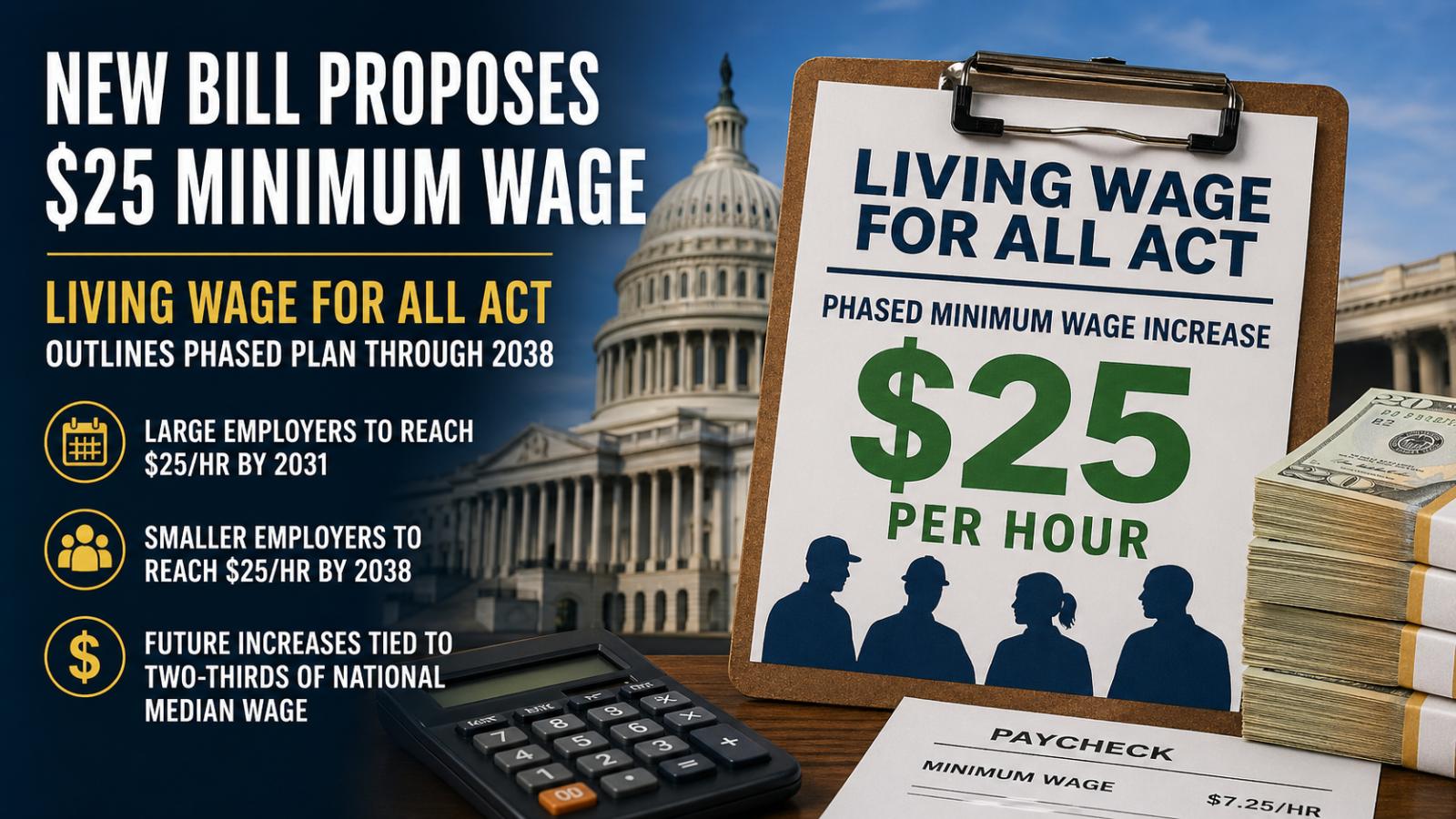
What is the Living Wage for All Act? It aims to raise minimum wage to $25
What is the Living Wage for All Act? It aims to raise minimum wage to $25 A new legislative proposal introduced on Tuesday seeks to significantly raise the federal minimum wage in the United States, setting a long-term target of $25 per hour through a phased implementation plan. The measure, known as the Living Wage for All Act, was introduced by a group of Democratic lawmakers aiming to address ongoing affordability concerns and wage stagnation.
What is the Living Wage for All Act? It aims to raise minimum wage to $25
What is the Living Wage for All Act? It aims to raise minimum wage to $25 A new legislative proposal introduced on Tuesday seeks to significantly raise the federal minimum wage in the United States, setting a long-term target of $25 per hour through a phased implementation plan. The measure, known as the Living Wage for All Act, was introduced by a group of Democratic lawmakers aiming to address ongoing affordability concerns and wage stagnation.

What is PayPal’s new structure? Venmo becomes standalone segment
PayPal’s Venmo spinoff signals strategic shift to boost growth PayPal’s Venmo spinoff signals strategic shift to boost growth as CEO Enrique Lores informed managers this week that the company is reorganizing its reporting structure, separating Venmo into its own standalone business segment. The move reflects a broader effort to streamline operations and sharpen focus across its fintech portfolio. New reporting structure creates three distinct business units Under the restructuring plan, Venmo will operate independently, allowing clearer performance tracking and potentially positioning it for a future sale. Two additional segments will be formed: a PayPal-branded unit serving merchants and consumers, and a payment services division that includes Braintree along with crypto-related operations. The company is also reportedly seeking a digital banking executive to lead the newly independent Venmo unit. Leadership transition and competitive pressures Lores, who previously led HP Inc. and assumed leadership of PayPal in March, is implementing these changes as the company faces mounting competition from Apple, Google, and Stripe in digital payments. He succeeded Alex Chriss, whose tenure saw a steep decline in PayPal’s stock value following its pandemic-era peak. Investor interest and restructuring implications The company’s declining valuation has drawn attention from potential buyers, including reported interest from Stripe in acquiring parts or all of the business. PayPal has also engaged financial advisers to prepare for possible takeover attempts or activist investor campaigns. Following reports of the restructuring, PayPal shares rose by approximately 3%. Workforce uncertainty and executive departures The restructuring comes amid uncertainty over potential workforce reductions. Earlier in 2026, managers had been tasked with planning a 15% reduction in headcount, though those plans remain unresolved after the leadership transition. At the same time, key executives including Diego Scotti and Michelle Gill are departing as their divisions are restructured or dissolved. PayPal is also establishing a new artificial intelligence transformation group led by Anshu Bhardwaj, formerly of Walmart, and creating a financial services unit under Scott Young of Goldman Sachs. The changes highlight the company’s push to modernize operations and regain momentum in a rapidly evolving digital payments market.
What is PayPal’s new structure? Venmo becomes standalone segment
PayPal’s Venmo spinoff signals strategic shift to boost growth PayPal’s Venmo spinoff signals strategic shift to boost growth as CEO Enrique Lores informed managers this week that the company is reorganizing its reporting structure, separating Venmo into its own standalone business segment. The move reflects a broader effort to streamline operations and sharpen focus across its fintech portfolio. New reporting structure creates three distinct business units Under the restructuring plan, Venmo will operate independently, allowing clearer performance tracking and potentially positioning it for a future sale. Two additional segments will be formed: a PayPal-branded unit serving merchants and consumers, and a payment services division that includes Braintree along with crypto-related operations. The company is also reportedly seeking a digital banking executive to lead the newly independent Venmo unit. Leadership transition and competitive pressures Lores, who previously led HP Inc. and assumed leadership of PayPal in March, is implementing these changes as the company faces mounting competition from Apple, Google, and Stripe in digital payments. He succeeded Alex Chriss, whose tenure saw a steep decline in PayPal’s stock value following its pandemic-era peak. Investor interest and restructuring implications The company’s declining valuation has drawn attention from potential buyers, including reported interest from Stripe in acquiring parts or all of the business. PayPal has also engaged financial advisers to prepare for possible takeover attempts or activist investor campaigns. Following reports of the restructuring, PayPal shares rose by approximately 3%. Workforce uncertainty and executive departures The restructuring comes amid uncertainty over potential workforce reductions. Earlier in 2026, managers had been tasked with planning a 15% reduction in headcount, though those plans remain unresolved after the leadership transition. At the same time, key executives including Diego Scotti and Michelle Gill are departing as their divisions are restructured or dissolved. PayPal is also establishing a new artificial intelligence transformation group led by Anshu Bhardwaj, formerly of Walmart, and creating a financial services unit under Scott Young of Goldman Sachs. The changes highlight the company’s push to modernize operations and regain momentum in a rapidly evolving digital payments market.
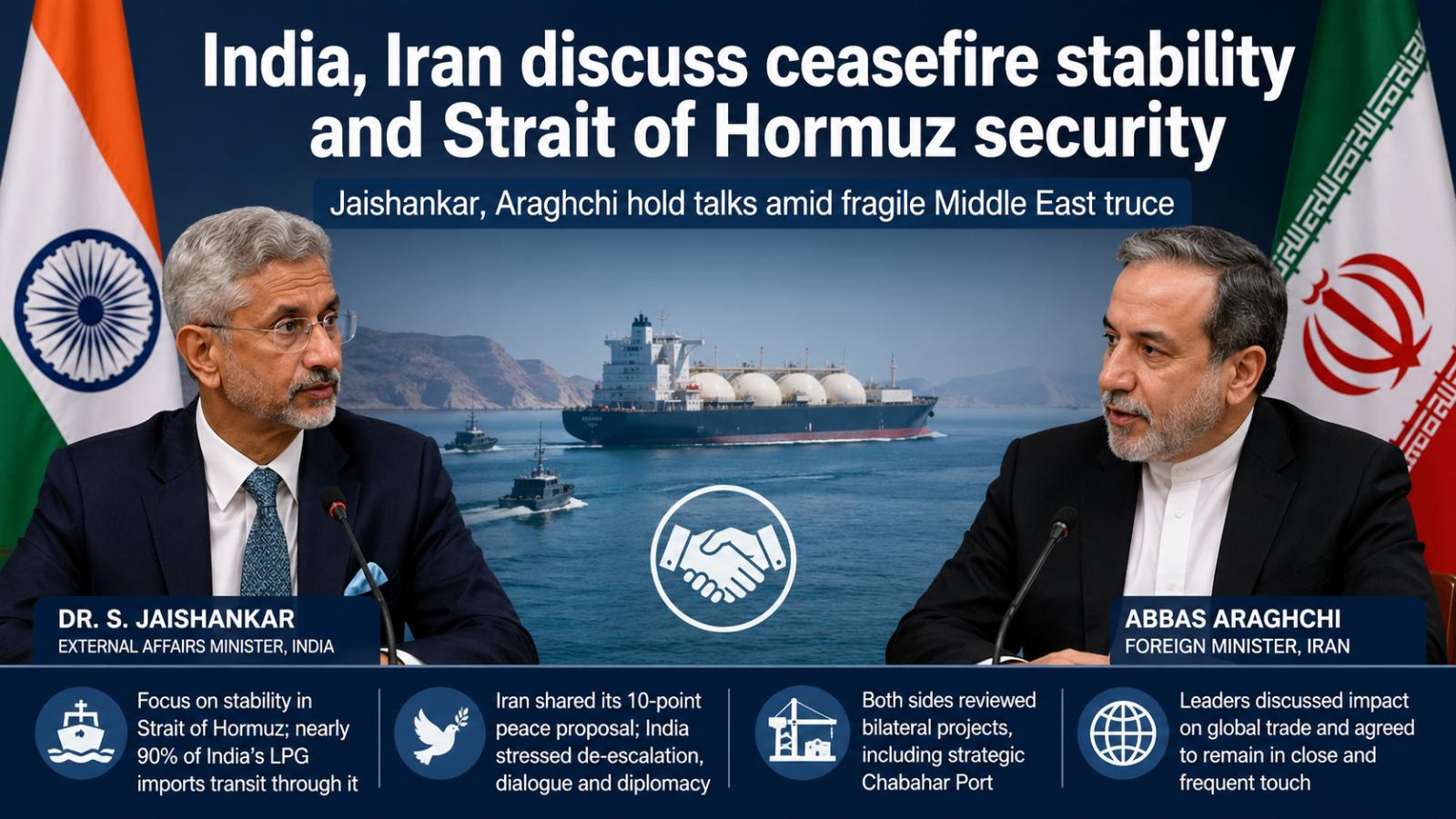
India, Iran discuss ceasefire stability and Strait of Hormuz security
India and Iran held talks on April 29, 2026, on ceasefire stability, Strait of Hormuz security, and trade impact. Both stressed diplomacy and continued coordination as regional tensions remain high despite the fragile truce. India, Iran discuss ceasefire stability and Strait of Hormuz security as External Affairs Minister Dr. S. Jaishankar and Iranian Foreign Minister Abbas Araghchi held talks on Wednesday, April 29, 2026, focusing on the evolving security situation in Tehran and across the region. The discussion comes at a critical moment as the international community monitors a fragile two-week ceasefire involving Iran and a U.S.-Israel coalition, brokered earlier in April. According to an official statement, both leaders exchanged views on recent developments related to the ceasefire while also reviewing bilateral relations and broader regional security concerns. A central issue in the dialogue was the stability of the Strait of Hormuz, a key global shipping route through which nearly 90% of India’s liquefied petroleum gas imports pass, underscoring its economic significance for New Delhi. Officials familiar with the talks indicated that both sides emphasized the need to ensure uninterrupted freedom of navigation in the region. Iran reportedly shared updates on its proposed 10-point peace framework, while India reiterated its longstanding position that de-escalation, sustained dialogue, and diplomatic engagement remain essential to achieving lasting stability in West Asia. Beyond immediate security concerns, the ministers also reviewed ongoing bilateral initiatives, including the development of Chabahar Port. The project remains strategically important for India as it provides access to Central Asian markets, even as regional tensions pose logistical and security challenges. The conversation also addressed the broader impact of the conflict on global trade networks. Jaishankar highlighted concerns over prolonged instability, noting its disruptive effects on supply chains and economic activity. He emphasized that India continues to engage with multiple stakeholders in an effort to prevent escalation and support regional stability. The diplomatic exchange follows a period of heightened pressure from the administration of Donald Trump, which had issued strong warnings to Tehran over maritime disruptions. Although a ceasefire was implemented on Tuesday, April 8, 2026, tensions persist, with continued rhetoric from various factions raising concerns about its durability. As the ceasefire enters a sensitive phase, both ministers agreed to remain in close and frequent contact to monitor developments. For India, maintaining stability in the region is not only a strategic priority but also a critical economic necessity tied to energy security and trade continuity.
India, Iran discuss ceasefire stability and Strait of Hormuz security
India and Iran held talks on April 29, 2026, on ceasefire stability, Strait of Hormuz security, and trade impact. Both stressed diplomacy and continued coordination as regional tensions remain high despite the fragile truce. India, Iran discuss ceasefire stability and Strait of Hormuz security as External Affairs Minister Dr. S. Jaishankar and Iranian Foreign Minister Abbas Araghchi held talks on Wednesday, April 29, 2026, focusing on the evolving security situation in Tehran and across the region. The discussion comes at a critical moment as the international community monitors a fragile two-week ceasefire involving Iran and a U.S.-Israel coalition, brokered earlier in April. According to an official statement, both leaders exchanged views on recent developments related to the ceasefire while also reviewing bilateral relations and broader regional security concerns. A central issue in the dialogue was the stability of the Strait of Hormuz, a key global shipping route through which nearly 90% of India’s liquefied petroleum gas imports pass, underscoring its economic significance for New Delhi. Officials familiar with the talks indicated that both sides emphasized the need to ensure uninterrupted freedom of navigation in the region. Iran reportedly shared updates on its proposed 10-point peace framework, while India reiterated its longstanding position that de-escalation, sustained dialogue, and diplomatic engagement remain essential to achieving lasting stability in West Asia. Beyond immediate security concerns, the ministers also reviewed ongoing bilateral initiatives, including the development of Chabahar Port. The project remains strategically important for India as it provides access to Central Asian markets, even as regional tensions pose logistical and security challenges. The conversation also addressed the broader impact of the conflict on global trade networks. Jaishankar highlighted concerns over prolonged instability, noting its disruptive effects on supply chains and economic activity. He emphasized that India continues to engage with multiple stakeholders in an effort to prevent escalation and support regional stability. The diplomatic exchange follows a period of heightened pressure from the administration of Donald Trump, which had issued strong warnings to Tehran over maritime disruptions. Although a ceasefire was implemented on Tuesday, April 8, 2026, tensions persist, with continued rhetoric from various factions raising concerns about its durability. As the ceasefire enters a sensitive phase, both ministers agreed to remain in close and frequent contact to monitor developments. For India, maintaining stability in the region is not only a strategic priority but also a critical economic necessity tied to energy security and trade continuity.

What defines JRD Tata’s legacy? A life of service over ownership
A life of service over ownership JRD Tata’s legacy offers a striking contrast to modern perceptions of wealth and leadership. As one of India’s most influential industrialists, he led the Tata Group for over five decades, yet chose to live in a rented residence rather than accumulate personal assets. His approach reflected a philosophy that prioritized responsibility, ethics, and long-term impact over visible displays of success. Leadership that expanded an industrial empire Under JRD Tata’s leadership, the Tata Group evolved into one of India’s most significant industrial conglomerates, spanning sectors such as steel, aviation, power, and chemicals. His tenure marked a period of sustained growth and modernization, contributing to the country’s economic development. Rather than focusing on personal gain, he emphasized institutional strength, innovation, and employee welfare, setting standards that influenced corporate governance across industries. Simplicity as a leadership principle JRD Tata’s personal lifestyle remained notably modest despite his professional stature. He lived in a rented bungalow in Mumbai for decades, demonstrating that leadership did not require material excess. His daily life reflected discipline and humility, reinforcing the idea that influence comes from actions and values rather than possessions. This approach continues to resonate in discussions about ethical leadership and sustainable success. Impact measured beyond wealth The scale of JRD Tata’s impact is reflected not only in business expansion but also in the opportunities created for thousands of employees and communities. His leadership helped build institutions that continue to operate globally, shaping industries and contributing to economic stability. For many observers, his legacy represents a model where success is defined by contribution rather than ownership. A lasting example for global audiences For audiences in the United States and beyond, JRD Taa’s story provides a broader perspective on leadership in a global context. His life underscores the importance of purpose-driven decision-making and challenges assumptions about the relationship between wealth and success. In an era where corporate influence is closely examined, his example remains relevant as a benchmark for integrity and long-term vision.
What defines JRD Tata’s legacy? A life of service over ownership
A life of service over ownership JRD Tata’s legacy offers a striking contrast to modern perceptions of wealth and leadership. As one of India’s most influential industrialists, he led the Tata Group for over five decades, yet chose to live in a rented residence rather than accumulate personal assets. His approach reflected a philosophy that prioritized responsibility, ethics, and long-term impact over visible displays of success. Leadership that expanded an industrial empire Under JRD Tata’s leadership, the Tata Group evolved into one of India’s most significant industrial conglomerates, spanning sectors such as steel, aviation, power, and chemicals. His tenure marked a period of sustained growth and modernization, contributing to the country’s economic development. Rather than focusing on personal gain, he emphasized institutional strength, innovation, and employee welfare, setting standards that influenced corporate governance across industries. Simplicity as a leadership principle JRD Tata’s personal lifestyle remained notably modest despite his professional stature. He lived in a rented bungalow in Mumbai for decades, demonstrating that leadership did not require material excess. His daily life reflected discipline and humility, reinforcing the idea that influence comes from actions and values rather than possessions. This approach continues to resonate in discussions about ethical leadership and sustainable success. Impact measured beyond wealth The scale of JRD Tata’s impact is reflected not only in business expansion but also in the opportunities created for thousands of employees and communities. His leadership helped build institutions that continue to operate globally, shaping industries and contributing to economic stability. For many observers, his legacy represents a model where success is defined by contribution rather than ownership. A lasting example for global audiences For audiences in the United States and beyond, JRD Taa’s story provides a broader perspective on leadership in a global context. His life underscores the importance of purpose-driven decision-making and challenges assumptions about the relationship between wealth and success. In an era where corporate influence is closely examined, his example remains relevant as a benchmark for integrity and long-term vision.

Are you visiting India? Digi Yatra could change your airport experience
Digi Yatra could change your airport experience India’s push toward seamless air travel is being led by Digi Yatra, a government-backed initiative that uses facial recognition to streamline passenger movement through airports. Developed under the Ministry of Civil Aviation, the system allows travelers to bypass repeated document checks by using biometric verification instead of physical boarding passes and identification. How Digi Yatra is transforming airport travel in India Digi Yatra enables passengers to create a digital identity through the Digi Yatra App by uploading ID credentials and flight details before arriving at the airport. Once enrolled, travelers can pass through entry gates, security checkpoints, and boarding areas using facial scans. The system is currently operational at major hubs such as Kempegowda International Airport and Indira Gandhi International Airport, with plans for wider adoption across the country. The initiative is voluntary and emphasizes speed, convenience, and reduced physical contact in crowded terminals. Biometric travel systems already in use across US airports In the United States, similar biometric technologies are already deployed, primarily for international travel. Agencies such as the Transportation Security Administration and U.S. Customs and Border Protection operate facial recognition systems that match a traveler’s live image with passport or visa databases. These systems are commonly used at immigration checkpoints and boarding gates for international flights, and in some cases at security screening through programs like TSA’s touchless identity verification. Unlike Digi Yatra, enrollment is not typically handled through a consumer-facing app, and the process is largely managed through government databases. Key differences between Digi Yatra and US biometric systems Feature Digi Yatra (India) United States Systems Control User-controlled via app Government-controlled databases Enrollment Voluntary, app-based Mostly automatic or backend Primary Use Domestic travel International travel focus Documents Replaced by facial ID Linked to passport/visa User Role Active participation required Passive participation Data Handling User uploads data Govt retrieves from records Experience Fully contactless journey Partial contactless process What global travelers should know about evolving airport technology As airports worldwide adopt digital identity solutions, the contrast between India’s Digi Yatra and US biometric programs highlights broader questions around privacy, convenience, and control. For US-based travelers heading to India, understanding how Digi Yatra works can help streamline the airport experience, while also offering insight into how biometric travel technology may continue to evolve globally.
Are you visiting India? Digi Yatra could change your airport experience
Digi Yatra could change your airport experience India’s push toward seamless air travel is being led by Digi Yatra, a government-backed initiative that uses facial recognition to streamline passenger movement through airports. Developed under the Ministry of Civil Aviation, the system allows travelers to bypass repeated document checks by using biometric verification instead of physical boarding passes and identification. How Digi Yatra is transforming airport travel in India Digi Yatra enables passengers to create a digital identity through the Digi Yatra App by uploading ID credentials and flight details before arriving at the airport. Once enrolled, travelers can pass through entry gates, security checkpoints, and boarding areas using facial scans. The system is currently operational at major hubs such as Kempegowda International Airport and Indira Gandhi International Airport, with plans for wider adoption across the country. The initiative is voluntary and emphasizes speed, convenience, and reduced physical contact in crowded terminals. Biometric travel systems already in use across US airports In the United States, similar biometric technologies are already deployed, primarily for international travel. Agencies such as the Transportation Security Administration and U.S. Customs and Border Protection operate facial recognition systems that match a traveler’s live image with passport or visa databases. These systems are commonly used at immigration checkpoints and boarding gates for international flights, and in some cases at security screening through programs like TSA’s touchless identity verification. Unlike Digi Yatra, enrollment is not typically handled through a consumer-facing app, and the process is largely managed through government databases. Key differences between Digi Yatra and US biometric systems Feature Digi Yatra (India) United States Systems Control User-controlled via app Government-controlled databases Enrollment Voluntary, app-based Mostly automatic or backend Primary Use Domestic travel International travel focus Documents Replaced by facial ID Linked to passport/visa User Role Active participation required Passive participation Data Handling User uploads data Govt retrieves from records Experience Fully contactless journey Partial contactless process What global travelers should know about evolving airport technology As airports worldwide adopt digital identity solutions, the contrast between India’s Digi Yatra and US biometric programs highlights broader questions around privacy, convenience, and control. For US-based travelers heading to India, understanding how Digi Yatra works can help streamline the airport experience, while also offering insight into how biometric travel technology may continue to evolve globally.
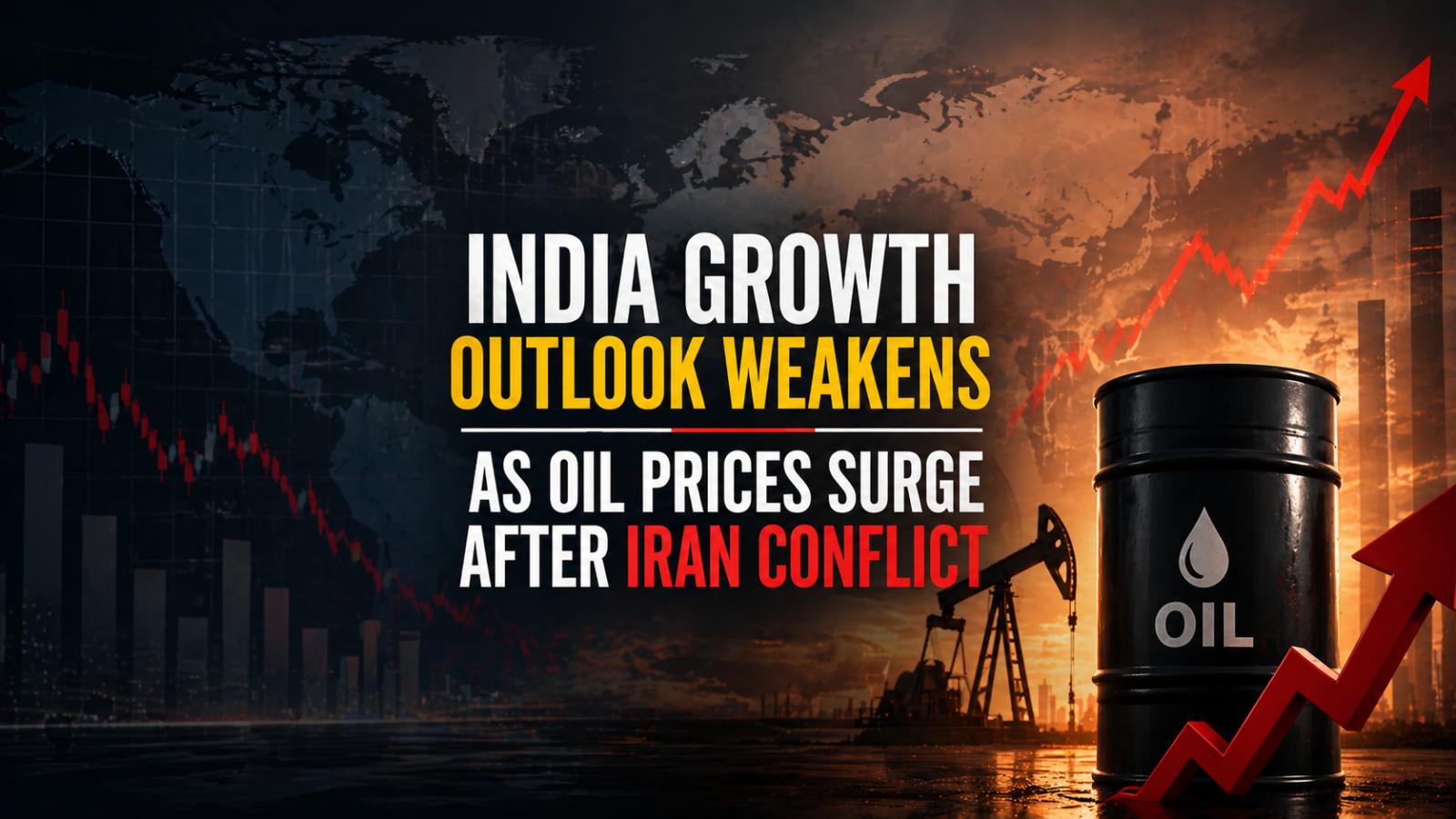
India economy faces slowdown risks amid rising crude oil prices
India growth slowdown: oil price surge impacts economy India growth slowdown has become a major concern after crude oil prices crossed $100 per barrel following tensions linked to the Iran conflict. The sharp increase in energy costs is already affecting corporate earnings and is expected to impact the FY27 outlook, according to analysts tracking the India economy slowdown. The rising oil price surge is not seen as a short-term issue. Higher crude oil prices are likely to continue putting pressure on multiple sectors including consumer, auto, and financial industries. JP Morgan has warned that supply disruptions and elevated energy costs India could persist for months, even after a ceasefire, delaying full normalization. The firm has reduced its FY27 earnings forecast by 2–10 percent across major sectors, highlighting the growing risks to corporate earnings India. Experts point out that the impact will be visible in different ways. Companies may face margin compression, reduced demand, and operational challenges, while consumers may experience the effects through higher prices and inflation India. These combined factors are expected to slow overall economic momentum. Market estimates show that Nifty EPS growth could drop sharply from earlier expectations of around 15 percent to nearly 7–8 percent if crude oil prices remain high. Key industries such as automobiles, oil and gas, and airlines are likely to be the most affected due to their heavy dependence on fuel. Despite these pressures, India Inc revenue growth remains stable, but the growth pattern is shifting from volume-driven to price-led expansion. This means companies are increasing prices to maintain revenues, a strategy that may not be sustainable if inflation continues to rise. West Asia continues to play a crucial role in India’s economy. The region accounts for a significant share of exports and remittances, making India highly sensitive to disruptions in West Asia trade and income flows. Any prolonged instability could further deepen the India growth slowdown. Investor sentiment has also weakened amid global uncertainty. Foreign portfolio investors have turned net sellers, with total FPI outflows reaching nearly ₹1.68 trillion since early 2026, reflecting concerns over geopolitical risks and economic stability.
India economy faces slowdown risks amid rising crude oil prices
India growth slowdown: oil price surge impacts economy India growth slowdown has become a major concern after crude oil prices crossed $100 per barrel following tensions linked to the Iran conflict. The sharp increase in energy costs is already affecting corporate earnings and is expected to impact the FY27 outlook, according to analysts tracking the India economy slowdown. The rising oil price surge is not seen as a short-term issue. Higher crude oil prices are likely to continue putting pressure on multiple sectors including consumer, auto, and financial industries. JP Morgan has warned that supply disruptions and elevated energy costs India could persist for months, even after a ceasefire, delaying full normalization. The firm has reduced its FY27 earnings forecast by 2–10 percent across major sectors, highlighting the growing risks to corporate earnings India. Experts point out that the impact will be visible in different ways. Companies may face margin compression, reduced demand, and operational challenges, while consumers may experience the effects through higher prices and inflation India. These combined factors are expected to slow overall economic momentum. Market estimates show that Nifty EPS growth could drop sharply from earlier expectations of around 15 percent to nearly 7–8 percent if crude oil prices remain high. Key industries such as automobiles, oil and gas, and airlines are likely to be the most affected due to their heavy dependence on fuel. Despite these pressures, India Inc revenue growth remains stable, but the growth pattern is shifting from volume-driven to price-led expansion. This means companies are increasing prices to maintain revenues, a strategy that may not be sustainable if inflation continues to rise. West Asia continues to play a crucial role in India’s economy. The region accounts for a significant share of exports and remittances, making India highly sensitive to disruptions in West Asia trade and income flows. Any prolonged instability could further deepen the India growth slowdown. Investor sentiment has also weakened amid global uncertainty. Foreign portfolio investors have turned net sellers, with total FPI outflows reaching nearly ₹1.68 trillion since early 2026, reflecting concerns over geopolitical risks and economic stability.
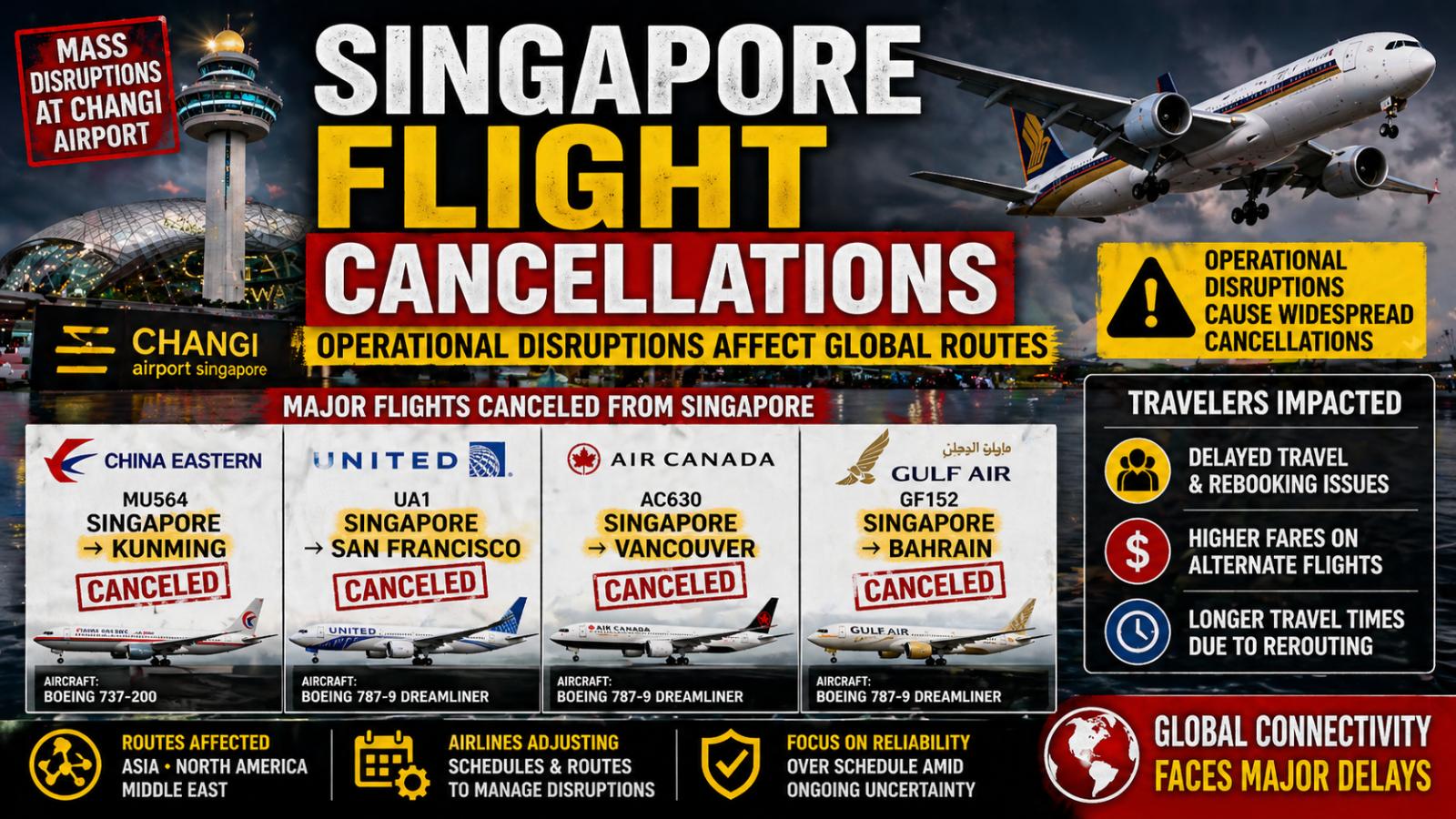
What caused Singapore flight cancellations? Operational disruptions affect global routes
What caused Singapore flight cancellations? Operational disruptions affect global routes as multiple departures from Singapore’s Changi Airport were canceled, impacting both regional and long-haul travel. The disruptions affected flights bound for Kunming, San Francisco, Vancouver, and Bahrain, underscoring operational challenges at one of Asia’s busiest aviation hubs. Airlines and routes affected across Asia, North America, and the Middle East Airli
What caused Singapore flight cancellations? Operational disruptions affect global routes
What caused Singapore flight cancellations? Operational disruptions affect global routes as multiple departures from Singapore’s Changi Airport were canceled, impacting both regional and long-haul travel. The disruptions affected flights bound for Kunming, San Francisco, Vancouver, and Bahrain, underscoring operational challenges at one of Asia’s busiest aviation hubs. Airlines and routes affected across Asia, North America, and the Middle East Airli
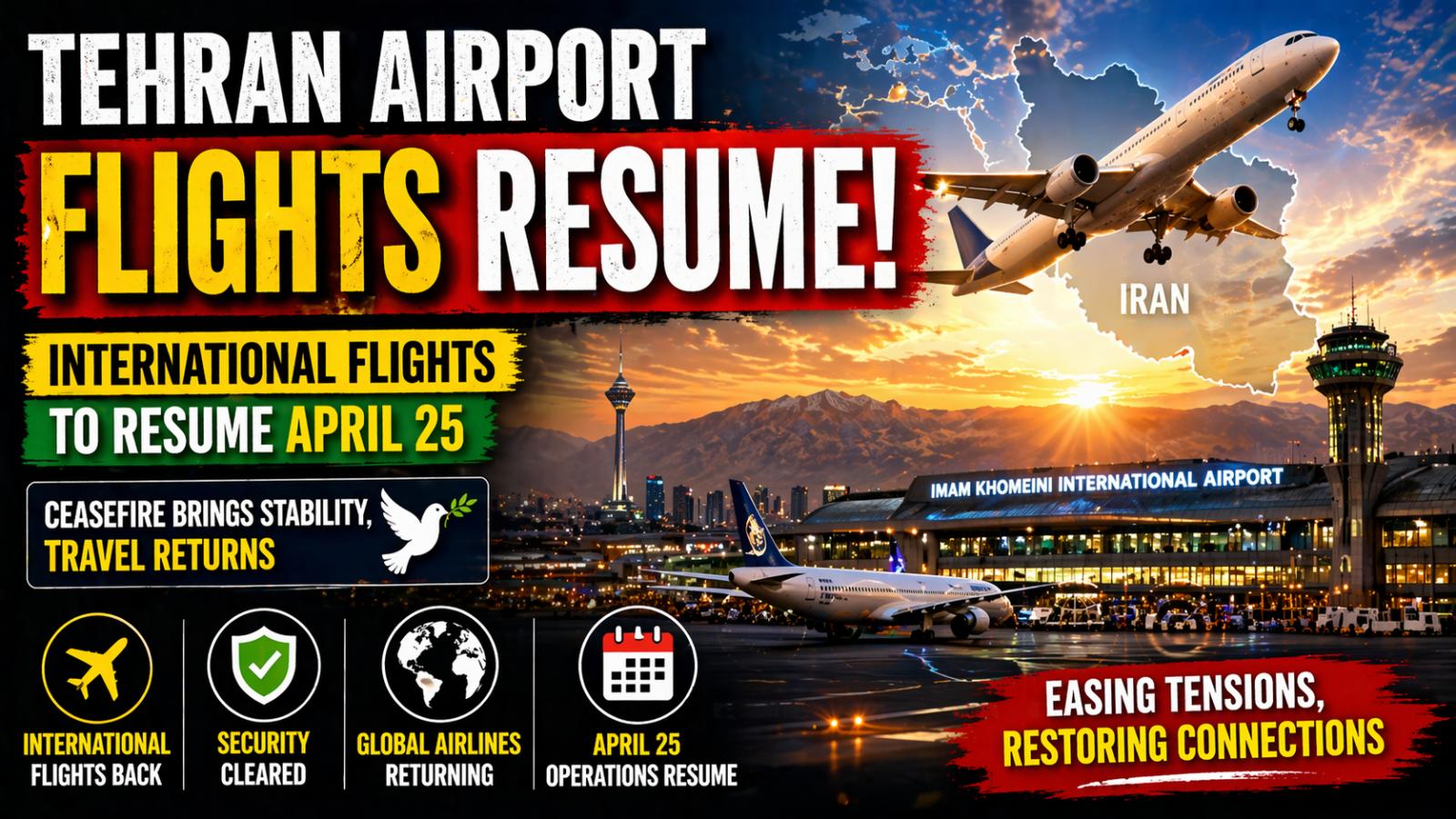
What does Tehran airport reopening signal? It marks easing regional tensions
What does Tehran airport reopening signal? It marks easing regional tensions, Tehran’s primary international gateway is preparing to resume global flight operations on Saturday, April 25, 2026, according to Iranian aviation authorities, marking a significant step toward restoring stability after a week-long suspension tied to heightened regional tensions. Airport reopening follows week-long aviation shutdown Imam Khomeini International
What does Tehran airport reopening signal? It marks easing regional tensions
What does Tehran airport reopening signal? It marks easing regional tensions, Tehran’s primary international gateway is preparing to resume global flight operations on Saturday, April 25, 2026, according to Iranian aviation authorities, marking a significant step toward restoring stability after a week-long suspension tied to heightened regional tensions. Airport reopening follows week-long aviation shutdown Imam Khomeini International
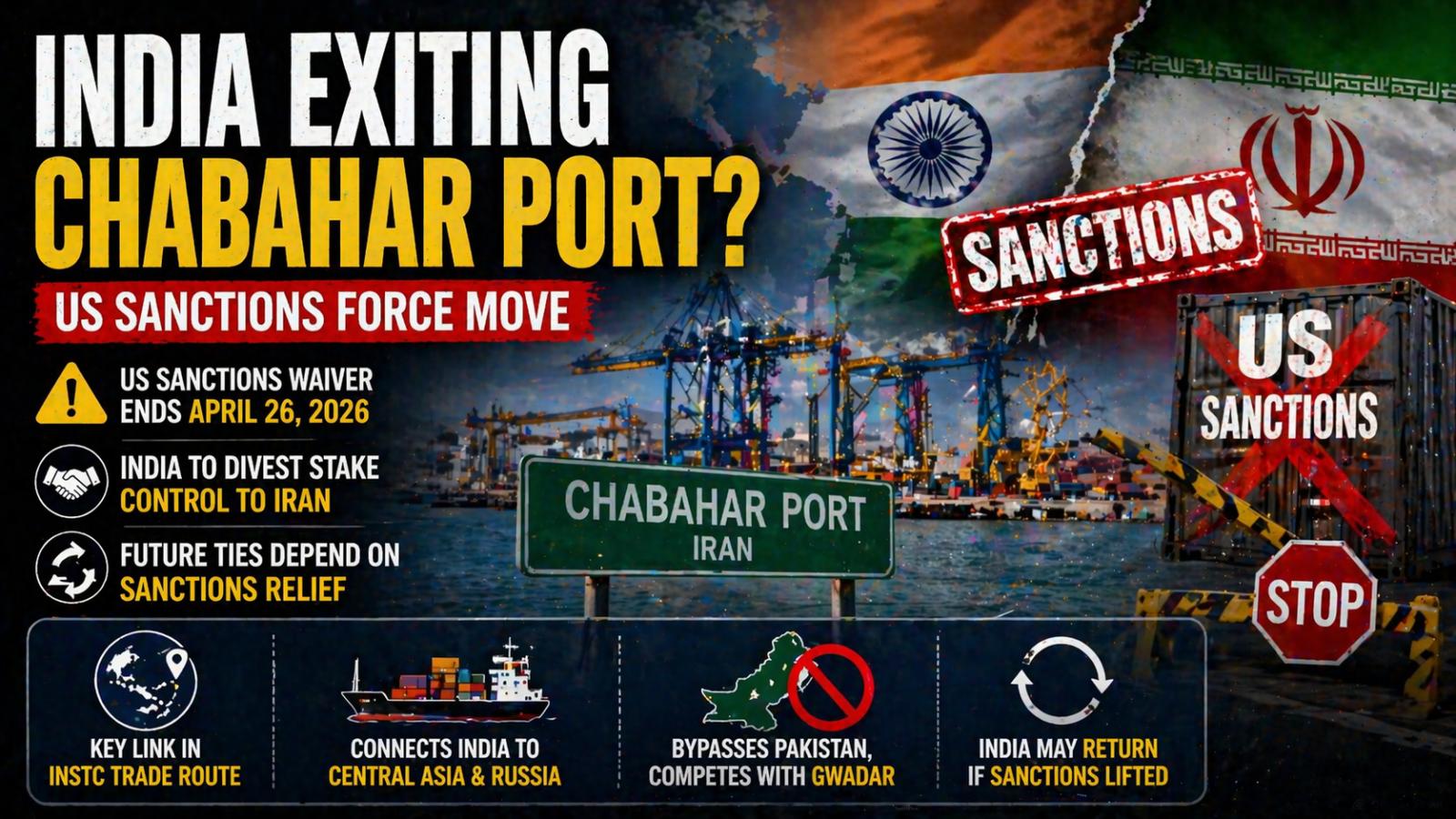
Why is India exiting Chabahar port? Government plans divestment amid US sanctions
Sanctions pressure drives India’s planned exit from Chabahar port Why is India exiting Chabahar port? Government plans divestment amid US sanctions as New Delhi prepares to step back from the strategic Iranian port ahead of the expiration of a US sanctions waiver on Sunday, April 26, 2026. The move is expected to transfer operational control to a local Iranian entity while preserving the possibility of India’s return if sanctions are lifted or a new waiver is g
Why is India exiting Chabahar port? Government plans divestment amid US sanctions
Sanctions pressure drives India’s planned exit from Chabahar port Why is India exiting Chabahar port? Government plans divestment amid US sanctions as New Delhi prepares to step back from the strategic Iranian port ahead of the expiration of a US sanctions waiver on Sunday, April 26, 2026. The move is expected to transfer operational control to a local Iranian entity while preserving the possibility of India’s return if sanctions are lifted or a new waiver is g

Rihanna Returns To India After 2 Years, Captures Crowd During Mumbai Arrival
Global pop icon Rihanna returned to India on April 24, 2026, marking her second visit to the country. The singer was spotted arriving in Mumbai, where she received an enthusiastic welcome from fans and paparazzi at Kalina Airport. Dressed in an all-black outfit, Rihanna completed her look with a sleek ponytail, dark sunglasses, and gold jewellery, making a striking appearance as she stepped out of a private jet. As she made her way through the airport under tight security, photographers greeted her with chants of “RiRi,” to which she responded warmly by waving, smiling, and even blowing kisses. Her brief yet engaging interaction with the media quickly became a highlight of her arrival, reflecting her strong connection with fans in India. Videos circulating on social media captured a unique moment during her arrival, showing Rihanna recording the crowd gathered around her car on her phone. The clip, which has since gone viral, shows the singer documenting the excitement of fans who had gathered in large numbers to catch a glimpse of her. This visit comes two years after Rihanna’s much-talked-about trip to India in 2024, when she performed at the pre-wedding celebrations of Anant Ambani and Radhika Merchant in Jamnagar. Her performance at the event marked her first-ever live show in India and became one of the most memorable highlights of the grand celebration. The Jamnagar festivities were attended by several global personalities, including Mark Zuckerberg, Bill Gates, and Ivanka Trump, making it a star-studded international affair. Rihanna’s latest visit has once again generated significant buzz, with fans eagerly sharing videos and photos across social media platforms. While the purpose of her current trip remains undisclosed, her presence in Mumbai has already created excitement among fans and the entertainment industry alike.
Rihanna Returns To India After 2 Years, Captures Crowd During Mumbai Arrival
Global pop icon Rihanna returned to India on April 24, 2026, marking her second visit to the country. The singer was spotted arriving in Mumbai, where she received an enthusiastic welcome from fans and paparazzi at Kalina Airport. Dressed in an all-black outfit, Rihanna completed her look with a sleek ponytail, dark sunglasses, and gold jewellery, making a striking appearance as she stepped out of a private jet. As she made her way through the airport under tight security, photographers greeted her with chants of “RiRi,” to which she responded warmly by waving, smiling, and even blowing kisses. Her brief yet engaging interaction with the media quickly became a highlight of her arrival, reflecting her strong connection with fans in India. Videos circulating on social media captured a unique moment during her arrival, showing Rihanna recording the crowd gathered around her car on her phone. The clip, which has since gone viral, shows the singer documenting the excitement of fans who had gathered in large numbers to catch a glimpse of her. This visit comes two years after Rihanna’s much-talked-about trip to India in 2024, when she performed at the pre-wedding celebrations of Anant Ambani and Radhika Merchant in Jamnagar. Her performance at the event marked her first-ever live show in India and became one of the most memorable highlights of the grand celebration. The Jamnagar festivities were attended by several global personalities, including Mark Zuckerberg, Bill Gates, and Ivanka Trump, making it a star-studded international affair. Rihanna’s latest visit has once again generated significant buzz, with fans eagerly sharing videos and photos across social media platforms. While the purpose of her current trip remains undisclosed, her presence in Mumbai has already created excitement among fans and the entertainment industry alike.
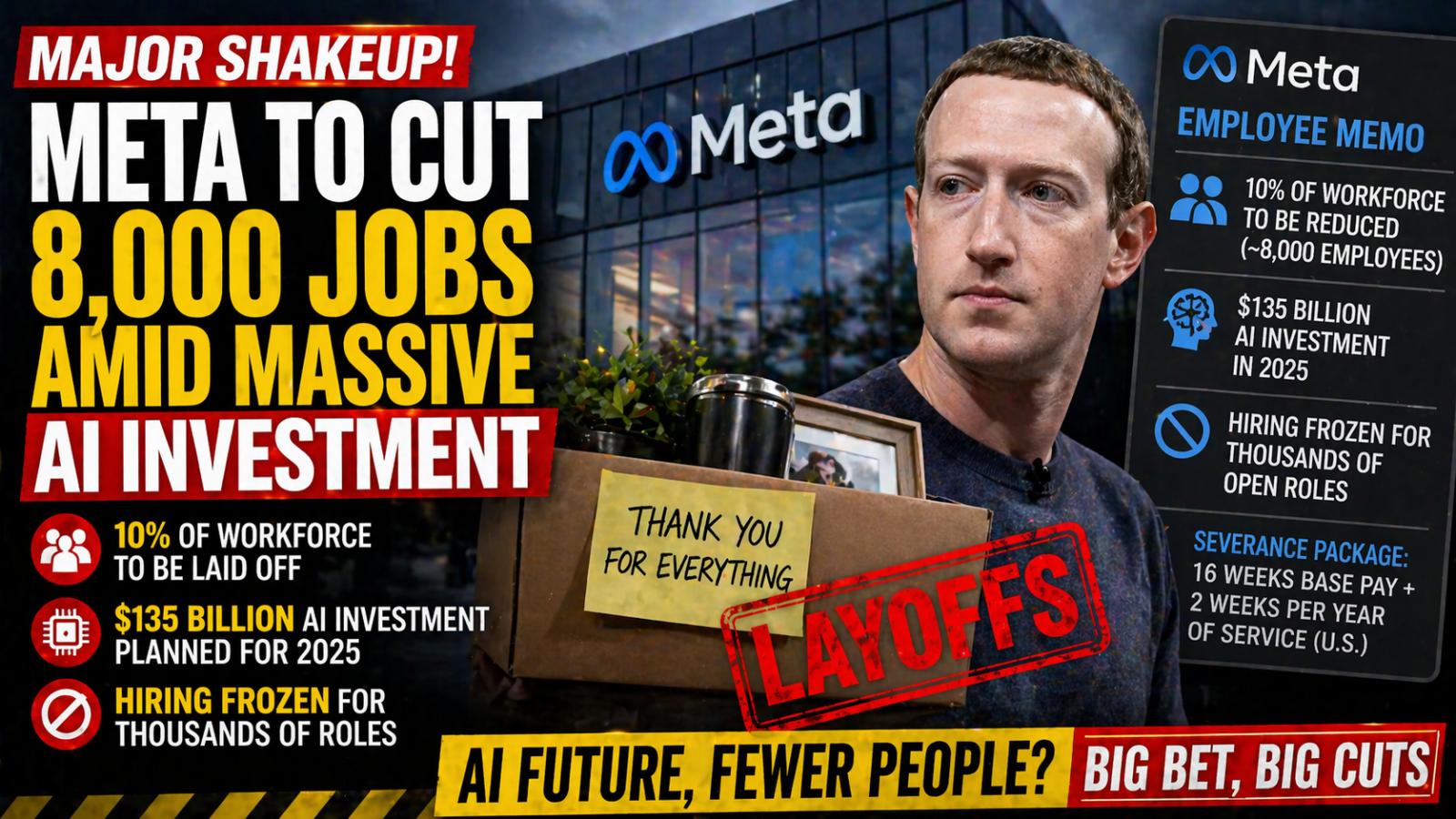
Meta to Lay Off Thousands as AI Spending Reaches New Highs
Meta is preparing to reduce its global workforce as part of a broader strategy to increase investment in artificial intelligence. In an internal communication to employees, the company outlined plans to cut approximately 10 percent of its workforce, affecting around 8,000 employees, while also pausing hiring for numerous open positions. The move reflects a shift in priorities as Meta accel
Meta to Lay Off Thousands as AI Spending Reaches New Highs
Meta is preparing to reduce its global workforce as part of a broader strategy to increase investment in artificial intelligence. In an internal communication to employees, the company outlined plans to cut approximately 10 percent of its workforce, affecting around 8,000 employees, while also pausing hiring for numerous open positions. The move reflects a shift in priorities as Meta accel
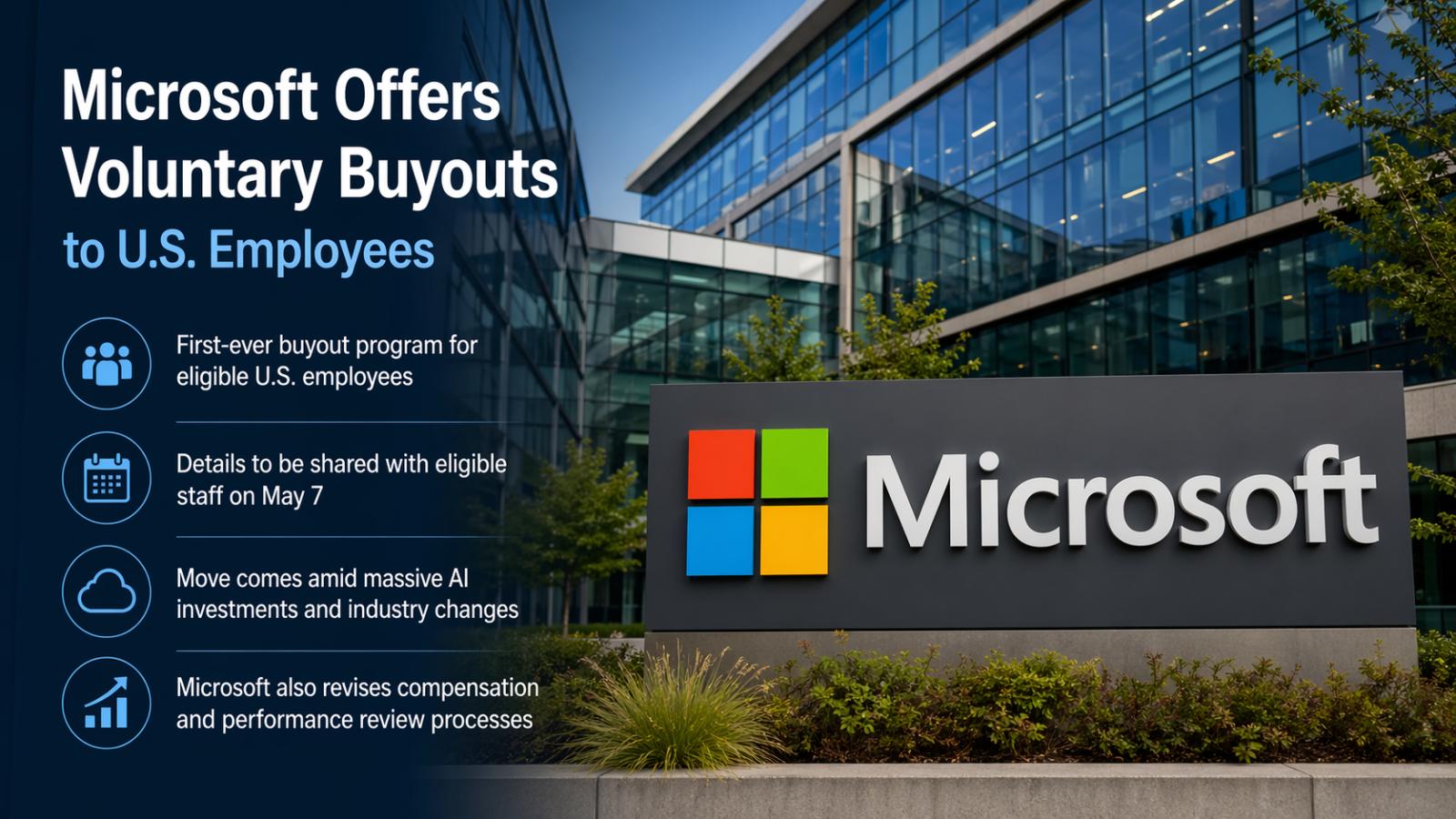
Why is Microsoft offering buyouts to U.S. employees? It aims to adapt to AI-driven industry changes
Voluntary buyouts introduced for U.S. workforce amid AI shift Microsoft is offering voluntary buyouts to a portion of its U.S. workforce, marking the first such initiative in the company’s 51-year history. The move comes as the broader technology sector adjusts to rapid changes driven by the rise of artificial intelligence. According to a person familiar with the plan,
Why is Microsoft offering buyouts to U.S. employees? It aims to adapt to AI-driven industry changes
Voluntary buyouts introduced for U.S. workforce amid AI shift Microsoft is offering voluntary buyouts to a portion of its U.S. workforce, marking the first such initiative in the company’s 51-year history. The move comes as the broader technology sector adjusts to rapid changes driven by the rise of artificial intelligence. According to a person familiar with the plan,
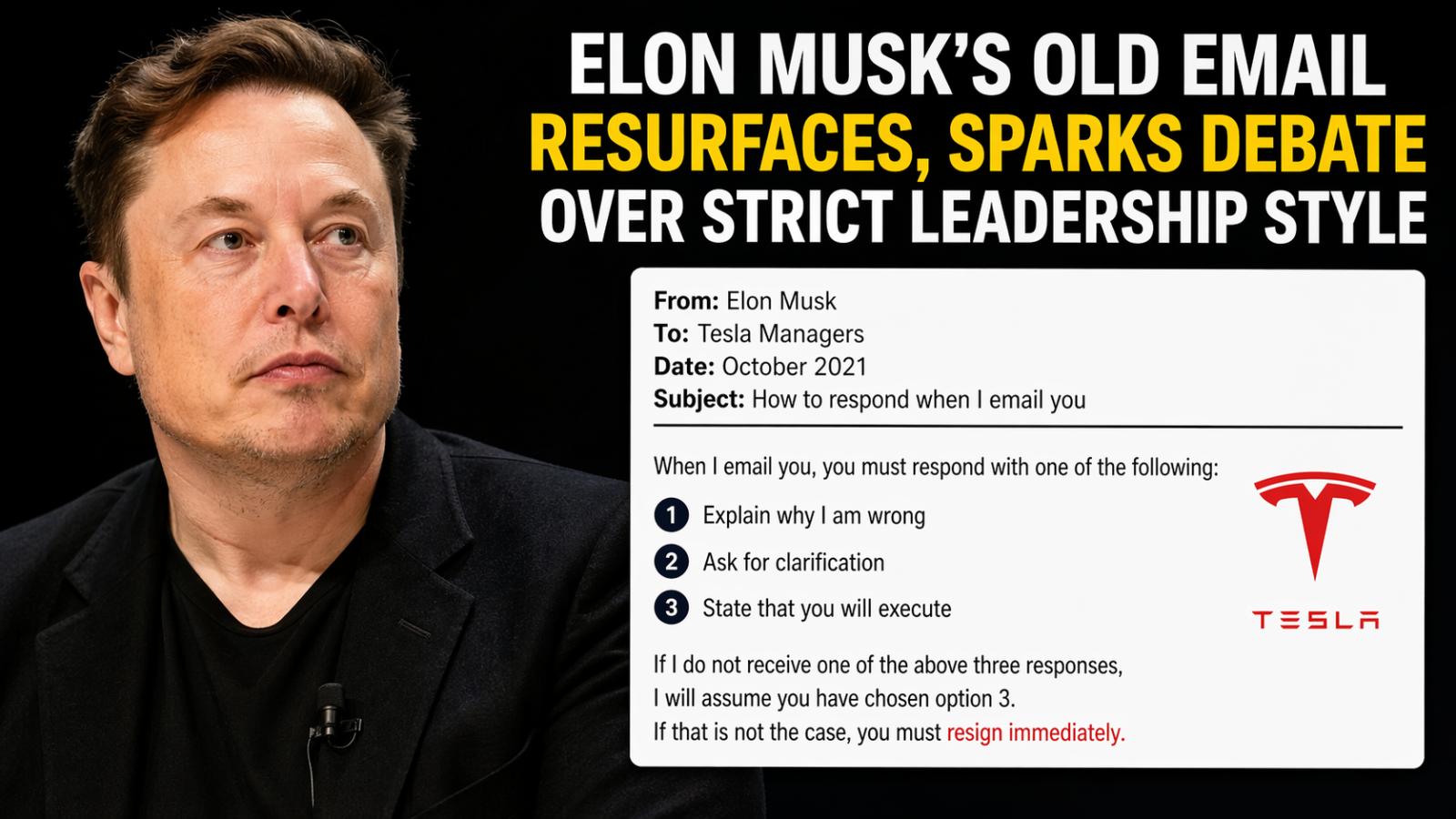
What did Elon Musk tell Tesla managers? Follow three steps or resign, email says
Resurfaced email sparks fresh debate on leadership style An internal email sent by Elon Musk to employees at Tesla in October 2021 has resurfaced on X, reigniting debate about his dire
What did Elon Musk tell Tesla managers? Follow three steps or resign, email says
Resurfaced email sparks fresh debate on leadership style An internal email sent by Elon Musk to employees at Tesla in October 2021 has resurfaced on X, reigniting debate about his dire

TCS enters broader discussion on workplace conduct and women’s treatment in India
India’s reverence for goddesses contrasts with rising concerns over women’s safety, workplace conduct, and equality, as discussions around TCS highlight broader systemic and cultural gaps A growing public conversation in India is highlighting a stark contrast between longstanding cultural values and contemporary realities surrounding the treatment of women. In a country where the Earth is often revered as a mother figure and rivers such as the Ganges are consid
TCS enters broader discussion on workplace conduct and women’s treatment in India
India’s reverence for goddesses contrasts with rising concerns over women’s safety, workplace conduct, and equality, as discussions around TCS highlight broader systemic and cultural gaps A growing public conversation in India is highlighting a stark contrast between longstanding cultural values and contemporary realities surrounding the treatment of women. In a country where the Earth is often revered as a mother figure and rivers such as the Ganges are consid

What does the Warner-Paramount merger approval mean? It moves a $111B deal closer to closing
Shareholder vote advances historic media consolidation Warner Bros. Discovery shareholders voted on Thursday, April 23, 2026, to approve a proposed sale of the company to Paramount, marking a major step toward finalizing one of the largest media mergers in recent history. According to preliminary results released the same day, a strong majority supported the $31-per-share offer, placing the total transaction value at nearly $111 billion, including debt. The vote signals significant investor backing for a deal that would reshape the structure of the global entertainment industry. Combined assets could redefine streaming and legacy media If completed, the merger would unite Warner’s portfolio — including HBO Max, CNN, and the Harry Potter franchise — with Paramount’s holdings such as CBS, Paramount+, and major film properties like Top Gun. The combined entity would bring together two of Hollywood’s remaining major studios while consolidating major streaming platforms under one corporate umbrella. Executives argue that the integration could deliver expanded content libraries and potentially streamline consumer offerings through unified services. Rival bids and shifting alliances shaped the outcome The path to shareholder approval followed months of intense competition and shifting strategies. Warner had previously rejected Paramount’s initial approach in favor of a $72 billion proposal from Netflix focused on studio and streaming assets. Paramount later pursued a direct appeal to shareholders with a broader acquisition plan, eventually increasing its bid. Netflix ultimately withdrew, allowing Paramount to secure board support and shareholder approval. Industry backlash and political scrutiny intensify Despite corporate backing, the merger has drawn strong opposition from industry professionals and policymakers. Thousands of actors, writers, and directors have warned that further consolidation could reduce job opportunities and limit creative diversity. U.S. Senator Cory Booker raised concerns during a recent hearing in Washington, questioning the broader implications for control over news and entertainment content. Regulatory agencies, including the Department of Justice, are continuing their review, with additional scrutiny expected from state and international authorities. Uncertainty remains over jobs, pricing, and editorial direction Paramount leadership has pledged to maintain theatrical releases and invest in film production, while also acknowledging the likelihood of cost-cutting measures, including layoffs. Analysts and critics caution that consolidation could lead to higher subscription costs and fewer content choices over time. Questions have also emerged regarding editorial direction at major news outlets like CNN and CBS, particularly as ownership changes intersect with political and financial influences. Warner has indicated the deal could close in the third fiscal quarter of 2026, pending regulatory approvals.
What does the Warner-Paramount merger approval mean? It moves a $111B deal closer to closing
Shareholder vote advances historic media consolidation Warner Bros. Discovery shareholders voted on Thursday, April 23, 2026, to approve a proposed sale of the company to Paramount, marking a major step toward finalizing one of the largest media mergers in recent history. According to preliminary results released the same day, a strong majority supported the $31-per-share offer, placing the total transaction value at nearly $111 billion, including debt. The vote signals significant investor backing for a deal that would reshape the structure of the global entertainment industry. Combined assets could redefine streaming and legacy media If completed, the merger would unite Warner’s portfolio — including HBO Max, CNN, and the Harry Potter franchise — with Paramount’s holdings such as CBS, Paramount+, and major film properties like Top Gun. The combined entity would bring together two of Hollywood’s remaining major studios while consolidating major streaming platforms under one corporate umbrella. Executives argue that the integration could deliver expanded content libraries and potentially streamline consumer offerings through unified services. Rival bids and shifting alliances shaped the outcome The path to shareholder approval followed months of intense competition and shifting strategies. Warner had previously rejected Paramount’s initial approach in favor of a $72 billion proposal from Netflix focused on studio and streaming assets. Paramount later pursued a direct appeal to shareholders with a broader acquisition plan, eventually increasing its bid. Netflix ultimately withdrew, allowing Paramount to secure board support and shareholder approval. Industry backlash and political scrutiny intensify Despite corporate backing, the merger has drawn strong opposition from industry professionals and policymakers. Thousands of actors, writers, and directors have warned that further consolidation could reduce job opportunities and limit creative diversity. U.S. Senator Cory Booker raised concerns during a recent hearing in Washington, questioning the broader implications for control over news and entertainment content. Regulatory agencies, including the Department of Justice, are continuing their review, with additional scrutiny expected from state and international authorities. Uncertainty remains over jobs, pricing, and editorial direction Paramount leadership has pledged to maintain theatrical releases and invest in film production, while also acknowledging the likelihood of cost-cutting measures, including layoffs. Analysts and critics caution that consolidation could lead to higher subscription costs and fewer content choices over time. Questions have also emerged regarding editorial direction at major news outlets like CNN and CBS, particularly as ownership changes intersect with political and financial influences. Warner has indicated the deal could close in the third fiscal quarter of 2026, pending regulatory approvals.

TCS Nashik Harassment Case: Survivor Alleges Abuse, Religious Insults At Workplace
A shocking workplace harassment case has emerged from the Nashik branch of Tata Consultancy Services, where a female employee has alleged months of sexual harassment, verbal abuse, and religious insults by multiple colleagues. The survivor, who joined the company in July 2024, described the office environment as deeply unsafe and intimidating, claiming that accused employees operated without fear due to alleged protection from senior officials. According to her complaint, the harass
TCS Nashik Harassment Case: Survivor Alleges Abuse, Religious Insults At Workplace
A shocking workplace harassment case has emerged from the Nashik branch of Tata Consultancy Services, where a female employee has alleged months of sexual harassment, verbal abuse, and religious insults by multiple colleagues. The survivor, who joined the company in July 2024, described the office environment as deeply unsafe and intimidating, claiming that accused employees operated without fear due to alleged protection from senior officials. According to her complaint, the harass
Kerala Fireworks Unit Blast Kills 13 Ahead Of Thrissur Pooram
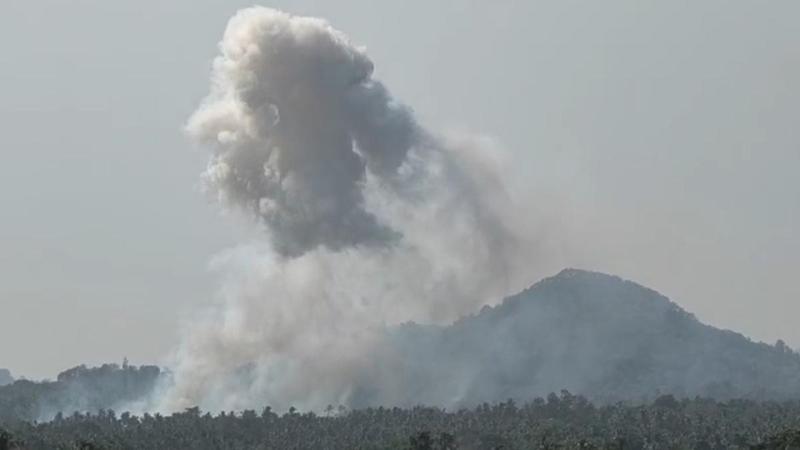
A tragic explosion at a fireworks manufacturing unit in Mundathikode, located in Kerala, has claimed the lives of at least 13 people and left around 40 others injured, several of them in critical condition. The incident occurred just days before the grand celebrations of Thrissur Pooram, one of the most prominent temple festivals in the state, where elaborate fireworks displays are a major highlight. According to initial reports, the blast took place while workers were preparing fireworks for the upcoming festival. The explosion triggered a massive fire that quickly engulfed the unit, causing widespread destruction and panic in the surrounding area. Eyewitnesses described multiple blasts occurring in quick succession, indicating the presence of highly volatile materials stored inside the facility. Authorities rushed to the spot immediately after receiving alerts, with fire and rescue teams working tirelessly to control the flames and search for survivors. Due to the intensity of the explosion and the extent of the damage, drones were deployed to assess the situation from above and help locate victims trapped under debris. Emergency services shifted the injured to nearby hospitals, where doctors confirmed that several victims remain in critical condition. The incident has raised serious concerns about safety standards in fireworks manufacturing units, especially during peak festival seasons when production is at its highest. Officials have launched an investigation to determine the exact cause of the explosion and to check whether safety regulations were violated. Preliminary findings suggest that improper storage or handling of explosive materials may have contributed to the tragedy. Local authorities have also initiated a review of all licensed fireworks units in the region to prevent similar incidents in the future. Meanwhile, families of the victims are grappling with immense grief as the state mourns the loss of lives in what is being described as one of the deadliest industrial accidents in recent times.
Kerala Fireworks Unit Blast Kills 13 Ahead Of Thrissur Pooram
A tragic explosion at a fireworks manufacturing unit in Mundathikode, located in Kerala, has claimed the lives of at least 13 people and left around 40 others injured, several of them in critical condition. The incident occurred just days before the grand celebrations of Thrissur Pooram, one of the most prominent temple festivals in the state, where elaborate fireworks displays are a major highlight. According to initial reports, the blast took place while workers were preparing fireworks for the upcoming festival. The explosion triggered a massive fire that quickly engulfed the unit, causing widespread destruction and panic in the surrounding area. Eyewitnesses described multiple blasts occurring in quick succession, indicating the presence of highly volatile materials stored inside the facility. Authorities rushed to the spot immediately after receiving alerts, with fire and rescue teams working tirelessly to control the flames and search for survivors. Due to the intensity of the explosion and the extent of the damage, drones were deployed to assess the situation from above and help locate victims trapped under debris. Emergency services shifted the injured to nearby hospitals, where doctors confirmed that several victims remain in critical condition. The incident has raised serious concerns about safety standards in fireworks manufacturing units, especially during peak festival seasons when production is at its highest. Officials have launched an investigation to determine the exact cause of the explosion and to check whether safety regulations were violated. Preliminary findings suggest that improper storage or handling of explosive materials may have contributed to the tragedy. Local authorities have also initiated a review of all licensed fireworks units in the region to prevent similar incidents in the future. Meanwhile, families of the victims are grappling with immense grief as the state mourns the loss of lives in what is being described as one of the deadliest industrial accidents in recent times.










