





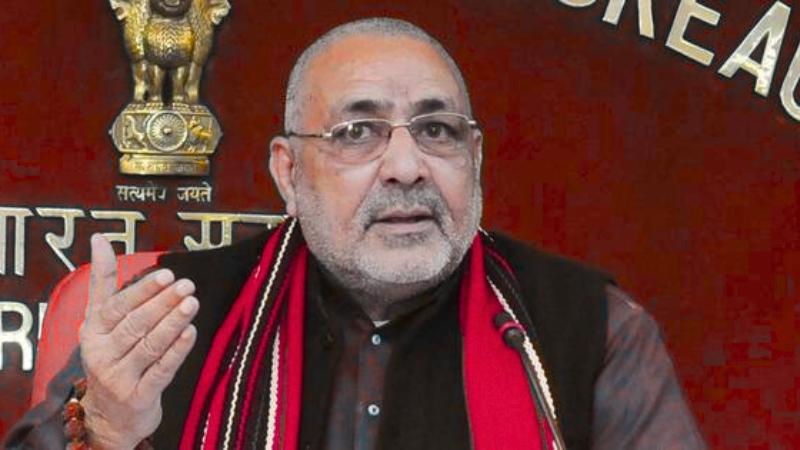






India-Russia political cooperation crucial in volatile global environment, says S Jaishankar
In a key diplomatic meeting this week, India's External Affairs Minister, S. Jaishankar, sat down with Russian Foreign Minister Sergey Lavrov to discuss the strengthening of ties between the two countries. As global uncertainties grow, the two leaders emphasized the growing importance of their political and economic cooperation. Jaishankar highlighted how vital it is for India and Russia to continue collaborating in these unpredictable times. This meeting comes just ahead of the BRI
India-Russia political cooperation crucial in volatile global environment, says S Jaishankar
In a key diplomatic meeting this week, India's External Affairs Minister, S. Jaishankar, sat down with Russian Foreign Minister Sergey Lavrov to discuss the strengthening of ties between the two countries. As global uncertainties grow, the two leaders emphasized the growing importance of their political and economic cooperation. Jaishankar highlighted how vital it is for India and Russia to continue collaborating in these unpredictable times. This meeting comes just ahead of the BRI
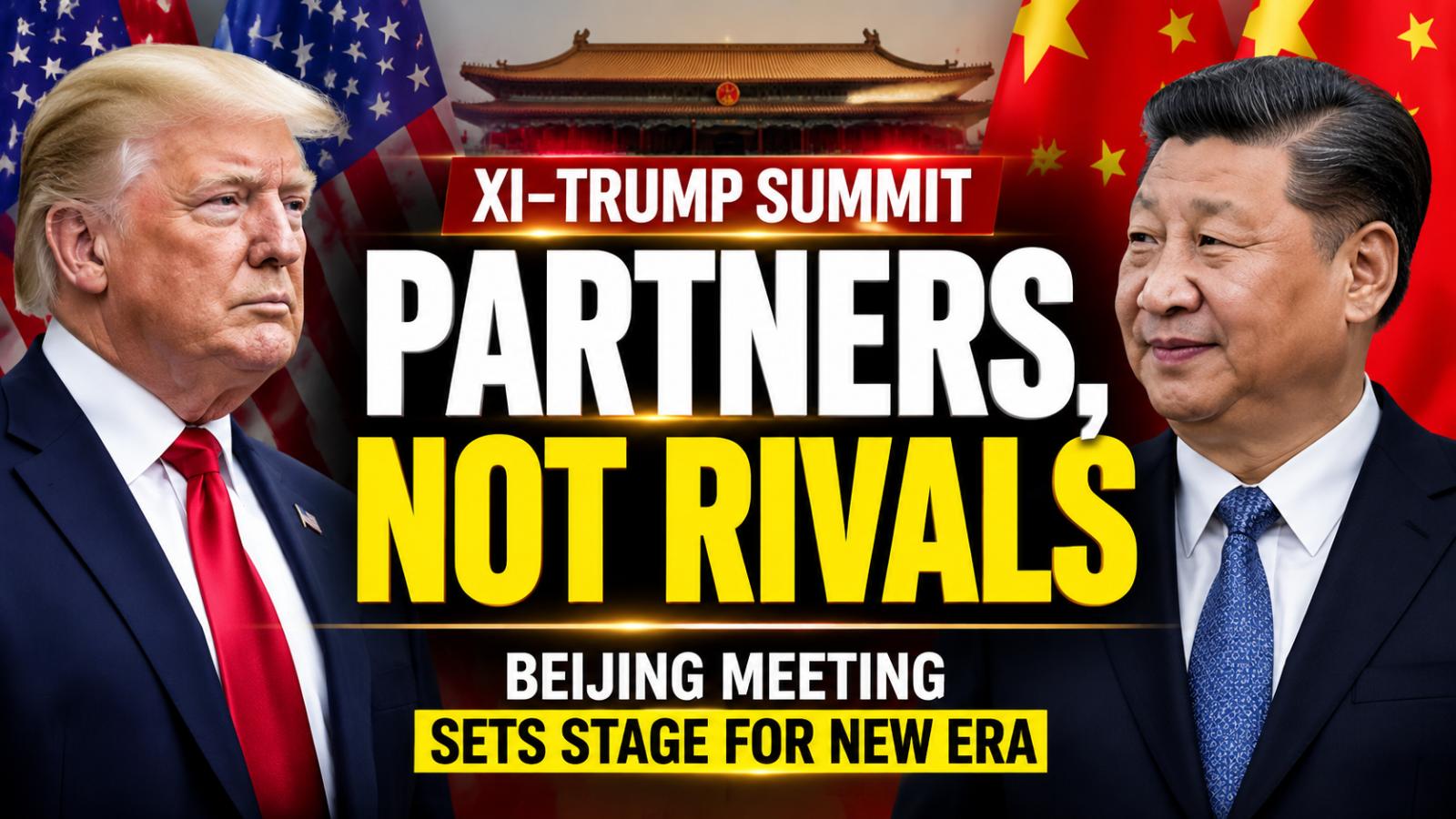
Xi and Trump Summit at Beijing
Historic Summit Marks a New Phase for US-China Relations On Thursday, May 14, 2026, Chinese President Xi Jinping welcomed US President Donald Trump to Beijing for a high-stakes summit, marking a critical moment in the evolving relationship between the two global powers. Xi set the tone for the summit by stressing the importance of cooperation over confrontation, calling for a stable US-China relationship as a foundation for global stability. “A stable China-US relationship is a
Xi and Trump Summit at Beijing
Historic Summit Marks a New Phase for US-China Relations On Thursday, May 14, 2026, Chinese President Xi Jinping welcomed US President Donald Trump to Beijing for a high-stakes summit, marking a critical moment in the evolving relationship between the two global powers. Xi set the tone for the summit by stressing the importance of cooperation over confrontation, calling for a stable US-China relationship as a foundation for global stability. “A stable China-US relationship is a
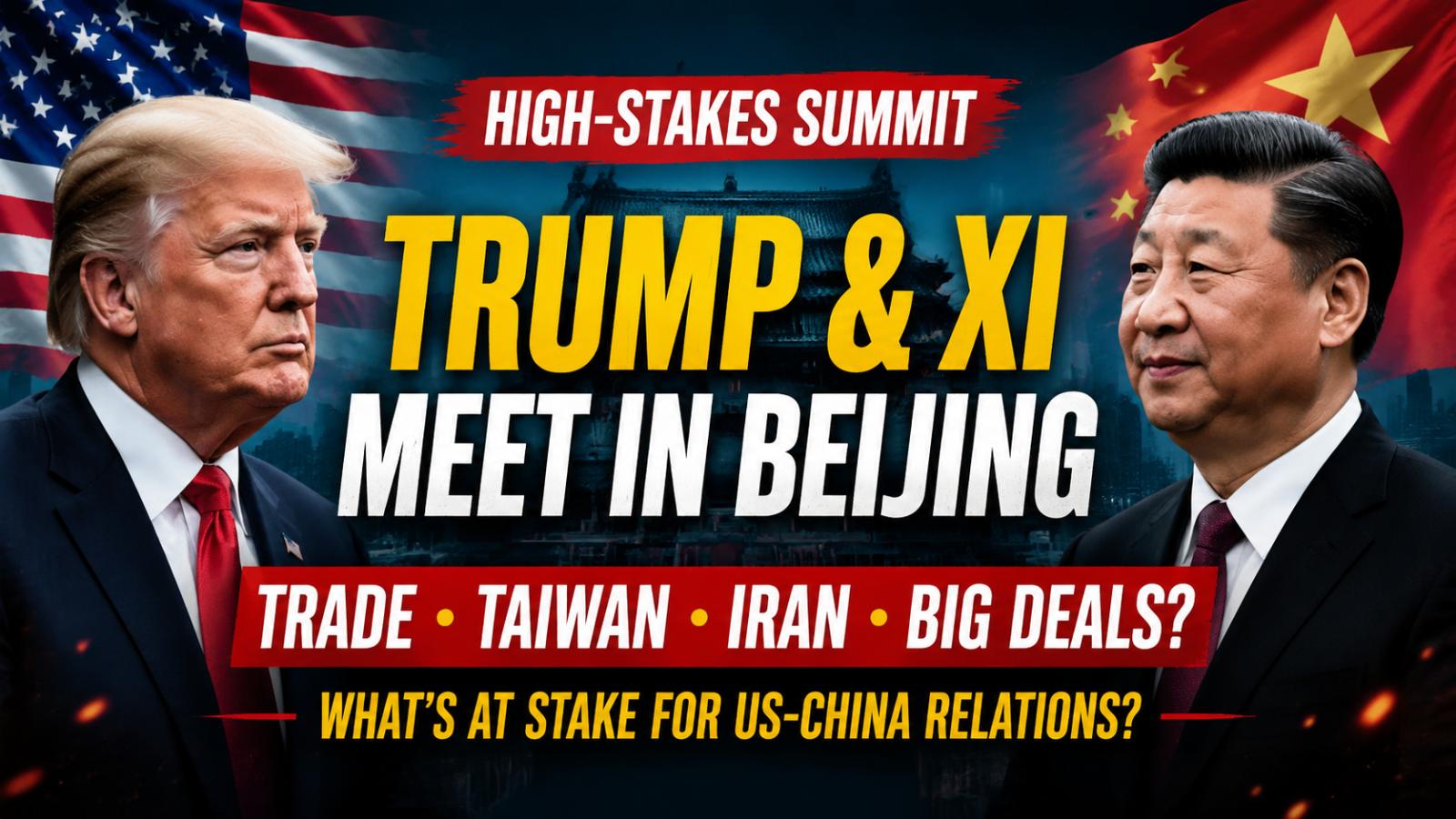
US-China Summit: Trump and Xi Discuss Trade, Taiwan, and Iran
On May 14, US President Donald Trump will meet Chinese President Xi Jinping in Beijing for an important summit that could reshape the US-China relationship. This high-level meeting comes after years of trade disputes, rising tensions over Taiwan, and concerns about Iran’s nuclear ambitions. The two leaders are expected to tackle these critical issues head-on, with major global implications. This marks Trump’s first visit to China since 2017, and the atmosphere surrounding the trip is tense, yet optimistic. Alongside the president, top business leaders, including Nvidia’s Jensen Huang and Tesla’s Elon Musk, will be part of the delegation, emphasizing the US’s desire to push for commercial deals that strengthen trade ties with China. The summit is taking place against the backdrop of escalating tensions, including the ongoing trade war between the two powers, China’s rare earth restrictions, and the fierce competition in artificial intelligence (AI). Trade Tensions: A Fragile Truce One of the central issues on the table is trade. The US and China have been at odds for years, with both countries imposing tariffs on each other's goods. While last year saw a brief period of truce, many unresolved issues remain. President Trump is expected to press China for further trade reforms and better deals for American businesses, especially in the face of high tariffs and economic uncertainty.Both sides are aware that the trade dynamics have far-reaching consequences for the global economy, so finding common ground will be critical. Taiwan: A Stubborn Point of Contention Another major issue will be Taiwan, which has long been a flashpoint between the two nations. China views Taiwan as an inseparable part of its territory, while the US has shown strong support for the island’s autonomy. With tensions rising, especially after China increased military activity near Taiwan, the US's stance on Taiwan remains a key area of friction. Trump’s administration has been vocal about its support for Taiwan, and it remains to be seen how this will affect the overall talks. How the two leaders address this issue will set the tone for future interactions between the two countries, especially considering the delicate balance the US must strike between its relationship with China and its support for Taiwan. Iran: A Strategic Challenge Trump is also expected to address the situation in Iran, seeking China’s cooperation on curbing Iran’s nuclear ambitions. With China’s significant economic ties to Iran, Trump hopes Beijing can use its influence to help rein in Tehran’s nuclear program and reduce instability in the Middle East. China’s role in global diplomacy has been growing, and this summit could serve as a turning point for its involvement in international peace efforts. The Stakes of the Summit Both leaders face high stakes at this summit. Trump’s goal is clear: to secure deals that will benefit American businesses and address concerns about China’s rising influence in global trade and AI. For China, maintaining its geopolitical power while ensuring economic growth is paramount. Despite the challenging topics, both leaders know the importance of maintaining a functional relationship for global stability. As the summit unfolds, eyes will be on whether the two leaders can navigate their differences and strike a deal that addresses the critical issues of trade, Taiwan, and Iran. The outcome will not just shape US-China relations, but could influence global geopolitics for years to come. This meeting is more than just diplomacy; it's a chance to shape the future of international relations, with consequences that reach far beyond the negotiating table.
US-China Summit: Trump and Xi Discuss Trade, Taiwan, and Iran
On May 14, US President Donald Trump will meet Chinese President Xi Jinping in Beijing for an important summit that could reshape the US-China relationship. This high-level meeting comes after years of trade disputes, rising tensions over Taiwan, and concerns about Iran’s nuclear ambitions. The two leaders are expected to tackle these critical issues head-on, with major global implications. This marks Trump’s first visit to China since 2017, and the atmosphere surrounding the trip is tense, yet optimistic. Alongside the president, top business leaders, including Nvidia’s Jensen Huang and Tesla’s Elon Musk, will be part of the delegation, emphasizing the US’s desire to push for commercial deals that strengthen trade ties with China. The summit is taking place against the backdrop of escalating tensions, including the ongoing trade war between the two powers, China’s rare earth restrictions, and the fierce competition in artificial intelligence (AI). Trade Tensions: A Fragile Truce One of the central issues on the table is trade. The US and China have been at odds for years, with both countries imposing tariffs on each other's goods. While last year saw a brief period of truce, many unresolved issues remain. President Trump is expected to press China for further trade reforms and better deals for American businesses, especially in the face of high tariffs and economic uncertainty.Both sides are aware that the trade dynamics have far-reaching consequences for the global economy, so finding common ground will be critical. Taiwan: A Stubborn Point of Contention Another major issue will be Taiwan, which has long been a flashpoint between the two nations. China views Taiwan as an inseparable part of its territory, while the US has shown strong support for the island’s autonomy. With tensions rising, especially after China increased military activity near Taiwan, the US's stance on Taiwan remains a key area of friction. Trump’s administration has been vocal about its support for Taiwan, and it remains to be seen how this will affect the overall talks. How the two leaders address this issue will set the tone for future interactions between the two countries, especially considering the delicate balance the US must strike between its relationship with China and its support for Taiwan. Iran: A Strategic Challenge Trump is also expected to address the situation in Iran, seeking China’s cooperation on curbing Iran’s nuclear ambitions. With China’s significant economic ties to Iran, Trump hopes Beijing can use its influence to help rein in Tehran’s nuclear program and reduce instability in the Middle East. China’s role in global diplomacy has been growing, and this summit could serve as a turning point for its involvement in international peace efforts. The Stakes of the Summit Both leaders face high stakes at this summit. Trump’s goal is clear: to secure deals that will benefit American businesses and address concerns about China’s rising influence in global trade and AI. For China, maintaining its geopolitical power while ensuring economic growth is paramount. Despite the challenging topics, both leaders know the importance of maintaining a functional relationship for global stability. As the summit unfolds, eyes will be on whether the two leaders can navigate their differences and strike a deal that addresses the critical issues of trade, Taiwan, and Iran. The outcome will not just shape US-China relations, but could influence global geopolitics for years to come. This meeting is more than just diplomacy; it's a chance to shape the future of international relations, with consequences that reach far beyond the negotiating table.
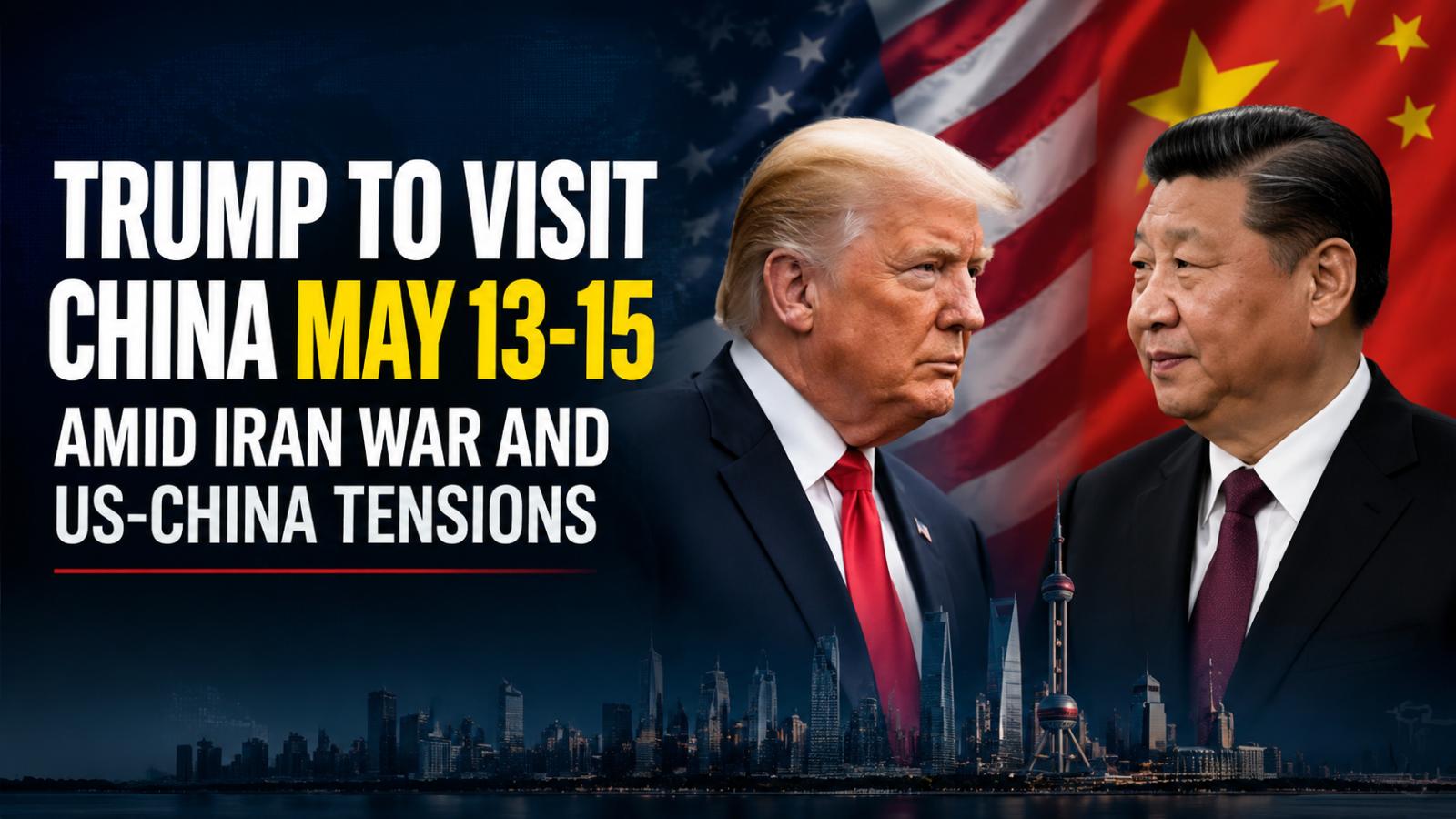
Trump-Xi summit: Key issues, trade talks, and Iran conflict to be addressed
US President Donald Trump is set to visit China from May 13 to 15, marking the first visit to the country by an American president in nearly nine years. The invitation comes from Chinese President Xi Jinping amid growing tensions between the two nations over issues such as trade, technology, and defense. This visit comes at a critical time for global politics, with the ongoing Iran conflict impacting both economic stability and energy prices. The timing of Trump’s visit coincides with a volatile situation in the Strait of Hormuz, where a dual blockade has significantly disrupted global oil trade, driving up energy prices. These disruptions have the potential to harm global economic growth, as the Strait is a vital shipping route for the world’s oil supply. Trump’s administration has placed significant pressure on Iran over its nuclear program, and in recent remarks, he stated that the US would “finish the job” if Iran did not agree to the terms aimed at halting the conflict. While tensions remain high, the US continues to press for a diplomatic resolution to the situation, with President Trump asserting that Iran must meet specific demands regarding its nuclear ambitions. Despite these pressures, Trump maintains that the US does not need China’s assistance to resolve the issue, suggesting that the conflict could be settled with or without China’s involvement. Iran, for its part, has signaled its intention to pursue peace, with chief negotiator Mohammad Bagher Ghalibaf issuing an ultimatum to the US. According to Ghalibaf, Washington must accept Iran’s recent peace proposal or face further failure in negotiations. He emphasized that there was no alternative but to acknowledge the rights of the Iranian people as outlined in Tehran’s 14-point proposal. Beyond the Iran conflict, the upcoming Trump-Xi summit is expected to address several key issues affecting US-China relations. Trade discussions will likely focus on extending a temporary truce in the ongoing trade dispute, particularly concerning rare earth minerals. Both leaders are expected to explore agreements related to Boeing aircraft purchases, as well as expanding trade and investment ties. Additionally, China is anticipated to announce purchases in the US agricultural and energy sectors. Another significant topic of discussion will be Taiwan, with Xi expressing frustration over the US’s continued support for the island nation, which China claims as part of its territory. Trump’s administration has reiterated its commitment to Taiwan, despite escalating military activities in the region by China. The summit will also cover the rapid development of artificial intelligence (AI) in both countries, with US officials highlighting concerns about the potential military and economic implications of AI advancements. With both nations at the forefront of technological innovation, there is a growing need for open communication to avoid misunderstandings or potential conflicts arising from the use of AI. This high-stakes summit between the US and China is poised to shape the future of global trade, energy security, and technological development, with both sides seeking to manage their differences while addressing urgent geopolitical challenges. As the world watches, the outcome of these talks could have far-reaching implications for international relations.
Trump-Xi summit: Key issues, trade talks, and Iran conflict to be addressed
US President Donald Trump is set to visit China from May 13 to 15, marking the first visit to the country by an American president in nearly nine years. The invitation comes from Chinese President Xi Jinping amid growing tensions between the two nations over issues such as trade, technology, and defense. This visit comes at a critical time for global politics, with the ongoing Iran conflict impacting both economic stability and energy prices. The timing of Trump’s visit coincides with a volatile situation in the Strait of Hormuz, where a dual blockade has significantly disrupted global oil trade, driving up energy prices. These disruptions have the potential to harm global economic growth, as the Strait is a vital shipping route for the world’s oil supply. Trump’s administration has placed significant pressure on Iran over its nuclear program, and in recent remarks, he stated that the US would “finish the job” if Iran did not agree to the terms aimed at halting the conflict. While tensions remain high, the US continues to press for a diplomatic resolution to the situation, with President Trump asserting that Iran must meet specific demands regarding its nuclear ambitions. Despite these pressures, Trump maintains that the US does not need China’s assistance to resolve the issue, suggesting that the conflict could be settled with or without China’s involvement. Iran, for its part, has signaled its intention to pursue peace, with chief negotiator Mohammad Bagher Ghalibaf issuing an ultimatum to the US. According to Ghalibaf, Washington must accept Iran’s recent peace proposal or face further failure in negotiations. He emphasized that there was no alternative but to acknowledge the rights of the Iranian people as outlined in Tehran’s 14-point proposal. Beyond the Iran conflict, the upcoming Trump-Xi summit is expected to address several key issues affecting US-China relations. Trade discussions will likely focus on extending a temporary truce in the ongoing trade dispute, particularly concerning rare earth minerals. Both leaders are expected to explore agreements related to Boeing aircraft purchases, as well as expanding trade and investment ties. Additionally, China is anticipated to announce purchases in the US agricultural and energy sectors. Another significant topic of discussion will be Taiwan, with Xi expressing frustration over the US’s continued support for the island nation, which China claims as part of its territory. Trump’s administration has reiterated its commitment to Taiwan, despite escalating military activities in the region by China. The summit will also cover the rapid development of artificial intelligence (AI) in both countries, with US officials highlighting concerns about the potential military and economic implications of AI advancements. With both nations at the forefront of technological innovation, there is a growing need for open communication to avoid misunderstandings or potential conflicts arising from the use of AI. This high-stakes summit between the US and China is poised to shape the future of global trade, energy security, and technological development, with both sides seeking to manage their differences while addressing urgent geopolitical challenges. As the world watches, the outcome of these talks could have far-reaching implications for international relations.
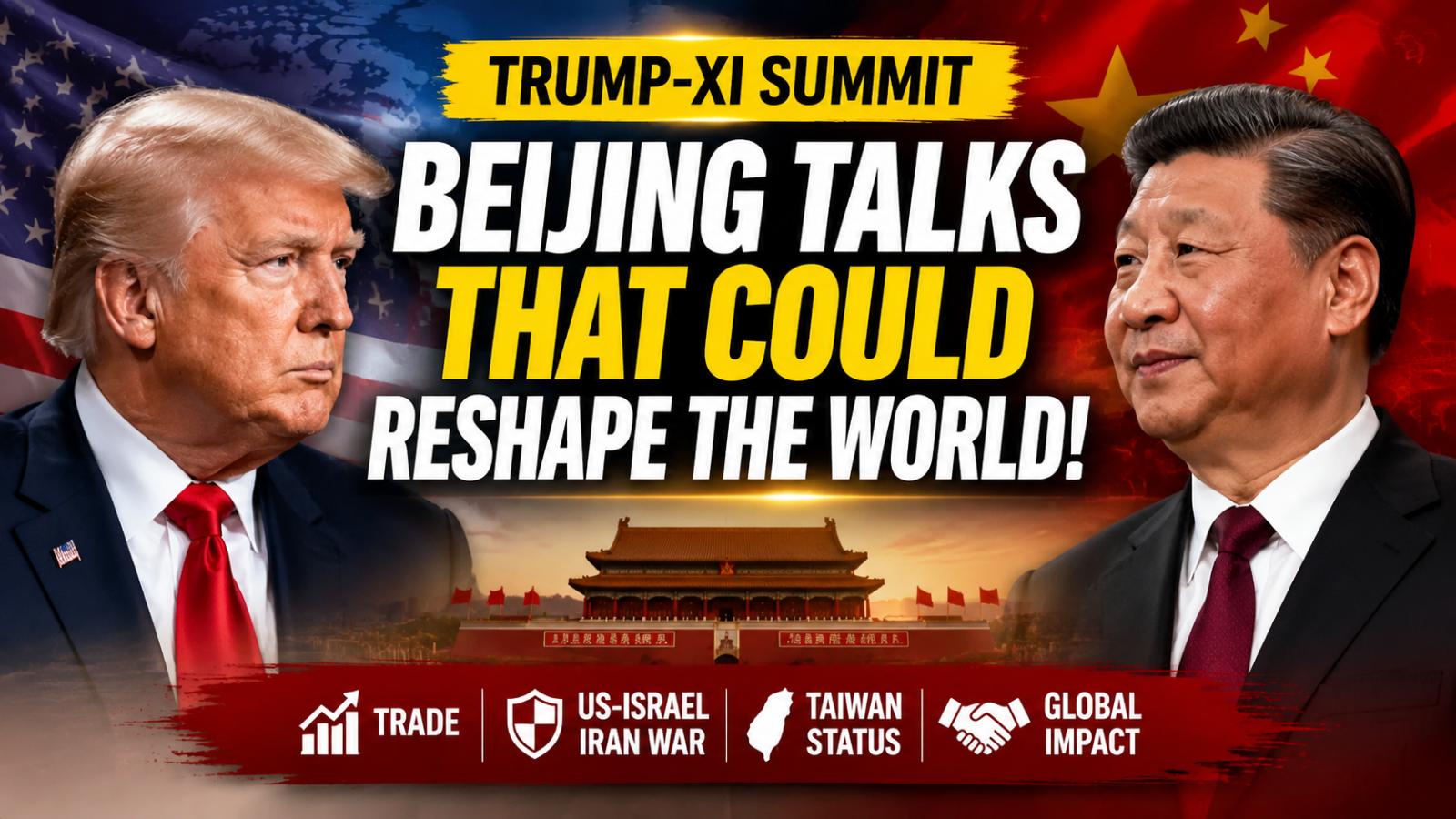
Historic US-China Summit: Trump and Xi Discuss Iran, Trade, and Taiwan in Beijing
Trump and Xi Jinping Meet in Beijing for Key Summit US President Donald Trump and Chinese President Xi Jinping are set to meet in Beijing for a highly anticipated three-day summit. This is Trump’s first visit to China in nearly a decade, making the meeting particularly significant. The summit is expected to focus on critical global issues, including the ongoing US-Israel war on Iran, trade relations between the two nations, and the status of Taiw
Historic US-China Summit: Trump and Xi Discuss Iran, Trade, and Taiwan in Beijing
Trump and Xi Jinping Meet in Beijing for Key Summit US President Donald Trump and Chinese President Xi Jinping are set to meet in Beijing for a highly anticipated three-day summit. This is Trump’s first visit to China in nearly a decade, making the meeting particularly significant. The summit is expected to focus on critical global issues, including the ongoing US-Israel war on Iran, trade relations between the two nations, and the status of Taiw

Gold, Silver Imports to Cost More After Government Hikes Customs Duty to 15%
The Indian government has raised the import duties on gold and silver sharply, setting the new rates at 15% from the previous 6%. This move comes just days after Prime Minister Narendra Modi urged the public to avoid purchasing gold for the next year, in response to the growing economic strain caused by the Iran war and the pressure on India's foreign exchange reserves. The government's decision involves a 10% basic customs duty along with an additional 5% Agriculture Infrastructure
Gold, Silver Imports to Cost More After Government Hikes Customs Duty to 15%
The Indian government has raised the import duties on gold and silver sharply, setting the new rates at 15% from the previous 6%. This move comes just days after Prime Minister Narendra Modi urged the public to avoid purchasing gold for the next year, in response to the growing economic strain caused by the Iran war and the pressure on India's foreign exchange reserves. The government's decision involves a 10% basic customs duty along with an additional 5% Agriculture Infrastructure
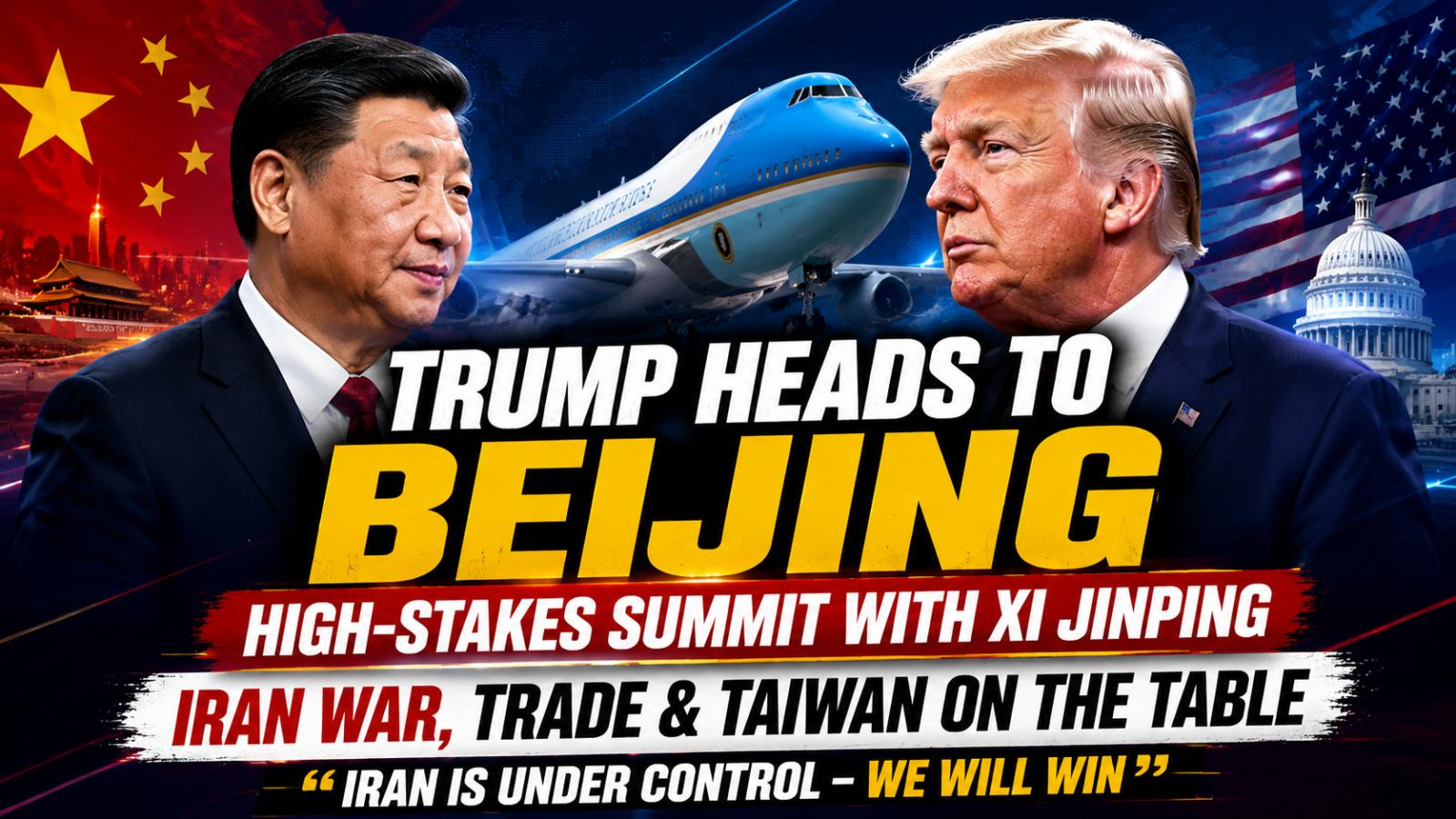
Trump’s Bold Iran Strategy: "We’ll Win Peacefully or Otherwise"
Trump’s Departure for Beijing President Donald Trump left Washington on May 12th for a high-stakes summit with Chinese President Xi Jinping in Beijing. As he boarded Air Force One for the trip, Trump addressed reporters, emphasizing that Iran is "under control" and that the United States either intends to make a deal or "decimate" Iran’s military capabilities. This rhetoric comes amid the ongoing conflict with Iran, with Trump reiterating his u
Trump’s Bold Iran Strategy: "We’ll Win Peacefully or Otherwise"
Trump’s Departure for Beijing President Donald Trump left Washington on May 12th for a high-stakes summit with Chinese President Xi Jinping in Beijing. As he boarded Air Force One for the trip, Trump addressed reporters, emphasizing that Iran is "under control" and that the United States either intends to make a deal or "decimate" Iran’s military capabilities. This rhetoric comes amid the ongoing conflict with Iran, with Trump reiterating his u
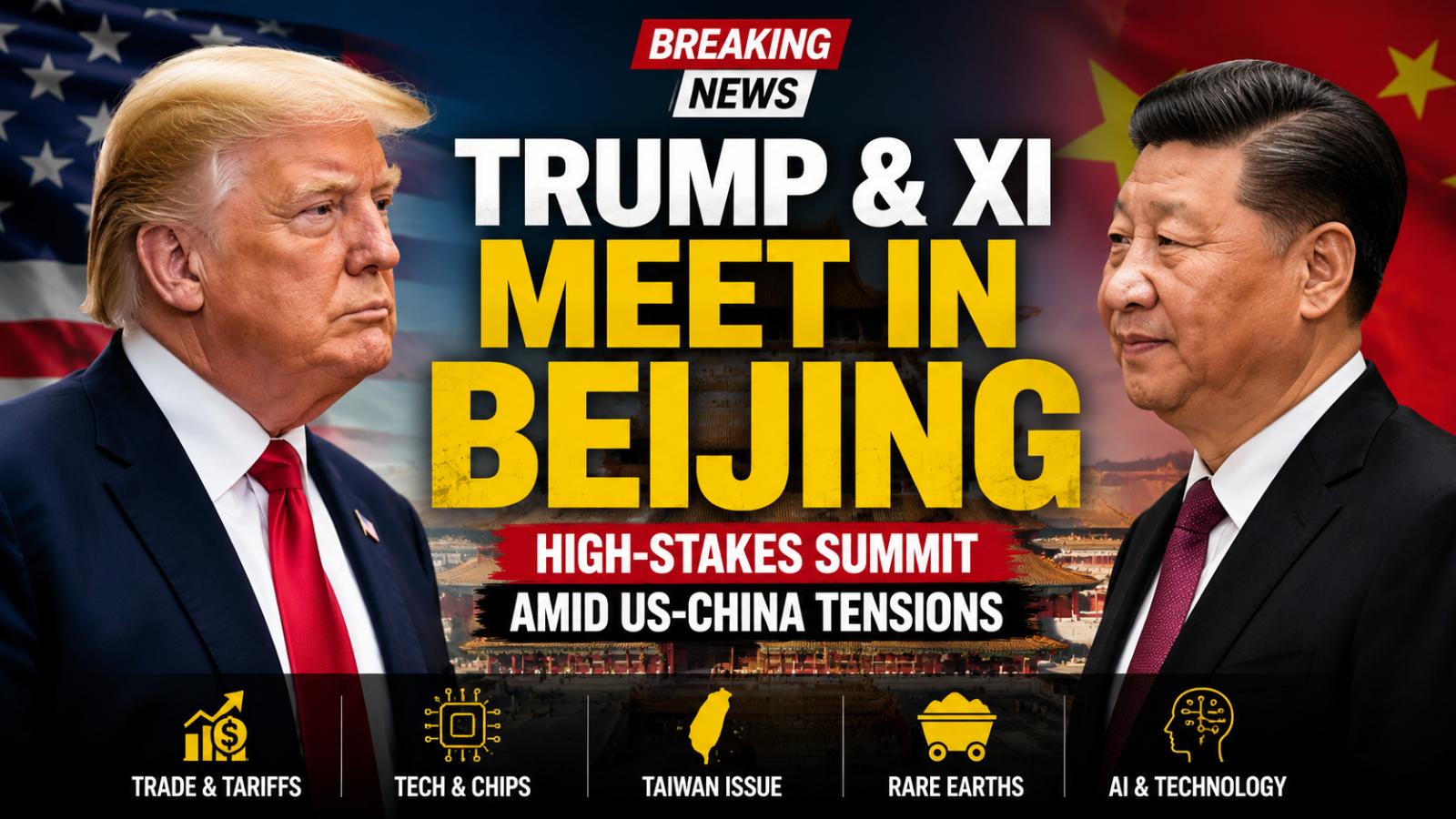
Trump and Xi Meet in Beijing Amid Rising US-China Trade Tensions
US President Donald Trump and Chinese President Xi Jinping are meeting in Beijing amid renewed efforts to prevent escalating tensions between the world’s two largest economies. The summit follows months of friction over tariffs, semiconductors, artificial intelligence, supply chains, and Taiwan, all of which have intensified competition between Washington and Beijing despite a temporary stabilisation agreement reached during the APEC summit in Busan, South Korea, in October 2025.
Trump and Xi Meet in Beijing Amid Rising US-China Trade Tensions
US President Donald Trump and Chinese President Xi Jinping are meeting in Beijing amid renewed efforts to prevent escalating tensions between the world’s two largest economies. The summit follows months of friction over tariffs, semiconductors, artificial intelligence, supply chains, and Taiwan, all of which have intensified competition between Washington and Beijing despite a temporary stabilisation agreement reached during the APEC summit in Busan, South Korea, in October 2025.
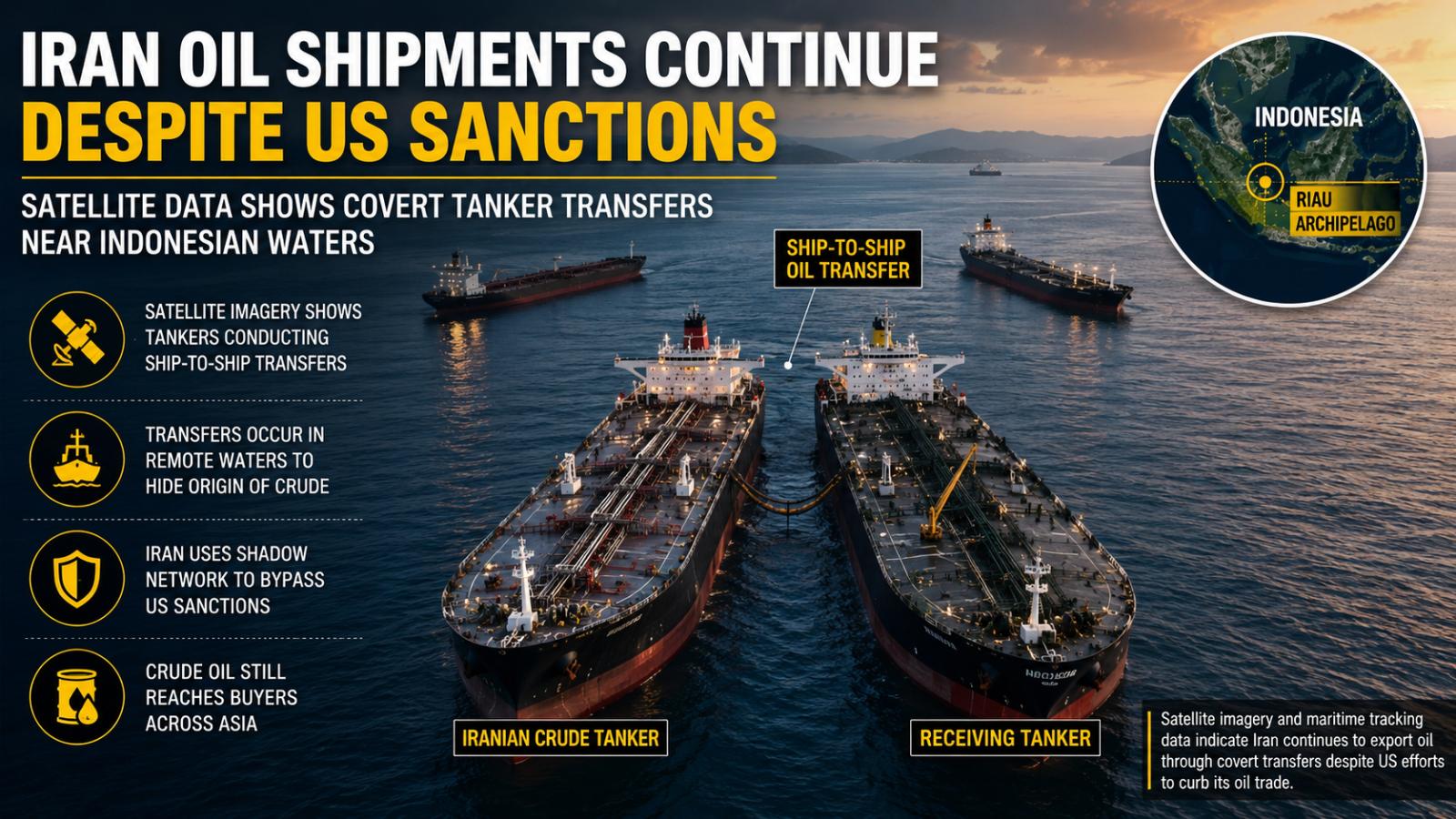
Iran Oil Shipments Keep Moving Despite US Sanctions, Data Shows
Iran oil shipments are continuing despite tighter U.S. sanctions, with satellite imagery and maritime tracking data suggesting Tehran is still moving crude through covert sea transfers. The findings point to an active shadow shipping network that allows Iranian oil to reach buyers in Asia even as Washington works to restrict crude exports from the Persian Gulf. Satellite Data Points To Covert Tanker Transfers Maritime tracking records and satel
Iran Oil Shipments Keep Moving Despite US Sanctions, Data Shows
Iran oil shipments are continuing despite tighter U.S. sanctions, with satellite imagery and maritime tracking data suggesting Tehran is still moving crude through covert sea transfers. The findings point to an active shadow shipping network that allows Iranian oil to reach buyers in Asia even as Washington works to restrict crude exports from the Persian Gulf. Satellite Data Points To Covert Tanker Transfers Maritime tracking records and satel
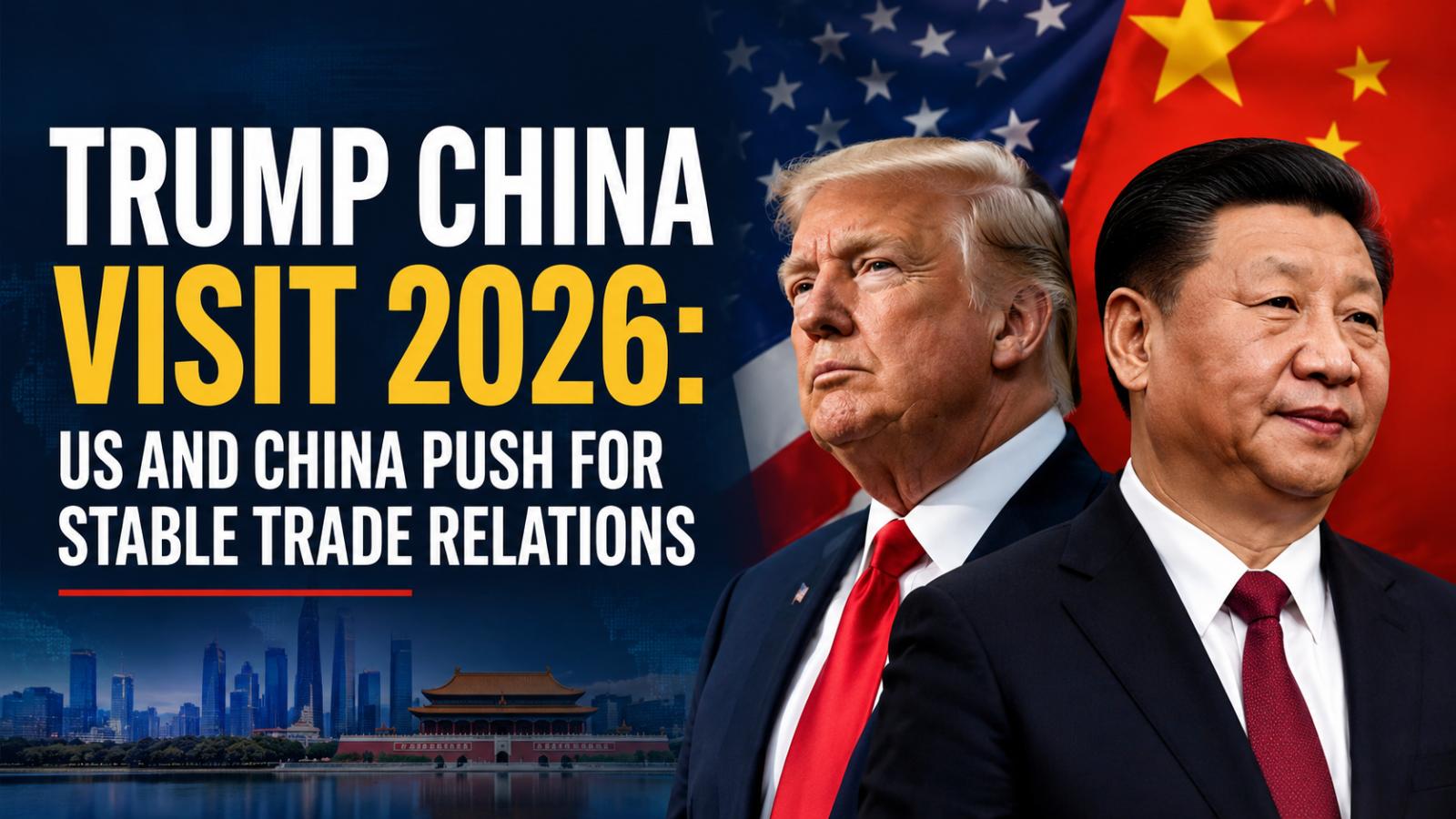
Trump-Xi meeting to focus on tariffs, Iran crisis and global stability
China on Monday confirmed that US President Donald Trump will visit Beijing from May 13 to May 15 for high-level talks with Chinese President Xi Jinping. The Trump China visit will be the first trip to China during Trump’s second term and is expected to focus on improving strained trade relations between the world’s two largest economies. The meeting comes at a time when global tensions, tariff disputes and concerns over economic stability continue to affect international markets and poli
Trump-Xi meeting to focus on tariffs, Iran crisis and global stability
China on Monday confirmed that US President Donald Trump will visit Beijing from May 13 to May 15 for high-level talks with Chinese President Xi Jinping. The Trump China visit will be the first trip to China during Trump’s second term and is expected to focus on improving strained trade relations between the world’s two largest economies. The meeting comes at a time when global tensions, tariff disputes and concerns over economic stability continue to affect international markets and poli
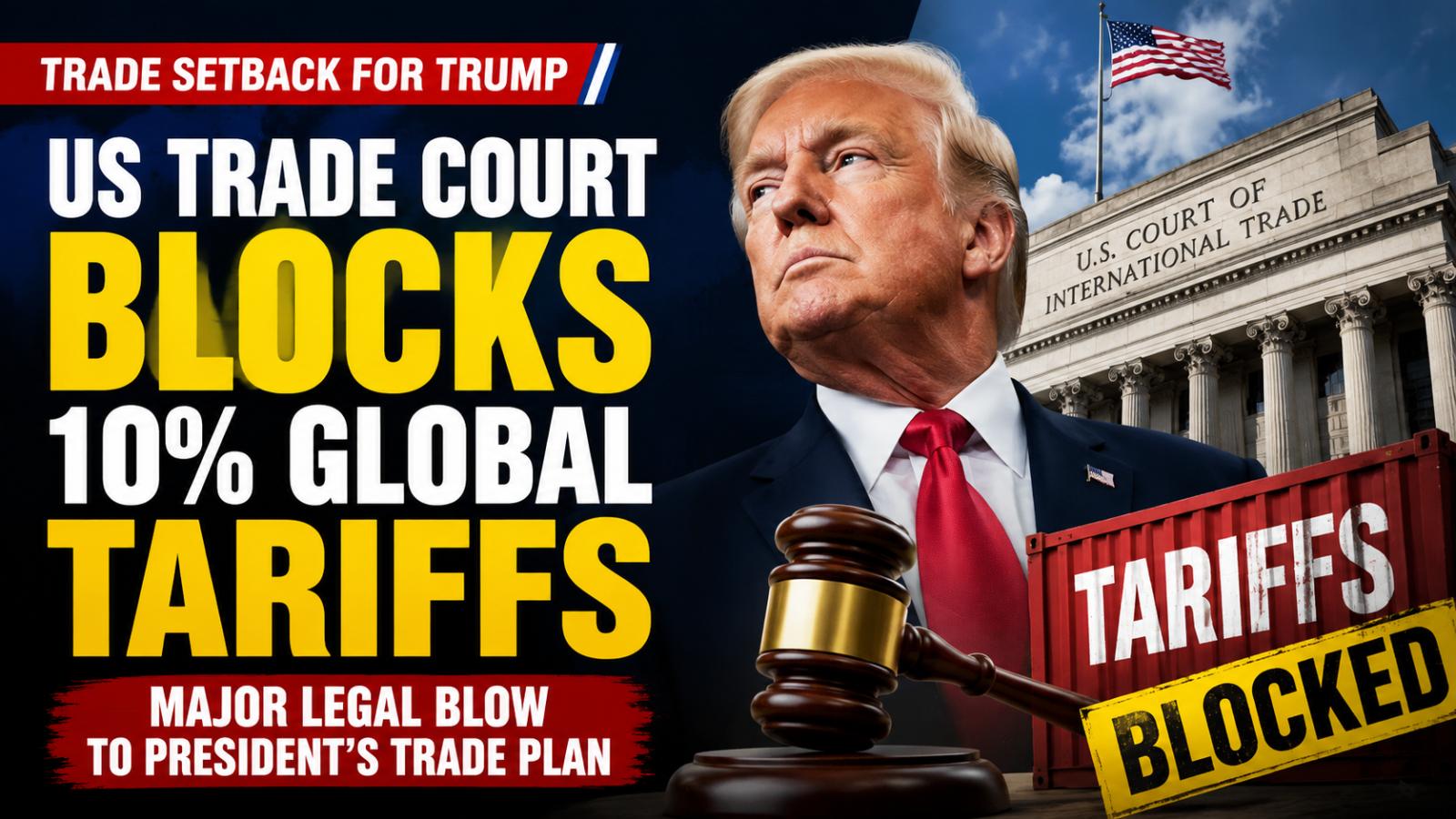
Trump’s 10% Global Tariffs Face Legal Setback, Court Orders Refunds
The Trump administration had introduced the 10% tariff in February, following a Supreme Court decision that struck down many of his earlier tariffs. The administration argued that the new measure was necessary to address balance-of-payments deficits, citing Section 122 of the Trade Act of 1974. However, the court found that this legal justification was not applicable to the current situation. The U.S. trade court's ruling has implications for the administrat
Trump’s 10% Global Tariffs Face Legal Setback, Court Orders Refunds
The Trump administration had introduced the 10% tariff in February, following a Supreme Court decision that struck down many of his earlier tariffs. The administration argued that the new measure was necessary to address balance-of-payments deficits, citing Section 122 of the Trade Act of 1974. However, the court found that this legal justification was not applicable to the current situation. The U.S. trade court's ruling has implications for the administrat
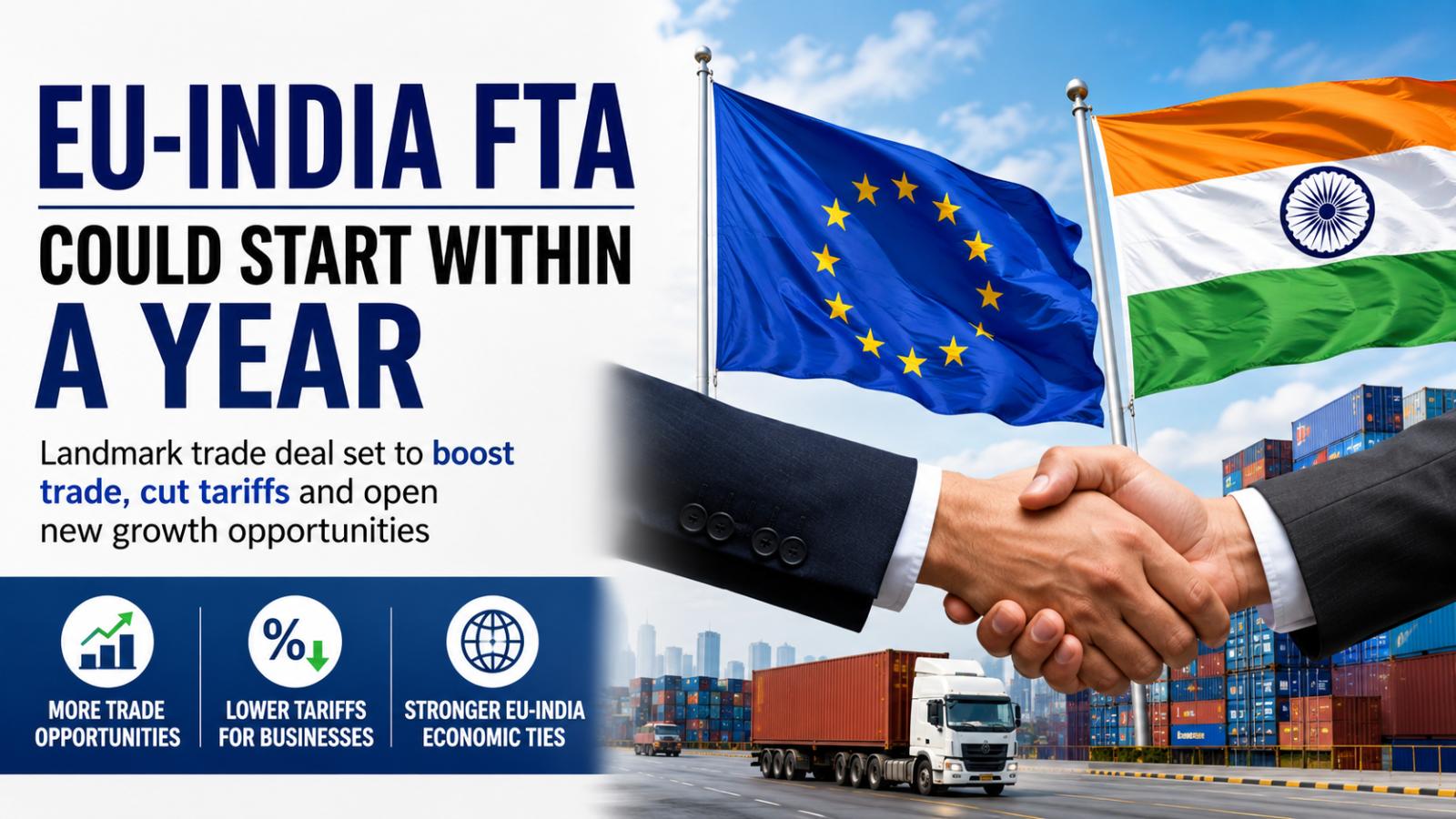
EU-India FTA Could Start Within A Year: What The Landmark Trade Deal Means For Exporters
EU-India FTA May Begin Within A Year The EU-India FTA could come into force within a year, potentially by early 2027, after both sides concluded negotiations on January 27, 2026. European Union Ambassador to India Hervé Delphin said the landmark free trade agreement is now moving through legal and procedural steps before ratification. The process includes legal vetting of the final text, followed by approvals in India and the European Union.
EU-India FTA Could Start Within A Year: What The Landmark Trade Deal Means For Exporters
EU-India FTA May Begin Within A Year The EU-India FTA could come into force within a year, potentially by early 2027, after both sides concluded negotiations on January 27, 2026. European Union Ambassador to India Hervé Delphin said the landmark free trade agreement is now moving through legal and procedural steps before ratification. The process includes legal vetting of the final text, followed by approvals in India and the European Union.
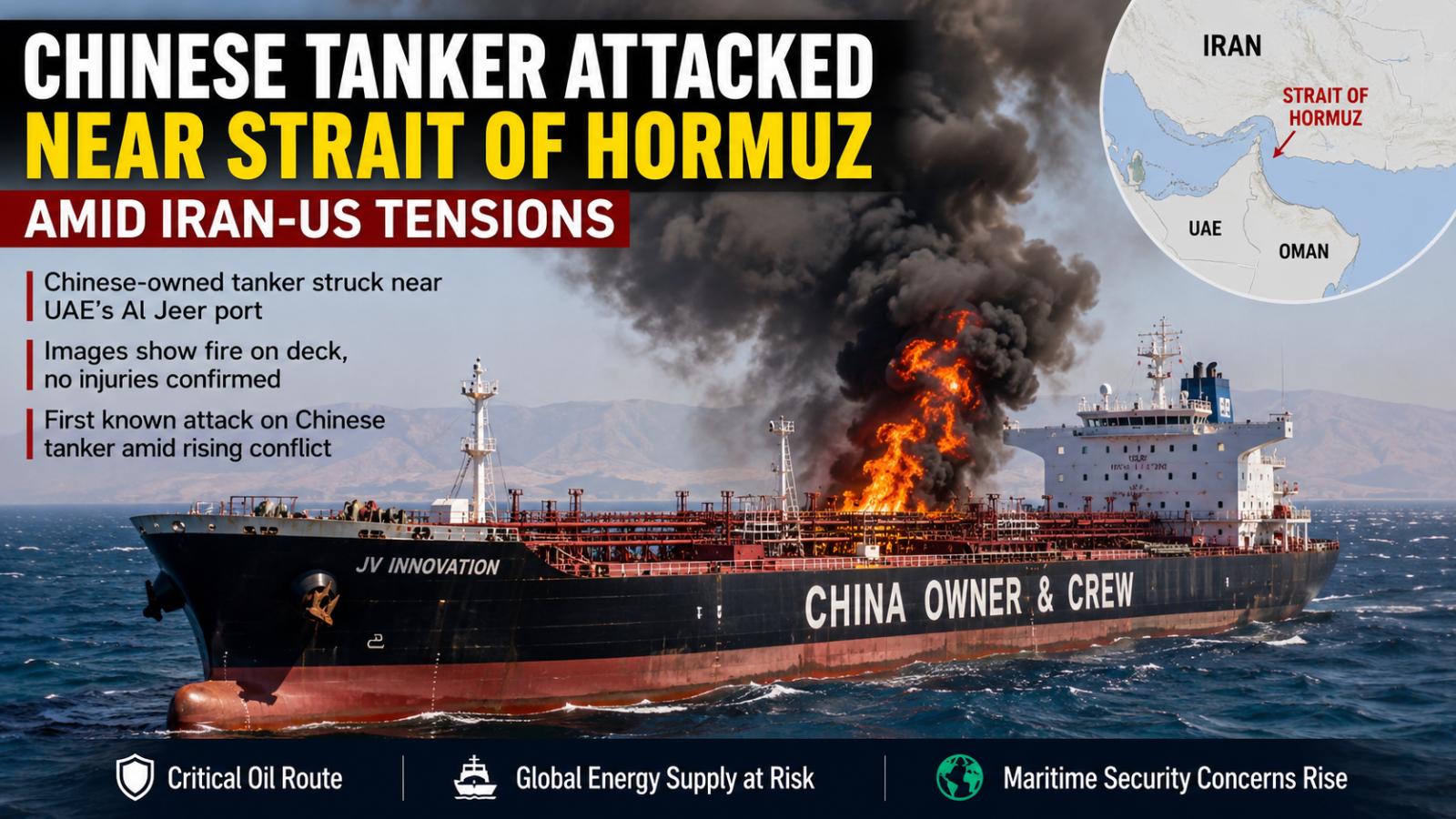
Chinese Tanker Attack Near Strait of Hormuz Sparks Oil Route Alarm Amid Iran-US Tensions
Chinese Tanker Attack Near Strait of Hormuz Raises Global Oil Fears A Chinese-owned oil tanker was attacked near the Strait of Hormuz, intensifying fears over oil shipping safety as Iran-US tensions deepen across Gulf waters. The vessel, identified in reports as JV Innovation, was reportedly hit off UAE’s Al Jeer port on May 4, with images showing flames on deck and markings reading “CHINA OWNER & CREW.”
Chinese Tanker Attack Near Strait of Hormuz Sparks Oil Route Alarm Amid Iran-US Tensions
Chinese Tanker Attack Near Strait of Hormuz Raises Global Oil Fears A Chinese-owned oil tanker was attacked near the Strait of Hormuz, intensifying fears over oil shipping safety as Iran-US tensions deepen across Gulf waters. The vessel, identified in reports as JV Innovation, was reportedly hit off UAE’s Al Jeer port on May 4, with images showing flames on deck and markings reading “CHINA OWNER & CREW.”
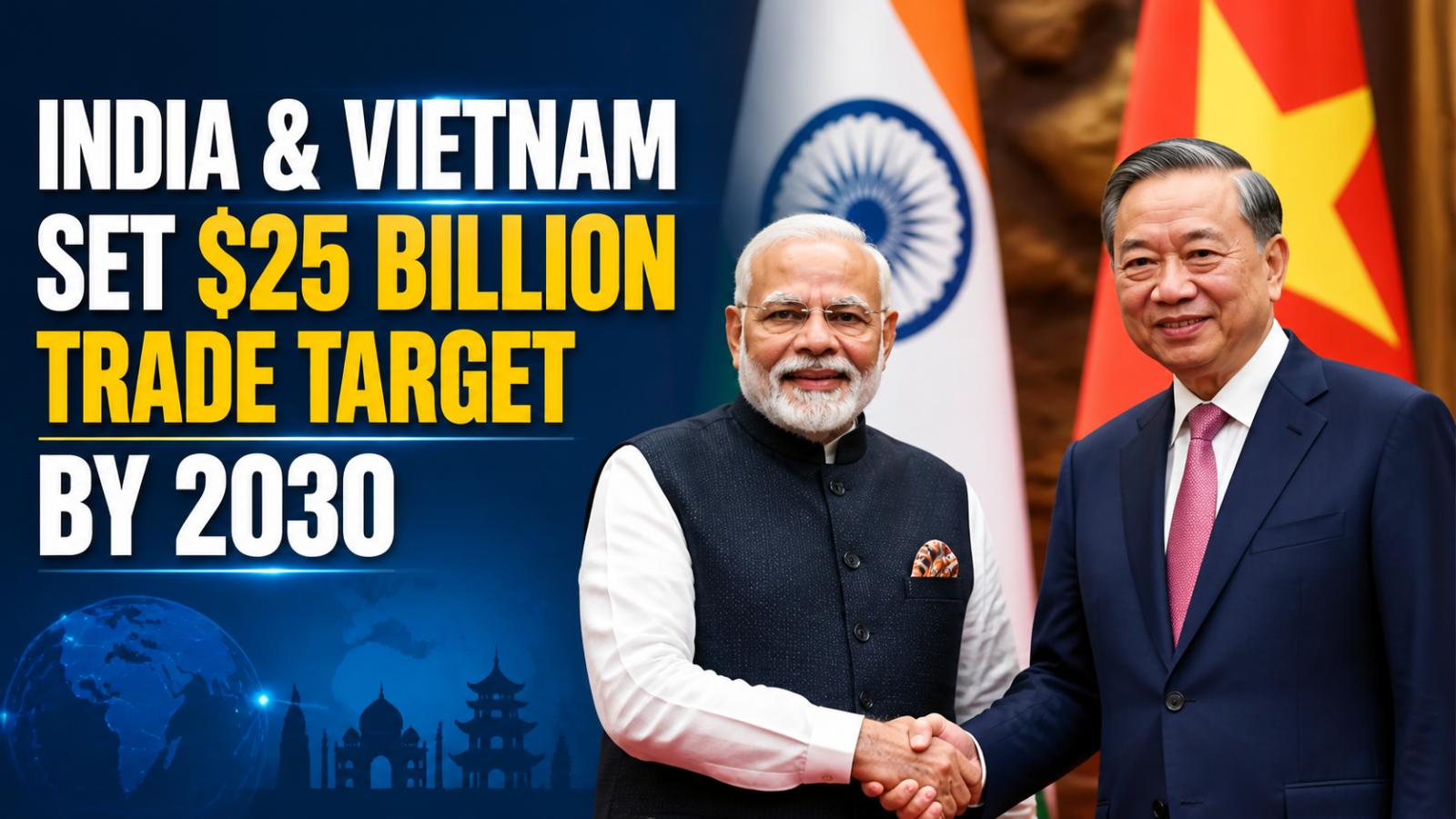
India, Vietnam unveil roadmap to boost bilateral trade to $25 billion by 2030
India and Vietnam have agreed to strengthen their economic ties with an ambitious goal of increasing bilateral trade to USD 25 billion by 2030. This announcement, made by Prime Minister Narendra Modi on May 6, 2026, is part of a new strategic roadmap designed to expand economic and sector-specific cooperation between the two countries. The announcement was made following the signing of several Memoranda of Understanding (MoUs) at Hyderabad House in Delhi by PM Modi and Vietnam's President To
India, Vietnam unveil roadmap to boost bilateral trade to $25 billion by 2030
India and Vietnam have agreed to strengthen their economic ties with an ambitious goal of increasing bilateral trade to USD 25 billion by 2030. This announcement, made by Prime Minister Narendra Modi on May 6, 2026, is part of a new strategic roadmap designed to expand economic and sector-specific cooperation between the two countries. The announcement was made following the signing of several Memoranda of Understanding (MoUs) at Hyderabad House in Delhi by PM Modi and Vietnam's President To
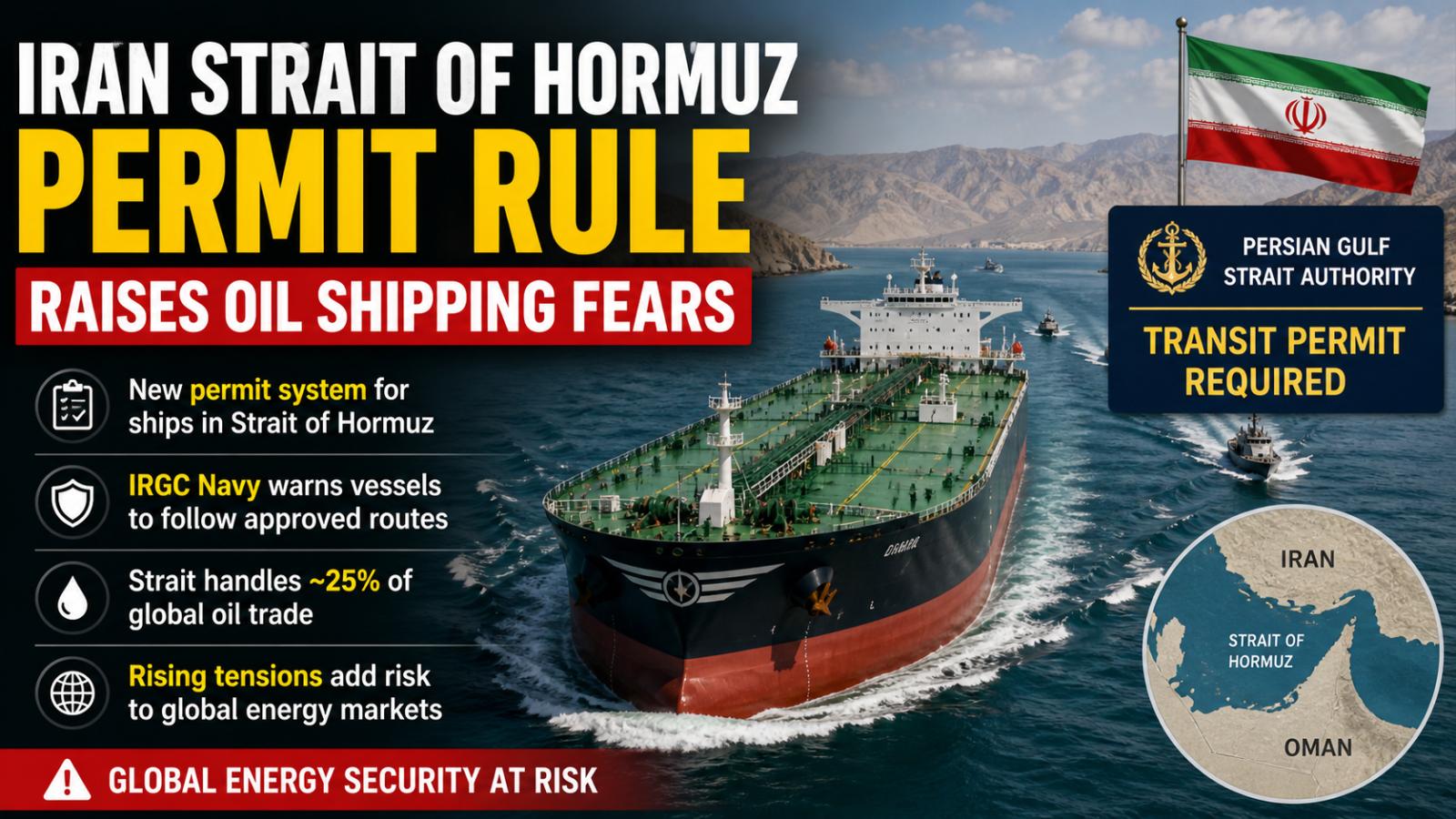
Iran Strait of Hormuz Permit Rule Raises Oil Shipping Fears
Iran Tightens Control Over Strait of Hormuz Shipping Iran has introduced a new Strait of Hormuz permit system, requiring ships to follow official transit instructions before entering one of the world’s most vital oil routes. The move raises fresh concerns for global energy markets, as the Strait of Hormuz carries a major share of seaborne oil trade and remains a flashpoint in rising US-Iran tensions. What Iran’s New Permit Rule Means
Iran Strait of Hormuz Permit Rule Raises Oil Shipping Fears
Iran Tightens Control Over Strait of Hormuz Shipping Iran has introduced a new Strait of Hormuz permit system, requiring ships to follow official transit instructions before entering one of the world’s most vital oil routes. The move raises fresh concerns for global energy markets, as the Strait of Hormuz carries a major share of seaborne oil trade and remains a flashpoint in rising US-Iran tensions. What Iran’s New Permit Rule Means
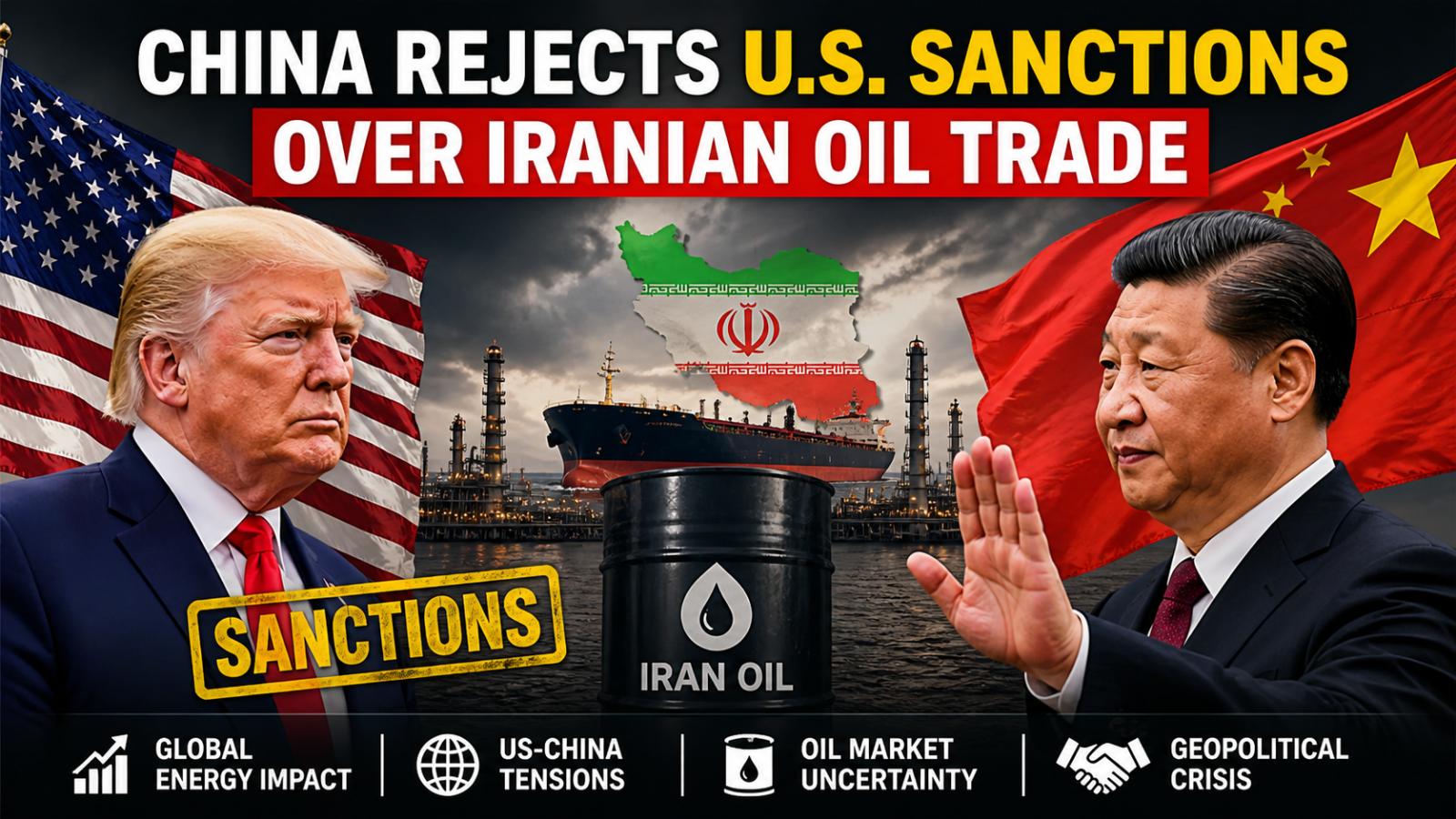
China Rejects US Sanctions on Iranian Oil Trade, Escalating Global Energy Tensions in 2026
China has strongly rejected new sanctions imposed by the United States on Chinese firms accused of purchasing Iranian oil, calling the measures “unlawful” and a violation of international trade norms. The move marks a fresh escalation in tensions between China and Washington, with potential ripple effe
China Rejects US Sanctions on Iranian Oil Trade, Escalating Global Energy Tensions in 2026
China has strongly rejected new sanctions imposed by the United States on Chinese firms accused of purchasing Iranian oil, calling the measures “unlawful” and a violation of international trade norms. The move marks a fresh escalation in tensions between China and Washington, with potential ripple effe
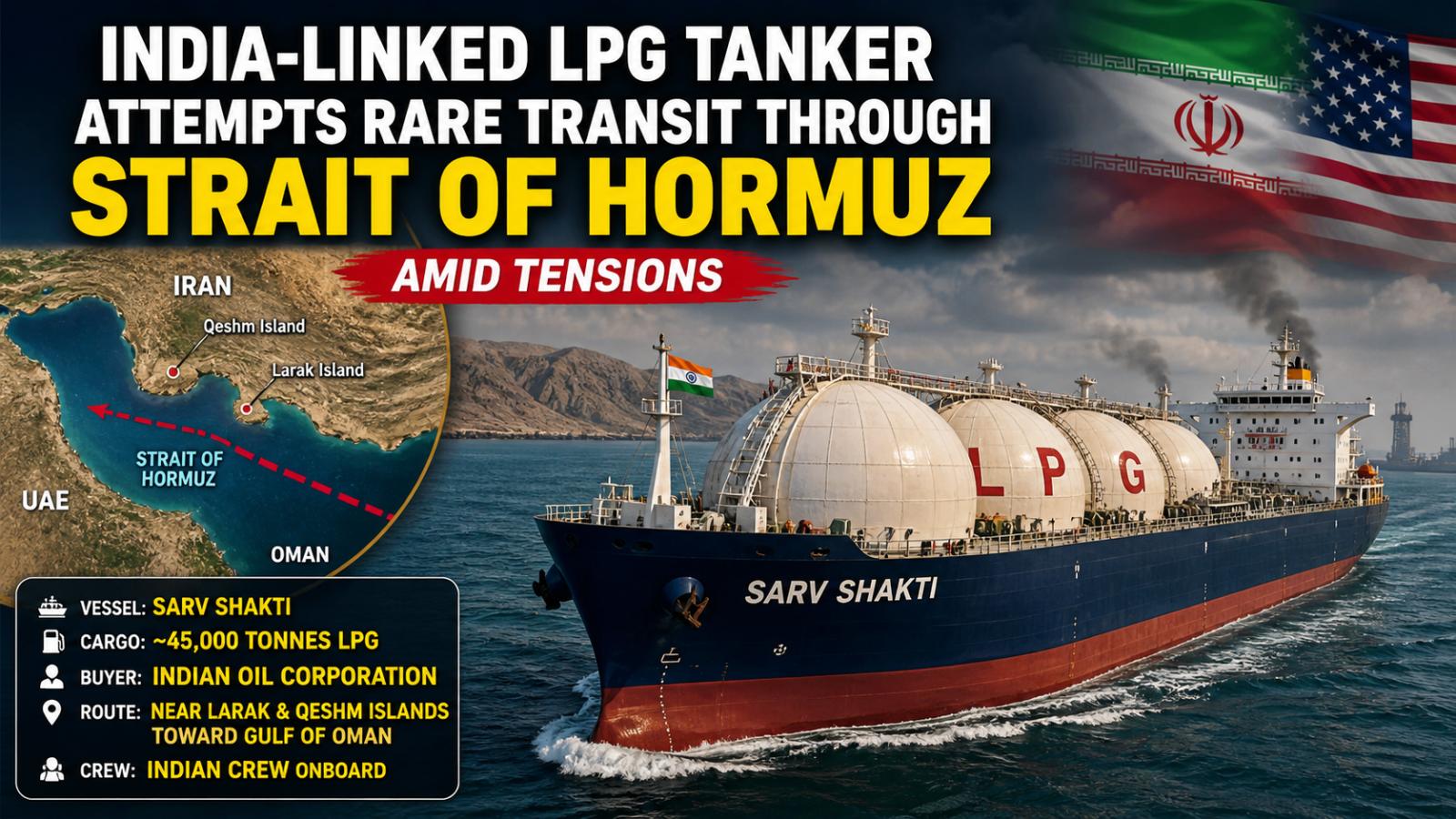
India’s High-Risk Energy Move: LPG Tanker Braces for Dangerous Strait of Hormuz Crossing
In a moment that could quietly shape global energy markets, an India-linked LPG tanker is attempting something most ships are now avoiding. The vessel, Sarv Shakti, loaded with nearly 45,000 tonnes of liquefied petroleum gas, is moving toward the tense waters of the Strait of Hormuz — a route that has suddenly become one of the world’s most dangerous maritime
India’s High-Risk Energy Move: LPG Tanker Braces for Dangerous Strait of Hormuz Crossing
In a moment that could quietly shape global energy markets, an India-linked LPG tanker is attempting something most ships are now avoiding. The vessel, Sarv Shakti, loaded with nearly 45,000 tonnes of liquefied petroleum gas, is moving toward the tense waters of the Strait of Hormuz — a route that has suddenly become one of the world’s most dangerous maritime
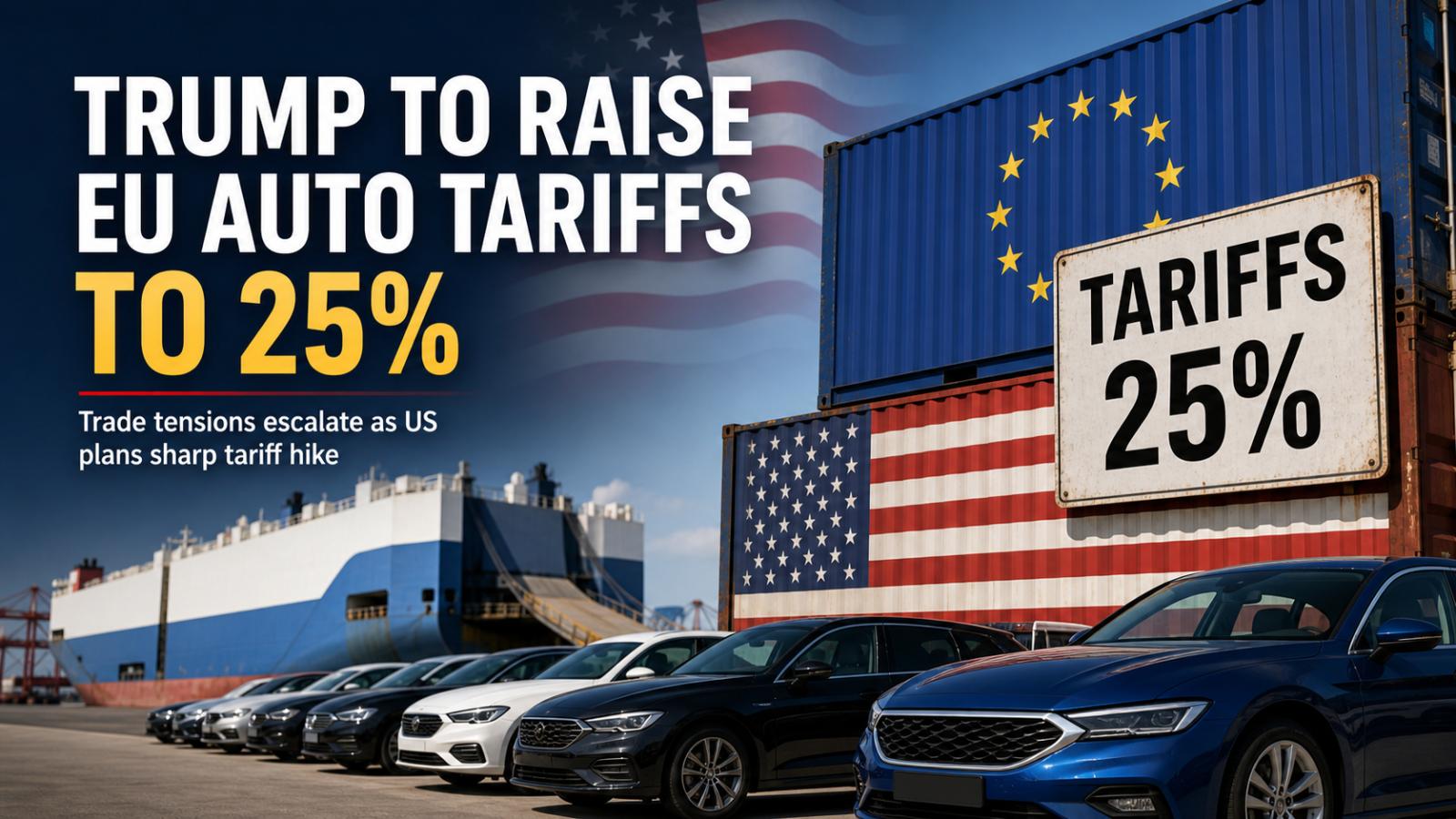
Will Trump raise EU auto tariffs to 25%? Yes, escalation risks trade tensions
Trump signals sharp increase in tariffs on EU vehicles WASHINGTON — On Friday, May 1, 2026, U.S. President Donald Trump announced plans to raise tariffs on cars and trucks imported from the European Union to 25%, signaling a significant shift in U.S.-EU trade policy. The move, shared publicly in a statement, comes at a time when global markets remain sensitive to policy changes and could trigger broader economic repercussions. Trump stated that the European Union was “not complying” with the previously agreed trade deal, though he did not provide specific details regarding the alleged violations. The announcement marks a departure from the earlier tariff framework negotiated between both sides. Background of the US-EU Turnberry trade framework The current dispute traces back to a bilateral agreement reached in July 2025 between Trump and Ursula von der Leyen, which set a 15% tariff ceiling on most traded goods. Known as the Turnberry Agreement, the arrangement aimed to stabilize trade relations and reduce uncertainty for industries on both sides of the Atlantic. Both the United States and the European Union had reaffirmed their commitment to maintaining this framework even after legal and policy challenges emerged earlier in 2026. Legal challenges reshape tariff authority The agreement’s stability was called into question after a ruling by the U.S. Supreme Court, which determined that the president lacked authority to impose tariffs under an economic emergency declaration. Following the ruling, tariff limits were effectively reduced, prompting the administration to explore alternative legal pathways to implement new import taxes. Ongoing investigations into trade imbalances and national security concerns have since been cited by the administration as justification for a revised tariff strategy, potentially putting the original agreement at risk. Economic stakes for EU and global markets The European Union has consistently emphasized the importance of maintaining agreed tariff limits, noting that the deal was expected to save its automotive sector between €500 million and €600 million monthly. Trade between the U.S. and EU reached approximately €1.7 trillion ($2 trillion) in 2024, highlighting the scale of economic interdependence. European officials have reiterated that commitments under the agreement should be upheld, stressing that EU exports must continue to benefit from competitive tariff treatment without unexpected increases. Rising tensions threaten trade stability The proposed tariff increase introduces fresh uncertainty into one of the world’s largest trading relationships. Analysts warn that such measures could disrupt supply chains, increase costs for manufacturers and consumers, and strain diplomatic ties. As the administration moves forward with its trade investigations, the future of the U.S.-EU trade framework remains uncertain, with potential implications extending beyond the automotive sector into the broader global economy.
Will Trump raise EU auto tariffs to 25%? Yes, escalation risks trade tensions
Trump signals sharp increase in tariffs on EU vehicles WASHINGTON — On Friday, May 1, 2026, U.S. President Donald Trump announced plans to raise tariffs on cars and trucks imported from the European Union to 25%, signaling a significant shift in U.S.-EU trade policy. The move, shared publicly in a statement, comes at a time when global markets remain sensitive to policy changes and could trigger broader economic repercussions. Trump stated that the European Union was “not complying” with the previously agreed trade deal, though he did not provide specific details regarding the alleged violations. The announcement marks a departure from the earlier tariff framework negotiated between both sides. Background of the US-EU Turnberry trade framework The current dispute traces back to a bilateral agreement reached in July 2025 between Trump and Ursula von der Leyen, which set a 15% tariff ceiling on most traded goods. Known as the Turnberry Agreement, the arrangement aimed to stabilize trade relations and reduce uncertainty for industries on both sides of the Atlantic. Both the United States and the European Union had reaffirmed their commitment to maintaining this framework even after legal and policy challenges emerged earlier in 2026. Legal challenges reshape tariff authority The agreement’s stability was called into question after a ruling by the U.S. Supreme Court, which determined that the president lacked authority to impose tariffs under an economic emergency declaration. Following the ruling, tariff limits were effectively reduced, prompting the administration to explore alternative legal pathways to implement new import taxes. Ongoing investigations into trade imbalances and national security concerns have since been cited by the administration as justification for a revised tariff strategy, potentially putting the original agreement at risk. Economic stakes for EU and global markets The European Union has consistently emphasized the importance of maintaining agreed tariff limits, noting that the deal was expected to save its automotive sector between €500 million and €600 million monthly. Trade between the U.S. and EU reached approximately €1.7 trillion ($2 trillion) in 2024, highlighting the scale of economic interdependence. European officials have reiterated that commitments under the agreement should be upheld, stressing that EU exports must continue to benefit from competitive tariff treatment without unexpected increases. Rising tensions threaten trade stability The proposed tariff increase introduces fresh uncertainty into one of the world’s largest trading relationships. Analysts warn that such measures could disrupt supply chains, increase costs for manufacturers and consumers, and strain diplomatic ties. As the administration moves forward with its trade investigations, the future of the U.S.-EU trade framework remains uncertain, with potential implications extending beyond the automotive sector into the broader global economy.
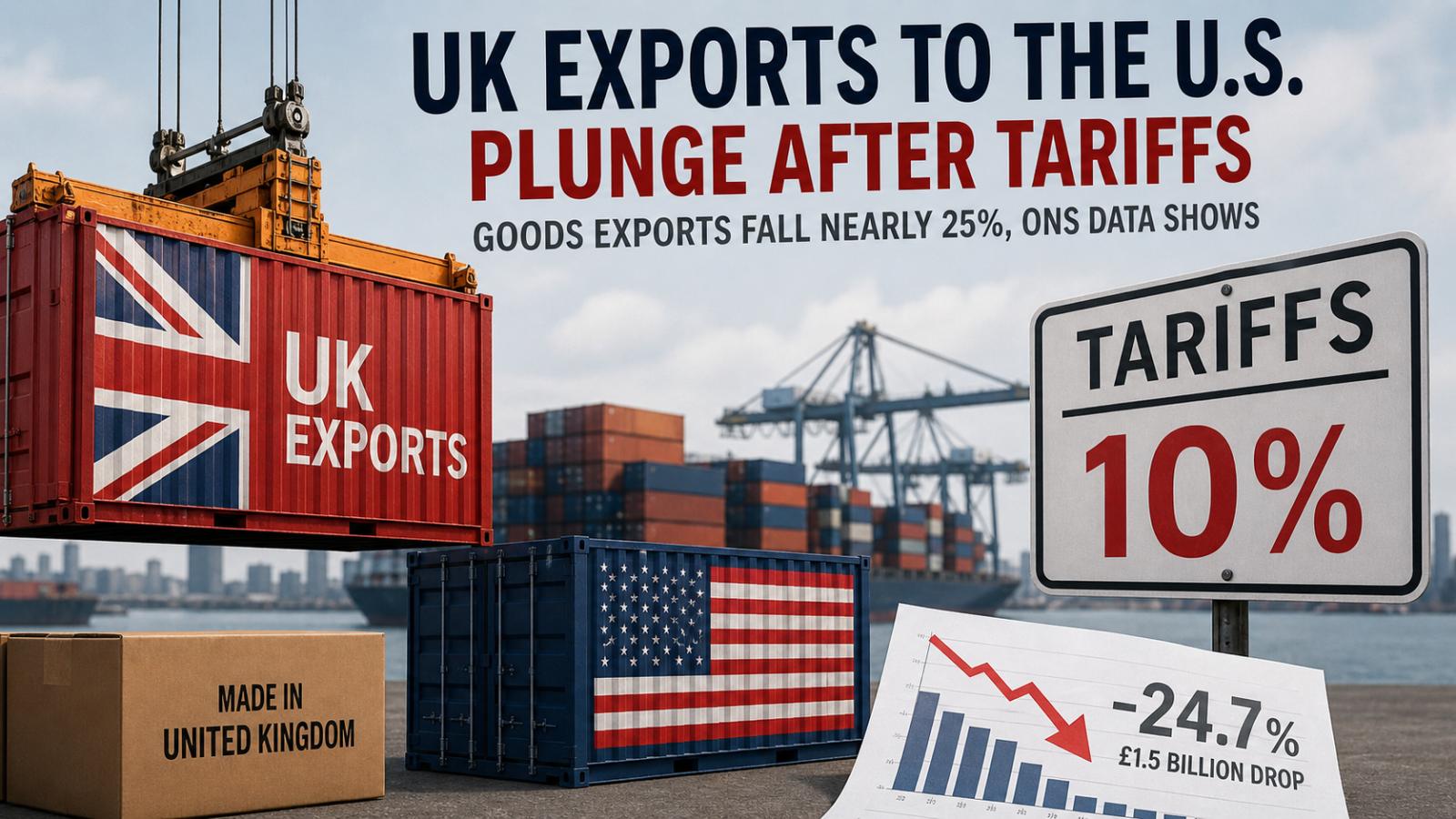
What caused U.K. exports to the U.S. to fall? Tariffs cut goods by nearly 25%
Tariffs trigger sharp decline in U.K. exports to the U.S. What caused U.K. exports to the U.S. to fall? Tariffs cut goods by nearly 25% as official data shows a steep decline in trade flows following sweeping tariff measures. According to figures released Friday by the Office for National Statistics, goods exports from the United Kingdom to the United States dropped by £1.5 billion, marking a 24.7% decrease after tariffs were introduced. The data, which excludes precious metals, highlights the immediate and sustained impact of trade policy changes initiated under Donald Trump. The tariffs, introduced as part of a broader “liberation day” strategy, disrupted established trading patterns between the two countries, which had previously benefited from largely tariff-free exchanges. Automotive and key sectors remain below pre-tariff levels The downturn has been particularly evident in the automotive sector, where U.K. car exports to the U.S. have remained below pre-tariff levels for the 12 months since April 2025. Analysts note that the continued weakness reflects both higher costs and reduced competitiveness in the American market. While exports have struggled, imports from the United States into the U.K. increased at the beginning of 2026. This imbalance has resulted in a trade deficit for three consecutive months, underscoring the broader economic consequences of the tariff regime on bilateral trade. Trade deal reshapes transatlantic economic ties The United Kingdom was the first nation to secure a post-tariff trade agreement with the U.S., following the introduction of the new measures. The deal included a 10% blanket tariff on goods entering the American market, effectively ending the previous zero-tariff environment that had benefited exporters on both sides. The new framework also imposed duties on key British exports, including Scotch whisky and other spirits. However, in a recent development, Trump announced plans to remove tariffs on Scotch whisky “in honor” of King Charles III and Queen Camilla following their state visit. Despite this move, industry experts caution that relief in one sector is unlikely to offset broader trade declines. Economic pressures weigh on exporters and growth outlook Economists warn that the sustained drop in exports could have wider implications for the U.K. economy. The United States remains the country’s largest export market, making the scale of the downturn particularly significant. Samuel Edwards, head of client portfolio management at Ebury, said exporters are facing mounting challenges. He pointed to a combination of higher trading costs from tariffs, increased employment expenses, and rising input prices, all of which are squeezing profit margins. These overlapping pressures are making it more difficult for U.K. businesses to remain competitive internationally, raising concerns about long-term growth and stability in the evolving global trade environment.
What caused U.K. exports to the U.S. to fall? Tariffs cut goods by nearly 25%
Tariffs trigger sharp decline in U.K. exports to the U.S. What caused U.K. exports to the U.S. to fall? Tariffs cut goods by nearly 25% as official data shows a steep decline in trade flows following sweeping tariff measures. According to figures released Friday by the Office for National Statistics, goods exports from the United Kingdom to the United States dropped by £1.5 billion, marking a 24.7% decrease after tariffs were introduced. The data, which excludes precious metals, highlights the immediate and sustained impact of trade policy changes initiated under Donald Trump. The tariffs, introduced as part of a broader “liberation day” strategy, disrupted established trading patterns between the two countries, which had previously benefited from largely tariff-free exchanges. Automotive and key sectors remain below pre-tariff levels The downturn has been particularly evident in the automotive sector, where U.K. car exports to the U.S. have remained below pre-tariff levels for the 12 months since April 2025. Analysts note that the continued weakness reflects both higher costs and reduced competitiveness in the American market. While exports have struggled, imports from the United States into the U.K. increased at the beginning of 2026. This imbalance has resulted in a trade deficit for three consecutive months, underscoring the broader economic consequences of the tariff regime on bilateral trade. Trade deal reshapes transatlantic economic ties The United Kingdom was the first nation to secure a post-tariff trade agreement with the U.S., following the introduction of the new measures. The deal included a 10% blanket tariff on goods entering the American market, effectively ending the previous zero-tariff environment that had benefited exporters on both sides. The new framework also imposed duties on key British exports, including Scotch whisky and other spirits. However, in a recent development, Trump announced plans to remove tariffs on Scotch whisky “in honor” of King Charles III and Queen Camilla following their state visit. Despite this move, industry experts caution that relief in one sector is unlikely to offset broader trade declines. Economic pressures weigh on exporters and growth outlook Economists warn that the sustained drop in exports could have wider implications for the U.K. economy. The United States remains the country’s largest export market, making the scale of the downturn particularly significant. Samuel Edwards, head of client portfolio management at Ebury, said exporters are facing mounting challenges. He pointed to a combination of higher trading costs from tariffs, increased employment expenses, and rising input prices, all of which are squeezing profit margins. These overlapping pressures are making it more difficult for U.K. businesses to remain competitive internationally, raising concerns about long-term growth and stability in the evolving global trade environment.
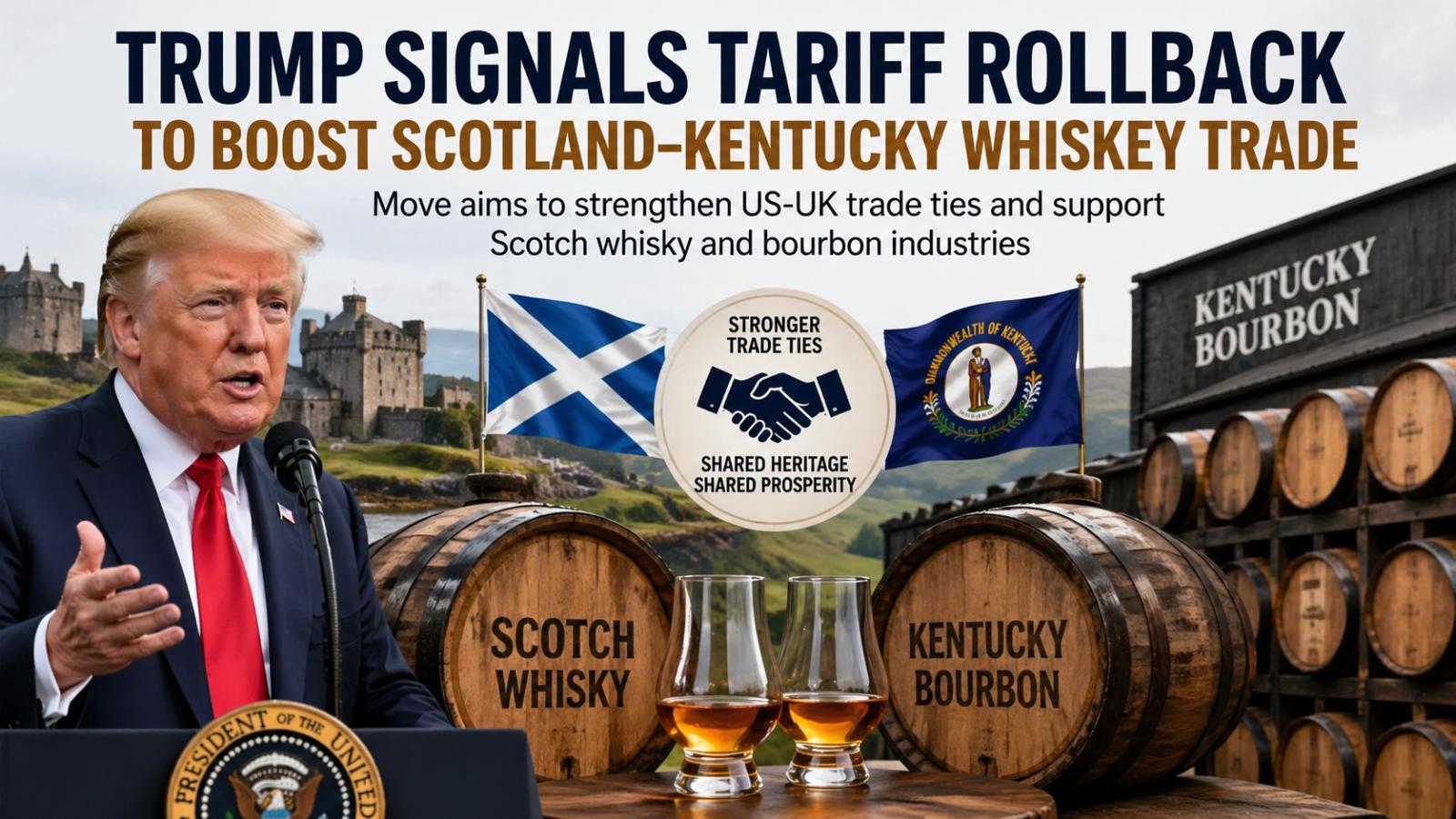
Trump signals tariff rollback to boost Scotland–Kentucky whiskey trade
President Donald Trump announced plans on Thursday, April 30, 2026, to remove tariffs affecting whiskey trade between Scotland and Kentucky, aiming to boost US-UK trade ties and support the Scotch whisky and bourbon industries. Trump signals tariff rollback to boost Scotland–Kentucky whiskey trade — Donald Trump announced on Thursday, April 30, 2026, that he intends t
Trump signals tariff rollback to boost Scotland–Kentucky whiskey trade
President Donald Trump announced plans on Thursday, April 30, 2026, to remove tariffs affecting whiskey trade between Scotland and Kentucky, aiming to boost US-UK trade ties and support the Scotch whisky and bourbon industries. Trump signals tariff rollback to boost Scotland–Kentucky whiskey trade — Donald Trump announced on Thursday, April 30, 2026, that he intends t










