










Columbus Voters Approve Sunday Alcohol Sales for German Village Restaurant
Columbus Voters Approve Sunday Alcohol Sales for German Village Restaurant Columbus voters approved Sunday alcohol sales for the Sycamore restaurant in German Village during the Tuesday, May 5, 2026, election. The vote clears the way for the restaurant at 262 E. Sycamore St. to serve beer, wine and spirits on Sundays through Ohio’s D-6 liquor permit process. German Village Res
Columbus Voters Approve Sunday Alcohol Sales for German Village Restaurant
Columbus Voters Approve Sunday Alcohol Sales for German Village Restaurant Columbus voters approved Sunday alcohol sales for the Sycamore restaurant in German Village during the Tuesday, May 5, 2026, election. The vote clears the way for the restaurant at 262 E. Sycamore St. to serve beer, wine and spirits on Sundays through Ohio’s D-6 liquor permit process. German Village Res

Bay Area Billionaires Hold Four Spots in World’s Top 10 Richest People
Bay Area billionaires remain heavily represented among the world’s richest people, with Larry Page, Sergey Brin, Mark Zuckerberg and Jensen Huang listed among the global top 10. The concentration highlights Silicon Valley’s continued influence over artificial intelligence, digital advertising, social media, cloud computing and semiconductor technology. Larry Page Leads Bay Area Wealth Rankings Google co-founder Larry Page, who resides in Pa
Bay Area Billionaires Hold Four Spots in World’s Top 10 Richest People
Bay Area billionaires remain heavily represented among the world’s richest people, with Larry Page, Sergey Brin, Mark Zuckerberg and Jensen Huang listed among the global top 10. The concentration highlights Silicon Valley’s continued influence over artificial intelligence, digital advertising, social media, cloud computing and semiconductor technology. Larry Page Leads Bay Area Wealth Rankings Google co-founder Larry Page, who resides in Pa
Belleville Mayor Upset: Frank Velez Wins After Fire Backlash
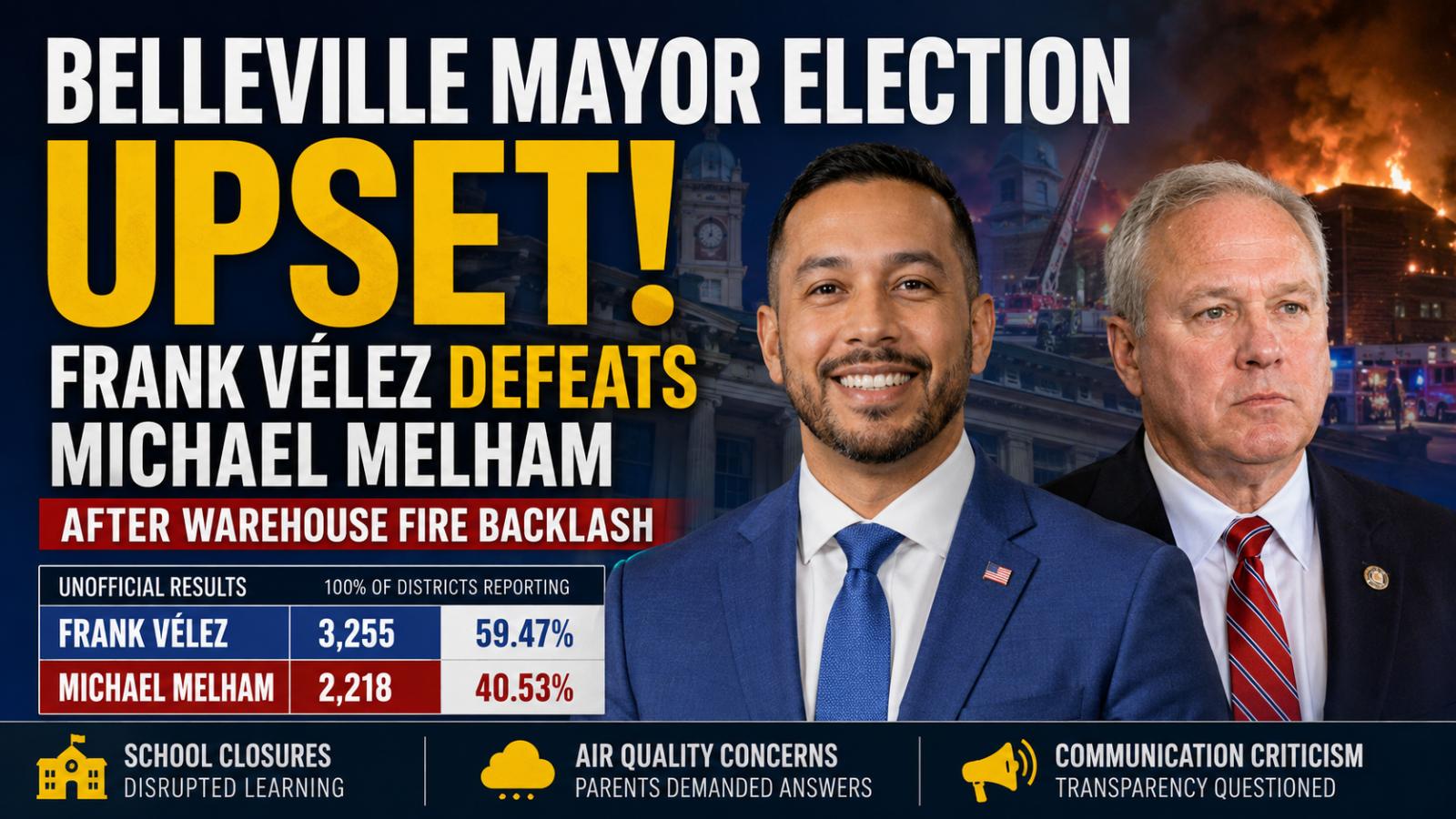
Belleville Mayor Election Results Frank Velez defeated incumbent Michael Melham in the Belleville mayor election, ending Melham’s bid for a third term after a race shaped by local trust, school safety and the town’s response to a major warehouse fire. Unofficial results from the Essex County Clerk’s Office for Tuesday, May 12, 2026, showed Velez with 3,255 votes, or 59.47%, while Melham received 2,218 votes, or 40.53%, with all districts reporting.
Belleville Mayor Upset: Frank Velez Wins After Fire Backlash
Belleville Mayor Election Results Frank Velez defeated incumbent Michael Melham in the Belleville mayor election, ending Melham’s bid for a third term after a race shaped by local trust, school safety and the town’s response to a major warehouse fire. Unofficial results from the Essex County Clerk’s Office for Tuesday, May 12, 2026, showed Velez with 3,255 votes, or 59.47%, while Melham received 2,218 votes, or 40.53%, with all districts reporting.
Nvidia CEO Joins Trump’s China Trip as AI Chip Stakes Rise
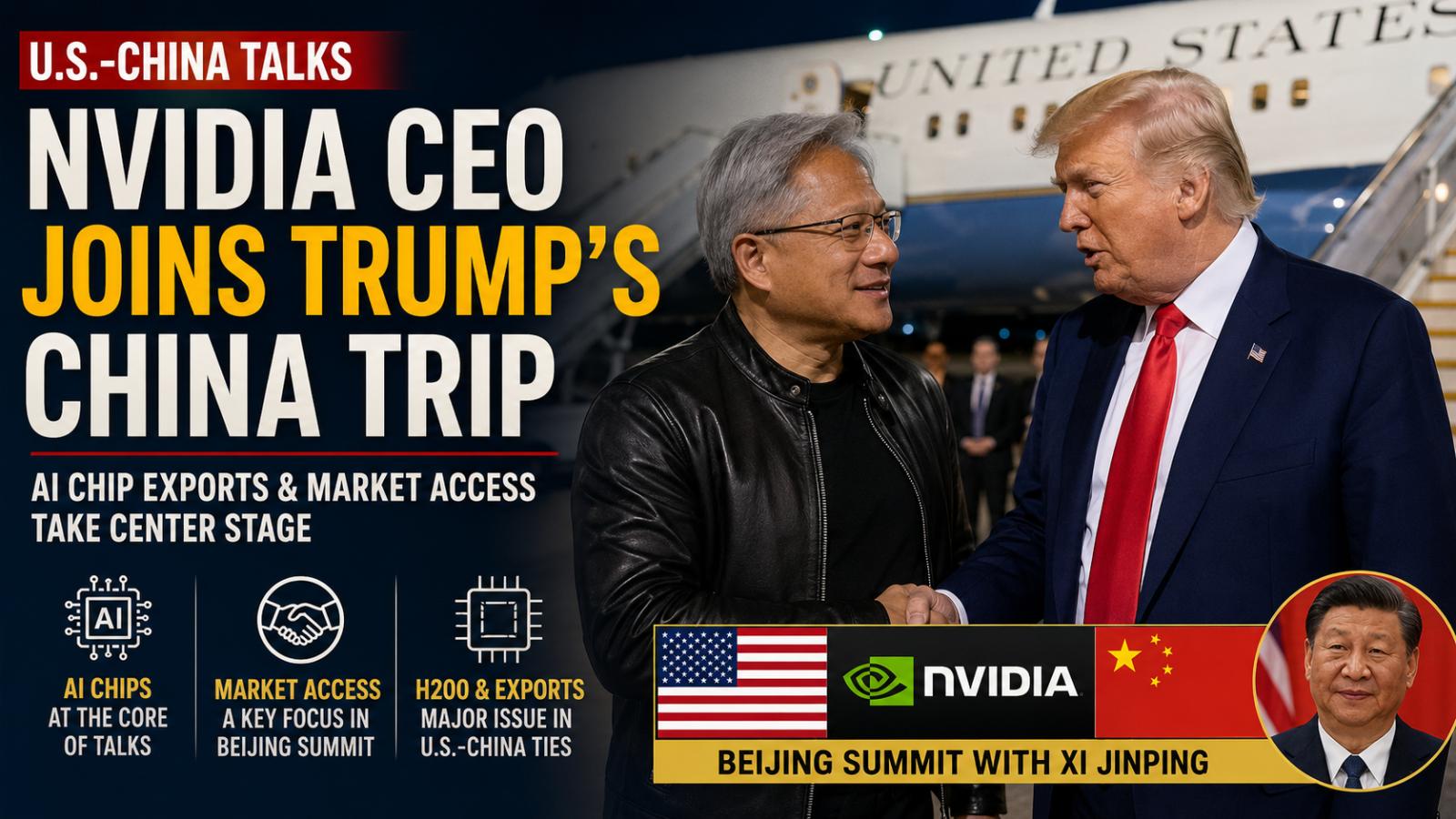
Nvidia CEO Jensen Huang joined President Donald Trump’s China trip on Wednesday, May 13, 2026, as AI chip exports and market access moved to the center of U.S.-China talks. His presence matters because Nvidia’s powerful GPUs sit at the heart of AI development, while U.S. export controls have limited high-end chip sales to China. Why Huang’s Role Matters Huang was added after earlier indications he was not in the U.S. business delegation,
Nvidia CEO Joins Trump’s China Trip as AI Chip Stakes Rise
Nvidia CEO Jensen Huang joined President Donald Trump’s China trip on Wednesday, May 13, 2026, as AI chip exports and market access moved to the center of U.S.-China talks. His presence matters because Nvidia’s powerful GPUs sit at the heart of AI development, while U.S. export controls have limited high-end chip sales to China. Why Huang’s Role Matters Huang was added after earlier indications he was not in the U.S. business delegation,

Waymo Recall Hits 3,791 Robotaxis as Chicago Testing Faces Flood Questions
Waymo’s recall of 3,791 robotaxis is putting new attention on self-driving safety as the company continues early-stage testing in Chicago. Federal safety officials said the issue involves autonomous-driving software that may slow but fail to stop when detecting a flooded lane on higher-speed roads, increasing crash risk. Why Waymo Issued the Recall The recall followed a Monday, April 20, 2026, incident in San Antonio, Texas, where an unoccupied Waymo vehicle entered a flooded road during severe weather. No passengers were inside, and no injuries were reported. Waymo said it found an area for improvement involving flooded lanes on faster roads and filed a voluntary software recall covering fifth- and sixth-generation automated driving systems. What Changes Are Being Made NHTSA said Waymo has increased weather-related operating limits and updated vehicle maps while a full remedy is developed. Waymo said it is adding software safeguards and limiting access to areas where flash flooding may occur. What It Means for Chicago Waymo began mapping Chicago in late February as an early step toward a possible future robotaxi service. The company says the recall will not affect its Chicago testing. Still, Chicago’s heavy rain, expressways and urban flooding risks make the recall important for Illinois regulators and riders watching how driverless taxis handle extreme weather before broader approval. Why Flood Risk Matters The National Weather Service warns that flooded roads can become dangerous quickly, with one foot of moving water able to carry away many cars and two feet capable of moving larger vehicles. For Waymo, the recall is not just a software fix. It is a public test of whether autonomous taxis can respond safely when real-world weather changes faster than maps and sensors expect.
Waymo Recall Hits 3,791 Robotaxis as Chicago Testing Faces Flood Questions
Waymo’s recall of 3,791 robotaxis is putting new attention on self-driving safety as the company continues early-stage testing in Chicago. Federal safety officials said the issue involves autonomous-driving software that may slow but fail to stop when detecting a flooded lane on higher-speed roads, increasing crash risk. Why Waymo Issued the Recall The recall followed a Monday, April 20, 2026, incident in San Antonio, Texas, where an unoccupied Waymo vehicle entered a flooded road during severe weather. No passengers were inside, and no injuries were reported. Waymo said it found an area for improvement involving flooded lanes on faster roads and filed a voluntary software recall covering fifth- and sixth-generation automated driving systems. What Changes Are Being Made NHTSA said Waymo has increased weather-related operating limits and updated vehicle maps while a full remedy is developed. Waymo said it is adding software safeguards and limiting access to areas where flash flooding may occur. What It Means for Chicago Waymo began mapping Chicago in late February as an early step toward a possible future robotaxi service. The company says the recall will not affect its Chicago testing. Still, Chicago’s heavy rain, expressways and urban flooding risks make the recall important for Illinois regulators and riders watching how driverless taxis handle extreme weather before broader approval. Why Flood Risk Matters The National Weather Service warns that flooded roads can become dangerous quickly, with one foot of moving water able to carry away many cars and two feet capable of moving larger vehicles. For Waymo, the recall is not just a software fix. It is a public test of whether autonomous taxis can respond safely when real-world weather changes faster than maps and sensors expect.
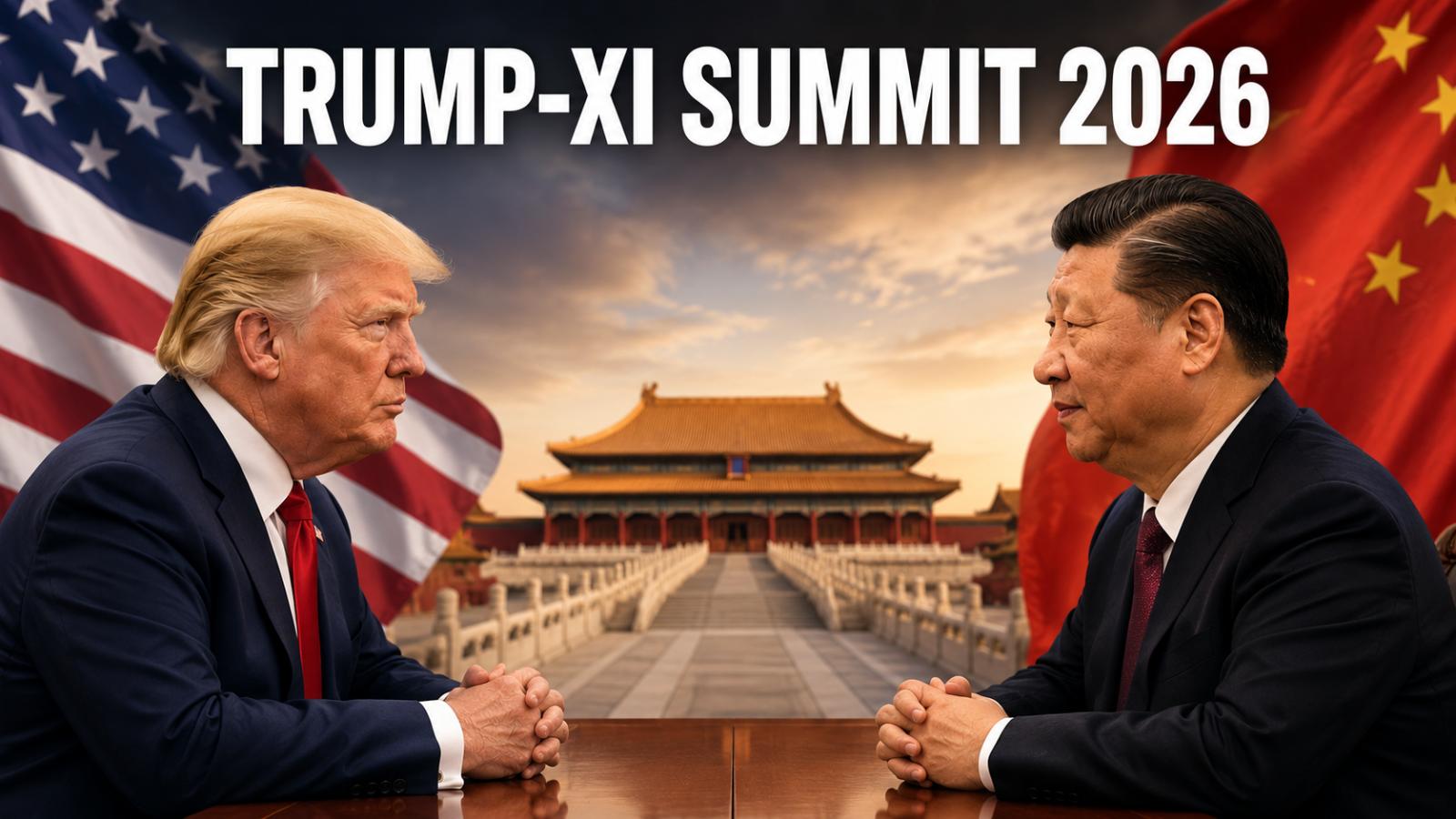
Trump-Xi Summit 2026: 6 Past Meetings That Explain US-China Tensions
Trump-Xi Summit Puts US-China Tensions Back in Focus US President Donald Trump arrived in Beijing on Wednesday, May 13, 2026, for a high-stakes summit with Chinese President Xi Jinping, bringing tariffs, rare earth exports, AI chips, Taiwan and global security back to the center of US-China relations. The summit is expected to mark another major test for the world’s two largest economies after six previous Trump-Xi meetings shaped trade disputes, tariff pauses and fragile diplomatic resets since 2017. For Washington, the key questions include trade access, technology restrictions, agriculture purchases, Taiwan and supply-chain stability. For Beijing, the meeting is a chance to push back against US tariffs and technology controls while protecting China’s position in global trade. Why the Trump-Xi Summit Matters in 2026 The 2026 Trump-Xi summit matters because the issues are no longer limited to trade. The talks now include rare earth minerals, artificial intelligence, agriculture, Taiwan, nuclear concerns and broader geopolitical tensions. Reuters reported that Trump and Xi are expected to discuss trade, AI, agriculture, rare earths and global security issues during the summit period. Rare earth exports are especially important because China plays a major role in minerals used in defense systems, electric vehicles, electronics and clean-energy technology. Any movement on export controls could affect global supply chains and US manufacturers. AI chips are another major pressure point. Trump’s Beijing visit also drew attention because Nvidia CEO Jensen Huang joined the mission as US companies seek broader access to China’s technology market. Taiwan remains one of the most sensitive security issues. Beijing strongly opposes US arms sales to Taiwan, while Washington continues to maintain political and security ties with Taipei. AP reported that US arms sales to Taiwan are among the issues surrounding the summit. Trump-Xi Meetings Timeline Meeting Date Location Main Focus Why It Matters Now First Trump-Xi meeting Thursday, April 6, 2017 Mar-a-Lago, Florida Trade, diplomacy, North Korea Opened direct leader-level communication G20 meeting Saturday, July 8, 2017 Hamburg, Germany North Korea and economic ties Came before stronger US trade action Trump China visit Wednesday, November 8, 2017 to Friday, November 10, 2017 Beijing, China Business deals and trade imbalance Warm diplomacy did not stop tariff tensions G20 dinner Saturday, December 1, 2018 Buenos Aires, Argentina Tariffs, intellectual property and cyber concerns Opened temporary negotiations during the trade war Osaka G20 meeting Saturday, June 29, 2019 Osaka, Japan Tariff pause and farm purchases Restarted trade talks after escalation APEC meeting Thursday, October 30, 2025 Busan, South Korea Tariffs, rare earths and farm exports Created a temporary pause before the 2026 summit How Six Meetings Shaped US-China Relations Trump and Xi first met at Mar-a-Lago in Florida on Thursday, April 6, 2017. The meeting created a personal channel between the two leaders, but it did not resolve deeper US concerns over China’s trade practices, market access and industrial policy. Their second meeting came on Saturday, July 8, 2017, during the G20 summit in Hamburg, Germany. North Korea was a major topic, but trade tensions were already rising. Soon after, Washington moved toward stronger action over alleged Chinese intellectual property theft and unfair trade practices. Trump visited Beijing from Wednesday, November 8, 2017, to Friday, November 10, 2017. The visit included ceremonial events and business announcements, but the friendly tone did not prevent the two countries from moving toward a wider trade confrontation. By Saturday, December 1, 2018, when Trump and Xi met at the G20 summit in Buenos Aires, both countries had already imposed tariffs. The dinner opened temporary negotiations on trade imbalances, intellectual property and cyber concerns. The next major pause came at the G20 summit in Osaka on Saturday, June 29, 2019. Trump and Xi agreed to restart trade talks and delay new tariffs. China also pledged to buy more US agricultural goods. Their sixth meeting came after a six-year gap on Thursday, October 30, 2025, during the APEC summit in Busan, South Korea. That meeting helped create a temporary pause in parts of the trade dispute, including movement on tariffs, rare earth exports and US farm purchases. What the 2026 Trump-Xi Meeting Could Decide The Beijing summit could decide whether Washington and Beijing extend a period of limited stability or return to sharper confrontation. For the United States, the main goals include tariff relief, stronger export access for farmers, rare earth supply stability, technology safeguards and progress on broader security issues. American companies are also watching whether the talks create more space for business access in China. For China, the summit is about reducing pressure from tariffs and technology restrictions while showing that Beijing can negotiate from strength. Rare earths give China leverage, while its large consumer and technology market remains important for US companies. The six previous Trump-Xi meetings show a clear pattern: personal diplomacy can slow escalation, but it rarely solves the deeper disputes. Mar-a-Lago and Beijing created warmth but did not prevent the trade war. Buenos Aires and Osaka produced temporary pauses. Busan again showed that both sides could step back from escalation, but only for a limited period. That makes the 2026 summit more than another diplomatic event. It is a test of whether the United States and China can manage competition without allowing tariffs, AI chip restrictions, rare earth controls and Taiwan tensions to trigger another major crisis.
Trump-Xi Summit 2026: 6 Past Meetings That Explain US-China Tensions
Trump-Xi Summit Puts US-China Tensions Back in Focus US President Donald Trump arrived in Beijing on Wednesday, May 13, 2026, for a high-stakes summit with Chinese President Xi Jinping, bringing tariffs, rare earth exports, AI chips, Taiwan and global security back to the center of US-China relations. The summit is expected to mark another major test for the world’s two largest economies after six previous Trump-Xi meetings shaped trade disputes, tariff pauses and fragile diplomatic resets since 2017. For Washington, the key questions include trade access, technology restrictions, agriculture purchases, Taiwan and supply-chain stability. For Beijing, the meeting is a chance to push back against US tariffs and technology controls while protecting China’s position in global trade. Why the Trump-Xi Summit Matters in 2026 The 2026 Trump-Xi summit matters because the issues are no longer limited to trade. The talks now include rare earth minerals, artificial intelligence, agriculture, Taiwan, nuclear concerns and broader geopolitical tensions. Reuters reported that Trump and Xi are expected to discuss trade, AI, agriculture, rare earths and global security issues during the summit period. Rare earth exports are especially important because China plays a major role in minerals used in defense systems, electric vehicles, electronics and clean-energy technology. Any movement on export controls could affect global supply chains and US manufacturers. AI chips are another major pressure point. Trump’s Beijing visit also drew attention because Nvidia CEO Jensen Huang joined the mission as US companies seek broader access to China’s technology market. Taiwan remains one of the most sensitive security issues. Beijing strongly opposes US arms sales to Taiwan, while Washington continues to maintain political and security ties with Taipei. AP reported that US arms sales to Taiwan are among the issues surrounding the summit. Trump-Xi Meetings Timeline Meeting Date Location Main Focus Why It Matters Now First Trump-Xi meeting Thursday, April 6, 2017 Mar-a-Lago, Florida Trade, diplomacy, North Korea Opened direct leader-level communication G20 meeting Saturday, July 8, 2017 Hamburg, Germany North Korea and economic ties Came before stronger US trade action Trump China visit Wednesday, November 8, 2017 to Friday, November 10, 2017 Beijing, China Business deals and trade imbalance Warm diplomacy did not stop tariff tensions G20 dinner Saturday, December 1, 2018 Buenos Aires, Argentina Tariffs, intellectual property and cyber concerns Opened temporary negotiations during the trade war Osaka G20 meeting Saturday, June 29, 2019 Osaka, Japan Tariff pause and farm purchases Restarted trade talks after escalation APEC meeting Thursday, October 30, 2025 Busan, South Korea Tariffs, rare earths and farm exports Created a temporary pause before the 2026 summit How Six Meetings Shaped US-China Relations Trump and Xi first met at Mar-a-Lago in Florida on Thursday, April 6, 2017. The meeting created a personal channel between the two leaders, but it did not resolve deeper US concerns over China’s trade practices, market access and industrial policy. Their second meeting came on Saturday, July 8, 2017, during the G20 summit in Hamburg, Germany. North Korea was a major topic, but trade tensions were already rising. Soon after, Washington moved toward stronger action over alleged Chinese intellectual property theft and unfair trade practices. Trump visited Beijing from Wednesday, November 8, 2017, to Friday, November 10, 2017. The visit included ceremonial events and business announcements, but the friendly tone did not prevent the two countries from moving toward a wider trade confrontation. By Saturday, December 1, 2018, when Trump and Xi met at the G20 summit in Buenos Aires, both countries had already imposed tariffs. The dinner opened temporary negotiations on trade imbalances, intellectual property and cyber concerns. The next major pause came at the G20 summit in Osaka on Saturday, June 29, 2019. Trump and Xi agreed to restart trade talks and delay new tariffs. China also pledged to buy more US agricultural goods. Their sixth meeting came after a six-year gap on Thursday, October 30, 2025, during the APEC summit in Busan, South Korea. That meeting helped create a temporary pause in parts of the trade dispute, including movement on tariffs, rare earth exports and US farm purchases. What the 2026 Trump-Xi Meeting Could Decide The Beijing summit could decide whether Washington and Beijing extend a period of limited stability or return to sharper confrontation. For the United States, the main goals include tariff relief, stronger export access for farmers, rare earth supply stability, technology safeguards and progress on broader security issues. American companies are also watching whether the talks create more space for business access in China. For China, the summit is about reducing pressure from tariffs and technology restrictions while showing that Beijing can negotiate from strength. Rare earths give China leverage, while its large consumer and technology market remains important for US companies. The six previous Trump-Xi meetings show a clear pattern: personal diplomacy can slow escalation, but it rarely solves the deeper disputes. Mar-a-Lago and Beijing created warmth but did not prevent the trade war. Buenos Aires and Osaka produced temporary pauses. Busan again showed that both sides could step back from escalation, but only for a limited period. That makes the 2026 summit more than another diplomatic event. It is a test of whether the United States and China can manage competition without allowing tariffs, AI chip restrictions, rare earth controls and Taiwan tensions to trigger another major crisis.
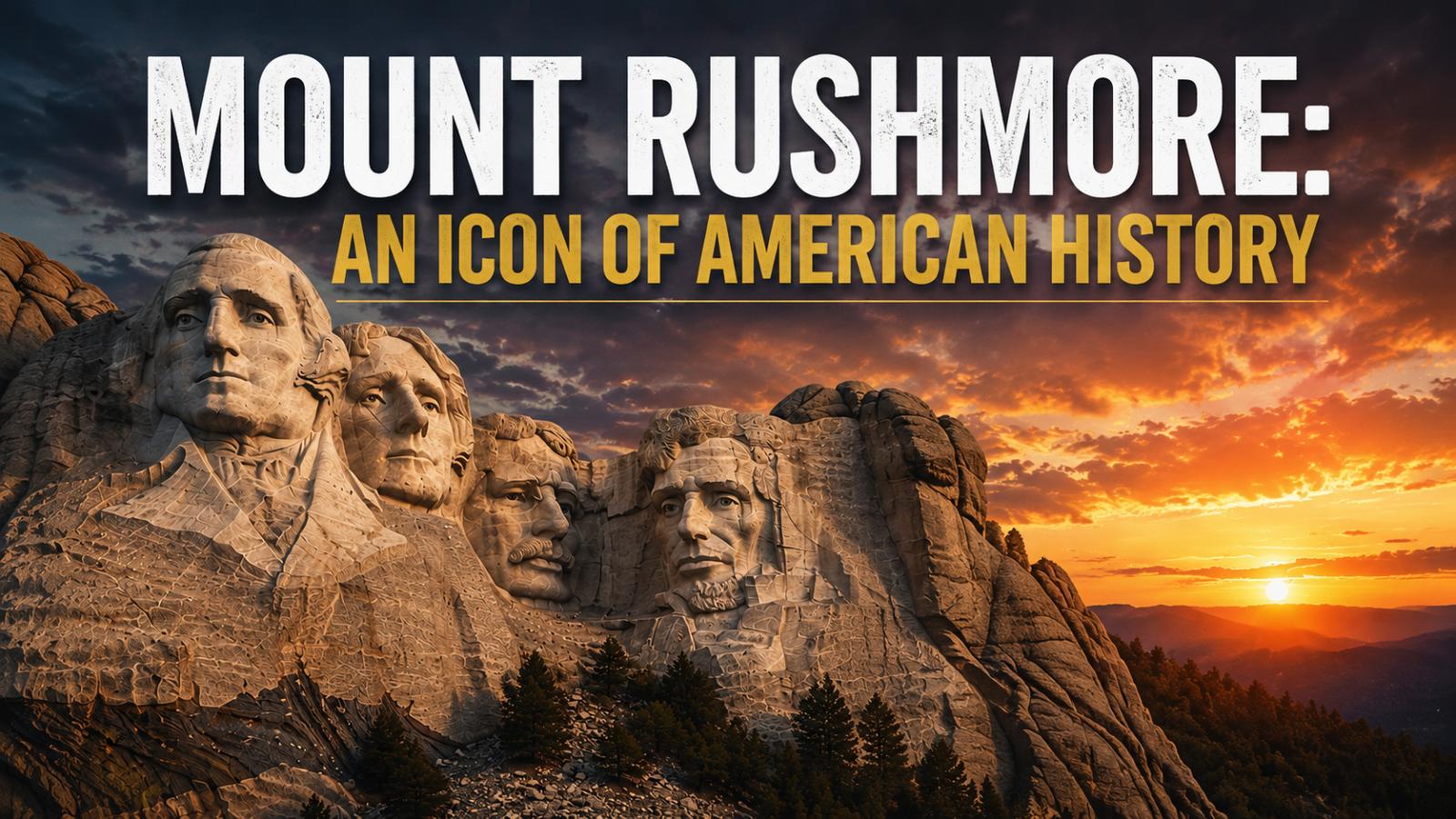
Exploring Mount Rushmore: America's Legacy Carved in Stone
Mount Rushmore, located in the Black Hills of South Dakota, is one of the most recognized landmarks in the United States. This monumental granite sculpture features the 60-foot faces of four U.S. presidents: George Washington, Thomas Jefferson, Theodore Roosevelt, and Abraham Lincoln. These iconic figures were chosen for their pivotal roles in the birth, expansion, and preservation of the United States. The Vision of Doane Robinson The idea for Mount Rus
Exploring Mount Rushmore: America's Legacy Carved in Stone
Mount Rushmore, located in the Black Hills of South Dakota, is one of the most recognized landmarks in the United States. This monumental granite sculpture features the 60-foot faces of four U.S. presidents: George Washington, Thomas Jefferson, Theodore Roosevelt, and Abraham Lincoln. These iconic figures were chosen for their pivotal roles in the birth, expansion, and preservation of the United States. The Vision of Doane Robinson The idea for Mount Rus

Gold Price Declines – Wednesday, May 13, 2026
Gold prices have dropped today, while silver shows an upward trend. Gold Price Gold (per oz): $4,701.60 (↓) Gold 24K (per 10g): ₹46,251 approx Gold 22K (per 10g): ₹42,410 approx Silver Price Silver (per oz): $87.38 (↑) (₹8,358 approx) Silver (per kg): $2,809.84 (₹268,451 approx) Currency
Gold Price Declines – Wednesday, May 13, 2026
Gold prices have dropped today, while silver shows an upward trend. Gold Price Gold (per oz): $4,701.60 (↓) Gold 24K (per 10g): ₹46,251 approx Gold 22K (per 10g): ₹42,410 approx Silver Price Silver (per oz): $87.38 (↑) (₹8,358 approx) Silver (per kg): $2,809.84 (₹268,451 approx) Currency
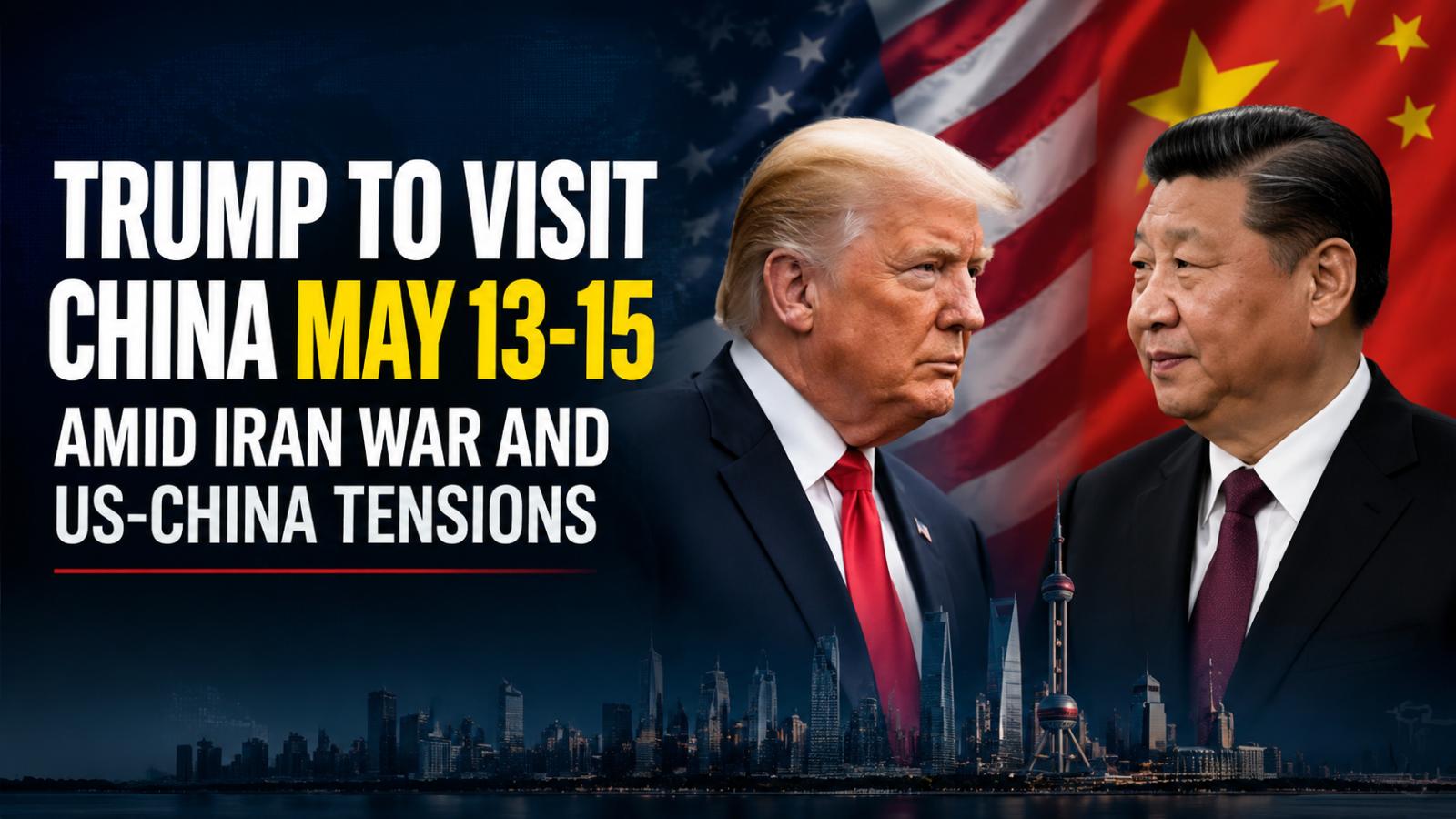
Trump-Xi summit: Key issues, trade talks, and Iran conflict to be addressed
US President Donald Trump is set to visit China from May 13 to 15, marking the first visit to the country by an American president in nearly nine years. The invitation comes from Chinese President Xi Jinping amid growing tensions between the two nations over issues such as trade, technology, and defense. This visit comes at a critical time for global politics, with the ongoing Iran conflict impacting both economic stability and energy prices. The timing of Trump’s visit coincides with a volatile situation in the Strait of Hormuz, where a dual blockade has significantly disrupted global oil trade, driving up energy prices. These disruptions have the potential to harm global economic growth, as the Strait is a vital shipping route for the world’s oil supply. Trump’s administration has placed significant pressure on Iran over its nuclear program, and in recent remarks, he stated that the US would “finish the job” if Iran did not agree to the terms aimed at halting the conflict. While tensions remain high, the US continues to press for a diplomatic resolution to the situation, with President Trump asserting that Iran must meet specific demands regarding its nuclear ambitions. Despite these pressures, Trump maintains that the US does not need China’s assistance to resolve the issue, suggesting that the conflict could be settled with or without China’s involvement. Iran, for its part, has signaled its intention to pursue peace, with chief negotiator Mohammad Bagher Ghalibaf issuing an ultimatum to the US. According to Ghalibaf, Washington must accept Iran’s recent peace proposal or face further failure in negotiations. He emphasized that there was no alternative but to acknowledge the rights of the Iranian people as outlined in Tehran’s 14-point proposal. Beyond the Iran conflict, the upcoming Trump-Xi summit is expected to address several key issues affecting US-China relations. Trade discussions will likely focus on extending a temporary truce in the ongoing trade dispute, particularly concerning rare earth minerals. Both leaders are expected to explore agreements related to Boeing aircraft purchases, as well as expanding trade and investment ties. Additionally, China is anticipated to announce purchases in the US agricultural and energy sectors. Another significant topic of discussion will be Taiwan, with Xi expressing frustration over the US’s continued support for the island nation, which China claims as part of its territory. Trump’s administration has reiterated its commitment to Taiwan, despite escalating military activities in the region by China. The summit will also cover the rapid development of artificial intelligence (AI) in both countries, with US officials highlighting concerns about the potential military and economic implications of AI advancements. With both nations at the forefront of technological innovation, there is a growing need for open communication to avoid misunderstandings or potential conflicts arising from the use of AI. This high-stakes summit between the US and China is poised to shape the future of global trade, energy security, and technological development, with both sides seeking to manage their differences while addressing urgent geopolitical challenges. As the world watches, the outcome of these talks could have far-reaching implications for international relations.
Trump-Xi summit: Key issues, trade talks, and Iran conflict to be addressed
US President Donald Trump is set to visit China from May 13 to 15, marking the first visit to the country by an American president in nearly nine years. The invitation comes from Chinese President Xi Jinping amid growing tensions between the two nations over issues such as trade, technology, and defense. This visit comes at a critical time for global politics, with the ongoing Iran conflict impacting both economic stability and energy prices. The timing of Trump’s visit coincides with a volatile situation in the Strait of Hormuz, where a dual blockade has significantly disrupted global oil trade, driving up energy prices. These disruptions have the potential to harm global economic growth, as the Strait is a vital shipping route for the world’s oil supply. Trump’s administration has placed significant pressure on Iran over its nuclear program, and in recent remarks, he stated that the US would “finish the job” if Iran did not agree to the terms aimed at halting the conflict. While tensions remain high, the US continues to press for a diplomatic resolution to the situation, with President Trump asserting that Iran must meet specific demands regarding its nuclear ambitions. Despite these pressures, Trump maintains that the US does not need China’s assistance to resolve the issue, suggesting that the conflict could be settled with or without China’s involvement. Iran, for its part, has signaled its intention to pursue peace, with chief negotiator Mohammad Bagher Ghalibaf issuing an ultimatum to the US. According to Ghalibaf, Washington must accept Iran’s recent peace proposal or face further failure in negotiations. He emphasized that there was no alternative but to acknowledge the rights of the Iranian people as outlined in Tehran’s 14-point proposal. Beyond the Iran conflict, the upcoming Trump-Xi summit is expected to address several key issues affecting US-China relations. Trade discussions will likely focus on extending a temporary truce in the ongoing trade dispute, particularly concerning rare earth minerals. Both leaders are expected to explore agreements related to Boeing aircraft purchases, as well as expanding trade and investment ties. Additionally, China is anticipated to announce purchases in the US agricultural and energy sectors. Another significant topic of discussion will be Taiwan, with Xi expressing frustration over the US’s continued support for the island nation, which China claims as part of its territory. Trump’s administration has reiterated its commitment to Taiwan, despite escalating military activities in the region by China. The summit will also cover the rapid development of artificial intelligence (AI) in both countries, with US officials highlighting concerns about the potential military and economic implications of AI advancements. With both nations at the forefront of technological innovation, there is a growing need for open communication to avoid misunderstandings or potential conflicts arising from the use of AI. This high-stakes summit between the US and China is poised to shape the future of global trade, energy security, and technological development, with both sides seeking to manage their differences while addressing urgent geopolitical challenges. As the world watches, the outcome of these talks could have far-reaching implications for international relations.

Satellite images fuel concerns over Pakistan's role in US-Iran diplomacy
Fresh satellite imagery has sparked renewed scrutiny over Pakistan's involvement in the ongoing US-Iran diplomatic talks, with reports suggesting that Islamabad may be housing at least one Iranian military aircraft at the strategically important Nur Khan Airbase, located near Islamabad. These developments come amid heightened tensions between Washington and Tehran, as Pakistan continues to position itself as a mediator between the two nations. The satellite images, which are believe
Satellite images fuel concerns over Pakistan's role in US-Iran diplomacy
Fresh satellite imagery has sparked renewed scrutiny over Pakistan's involvement in the ongoing US-Iran diplomatic talks, with reports suggesting that Islamabad may be housing at least one Iranian military aircraft at the strategically important Nur Khan Airbase, located near Islamabad. These developments come amid heightened tensions between Washington and Tehran, as Pakistan continues to position itself as a mediator between the two nations. The satellite images, which are believe
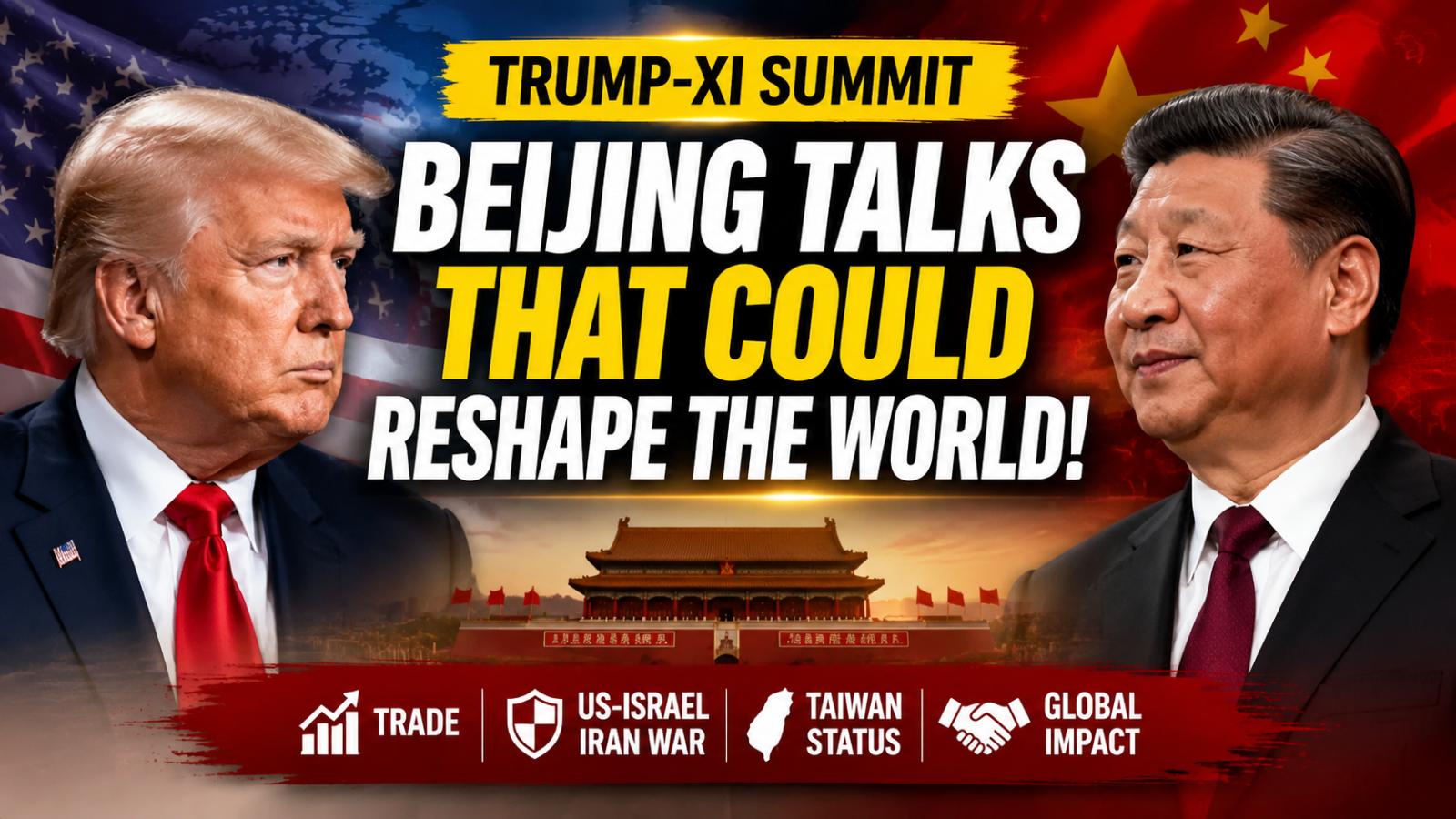
Historic US-China Summit: Trump and Xi Discuss Iran, Trade, and Taiwan in Beijing
Trump and Xi Jinping Meet in Beijing for Key Summit US President Donald Trump and Chinese President Xi Jinping are set to meet in Beijing for a highly anticipated three-day summit. This is Trump’s first visit to China in nearly a decade, making the meeting particularly significant. The summit is expected to focus on critical global issues, including the ongoing US-Israel war on Iran, trade relations between the two nations, and the status of Taiw
Historic US-China Summit: Trump and Xi Discuss Iran, Trade, and Taiwan in Beijing
Trump and Xi Jinping Meet in Beijing for Key Summit US President Donald Trump and Chinese President Xi Jinping are set to meet in Beijing for a highly anticipated three-day summit. This is Trump’s first visit to China in nearly a decade, making the meeting particularly significant. The summit is expected to focus on critical global issues, including the ongoing US-Israel war on Iran, trade relations between the two nations, and the status of Taiw

Hannah Harper Crowned Winner of American Idol 2026
Hannah Harper Wins "American Idol" 2026 On May 11, 2026, Hannah Harper, a stay-at-home mother of three from Willow Springs, Missouri, was crowned the winner of American Idol Season 24. The 25-year-old country singer made history as the first female country artist to win the competition since Carrie Underwood in 2005. Harper’s victory came after a thrilling finale, where she faced off against 27-year-old Jordan McCullough, a worship dire
Hannah Harper Crowned Winner of American Idol 2026
Hannah Harper Wins "American Idol" 2026 On May 11, 2026, Hannah Harper, a stay-at-home mother of three from Willow Springs, Missouri, was crowned the winner of American Idol Season 24. The 25-year-old country singer made history as the first female country artist to win the competition since Carrie Underwood in 2005. Harper’s victory came after a thrilling finale, where she faced off against 27-year-old Jordan McCullough, a worship dire

Vijay Successfully Passes Trust Vote in Tamil Nadu with 144 MLAs, DMK Walks Out
Vijay successfully passed the confidence motion in the Tamil Nadu Assembly on Wednesday with 144 MLAs backing his government. The required majority mark was 118, and despite some opposition from the DMK and PMK, Vijay comfortably crossed this threshold. The trust vote unfolded with empty benches in the opposition as the DMK and DMDK legislators staged a walkout, while several PMK and BJP MLAs abstained from voting. Among the supporting MLAs, the AIADMK faction led by rebel leaders S
Vijay Successfully Passes Trust Vote in Tamil Nadu with 144 MLAs, DMK Walks Out
Vijay successfully passed the confidence motion in the Tamil Nadu Assembly on Wednesday with 144 MLAs backing his government. The required majority mark was 118, and despite some opposition from the DMK and PMK, Vijay comfortably crossed this threshold. The trust vote unfolded with empty benches in the opposition as the DMK and DMDK legislators staged a walkout, while several PMK and BJP MLAs abstained from voting. Among the supporting MLAs, the AIADMK faction led by rebel leaders S
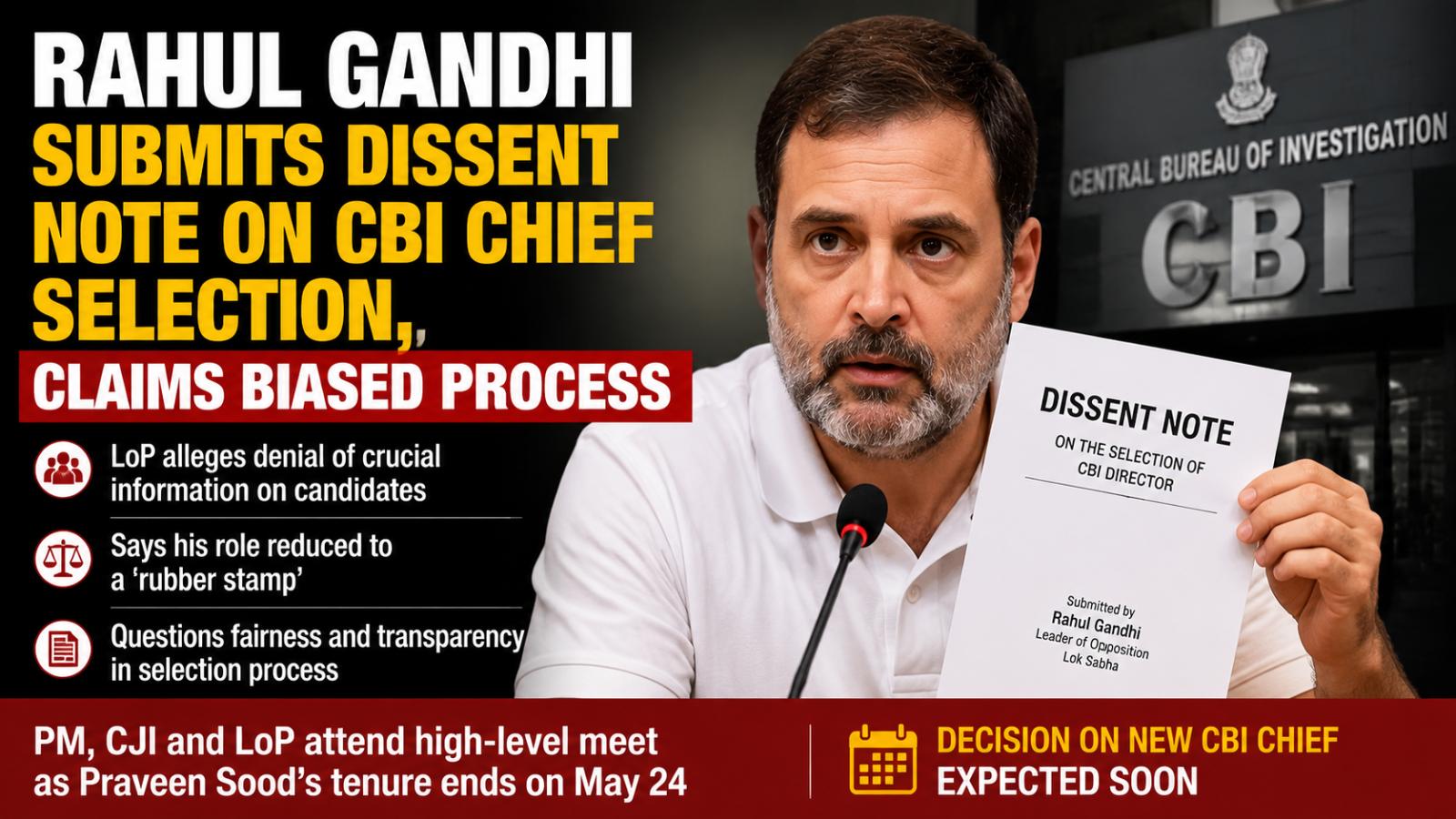
Rahul Gandhi Submits Dissent Note on CBI Chief Selection, Claims Biased Process
On May 13, 2026, Rahul Gandhi, the Leader of Opposition in the Lok Sabha, submitted a dissent note to Prime Minister Narendra Modi regarding the selection process for the new Central Bureau of Investigation (CBI) chief. The Congress MP accused the process of being biased, stating that his constitutional role in the appointment process had been reduced to that of a "rubber stamp." Gandhi expressed that the procedure was designed to ensure that the government's preferred candidate would be selected, and he refused to participate in what he deemed a "mockery" of the process. The high-level meeting, which included Prime Minister Modi, Chief Justice of India Surya Kant, and Gandhi, was held at the Prime Minister's residence to discuss the potential successors to Praveen Sood, the outgoing CBI Director, whose tenure ends on May 24, 2026. Gandhi claimed that despite repeated requests, he was denied access to crucial self-appraisal and assessment reports of the 69 shortlisted candidates. He pointed out that he was expected to review these records only during the meeting, preventing a meaningful evaluation of the candidates' histories and performances. The lack of transparency in the process, he said, made it difficult for him to fulfill his constitutional duty to ensure a fair and unbiased selection for the critical position. In his note, Gandhi also accused the Modi government of using the CBI to target political opponents, journalists, and critics. He noted that his suggestions for a more transparent and fair process had been ignored, including earlier written requests made on October 21 and May 5 of the previous year. Gandhi’s criticism of the process is seen as part of a broader political strategy to hold the government accountable on issues of institutional independence, especially as the CBI has often been at the center of political controversies. As the selection process for the new CBI chief continues, it is expected that the Modi government will announce the new director soon, with several senior IPS officers under consideration for the top position. This issue remains a politically sensitive one, with several high-profile cases involving the agency, making the outcome of the CBI chief selection process crucial for the current government and the opposition alike.
Rahul Gandhi Submits Dissent Note on CBI Chief Selection, Claims Biased Process
On May 13, 2026, Rahul Gandhi, the Leader of Opposition in the Lok Sabha, submitted a dissent note to Prime Minister Narendra Modi regarding the selection process for the new Central Bureau of Investigation (CBI) chief. The Congress MP accused the process of being biased, stating that his constitutional role in the appointment process had been reduced to that of a "rubber stamp." Gandhi expressed that the procedure was designed to ensure that the government's preferred candidate would be selected, and he refused to participate in what he deemed a "mockery" of the process. The high-level meeting, which included Prime Minister Modi, Chief Justice of India Surya Kant, and Gandhi, was held at the Prime Minister's residence to discuss the potential successors to Praveen Sood, the outgoing CBI Director, whose tenure ends on May 24, 2026. Gandhi claimed that despite repeated requests, he was denied access to crucial self-appraisal and assessment reports of the 69 shortlisted candidates. He pointed out that he was expected to review these records only during the meeting, preventing a meaningful evaluation of the candidates' histories and performances. The lack of transparency in the process, he said, made it difficult for him to fulfill his constitutional duty to ensure a fair and unbiased selection for the critical position. In his note, Gandhi also accused the Modi government of using the CBI to target political opponents, journalists, and critics. He noted that his suggestions for a more transparent and fair process had been ignored, including earlier written requests made on October 21 and May 5 of the previous year. Gandhi’s criticism of the process is seen as part of a broader political strategy to hold the government accountable on issues of institutional independence, especially as the CBI has often been at the center of political controversies. As the selection process for the new CBI chief continues, it is expected that the Modi government will announce the new director soon, with several senior IPS officers under consideration for the top position. This issue remains a politically sensitive one, with several high-profile cases involving the agency, making the outcome of the CBI chief selection process crucial for the current government and the opposition alike.
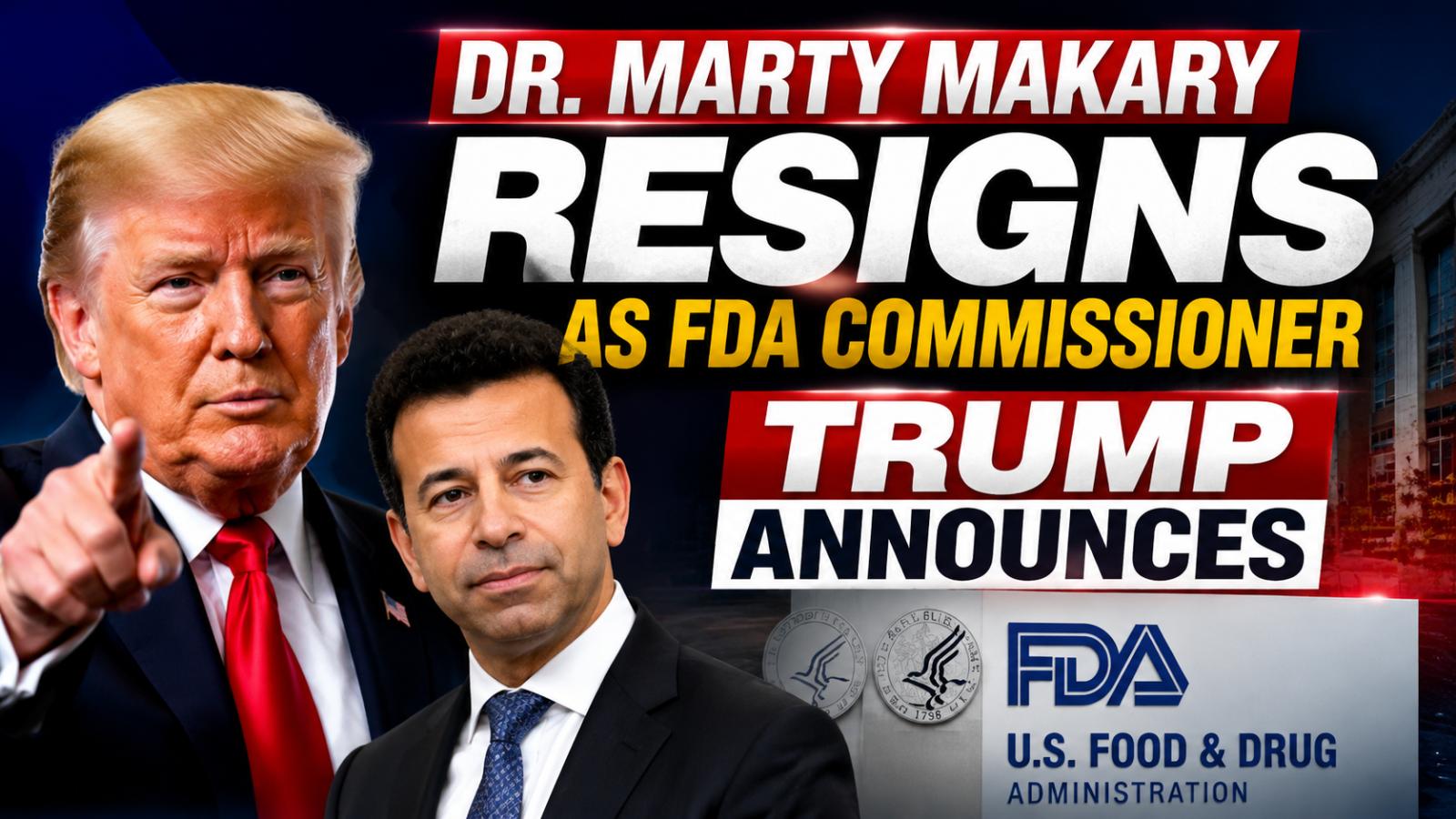
Dr. Marty Makary Resigns as FDA Commissioner, Trump Announces
Dr. Marty Makary Resigns as FDA Commissioner Dr. Marty Makary has resigned from his position as the commissioner of the U.S. Food and Drug Administration (FDA), as confirmed by President Donald Trump on May 12. In a social media post, Trump revealed that Makary had informed him of his decision to step down, effective Tuesday. While Makary did not offer an explicit reason for his resignation, Trump praised his leadership, calling him a “hard worke
Dr. Marty Makary Resigns as FDA Commissioner, Trump Announces
Dr. Marty Makary Resigns as FDA Commissioner Dr. Marty Makary has resigned from his position as the commissioner of the U.S. Food and Drug Administration (FDA), as confirmed by President Donald Trump on May 12. In a social media post, Trump revealed that Makary had informed him of his decision to step down, effective Tuesday. While Makary did not offer an explicit reason for his resignation, Trump praised his leadership, calling him a “hard worke

Prateek Yadav, Mulayam Singh Yadav’s Son, Dies at 38 – Apolitical Legacy and Tributes
Prateek Yadav, the 38-year-old son of late Samajwadi Party founder Mulayam Singh Yadav, passed away in Lucknow on May 13, 2026. Prateek, who had been struggling with lung-related issues for a long time, was undergoing treatment for a blood clot in his lungs. He was rushed to the hospital early in the morning but was unfortunately declared dead. The cause of death is yet to be confirmed, and a post-mortem is underway to determine the exact reason. Despite being born into one of India
Prateek Yadav, Mulayam Singh Yadav’s Son, Dies at 38 – Apolitical Legacy and Tributes
Prateek Yadav, the 38-year-old son of late Samajwadi Party founder Mulayam Singh Yadav, passed away in Lucknow on May 13, 2026. Prateek, who had been struggling with lung-related issues for a long time, was undergoing treatment for a blood clot in his lungs. He was rushed to the hospital early in the morning but was unfortunately declared dead. The cause of death is yet to be confirmed, and a post-mortem is underway to determine the exact reason. Despite being born into one of India

Tamil Nadu CM Vijay Faces Live Crucial Floor Test, Banks on Allies to Secure Trust Vote
Tamil Nadu Chief Minister C Joseph Vijay is set to face his first trust vote today in the Tamil Nadu Legislative Assembly. While the numbers appear to favor him, the lead-up to the floor test has been filled with swift political alliances, intense negotiations, and even a court intervention. Vijay, who took oath as Chief Minister recently, currently enjoys the support of 120 MLAs, just above the required majority mark of 118 in the 234-member Assembly. Despite emerging as the largest party in the 2026 elections with 108 seats, Vijay’s Tamilaga Vettri Kazhagam (TVK) remained short of a majority. After securing support from the Congress, Indian Union Muslim League (IUML), Communist Party of India (CPI), and the Communist Party of India (Marxist) (CPIM), Vijay consolidated a coalition of 120 MLAs. Even with one MLA temporarily barred from participating, the coalition remains above the majority line, ensuring a manageable trust vote. A major boost came from VCK leader Thol Thirumavalavan, who confirmed that his two-party MLAs would vote in favor of Vijay. Thirumavalavan’s support was instrumental in ensuring stability within the coalition. Additionally, Vijay’s efforts to consolidate support included meetings with Congress leaders, IUML, and even AIADMK dissidents. The opposition also faced internal turmoil, with a group of around 30 AIADMK MLAs led by CV Shanmugam and SP Velumani announcing their support for Vijay’s government. This added to the political chaos as these rebels accused the AIADMK leadership of secretly seeking DMK’s support to form an alternative government. However, the situation took another twist when TVK MLA R Seenivasa Sethupathy was temporarily barred from voting in the trust motion due to a pending case regarding vote-counting irregularities. Despite this, Vijay's coalition remains slightly above the required majority, and unless last-minute abstentions or legal interventions alter the scenario, he seems likely to survive the floor test. In the backdrop, the AMMK controversy added more drama when AMMK’s MLA Kamaraj was removed after his alleged forged support letter was used to claim his backing for the TVK. Vijay’s future in office hinges on today’s floor test, but with declared support from 120 MLAs, and despite a legal complication reducing his effective tally to 119, he is expected to clear the vote barring any unexpected developments.
Tamil Nadu CM Vijay Faces Live Crucial Floor Test, Banks on Allies to Secure Trust Vote
Tamil Nadu Chief Minister C Joseph Vijay is set to face his first trust vote today in the Tamil Nadu Legislative Assembly. While the numbers appear to favor him, the lead-up to the floor test has been filled with swift political alliances, intense negotiations, and even a court intervention. Vijay, who took oath as Chief Minister recently, currently enjoys the support of 120 MLAs, just above the required majority mark of 118 in the 234-member Assembly. Despite emerging as the largest party in the 2026 elections with 108 seats, Vijay’s Tamilaga Vettri Kazhagam (TVK) remained short of a majority. After securing support from the Congress, Indian Union Muslim League (IUML), Communist Party of India (CPI), and the Communist Party of India (Marxist) (CPIM), Vijay consolidated a coalition of 120 MLAs. Even with one MLA temporarily barred from participating, the coalition remains above the majority line, ensuring a manageable trust vote. A major boost came from VCK leader Thol Thirumavalavan, who confirmed that his two-party MLAs would vote in favor of Vijay. Thirumavalavan’s support was instrumental in ensuring stability within the coalition. Additionally, Vijay’s efforts to consolidate support included meetings with Congress leaders, IUML, and even AIADMK dissidents. The opposition also faced internal turmoil, with a group of around 30 AIADMK MLAs led by CV Shanmugam and SP Velumani announcing their support for Vijay’s government. This added to the political chaos as these rebels accused the AIADMK leadership of secretly seeking DMK’s support to form an alternative government. However, the situation took another twist when TVK MLA R Seenivasa Sethupathy was temporarily barred from voting in the trust motion due to a pending case regarding vote-counting irregularities. Despite this, Vijay's coalition remains slightly above the required majority, and unless last-minute abstentions or legal interventions alter the scenario, he seems likely to survive the floor test. In the backdrop, the AMMK controversy added more drama when AMMK’s MLA Kamaraj was removed after his alleged forged support letter was used to claim his backing for the TVK. Vijay’s future in office hinges on today’s floor test, but with declared support from 120 MLAs, and despite a legal complication reducing his effective tally to 119, he is expected to clear the vote barring any unexpected developments.
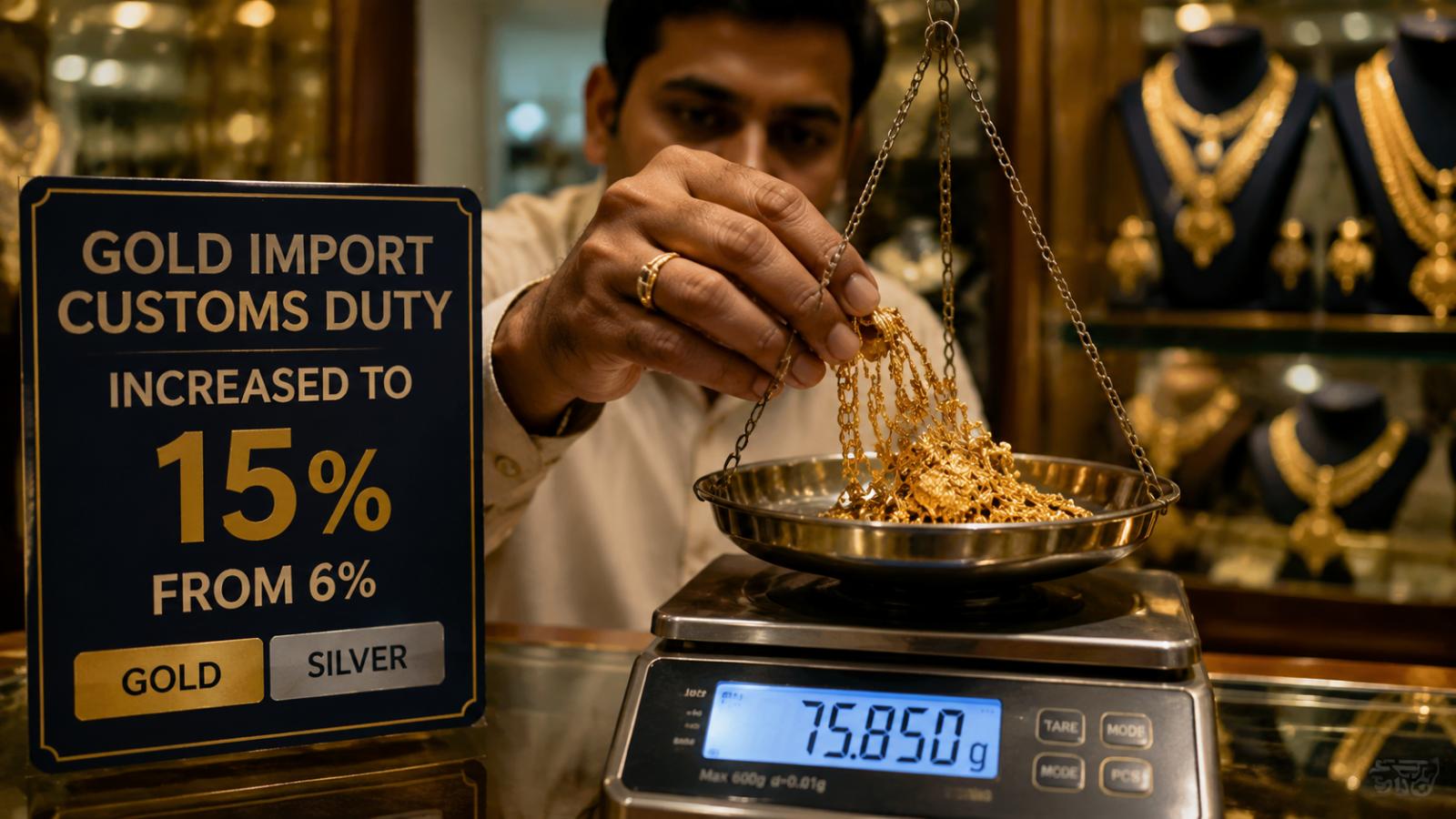
Gold, Silver Imports to Cost More After Government Hikes Customs Duty to 15%
The Indian government has raised the import duties on gold and silver sharply, setting the new rates at 15% from the previous 6%. This move comes just days after Prime Minister Narendra Modi urged the public to avoid purchasing gold for the next year, in response to the growing economic strain caused by the Iran war and the pressure on India's foreign exchange reserves. The government's decision involves a 10% basic customs duty along with an additional 5% Agriculture Infrastructure
Gold, Silver Imports to Cost More After Government Hikes Customs Duty to 15%
The Indian government has raised the import duties on gold and silver sharply, setting the new rates at 15% from the previous 6%. This move comes just days after Prime Minister Narendra Modi urged the public to avoid purchasing gold for the next year, in response to the growing economic strain caused by the Iran war and the pressure on India's foreign exchange reserves. The government's decision involves a 10% basic customs duty along with an additional 5% Agriculture Infrastructure

Trump Defends Pakistan Amid Iran Mediation Tensions
Trump Defends Pakistan's Role in Iran Talks President Donald Trump reaffirmed his trust in Pakistan’s role as a mediator in the ongoing talks with Iran, dismissing concerns raised by Senator Lindsey Graham. Trump praised Prime Minister Shehbaz Sharif and Pakistan's Army Chief, General Asim Munir, calling them “absolutely great” for their efforts in facilitating diplomatic discussions between the United States and Iran. His comments came on Ma
Trump Defends Pakistan Amid Iran Mediation Tensions
Trump Defends Pakistan's Role in Iran Talks President Donald Trump reaffirmed his trust in Pakistan’s role as a mediator in the ongoing talks with Iran, dismissing concerns raised by Senator Lindsey Graham. Trump praised Prime Minister Shehbaz Sharif and Pakistan's Army Chief, General Asim Munir, calling them “absolutely great” for their efforts in facilitating diplomatic discussions between the United States and Iran. His comments came on Ma

Iran Gains Control Over Strait of Hormuz as Iraq and Pakistan Strike Energy Deals
Iraq and Pakistan Secure Oil and Gas Transport Deals Amid the ongoing conflict in the Middle East, Iraq and Pakistan have reached separate agreements with Iran to allow the transport of oil and liquefied natural gas (LNG) through the critical Strait of Hormuz. According to multiple sources, these agreements reflect Iran’s growing control over one of the world’s most important energy corridors, a situation that has intensified due to the ongoing
Iran Gains Control Over Strait of Hormuz as Iraq and Pakistan Strike Energy Deals
Iraq and Pakistan Secure Oil and Gas Transport Deals Amid the ongoing conflict in the Middle East, Iraq and Pakistan have reached separate agreements with Iran to allow the transport of oil and liquefied natural gas (LNG) through the critical Strait of Hormuz. According to multiple sources, these agreements reflect Iran’s growing control over one of the world’s most important energy corridors, a situation that has intensified due to the ongoing










