







How did Western music begin in Athens? It started with mathematics and philosophy
Western music traces back to ancient Athens, where philosophy and mathematics defined sound and structure. In this early period, music was not merely entertainment but an intellectual discipline deeply connected to science and education. The ideas developed in Athens would later influence the foundations of Western music, shaping how sound is understood and organized. Mathematical foundations of musical sound Ancient Greek thinkers explored the relationship between numbers and sound, establishing principles that continue to influence music theory. Pythagoras, a key figure in this development, discovered that harmonious tones could be produced through simple mathematical ratios. By observing vibrating strings, he demonstrated that pitch changes were directly related to numerical relationships, laying the groundwork for structured scales and harmony. Music as part of education and philosophy In Athens, music was considered essential to intellectual and moral development. Philosophers such as Plato argued that music could influence human behavior, emotions, and character. As a result, music education became an integral part of learning, reinforcing the idea that sound had both scientific and psychological significance. Performance traditions in Greek theater Music also played a central role in public life, particularly in theatrical performances. Greek dramas incorporated choruses that combined singing, poetry, and movement to convey stories. These performances represented one of the earliest forms of organized musical storytelling, demonstrating how music functioned as both an artistic and communal experience. Lasting influence on Western musical systems Although ancient Greek compositions have not survived in their original form, the theoretical framework developed in Athens continues to shape Western music. Concepts such as scales, harmony, and structured composition evolved from these early discoveries. The emphasis on mathematical order and philosophical meaning established a foundation that later cultures expanded upon. The legacy of Athens highlights how music evolved from a study of numbers and ideas into a complex artistic system. This transition marks the beginning of a tradition that continues to influence modern music across the world.
How did Western music begin in Athens? It started with mathematics and philosophy
Western music traces back to ancient Athens, where philosophy and mathematics defined sound and structure. In this early period, music was not merely entertainment but an intellectual discipline deeply connected to science and education. The ideas developed in Athens would later influence the foundations of Western music, shaping how sound is understood and organized. Mathematical foundations of musical sound Ancient Greek thinkers explored the relationship between numbers and sound, establishing principles that continue to influence music theory. Pythagoras, a key figure in this development, discovered that harmonious tones could be produced through simple mathematical ratios. By observing vibrating strings, he demonstrated that pitch changes were directly related to numerical relationships, laying the groundwork for structured scales and harmony. Music as part of education and philosophy In Athens, music was considered essential to intellectual and moral development. Philosophers such as Plato argued that music could influence human behavior, emotions, and character. As a result, music education became an integral part of learning, reinforcing the idea that sound had both scientific and psychological significance. Performance traditions in Greek theater Music also played a central role in public life, particularly in theatrical performances. Greek dramas incorporated choruses that combined singing, poetry, and movement to convey stories. These performances represented one of the earliest forms of organized musical storytelling, demonstrating how music functioned as both an artistic and communal experience. Lasting influence on Western musical systems Although ancient Greek compositions have not survived in their original form, the theoretical framework developed in Athens continues to shape Western music. Concepts such as scales, harmony, and structured composition evolved from these early discoveries. The emphasis on mathematical order and philosophical meaning established a foundation that later cultures expanded upon. The legacy of Athens highlights how music evolved from a study of numbers and ideas into a complex artistic system. This transition marks the beginning of a tradition that continues to influence modern music across the world.
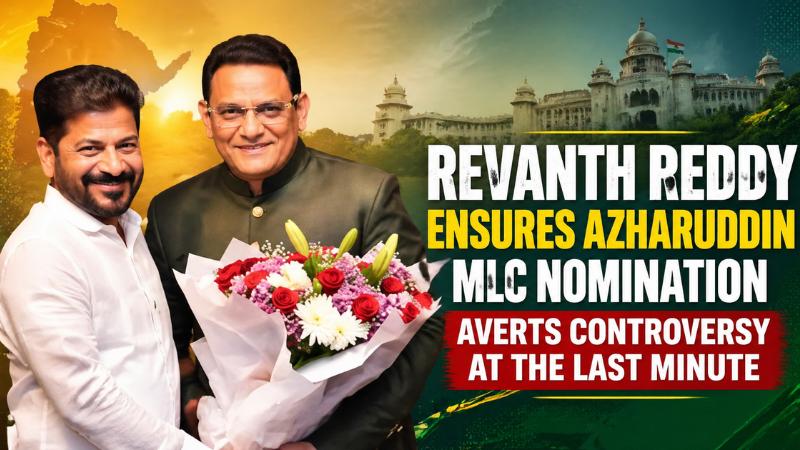
Revanth Reddy’s Strategic Move to Avoid Backlash and Secure Azharuddin's Position as MLC
Revanth Reddy Prevents Backlash with Last-Minute MLC Appointment for Azharuddin On April 25, 2026, Telangana Chief Minister Revanth Reddy averted a major political backlash by ensuring that Congress leader Azharuddin, who had been appointed to the state cabinet six months ago, was legislated as an MLC before his time ran out. Under the law, a cabinet minister must hold a legislative position within six months of appointment if they are not already a sitting represen
Revanth Reddy’s Strategic Move to Avoid Backlash and Secure Azharuddin's Position as MLC
Revanth Reddy Prevents Backlash with Last-Minute MLC Appointment for Azharuddin On April 25, 2026, Telangana Chief Minister Revanth Reddy averted a major political backlash by ensuring that Congress leader Azharuddin, who had been appointed to the state cabinet six months ago, was legislated as an MLC before his time ran out. Under the law, a cabinet minister must hold a legislative position within six months of appointment if they are not already a sitting represen
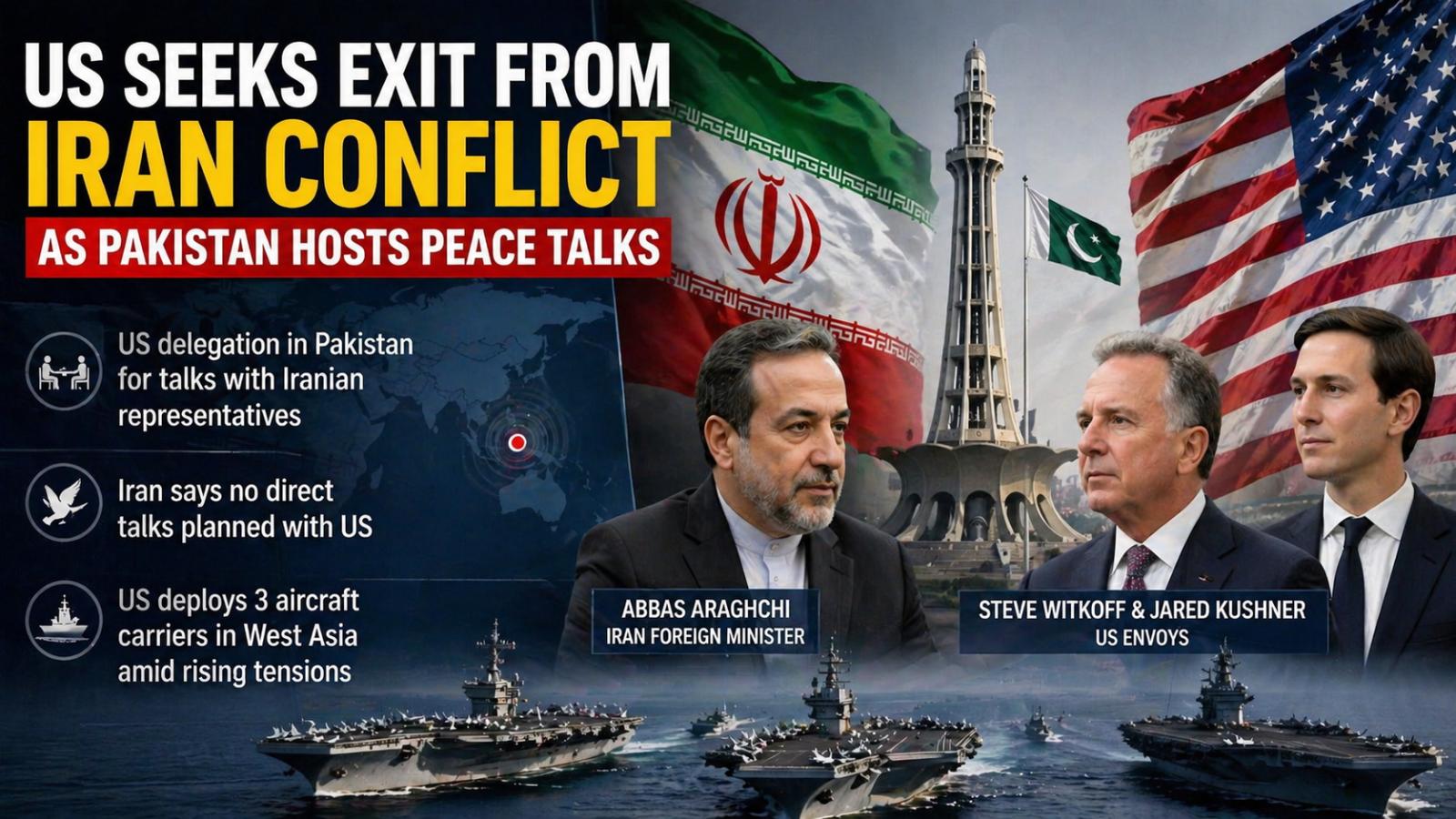
West Asia tensions rise as US envoys head to Pakistan for Iran talks
The US Iran conflict has entered a critical phase as Iran’s Defence Ministry claimed that the United States is seeking a “face-saving” way to exit the war, even as Washington sends a delegation to Pakistan for peace talks. The statement highlights growing diplomatic activity alongside rising military tensions in West Asia, with Pakistan emerging as a key mediator in the crisis. According to Iranian media reports, a defence ministry spokesperson said that Iran’s military strength has become dominant in the region, forcing the United States to look for a way out of what it described as a prolonged and difficult conflict. The remarks come at a time when US envoys Steve Witkoff and Jared Kushner are heading to Pakistan for discussions that the White House said would include talks with Iranian representatives. However, Iran has publicly denied plans for direct negotiations with the United States. Iranian Foreign Minister Abbas Araghchi arrived in Islamabad for an official visit and is scheduled to meet senior Pakistani officials. Iranian Foreign Ministry spokesperson Esmaeil Baqaei clarified that the visit is focused on consultations with Pakistan as part of its mediation efforts and not on direct dialogue with the US. He added that Iran’s position would be communicated through Pakistani channels. The diplomatic developments unfold against a backdrop of intensifying West Asia tensions, particularly around the Strait of Hormuz, a vital global oil route. The United States has significantly increased its military presence in the region, deploying three aircraft carrier strike groups, marking the largest such deployment since the Iraq war in 2003. According to US Central Command, the deployment includes more than 200 aircraft and around 15,000 personnel. As both diplomatic and military activities escalate, uncertainty remains over whether meaningful progress toward de-escalation can be achieved. While Pakistan continues its mediation role, the absence of direct Iran-US talks suggests that a resolution may still be distant, keeping the region on edge.
West Asia tensions rise as US envoys head to Pakistan for Iran talks
The US Iran conflict has entered a critical phase as Iran’s Defence Ministry claimed that the United States is seeking a “face-saving” way to exit the war, even as Washington sends a delegation to Pakistan for peace talks. The statement highlights growing diplomatic activity alongside rising military tensions in West Asia, with Pakistan emerging as a key mediator in the crisis. According to Iranian media reports, a defence ministry spokesperson said that Iran’s military strength has become dominant in the region, forcing the United States to look for a way out of what it described as a prolonged and difficult conflict. The remarks come at a time when US envoys Steve Witkoff and Jared Kushner are heading to Pakistan for discussions that the White House said would include talks with Iranian representatives. However, Iran has publicly denied plans for direct negotiations with the United States. Iranian Foreign Minister Abbas Araghchi arrived in Islamabad for an official visit and is scheduled to meet senior Pakistani officials. Iranian Foreign Ministry spokesperson Esmaeil Baqaei clarified that the visit is focused on consultations with Pakistan as part of its mediation efforts and not on direct dialogue with the US. He added that Iran’s position would be communicated through Pakistani channels. The diplomatic developments unfold against a backdrop of intensifying West Asia tensions, particularly around the Strait of Hormuz, a vital global oil route. The United States has significantly increased its military presence in the region, deploying three aircraft carrier strike groups, marking the largest such deployment since the Iraq war in 2003. According to US Central Command, the deployment includes more than 200 aircraft and around 15,000 personnel. As both diplomatic and military activities escalate, uncertainty remains over whether meaningful progress toward de-escalation can be achieved. While Pakistan continues its mediation role, the absence of direct Iran-US talks suggests that a resolution may still be distant, keeping the region on edge.

One Arrested for Harassing Akshay Kumar’s Daughter in Online Game
Hero’s Daughter Harassed in Online Game; One Arrested A troubling online incident involving Bollywood actor Akshay Kumar's teenage daughter has led to the arrest of one individual. The situation came to light when Akshay Kumar shared that his daughter had received inappropriate messages while playing an online game. What began as a routine interaction with another player quickly escalated when the stranger began asking personal qu
One Arrested for Harassing Akshay Kumar’s Daughter in Online Game
Hero’s Daughter Harassed in Online Game; One Arrested A troubling online incident involving Bollywood actor Akshay Kumar's teenage daughter has led to the arrest of one individual. The situation came to light when Akshay Kumar shared that his daughter had received inappropriate messages while playing an online game. What began as a routine interaction with another player quickly escalated when the stranger began asking personal qu
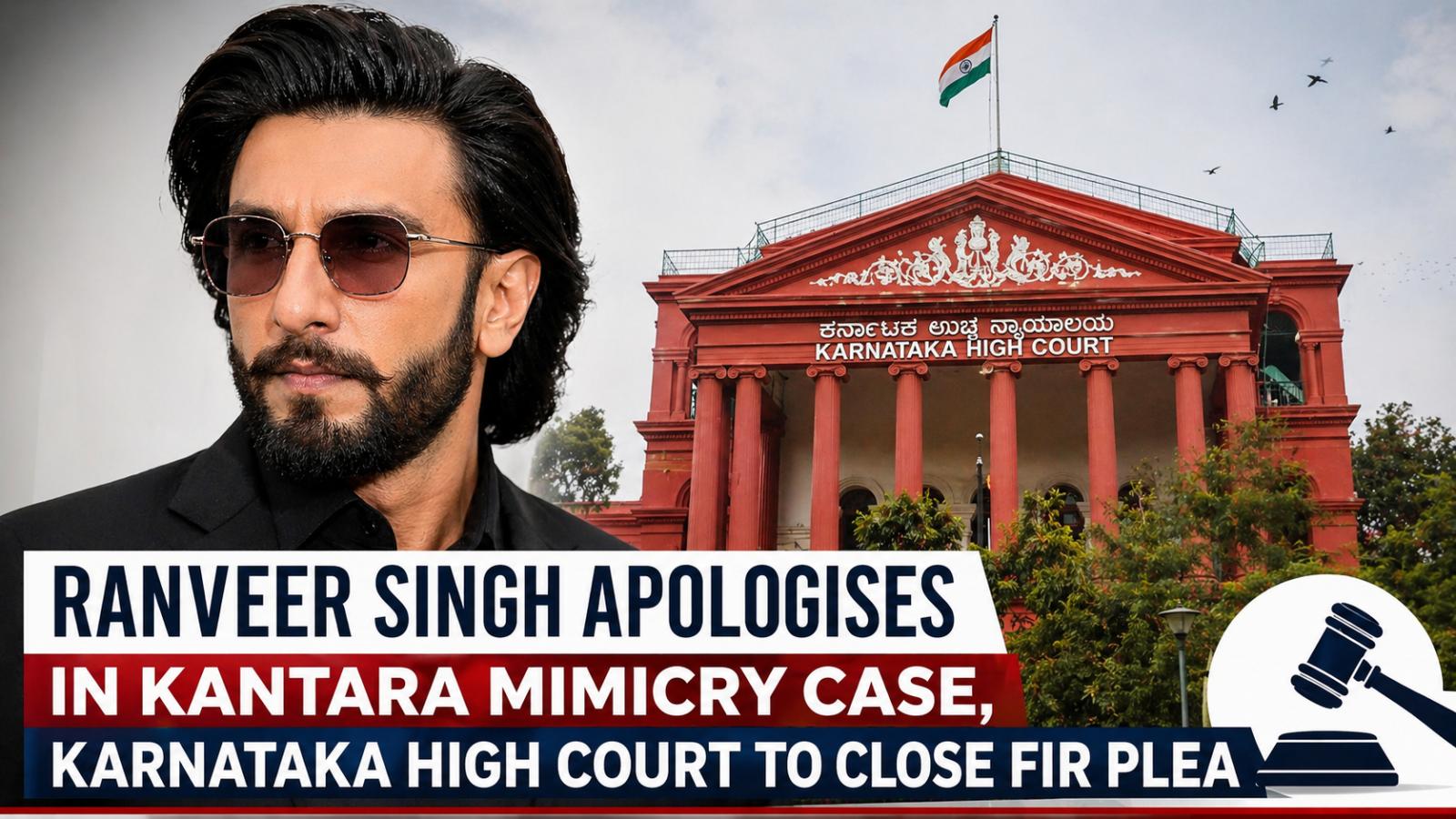
Ranveer Singh apologises for Kantara mimicry remarks, court to close case
Ranveer Singh submitted a revised affidavit before the Karnataka High Court on Saturday (April 25) during a hearing, expressing his unconditional apology over his mimicry of a character from Kantara: Chapter 1 at a public event last year. The court, after taking note of the affidavit, indicated that it is likely to dispose of the matter by recording the actor’s undertaking and closing the proceedings. The hearing pertained to Singh’s plea seeking to quash an FIR registered against him following remarks made during the International Film Festival of India in Goa. At the event, the actor had mimicked a role portrayed by Rishab Shetty and allegedly made references that hurt religious sentiments associated with a temple deity. The FIR invoked provisions under the Bharatiya Nyaya Sanhita, 2023, relating to promoting enmity and outraging religious beliefs. During the proceedings, counsel representing Singh informed the court that the affidavit had been revised to include an unconditional apology and an acknowledgment of the sentiments involved. The bench noted that the actor had also undertaken to visit the concerned temple within a specified period, and this assurance would be recorded while disposing of the case. The complainant, however, argued before the court that the matter involved a larger issue of faith and should not be treated as a routine legal dispute. The court responded by stating that it would issue an admonition, emphasizing that public figures must remain mindful of their words and actions, especially in matters linked to religious sensitivities. Earlier, the court had declined to stay the FIR, observing that celebrity status does not grant immunity from accountability. With the submission of the revised affidavit during the hearing and the acknowledgment of concerns raised, the court signaled that it would formally conclude the matter without engaging in a detailed legal examination.
Ranveer Singh apologises for Kantara mimicry remarks, court to close case
Ranveer Singh submitted a revised affidavit before the Karnataka High Court on Saturday (April 25) during a hearing, expressing his unconditional apology over his mimicry of a character from Kantara: Chapter 1 at a public event last year. The court, after taking note of the affidavit, indicated that it is likely to dispose of the matter by recording the actor’s undertaking and closing the proceedings. The hearing pertained to Singh’s plea seeking to quash an FIR registered against him following remarks made during the International Film Festival of India in Goa. At the event, the actor had mimicked a role portrayed by Rishab Shetty and allegedly made references that hurt religious sentiments associated with a temple deity. The FIR invoked provisions under the Bharatiya Nyaya Sanhita, 2023, relating to promoting enmity and outraging religious beliefs. During the proceedings, counsel representing Singh informed the court that the affidavit had been revised to include an unconditional apology and an acknowledgment of the sentiments involved. The bench noted that the actor had also undertaken to visit the concerned temple within a specified period, and this assurance would be recorded while disposing of the case. The complainant, however, argued before the court that the matter involved a larger issue of faith and should not be treated as a routine legal dispute. The court responded by stating that it would issue an admonition, emphasizing that public figures must remain mindful of their words and actions, especially in matters linked to religious sensitivities. Earlier, the court had declined to stay the FIR, observing that celebrity status does not grant immunity from accountability. With the submission of the revised affidavit during the hearing and the acknowledgment of concerns raised, the court signaled that it would formally conclude the matter without engaging in a detailed legal examination.
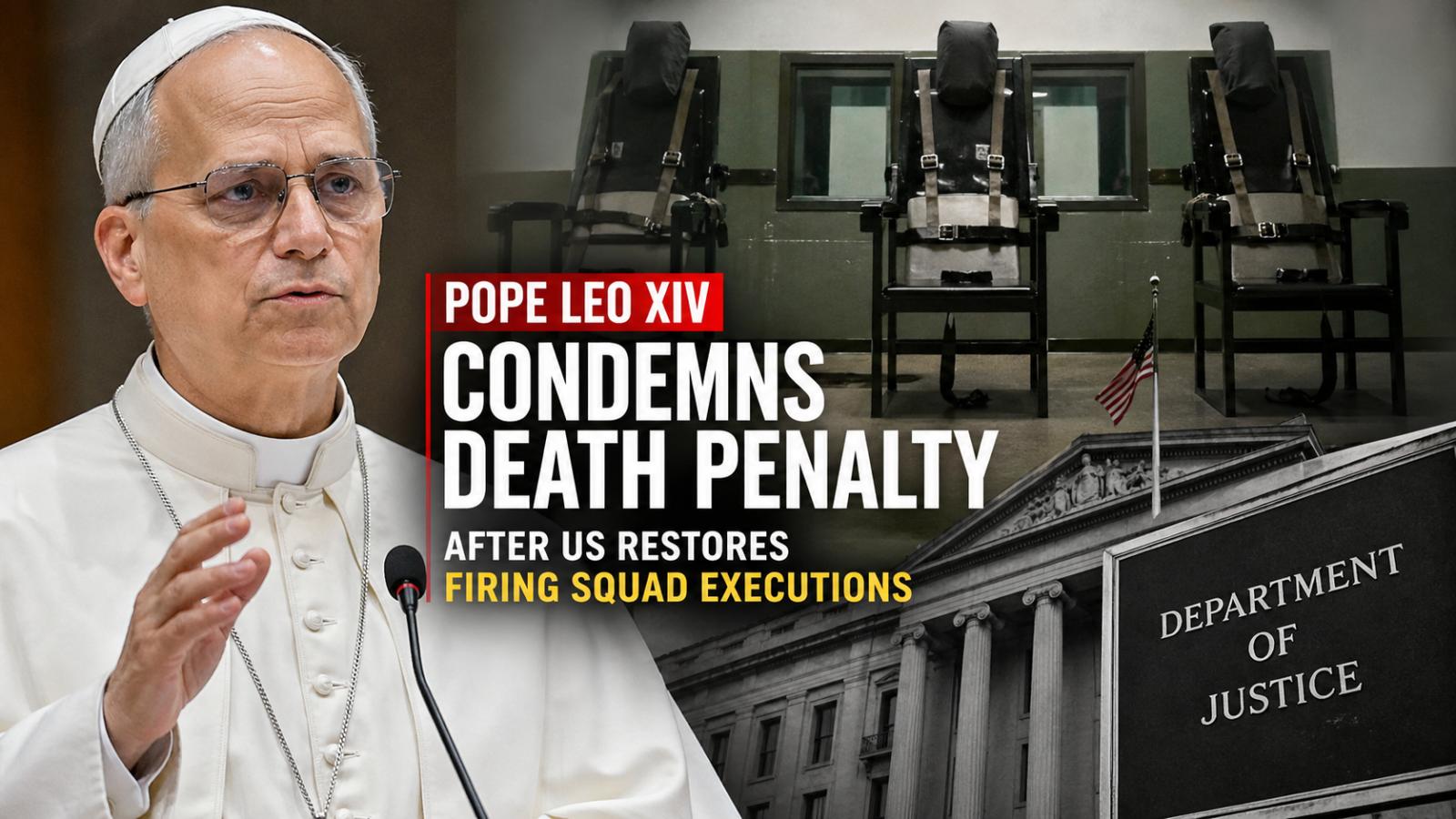
Pope Leo XIV condemns death penalty as US restores firing squad executions
Hours after the US Justice Department announced the lifting of the federal moratorium on capital punishment and the reinstatement of firing squad executions, Pope Leo XIV issued a strongly worded message condemning the death penalty. Delivered through a video address to DePaul University in Chicago, the Pope’s remarks coincided with the 15th anniversary of Illinois abolishing capital punishment, underscoring the significance of the moment. In his message, Pope Leo XIV emphasized t
Pope Leo XIV condemns death penalty as US restores firing squad executions
Hours after the US Justice Department announced the lifting of the federal moratorium on capital punishment and the reinstatement of firing squad executions, Pope Leo XIV issued a strongly worded message condemning the death penalty. Delivered through a video address to DePaul University in Chicago, the Pope’s remarks coincided with the 15th anniversary of Illinois abolishing capital punishment, underscoring the significance of the moment. In his message, Pope Leo XIV emphasized t
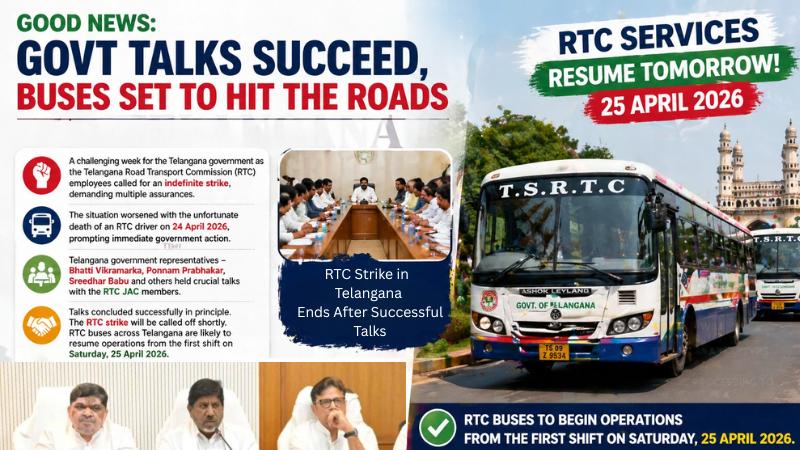
Govt. Successfully Resolves RTC Crisis: Buses Ready to Operate Again
RTC Strike in Telangana Resolved: Buses Set to Resume Operations After Successful Government Talks After several days of tension and a growing crisis in Telangana, the ongoing strike by the Telangana Road Transport Corporation (RTC) employees is finally coming to an end. The strike, which started earlier this week, intensified following the tragic death of an RTC driver. The employees had been demanding bette
Govt. Successfully Resolves RTC Crisis: Buses Ready to Operate Again
RTC Strike in Telangana Resolved: Buses Set to Resume Operations After Successful Government Talks After several days of tension and a growing crisis in Telangana, the ongoing strike by the Telangana Road Transport Corporation (RTC) employees is finally coming to an end. The strike, which started earlier this week, intensified following the tragic death of an RTC driver. The employees had been demanding bette
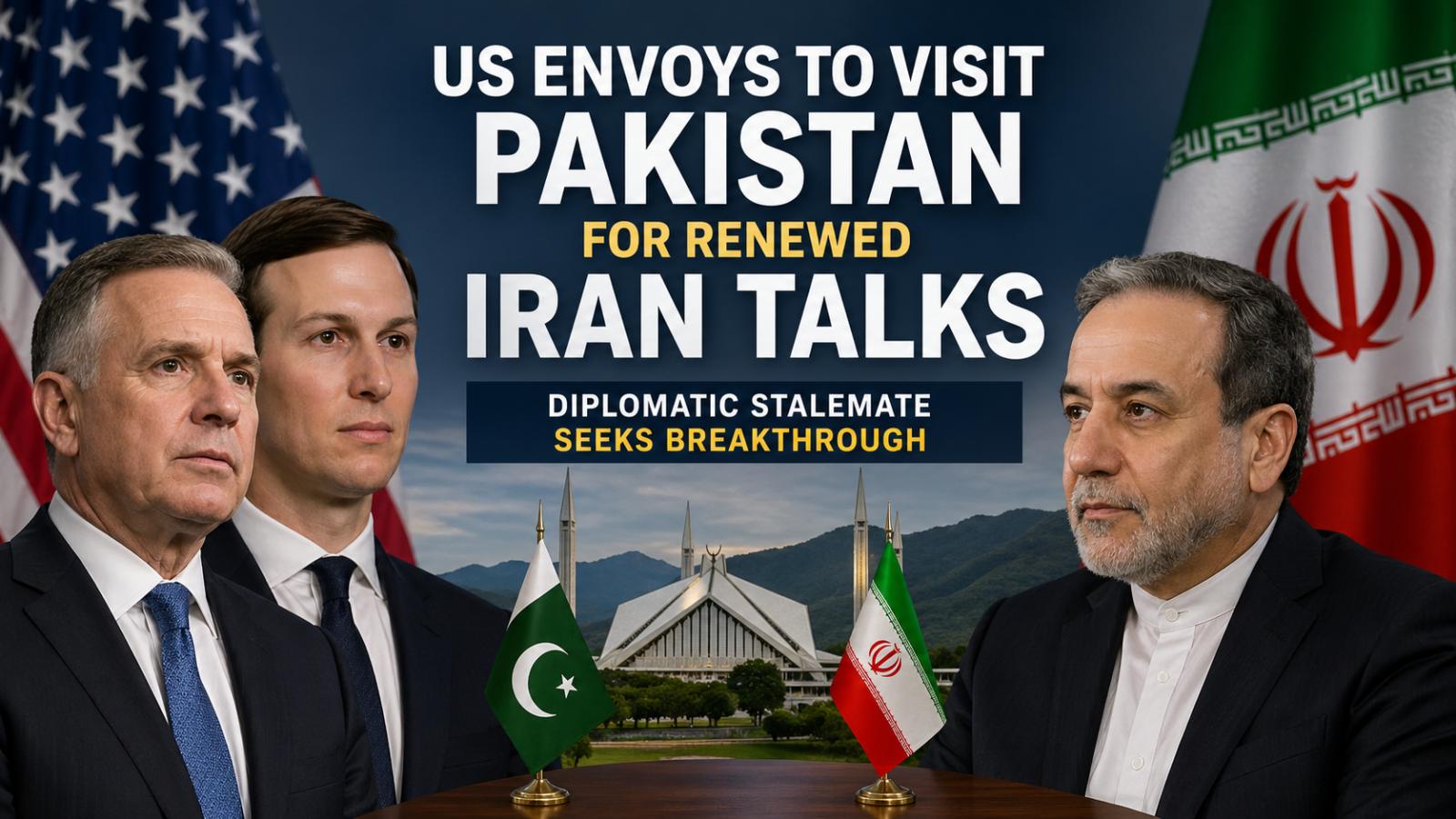
US envoys to visit Pakistan for renewed Iran talks amid ongoing tensions
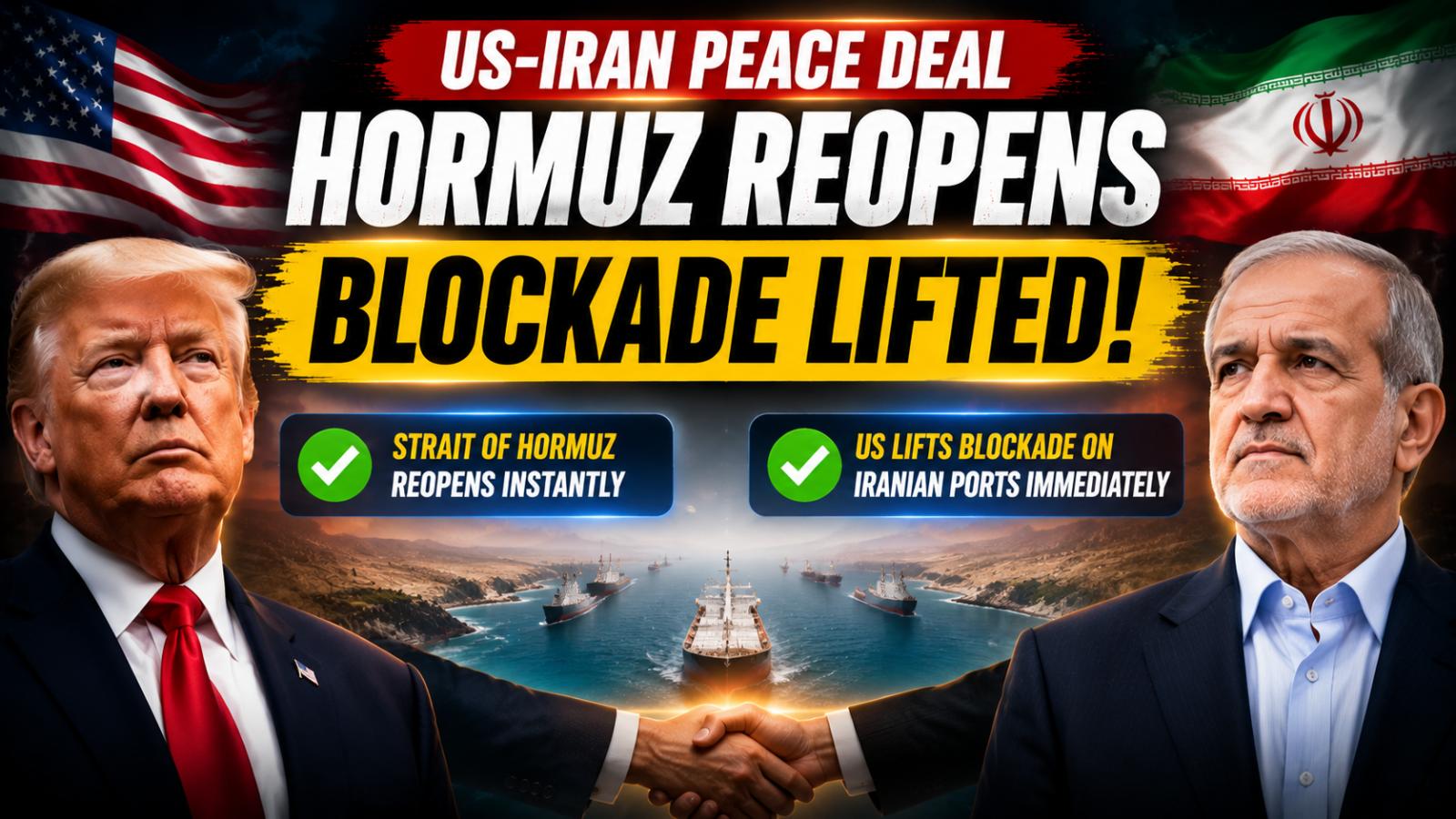
After several days of diplomatic deadlock, the United States has confirmed that senior envoys Steve Witkoff and Jared Kushner will travel to Pakistan for a fresh round of negotiations with Iran, signaling a renewed effort to address escalating tensions between the two nations. The visit is scheduled for Saturday and follows Iran’s request for direct, in-person discussions. White House Press Secretary Karoline Leavitt stated that the move comes after Iran reached out for dialogue, aligning with earlier calls from US leadership to reopen communication channels. She emphasized that the envoys will assess the situation on the ground and report back to President Donald Trump and Vice President JD Vance, while additional officials remain on standby if required. The upcoming talks mark the second round of discussions in Pakistan, following initial meetings held earlier this month. However, notable figures such as Vice President Vance and Iranian parliamentary leader Mohammad Bagher Ghalibaf, who were involved previously, will not participate in this phase. Their absence highlights a shift in the structure of the negotiations. Iran’s Foreign Minister Abbas Araghchi recently announced a regional diplomatic tour that includes Pakistan, Oman, and Russia. His stated objective is to strengthen coordination with key partners on bilateral and regional issues, underlining Iran’s strategic engagement with neighboring countries during a period of heightened geopolitical tension. What are the main sticking points in the talks? The primary disagreements revolve around Iran’s nuclear program and control over the Strait of Hormuz. Iran has insisted it will not proceed with negotiations unless the United States lifts its blockade in the strategic waterway. In contrast, the US is demanding verifiable guarantees that Iran will halt its nuclear ambitions and ease its own restrictions in the region. At a recent Pentagon briefing, US Defense Secretary Pete Hegseth reiterated that the United States is not under pressure to finalize an agreement quickly. He indicated that Washington is prepared for prolonged negotiations, while also stressing that Iran has an opportunity to secure a favorable and pragmatic deal if it chooses to engage constructively. The renewed diplomatic effort in Pakistan reflects a cautious but significant step toward resolving one of the most critical international disputes, with both sides maintaining firm positions as negotiations resume.
US envoys to visit Pakistan for renewed Iran talks amid ongoing tensions
After several days of diplomatic deadlock, the United States has confirmed that senior envoys Steve Witkoff and Jared Kushner will travel to Pakistan for a fresh round of negotiations with Iran, signaling a renewed effort to address escalating tensions between the two nations. The visit is scheduled for Saturday and follows Iran’s request for direct, in-person discussions. White House Press Secretary Karoline Leavitt stated that the move comes after Iran reached out for dialogue, aligning with earlier calls from US leadership to reopen communication channels. She emphasized that the envoys will assess the situation on the ground and report back to President Donald Trump and Vice President JD Vance, while additional officials remain on standby if required. The upcoming talks mark the second round of discussions in Pakistan, following initial meetings held earlier this month. However, notable figures such as Vice President Vance and Iranian parliamentary leader Mohammad Bagher Ghalibaf, who were involved previously, will not participate in this phase. Their absence highlights a shift in the structure of the negotiations. Iran’s Foreign Minister Abbas Araghchi recently announced a regional diplomatic tour that includes Pakistan, Oman, and Russia. His stated objective is to strengthen coordination with key partners on bilateral and regional issues, underlining Iran’s strategic engagement with neighboring countries during a period of heightened geopolitical tension. What are the main sticking points in the talks? The primary disagreements revolve around Iran’s nuclear program and control over the Strait of Hormuz. Iran has insisted it will not proceed with negotiations unless the United States lifts its blockade in the strategic waterway. In contrast, the US is demanding verifiable guarantees that Iran will halt its nuclear ambitions and ease its own restrictions in the region. At a recent Pentagon briefing, US Defense Secretary Pete Hegseth reiterated that the United States is not under pressure to finalize an agreement quickly. He indicated that Washington is prepared for prolonged negotiations, while also stressing that Iran has an opportunity to secure a favorable and pragmatic deal if it chooses to engage constructively. The renewed diplomatic effort in Pakistan reflects a cautious but significant step toward resolving one of the most critical international disputes, with both sides maintaining firm positions as negotiations resume.

Regulators eye prediction markets after suspicious betting activity
Prediction markets, digital platforms that allow users to wager on future events, are drawing increasing scrutiny amid concerns over suspicious trading activity and the potential misuse of sensitive information. The issue has gained prominence following a case involving a US Army special forces soldier accused of leveraging classified intelligence to place bets linked to a mission targeting Venezuelan President Nicolas Maduro. What are prediction markets? Prediction markets such as Polymarket and Kalshi operate in a manner similar to gambling platforms, but instead of sports, they focus on real-world events. Users place wagers on outcomes ranging from political developments and economic shifts to weather patterns and online activity. Participants earn profits if their predictions are accurate, while platforms generate revenue through transaction fees. With millions of users globally, these platforms now facilitate billions of dollars in wagers across diverse subjects including elections, tariffs, and commodity prices. Are these markets legal? The legal status of prediction markets varies by region. Globally, many jurisdictions permit such platforms, but the regulatory framework in the United States remains complex. Polymarket had been restricted domestically for several years before resuming limited operations, while Kalshi operates under oversight from the Commodity Futures Trading Commission. Some users attempt to bypass restrictions through virtual private networks, raising additional compliance concerns. Unlike traditional bookmakers, these platforms position themselves as exchanges that enable trading rather than setting odds. Can prediction markets accurately forecast events? Research suggests that collective forecasting, often described as the “wisdom of crowds,” can provide valuable insights. By aggregating diverse opinions, prediction markets can sometimes outperform individual experts in anticipating political, economic, and global outcomes. What are the risks involved? Concerns have intensified regarding the potential use of insider information. In the recent case, the US soldier allegedly earned more than $400,000 by betting on outcomes tied to a military operation. Similar patterns have been observed before major geopolitical and entertainment events, where unusual betting activity accurately predicted outcomes. Such incidents have raised questions about whether privileged information is influencing market behavior. Regulatory response and growing oversight Authorities are responding to these developments with increased vigilance. Several US states have initiated measures to restrict or ban prediction markets, while platforms like Kalshi and Polymarket have introduced safeguards to prevent misuse. Kalshi has prohibited political candidates from betting on their own elections, and government agencies have cautioned officials against using insider knowledge for financial gain. A concept with historical roots Despite recent attention, prediction markets are not a new phenomenon. Early models such as the Iowa Electronic Markets, established in 1988, focused on political forecasting. In 2003, the Pentagon explored launching a platform to predict geopolitical events, including potential security threats, but the initiative was abandoned following public criticism. As scrutiny intensifies, the future of prediction markets will likely depend on how effectively regulators and platforms address concerns surrounding transparency, legality, and the ethical use of information.
Regulators eye prediction markets after suspicious betting activity
Prediction markets, digital platforms that allow users to wager on future events, are drawing increasing scrutiny amid concerns over suspicious trading activity and the potential misuse of sensitive information. The issue has gained prominence following a case involving a US Army special forces soldier accused of leveraging classified intelligence to place bets linked to a mission targeting Venezuelan President Nicolas Maduro. What are prediction markets? Prediction markets such as Polymarket and Kalshi operate in a manner similar to gambling platforms, but instead of sports, they focus on real-world events. Users place wagers on outcomes ranging from political developments and economic shifts to weather patterns and online activity. Participants earn profits if their predictions are accurate, while platforms generate revenue through transaction fees. With millions of users globally, these platforms now facilitate billions of dollars in wagers across diverse subjects including elections, tariffs, and commodity prices. Are these markets legal? The legal status of prediction markets varies by region. Globally, many jurisdictions permit such platforms, but the regulatory framework in the United States remains complex. Polymarket had been restricted domestically for several years before resuming limited operations, while Kalshi operates under oversight from the Commodity Futures Trading Commission. Some users attempt to bypass restrictions through virtual private networks, raising additional compliance concerns. Unlike traditional bookmakers, these platforms position themselves as exchanges that enable trading rather than setting odds. Can prediction markets accurately forecast events? Research suggests that collective forecasting, often described as the “wisdom of crowds,” can provide valuable insights. By aggregating diverse opinions, prediction markets can sometimes outperform individual experts in anticipating political, economic, and global outcomes. What are the risks involved? Concerns have intensified regarding the potential use of insider information. In the recent case, the US soldier allegedly earned more than $400,000 by betting on outcomes tied to a military operation. Similar patterns have been observed before major geopolitical and entertainment events, where unusual betting activity accurately predicted outcomes. Such incidents have raised questions about whether privileged information is influencing market behavior. Regulatory response and growing oversight Authorities are responding to these developments with increased vigilance. Several US states have initiated measures to restrict or ban prediction markets, while platforms like Kalshi and Polymarket have introduced safeguards to prevent misuse. Kalshi has prohibited political candidates from betting on their own elections, and government agencies have cautioned officials against using insider knowledge for financial gain. A concept with historical roots Despite recent attention, prediction markets are not a new phenomenon. Early models such as the Iowa Electronic Markets, established in 1988, focused on political forecasting. In 2003, the Pentagon explored launching a platform to predict geopolitical events, including potential security threats, but the initiative was abandoned following public criticism. As scrutiny intensifies, the future of prediction markets will likely depend on how effectively regulators and platforms address concerns surrounding transparency, legality, and the ethical use of information.
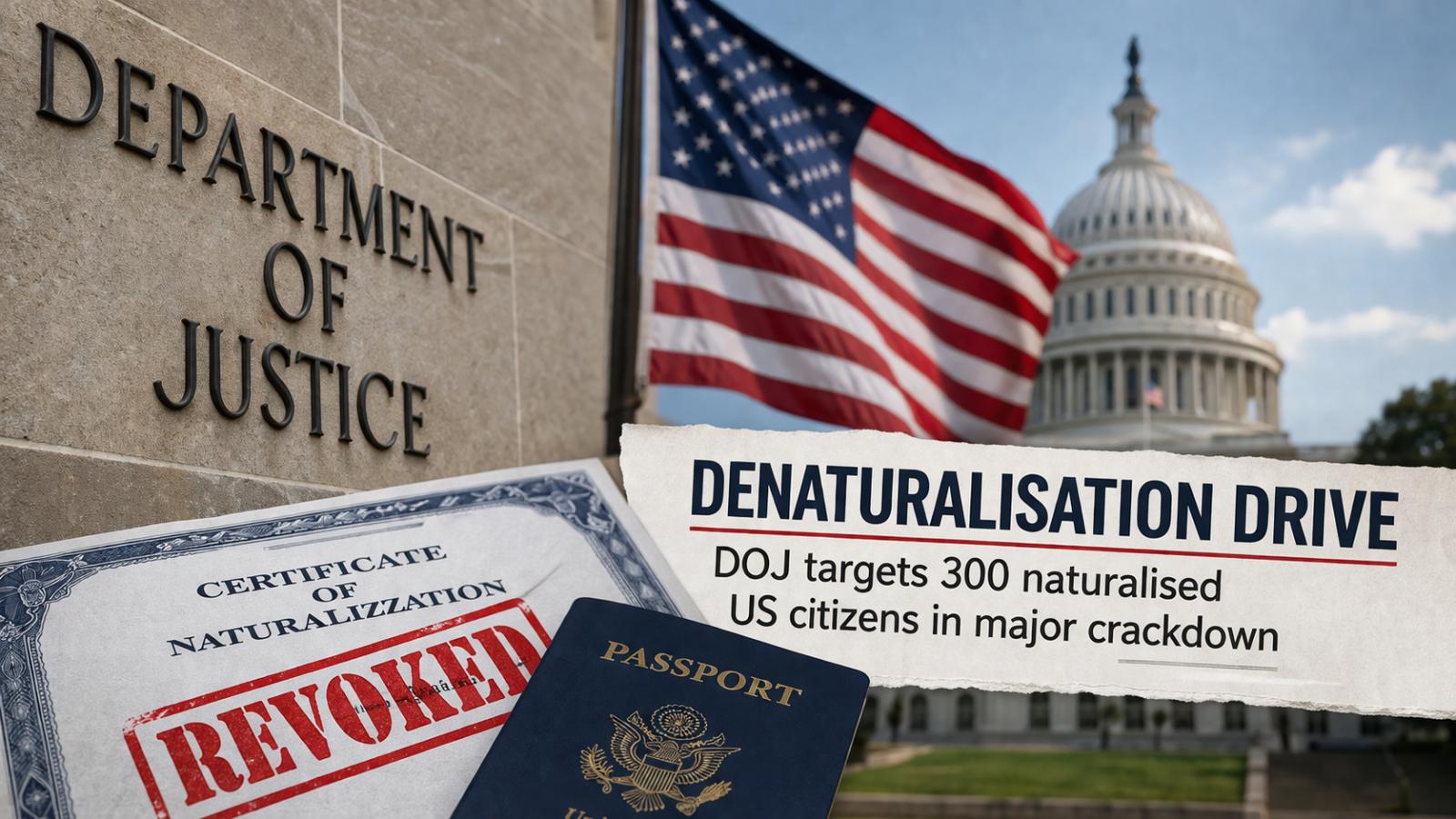
Trump administration accelerates denaturalisation cases across the US
The United States Justice Department is currently pursuing at least 300 foreign-born American citizens as part of an intensified denaturalisation effort, marking what officials describe as the largest such initiative in the country’s history. The legal process, which allows authorities to revoke citizenship obtained through fraud or concealment, has traditionally been used sparingly but is now being applied on an unprecedented scale. A senior offi
Trump administration accelerates denaturalisation cases across the US
The United States Justice Department is currently pursuing at least 300 foreign-born American citizens as part of an intensified denaturalisation effort, marking what officials describe as the largest such initiative in the country’s history. The legal process, which allows authorities to revoke citizenship obtained through fraud or concealment, has traditionally been used sparingly but is now being applied on an unprecedented scale. A senior offi

Fire engulfs historic Queens church after blaze spreads from rectory
A five-alarm fire in Queens severely damaged a historic church after spreading from a nearby rectory Thursday evening. Six firefighters were injured as crews battled the blaze for hours. Fire engulfs historic Queens church after blaze spreads from rectory as a massive fire tore through a historic house of worship in New York City, sending flames through the structure and prompting a large-scale emergency response. The New York City Fire Department said the blaze be
Fire engulfs historic Queens church after blaze spreads from rectory
A five-alarm fire in Queens severely damaged a historic church after spreading from a nearby rectory Thursday evening. Six firefighters were injured as crews battled the blaze for hours. Fire engulfs historic Queens church after blaze spreads from rectory as a massive fire tore through a historic house of worship in New York City, sending flames through the structure and prompting a large-scale emergency response. The New York City Fire Department said the blaze be

Why did Intel shares surge over 20%? AI demand and leadership changes drive rebound
Strong market reaction to earnings and AI momentum Shares of Intel surged more than 20% during trading hours on Friday, reflecting renewed investor confidence driven by rising artificial intelligence demand and stronger-than-expected financial results. By early afternoon, the stock had climbed approximately 22%, putting it on track for its best single-day performance in d
Why did Intel shares surge over 20%? AI demand and leadership changes drive rebound
Strong market reaction to earnings and AI momentum Shares of Intel surged more than 20% during trading hours on Friday, reflecting renewed investor confidence driven by rising artificial intelligence demand and stronger-than-expected financial results. By early afternoon, the stock had climbed approximately 22%, putting it on track for its best single-day performance in d
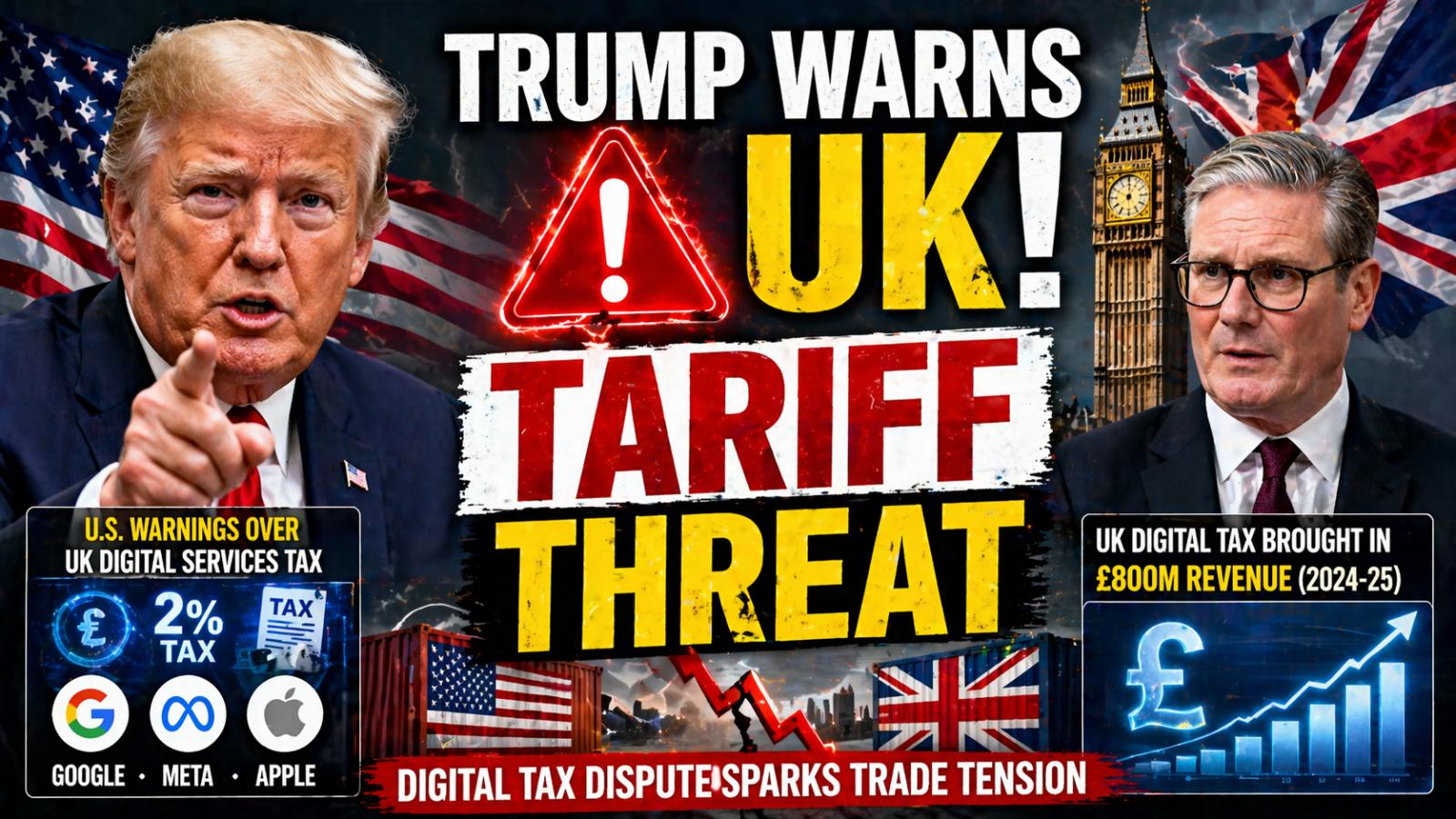
Why did Donald Trump warn the U.K. about tariffs? He cites digital tax concerns
Why did Donald Trump warn the U.K. about tariffs? He cites digital tax concerns — U.S. President Donald Trump issued a strong warning to the United Kingdom, signaling potential tariffs if Britain does not eliminate its digital services tax targeting major American technology firms. Speaking from the Oval Office on Thursday, Trump criticized the policy as an unfair attempt to profit from U.S. companies operating abroad. The digital services tax, introduced by the
Why did Donald Trump warn the U.K. about tariffs? He cites digital tax concerns
Why did Donald Trump warn the U.K. about tariffs? He cites digital tax concerns — U.S. President Donald Trump issued a strong warning to the United Kingdom, signaling potential tariffs if Britain does not eliminate its digital services tax targeting major American technology firms. Speaking from the Oval Office on Thursday, Trump criticized the policy as an unfair attempt to profit from U.S. companies operating abroad. The digital services tax, introduced by the
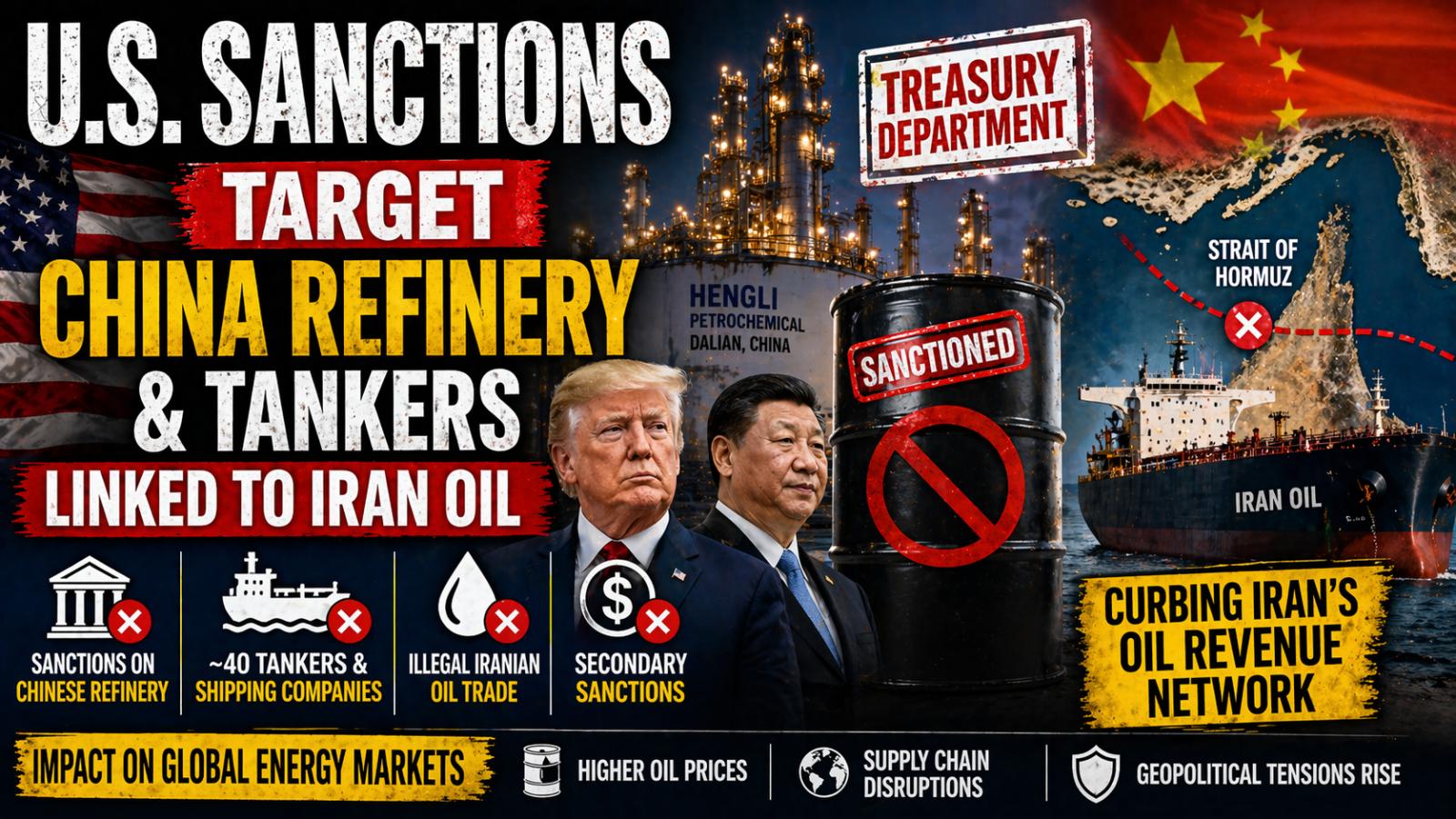
What sanctions did the U.S. impose on China-linked oil trade? The move targets refinery and tankers tied to Iran
The United States has imposed sweeping new sanctions targeting a China-linked oil trade network tied to Iran, focusing on a major refinery and dozens of shipping entities. Announced on Friday, April 25, 2026, the measures aim to disrupt Tehran’s oil revenue streams by penalizing companies involved in transporting and processing Iranian crude, reinforcing Washington’s broader use of secondary sanctions. Targeting key nodes in Iran’s oil supply chain Among those sanctioned is Hengli Petrochemical’s large refinery in Dalian, China, which has the capacity to process about 400,000 barrels of crude oil per day. The U.S. Treasury Department said the facility has accepted Iranian crude shipments since 2023, generating substantial revenue that allegedly supports Iran’s military. Officials indicated the action is part of a wider strategy to dismantle networks of vessels, intermediaries, and buyers enabling Iranian oil exports. Escalating pressure amid geopolitical tensions The sanctions come just weeks before a planned meeting between U.S. President Donald Trump and Chinese President Xi Jinping in China, adding strain to an already complex economic relationship. Earlier in April 2026, U.S. officials issued warnings to financial institutions in China, Hong Kong, the United Arab Emirates, and Oman about potential penalties for facilitating Iranian transactions. Treasury Secretary Scott Bessent said the administration is prepared to apply stringent secondary sanctions to entities involved in such dealings. Impact on global energy flows and shipping routes These developments coincide with broader disruptions in global energy markets. Earlier in April 2026, the U.S. implemented a physical blockade of the Strait of Hormuz, a critical passage for oil shipments from the Persian Gulf. The move has contributed to rising oil prices and heightened uncertainty across energy markets, though U.S. authorities have issued limited waivers to ease immediate supply concerns. China’s response and global compliance concerns China remains the largest importer of Iranian oil and has consistently opposed U.S. sanctions, arguing they undermine international trade rules. Despite this position, many Chinese firms and banks continue to comply due to their reliance on the U.S.-dominated financial system. Chinese officials have previously criticized such sanctions as disruptive to legitimate economic activity, highlighting ongoing tensions over trade enforcement and global energy flows.
What sanctions did the U.S. impose on China-linked oil trade? The move targets refinery and tankers tied to Iran
The United States has imposed sweeping new sanctions targeting a China-linked oil trade network tied to Iran, focusing on a major refinery and dozens of shipping entities. Announced on Friday, April 25, 2026, the measures aim to disrupt Tehran’s oil revenue streams by penalizing companies involved in transporting and processing Iranian crude, reinforcing Washington’s broader use of secondary sanctions. Targeting key nodes in Iran’s oil supply chain Among those sanctioned is Hengli Petrochemical’s large refinery in Dalian, China, which has the capacity to process about 400,000 barrels of crude oil per day. The U.S. Treasury Department said the facility has accepted Iranian crude shipments since 2023, generating substantial revenue that allegedly supports Iran’s military. Officials indicated the action is part of a wider strategy to dismantle networks of vessels, intermediaries, and buyers enabling Iranian oil exports. Escalating pressure amid geopolitical tensions The sanctions come just weeks before a planned meeting between U.S. President Donald Trump and Chinese President Xi Jinping in China, adding strain to an already complex economic relationship. Earlier in April 2026, U.S. officials issued warnings to financial institutions in China, Hong Kong, the United Arab Emirates, and Oman about potential penalties for facilitating Iranian transactions. Treasury Secretary Scott Bessent said the administration is prepared to apply stringent secondary sanctions to entities involved in such dealings. Impact on global energy flows and shipping routes These developments coincide with broader disruptions in global energy markets. Earlier in April 2026, the U.S. implemented a physical blockade of the Strait of Hormuz, a critical passage for oil shipments from the Persian Gulf. The move has contributed to rising oil prices and heightened uncertainty across energy markets, though U.S. authorities have issued limited waivers to ease immediate supply concerns. China’s response and global compliance concerns China remains the largest importer of Iranian oil and has consistently opposed U.S. sanctions, arguing they undermine international trade rules. Despite this position, many Chinese firms and banks continue to comply due to their reliance on the U.S.-dominated financial system. Chinese officials have previously criticized such sanctions as disruptive to legitimate economic activity, highlighting ongoing tensions over trade enforcement and global energy flows.
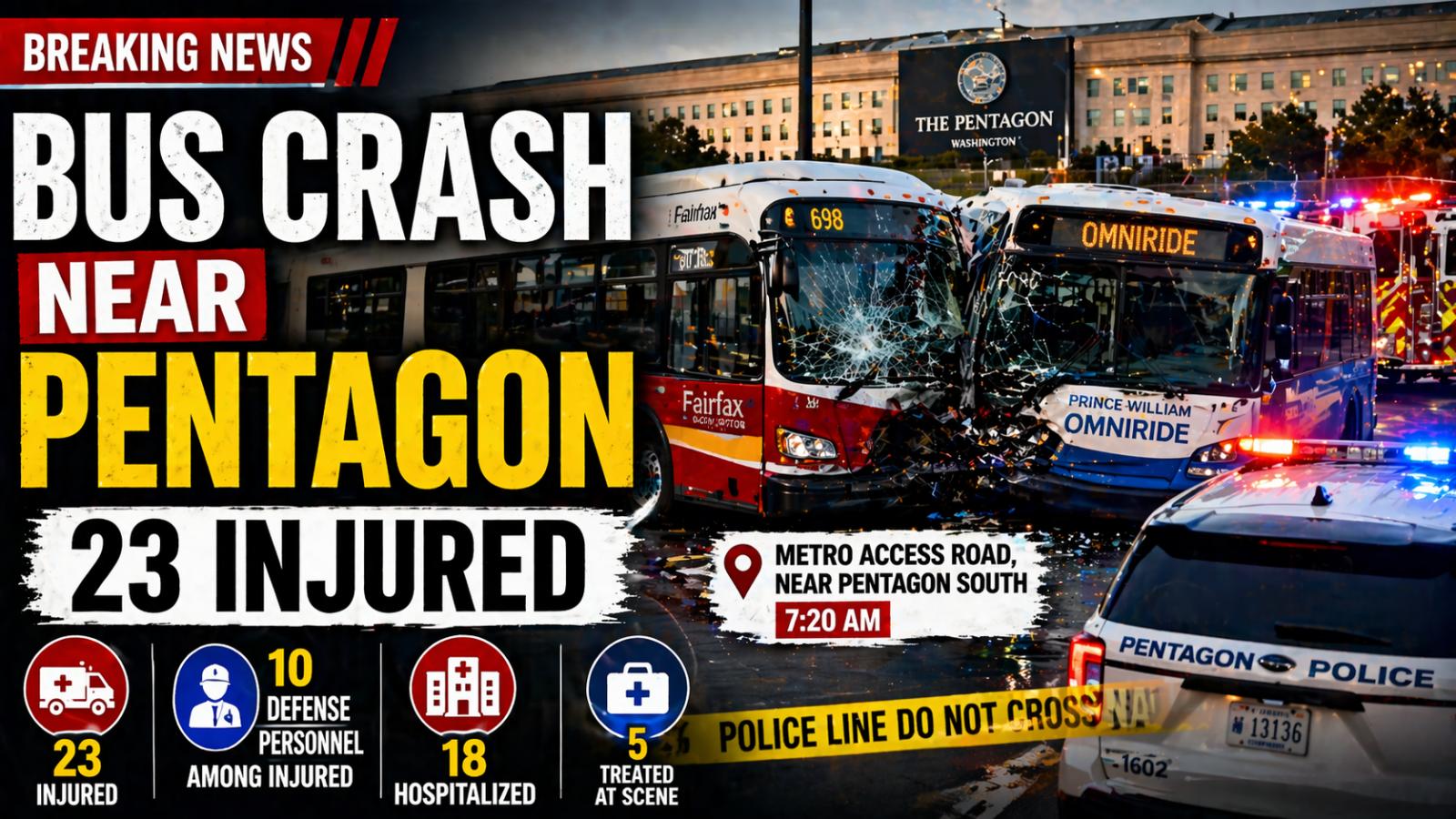
Bus crash near Pentagon leaves 23 injured including defense personnel
Bus collision near Pentagon on April 24, 2026 injures 23 people, including defense personnel, triggering emergency response, hospital treatment, and an ongoing investigation. Bus crash near Pentagon leaves 23 injured, including Department of War personnel after a collision involving two commuter buses during the morning rush hour on Friday. Officials said the incident involved a Fairfax County Connector bus and a Prince William County OmniRide bus that collided near the Pentagon complex shortly before 7:30 a.m. local time. According to authorities, the crash occurred at approximately 7:20 a.m. on the Metro Access Road near the Pentagon South parking area. The collision resulted in 23 passengers being injured, including 10 individuals identified as Department of War personnel. Emergency teams were immediately dispatched to the location following reports of the crash. Officials confirmed that 18 injured passengers were transported to nearby hospitals for further medical evaluation and treatment. Five additional passengers received first aid at the scene and were released after on-site assessment by emergency responders. The extent of injuries has not been fully disclosed, but authorities stated that all injured individuals are receiving appropriate care. Multiple law enforcement and fire department units from surrounding areas assisted in managing the emergency response and supported the initial investigation into the cause of the collision. The crash led to temporary disruptions in transit operations near the Pentagon, with emergency crews working to clear the scene and assess the damage. For a short period after the incident, the Pentagon Metro station and adjacent transit center were closed to allow for investigation and emergency operations. Authorities continue to examine the circumstances surrounding the collision, with further details expected as the investigation moves forward.
Bus crash near Pentagon leaves 23 injured including defense personnel
Bus collision near Pentagon on April 24, 2026 injures 23 people, including defense personnel, triggering emergency response, hospital treatment, and an ongoing investigation. Bus crash near Pentagon leaves 23 injured, including Department of War personnel after a collision involving two commuter buses during the morning rush hour on Friday. Officials said the incident involved a Fairfax County Connector bus and a Prince William County OmniRide bus that collided near the Pentagon complex shortly before 7:30 a.m. local time. According to authorities, the crash occurred at approximately 7:20 a.m. on the Metro Access Road near the Pentagon South parking area. The collision resulted in 23 passengers being injured, including 10 individuals identified as Department of War personnel. Emergency teams were immediately dispatched to the location following reports of the crash. Officials confirmed that 18 injured passengers were transported to nearby hospitals for further medical evaluation and treatment. Five additional passengers received first aid at the scene and were released after on-site assessment by emergency responders. The extent of injuries has not been fully disclosed, but authorities stated that all injured individuals are receiving appropriate care. Multiple law enforcement and fire department units from surrounding areas assisted in managing the emergency response and supported the initial investigation into the cause of the collision. The crash led to temporary disruptions in transit operations near the Pentagon, with emergency crews working to clear the scene and assess the damage. For a short period after the incident, the Pentagon Metro station and adjacent transit center were closed to allow for investigation and emergency operations. Authorities continue to examine the circumstances surrounding the collision, with further details expected as the investigation moves forward.
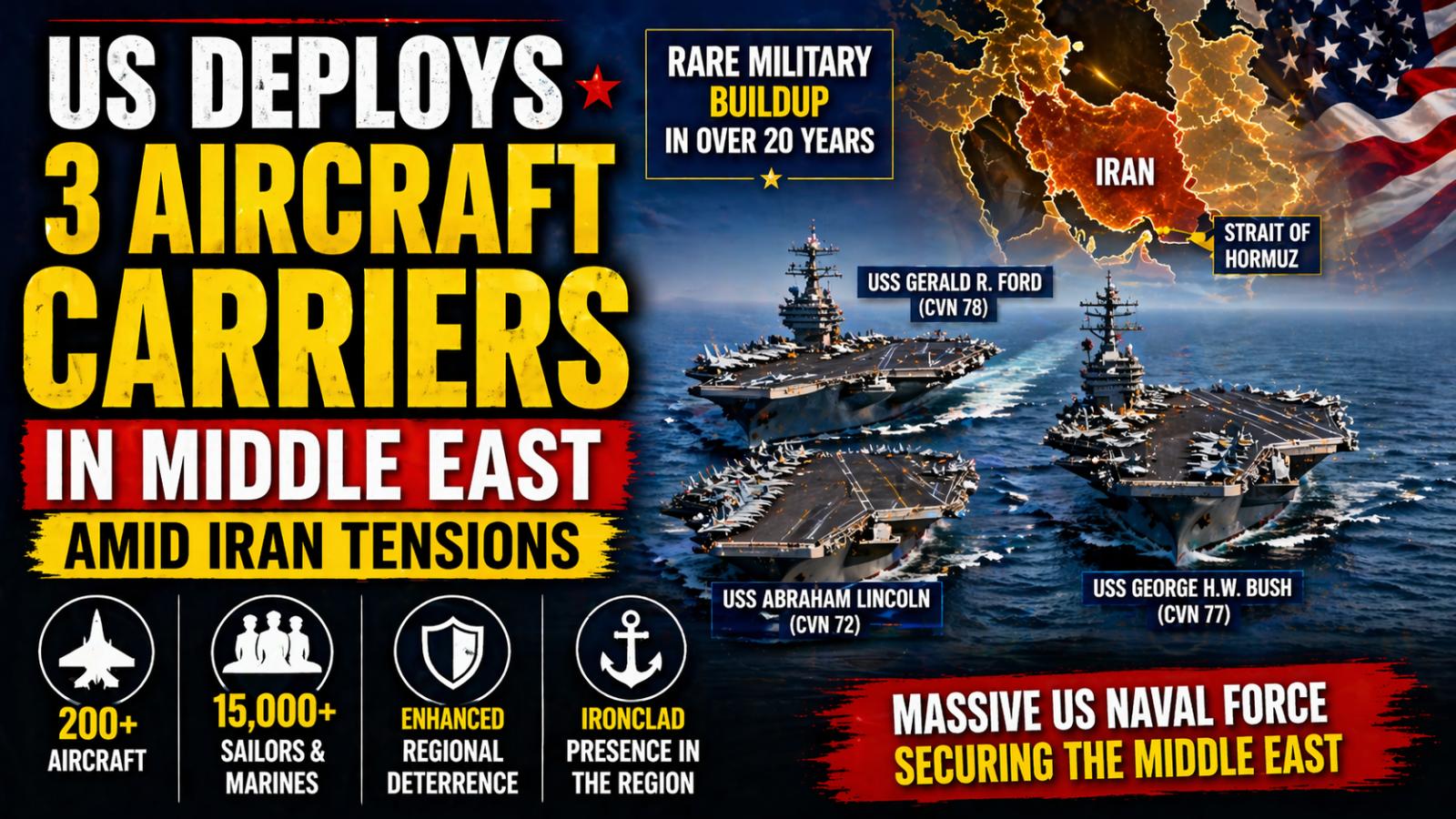
US deploys three aircraft carriers to Middle East amid Iran tensions
US deploys three aircraft carriers to the Middle East amid Iran tensions, expanding naval operations and reinforcing security in key maritime routes including the Strait of Hormuz. US deploys three aircraft carriers to Middle East amid Iran tensions as Washington significantly expands its military footprint across the region, marking one of the largest naval concentrations in more than two decades. Officials confirmed that three carrier strike groups—the USS Abraham Lincoln, USS Gerald R. Ford, and USS George H.W. Bush—are operating simultaneously, supported by more than 200 aircraft and approximately 15,000 sailors and Marines. A statement from US Central Command on Thursday confirmed the rare deployment, describing it as a significant concentration of naval power aimed at maintaining operational readiness amid rising tensions involving Iran. The carrier groups and their air wings are conducting coordinated missions, underscoring the strategic importance of key maritime routes in the Middle East and reinforcing a broader posture of deterrence. The announcement coincided with remarks from Donald Trump on Thursday, who declined to provide a timeline for a potential resolution to the Iran conflict. He indicated that any agreement would depend on conditions favorable to US interests, highlighting ongoing uncertainty surrounding diplomatic efforts. The absence of a clear timeline has aligned with increased military activity and messaging focused on regional stability. Defense officials stated on Friday that the US blockade of Iranian vessels in the Strait of Hormuz remains “ironclad,” with additional naval assets expected to join the operation in the coming days. The expanding mission signals a broader enforcement effort in one of the world’s most critical shipping corridors. The USS George H.W. Bush, commissioned in 2009, is among the newest Nimitz-class carriers involved, measuring nearly 1,000 feet in length and powered by two nuclear reactors, with the capacity to carry more than 80 aircraft and support a crew exceeding 5,500 personnel.
US deploys three aircraft carriers to Middle East amid Iran tensions
US deploys three aircraft carriers to the Middle East amid Iran tensions, expanding naval operations and reinforcing security in key maritime routes including the Strait of Hormuz. US deploys three aircraft carriers to Middle East amid Iran tensions as Washington significantly expands its military footprint across the region, marking one of the largest naval concentrations in more than two decades. Officials confirmed that three carrier strike groups—the USS Abraham Lincoln, USS Gerald R. Ford, and USS George H.W. Bush—are operating simultaneously, supported by more than 200 aircraft and approximately 15,000 sailors and Marines. A statement from US Central Command on Thursday confirmed the rare deployment, describing it as a significant concentration of naval power aimed at maintaining operational readiness amid rising tensions involving Iran. The carrier groups and their air wings are conducting coordinated missions, underscoring the strategic importance of key maritime routes in the Middle East and reinforcing a broader posture of deterrence. The announcement coincided with remarks from Donald Trump on Thursday, who declined to provide a timeline for a potential resolution to the Iran conflict. He indicated that any agreement would depend on conditions favorable to US interests, highlighting ongoing uncertainty surrounding diplomatic efforts. The absence of a clear timeline has aligned with increased military activity and messaging focused on regional stability. Defense officials stated on Friday that the US blockade of Iranian vessels in the Strait of Hormuz remains “ironclad,” with additional naval assets expected to join the operation in the coming days. The expanding mission signals a broader enforcement effort in one of the world’s most critical shipping corridors. The USS George H.W. Bush, commissioned in 2009, is among the newest Nimitz-class carriers involved, measuring nearly 1,000 feet in length and powered by two nuclear reactors, with the capacity to carry more than 80 aircraft and support a crew exceeding 5,500 personnel.
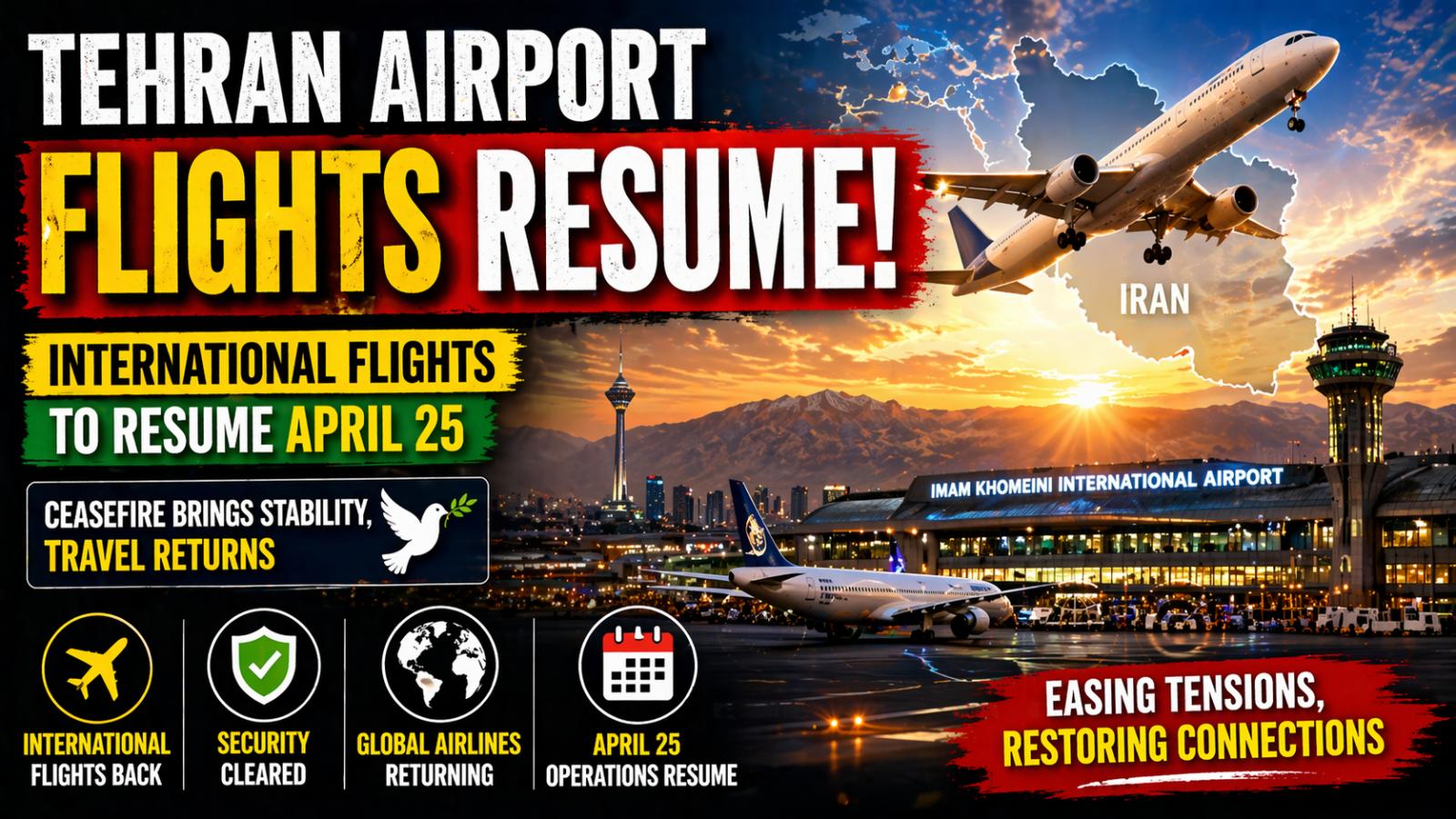
What does Tehran airport reopening signal? It marks easing regional tensions
What does Tehran airport reopening signal? It marks easing regional tensions, Tehran’s primary international gateway is preparing to resume global flight operations on Saturday, April 25, 2026, according to Iranian aviation authorities, marking a significant step toward restoring stability after a week-long suspension tied to heightened regional tensions. Airport reopening follows week-long aviation shutdown Imam Khomeini International
What does Tehran airport reopening signal? It marks easing regional tensions
What does Tehran airport reopening signal? It marks easing regional tensions, Tehran’s primary international gateway is preparing to resume global flight operations on Saturday, April 25, 2026, according to Iranian aviation authorities, marking a significant step toward restoring stability after a week-long suspension tied to heightened regional tensions. Airport reopening follows week-long aviation shutdown Imam Khomeini International
What did Kenneth Juster say about India’s global role? He called it a rising civilisational power
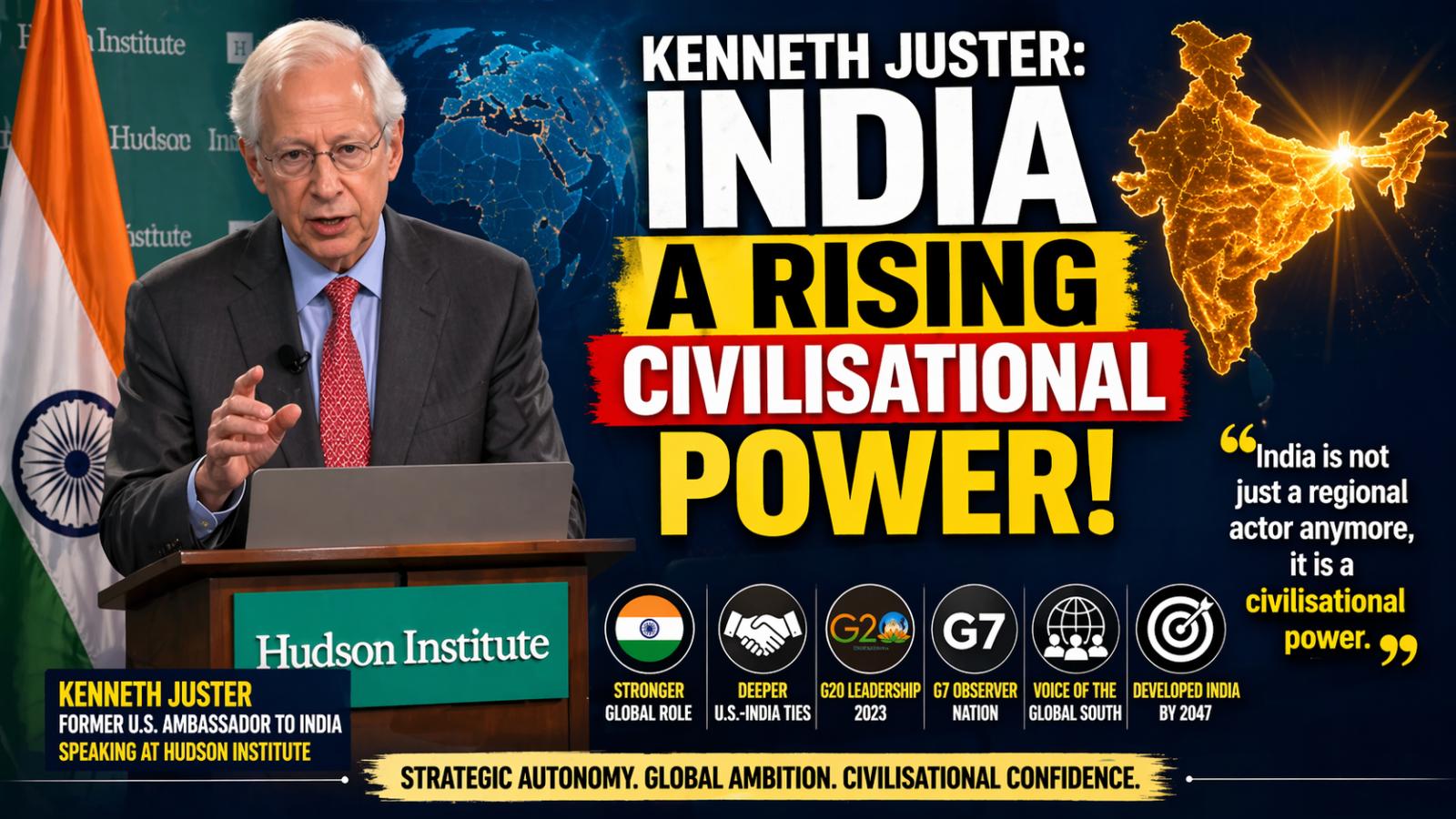
India’s emergence as a civilisational power in global affairs What did Kenneth Juster say about India’s global role? He called it a rising civilisational power, underscoring a major shift in how the country positions itself internationally. Former U.S. Ambassador to India Kenneth Juster said on Thursday, April 23, 2026, that India has evolved into a “civilisational power” under Prime Minister Narendra Modi, reflecting a more assertive and confident global posture. Speaking at an event hosted by the Hudson Institute, Juster identified Modi’s 2014 election as a turning point that accelerated India’s transformation in foreign policy and international engagement. Expanding diplomatic reach and global engagement Juster emphasized that India’s approach to global affairs has shifted significantly over the past decade, with New Delhi demonstrating greater confidence and a willingness to engage broadly with countries across regions. He noted that India no longer views itself as limited to a regional role but instead positions itself as a major global force with a distinct civilizational identity. This evolution has enabled India to expand its diplomatic outreach and pursue strategic ambitions with increased clarity and purpose. Navigating U.S.-China competition with strategic autonomy According to Juster, India’s foreign policy reflects a careful balance between deeper global engagement and maintaining strategic autonomy, particularly in the context of U.S.-China competition. While India shares concerns with other middle powers about preserving independence in decision-making, it has simultaneously strengthened ties with the United States. This dual approach allows India to navigate geopolitical tensions while safeguarding its national interests. Growing influence in global governance platforms Juster also highlighted India’s increasing role in global governance, including its active participation in G7 discussions as a regular observer and its leadership during the G20 presidency in 2023. He pointed to India’s ambition of becoming a developed nation by 2047 as a key driver of its international strategy. Additionally, India has sought to position itself as a leading voice for the Global South, shaping conversations on development, equity, and governance. Washington’s perspective on India’s rising global role Juster’s remarks reflect a broader consensus in Washington that India is emerging as a confident and influential actor on the world stage. By combining strategic independence with proactive diplomacy, India is increasingly seen as a country intent on shaping the global order in the 21st century while advancing its long-term national objectives.
What did Kenneth Juster say about India’s global role? He called it a rising civilisational power
India’s emergence as a civilisational power in global affairs What did Kenneth Juster say about India’s global role? He called it a rising civilisational power, underscoring a major shift in how the country positions itself internationally. Former U.S. Ambassador to India Kenneth Juster said on Thursday, April 23, 2026, that India has evolved into a “civilisational power” under Prime Minister Narendra Modi, reflecting a more assertive and confident global posture. Speaking at an event hosted by the Hudson Institute, Juster identified Modi’s 2014 election as a turning point that accelerated India’s transformation in foreign policy and international engagement. Expanding diplomatic reach and global engagement Juster emphasized that India’s approach to global affairs has shifted significantly over the past decade, with New Delhi demonstrating greater confidence and a willingness to engage broadly with countries across regions. He noted that India no longer views itself as limited to a regional role but instead positions itself as a major global force with a distinct civilizational identity. This evolution has enabled India to expand its diplomatic outreach and pursue strategic ambitions with increased clarity and purpose. Navigating U.S.-China competition with strategic autonomy According to Juster, India’s foreign policy reflects a careful balance between deeper global engagement and maintaining strategic autonomy, particularly in the context of U.S.-China competition. While India shares concerns with other middle powers about preserving independence in decision-making, it has simultaneously strengthened ties with the United States. This dual approach allows India to navigate geopolitical tensions while safeguarding its national interests. Growing influence in global governance platforms Juster also highlighted India’s increasing role in global governance, including its active participation in G7 discussions as a regular observer and its leadership during the G20 presidency in 2023. He pointed to India’s ambition of becoming a developed nation by 2047 as a key driver of its international strategy. Additionally, India has sought to position itself as a leading voice for the Global South, shaping conversations on development, equity, and governance. Washington’s perspective on India’s rising global role Juster’s remarks reflect a broader consensus in Washington that India is emerging as a confident and influential actor on the world stage. By combining strategic independence with proactive diplomacy, India is increasingly seen as a country intent on shaping the global order in the 21st century while advancing its long-term national objectives.
Netanyahu accuses Hezbollah of sabotaging Israel-Lebanon peace efforts
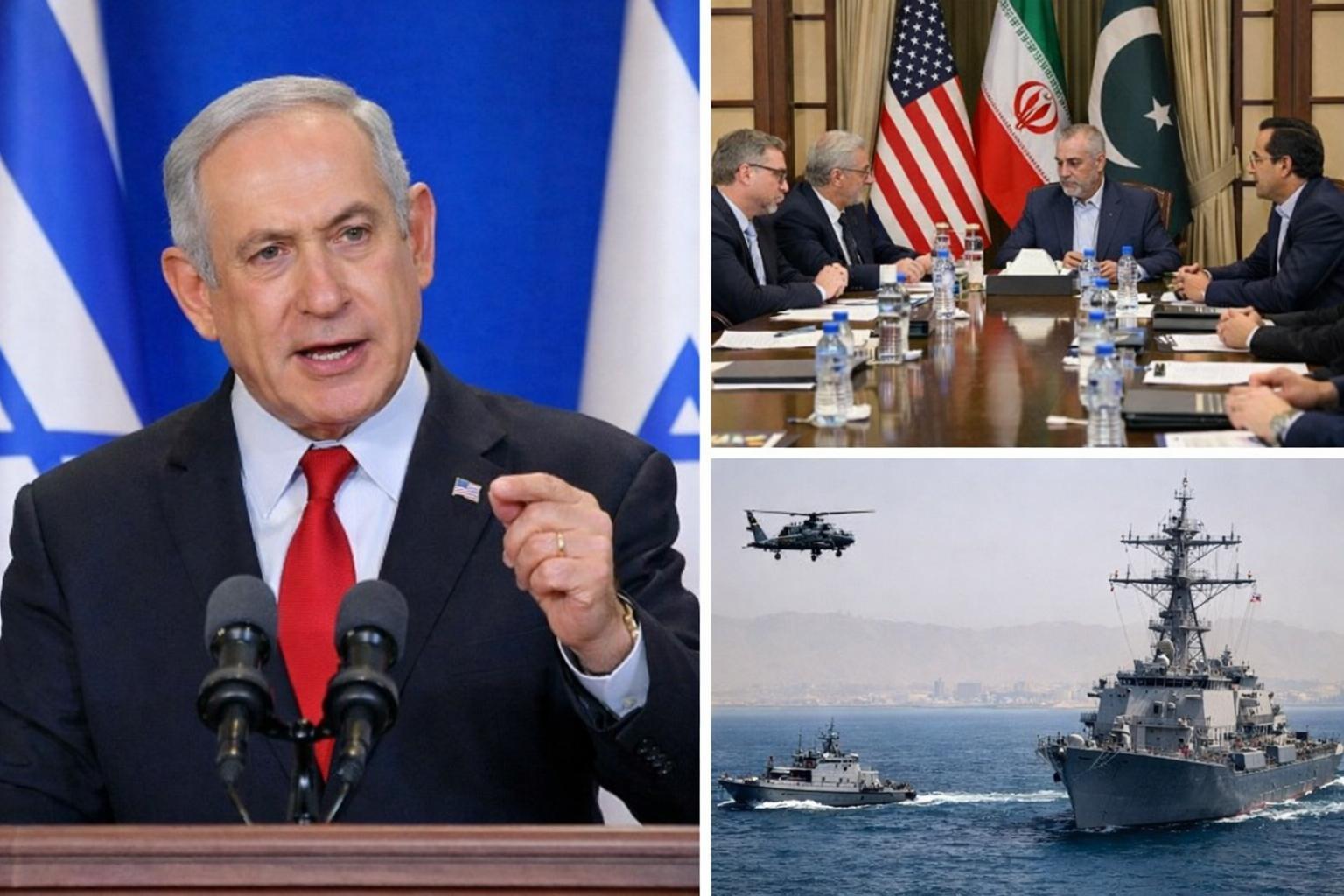
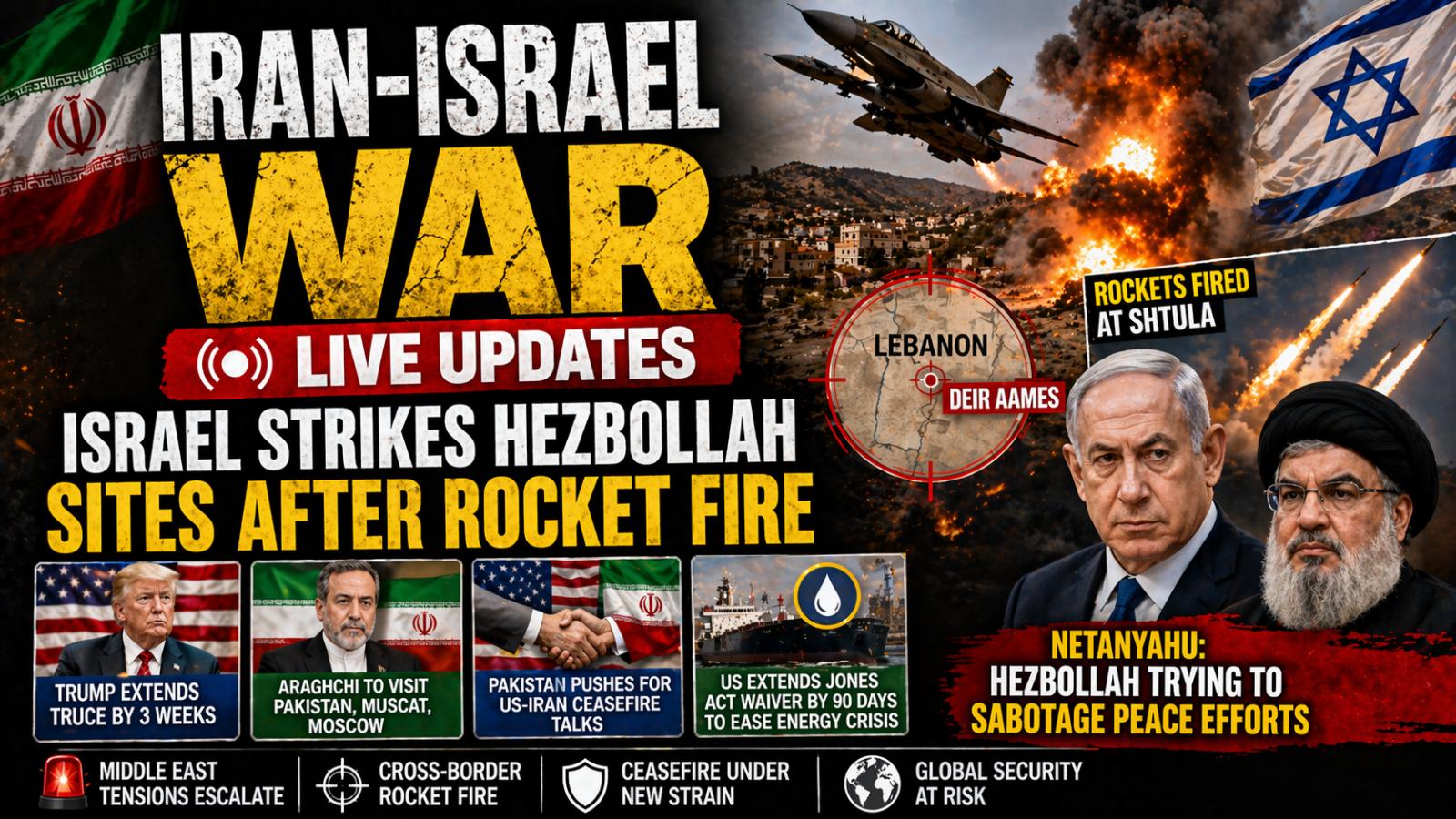
Israel strikes Hezbollah targets after rocket fire from Lebanon as tensions persist despite a truce extension, while diplomatic efforts and US energy measures reflect widening regional impact. Iran-Israel war live updates: Israel strikes Hezbollah sites after rocket fire as regional tensions escalated on Friday, April 24, 2026, with the Israeli military confirming strikes on Hezbollah-linked locations in southern Lebanon following cross-border rocket launches. The Israeli military stated that it targeted sites near the town of Deir Aames after rockets were fired toward the Israeli town of Shtula a day earlier. Deir Aames lies outside the designated border buffer zone that Israeli forces have continued to occupy even after a 10-day ceasefire agreement implemented the previous week. Earlier on Friday, April 24, 2026, the military issued evacuation warnings urging residents to leave the area before the strikes. The renewed hostilities come despite diplomatic efforts to maintain calm. U.S. President Donald Trump announced on Thursday, April 23, 2026, a three-week extension of the Israel-Hezbollah truce. However, both sides have continued intermittent exchanges of fire, raising concerns about the durability of the ceasefire. Israeli Prime Minister Benjamin Netanyahu accused Hezbollah of undermining peace efforts, stating on Friday, April 24, 2026, that the group was attempting to “sabotage” negotiations aimed at reaching a long-term agreement between Israel and Lebanon. His remarks marked his first public comments following the truce extension. Meanwhile, diplomatic activity continued across the region. Iranian Foreign Minister Abbas Araghchi said his upcoming visits to Islamabad, Muscat, and Moscow are intended to coordinate with regional partners and discuss evolving developments. While he did not directly address potential talks with the United States, officials in Pakistan have recently intensified efforts to facilitate renewed ceasefire negotiations between Washington and Tehran. In Washington, the White House announced an extension of a waiver to the Jones Act by 90 days on Friday, April 24, 2026. The measure is designed to ease domestic energy supply pressures amid disruptions linked to the broader West Asia conflict. Officials said the extension would help maintain the flow of oil and natural gas within the United States by allowing greater flexibility in maritime transport. The combination of military actions, diplomatic outreach, and economic measures underscores the widening impact of the conflict, with regional instability continuing to influence global security and energy markets.
Netanyahu accuses Hezbollah of sabotaging Israel-Lebanon peace efforts
Israel strikes Hezbollah targets after rocket fire from Lebanon as tensions persist despite a truce extension, while diplomatic efforts and US energy measures reflect widening regional impact. Iran-Israel war live updates: Israel strikes Hezbollah sites after rocket fire as regional tensions escalated on Friday, April 24, 2026, with the Israeli military confirming strikes on Hezbollah-linked locations in southern Lebanon following cross-border rocket launches. The Israeli military stated that it targeted sites near the town of Deir Aames after rockets were fired toward the Israeli town of Shtula a day earlier. Deir Aames lies outside the designated border buffer zone that Israeli forces have continued to occupy even after a 10-day ceasefire agreement implemented the previous week. Earlier on Friday, April 24, 2026, the military issued evacuation warnings urging residents to leave the area before the strikes. The renewed hostilities come despite diplomatic efforts to maintain calm. U.S. President Donald Trump announced on Thursday, April 23, 2026, a three-week extension of the Israel-Hezbollah truce. However, both sides have continued intermittent exchanges of fire, raising concerns about the durability of the ceasefire. Israeli Prime Minister Benjamin Netanyahu accused Hezbollah of undermining peace efforts, stating on Friday, April 24, 2026, that the group was attempting to “sabotage” negotiations aimed at reaching a long-term agreement between Israel and Lebanon. His remarks marked his first public comments following the truce extension. Meanwhile, diplomatic activity continued across the region. Iranian Foreign Minister Abbas Araghchi said his upcoming visits to Islamabad, Muscat, and Moscow are intended to coordinate with regional partners and discuss evolving developments. While he did not directly address potential talks with the United States, officials in Pakistan have recently intensified efforts to facilitate renewed ceasefire negotiations between Washington and Tehran. In Washington, the White House announced an extension of a waiver to the Jones Act by 90 days on Friday, April 24, 2026. The measure is designed to ease domestic energy supply pressures amid disruptions linked to the broader West Asia conflict. Officials said the extension would help maintain the flow of oil and natural gas within the United States by allowing greater flexibility in maritime transport. The combination of military actions, diplomatic outreach, and economic measures underscores the widening impact of the conflict, with regional instability continuing to influence global security and energy markets.

How did Dr. Rajkumar influence Kannada cinema and earn top honors?
How did Dr. Rajkumar influence Kannada cinema and earn top honors? remains a defining question in understanding Indian cinema, particularly in southern India. Dr. Rajkumar, born on April 24, 1929, in Karnataka, India, rose from a theater background to become one of the most respected actors in Kannada cinema. Raised in a family of stage performers, his early exposure to acting shaped a disciplined and values-driven career that spanned decades. Early life and rise in Kannada cinema Rajkumar’s upbringing in rural Karnataka and his work in traveling theater troupes laid the foundation for his entry into films. He made his cinematic debut in the 1950s with Bedara Kannappa, a mythological film where he portrayed a devoted follower of Lord Shiva. The film marked a turning point in Kannada cinema and established him as a leading actor. Over time, he went on to act in more than 200 films, earning widespread recognition Film career success and lasting impact Over the course of his career, Rajkumar became synonymous with Kannada cinema, often referred to as “Annavru.” His films consistently performed well at the box office and carried strong social messages. One of his most influential works, Bangarada Manushya, portrayed a man returning to agriculture, inspiring many toward rural development and farming. Decades later, Jeevana Chaitra highlighted his enduring appeal, where he played an elderly villager reflecting on changing societal values. Contributions as a playback singer In addition to acting, Rajkumar was an accomplished playback singer. His songs, often rooted in classical traditions, gained widespread popularity. His performance in “Nadamaya” from Jeevana Chaitra earned him national recognition, further establishing his versatility in Indian cinema. Awards, honors, and public recognition Rajkumar received numerous prestigious honors for his contributions to cinema and culture. He was awarded the Dadasaheb Phalke Award in 1995, India’s highest recognition in film. He also received the Padma Bhushan in 1983, one of the country’s top civilian honors. In 1992, he was conferred the Karnataka Ratna, recognizing his profound influence on the state’s cultural identity. Role in Gokak protest and personal principles During the Gokak agitation in the 1980s, Rajkumar played an active role in advocating for the primacy of the Kannada language in education. His involvement brought widespread attention to the movement and reinforced his position as a cultural leader. Strict on-screen rule against smoking and alcohol portrayal One of his most defining personal principles was his conscious decision to never smoke or consume alcohol in his on-screen roles. Given his immense popularity and influence, he believed audiences—especially younger fans—might imitate his behavior. This deliberate choice reflected his sense of responsibility as a public figure and strengthened his reputation as a disciplined and value-driven icon. Rajkumar’s legacy continues to influence Indian cinema and cultural identity, making his life and career a lasting point of reference for artists and audiences alike.
How did Dr. Rajkumar influence Kannada cinema and earn top honors?
How did Dr. Rajkumar influence Kannada cinema and earn top honors? remains a defining question in understanding Indian cinema, particularly in southern India. Dr. Rajkumar, born on April 24, 1929, in Karnataka, India, rose from a theater background to become one of the most respected actors in Kannada cinema. Raised in a family of stage performers, his early exposure to acting shaped a disciplined and values-driven career that spanned decades. Early life and rise in Kannada cinema Rajkumar’s upbringing in rural Karnataka and his work in traveling theater troupes laid the foundation for his entry into films. He made his cinematic debut in the 1950s with Bedara Kannappa, a mythological film where he portrayed a devoted follower of Lord Shiva. The film marked a turning point in Kannada cinema and established him as a leading actor. Over time, he went on to act in more than 200 films, earning widespread recognition Film career success and lasting impact Over the course of his career, Rajkumar became synonymous with Kannada cinema, often referred to as “Annavru.” His films consistently performed well at the box office and carried strong social messages. One of his most influential works, Bangarada Manushya, portrayed a man returning to agriculture, inspiring many toward rural development and farming. Decades later, Jeevana Chaitra highlighted his enduring appeal, where he played an elderly villager reflecting on changing societal values. Contributions as a playback singer In addition to acting, Rajkumar was an accomplished playback singer. His songs, often rooted in classical traditions, gained widespread popularity. His performance in “Nadamaya” from Jeevana Chaitra earned him national recognition, further establishing his versatility in Indian cinema. Awards, honors, and public recognition Rajkumar received numerous prestigious honors for his contributions to cinema and culture. He was awarded the Dadasaheb Phalke Award in 1995, India’s highest recognition in film. He also received the Padma Bhushan in 1983, one of the country’s top civilian honors. In 1992, he was conferred the Karnataka Ratna, recognizing his profound influence on the state’s cultural identity. Role in Gokak protest and personal principles During the Gokak agitation in the 1980s, Rajkumar played an active role in advocating for the primacy of the Kannada language in education. His involvement brought widespread attention to the movement and reinforced his position as a cultural leader. Strict on-screen rule against smoking and alcohol portrayal One of his most defining personal principles was his conscious decision to never smoke or consume alcohol in his on-screen roles. Given his immense popularity and influence, he believed audiences—especially younger fans—might imitate his behavior. This deliberate choice reflected his sense of responsibility as a public figure and strengthened his reputation as a disciplined and value-driven icon. Rajkumar’s legacy continues to influence Indian cinema and cultural identity, making his life and career a lasting point of reference for artists and audiences alike.










