



























What causes Panchang confusion abroad? A USA-focused Vedic tool offers clarity
Why are Hindu calendar timings confusing in the USA? A new online Panchang solves it For many Indians living in the United States, following traditional Hindu practices often presents an unexpected challenge. Festivals, poojas, and important life events require precise timing, yet differences in Tithi, Nakshatra, and muhurthams across sources frequently create confusion. What appears as a simple search can quickly turn into uncertainty, especially when Indian calendar timings do not align with local US conditions. Why traditional Panchang timings do not match US locations The root of this issue lies in geography and time zones. Most Hindu calendars are calculated based on Indian Standard Time, where sunrise, sunset, and lunar positions differ significantly from those in the United States. Because Vedic calculations are location-sensitive, even a few hours’ difference can alter Tithi durations, Nakshatra transitions, and auspicious muhurthams. For NRIs, relying solely on Indian Panchang data can result in performing rituals at incorrect times, creating a growing need for location-specific accuracy. A USA-focused online Panchang addressing the gap To bridge this gap, a dedicated digital solution has emerged in the form of lagna.pravachanam.com, an online Panchang platform designed specifically for US users. Users can directly access the platform by visiting: https://lagna.pravachanam.com, where location-based Vedic timings are available instantly through a simple browser interface. Unlike traditional tools, it provides accurate Panchang details tailored to individual cities across the United States, eliminating confusion caused by time zone differences and generalized data. City-specific Tithi, Vara, and Nakshatra calculations One of the platform’s core strengths is its ability to deliver precise Panchang details based on a user’s exact US location. It calculates Tithi, Vara, and Nakshatra according to local sunrise and sunset timings, ensuring that all information reflects accurate regional conditions rather than relying on Indian Standard Time. Seven-day planning view for upcoming muhurthams The platform includes a forward-looking seven-day calendar that allows users to plan religious and personal events in advance. This feature is particularly useful for identifying suitable muhurthams for occasions such as weddings, housewarmings, and poojas, helping users make informed decisions without last-minute uncertainty. Daily Lagna charts with precise timing windows For users who follow astrology closely, the tool provides detailed Lagna charts with clearly defined start and end times. These insights help identify favorable periods for rituals and important activities, aligning traditional practices with accurate astronomical calculations. Integrated astrology insights and annual predictions Beyond daily Panchang data, the platform offers traditional astrology insights, including Rashi Phalalu, Nava Nayaka Phalalu, and Kandaya Phalalu. These features provide a broader understanding of astrological influences based on the current Hindu year, supporting both personal reflection and spiritual planning. Comprehensive festival guide and auspicious day tracking A built-in festival guide ensures users stay informed about major Hindu festivals and auspicious days throughout the year. By aligning these dates with US-based timings, the platform removes ambiguity and helps users observe traditions correctly. Simple browser-based access with user-friendly design The platform is designed for ease of use, requiring no application downloads or technical expertise. Its clean and intuitive interface allows users to quickly access relevant information, making it suitable for both regular users and those new to Panchang systems. Enabling cultural continuity with accurate Vedic timing By combining traditional Vedic principles with modern digital accessibility, platforms like https://lagna.pravachanam.com address a long-standing challenge faced by the NRI community. Accurate, location-based Hindu calendar data reduces uncertainty and supports the continuation of cultural and spiritual practices for individuals living in the United States.
What causes Panchang confusion abroad? A USA-focused Vedic tool offers clarity
Why are Hindu calendar timings confusing in the USA? A new online Panchang solves it For many Indians living in the United States, following traditional Hindu practices often presents an unexpected challenge. Festivals, poojas, and important life events require precise timing, yet differences in Tithi, Nakshatra, and muhurthams across sources frequently create confusion. What appears as a simple search can quickly turn into uncertainty, especially when Indian calendar timings do not align with local US conditions. Why traditional Panchang timings do not match US locations The root of this issue lies in geography and time zones. Most Hindu calendars are calculated based on Indian Standard Time, where sunrise, sunset, and lunar positions differ significantly from those in the United States. Because Vedic calculations are location-sensitive, even a few hours’ difference can alter Tithi durations, Nakshatra transitions, and auspicious muhurthams. For NRIs, relying solely on Indian Panchang data can result in performing rituals at incorrect times, creating a growing need for location-specific accuracy. A USA-focused online Panchang addressing the gap To bridge this gap, a dedicated digital solution has emerged in the form of lagna.pravachanam.com, an online Panchang platform designed specifically for US users. Users can directly access the platform by visiting: https://lagna.pravachanam.com, where location-based Vedic timings are available instantly through a simple browser interface. Unlike traditional tools, it provides accurate Panchang details tailored to individual cities across the United States, eliminating confusion caused by time zone differences and generalized data. City-specific Tithi, Vara, and Nakshatra calculations One of the platform’s core strengths is its ability to deliver precise Panchang details based on a user’s exact US location. It calculates Tithi, Vara, and Nakshatra according to local sunrise and sunset timings, ensuring that all information reflects accurate regional conditions rather than relying on Indian Standard Time. Seven-day planning view for upcoming muhurthams The platform includes a forward-looking seven-day calendar that allows users to plan religious and personal events in advance. This feature is particularly useful for identifying suitable muhurthams for occasions such as weddings, housewarmings, and poojas, helping users make informed decisions without last-minute uncertainty. Daily Lagna charts with precise timing windows For users who follow astrology closely, the tool provides detailed Lagna charts with clearly defined start and end times. These insights help identify favorable periods for rituals and important activities, aligning traditional practices with accurate astronomical calculations. Integrated astrology insights and annual predictions Beyond daily Panchang data, the platform offers traditional astrology insights, including Rashi Phalalu, Nava Nayaka Phalalu, and Kandaya Phalalu. These features provide a broader understanding of astrological influences based on the current Hindu year, supporting both personal reflection and spiritual planning. Comprehensive festival guide and auspicious day tracking A built-in festival guide ensures users stay informed about major Hindu festivals and auspicious days throughout the year. By aligning these dates with US-based timings, the platform removes ambiguity and helps users observe traditions correctly. Simple browser-based access with user-friendly design The platform is designed for ease of use, requiring no application downloads or technical expertise. Its clean and intuitive interface allows users to quickly access relevant information, making it suitable for both regular users and those new to Panchang systems. Enabling cultural continuity with accurate Vedic timing By combining traditional Vedic principles with modern digital accessibility, platforms like https://lagna.pravachanam.com address a long-standing challenge faced by the NRI community. Accurate, location-based Hindu calendar data reduces uncertainty and supports the continuation of cultural and spiritual practices for individuals living in the United States.
Texas Fuel Prices Jump, Squeezing Household Budgets
The numbers on gas station signs across Texas are rising fast—and for many drivers, so is the stress. What used to be a routine fill-up is now a moment of hesitation, as fuel costs eat deeper into already stretched budgets. High gas prices in Texas have surged in recent weeks, climbing from about $2.55 per gallon in early February to nearly $3.78. The sharp increase is being driven by global tensions that have disrupted oil supply routes, sending ripple effects through loca
Texas Fuel Prices Jump, Squeezing Household Budgets
The numbers on gas station signs across Texas are rising fast—and for many drivers, so is the stress. What used to be a routine fill-up is now a moment of hesitation, as fuel costs eat deeper into already stretched budgets. High gas prices in Texas have surged in recent weeks, climbing from about $2.55 per gallon in early February to nearly $3.78. The sharp increase is being driven by global tensions that have disrupted oil supply routes, sending ripple effects through loca
Are you visiting India? Digi Yatra could change your airport experience
Digi Yatra could change your airport experience India’s push toward seamless air travel is being led by Digi Yatra, a government-backed initiative that uses facial recognition to streamline passenger movement through airports. Developed under the Ministry of Civil Aviation, the system allows travelers to bypass repeated document checks by using biometric verification instead of physical boarding passes and identification. How Digi Yatra is transforming airport travel in India Digi Yatra enables passengers to create a digital identity through the Digi Yatra App by uploading ID credentials and flight details before arriving at the airport. Once enrolled, travelers can pass through entry gates, security checkpoints, and boarding areas using facial scans. The system is currently operational at major hubs such as Kempegowda International Airport and Indira Gandhi International Airport, with plans for wider adoption across the country. The initiative is voluntary and emphasizes speed, convenience, and reduced physical contact in crowded terminals. Biometric travel systems already in use across US airports In the United States, similar biometric technologies are already deployed, primarily for international travel. Agencies such as the Transportation Security Administration and U.S. Customs and Border Protection operate facial recognition systems that match a traveler’s live image with passport or visa databases. These systems are commonly used at immigration checkpoints and boarding gates for international flights, and in some cases at security screening through programs like TSA’s touchless identity verification. Unlike Digi Yatra, enrollment is not typically handled through a consumer-facing app, and the process is largely managed through government databases. Key differences between Digi Yatra and US biometric systems Feature Digi Yatra (India) United States Systems Control User-controlled via app Government-controlled databases Enrollment Voluntary, app-based Mostly automatic or backend Primary Use Domestic travel International travel focus Documents Replaced by facial ID Linked to passport/visa User Role Active participation required Passive participation Data Handling User uploads data Govt retrieves from records Experience Fully contactless journey Partial contactless process What global travelers should know about evolving airport technology As airports worldwide adopt digital identity solutions, the contrast between India’s Digi Yatra and US biometric programs highlights broader questions around privacy, convenience, and control. For US-based travelers heading to India, understanding how Digi Yatra works can help streamline the airport experience, while also offering insight into how biometric travel technology may continue to evolve globally.
Are you visiting India? Digi Yatra could change your airport experience
Digi Yatra could change your airport experience India’s push toward seamless air travel is being led by Digi Yatra, a government-backed initiative that uses facial recognition to streamline passenger movement through airports. Developed under the Ministry of Civil Aviation, the system allows travelers to bypass repeated document checks by using biometric verification instead of physical boarding passes and identification. How Digi Yatra is transforming airport travel in India Digi Yatra enables passengers to create a digital identity through the Digi Yatra App by uploading ID credentials and flight details before arriving at the airport. Once enrolled, travelers can pass through entry gates, security checkpoints, and boarding areas using facial scans. The system is currently operational at major hubs such as Kempegowda International Airport and Indira Gandhi International Airport, with plans for wider adoption across the country. The initiative is voluntary and emphasizes speed, convenience, and reduced physical contact in crowded terminals. Biometric travel systems already in use across US airports In the United States, similar biometric technologies are already deployed, primarily for international travel. Agencies such as the Transportation Security Administration and U.S. Customs and Border Protection operate facial recognition systems that match a traveler’s live image with passport or visa databases. These systems are commonly used at immigration checkpoints and boarding gates for international flights, and in some cases at security screening through programs like TSA’s touchless identity verification. Unlike Digi Yatra, enrollment is not typically handled through a consumer-facing app, and the process is largely managed through government databases. Key differences between Digi Yatra and US biometric systems Feature Digi Yatra (India) United States Systems Control User-controlled via app Government-controlled databases Enrollment Voluntary, app-based Mostly automatic or backend Primary Use Domestic travel International travel focus Documents Replaced by facial ID Linked to passport/visa User Role Active participation required Passive participation Data Handling User uploads data Govt retrieves from records Experience Fully contactless journey Partial contactless process What global travelers should know about evolving airport technology As airports worldwide adopt digital identity solutions, the contrast between India’s Digi Yatra and US biometric programs highlights broader questions around privacy, convenience, and control. For US-based travelers heading to India, understanding how Digi Yatra works can help streamline the airport experience, while also offering insight into how biometric travel technology may continue to evolve globally.
Meta faces setback as China cancels $2B Manus AI startup acquisition
China’s decision to block the acquisition of Manus AI by Meta marks a major shift in global technology deals, as authorities cited concerns over technology transfer and national interests. The country’s top economic planner, the National Development and Reform Commission, ordered the cancellation of th
Meta faces setback as China cancels $2B Manus AI startup acquisition
China’s decision to block the acquisition of Manus AI by Meta marks a major shift in global technology deals, as authorities cited concerns over technology transfer and national interests. The country’s top economic planner, the National Development and Reform Commission, ordered the cancellation of th
How did the Columbus half marathon impact the community? Event raises funds and unity
Thousands of participants gathered in downtown Columbus, Ohio, for the Capital City half marathon, a major annual event that brought together runners, volunteers, and supporters from across the United States. The race drew more than 11,000 runners and over 70 volunteers, with spectators lining the streets to cheer on participants who had spent months preparing. Months of preparation lead to race day success Many runners committed to rigorous training sch
How did the Columbus half marathon impact the community? Event raises funds and unity
Thousands of participants gathered in downtown Columbus, Ohio, for the Capital City half marathon, a major annual event that brought together runners, volunteers, and supporters from across the United States. The race drew more than 11,000 runners and over 70 volunteers, with spectators lining the streets to cheer on participants who had spent months preparing. Months of preparation lead to race day success Many runners committed to rigorous training sch
Regulators eye prediction markets after suspicious betting activity
Prediction markets, digital platforms that allow users to wager on future events, are drawing increasing scrutiny amid concerns over suspicious trading activity and the potential misuse of sensitive information. The issue has gained prominence following a case involving a US Army special forces soldier accused of leveraging classified intelligence to place bets linked to a mission targeting Venezuelan President Nicolas Maduro. What are prediction markets? Prediction markets such as Polymarket and Kalshi operate in a manner similar to gambling platforms, but instead of sports, they focus on real-world events. Users place wagers on outcomes ranging from political developments and economic shifts to weather patterns and online activity. Participants earn profits if their predictions are accurate, while platforms generate revenue through transaction fees. With millions of users globally, these platforms now facilitate billions of dollars in wagers across diverse subjects including elections, tariffs, and commodity prices. Are these markets legal? The legal status of prediction markets varies by region. Globally, many jurisdictions permit such platforms, but the regulatory framework in the United States remains complex. Polymarket had been restricted domestically for several years before resuming limited operations, while Kalshi operates under oversight from the Commodity Futures Trading Commission. Some users attempt to bypass restrictions through virtual private networks, raising additional compliance concerns. Unlike traditional bookmakers, these platforms position themselves as exchanges that enable trading rather than setting odds. Can prediction markets accurately forecast events? Research suggests that collective forecasting, often described as the “wisdom of crowds,” can provide valuable insights. By aggregating diverse opinions, prediction markets can sometimes outperform individual experts in anticipating political, economic, and global outcomes. What are the risks involved? Concerns have intensified regarding the potential use of insider information. In the recent case, the US soldier allegedly earned more than $400,000 by betting on outcomes tied to a military operation. Similar patterns have been observed before major geopolitical and entertainment events, where unusual betting activity accurately predicted outcomes. Such incidents have raised questions about whether privileged information is influencing market behavior. Regulatory response and growing oversight Authorities are responding to these developments with increased vigilance. Several US states have initiated measures to restrict or ban prediction markets, while platforms like Kalshi and Polymarket have introduced safeguards to prevent misuse. Kalshi has prohibited political candidates from betting on their own elections, and government agencies have cautioned officials against using insider knowledge for financial gain. A concept with historical roots Despite recent attention, prediction markets are not a new phenomenon. Early models such as the Iowa Electronic Markets, established in 1988, focused on political forecasting. In 2003, the Pentagon explored launching a platform to predict geopolitical events, including potential security threats, but the initiative was abandoned following public criticism. As scrutiny intensifies, the future of prediction markets will likely depend on how effectively regulators and platforms address concerns surrounding transparency, legality, and the ethical use of information.
Regulators eye prediction markets after suspicious betting activity
Prediction markets, digital platforms that allow users to wager on future events, are drawing increasing scrutiny amid concerns over suspicious trading activity and the potential misuse of sensitive information. The issue has gained prominence following a case involving a US Army special forces soldier accused of leveraging classified intelligence to place bets linked to a mission targeting Venezuelan President Nicolas Maduro. What are prediction markets? Prediction markets such as Polymarket and Kalshi operate in a manner similar to gambling platforms, but instead of sports, they focus on real-world events. Users place wagers on outcomes ranging from political developments and economic shifts to weather patterns and online activity. Participants earn profits if their predictions are accurate, while platforms generate revenue through transaction fees. With millions of users globally, these platforms now facilitate billions of dollars in wagers across diverse subjects including elections, tariffs, and commodity prices. Are these markets legal? The legal status of prediction markets varies by region. Globally, many jurisdictions permit such platforms, but the regulatory framework in the United States remains complex. Polymarket had been restricted domestically for several years before resuming limited operations, while Kalshi operates under oversight from the Commodity Futures Trading Commission. Some users attempt to bypass restrictions through virtual private networks, raising additional compliance concerns. Unlike traditional bookmakers, these platforms position themselves as exchanges that enable trading rather than setting odds. Can prediction markets accurately forecast events? Research suggests that collective forecasting, often described as the “wisdom of crowds,” can provide valuable insights. By aggregating diverse opinions, prediction markets can sometimes outperform individual experts in anticipating political, economic, and global outcomes. What are the risks involved? Concerns have intensified regarding the potential use of insider information. In the recent case, the US soldier allegedly earned more than $400,000 by betting on outcomes tied to a military operation. Similar patterns have been observed before major geopolitical and entertainment events, where unusual betting activity accurately predicted outcomes. Such incidents have raised questions about whether privileged information is influencing market behavior. Regulatory response and growing oversight Authorities are responding to these developments with increased vigilance. Several US states have initiated measures to restrict or ban prediction markets, while platforms like Kalshi and Polymarket have introduced safeguards to prevent misuse. Kalshi has prohibited political candidates from betting on their own elections, and government agencies have cautioned officials against using insider knowledge for financial gain. A concept with historical roots Despite recent attention, prediction markets are not a new phenomenon. Early models such as the Iowa Electronic Markets, established in 1988, focused on political forecasting. In 2003, the Pentagon explored launching a platform to predict geopolitical events, including potential security threats, but the initiative was abandoned following public criticism. As scrutiny intensifies, the future of prediction markets will likely depend on how effectively regulators and platforms address concerns surrounding transparency, legality, and the ethical use of information.
Federal Charges Filed in Case of Military Insider Trading and Crypto Bets
A United States Army soldier has been indicted on multiple federal charges after authorities alleged he used classified information tied to a covert military operation for personal financial gain. The case centers on claims that sensitive intelligence was exploited to place high-value prediction market bets before key developments became public. According to federal prosecutors, the accused, identified as Gannon Ken Van Dyke, was stationed in North Carolina and had access to restric
Federal Charges Filed in Case of Military Insider Trading and Crypto Bets
A United States Army soldier has been indicted on multiple federal charges after authorities alleged he used classified information tied to a covert military operation for personal financial gain. The case centers on claims that sensitive intelligence was exploited to place high-value prediction market bets before key developments became public. According to federal prosecutors, the accused, identified as Gannon Ken Van Dyke, was stationed in North Carolina and had access to restric
CSK crush MI by 103 runs as Samson’s unbeaten century leads rout
CSK crush MI by 103 runs in IPL 2026 as Sanju Samson hits 101 and Akeal Hosein takes four wickets in dominant win at Wankhede Stadium CSK crush MI by 103 runs as Samson’s unbeaten century leads rout in a commanding Indian Premier League 2026 performance at Wankhede Stadium in Mumbai on Thursday, April 23, 2026, with first ball at approximately 7:30 PM IST. The result marked a significant turnaround for Chennai Super Kings, who climbed to fifth in the standings, w
CSK crush MI by 103 runs as Samson’s unbeaten century leads rout
CSK crush MI by 103 runs in IPL 2026 as Sanju Samson hits 101 and Akeal Hosein takes four wickets in dominant win at Wankhede Stadium CSK crush MI by 103 runs as Samson’s unbeaten century leads rout in a commanding Indian Premier League 2026 performance at Wankhede Stadium in Mumbai on Thursday, April 23, 2026, with first ball at approximately 7:30 PM IST. The result marked a significant turnaround for Chennai Super Kings, who climbed to fifth in the standings, w
TCS Nashik Harassment Case: Survivor Alleges Abuse, Religious Insults At Workplace
A shocking workplace harassment case has emerged from the Nashik branch of Tata Consultancy Services, where a female employee has alleged months of sexual harassment, verbal abuse, and religious insults by multiple colleagues. The survivor, who joined the company in July 2024, described the office environment as deeply unsafe and intimidating, claiming that accused employees operated without fear due to alleged protection from senior officials. According to her complaint, the harass
TCS Nashik Harassment Case: Survivor Alleges Abuse, Religious Insults At Workplace
A shocking workplace harassment case has emerged from the Nashik branch of Tata Consultancy Services, where a female employee has alleged months of sexual harassment, verbal abuse, and religious insults by multiple colleagues. The survivor, who joined the company in July 2024, described the office environment as deeply unsafe and intimidating, claiming that accused employees operated without fear due to alleged protection from senior officials. According to her complaint, the harass
Carlos Alcaraz Injury Puts French Open 2026 Title Defense in Doubt
Carlos Alcaraz has raised concerns about his participation in the 2026 French Open after revealing uncertainty over his recovery from a wrist injury. The world-class Spaniard, who is among the leading names in men’s tennis, indicated that he may not be ready in time to defend his title at French Open, sc
Carlos Alcaraz Injury Puts French Open 2026 Title Defense in Doubt
Carlos Alcaraz has raised concerns about his participation in the 2026 French Open after revealing uncertainty over his recovery from a wrist injury. The world-class Spaniard, who is among the leading names in men’s tennis, indicated that he may not be ready in time to defend his title at French Open, sc
Fort Worth Art Fair returns with artists, music, and murals in Sundance Square
The Fort Worth Art Fair is returning for its fifth year, bringing a multi-day celebration of visual art and live music to Sundance Square in Fort Worth. The open-air event will feature more than 100 artists alongside a lineup of musical performances, offering visitors a walkable and immersive cultural experience in the city’s downtown district. Organizers say the fair will run for four con
Fort Worth Art Fair returns with artists, music, and murals in Sundance Square
The Fort Worth Art Fair is returning for its fifth year, bringing a multi-day celebration of visual art and live music to Sundance Square in Fort Worth. The open-air event will feature more than 100 artists alongside a lineup of musical performances, offering visitors a walkable and immersive cultural experience in the city’s downtown district. Organizers say the fair will run for four con
Lieutenant General Susan Coyle to lead Australia's army
Australia has appointed Lieutenant General Susan Coyle as the country’s first female Chief of Army, marking a historic moment in the nation's military history. The announcement was made on Monday, April 13, 2026, as part of a broader reshuffle in the Australian Defence Force leadership. Coyle, who is currently serving as the Acting Chief of Joint Capabilities, will officially take over the top army post in July this year. Prime Minister Anthony Albanese hailed the appointment, emp
Lieutenant General Susan Coyle to lead Australia's army
Australia has appointed Lieutenant General Susan Coyle as the country’s first female Chief of Army, marking a historic moment in the nation's military history. The announcement was made on Monday, April 13, 2026, as part of a broader reshuffle in the Australian Defence Force leadership. Coyle, who is currently serving as the Acting Chief of Joint Capabilities, will officially take over the top army post in July this year. Prime Minister Anthony Albanese hailed the appointment, emp
Sanju Samson century powers CSK to first IPL 2026 win over Delhi
Chennai Super Kings secured their first victory of the Indian Premier League 2026 season with a 23-run win over Delhi Capitals at the MA Chidambaram Stadium in Chennai, India, on Saturday, April 10, 2026. The result marked a turnaround for CSK after losing their opening three matches. Batting first after being sent in, Chennai posted a commanding total of 212 for 6 in 20 overs, driven by a standout performance from Sanju Samson. The wicketkeeper-batter delivered an unbeaten 115 off
Sanju Samson century powers CSK to first IPL 2026 win over Delhi
Chennai Super Kings secured their first victory of the Indian Premier League 2026 season with a 23-run win over Delhi Capitals at the MA Chidambaram Stadium in Chennai, India, on Saturday, April 10, 2026. The result marked a turnaround for CSK after losing their opening three matches. Batting first after being sent in, Chennai posted a commanding total of 212 for 6 in 20 overs, driven by a standout performance from Sanju Samson. The wicketkeeper-batter delivered an unbeaten 115 off
The U.S. and Japan: The Road to World War II and the Atomic Bombings
In 1945, the world was on the edge of significant change, driven by the destructive forces of war. The United States and Japan, two powerful nations, found themselves on a path of inevitable conflict, forever altering the course of history. Japan’s imperial ambitions across Asia and the Pacific created rising tensions with the U.S. and Western nations. The United States had long condemned Japan’s expansion, particularly its invasion of China and occupation of Fren
The U.S. and Japan: The Road to World War II and the Atomic Bombings
In 1945, the world was on the edge of significant change, driven by the destructive forces of war. The United States and Japan, two powerful nations, found themselves on a path of inevitable conflict, forever altering the course of history. Japan’s imperial ambitions across Asia and the Pacific created rising tensions with the U.S. and Western nations. The United States had long condemned Japan’s expansion, particularly its invasion of China and occupation of Fren
Chicago to host Candy Hall of Fame Experience opening in 2027
Chicago is set to become home to a major new cultural and tourism attraction, as the National Confectionery Sales Association announced on Thursday, April 10, 2026, that the city has been selected as the permanent site for the Candy Hall of Fame Experience. The large-scale venue is scheduled to open in summer
Chicago to host Candy Hall of Fame Experience opening in 2027
Chicago is set to become home to a major new cultural and tourism attraction, as the National Confectionery Sales Association announced on Thursday, April 10, 2026, that the city has been selected as the permanent site for the Candy Hall of Fame Experience. The large-scale venue is scheduled to open in summer
Central Park remains top destination for visitors in New York City
landscapes and iconic city views in the center of Manhattan. Spanning over 840 acres, the park serves as a major destination for both tourists and residents seeking recreation and cultural experiences. Visitors can access Central Park through multiple transportation options, making it convenient from nearly any part of New York City. The New York City Subway is the most efficient way to reach the park, with several lines stopping near key entrances, including 59th Street–Columbus Circle and 72nd Street. Public buses also run along the park’s perimeter, offering easy access for those traveling within Manhattan. For those preferring direct travel, taxis and ride-sharing services are widely available and can drop visitors at major entry points. Walking is another popular option, especially for those staying nearby, allowing visitors to explore surrounding neighborhoods along the way. Additionally, cycling routes connect to Central Park, and bike rentals are available for exploring the park itself. Inside the park, visitors can enjoy well-known landmarks such as Bethesda Terrace and Bow Bridge, along with open spaces like the Great Lawn. Seasonal changes enhance the experience, with spring and summer offering greenery and events, while fall draws visitors with its colorful foliage. Central Park’s accessibility, combined with its diverse attractions and transportation options, continues to make it a key highlight for anyone visiting New York City.
Central Park remains top destination for visitors in New York City
landscapes and iconic city views in the center of Manhattan. Spanning over 840 acres, the park serves as a major destination for both tourists and residents seeking recreation and cultural experiences. Visitors can access Central Park through multiple transportation options, making it convenient from nearly any part of New York City. The New York City Subway is the most efficient way to reach the park, with several lines stopping near key entrances, including 59th Street–Columbus Circle and 72nd Street. Public buses also run along the park’s perimeter, offering easy access for those traveling within Manhattan. For those preferring direct travel, taxis and ride-sharing services are widely available and can drop visitors at major entry points. Walking is another popular option, especially for those staying nearby, allowing visitors to explore surrounding neighborhoods along the way. Additionally, cycling routes connect to Central Park, and bike rentals are available for exploring the park itself. Inside the park, visitors can enjoy well-known landmarks such as Bethesda Terrace and Bow Bridge, along with open spaces like the Great Lawn. Seasonal changes enhance the experience, with spring and summer offering greenery and events, while fall draws visitors with its colorful foliage. Central Park’s accessibility, combined with its diverse attractions and transportation options, continues to make it a key highlight for anyone visiting New York City.
Trump Reveals US Pilot’s 3-Word Radio Message That Sparked Fears of Iranian Trap
US President Donald Trump recently revealed the three-word radio message sent by a US pilot trapped in Iran, which initially sparked fears of an Iranian trap. The pilot, a weapons system officer, had ejected from his downed F-15E Strike Eagle over southern Iran on April 3, 2026, during the ongoing conflict. After his aircraft was shot down, the first pilot was rescued, but the second remained missing, and both US and Iranian forces raced to locate him. During the search, Trump expla
Trump Reveals US Pilot’s 3-Word Radio Message That Sparked Fears of Iranian Trap
US President Donald Trump recently revealed the three-word radio message sent by a US pilot trapped in Iran, which initially sparked fears of an Iranian trap. The pilot, a weapons system officer, had ejected from his downed F-15E Strike Eagle over southern Iran on April 3, 2026, during the ongoing conflict. After his aircraft was shot down, the first pilot was rescued, but the second remained missing, and both US and Iranian forces raced to locate him. During the search, Trump expla
AAP Leader Kejriwal Moves to Recuse Judge in Excise Policy Case Amid CBI Appeals
Arvind Kejriwal, the Aam Aadmi Party (AAP) chief and former Delhi Chief Minister, has moved a recusal application before the Delhi High Court, requesting that Justice Swarn Kanta Sharma recuse herself from hearing the excise policy case. This legal maneuver follows the court’s previous decision on March 16, granting Kejriwal and 22 others more time to respond to the Central Bureau of Investigation's (CBI) plea challenging their discharge in the case. Kejriwal has stated his intent to p
AAP Leader Kejriwal Moves to Recuse Judge in Excise Policy Case Amid CBI Appeals
Arvind Kejriwal, the Aam Aadmi Party (AAP) chief and former Delhi Chief Minister, has moved a recusal application before the Delhi High Court, requesting that Justice Swarn Kanta Sharma recuse herself from hearing the excise policy case. This legal maneuver follows the court’s previous decision on March 16, granting Kejriwal and 22 others more time to respond to the Central Bureau of Investigation's (CBI) plea challenging their discharge in the case. Kejriwal has stated his intent to p
Three Chicago bars rank among North America’s best in new list
Three bars in Chicago have secured spots among North America’s best, according to a newly released industry ranking that highlights standout destinations for cocktail culture and nightlife across the region. The recognition underscores Chicago’s growing reputation as a hub for innovative mixology and premium bar experiences in the United States. The three Chicago bars featured on the list are: Meadowlark (Logan Square) – Known
Three Chicago bars rank among North America’s best in new list
Three bars in Chicago have secured spots among North America’s best, according to a newly released industry ranking that highlights standout destinations for cocktail culture and nightlife across the region. The recognition underscores Chicago’s growing reputation as a hub for innovative mixology and premium bar experiences in the United States. The three Chicago bars featured on the list are: Meadowlark (Logan Square) – Known
Changes to U.S. medical aid system may risk HIV and malaria supply chains
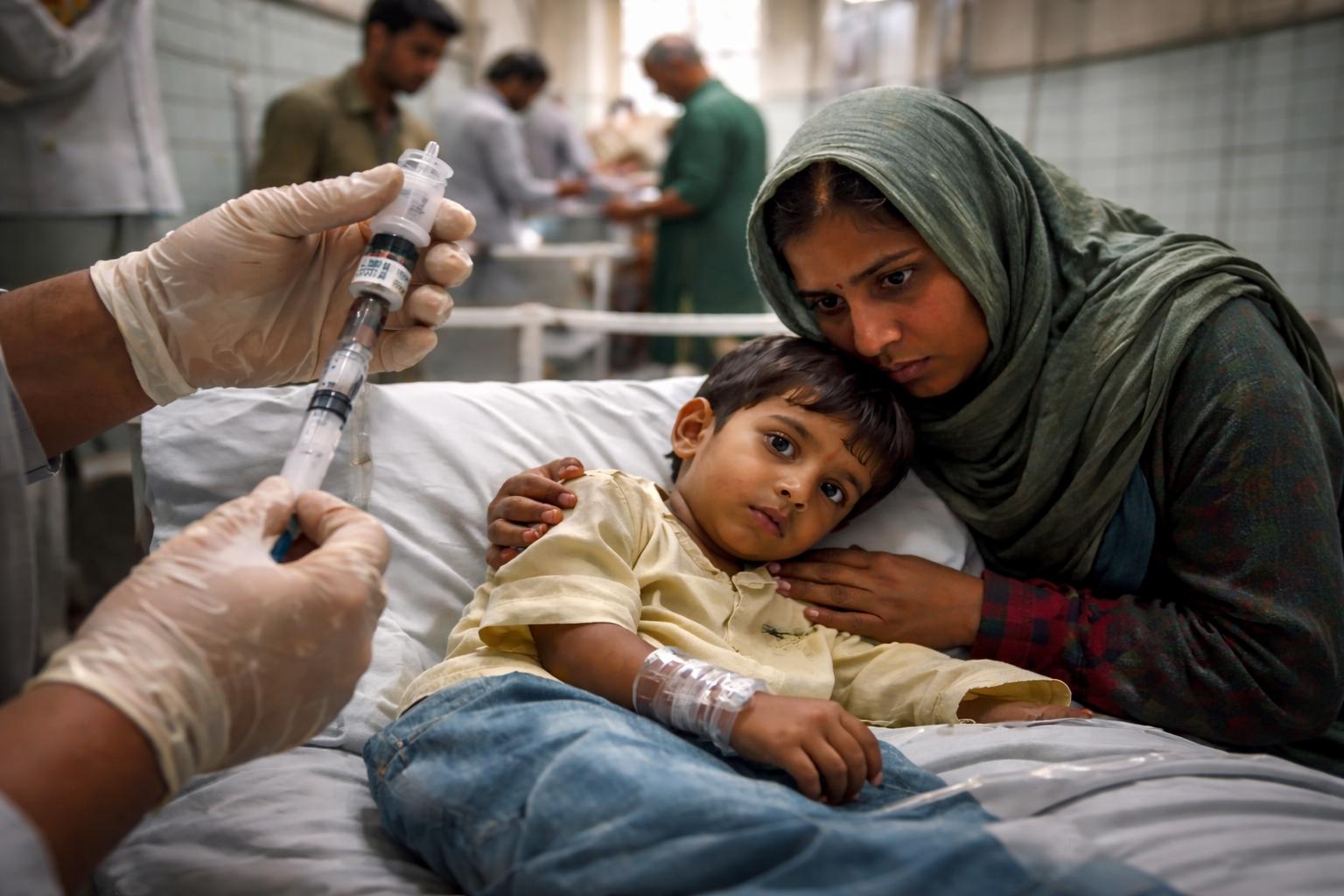
NAIROBI/LONDON — Friday, April 3, 2026 — The United States is restructuring how it delivers critical medical supplies for diseases such as HIV and malaria to lower-income countries, a move that officials and experts warn could disrupt life-saving services across multiple regions. For nearly a decade, the U.S. managed its medical aid through the Global Health Supply Chain Program, overseen by private contractor Chemonics. Between 2016 and 2024, the program distributed more than $5 billion worth of HIV and malaria treatments and prevention tools to roughly 90 countries, primarily in sub-Saharan Africa and parts of Asia. That system was first disrupted in January 2025, when President Donald Trump halted international aid on the first day of his presidency. The decision left large quantities of medical supplies stranded in ports and warehouses, including antiretroviral drugs and insecticide-treated bed nets. Although a waiver later allowed the resumption of some life-saving shipments, uncertainty has persisted. The latest shift comes as the administration reduces foreign aid spending, dismantles the U.S. Agency for International Development (USAID), and transitions away from contractor-led programs toward direct agreements with recipient governments. According to multiple sources, the U.S. State Department instructed staff in 17 African countries and Haiti via an internal email sent on Tuesday, April 1, 2026, to begin phasing out the current supply program by Friday, May 30, 2026. The same communication noted that the Chemonics contract would end on Tuesday, September 30, 2026, aligning with broader USAID program closures. However, officials cautioned that a rushed transition could create immediate risks to service continuity, potentially leading to shortages of essential medicines. Experts familiar with the process say the timeline is particularly challenging because procuring and delivering medical products to remote regions can take up to a year. Rapid changes could therefore interrupt treatment for patients relying on consistent access to HIV medications and malaria prevention tools. The U.S. government is reportedly exploring collaboration with the Global Fund to Fight AIDS, Tuberculosis and Malaria, which already manages approximately $2 billion in annual health procurement. Still, negotiations remain unclear, and earlier discussions had anticipated a transition closer to November 2027. The administration’s broader “America First” global health strategy emphasizes direct funding to national governments and increased use of private logistics firms. Officials argue the previous system was inefficient and costly, while critics warn that abrupt structural changes could weaken established supply chains. Recent bilateral agreements have been signed with several countries, including Kenya, Rwanda, and Uganda, though implementation details are still under negotiation. Legal and administrative challenges in some regions continue to delay progress, adding to concerns about potential disruptions in critical healthcare delivery systems.
Changes to U.S. medical aid system may risk HIV and malaria supply chains
NAIROBI/LONDON — Friday, April 3, 2026 — The United States is restructuring how it delivers critical medical supplies for diseases such as HIV and malaria to lower-income countries, a move that officials and experts warn could disrupt life-saving services across multiple regions. For nearly a decade, the U.S. managed its medical aid through the Global Health Supply Chain Program, overseen by private contractor Chemonics. Between 2016 and 2024, the program distributed more than $5 billion worth of HIV and malaria treatments and prevention tools to roughly 90 countries, primarily in sub-Saharan Africa and parts of Asia. That system was first disrupted in January 2025, when President Donald Trump halted international aid on the first day of his presidency. The decision left large quantities of medical supplies stranded in ports and warehouses, including antiretroviral drugs and insecticide-treated bed nets. Although a waiver later allowed the resumption of some life-saving shipments, uncertainty has persisted. The latest shift comes as the administration reduces foreign aid spending, dismantles the U.S. Agency for International Development (USAID), and transitions away from contractor-led programs toward direct agreements with recipient governments. According to multiple sources, the U.S. State Department instructed staff in 17 African countries and Haiti via an internal email sent on Tuesday, April 1, 2026, to begin phasing out the current supply program by Friday, May 30, 2026. The same communication noted that the Chemonics contract would end on Tuesday, September 30, 2026, aligning with broader USAID program closures. However, officials cautioned that a rushed transition could create immediate risks to service continuity, potentially leading to shortages of essential medicines. Experts familiar with the process say the timeline is particularly challenging because procuring and delivering medical products to remote regions can take up to a year. Rapid changes could therefore interrupt treatment for patients relying on consistent access to HIV medications and malaria prevention tools. The U.S. government is reportedly exploring collaboration with the Global Fund to Fight AIDS, Tuberculosis and Malaria, which already manages approximately $2 billion in annual health procurement. Still, negotiations remain unclear, and earlier discussions had anticipated a transition closer to November 2027. The administration’s broader “America First” global health strategy emphasizes direct funding to national governments and increased use of private logistics firms. Officials argue the previous system was inefficient and costly, while critics warn that abrupt structural changes could weaken established supply chains. Recent bilateral agreements have been signed with several countries, including Kenya, Rwanda, and Uganda, though implementation details are still under negotiation. Legal and administrative challenges in some regions continue to delay progress, adding to concerns about potential disruptions in critical healthcare delivery systems.


