









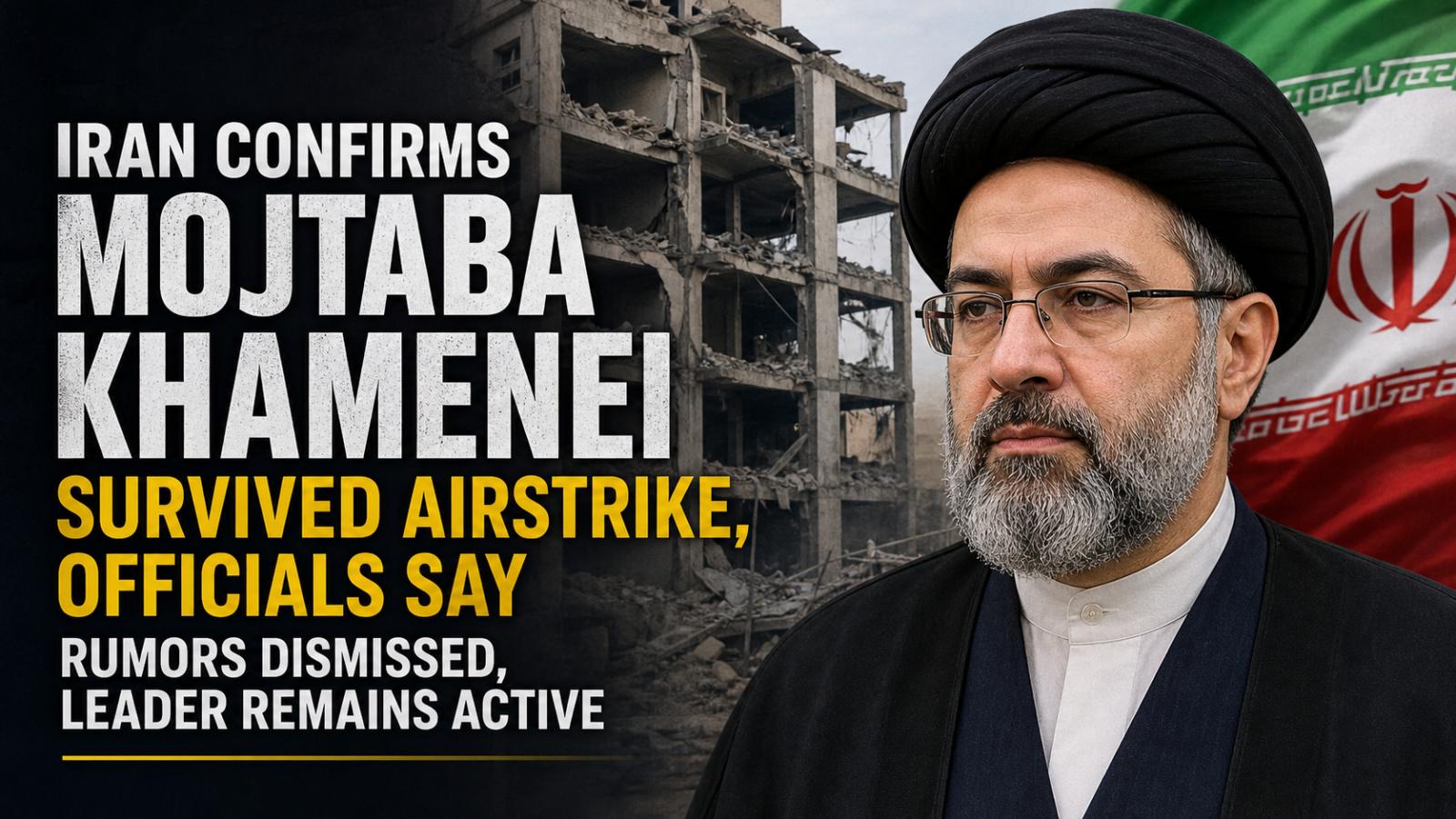
What happened to Mojtaba Khamenei during the Iran conflict? He survived an airstrike, officials say
Iranian authorities on Friday, May 1, confirmed that Mojtaba Khamenei was present in a building that was later destroyed in an airstrike during the ongoing Iran conflict, which began on February 28. Officials stated that he survived the attack and remains in active control of key state matters, while also dismissing widespread speculation about his health and absence from public appearances. Senior official details narrow escape during bombing Ayatollah Mohsen Qomi, a senior member of Iran’s Assembly of Experts and Deputy for International Affairs in the Supreme Leader’s office, said that Mojtaba Khamenei had been inside the targeted building shortly before it was struck. According to Qomi, Khamenei moved into the courtyard just minutes before the explosion, avoiding the fatal impact that reportedly killed others inside. Qomi described the survival as a matter of timing, emphasizing that the leader’s presence in the building had been confirmed but that his movement moments before the strike ultimately ensured his safety. The airstrike was part of ongoing hostilities that have escalated since late February. Officials assert leader remains in control of national affairs Despite rumors circulating internationally, Iranian officials maintained that Mojtaba Khamenei is in good health and continues to oversee both diplomatic and operational matters. Qomi stated that Khamenei is directly supervising negotiations and military-related decisions, including providing guidance to negotiating teams under varying conditions. The comments appear aimed at reinforcing internal stability and projecting continuity in leadership during a period of heightened geopolitical tension. Iranian officials emphasized that decision-making authority remains firmly centralized under Khamenei’s direction. Iran dismisses Western speculation as strategic pressure Qomi also addressed claims from Western sources regarding the leader’s health, characterizing them as deliberate attempts to provoke a response from Tehran. He suggested that questions about Khamenei’s public absence are part of a broader strategy to create uncertainty and apply psychological pressure. According to Qomi, such narratives are intended to push Iranian officials into reactive communication, which could be leveraged for strategic advantage by adversaries. Acknowledgment of injuries and focus on protection While firmly denying claims of serious health concerns, Qomi indicated that Mojtaba Khamenei may have sustained injuries during the incident. He stated that ensuring the leader’s safety has become a top priority for Iranian authorities, underscoring the importance of preserving leadership continuity amid the conflict. Officials reiterated that despite any injuries, Khamenei remains active and engaged in directing national policy, reinforcing the government’s position that leadership stability has not been compromised.
What happened to Mojtaba Khamenei during the Iran conflict? He survived an airstrike, officials say
Iranian authorities on Friday, May 1, confirmed that Mojtaba Khamenei was present in a building that was later destroyed in an airstrike during the ongoing Iran conflict, which began on February 28. Officials stated that he survived the attack and remains in active control of key state matters, while also dismissing widespread speculation about his health and absence from public appearances. Senior official details narrow escape during bombing Ayatollah Mohsen Qomi, a senior member of Iran’s Assembly of Experts and Deputy for International Affairs in the Supreme Leader’s office, said that Mojtaba Khamenei had been inside the targeted building shortly before it was struck. According to Qomi, Khamenei moved into the courtyard just minutes before the explosion, avoiding the fatal impact that reportedly killed others inside. Qomi described the survival as a matter of timing, emphasizing that the leader’s presence in the building had been confirmed but that his movement moments before the strike ultimately ensured his safety. The airstrike was part of ongoing hostilities that have escalated since late February. Officials assert leader remains in control of national affairs Despite rumors circulating internationally, Iranian officials maintained that Mojtaba Khamenei is in good health and continues to oversee both diplomatic and operational matters. Qomi stated that Khamenei is directly supervising negotiations and military-related decisions, including providing guidance to negotiating teams under varying conditions. The comments appear aimed at reinforcing internal stability and projecting continuity in leadership during a period of heightened geopolitical tension. Iranian officials emphasized that decision-making authority remains firmly centralized under Khamenei’s direction. Iran dismisses Western speculation as strategic pressure Qomi also addressed claims from Western sources regarding the leader’s health, characterizing them as deliberate attempts to provoke a response from Tehran. He suggested that questions about Khamenei’s public absence are part of a broader strategy to create uncertainty and apply psychological pressure. According to Qomi, such narratives are intended to push Iranian officials into reactive communication, which could be leveraged for strategic advantage by adversaries. Acknowledgment of injuries and focus on protection While firmly denying claims of serious health concerns, Qomi indicated that Mojtaba Khamenei may have sustained injuries during the incident. He stated that ensuring the leader’s safety has become a top priority for Iranian authorities, underscoring the importance of preserving leadership continuity amid the conflict. Officials reiterated that despite any injuries, Khamenei remains active and engaged in directing national policy, reinforcing the government’s position that leadership stability has not been compromised.

Will Donald Trump win Nobel Peace Prize 2026? Key facts and timeline
Nobel Peace Prize 2026: Trump emerges as likely contender Donald Trump is being seen as a likely contender for the Nobel Peace Prize 2026, with 287 candidates under review, but the final list remains strictly confidential. Kristian Berg Harpviken, secretary of the Norwegian Nobel Committee, confirmed that the total nominations include 208 individuals and 79 organisations, highlighting strong global participation despite ongoing conf
Will Donald Trump win Nobel Peace Prize 2026? Key facts and timeline
Nobel Peace Prize 2026: Trump emerges as likely contender Donald Trump is being seen as a likely contender for the Nobel Peace Prize 2026, with 287 candidates under review, but the final list remains strictly confidential. Kristian Berg Harpviken, secretary of the Norwegian Nobel Committee, confirmed that the total nominations include 208 individuals and 79 organisations, highlighting strong global participation despite ongoing conf
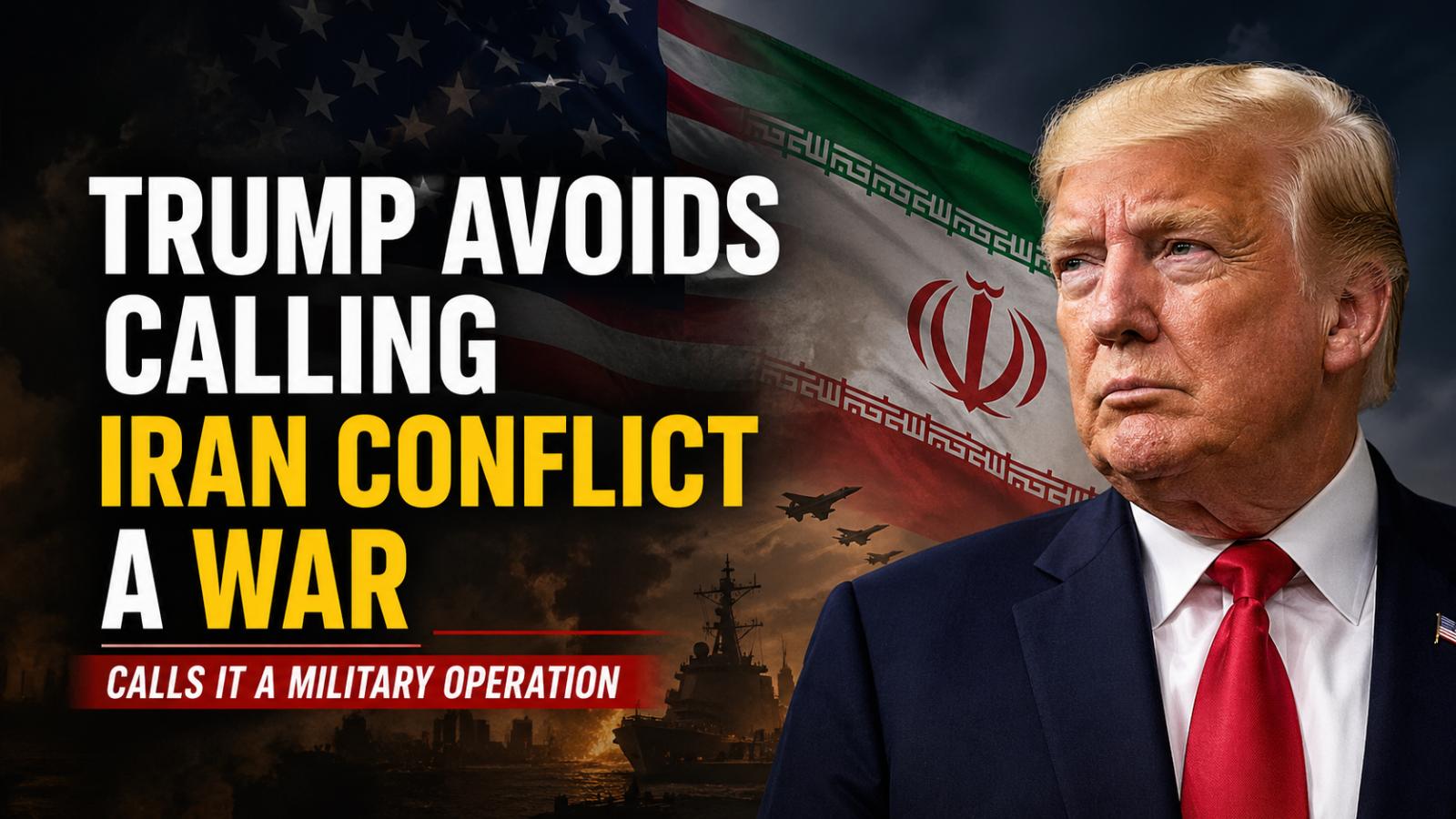
Trump shifts stance on Iran conflict, calls it a military operation
Trump redefines Iran conflict as military operation As the War Powers Resolution deadline approached on May 1, US President Donald Trump made a sharp shift in stance by stating that the ongoing Trump Iran conflict would not be labeled as a war but instead as a military operation. This move comes just days before a legal deadline that could have required congressional approval or forced the US to halt militar
Trump shifts stance on Iran conflict, calls it a military operation
Trump redefines Iran conflict as military operation As the War Powers Resolution deadline approached on May 1, US President Donald Trump made a sharp shift in stance by stating that the ongoing Trump Iran conflict would not be labeled as a war but instead as a military operation. This move comes just days before a legal deadline that could have required congressional approval or forced the US to halt militar
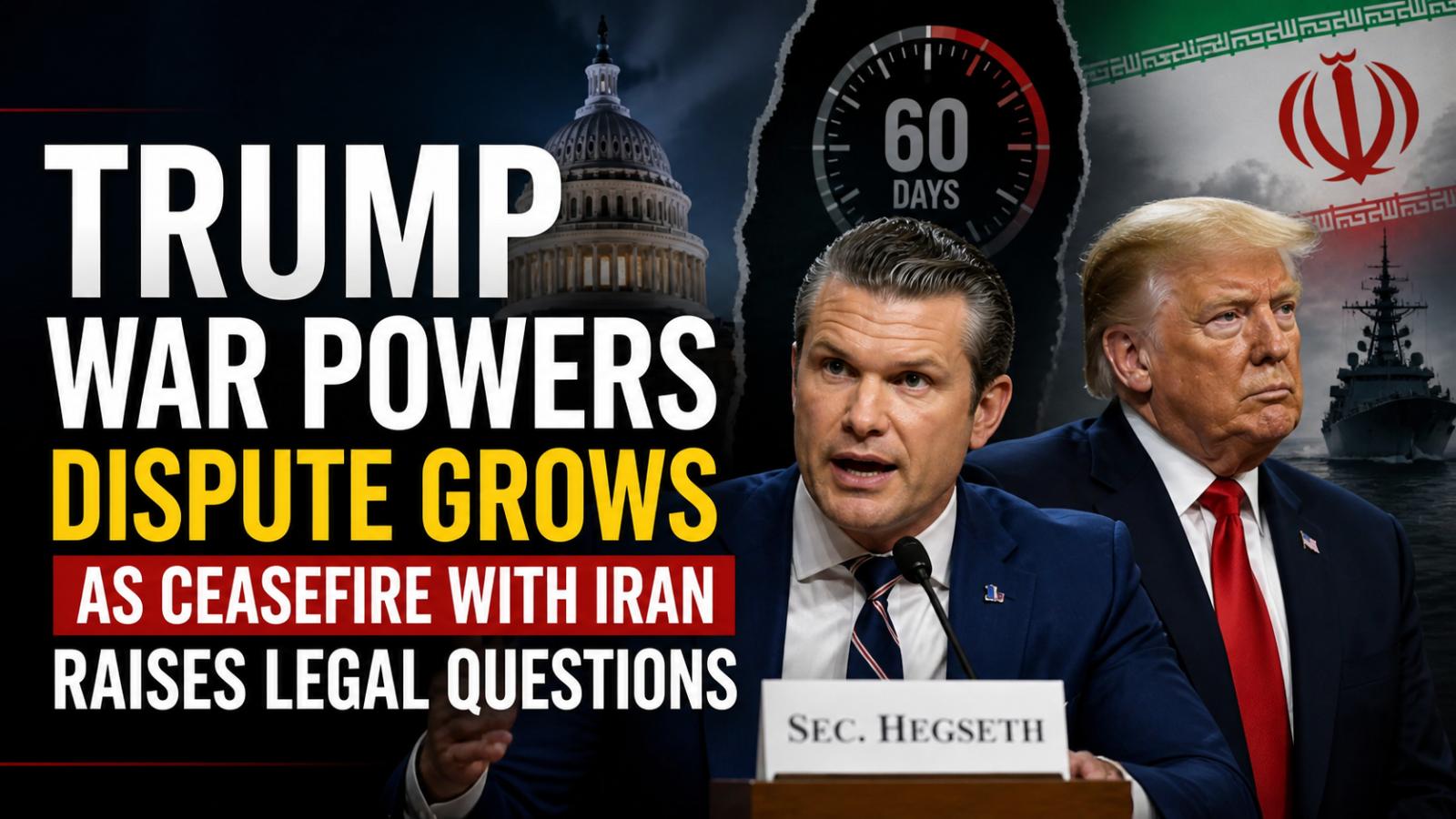
Hegseth says Iran ceasefire pauses war powers clock amid congressional concerns
The Trump war powers debate took center stage in Washington as Defense Secretary Pete Hegseth told lawmakers that a ceasefire with Iran pauses the legal clock under the War Powers Resolution, a claim that has triggered strong political and legal reactions. The dispute comes just before the 60-day deadline that typically requires the president to seek approval from Congress to continue military action, raising questions about how the law should be applied during a ceasefire. Speaking before the Senate Armed Services Committee, Hegseth argued that ongoing ceasefire conditions mean the countdown does not apply in the usual way. Under the War Powers Resolution, introduced in 1973, presidents must inform Congress within 48 hours of military action and must withdraw troops within 60 days unless lawmakers approve continued engagement. Lawmakers had expected this deadline to expire on May 1, but Hegseth’s interpretation suggests otherwise. Hegseth avoided giving a clear answer when asked if the administration of Donald Trump would seek formal authorization. Instead, he defended the administration’s actions and criticized opponents, saying that internal political disagreements weaken the country’s position. His remarks came during discussions on the Pentagon’s proposed $1.45 trillion budget, though much of the focus shifted to the Iran conflict and its legal implications. Several lawmakers from both parties expressed concern. Senator Tim Kaine warned that the situation raises serious constitutional questions, while some Republicans also indicated they may oppose continuing military operations without approval. Others supported a more flexible interpretation, especially during active negotiations or ceasefire periods. Legal experts, however, strongly rejected the argument that a ceasefire pauses the law. Analysts pointed out that US naval forces remain active in the region, including operations in the Strait of Hormuz, suggesting that hostilities have not fully stopped. Scholars emphasized that the law does not include any provision for pausing the timeline. The conflict has already had wider consequences, including rising energy prices and increased tensions in the region. Critics have also accused the administration of starting the conflict without a clear immediate threat. During the hearing, Senator Elissa Slotkin questioned whether the administration could truly claim progress while key trade routes remain unstable. The exchange grew tense at times, reflecting deep divisions over the handling of the situation. While military officials maintained a more measured tone, political leaders continued to clash over strategy, legality, and communication with the public. As the deadline passes, the debate over war powers, presidential authority, and congressional oversight is expected to intensify further.
Hegseth says Iran ceasefire pauses war powers clock amid congressional concerns
The Trump war powers debate took center stage in Washington as Defense Secretary Pete Hegseth told lawmakers that a ceasefire with Iran pauses the legal clock under the War Powers Resolution, a claim that has triggered strong political and legal reactions. The dispute comes just before the 60-day deadline that typically requires the president to seek approval from Congress to continue military action, raising questions about how the law should be applied during a ceasefire. Speaking before the Senate Armed Services Committee, Hegseth argued that ongoing ceasefire conditions mean the countdown does not apply in the usual way. Under the War Powers Resolution, introduced in 1973, presidents must inform Congress within 48 hours of military action and must withdraw troops within 60 days unless lawmakers approve continued engagement. Lawmakers had expected this deadline to expire on May 1, but Hegseth’s interpretation suggests otherwise. Hegseth avoided giving a clear answer when asked if the administration of Donald Trump would seek formal authorization. Instead, he defended the administration’s actions and criticized opponents, saying that internal political disagreements weaken the country’s position. His remarks came during discussions on the Pentagon’s proposed $1.45 trillion budget, though much of the focus shifted to the Iran conflict and its legal implications. Several lawmakers from both parties expressed concern. Senator Tim Kaine warned that the situation raises serious constitutional questions, while some Republicans also indicated they may oppose continuing military operations without approval. Others supported a more flexible interpretation, especially during active negotiations or ceasefire periods. Legal experts, however, strongly rejected the argument that a ceasefire pauses the law. Analysts pointed out that US naval forces remain active in the region, including operations in the Strait of Hormuz, suggesting that hostilities have not fully stopped. Scholars emphasized that the law does not include any provision for pausing the timeline. The conflict has already had wider consequences, including rising energy prices and increased tensions in the region. Critics have also accused the administration of starting the conflict without a clear immediate threat. During the hearing, Senator Elissa Slotkin questioned whether the administration could truly claim progress while key trade routes remain unstable. The exchange grew tense at times, reflecting deep divisions over the handling of the situation. While military officials maintained a more measured tone, political leaders continued to clash over strategy, legality, and communication with the public. As the deadline passes, the debate over war powers, presidential authority, and congressional oversight is expected to intensify further.
Why is the Pentagon’s $25 billion war cost estimate questioned? Experts say it may be incomplete
The United States Department of Defense has estimated that its ongoing military conflict with Iran has cost approximately $25 billion, but analysts and lawmakers are raising concerns that the figure may significantly understate the true financial burden. The estimate was presented during a congressional hearing on Tuesday, April 29, 2026, where Pentagon officials outlined current war-related expenditures without offering a detailed breakdown. Congressional hearing reveals l
Why is the Pentagon’s $25 billion war cost estimate questioned? Experts say it may be incomplete
The United States Department of Defense has estimated that its ongoing military conflict with Iran has cost approximately $25 billion, but analysts and lawmakers are raising concerns that the figure may significantly understate the true financial burden. The estimate was presented during a congressional hearing on Tuesday, April 29, 2026, where Pentagon officials outlined current war-related expenditures without offering a detailed breakdown. Congressional hearing reveals l

Trump Comments on Ukraine and Iran Wars Spark Confusion
US President Donald Trump drew attention during a recent press interaction after appearing to confuse details while discussing two major international conflicts. The exchange took place as Trump addressed reporters during an event linked to the Artemis II mission crew, where he was asked which conflict might conclude first: the prolonged Russia-Ukraine war or the ongoing tensions involving Iran and Israel. In response, Trump suggested that both situations could follow a similar timeline, stating that he was uncertain which would end sooner. However, his subsequent remarks raised questions as he began describing military conditions that appeared inconsistent or unclear in context. He claimed that Ukraine was militarily defeated, referencing significant naval and air losses, including statements about ships being destroyed and aircraft being eliminated. Trump also cited reductions in missile and drone capabilities, though his comments did not clearly distinguish whether he was referring to Ukraine or Iran at various points. This lack of clarity led to widespread attention, with observers noting the difficulty in separating his analysis of the two conflicts. The Russia-Ukraine war has continued for years with ongoing military engagements, while tensions involving Iran, Israel, and US involvement have added another layer of complexity to global security dynamics. Trump’s remarks came at a time when both conflicts remain active and under close international observation. The moment quickly gained traction due to the ambiguity in the president’s statements, highlighting the challenges of addressing multiple geopolitical crises simultaneously in public forums.
Trump Comments on Ukraine and Iran Wars Spark Confusion
US President Donald Trump drew attention during a recent press interaction after appearing to confuse details while discussing two major international conflicts. The exchange took place as Trump addressed reporters during an event linked to the Artemis II mission crew, where he was asked which conflict might conclude first: the prolonged Russia-Ukraine war or the ongoing tensions involving Iran and Israel. In response, Trump suggested that both situations could follow a similar timeline, stating that he was uncertain which would end sooner. However, his subsequent remarks raised questions as he began describing military conditions that appeared inconsistent or unclear in context. He claimed that Ukraine was militarily defeated, referencing significant naval and air losses, including statements about ships being destroyed and aircraft being eliminated. Trump also cited reductions in missile and drone capabilities, though his comments did not clearly distinguish whether he was referring to Ukraine or Iran at various points. This lack of clarity led to widespread attention, with observers noting the difficulty in separating his analysis of the two conflicts. The Russia-Ukraine war has continued for years with ongoing military engagements, while tensions involving Iran, Israel, and US involvement have added another layer of complexity to global security dynamics. Trump’s remarks came at a time when both conflicts remain active and under close international observation. The moment quickly gained traction due to the ambiguity in the president’s statements, highlighting the challenges of addressing multiple geopolitical crises simultaneously in public forums.

Putin Proposes Ukraine Ceasefire as He Speaks With Trump on Global Crises
Russian President Vladimir Putin and US President Donald Trump held a phone call on Wednesday, discussing key global issues including the ongoing Ukraine war and rising tensions in the Middle East. The conversation, which lasted approximately 90 minutes, marked their first known direct contact since March and reflected continued diplomatic engagement between the two countries. According to Kremlin aide Yuri Ushakov, both leaders focused extensively on developments in the Middle East, particularly the situation involving Iran and the broader Persian Gulf region. Ushakov said Putin supported Trump’s decision to extend a ceasefire with Iran, noting that such a move could create space for negotiations and contribute to regional stability. The discussion also included specific proposals from Russia regarding Iran, though details were not publicly disclosed. The Ukraine conflict was another central topic of the call. Putin reportedly expressed readiness to declare a temporary ceasefire to coincide with Russia’s Victory Day on May 9, an annual commemoration of the Soviet Union’s victory in World War II. The proposal is seen as a symbolic gesture tied to a major national observance, although its broader implications remain unclear. During the call, Putin also condemned the recent shooting at the White House Correspondents’ Association dinner and conveyed support in response to the incident. Additionally, he extended birthday greetings to Melania Trump and acknowledged her efforts in humanitarian matters, including initiatives aimed at reconnecting families affected by the Russia-Ukraine conflict. Victory Day, observed annually in Moscow with a military parade, will reportedly be scaled back this year due to security concerns, including potential threats of retaliatory strikes. The call highlights ongoing dialogue between the two leaders amid complex geopolitical challenges.
Putin Proposes Ukraine Ceasefire as He Speaks With Trump on Global Crises
Russian President Vladimir Putin and US President Donald Trump held a phone call on Wednesday, discussing key global issues including the ongoing Ukraine war and rising tensions in the Middle East. The conversation, which lasted approximately 90 minutes, marked their first known direct contact since March and reflected continued diplomatic engagement between the two countries. According to Kremlin aide Yuri Ushakov, both leaders focused extensively on developments in the Middle East, particularly the situation involving Iran and the broader Persian Gulf region. Ushakov said Putin supported Trump’s decision to extend a ceasefire with Iran, noting that such a move could create space for negotiations and contribute to regional stability. The discussion also included specific proposals from Russia regarding Iran, though details were not publicly disclosed. The Ukraine conflict was another central topic of the call. Putin reportedly expressed readiness to declare a temporary ceasefire to coincide with Russia’s Victory Day on May 9, an annual commemoration of the Soviet Union’s victory in World War II. The proposal is seen as a symbolic gesture tied to a major national observance, although its broader implications remain unclear. During the call, Putin also condemned the recent shooting at the White House Correspondents’ Association dinner and conveyed support in response to the incident. Additionally, he extended birthday greetings to Melania Trump and acknowledged her efforts in humanitarian matters, including initiatives aimed at reconnecting families affected by the Russia-Ukraine conflict. Victory Day, observed annually in Moscow with a military parade, will reportedly be scaled back this year due to security concerns, including potential threats of retaliatory strikes. The call highlights ongoing dialogue between the two leaders amid complex geopolitical challenges.
Israel says Hamas intelligence leader killed in Gaza strike
Israel says it killed a senior Hamas intelligence leader involved in planning the October 7 attack, as violence continues in Gaza despite a ceasefire, with reports of additional casualties from a separate drone strike. The Israel Defense Forces said on Wednesday, April 29, 2026, that Iyad Ahmed Abd al Rahman Shambari, a senior figure in Hamas’s military intelligence wing, was killed in the Gaza Strip. According to the IDF, Shambari led the operations department within Hamas military intelligence and played a key role in planning the October 7, 2023, attack on Israel that triggered the ongoing war. The IDF statement did not specify the exact time of the strike or provide additional operational details. The Israeli military has repeatedly targeted senior Hamas figures as part of its broader campaign in Gaza following the large-scale assault that prompted Israel’s ground offensive in the enclave. A ceasefire announced on Friday, October 10, 2025, has largely reduced large-scale combat, but violence has continued across Gaza. The Gaza health ministry, which operates under Hamas authority, reported that at least 818 Palestinians have been killed since the truce began. The United Nations has previously considered such figures broadly reliable, though independent verification remains limited. Separately, Gaza’s civil defense agency said four people were killed and six others injured in a drone strike targeting a vehicle in the western Al Rimal neighborhood of Gaza City. A Gaza security official identified two of the victims as Hamas commander Iyad al Shanbari and his son Salah. The identities of the other two individuals were not disclosed. There was no immediate independent confirmation of the identities of those killed in that strike. The IDF has not publicly commented on the specific incident described by local authorities. The developments underscore ongoing instability in Gaza despite the ceasefire, with sporadic strikes and casualties continuing to be reported.
Israel says Hamas intelligence leader killed in Gaza strike
Israel says it killed a senior Hamas intelligence leader involved in planning the October 7 attack, as violence continues in Gaza despite a ceasefire, with reports of additional casualties from a separate drone strike. The Israel Defense Forces said on Wednesday, April 29, 2026, that Iyad Ahmed Abd al Rahman Shambari, a senior figure in Hamas’s military intelligence wing, was killed in the Gaza Strip. According to the IDF, Shambari led the operations department within Hamas military intelligence and played a key role in planning the October 7, 2023, attack on Israel that triggered the ongoing war. The IDF statement did not specify the exact time of the strike or provide additional operational details. The Israeli military has repeatedly targeted senior Hamas figures as part of its broader campaign in Gaza following the large-scale assault that prompted Israel’s ground offensive in the enclave. A ceasefire announced on Friday, October 10, 2025, has largely reduced large-scale combat, but violence has continued across Gaza. The Gaza health ministry, which operates under Hamas authority, reported that at least 818 Palestinians have been killed since the truce began. The United Nations has previously considered such figures broadly reliable, though independent verification remains limited. Separately, Gaza’s civil defense agency said four people were killed and six others injured in a drone strike targeting a vehicle in the western Al Rimal neighborhood of Gaza City. A Gaza security official identified two of the victims as Hamas commander Iyad al Shanbari and his son Salah. The identities of the other two individuals were not disclosed. There was no immediate independent confirmation of the identities of those killed in that strike. The IDF has not publicly commented on the specific incident described by local authorities. The developments underscore ongoing instability in Gaza despite the ceasefire, with sporadic strikes and casualties continuing to be reported.
Iran-US tensions rise as Tehran rejects pressure and asserts military strength
Iran missile stockpile and war readiness Iran missile stockpile has become a major focus as tensions with the United States intensify, with Tehran claiming it can sustain several years of war using its missile and drone reserves. A senior Iranian lawmaker said the country is fully prepared for prolonged conflict while continuing negotiations with Washington under the direction of its top leadership. The statement highlights both Iran’s military confidence and its refusal to yield under pressure. Alaeddin Boroujerdi, a senior member of Iran’s parliament, said the country’s defense capacity remains strong and capable of long-term engagement. He emphasized that Iran’s missile and drone arsenal is sufficient to maintain sustained operations if required. He made it clear that negotiations with the United States are not a sign of weakness but part of a calculated strategy directed by the Supreme Leader. According to him, experienced leadership is handling the talks, ensuring that national interests are protected at all times. Boroujerdi stressed that Iran does not view the negotiating table as a place for surrender. He stated that discussions would not lead to compromise or humiliation, reinforcing Tehran’s firm diplomatic stance. His comments come at a time of rising Iran-US tensions, particularly following statements by Donald Trump, which he dismissed as ineffective. He also pointed out that a recently extended ceasefire period has not resulted in any significant actions from the opposing side. The Iranian lawmaker also criticized the US-led maritime blockade, describing it as lacking global legitimacy. He noted that no major European or NATO countries have joined the effort, suggesting limited international support for Washington’s position. This, he argued, weakens the overall impact of the blockade. Strategically, Iran continues to emphasize its control over the Strait of Hormuz, a crucial global oil route. Officials maintain that Iran will never lose control over this vital waterway, underlining its importance in the broader geopolitical landscape. The statement reinforces Tehran’s confidence in its regional influence and defense strategy. Overall, Iran’s position reflects a dual approach of negotiation and strength. While talks with the United States continue, Tehran is signaling that it is fully prepared for extended conflict if necessary, maintaining both diplomatic engagement and military readiness.
Iran-US tensions rise as Tehran rejects pressure and asserts military strength
Iran missile stockpile and war readiness Iran missile stockpile has become a major focus as tensions with the United States intensify, with Tehran claiming it can sustain several years of war using its missile and drone reserves. A senior Iranian lawmaker said the country is fully prepared for prolonged conflict while continuing negotiations with Washington under the direction of its top leadership. The statement highlights both Iran’s military confidence and its refusal to yield under pressure. Alaeddin Boroujerdi, a senior member of Iran’s parliament, said the country’s defense capacity remains strong and capable of long-term engagement. He emphasized that Iran’s missile and drone arsenal is sufficient to maintain sustained operations if required. He made it clear that negotiations with the United States are not a sign of weakness but part of a calculated strategy directed by the Supreme Leader. According to him, experienced leadership is handling the talks, ensuring that national interests are protected at all times. Boroujerdi stressed that Iran does not view the negotiating table as a place for surrender. He stated that discussions would not lead to compromise or humiliation, reinforcing Tehran’s firm diplomatic stance. His comments come at a time of rising Iran-US tensions, particularly following statements by Donald Trump, which he dismissed as ineffective. He also pointed out that a recently extended ceasefire period has not resulted in any significant actions from the opposing side. The Iranian lawmaker also criticized the US-led maritime blockade, describing it as lacking global legitimacy. He noted that no major European or NATO countries have joined the effort, suggesting limited international support for Washington’s position. This, he argued, weakens the overall impact of the blockade. Strategically, Iran continues to emphasize its control over the Strait of Hormuz, a crucial global oil route. Officials maintain that Iran will never lose control over this vital waterway, underlining its importance in the broader geopolitical landscape. The statement reinforces Tehran’s confidence in its regional influence and defense strategy. Overall, Iran’s position reflects a dual approach of negotiation and strength. While talks with the United States continue, Tehran is signaling that it is fully prepared for extended conflict if necessary, maintaining both diplomatic engagement and military readiness.
Julie Davis Announces Exit as US Faces Challenges in Ukraine Peace Efforts
The United States Department of State confirmed on April 28 that Julie Davis will step down from her role as acting ambassador to Ukraine after serving less than a year in the position. The announcement comes at a time when diplomatic efforts by the United States to facilitate a peace agreement between Ukraine and Russia have yet to produce a breakthrough. Davis, who also serves as ambassador to Cyprus, had been handling dual responsibilities since her appointment by Donald Trump in May of the previous year. She assumed the Kyiv role following the departure of Bridget Brink, who had been appointed earlier and later stepped down. The State Department stated that Davis cited retirement as the reason for her decision. Her tenure coincided with increased diplomatic pressure from Washington on Kyiv to consider terms that could advance negotiations with Moscow. Trump has publicly emphasized the need for a resolution, including the possibility of territorial concessions by Ukraine, as part of a broader effort to secure a ceasefire. However, these initiatives have not resulted in a formal agreement, and fighting has continued without a comprehensive settlement. Reports suggesting internal disagreements regarding US policy toward Ukraine were rejected by officials, who maintained that no such disputes influenced Davis’s decision. Brink, Davis’s predecessor, had previously expressed concern over what she described as an approach that placed disproportionate pressure on Ukraine during negotiations. Davis’s departure highlights the ongoing complexity of US diplomatic engagement in the region. With peace talks stalled and geopolitical tensions unresolved, the transition comes at a critical moment for American foreign policy and its role in shaping outcomes in Eastern Europe.
Julie Davis Announces Exit as US Faces Challenges in Ukraine Peace Efforts
The United States Department of State confirmed on April 28 that Julie Davis will step down from her role as acting ambassador to Ukraine after serving less than a year in the position. The announcement comes at a time when diplomatic efforts by the United States to facilitate a peace agreement between Ukraine and Russia have yet to produce a breakthrough. Davis, who also serves as ambassador to Cyprus, had been handling dual responsibilities since her appointment by Donald Trump in May of the previous year. She assumed the Kyiv role following the departure of Bridget Brink, who had been appointed earlier and later stepped down. The State Department stated that Davis cited retirement as the reason for her decision. Her tenure coincided with increased diplomatic pressure from Washington on Kyiv to consider terms that could advance negotiations with Moscow. Trump has publicly emphasized the need for a resolution, including the possibility of territorial concessions by Ukraine, as part of a broader effort to secure a ceasefire. However, these initiatives have not resulted in a formal agreement, and fighting has continued without a comprehensive settlement. Reports suggesting internal disagreements regarding US policy toward Ukraine were rejected by officials, who maintained that no such disputes influenced Davis’s decision. Brink, Davis’s predecessor, had previously expressed concern over what she described as an approach that placed disproportionate pressure on Ukraine during negotiations. Davis’s departure highlights the ongoing complexity of US diplomatic engagement in the region. With peace talks stalled and geopolitical tensions unresolved, the transition comes at a critical moment for American foreign policy and its role in shaping outcomes in Eastern Europe.
Why are North Korean troops reportedly taking their own lives? Kim Jong Un calls it battlefield honor
Why are North Korean troops reportedly taking their own lives? Kim Jong Un calls it battlefield honor has drawn international scrutiny after reports emerged that North Korean soldiers fighting alongside Russia in the war in Ukraine may be taking their own lives to avoid capture. The claims
Why are North Korean troops reportedly taking their own lives? Kim Jong Un calls it battlefield honor
Why are North Korean troops reportedly taking their own lives? Kim Jong Un calls it battlefield honor has drawn international scrutiny after reports emerged that North Korean soldiers fighting alongside Russia in the war in Ukraine may be taking their own lives to avoid capture. The claims
Taiwan steps up defence as Chinese warships enter sensitive waters
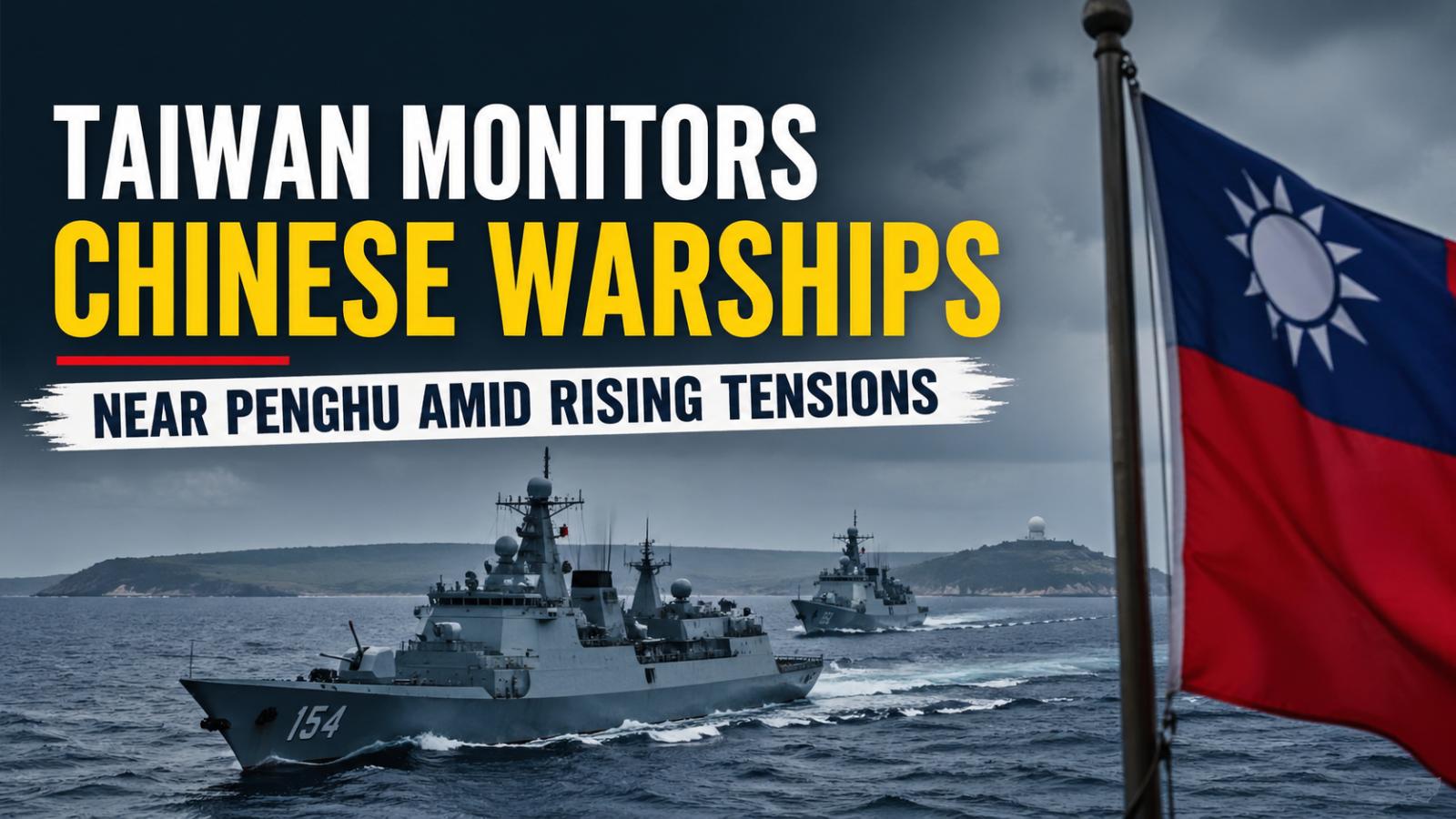
Taiwan China tension has intensified after Taiwan detected Chinese warships near the Penghu islands, prompting immediate military monitoring and response. Taiwan’s defence ministry confirmed that a Chinese destroyer and frigate entered sensitive waters southwest of the Penghu islands, an area known for hosting key naval and air force bases. In response, Taiwan deployed its own naval and air assets to track the ships closely and ensure security in the region. Officials stated that
Taiwan steps up defence as Chinese warships enter sensitive waters
Taiwan China tension has intensified after Taiwan detected Chinese warships near the Penghu islands, prompting immediate military monitoring and response. Taiwan’s defence ministry confirmed that a Chinese destroyer and frigate entered sensitive waters southwest of the Penghu islands, an area known for hosting key naval and air force bases. In response, Taiwan deployed its own naval and air assets to track the ships closely and ensure security in the region. Officials stated that
US missile stockpile concerns grow amid iran conflict scrutiny
US missile stockpile concerns during Iran war
US missile stockpile concerns grow amid iran conflict scrutiny
US missile stockpile concerns during Iran war

India Enters Top Five as Global Defense Spending Surge
Global military spending reached a record $2,887 billion in 2025, marking the eleventh consecutive year of growth and the highest level ever recorded. According to the latest SIPRI report, the increase reflects rising geopolitical tensions, ongoing conflicts, and a shifting global security environment that has prompted governments to expand their defense budgets. India emerged as one of the world’s top military spenders, entering the top five for the first time with total expenditure of $92.1 billion. The country’s defense spending rose by 8.9 percent, reflecting heightened security concerns and operational demands. The report noted that this increase coincided with armed tensions involving Pakistan in May 2025, during which India deployed a range of military assets including aircraft, drones, and missile systems. The five largest spenders—the United States, China, Russia, Germany, and India—collectively accounted for 58 percent of global military expenditure, totaling $1,686 billion. Pakistan also increased its defense budget by 11 percent to $11.9 billion, driven largely by procurement activities and ongoing modernization efforts following regional tensions. Europe was identified as the primary contributor to the global rise in military spending, with a 14 percent increase bringing the region’s total to $864 billion. This marked the fastest growth in Central and Western Europe since the Cold War, as countries accelerated rearmament programs in response to security concerns, particularly the ongoing conflict involving Russia and Ukraine. The United States remained the largest military spender globally, allocating $954 billion in 2025. However, this represented a 7.5 percent decline compared to the previous year. The decrease was attributed mainly to reduced financial assistance to Ukraine, contrasting with higher levels of support in earlier years. Overall, the data highlights a continued global trend toward increased defense investment, driven by evolving security challenges and shifting geopolitical dynamics.
India Enters Top Five as Global Defense Spending Surge
Global military spending reached a record $2,887 billion in 2025, marking the eleventh consecutive year of growth and the highest level ever recorded. According to the latest SIPRI report, the increase reflects rising geopolitical tensions, ongoing conflicts, and a shifting global security environment that has prompted governments to expand their defense budgets. India emerged as one of the world’s top military spenders, entering the top five for the first time with total expenditure of $92.1 billion. The country’s defense spending rose by 8.9 percent, reflecting heightened security concerns and operational demands. The report noted that this increase coincided with armed tensions involving Pakistan in May 2025, during which India deployed a range of military assets including aircraft, drones, and missile systems. The five largest spenders—the United States, China, Russia, Germany, and India—collectively accounted for 58 percent of global military expenditure, totaling $1,686 billion. Pakistan also increased its defense budget by 11 percent to $11.9 billion, driven largely by procurement activities and ongoing modernization efforts following regional tensions. Europe was identified as the primary contributor to the global rise in military spending, with a 14 percent increase bringing the region’s total to $864 billion. This marked the fastest growth in Central and Western Europe since the Cold War, as countries accelerated rearmament programs in response to security concerns, particularly the ongoing conflict involving Russia and Ukraine. The United States remained the largest military spender globally, allocating $954 billion in 2025. However, this represented a 7.5 percent decline compared to the previous year. The decrease was attributed mainly to reduced financial assistance to Ukraine, contrasting with higher levels of support in earlier years. Overall, the data highlights a continued global trend toward increased defense investment, driven by evolving security challenges and shifting geopolitical dynamics.
What happened in the Minab school strike? Iran says 155 killed in attack
Iran says 155 killed in attack Iran has released a detailed account of casualties from a strike on an elementary school in Minab on Friday, February 28, 2026, marking the first day of the West Asia war. According to state broadcaster IRIB and local media reports, the attack killed 155 people, including 120 children, and has intensified scrutiny over civilian safety in the escalating conflict. Revised casualty figures highlight scale of civilian d
What happened in the Minab school strike? Iran says 155 killed in attack
Iran says 155 killed in attack Iran has released a detailed account of casualties from a strike on an elementary school in Minab on Friday, February 28, 2026, marking the first day of the West Asia war. According to state broadcaster IRIB and local media reports, the attack killed 155 people, including 120 children, and has intensified scrutiny over civilian safety in the escalating conflict. Revised casualty figures highlight scale of civilian d
Iran War Update: What Happened in the Minab School Strike and Why It Matters
Iran has revised the death toll from the Minab school strike to 155, confirming it as the deadliest single incident in the ongoing conflict, now in its 59th day. Officials released a detailed breakdown indicating that most victims were children, alongside teachers and civilians connected to the school. The updated figure is lower than earlier estimates exceeding 175, though no formal explanation has been provided for the discrepancy. The strike occurred on February 28, the opening day of a coordinated military campaign. Two successive impacts hit the Shajareh Tayyebeh elementary school in Minab while classes were in session, a pattern described as a “double-tap” strike. Many of the children killed were between the ages of seven and twelve, amplifying global concern over the nature of the attack. Preliminary findings from a U.S. military review suggest the use of a Tomahawk cruise missile and indicate that the strike may have resulted from a targeting error. According to the investigation, outdated intelligence data misidentified the site as an active military location linked to a former Revolutionary Guards facility. Although the school had been separated from the base years earlier, the database used in targeting had not been updated accordingly. Analysts noted that automated systems processing this information may have contributed to the failure to recognize the location as a civilian site. Iranian officials have rejected the explanation, describing the incident as deliberate. The foreign minister characterized it as a calculated assault, citing the advanced precision capabilities attributed to modern military systems. The strike has since become a focal point in diplomatic discussions and ongoing ceasefire negotiations. The Pentagon has confirmed that a full investigation is still underway. As scrutiny continues, the Minab incident remains central to debates over accountability, intelligence reliability, and the risks associated with modern warfare technologies.
Iran War Update: What Happened in the Minab School Strike and Why It Matters
Iran has revised the death toll from the Minab school strike to 155, confirming it as the deadliest single incident in the ongoing conflict, now in its 59th day. Officials released a detailed breakdown indicating that most victims were children, alongside teachers and civilians connected to the school. The updated figure is lower than earlier estimates exceeding 175, though no formal explanation has been provided for the discrepancy. The strike occurred on February 28, the opening day of a coordinated military campaign. Two successive impacts hit the Shajareh Tayyebeh elementary school in Minab while classes were in session, a pattern described as a “double-tap” strike. Many of the children killed were between the ages of seven and twelve, amplifying global concern over the nature of the attack. Preliminary findings from a U.S. military review suggest the use of a Tomahawk cruise missile and indicate that the strike may have resulted from a targeting error. According to the investigation, outdated intelligence data misidentified the site as an active military location linked to a former Revolutionary Guards facility. Although the school had been separated from the base years earlier, the database used in targeting had not been updated accordingly. Analysts noted that automated systems processing this information may have contributed to the failure to recognize the location as a civilian site. Iranian officials have rejected the explanation, describing the incident as deliberate. The foreign minister characterized it as a calculated assault, citing the advanced precision capabilities attributed to modern military systems. The strike has since become a focal point in diplomatic discussions and ongoing ceasefire negotiations. The Pentagon has confirmed that a full investigation is still underway. As scrutiny continues, the Minab incident remains central to debates over accountability, intelligence reliability, and the risks associated with modern warfare technologies.
Iran offers Strait of Hormuz reopening if US lifts blockade, delays nuclear talks
Iran offered to reopen the Strait of Hormuz if the U.S. lifts its blockade and ends hostilities, but Washington insists any deal must address Tehran’s nuclear program, leaving tensions high and global energy markets under strain. Iran has proposed reopening the Strait of Hormuz if the United States lifts its blockade and agrees to end hostilities, according to regional officials familiar with negotiations disclosed on Monday, April 28, 2026. The proposal, deliver
Iran offers Strait of Hormuz reopening if US lifts blockade, delays nuclear talks
Iran offered to reopen the Strait of Hormuz if the U.S. lifts its blockade and ends hostilities, but Washington insists any deal must address Tehran’s nuclear program, leaving tensions high and global energy markets under strain. Iran has proposed reopening the Strait of Hormuz if the United States lifts its blockade and agrees to end hostilities, according to regional officials familiar with negotiations disclosed on Monday, April 28, 2026. The proposal, deliver
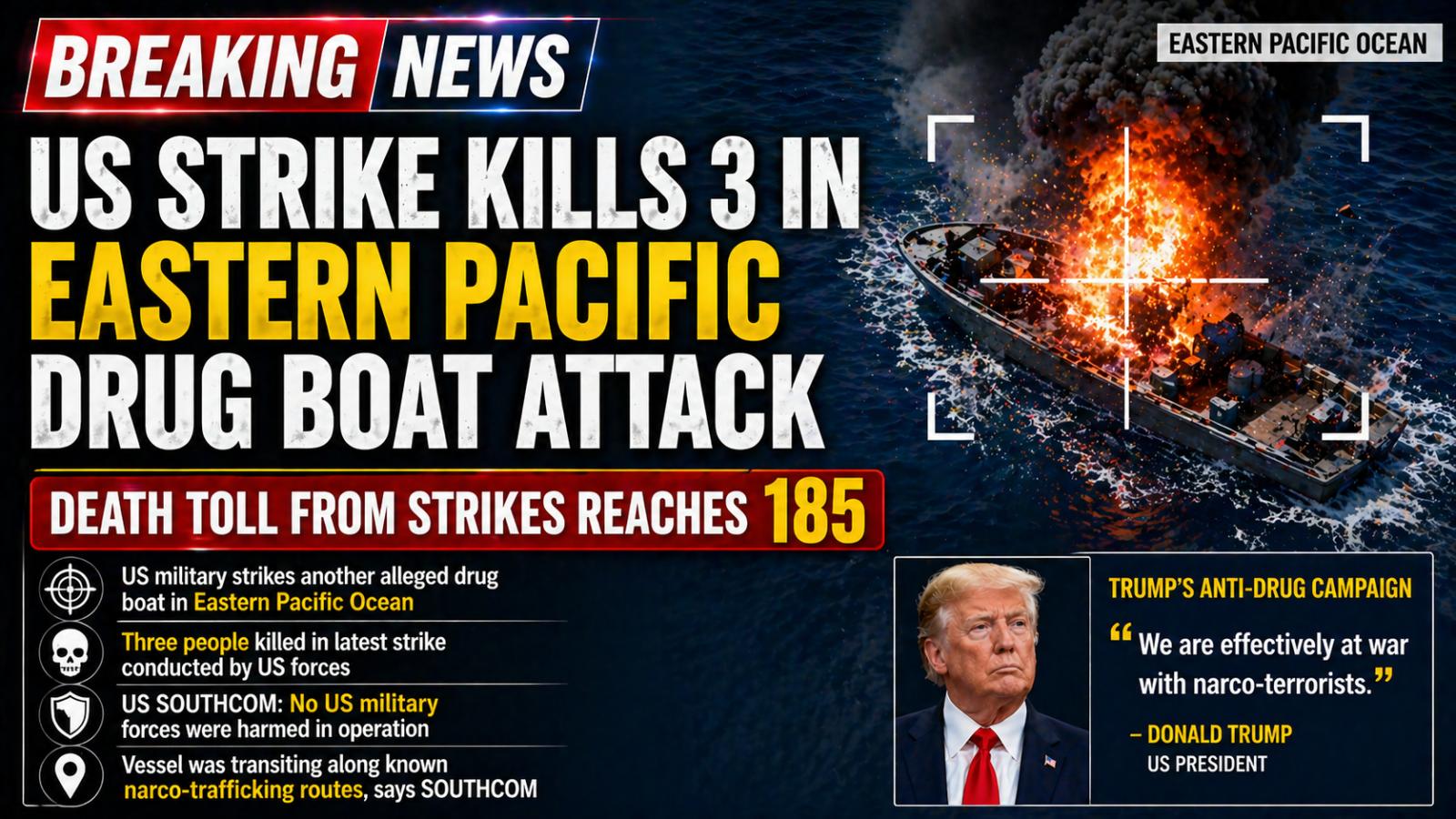
US Expands Anti-Drug Campaign With New Pacific Strike
The United States military carried out another strike on a suspected drug-trafficking vessel in the Eastern Pacific, resulting in the deaths of three individuals, on Sunday (Apr 26), according to officials. The operation was conducted under the direction of US Southern Command, which stated that the vessel was operating along known narcotics trafficking routes and was actively engaged in il
US Expands Anti-Drug Campaign With New Pacific Strike
The United States military carried out another strike on a suspected drug-trafficking vessel in the Eastern Pacific, resulting in the deaths of three individuals, on Sunday (Apr 26), according to officials. The operation was conducted under the direction of US Southern Command, which stated that the vessel was operating along known narcotics trafficking routes and was actively engaged in il
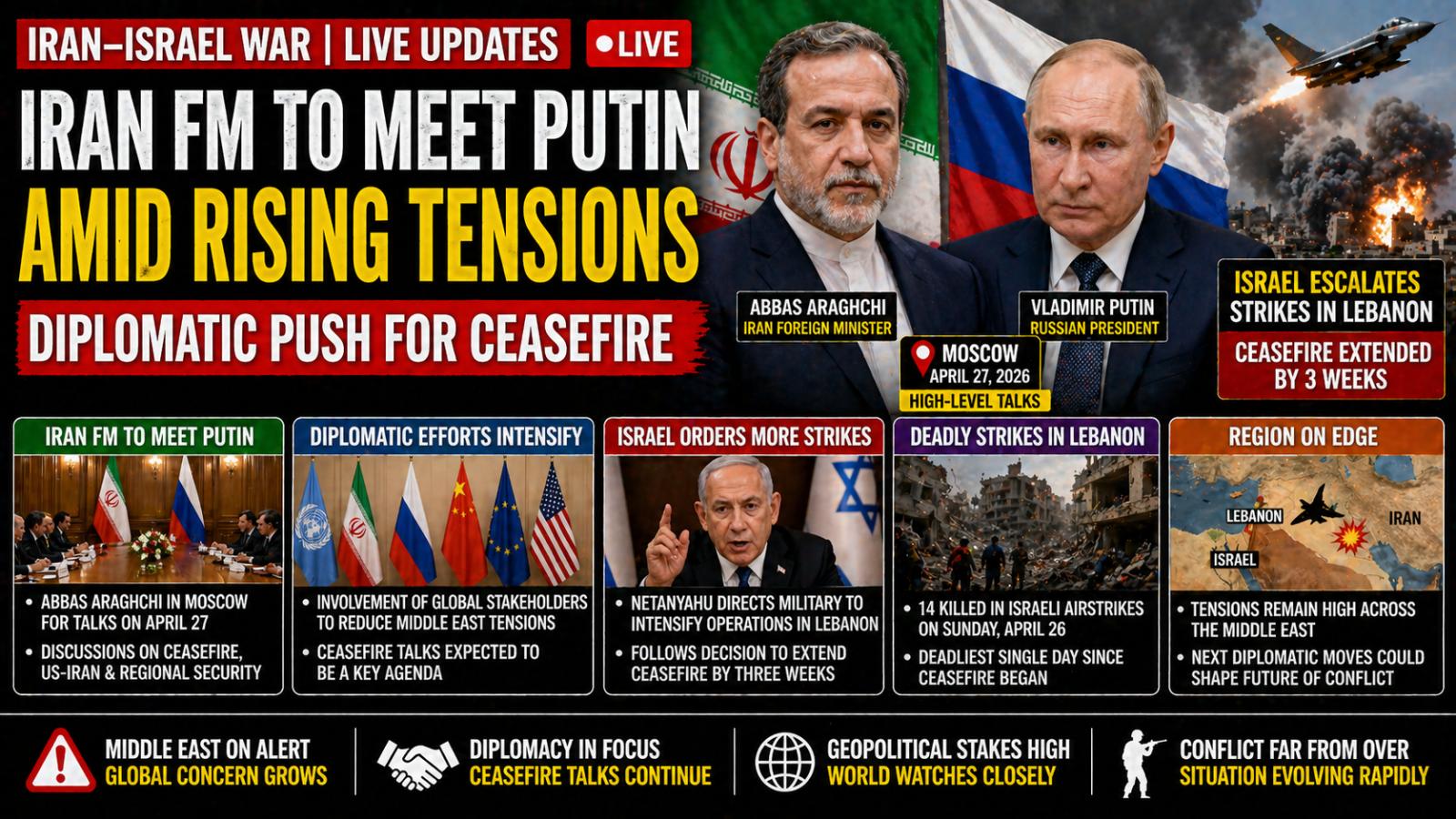
Iran-Israel war live updates: Iran FM to meet Putin amid rising tensions
Iran’s foreign minister Abbas Araghchi meets Vladimir Putin in Moscow on Monday, April 27, for ceasefire talks as Israel intensifies strikes on Hezbollah in Lebanon, where 14 were killed Sunday, April 26, marking the deadliest day since the truce began. Iran-Israel war live updates: Iran FM to meet Putin amid rising tensions as Abbas Araghchi prepares for high-level tal
Iran-Israel war live updates: Iran FM to meet Putin amid rising tensions
Iran’s foreign minister Abbas Araghchi meets Vladimir Putin in Moscow on Monday, April 27, for ceasefire talks as Israel intensifies strikes on Hezbollah in Lebanon, where 14 were killed Sunday, April 26, marking the deadliest day since the truce began. Iran-Israel war live updates: Iran FM to meet Putin amid rising tensions as Abbas Araghchi prepares for high-level tal
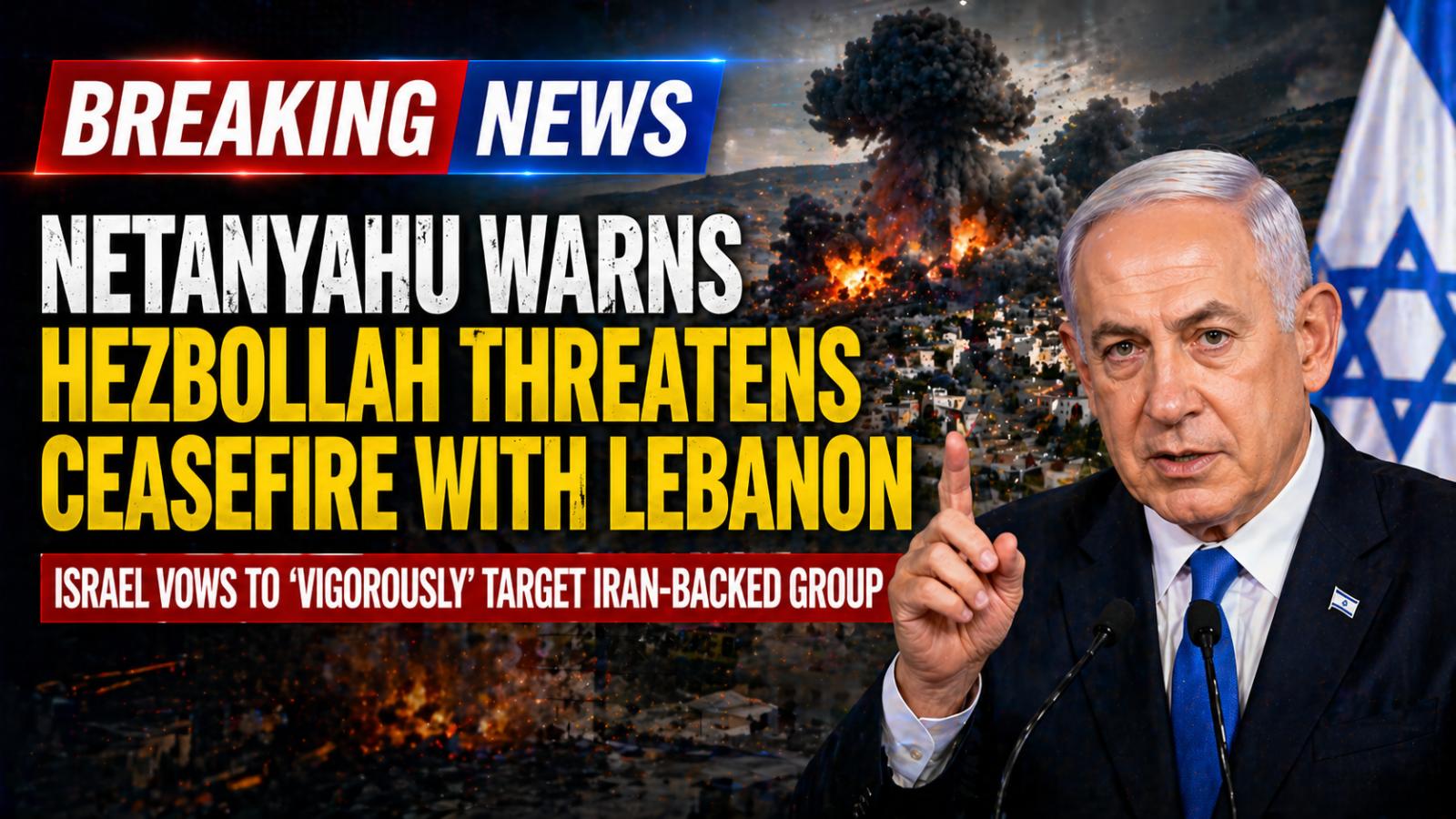
Israel Accuses Hezbollah of Violating Ceasefire Amid Rising Tensions
Israeli Prime Minister Benjamin Netanyahu has warned that ongoing actions by Hezbollah are placing the fragile ceasefire between Israel and Lebanon under increasing strain. Speaking during a weekly Cabinet meeting, Netanyahu stated that repeated violations by the Iran-backed group were effectively undermining the agreement intended to reduce hostilities along the border. In a separate statement, the Israeli military said recent activity attributed to Hezbollah represented a direct breach of ceasefire understandings. The Israel Defense Forces confirmed that it conducted overnight strikes on multiple structures in southern Lebanon, describing them as locations used by Hezbollah for operational purposes. These developments come amid heightened tensions despite ongoing diplomatic efforts to stabilize the region. The ceasefire arrangement, initially agreed upon for a limited period, was recently extended following discussions in Washington. During those talks, US President Donald Trump described the negotiations as productive, while acknowledging the complexities posed by Hezbollah’s involvement. The agreement aimed to provide additional time for de-escalation and further dialogue between the parties. Despite these efforts, reports of violations have continued to emerge from both sides since the truce came into effect. The situation remains fluid, with both Israel and Hezbollah accusing each other of actions that could destabilize the agreement. The initial ceasefire period, originally set to expire soon after its implementation, has faced mounting challenges as regional dynamics continue to shift. Observers note that the involvement of Iran-backed forces and the broader geopolitical context add complexity to maintaining the ceasefire. With both sides remaining on alert, the risk of escalation persists, even as diplomatic channels remain open.
Israel Accuses Hezbollah of Violating Ceasefire Amid Rising Tensions
Israeli Prime Minister Benjamin Netanyahu has warned that ongoing actions by Hezbollah are placing the fragile ceasefire between Israel and Lebanon under increasing strain. Speaking during a weekly Cabinet meeting, Netanyahu stated that repeated violations by the Iran-backed group were effectively undermining the agreement intended to reduce hostilities along the border. In a separate statement, the Israeli military said recent activity attributed to Hezbollah represented a direct breach of ceasefire understandings. The Israel Defense Forces confirmed that it conducted overnight strikes on multiple structures in southern Lebanon, describing them as locations used by Hezbollah for operational purposes. These developments come amid heightened tensions despite ongoing diplomatic efforts to stabilize the region. The ceasefire arrangement, initially agreed upon for a limited period, was recently extended following discussions in Washington. During those talks, US President Donald Trump described the negotiations as productive, while acknowledging the complexities posed by Hezbollah’s involvement. The agreement aimed to provide additional time for de-escalation and further dialogue between the parties. Despite these efforts, reports of violations have continued to emerge from both sides since the truce came into effect. The situation remains fluid, with both Israel and Hezbollah accusing each other of actions that could destabilize the agreement. The initial ceasefire period, originally set to expire soon after its implementation, has faced mounting challenges as regional dynamics continue to shift. Observers note that the involvement of Iran-backed forces and the broader geopolitical context add complexity to maintaining the ceasefire. With both sides remaining on alert, the risk of escalation persists, even as diplomatic channels remain open.










